The Harvesting and Processing Techniques of Cigars: Key Factors Affecting Quality
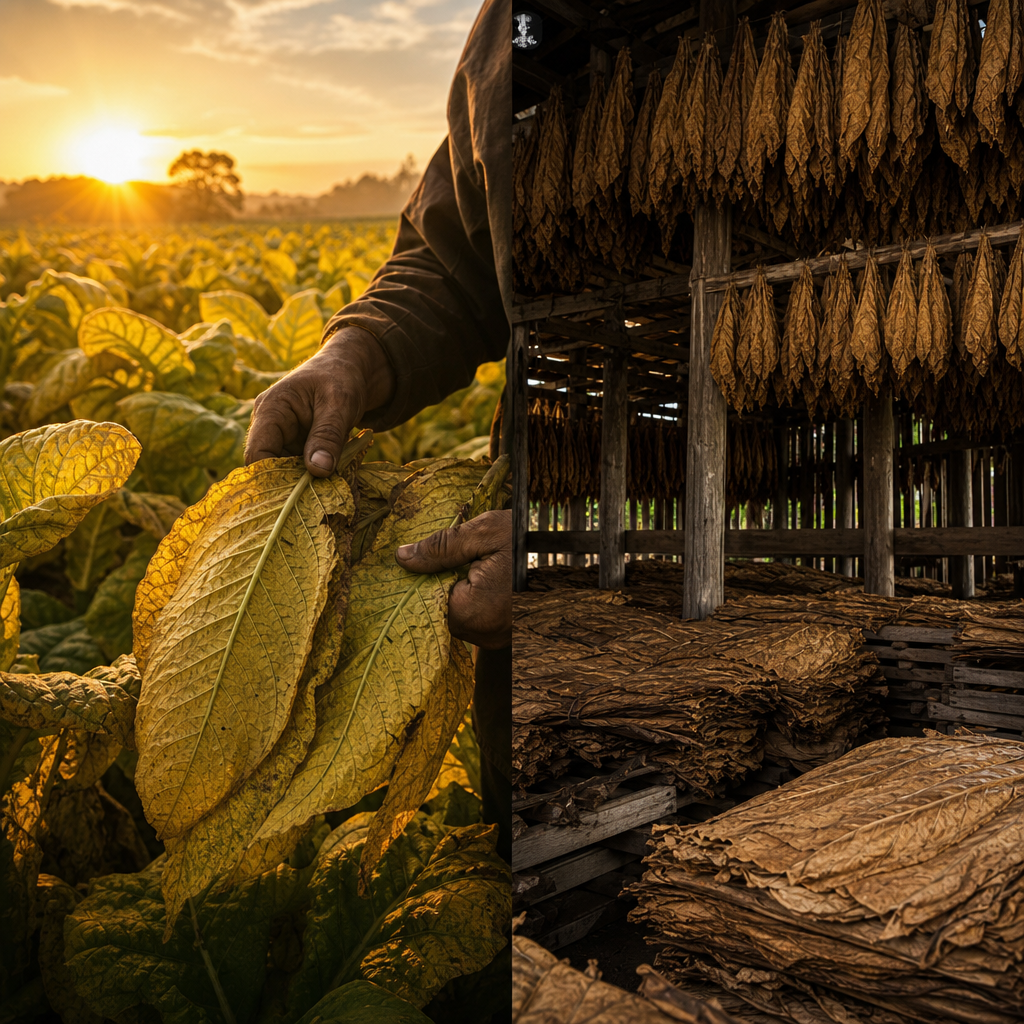
The Harvesting and Processing Techniques of Cigars: Key Factors Affecting Quality
When experienced cigar enthusiasts discuss cigars, the conversation inevitably returns to the leaves. While ring gauge, length, brand name, and origin are important, the true backbone of a cigar is determined by every choice made from the moment the tobacco leaves are picked in the field, through drying, fermentation, grading, rolling, and aging.
As the editor of "Cigar Bible," I often compare cigars to wine: the vintage is not just a label decoration but a combination of climate, soil, human judgment, and time management. In this article, I want to delve deeper into how quality is "crafted" from harvest to processing.
The Flavor Framework from Field Maturity
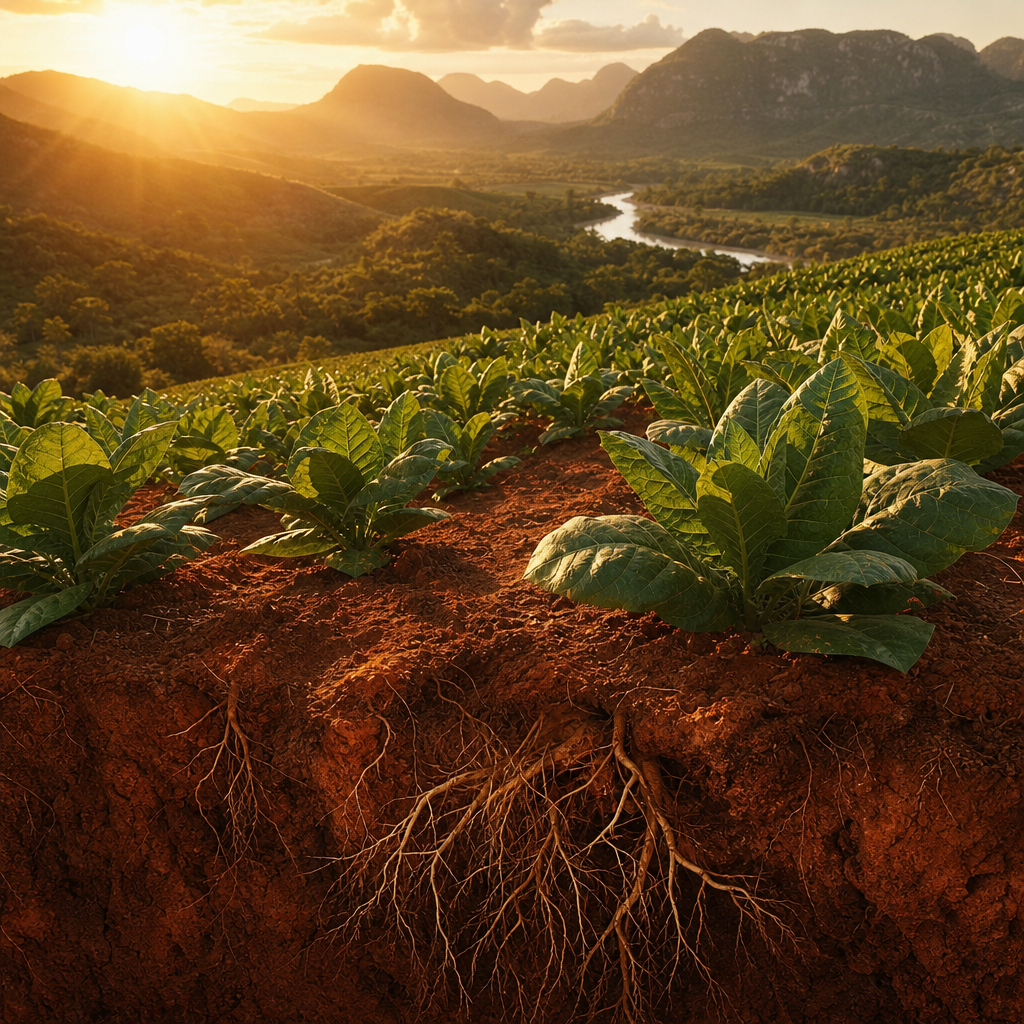
Cigar tobacco leaves are not harvested all at once but are picked in batches according to the height of the plant. Taking the Vuelta Abajo region of Pinar del Río, Cuba, as an example, a tobacco plant is usually divided into Volado, Seco, Ligero, and sometimes a small amount of Medio Tiempo; lower leaves have good combustibility, middle leaves carry aroma, and upper leaves have higher oil and nicotine content. A maturity difference of 3 to 5 days can change sugar content, nitrogen levels, and leaf thickness.
The real challenge is that "appears ready to harvest" and "worth harvesting" are not the same. Experienced farmers observe the leaf surface turning from bright green to slightly yellow-green, the main vein thickening, the leaf naturally drooping, and feel the surface oil with their fingers. After the official launch of Cohiba Behike in 2010, many seasoned customers began to notice the term Medio Tiempo, but not every plant has it, and it's not available in sufficient quantities every year. Harvesting is not just picking leaves but making the first trade-off between aroma, strength, and combustion potential.
If harvested too early, the chlorophyll is heavy, and the grassy taste is evident, with sharp spiciness appearing later; if overripe, the leaves may be thick but could ferment unevenly and burn slowly. Nicaragua's Estelí, with its high sunlight and volcanic soil, often makes Ligero strong and direct; the Piloto Cubano from the Cibao Valley in the Dominican Republic often retains a more rounded spice when mature. The same variety harvested at a different window may end up like two completely different cigars.
Picking Order and Position Grading: Strength Isn't Always Better
The first grading after harvest actually begins in the field. The lower Volado, due to less sunlight and thinner leaves, has relatively low nicotine but ensures stable combustion; the middle Seco has a high proportion of aromatic substances and is the core of many blends' aroma; the upper Ligero absorbs the most sunlight, with high oil and strength, but burns slowly, and too much can make the cigar dull, hot, and rough in the later stages.
Experienced enthusiasts often pursue "strength," but mature blenders don't just pile on Ligero. For a Robusto size like Partagás Serie D No.4, it's not a single heavy hit that impresses, but the order of woody and earthy notes in the front, spices in the middle, and gradually increasing strength in the back. If only the upper leaves are emphasized, even a 50-ring gauge size may have draw resistance and a skewed burn line. Strength comes from proportion, not from stuffing the strongest leaves.
In practice, grading considers leaf position, size, thickness, elasticity, and defects. Common judgments include:
- Volado: Good combustibility, often used as the base for filler leaves.
- Seco: Rich in aromatic details, determines the recognizability of the front and middle stages.
- Ligero: Provides strength and support for the later stages but requires longer fermentation and aging.
- Wrapper candidate leaves: Require complete leaf surfaces, fine veins, and balanced oil.
Between 2003 and 2005, many Caribbean brands, after increasing large ring gauge products, paid more attention to the balance of different leaf positions, as ring gauges of 54, 56, or even 60 can accommodate more leaf types. The advantage is that the layers can be made complex, but the disadvantage is that any untreated leaf will be magnified. The more precise the grading, the more complete the scale in the blender's hands.
Curing Barn: Color, Humidity, and Slow Transformation
After harvesting, tobacco leaves enter the curing barn. Traditional Cuban casas de tabaco are often built with wooden frames and palm leaf roofs for natural ventilation, while Nicaragua and Honduras often mix in more modern ventilation controls. The general drying period is about 45 to 60 days, possibly longer for thicker leaves; the leaf color changes from green to yellow, brown, and then dark brown, with chlorophyll gradually decomposing, reducing bitterness and grassy taste.
Drying is not simply "drying out" but allowing water, sugar, and protein to slowly transform. If ventilation is too fast in the early stages, the outer layer of the leaf becomes hard while the inside remains moist, leading to sour and musty flavors during subsequent fermentation; if humidity is too high, mold risk increases. Cuba faced hurricane and rainfall pressures in 2002 and 2008, and the differences in drying management often explain batch performance better than brand names. The curing barn determines cleanliness: without a clean base, even the best fermentation is just a remedy.
Experienced enthusiasts can reverse-engineer drying issues from the finished product. If the cigar has wet grass, ammonia, or green pepper-like sharpness in the front, and the ash is gray and loose after burning, it often indicates insufficient leaf transformation; if the aroma is flat and papery, it may have dried too quickly or lost oil. Excellent drying leaves flexibility, with the wrapper not cracking and the ash column maintaining 2 to 3 cm after burning. Slow is not romantic; slow allows the leaves to expel what shouldn't be retained.
Temperature Management in Fermentation Piles: The Core Engineering of Aroma Depth
After drying, tobacco leaves are tied into bundles and enter the pilón fermentation pile. Fermentation relies on the moisture, microorganisms, and pressure within the leaves to generate heat, with common temperatures controlled around 38 to 48°C; some thick Ligero may briefly approach 50°C, but too high a temperature "cooks" the aroma, making the leaves dull. Fermentation masters measure temperatures daily or every few days, turning the pile as needed to ensure even heating inside and out.
Different regions have very different techniques. Traditional Cuban fermentation often emphasizes a natural rhythm, pursuing earthy, leathery, woody, and delicate spice notes; Nicaragua's Estelí thick leaves require more active turning, or the strength easily turns into irritation; the Fuente family in the Dominican Republic is particularly conservative in fermenting wrapper leaves from the Chateau de la Fuente farm, as too high a temperature can damage the gloss and elasticity of the wrapper. Fermentation is about refining raw power into a readable flavor language.
To judge fermentation quality, experienced enthusiasts can pay attention to three points: first, whether the ammonia smell has dissipated; second, whether the spiciness has shifted from tongue-piercing to warm; third, whether the aroma has depth rather than just strength. Since the late 1990s, many non-Cuban brands have marked vintages or limited farm concepts on boxes, but what truly matters is whether they are willing to ferment thick leaves an extra time. A temperature difference of 5°C can be the boundary between finesse and coarseness.
Grading, Destemming, and Aging: How Time Changes Usability
After fermentation, leaves are graded again, classified by color, size, thickness, elasticity, and purpose. Wrapper leaves have the strictest requirements, with only the most complete part of a large leaf being usable; binder leaves emphasize toughness and structure; filler leaves are arranged according to taste and combustion function. Destemming is not a mechanical action; leaving too much of the main vein affects combustion, while removing too much destroys leaf tension.
After initial processing, tobacco leaves are usually packed into bales for aging. Common practices in Cuba, Nicaragua, and the Dominican Republic range from 6 months to over 3 years, with thicker and high-oil wrapper leaves taking longer. The stable dark sweetness often discussed in the Padron 1964 Anniversary series is related to its long-term use of mature tobacco leaves and emphasis on batch consistency; Davidoff in the Dominican system is known for its cleanliness, linearity, and balance. Aging doesn't turn bad leaves into good leaves; it makes good leaves more controllable and harmonious.
Below is a simplified comparison of processing stages affecting quality:
| Stage | Common Duration | Main Purpose | Risk of Mistakes |
|---|---|---|---|
| Field Maturity | About 45-90 days after growth, harvested in batches | Establish sugar, oil, and thickness | Green taste, overripe, strength imbalance |
| Drying | 45-60 days | Reduce moisture, decompose chlorophyll | Mold, oil loss, grassy taste |
| Fermentation | Several weeks to months, multiple turns | Reduce ammonia, integrate aroma | Overheating, sour, irritating |
| Aging | 6 months to over 3 years | Stabilize flavor and combustion | Cracking, flavor absorption, aroma loss |
When experienced enthusiasts collect box-packed cigars, they often focus on the vintage of the finished product; however, the time before the leaves reach the factory is more crucial. If the raw leaves are insufficiently aged, even long-term storage of the finished product may not compensate for the structure. As for collection appreciation, it doesn't guarantee appreciation; it still depends on source preservation and market conditions.
Rolling and Blending: How Torcedor Turns Leaves into Cigars
Blenders decide the proportions, and torcedor determines whether they can be correctly presented. The core of long-filler cigars is bunching, folding different filler leaves into a bundle that can burn and ventilate. Entubado rolls each leaf into small tubes, providing good ventilation but labor-intensive; Book style stacks like book pages, efficient but prone to draw resistance differences if pressure is uneven.
For a Pirámide size like Montecristo No.2, the pointed structure concentrates the draw, and any uneven filling density will be magnified. A Robusto like Hoyo de Monterrey Epicure No.2, with a length of about 124mm and a ring gauge of 50, has faster transitions in the front, middle, and back stages, requiring the blend and rolling to stabilize the burning rhythm. The same batch of leaves, rolled too tightly is stifling, rolled too loosely is empty; technical differences directly rewrite the flavor.
Factories usually conduct draw resistance tests, with modern equipment using airflow values to screen overly tight or loose semi-finished products. Common checks include:
- Feeling the entire cigar for hard knots or voids.
- Observing whether the foot end filler leaves are evenly distributed.
- Measuring whether the weight deviates from the average of the same model.
- Checking whether the wrapper seams, cap, and shoulder line are neat.
A good torcedor is not only fast but also understands leaf characteristics. Ecuador Connecticut wrapper is thin and delicate, with slight tension control causing cracks; San Andrés Maduro wrapper is thick, with a sweet sensation, but requires more careful application. Rolling is not the end of processing but the final translation of all agricultural and fermentation achievements.
Wrapper and Final Resting: The True Impact Beyond Appearance
Many experienced enthusiasts know that the wrapper affects more than just appearance but still tend to underestimate it. The wrapper accounts for only about 10% of the cigar's weight but is the first part to contact the flame and the sense of smell. Ecuador Habano often carries pepper, wood, and slight sweetness; Cameroon wrapper often has nutty, dry wood, and fine spice; Connecticut Shade offers creamy, straw, and gentle sweetness; Maduro, due to deeper fermentation and higher sugar content, often presents cocoa, coffee, and molasses directions.
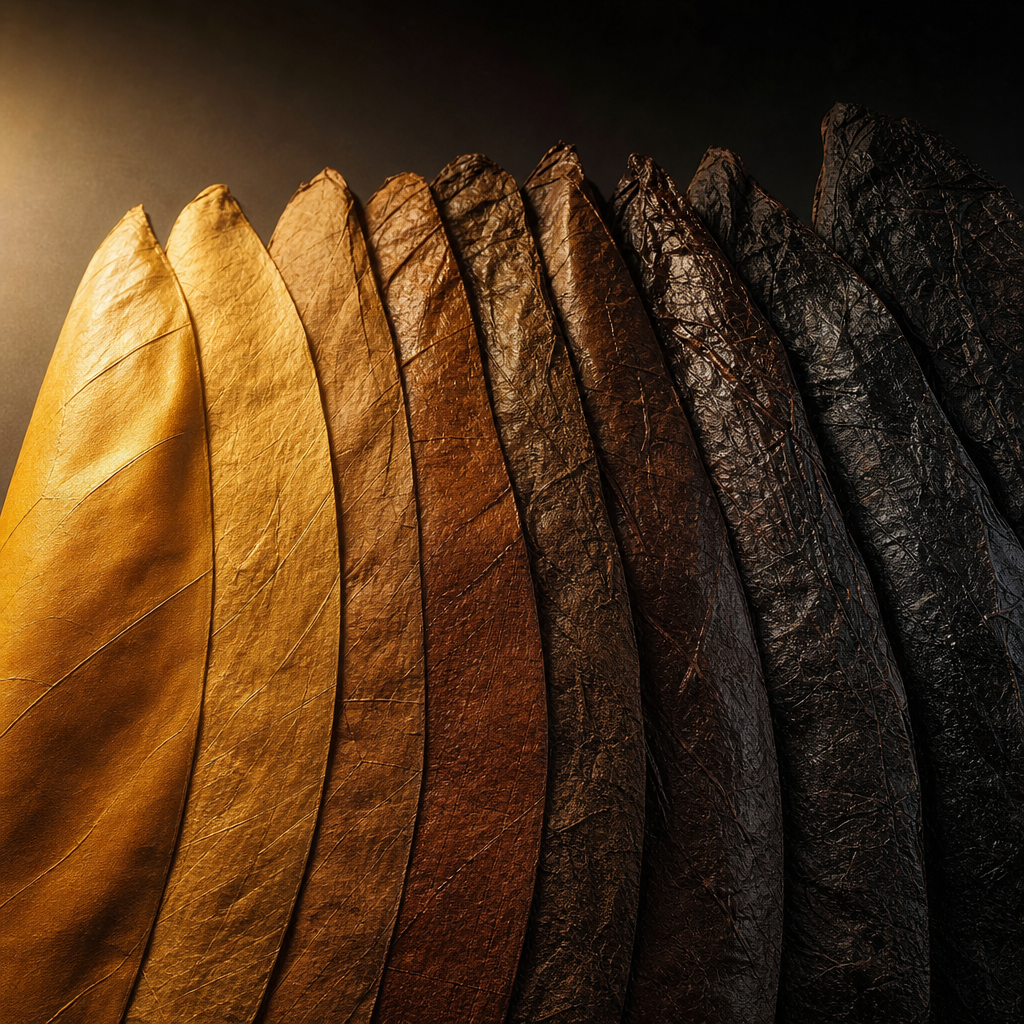
Wrapper color also requires color grading. Factories will box Claro, Colorado Claro, Colorado, Colorado Maduro, Maduro, and other shades to ensure visual consistency within the same box. This is not just for aesthetics; color often reflects fermentation degree and oil condition. After 2006, many markets' preference for dark wrappers increased, but dark does not equal strong; poorly handled Maduro can easily have dull sweetness, burnt bitterness, and uneven combustion. The wrapper is not the cigar's clothing but the tuning fork for aroma entry and burning rhythm.
After rolling, the finished product will rest in the factory for several weeks to months, allowing the wrapper, binder, and filler leaves to rebalance moisture. If boxed immediately after rolling, uneven moisture distribution can lead to a wet front, hot back, or repeated burn line corrections. In the past, Cuban box-packed cigars often showed batch differences, partly related to raw leaves, factory resting, and transportation conditions. The final wait turns a cigar from a collection of parts into a complete work.
How Experienced Enthusiasts Reverse-Engineer Processing Quality from the Finished Product
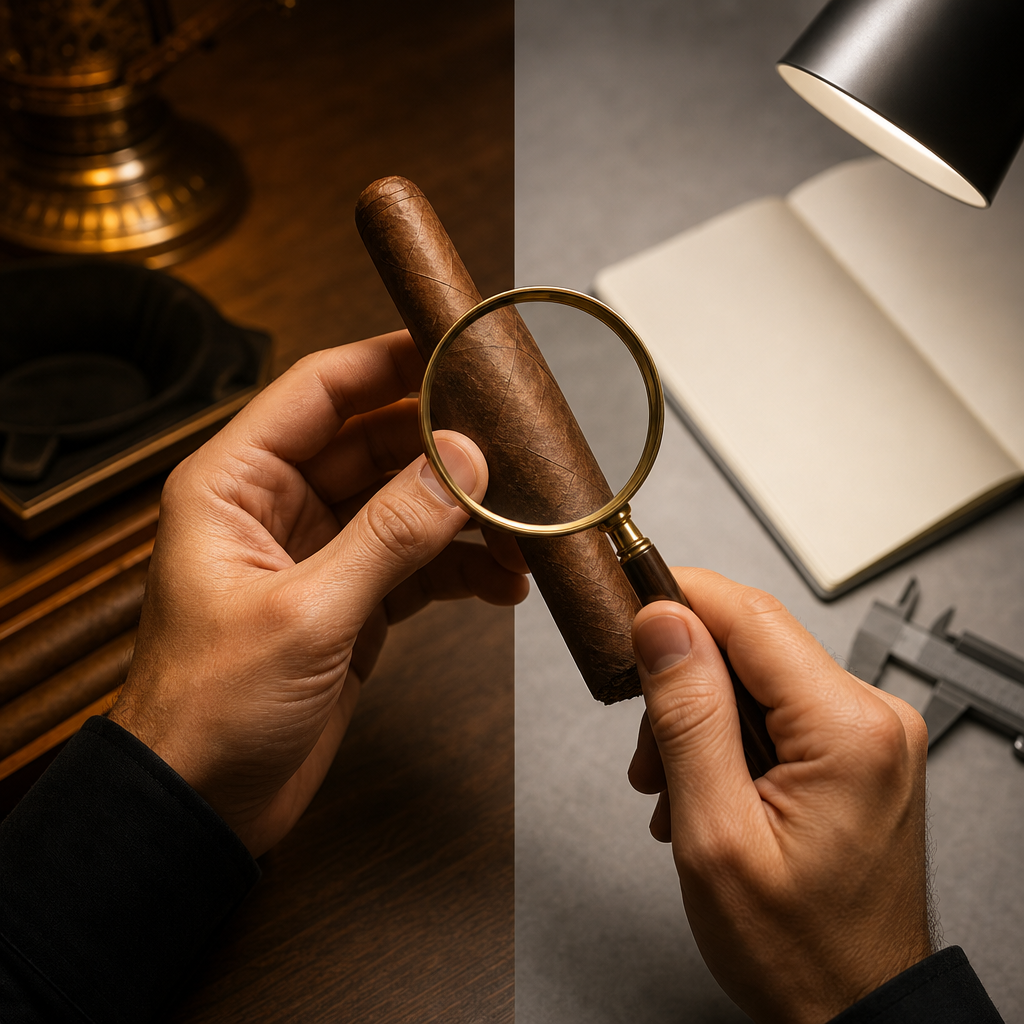
Advanced cigar appreciation is not just about naming leather, coffee, and pepper but about deducing where the problem lies. Before lighting, check if the wrapper's oil sheen is natural; too dry feels like paper, too wet rebounds slowly when pressed; if the foot end leaves are cracked or have large gaps, it may affect combustion. If there is a noticeable ammonia smell, sour, or warehouse mold smell on the cold draw, be cautious.
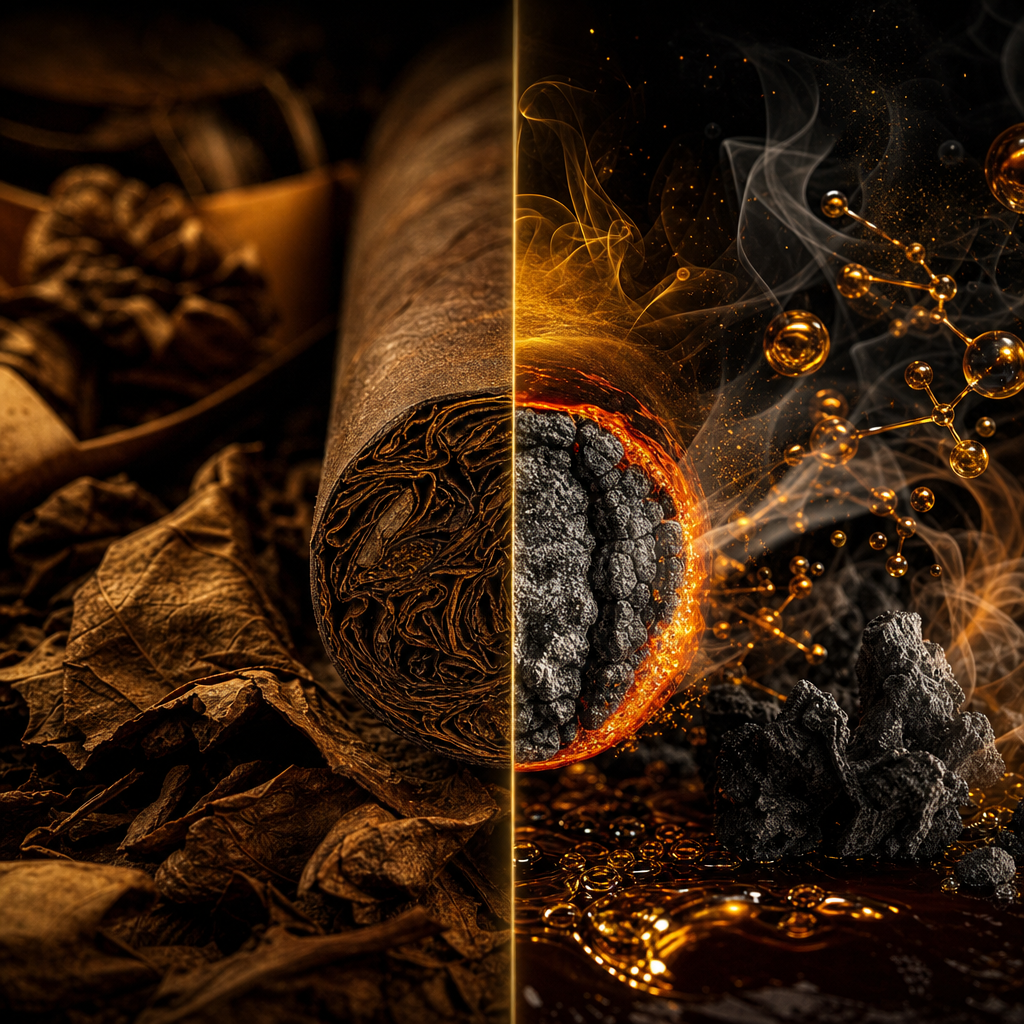
During burning, the ash color and structure also provide clues. A stable ash column does not necessarily indicate high quality, but if it collapses every 1 cm, it may indicate insufficient filling density or poor leaf drying; if the burn line consistently leans to one side, besides storage humidity, it may also be due to wrapper thickness or uneven filler distribution. Overly tight draw is often due to rolling pressure, high humidity, or poor main vein handling. Finished product issues rarely have a single cause, but experienced enthusiasts can use burning phenomena to reverse-engineer processing stages.
I recommend experienced enthusiasts establish their own recording method, not complex but consistent:
- Brand, size, box code, or purchase year.
- Storage humidity and temperature, e.g., 65-69% RH, 18-21°C.
- Pre-light aroma, draw resistance, burn line.
- Flavor and strength changes in the front, middle, and back stages.
- Presence of ammonia, bitterness, dullness, or emptiness.
Recording more than 20 cigars continuously makes differences between the same brand's different batches clear. You'll find that some cigars are not "unpalatable," but the processing or storage didn't reach ideal; some seemingly ordinary models, due to mature leaves, clean fermentation, and stable rolling, withstand long-term comparison. A true enthusiast not only remembers what they like but also knows why they like it.
Frequently Asked Questions
Are older cigar leaves better?
No. Both raw leaves and finished products require proper aging, but time is not a panacea. If harvested too early, dried poorly, or insufficiently fermented, subsequent storage can only soften some sharpness, not restore oil, structure, and cleanliness. Experienced enthusiasts should consider vintage alongside source, storage, and batch condition.
Why do the same brand and model have differences?
Crops cannot be completely consistent. Rainfall, sunlight, harvest day, fermentation pile temperature, roller's touch, and finished product resting time all cause differences. For Cuban cigars, box codes, factories, and vintages are often discussed by experienced enthusiasts because the same model may present distinct personalities in different batches.
Does dark Maduro mean stronger?
Not necessarily. Maduro represents a darker color and processing direction, often with sweetness, cocoa, and coffee notes, but strength still depends on filler leaf proportions. If the filler is mainly Seco and Volado, a dark wrapper can be quite mild; conversely, a light wrapper with a high proportion of Ligero can be very strong.
Does ammonia smell mean the cigar is bad?
Not necessarily, but it indicates the condition may not be ideal. A slight ammonia smell may come from post-fermentation not fully integrating, which can weaken with proper storage and time; if accompanied by sour, moldy, or pungent chemical smells, be cautious. Ammonia smell is an important signal for judging fermentation and aging.
Can storage humidity mask processing issues?
Yes, and it often leads to misjudgment. Too high humidity tightens draw, dulls combustion, and increases bitterness; too low humidity causes wrapper cracking, aroma loss, and fast burning. To compare processing quality, stabilize samples under similar conditions, such as 65-69% RH, before judging.
Does a slight wrapper crack indicate poor quality?
Not necessarily. Transportation and storage can also cause cracks. However, if multiple cigars in the same box have cracks, lifted edges, large color differences, or rough seams, it may reflect unstable wrapper selection, moisture content, or rolling process. The wrapper is a high-cost component, and handling details often reveal brand management levels.
After visiting many regions, factories, and warehouses, I increasingly believe that the charm of cigars lies not in mystery but in honesty at every step. Experienced enthusiasts pursue not flashy terms but the sense of order that arises when leaves mature, fermentation is clean, rolling is stable, and time is right. May you see the complete journey from field to workshop in the flame, ash column, and aroma the next time you pick up a cigar.
—Cigar Prince Wilson Tsai
Smoking is harmful to health. Under 20 years old is not allowed to smoke. Quit smoking hotline: 0800-636363. This article is for reference by adults over 20 years old on cigar culture, preservation, and regulations, not a tobacco advertisement, promotion, or purchase suggestion.