Quick Answer
Smoking is harmful to health. People under the age of twenty must not smoke. Smoking cessation hotline: 0800-636363. This article is provided solely for adults aged twenty and above as a reference on cigar culture, storage, and regulatory knowledge. It is not tobacco advertising, promotion, or purchasing advice.
Quick Answer
For a first cigar, look at size first, then strength, and only then read the flavor descriptions. Cigar size is usually expressed by length and cigar ring gauge. Ring Gauge is measured in units of 1/64 inch; Robusto, Toro, Churchill, and Corona represent common length and thickness formats, and they also broadly affect burn time. Beginner cigars are best approached from Mild to Medium strength and in short to medium sizes, with the principles of not inhaling and keeping a slow pace. Flavor terms such as wood, cedar, cocoa, coffee, nuts, and pepper are mostly metaphors for olfactory and oral sensations; they do not mean flavorings have been added.
Basic Definition/Background
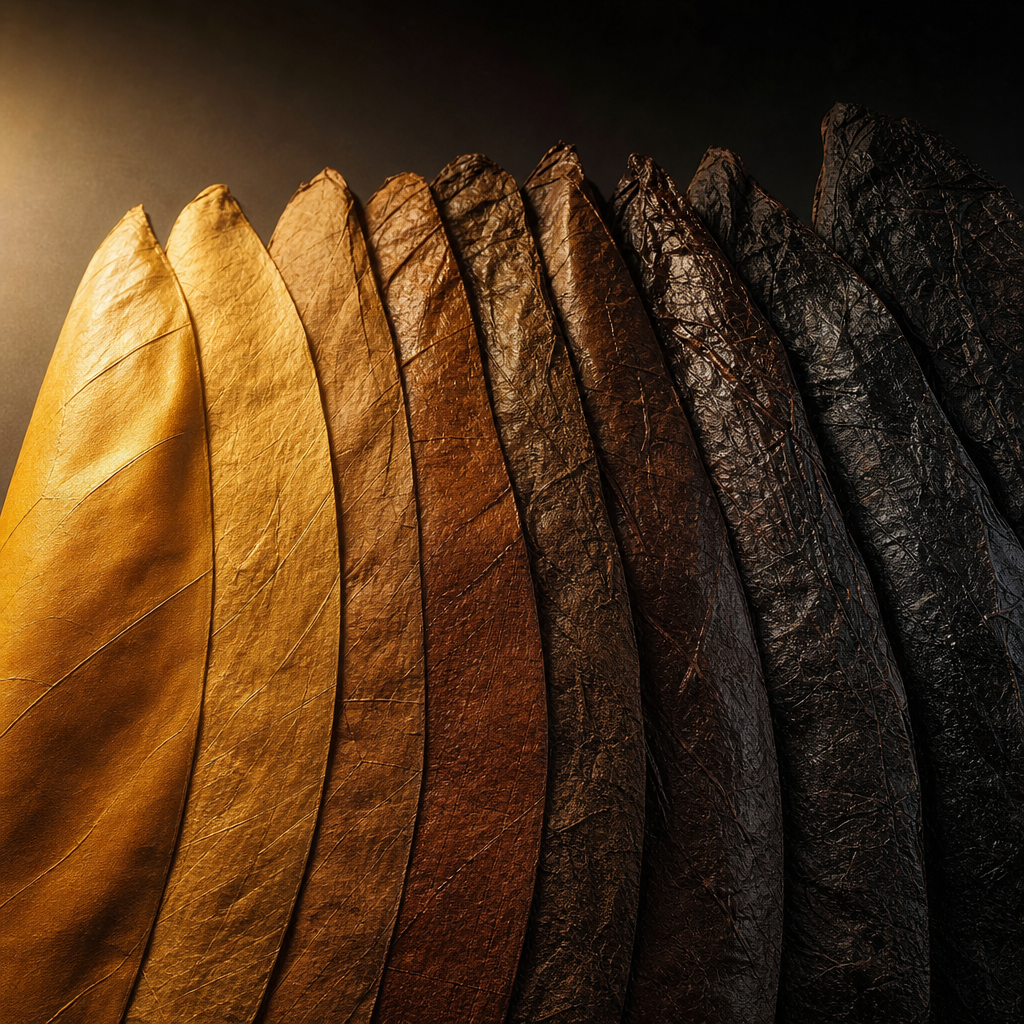
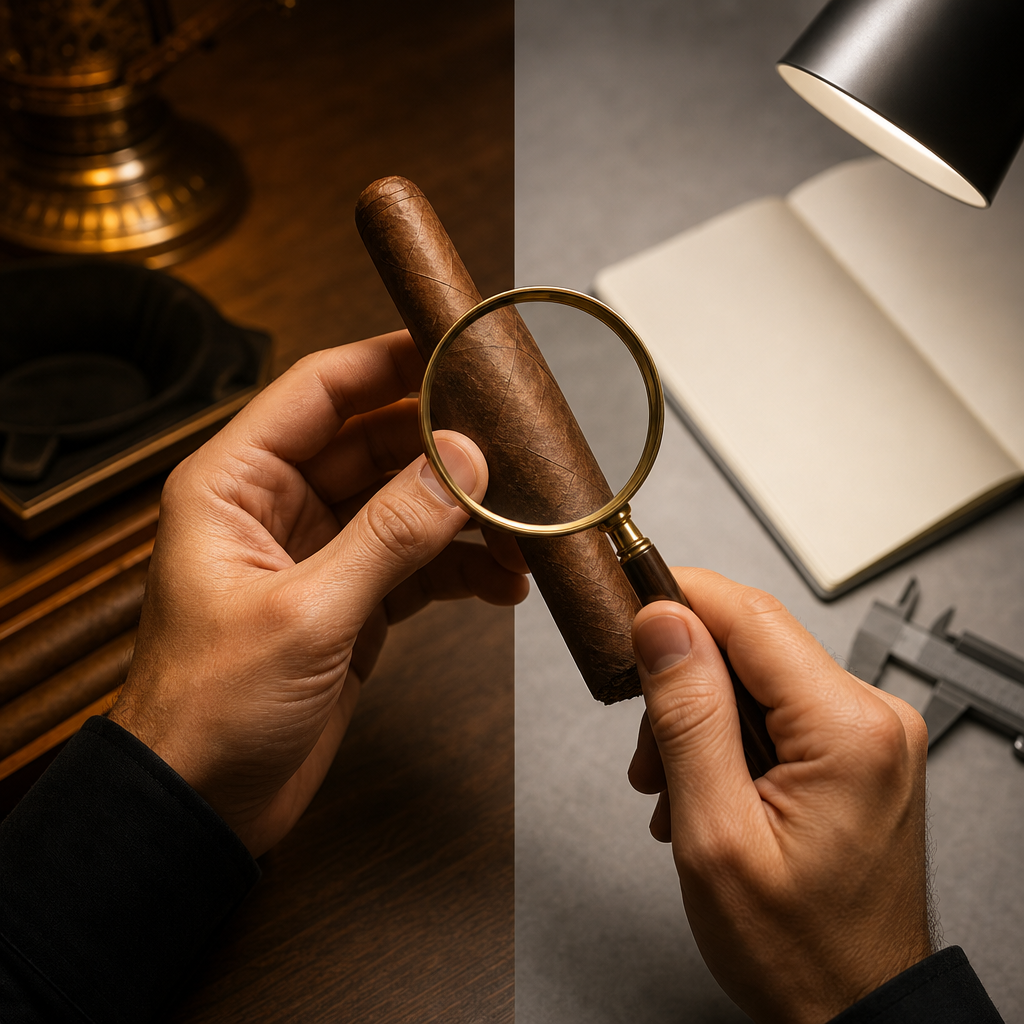
When first encountering cigars, the easiest points to confuse are whether "a larger cigar is necessarily stronger," whether strength equals heavier flavor, and whether flavor descriptions mean that additives are actually present. A cigar is rolled with whole tobacco leaves and is usually composed of filler, binder, and wrapper. Different growing regions, leaf positions, fermentation, and aging time all affect combustion, aroma, and mouthfeel. The first interpretation tool for beginner cigars is the specification label. For example, 5 x 50 means a length of about 5 inches and a cigar ring gauge of 50. 1 inch equals 25.4 millimeters, and ring gauge 50 is 50/64 inch, about 19.8 millimeters.
"Cigar size" is not merely a matter of appearance. Length usually affects how long a cigar can burn, while ring gauge affects the space for the filler blend, burn temperature, and draw resistance. For example, Robusto is commonly around 4 7/8 inches x 50, with a burn time of about 35 to 55 minutes; Churchill is commonly around 7 inches x 47, with a time that may fall between 70 and 100 minutes. In practice, this is still affected by humidity, cut size, and draw speed. Strength is mostly expressed as Mild, Medium, Full, describing nicotine sensation, mouth weight, late-stage pressure, and overall intensity; it is not a ranking of quality.
Key Points
| Concept | What beginners should look at | Common way to interpret it |
|---|---|---|
| Cigar size | Length and cigar ring gauge | Labels such as 5 x 50, 6 x 52, 7 x 47 |
| Cigar strength | Mild, Medium, Full | Observe mouth weight, throat irritation, and bodily response |
| Cigar flavor | Wood, cocoa, coffee, pepper, etc. | Understand through olfactory associations and changes in the first, middle, and final thirds |
| Draw rhythm | Do not inhale, go slowly | About one puff every 45 to 60 seconds, avoiding rapid consecutive draws |
| Beginner direction | Short to medium size, mild to medium strength | Robusto, Corona, and short Toro types are easier to manage |
The point of this table is to break the "first cigar" into several observable factors. Size first determines the time you need to commit and the margin for error in combustion; strength determines whether the body is likely to feel discomfort; flavor descriptions are the language used to read cigar notes. For beginners, there is no need to rush into complex vocabulary. First learn to distinguish categories such as wood, nuts, coffee, and pepper, then gradually understand the first third, middle third, and final third. If the first choice is too long, too thick, or too strong, it is often not a matter of "not knowing how to appreciate it," but that the specification and rhythm are not suitable for a first encounter.
How to Read Cigar Size: Length, Ring Gauge, and Common Formats
Cigar size is usually expressed as "length x cigar ring gauge." Length is mostly shown in inches, while Ring Gauge is measured in units of 1/64 inch. For example, ring gauge 42 is about 16.7 millimeters, 50 is about 19.8 millimeters, and 52 is about 20.6 millimeters. Four common beginner formats include Corona, Robusto, Toro, Churchill. Corona is commonly around 5 1/2 inches x 42, with a burn time of about 35 to 50 minutes; Robusto is commonly around 4 7/8 inches x 50, about 35 to 55 minutes; Toro is commonly around 6 inches x 50 or 52, about 55 to 75 minutes; Churchill is commonly around 7 inches x 47, about 70 to 100 minutes.
These names are not globally identical legal specifications, but long-established industry conventions. As a historical example, the size name Churchill is related to the cigar image of British Prime Minister Winston Churchill, and Romeo y Julieta Churchill has also become a traditional case often cited. However, its mention here is solely for size and cultural background explanation and does not constitute a brand recommendation. As for Robusto, in the latter half of the 20th century it gradually became a format often discussed in many beginner cigar articles, because the required time is not too long and the ring gauge provides a degree of burn stability. For a first encounter, rather than choosing an extra-long size, it is easier to build a sense of size and burn time by choosing a format that can be observed within 45 to 60 minutes.
How to Read Strength and Flavor Descriptions: Mild, Medium, Full, and the First, Middle, and Final Thirds
Cigar strength is usually divided into Mild, Medium, and Full, but this is not a single scale of taste. Mild means the overall nicotine sensation and mouth weight are lower, with less irritation; Medium indicates that strength, aroma, and late-stage presence are in the middle; Full may bring more noticeable tongue spice, throat pressure, bodily burden, and a heavier final third. Beginner cigars are usually not recommended to start from Full. A more suitable direction is Mild to Medium, paired with a short to medium size. If dizziness, nausea, sweating, or hand trembling appears within 10 to 15 minutes of the first cigar, common causes include an empty stomach, drawing too quickly, inhaling into the lungs, excessive strength, or poor ventilation.
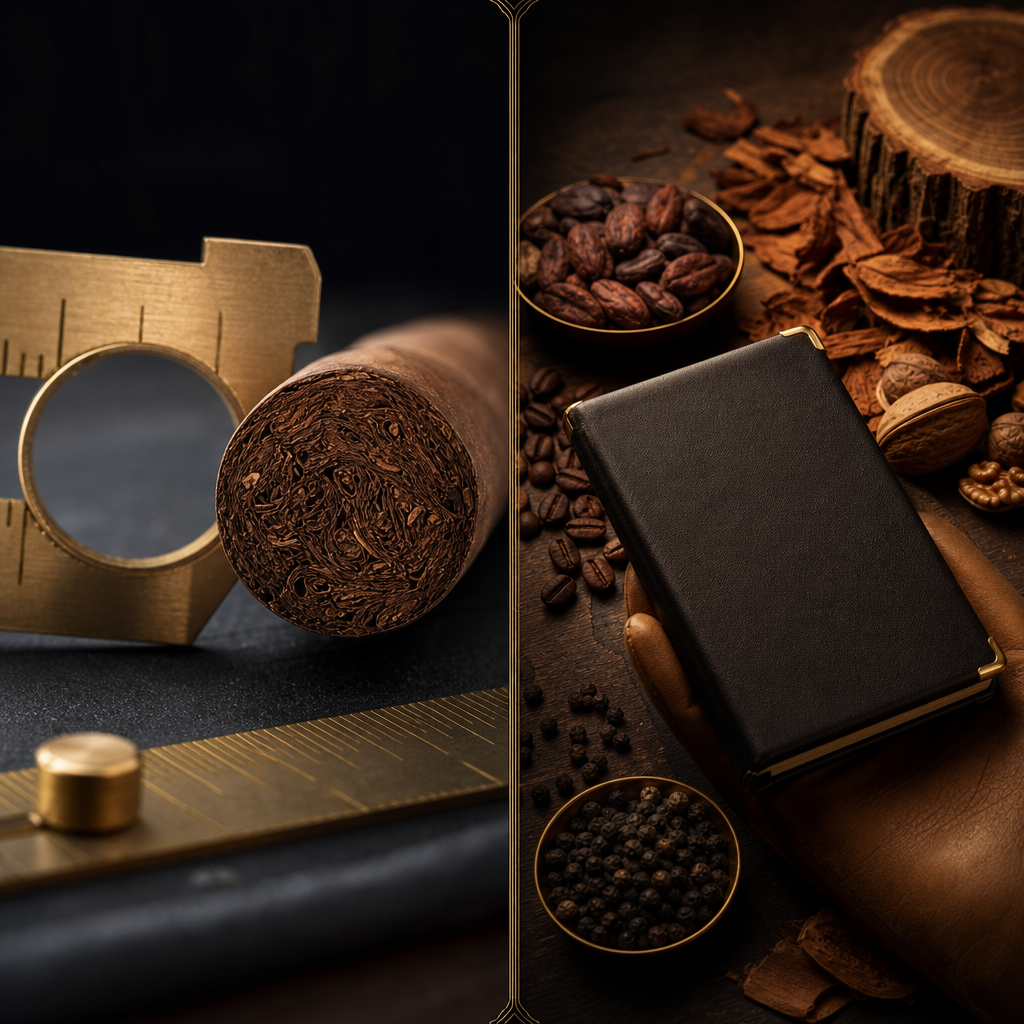
Flavor descriptions are like the sensory terms used in articles about coffee, tea, or whisky. They do not mean that cocoa powder, coffee, or wood chips have been added to the cigar. Wood usually refers to aromas like dry wood, toasted wood, or an old wooden box; cedar often evokes a cigar box and clean wood aroma; leather tends toward a dry, dense scent with a slight animalic quality; cocoa and coffee usually refer to roasted, slightly bitter, dark-toned impressions; nuts may resemble almonds, walnuts, or toasted hazelnuts; pepper refers to a spicy sensation felt on the tip of the tongue or in the nasal cavity. The first third usually refers to about the first third after lighting; the middle third is the more stable core of the flavor; the final third, due to rising temperature and tar accumulation, may become spicier, thicker, or more bitter. Understanding these terms is more practical than memorizing grades.
Practical Notes: How to Choose the First Cigar, Cut, and Basic Lighting
The direction for a first cigar can be considered through "manageable time, tolerable strength, and a size that is easy to maintain." If you have no experience at all, you may consider Corona, Robusto, or shorter Toro types, with a time of about 40 to 70 minutes, which is easier to observe through to completion than Churchill or large Gordo types. Strength is best at Mild to Medium; if you are usually sensitive to nicotine, be even more conservative. In terms of ring gauge, 42 to 52 are all common. Too thin may burn faster and show a more noticeable rise in temperature; too thick requires more time and more stable lighting technique. These are not absolute rules, but ways to reduce frustration in a first encounter.
When cutting, first find the cap line at the head of the cigar. You only need to open enough for a smooth draw; do not cut too deeply, otherwise the wrapper may loosen. Common tools include a double-blade cutter, V-cutter, and cigar punch. A double-blade cut is more intuitive, a V-cut forms a groove, and a cigar punch makes a smaller opening. When lighting, first warm the foot with the outer edge of the flame so that the circumference changes color evenly, then gently rotate the cigar so that the edge and center ignite consistently. Do not press the flame on the same point for a long time, and do not take rapid consecutive puffs as with cigarettes. A rhythm of one puff every 45 to 60 seconds can be used. Do not inhale into the lungs. If there is clear discomfort, stop. An empty stomach, lack of sleep, excessive alcohol consumption, or an enclosed space will all increase the likelihood of discomfort.
Common Mistakes
-
Thinking that the larger the cigar size, the more suitable it is for beginners Large sizes require more time and a steadier rhythm. In a first encounter, they may instead cause misjudgment due to fatigue, uneven combustion, or an overly heavy final third.
-
Treating cigar strength as a quality ranking Mild, Medium, and Full are only classifications of intensity and bodily sensation, not higher or lower grades. Mild strength can also have clear wood, nut, and cream impressions; full strength is not necessarily more complex.
-
Believing that flavor terms mean added flavorings Wood, cedar, leather, cocoa, coffee, and pepper are mostly sensory associations. Their sources may include tobacco leaf variety, fermentation, aging, burn temperature, and wrapper characteristics.
-
Cutting too deeply or pulling the cap Cutting only needs to open the cap end. Cutting too deeply may cause the wrapper to loosen, leading to leaf fragments or structural instability during the draw. If unsure, cut less first, then adjust slightly according to resistance.
-
Lighting only the center and not the edge If only the center of the foot ignites, it can easily form uneven burning or tunneling. The outer ring should be heated evenly first, then confirm that the whole cross-section shows a consistent ignition point.
-
Drawing too quickly and inhaling into the lungs Cigars are not cigarettes. Rapid consecutive drawing raises the burn temperature, increases bitterness, and also makes discomfort reactions such as dizziness, nausea, and sweating more likely.
Frequently Asked Questions (FAQ)
Should the first cigar be a Robusto or a Corona?
If you only want to understand the basic structure in a shorter time, both Corona and Robusto can serve as beginner comparisons. Corona is commonly 5 1/2 x 42, with more direct mouthfeel changes and a burn time of about 35 to 50 minutes; Robusto is commonly 4 7/8 x 50, with a wider ring gauge, usually a more stable burn temperature, and a time of about 35 to 55 minutes. For a first encounter, you can avoid overly long sizes first. The key is whether you can maintain a slow rhythm and avoid inhaling.
Does a larger cigar Ring Gauge number mean it is stronger?
Not necessarily. Cigar ring gauge is only a diameter unit, calculated in 1/64 inch. Ring gauge 50 is about 19.8 millimeters. Strength is mainly affected by tobacco leaf position, blend, fermentation, and aging condition. A larger ring gauge may accommodate more filler combinations, and the burn temperature may also be lower, but it does not mean it must be stronger.
How should Mild, Medium, and Full be chosen?
Beginners usually find it easier to observe from Mild to Medium. Mild is more suitable for those sensitive to nicotine, first-time encounters, or people who want to learn size and lighting first; Medium suits those who can already manage rhythm and want to distinguish flavors such as wood, nuts, and coffee; Full is not recommended as a first cigar because later-stage reactions may be more noticeable.
Are the cocoa, coffee, and leather in flavor descriptions real tastes?
They are sensory metaphors and do not mean that cocoa, coffee, or leather has been added. Cocoa often refers to roasted, slightly bitter, dark-toned impressions; coffee leans toward associations of roasted aroma and bittersweetness; leather is a dry, dense scent with a slight animalic quality. When reading flavor terms, understand them as directions rather than precise ingredients.
How are the first, middle, and final thirds divided?
A cigar can be viewed as three equal parts. The first third is the first third after lighting, where wood, herbs, nuts, and similar notes are often clearer; the middle third is the more stable core of the flavor, where associations such as coffee, cocoa, or sweet aroma may appear; the final third often becomes spicier and thicker due to increased temperature and accumulated substances, and bitterness is also more likely to appear.
Why can smoking a cigar cause dizziness and nausea?
Common causes include an empty stomach, drawing too quickly, inhaling into the lungs, excessive strength, an overly large size, poor ventilation, or poor physical condition. Cigars should be held in the mouth at a slow rhythm and not inhaled. If dizziness, nausea, sweating, or palpitations occur, stop immediately, drink water, and leave the area where smoke is concentrated.
Do cigars need to be stored at a specific humidity to be suitable?
Common cigar storage targets are about 65% to 72% relative humidity and a temperature of about 16 to 20°C. In practice, adjustments are made according to regional climate and container stability. If too dry, the wrapper may crack and the cigar may burn too quickly; if too humid, drawing may be difficult and combustion unstable. Long-term storage can be called aging, but aging results are affected by conditions and cannot be guaranteed to be more suitable for everyone.
Should the first cigar be paired with a beverage?
For a first encounter, the most conservative approach is to prepare room-temperature water, avoid an empty stomach, and also avoid using alcohol to mask bodily reactions. Beverage pairing is not a necessary condition for beginners. For newcomers, understanding size, strength, flavor terms, and rhythm is more important than pursuing complex pairings.
Smoking is harmful to health. People under the age of twenty must not smoke. Smoking cessation hotline: 0800-636363. This article is provided solely for adults aged twenty and above as a reference on cigar culture, storage, and regulatory knowledge. It is not tobacco advertising, promotion, or purchasing advice.
- Cigar Prince Wilson Tsai