The Emotional Connection of Cigar Tasting: How to Deepen Your Taste Through Delicate Sensory Experiences
The Emotional Connection of Cigar Tasting: How to Deepen Your Taste Through Delicate Sensory Experiences
The taste of cigars is not just a set of skills to distinguish wood, leather, coffee, and pepper; it is more like a slow self-dialogue. Once you understand the basics of tasting and know not to inhale the smoke into your lungs, the next step is to learn how to let your senses, memories, and emotions work together.
As the editor of "Cigar Bible," I often say: true mature taste is not about making flavors sound complex, but about reading time, occasion, and your state in a cigar. In this article, I want to start from psychology and the five senses to discuss how to make the cigar experience deeper and more layered.
Emotional Connection is Not Mysticism, But the Accumulation of Sensory Memories
Many beginners think that "tasting with emotion" sounds too abstract, but psychology has long explained that the distance between smell and emotional memory is very close. Scent signals directly affect the limbic system, especially the amygdala and hippocampus, so a hint of cedar, cocoa, hay, or leather can instantly take you back to a trip, a study, or a quiet moment after dinner. The emotional connection of cigars comes from the memory network formed by repeatedly pairing flavors with life experiences.
In my experience of organizing tasting notes in 2020, the same Cohiba Siglo VI was noted by one friend as "honey, cream, toasted bread," while another noted it as "the smell of my father's old wallet." The former is flavor language, the latter is emotional language, and both are effective. The difference is that emotional language is more likely to be remembered long-term and helps you distinguish the psychological position of different cigars.
I suggest you establish a "dual-track note": write objective senses in the left column, such as burn, intensity, aroma, and aftertaste; write your current mood, location, weather, music, and companions in the right column. In 2019, a beginner used this method to record 30 cigars, and three months later, he could clearly say that Partagás Serie D No.4 reminded him of a lively banquet, while Hoyo de Monterrey Epicure No.2 was suitable for a quiet afternoon. When flavors are marked by emotions, your taste is no longer just a judgment of the tongue, but a choice of complete memory.
Visual: Learn to Read the Appearance Before Lighting
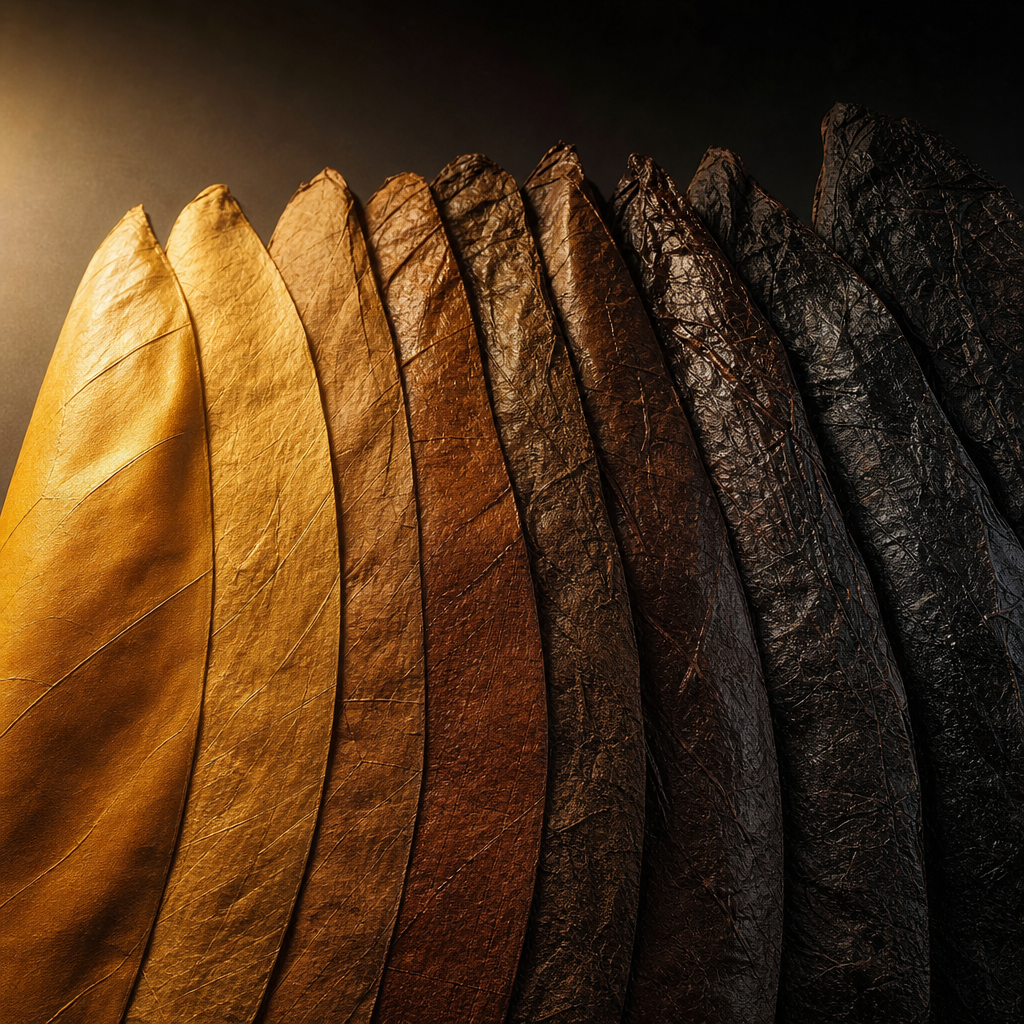
Vision is the first sense to enter the mind. Before lighting, the color of the wrapper, oiliness, leaf veins, rolling lines, and cap trimming already suggest the personality of the cigar. For example, with H. Upmann Magnum 46, if the wrapper shows a uniform Colorado hue, fine oil, and a resilient touch, it usually leads one to expect elegant wood, nut, and tea notes. This expectation is not superstition but the brain building "sensory predictions."
However, vision can also deceive. Dark Maduro wrappers often lead beginners to believe the intensity must be high, but in 2016, I compared Padrón 1964 Anniversary Maduro with some stronger Cuban Robustos, and the former had a noticeable sweetness and cocoa, with a rounded taste; the latter might have more direct spicy stimulation. Looking at a cigar is not about drawing conclusions first, but about establishing a hypothesis to be verified.
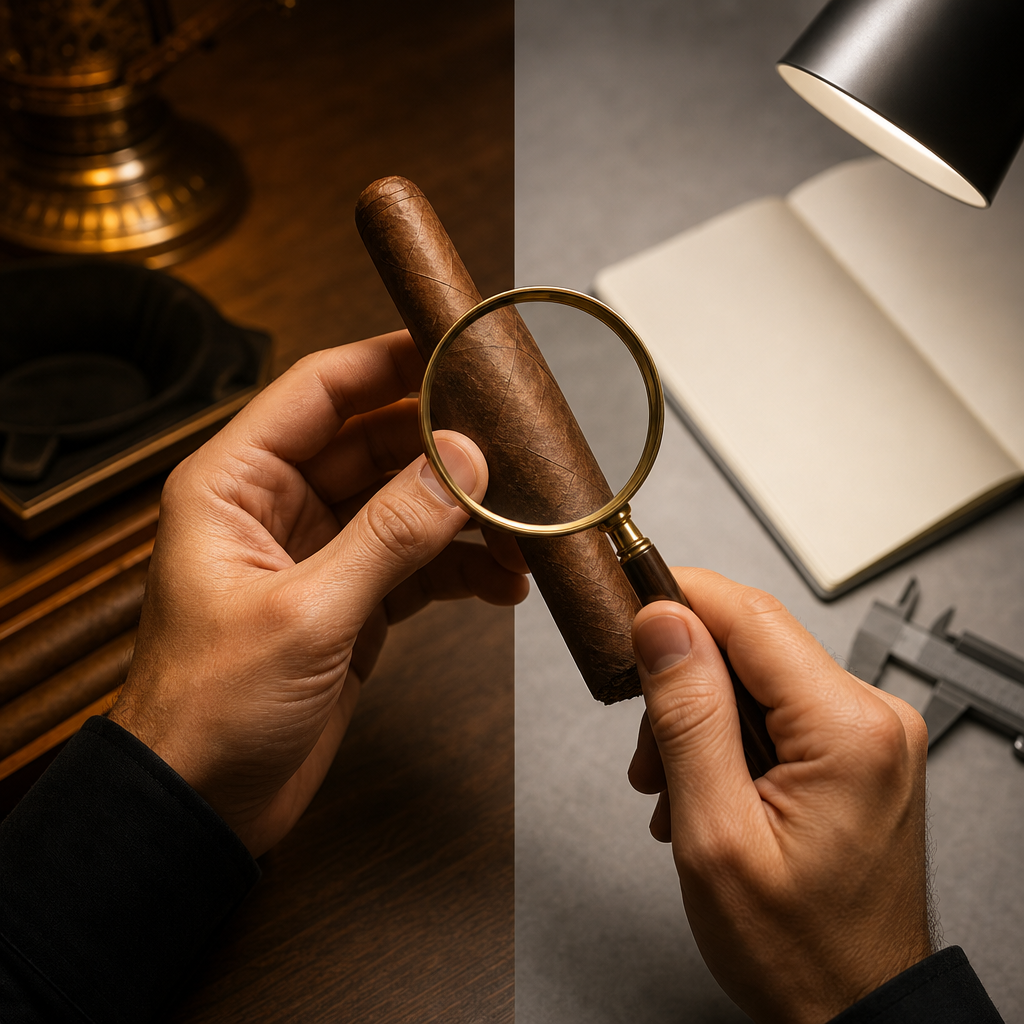
I suggest completing a visual observation in 60 seconds before lighting: first, check if the overall color is consistent, then check for any damage to the wrapper, then check if the foot is evenly filled, and finally check if the band and size match your memory of the brand style. Romeo y Julieta Churchill is about 178 mm, ring gauge 47, visually conveying a slender, formal ceremonial feel; Montecristo No.2 is about 156 mm, ring gauge 52, with a torpedo head naturally suggesting concentration, precision, and rhythm. Write down these visual impressions, and later compare them with the actual flavors, and you will gradually develop your judgment accuracy.
Smell: Dry Smell, Cold Draw, and Three Stages of Aroma After Lighting
Smell is the most underestimated part of cigar tasting. Before lighting, the dry smell usually reveals wood, herbal, cocoa, spice, or a faint ammonia scent from the wrapper; the foot is often more direct, possibly with grain, earth, nut, or dried fruit. During the cold draw, air passing through the filler brings unburned aromas into the mouth, allowing you to first experience sweetness, ventilation, and structure. Dry smell and cold draw are not formalities; they are key steps in establishing the first flavor map.
For example, with Bolívar Royal Corona, when in good condition, the dry smell might carry damp earth, coffee beans, and wood; the cold draw might reveal slightly sweet spices. After lighting, the front section is often more impactful, the middle section thickens, and the back section becomes more spicy and mineral. If you only start recording after lighting, you will miss the transition from static to burning aromas. This is like reading only the second half of a novel; the plot is there, but half the setup is missing.
I often use "three olfactory freeze frames" to train beginners: smell once after cutting, once 5 minutes after lighting, and once in the middle section, about 25 to 35 minutes in. Write only 3 words each time, don't be greedy. For example, "cedar, almond, white pepper" or "earth, coffee, brown sugar." This limitation forces you to focus on key points and reduces the pressure to pile on adjectives to seem professional. After accumulating over 50 times, you will find yourself beginning to distinguish brand lines: Cohiba's bean aroma and creaminess, Partagás's spiciness and thickness, Hoyo's gentle woodiness will all become clearer.
Taste and Mouthfeel: Breaking Down "Good or Bad Smoke" into Trainable Language
Beginners often describe taste as "smooth" or "strong," but these words are too broad to help you improve. Taste can at least be broken down into sweet, sour, bitter, salty, umami, and mouthfeel aspects like oiliness, dryness, spiciness, temperature, and aftertaste length. For example, Trinidad Vigía often gives a rounded sweetness and creamy mouthfeel; Ramon Allones Specially Selected is often remembered for dried fruit, wood, and a thicker middle to back section. The more you can break down vague feelings, the more you can truly know what you like.
I suggest using the table below for a quick 1 to 5 score, without needing to write a long essay each time. The key is to consistently use the same standard, so it has comparative value after three months.
| Sensory Item | 1 Point Represents | 3 Points Represents | 5 Points Represents | Reference Description |
|---|---|---|---|---|
| Sweetness | Almost None | Noticeable in the Middle | Obvious and Sustained | Honey, Brown Sugar, Ripe Fruit |
| Spiciness | Very Low | Layered | Strong and Prominent | White Pepper, Cinnamon, Clove |
| Oiliness | Dry | Balanced | Thick and Smooth | Cream, Nut Oil |
| Aftertaste | Within 10 Seconds | About 30 Seconds | Over 1 Minute | Wood, Cocoa, Tea Notes |
| Complexity | Single Line | With Changes | Multiple Transitions | Obvious Differences in Front, Middle, and Back |
In a blind tasting exercise I did in 2021, 5 participants faced the same Montecristo Edmundo, with some giving a sweetness score of 4, while others only gave 2. Upon reviewing the differences, the reason was not about who was right or wrong, but that some paired it with black coffee after dinner, while others were on an empty stomach and drank sparkling water. Taste is affected by the previous meal, drink, fatigue, and oral condition. Scores are not absolute truths but tools to help you understand your state and interaction with the cigar.
Touch and Rhythm: How Feel, Smoke, and Time Affect Emotions
The touch of a cigar exists not only in the fingers but also in the lips, tongue surface, and breathing rhythm. Picking up a well-rolled, evenly resilient cigar creates a sense of stability psychologically; if you feel parts that are too hard or too soft, unease arises first. This emotion will affect your subsequent judgment, so learn to separate "worry" from "actual performance" in your records. Punch Punch or Juan López Selección No.2, these medium-sized cigars, are often suitable for tactile training because the time is not too long, and the changes are obvious enough.
Rhythm is equally crucial. Many beginners take a puff every 20 to 30 seconds, resulting in increased temperature, bitterness, and a sharper back section. The ideal rhythm is often about 60 to 90 seconds per puff, adjusted according to the burn condition. You will find that when the rhythm slows down, the smoke becomes cooler, sweetness and woodiness are more likely to emerge, and the mood becomes calmer. Cigars are not about chasing flavors forcefully but about letting flavors unfold themselves through pauses.
I often divide a Robusto's 50 minutes into three sections: the first 15 minutes to observe the opening, the middle 20 minutes to judge the main body, and the last 15 minutes to see if the balance is maintained. If it's a Double Corona, like Hoyo de Monterrey Double Coronas, it might take 90 to 120 minutes, and the emotional rhythm is more like a long conversation. At this time, phone notifications, work messages, and environmental noise will interrupt the connection. Beginners who want to deepen their experience can first choose sizes that last 45 to 70 minutes, allowing themselves to practice a stable rhythm within a controllable time, rather than challenging too long a format at the start.
Occasion, Music, and People: How Emotional Background Shapes the Same Cigar
The same cigar can seem like two completely different works in different settings. In 2018, I recorded a Quai d’Orsay No.50 on a rainy afternoon, paired with unsweetened black tea, feeling it was elegant, citrus peel, and light wood; the following summer night, after dinner with friends, the same cigar felt more creamy, malty, and sweet. The cigar didn't become mysterious; it was the emotional background, dietary residue, environmental humidity, and conversation rhythm that changed the perception. Taste does not occur in isolation; it is always shaped by the occasion and interpersonal atmosphere.
Music can also affect taste attention. Slow jazz makes it easier to notice the aftertaste, classical strings may amplify elegance, and strong rhythm music might unconsciously speed up actions. If you want to make more rigorous records, at least keep three conditions stable: drink, time period, and ambient volume. For example, for three consecutive weeks, smoke different brand Robustos an hour after dinner with room temperature water, and the differences between Partagás, Romeo y Julieta, and H. Upmann will become clearer.
Don't overlook the influence of "people" either. When with experienced friends, beginners are easily led by vocabulary; when alone, they might overly doubt their judgment. My suggestion is to first independently write down 5 words, then listen to others share. This way, you retain your first impression while absorbing others' language. If it involves collection topics, I also remind: some limited editions, regional editions, or specific years do have market discussions, but collection appreciation does not guarantee appreciation, still depending on source preservation and market. Emotional connections can be precious, but investment judgments must remain calm.
Establishing Personal Rituals: From Sensory Records to Mature Taste
What truly enhances taste over the long term is not an occasional amazement but a repeatable personal ritual. My ritual is simple: observe for 1 minute before cutting, dry smell and cold draw for 2 minutes, don't rush to score in the first 5 minutes after lighting, start recording the main axis in the middle section, and write a summary 10 minutes after finishing. This process is not complicated but allows you to shift from impulsive evaluation to stable understanding. The purpose of the ritual is not decoration but to awaken the senses in an orderly manner.
You can start with the following checklist, and after continuously doing 10 cigars, you will see the difference:
- Record the date, time, temperature, and approximate humidity.
- Write down the brand, model, size, and acquisition year.
- Observe the wrapper, oiliness, and elasticity before cutting.
- Dry smell the foot and wrapper, writing 2 to 3 words each.
- Record the main flavor and aftertaste once in each of the front, middle, and back sections.
- Write an emotional description at the end, such as "suitable for quiet reading" or "suitable for post-dinner chat."
For example, if you continuously record 10 common Robustos in 2024, including Cohiba Robustos, Partagás Serie D No.4, Romeo y Julieta Short Churchills, Hoyo Epicure No.2, you will start to know if you prefer "creamy sweetness" or "spicy thickness," "gentle opening" or "mid-section explosion." This self-awareness is more important than memorizing brand reviews. The core of mature taste is being able to honestly say why you like something, not just saying others think it's good.
Common Questions
I already know basic tasting, what should I practice next?
First, practice "segment description." Divide a cigar into the front, middle, and back sections, writing 3 flavor words and 1 emotional word for each. For example, the front section is cedar, cream, white pepper, emotion is relaxed; the middle section is nut, coffee, leather, emotion is focused. Don't rush to use fancy vocabulary; first, make the changes clear.
Why can I smell aromas but can't describe the taste?
This is common because smell is better at recognizing details than taste. You can use "categories" instead of precise nouns: first determine if it's wood, sweet, spicy, herbal, earthy, or roasted, then slowly subdivide into cedar, honey, cinnamon, hay, damp earth, coffee. After 20 to 30 training sessions, the language will naturally increase.
Will pairing drinks interfere with judgment?
Yes, so it depends on the purpose. If you want to establish a brand benchmark, it's recommended to use room temperature water or light tea to reduce interference; if it's for leisure enjoyment, coffee, rum, whiskey can bring pleasant interactions. After 2007, many cigar dinners often paired single malt with Maduro, but sweetness is easily amplified, so note it in the record.
Does a cigar being too spicy mean it's of poor quality?
Not necessarily. Spiciness can come from the tobacco blend, size, humidity, burn temperature, or your pace being too fast. First, slow down the frequency to 60 to 90 seconds per puff and ensure the cigar is not too dry. Brands like Partagás or Bolívar often have more noticeable spiciness; the key is whether the spiciness has layers, not just pure stimulation.
How long does aging need to make the emotional connection deeper?
Time itself does not automatically create goodwill, but stable preservation will make flavors more integrated. For many Cuban cigars, 3 to 5 years often show softer edges; over 10 years depends more on source, humidity, and individual condition. If you store a box of cigars, it's recommended to record one annually, observing the changes in the same brand over time.
Is it better to taste alone or with friends?
Both are important. Solitude can establish an honest first impression, while exchanging with friends can expand language. My approach is to first quietly write down my 5 key words, then exchange views. This way, you won't be led by others, and you can learn new metaphors and observation angles.
My view is simple: the most fascinating aspect of cigars is not describing all flavors like exam answers, but that it slows you down, allowing you to hear your senses again. When a cigar can connect with a certain night, a book, a conversation, or a silence, it is not just a tobacco work but a coordinate of memory. May you establish a clearer and more gentle taste in every delicate observation.
—Cigar Prince Wilson Tsai
Smoking is harmful to health. Under twenty years of age, smoking is prohibited. Quitline: 0800-636363. This article is intended for adults over the age of twenty as a reference for cigar culture, preservation, and regulatory knowledge, not as tobacco advertising, promotion, or purchase advice.