The Evolution of Cigar Craftsmanship: From Hand-Rolling to Automation
The Evolution of Cigar Craftsmanship: From Hand-Rolling to Automation
The evolution of cigar craftsmanship has never been a simple dichotomy between "handmade" and "machine-made." What true aficionados care about is how the tobacco leaves are processed, whether the rolling tension is stable, if the burn line is clean, and whether the same cigar maintains its brand character across different years and batches.
As the editor of "Cigar Bible," I often regard cigars as a "tactile precision industry": it requires the patience of agriculture, the touch of craftsmen, and the data of modern quality control. Discussing the evolution of craftsmanship today is not about nostalgia or blind faith in machinery, but about re-understanding where quality comes from.
From Workshop to Factory: The Timeline of Cigar Craftsmanship
In the 19th century, Havana was a crucial stage for the formation of modern handmade cigar craftsmanship. Partagás was founded in 1845, and H. Upmann can be traced back to 1844. These brands established not just trademarks but also a workshop system: leaf selection, stemming, blending, rolling, shaping, and boxing, with each stage completed by different skilled hands. The traditional value of cigars lies not just in "handmade" but in a long-accumulated division of labor and judgment.
By the 20th century, industrialization brought more layers to cigars. From the 1910s to the 1930s, the European and American markets had already widely used machinery to process short-filler cigars and small-sized products. After the political changes in Cuba in 1959, many techniques and families moved to the Dominican Republic, Nicaragua, and Honduras, turning the craft centers into competitive regions. The birth of Cohiba in 1966 and Davidoff's shift to the Dominican Republic in the 1980s are markers of this craft transfer.
The "Cigar Boom" of the 1990s led to a rapid increase in production. Between 1994 and 1997, the demand in the U.S. market surged, and some new brands sacrificed stability for production capacity, prompting aficionados to refocus on factory quality control. After 2000, draw testing machines, humidity monitoring, and batch tracking became more common. The key to modern high-end cigars is not rejecting tools but letting tools serve the judgment of craftsmanship.
The Irreplaceability of Hand-Rolling: Touch, Tension, and Draw
The core of a fully handmade long-filler cigar lies in the roller's real-time judgment of the elasticity and humidity of the leaves. Take the common Robusto, for example, which is about 124 mm long with a ring gauge of 50, and usually consists of several filler leaves from different positions. If the ligero is packed too densely, the burn will be slow, and the draw resistance will be high. If the seco and volado proportions are imbalanced, the aroma layers and burn stability will be affected. These are details that cannot be solved by molds alone.
Traditional rolling methods like entubado involve rolling each filler leaf into small tubes before bundling them, aiming to maintain airflow channels. The book style is more efficient, but if the roller lacks touch, it can easily lead to leaves being packed too tightly. Cuban, Nicaraguan, and Dominican factories each have their habits. The structure of the Padron 1926 Series is often praised by aficionados, partly because its burn stability and draw resistance have remained within a predictable range for years.
The advantage of hand-rolling lies in its ability to handle the "irregularities" of the leaves. Leaves from the same farm, year, and plant but different heights can vary in thickness, oil content, and elasticity. A truly excellent roller doesn't make every cigar identical but adjusts the different leaves to achieve a similar burn and flavor rhythm. This dynamic adjustment is why high-end cigars still rely on human hands.
Automation Is Not Synonymous with Cheap: Three Levels of Mechanization
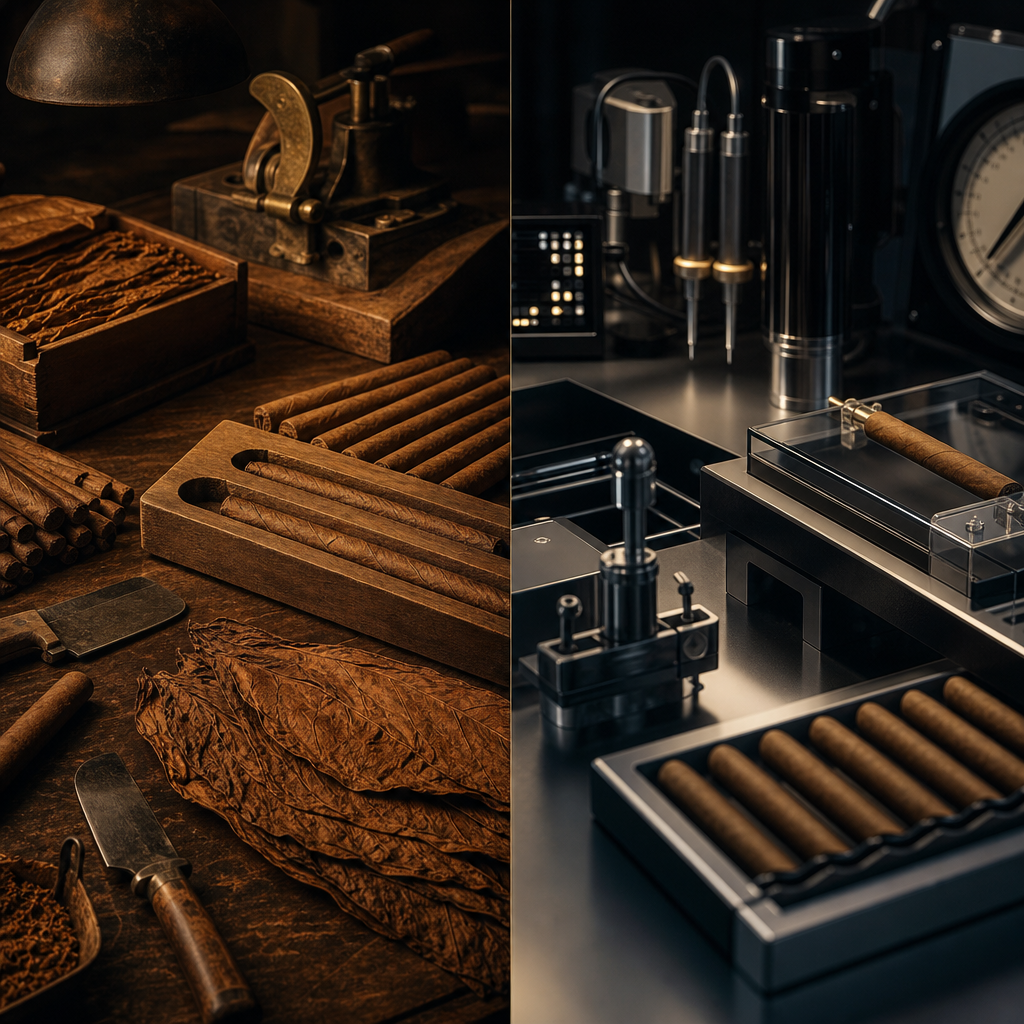
When discussing automation, aficionados must first distinguish three things: leaf processing automation, semi-mechanical assisted rolling, and fully mechanical short-filler production. The first is common in fermentation room temperature and humidity monitoring, grading records, and draw resistance testing. The second may use mechanical assistance to make bunches or control dimensions. The third is mostly used for mass-market small cigars, short-filler cigars, or machine-made products. The impact of these three on quality and flavor is entirely different.
Take J.C. Newman's Tampa factory in the U.S., for example, which dates back to 1895 and spans both handmade and mechanized processes. Small machine-made cigars common in the European market pursue consistency, speed, and stable pricing. These products should not be directly compared with Arturo Fuente OpusX or Davidoff Millennium Blend because the raw material specifications, filler forms, and target markets are different.
What is more worth discussing is "assisted automation" in high-end handmade cigars. For example, draw testing machines will check resistance after the cigar is completed. If the values deviate from the factory standard, they are discarded or rechecked. The most valuable aspect of automation is not to replace the roller but to catch problems that were previously discovered through experience with data in advance. For aficionados, this means increased batch stability, but it may also make some brand styles more conservative.
How Quality Control Rewrites Flavor Stability
Before the 1980s, many factories' quality control still heavily relied on master inspections and sampling judgments. After the 1990s, especially in large factories in the Dominican Republic and Nicaragua, they began to systematically record leaf origins, fermentation batches, roller codes, and shipment batch numbers. Aficionados who have compared the same brand from different years will find that the "failure rate" of many high-end lines has significantly decreased after 2005.
| Quality Control Item | Traditional Method | Modern Method | Impact on Aficionados |
|---|---|---|---|
| Draw Resistance | Master’s touch judgment | Draw testing machine measurement | Reduced proportion of too tight or too loose |
| Humidity Management | Warehouse experience control | Sensors and record sheets | Improved burn stability |
| Leaf Tracking | Oral or simple marking | Batch coding | Traceable problem source |
| Appearance Grading | Human eye selection | Human eye plus standard samples | More controllable color difference and damage |
The most direct change brought by quality control is "stability," but stability does not equal more soul. The charm of some old Cuban boxes comes from year differences, leaf fluctuations, and handmade traces, but it also comes with risks of blockage, uneven burn, and mold spots. Modern quality control makes high-end cigars more reliable, but it also requires brands to find a balance between stability and personality.
I often suggest aficionados do horizontal comparisons: for the same Toro size, observe the structural differences between Padron 1964 Anniversary, Oliva Serie V Melanio, and Davidoff Nicaragua. The former often has solid lines, the middle has obvious sweet and spicy aromas, and the latter emphasizes clean layers. These differences come not only from the formula but also from the factory's different settings for humidity, rolling, and quality control tolerance.
The Evolution of Leaf Processing: Fermentation, Grading, and Aging
The evolution of cigar craftsmanship cannot only be seen at the rolling table but also in the leaf warehouse. After tobacco leaves are harvested, they need to go through drying, fermentation, grading, and aging. Among them, temperature control of the fermentation pile is particularly important. Traditionally, masters judge the timing of turning the pile by touch and smell, while modern factories often use thermometers and humidity records to avoid overheating, which can "cook" the leaves or leave ammonia residue. The differences in leaf material among the three regions of Estelí, Jalapa, and Condega in Nicaragua require different processing rhythms.
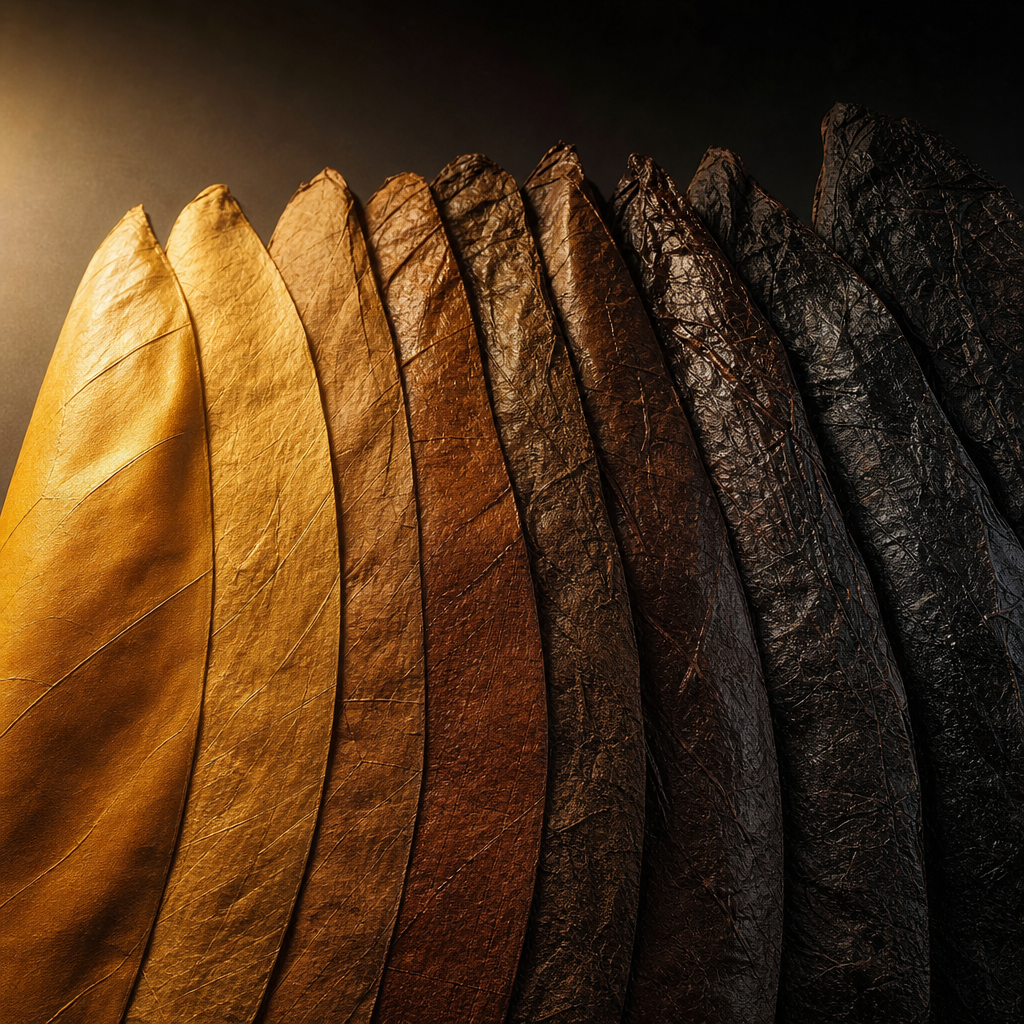
For wrappers, Connecticut Shade, Ecuador Habano, Mexican San Andrés, and Cameroon have significant differences in thickness and oil content. Cameroon has fine veins and sensitive elasticity, which can easily break if not handled well. San Andrés is dark and oily, requiring more delicate fermentation and aging control. The modernization of leaf processing truly enhances predictability rather than making flavors monotonous.
Brand cases can also illustrate differences. Since its debut in the mid-1990s, Arturo Fuente OpusX has made the Dominican puro an important topic. Its success relies not only on the land but also on the long-term ability to handle wrappers and high-strength leaves. Cohiba Behike was officially launched in 2010, emphasizing the characteristics of medio tiempo leaves, but aficionados should pay more attention to the scarcity of leaves and batch management rather than just chasing legends.
When discussing collection and price, the aging environment will amplify differences: 18 to 21°C with a relative humidity of about 62% to 68% is often considered a more stable range, but brand, size, and packaging will all affect the result. Collection may show price changes, but it does not guarantee appreciation; it still depends on source preservation and market. For aficionados, clear sources and preservation records are more important than stories.
How Aficionados Should Interpret the Traces of a Cigar's Production Process
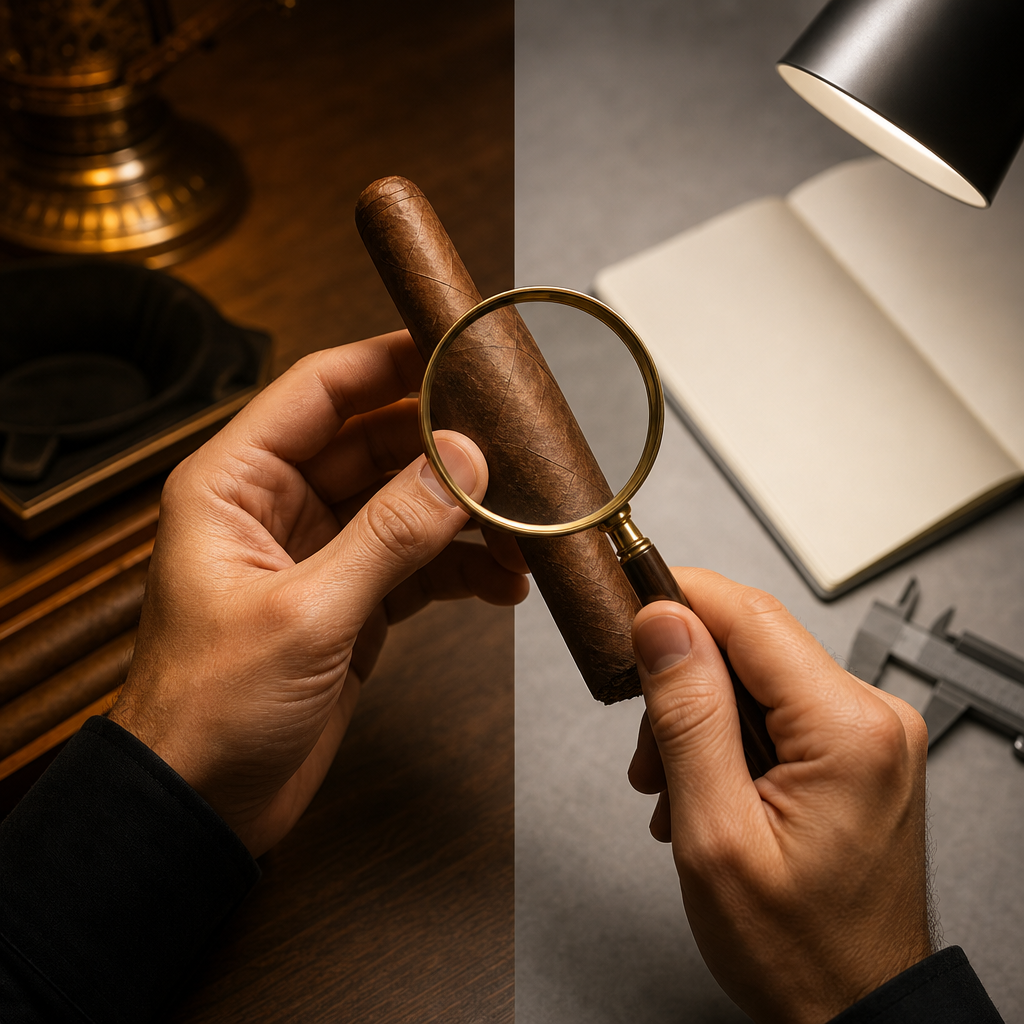
The first step in interpreting craftsmanship is not to look at the price but to look at the structure. Pick up a cigar and observe the arrangement of the filler leaves from the foot: if the layers of long-filler leaves are clear and there is no large amount of debris, it usually indicates a better basic specification. When lightly pinching the body, it should be elastic rather than hollow or hard. Whether the wrapper seams are smooth and whether the cap is upright can also reveal the factory's training and quality inspection standards.
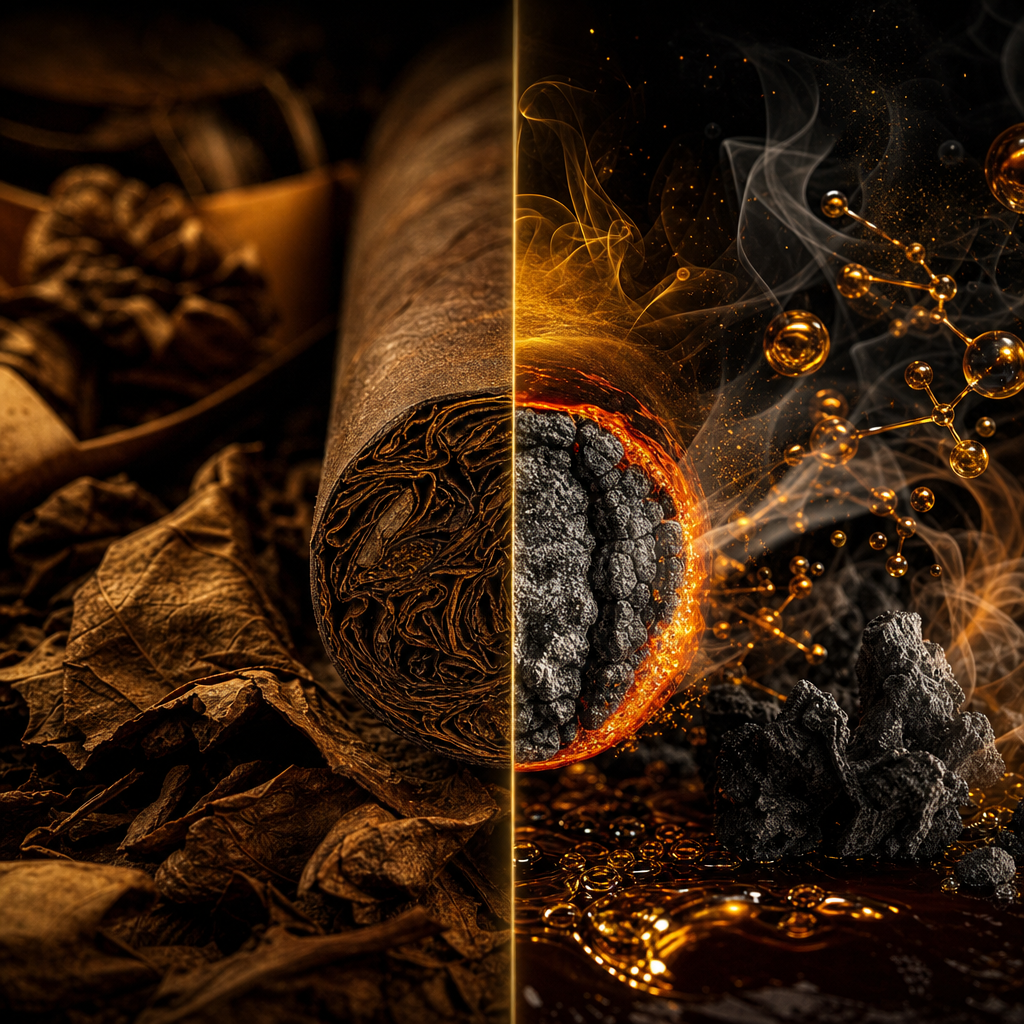
When burning, observe three things: whether the burn line is stable, whether the ash column is excessively loose, and whether the draw resistance changes over time. If the front section is normal and the middle suddenly blocks, it may be because the bunch is too tight locally. If tunneling often occurs, it may be related to humidity, filler leaf arrangement, or inconsistent burn speed. Craftsmanship problems are usually not a single phenomenon but clues left by appearance, draw, burn, and flavor together.
Aficionados can establish their own record sheets, which do not need to be complicated but should have a fixed format:
- Brand, series, size, box code, or year of purchase
- Storage temperature, humidity, placement time
- Flavor changes in the front, middle, and back sections
- Draw resistance and burn correction times
- Whether there is bitterness, spiciness, ammonia, or dullness
Recording 3 to 5 cigars of the same type consecutively is more reliable than a single impression. For example, if 4 out of 5 Robustos in a box are tight in the middle, it may be a batch or storage issue. If only one is abnormal, it is more likely a single rolling error. Advanced appreciation is not about pursuing mystery but about turning sensory experience into data that can be reviewed.
Common Questions
Are handmade cigars always better than machine-made cigars?
It should not be simplified in this way. Handmade long-filler cigars usually have more depth in layers, burn rhythm, and leaf performance, but machine-made cigars also have their stability, convenience, and price positioning. The real premise of comparison is to look at leaf grade, filler form, brand goals, and quality control standards. "Handmade" is one of the important conditions for high-end cigars, but it is not the only guarantee of quality.
Why do some famous brand cigars still get plugged?
Because cigars are still a combination of agricultural products and handmade items. High leaf humidity, overly dense filler placement, and improper transportation and storage can all cause excessive draw resistance. Even Cohiba, Montecristo, Davidoff, or Padron cannot completely eliminate single-stick differences. Modern draw testing can reduce the probability, but it cannot turn natural materials into metal parts.
Does automation make flavors less unique?
Not necessarily. If automation is only used in humidity monitoring, draw testing, and batch tracking, it will reduce defects while retaining formula characteristics. However, if a brand excessively pursues safety, reduces leaf strength, or narrows flavor fluctuations, it may indeed make the product flat. The key is not in the tools but in how the brand defines its style boundaries.
Are old cigars more worth collecting than new ones?
Old cigars sometimes exhibit smoother aromas and softer stimulation, but the premise is clear sources, stable preservation, and no moisture or cracking. The year itself is not a guarantee of quality; box condition, humidity records, and authenticity judgment are more important. Collection may involve market price changes, but it does not guarantee appreciation; it still depends on source preservation and market.
How to distinguish between production process issues and storage issues?
If multiple cigars in the same box exhibit similar draw or burn issues, the likelihood of production or batch factors is higher. If only a few single sticks are abnormal, it may be individual rolling differences. Storage issues are often accompanied by wrapper cracking, fast burning, dullness, mold, or uneven burn caused by high humidity. It is recommended to place them in a fixed humidity environment for several weeks before comparing, which will make the judgment more accurate.
Are modern cigars more stable than those 20 years ago?
Overall, yes. After 2000, many large factories introduced more comprehensive humidity monitoring, batch management, and draw testing, reducing error rates. However, "more stable" does not mean "more exciting." Some aficionados still prefer the rougher, more unpredictable personality of early products. Stability is an achievement of modern craftsmanship, while personality still relies on brand formulas and craftsmen's judgment to maintain.
The evolution of craftsmanship makes me respect cigars more, not more superstitious about a particular process. Hand-rolling preserves the breath of the leaves and the judgment of craftsmen, while automation makes quality defects easier to see and correct. For aficionados, the most interesting thing is not arguing about the superiority of old and new but reading the traces of land, factory, time, and people in each cigar. When you can distinguish these details, cigars are not just flavors but a complete history of craftsmanship.
—Cigar Prince Wilson Tsai
Smoking is harmful to health. Under 20 is prohibited from smoking. Quitline: 0800-636363. This article is for reference only for adults over 20 years old on cigar culture, preservation, and regulations, not tobacco advertising, promotion, or purchase advice.