The Art of Cigar Appreciation: Understanding Flavor Layers and Subtlety
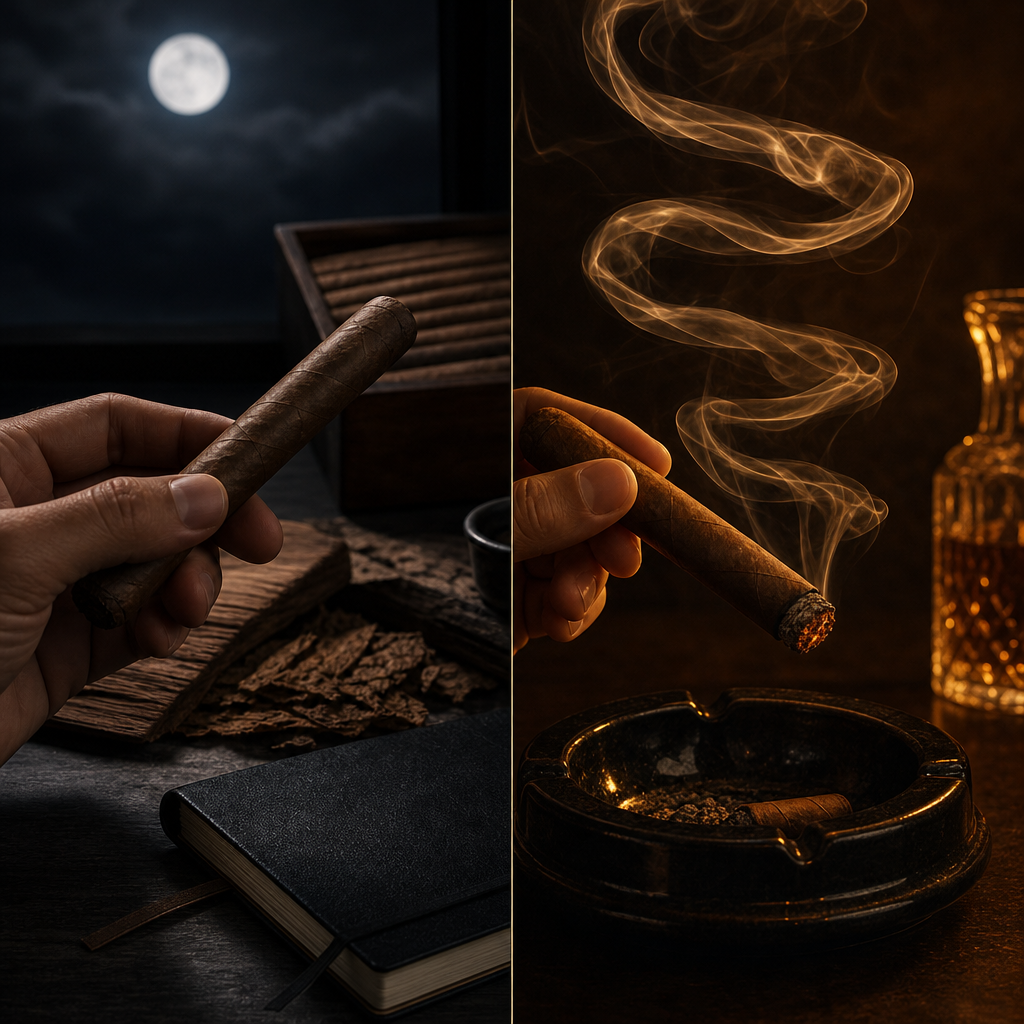
The most fascinating aspect of cigar appreciation is not about how many fancy adjectives you can use, but whether you can understand the changes of a cigar from before lighting, the first third, the middle third, to the final third. For beginners, mastering basic tasting techniques is just the starting point; true subtlety comes from consistent observation and honest recording.
As the editor of the "Cigar Bible," I often remind myself: don't rush to judge whether a cigar is "good or not," but first ask what it is "saying." The same cigar, under different years, humidity, sizes, and burning rhythms, may present completely different characters.
Flavor Layers: Don't Just Ask "What It Tastes Like," Ask "When It Appears"
Most people, when first encountering cigar flavors, are eager to find identifiable tastes: wood, leather, coffee, nuts, cocoa, pepper, floral. These words are certainly important, but if you only treat a cigar as a list of flavors, you may easily overlook its most crucial beauty—temporality. Take Montecristo No.2 as an example, with a 52 ring gauge and 156 mm torpedo shape, the first third often has roasted grains and slightly bitter cocoa, the middle third gradually turns to creamy and woody sweetness, and the final third may add black pepper and leather.
Flavor layers are not about memorizing a list of flavors but recording their changes in time, temperature, and burning position. I suggest roughly dividing a cigar into three parts: the first third, the middle third, and the final third, with at least three observations for each part: aroma, taste, and aftertaste. Around 2020, many beginners liked to practice with Hoyo de Monterrey Epicure No.2 because its woody, creamy, light floral, and hazelnut notes are relatively clear, with changes that are not too drastic, making it suitable for learning "transitions."
True layering often isn't about having more flavors but whether the main melody is clear and the supporting roles are orderly. Partagás Serie D No.4 in a 124 mm, 50 ring gauge Robusto size often shows earth, spices, coffee, and rich tobacco sweetness. If in good condition, the middle third will have a noticeable progression; if stored too dry, it may only leave spiciness and woody sharpness. This is an example of how the same brand and model can change layers due to different conditions.
Aroma Recognition: From Cold Aroma, Burning Aroma to Retrohale
The cold aroma before lighting is the first door to understanding a cigar's character. Pick up an unlit cigar, first smell the wrapper, then the foot, which may not be the same. A long size like Romeo y Julieta Churchill, 178 mm, 47 ring gauge, may have a wrapper with hay, cedar, and light floral notes; the foot is more likely to smell of grains, honey, cocoa, or earth. Cold aroma doesn't equal the burning taste but can provide direction, like watching a movie trailer.
Aroma recognition should be layered: the cold aroma before lighting, the main aroma during burning, the aftertaste after exhaling, and the retrohale are all different. Retrohale is not about forcing smoke into the lungs but letting a small amount of smoke out through the nasal cavity after staying in the mouth, observing spice, floral, woody, and sweet notes. Beginners can start with every 5 to 7 puffs; if it feels stimulating, reduce the frequency, no need to force it.
I once compared Cohiba Siglo VI with Trinidad Vigía. Siglo VI, 150 mm, 52 ring gauge, often has grass, cream, honey, light wood, and delicate spice; Vigía, 110 mm, 54 ring gauge, is more direct, often showing rich sweetness, roasted nuts, and obvious wood. Both can be beautiful, but the aroma lines are different: the former like multi-layered strings, the latter like a close-up jazz trio. Being able to describe this difference is the beginning of tasting progress.
Taste and Texture: Beyond Flavor, Understand the "Touch"
Many beginners overlook texture and only remember taste. In fact, a cigar's texture is as important as tannins, acidity, and body in wine. You can ask yourself: is the smoke light or heavy? Is the entry dry or oily? Does the tongue feel silky, powdery, granular, or slightly prickly? For example, the Davidoff Grand Cru series is often known for its clean, delicate, and balanced nature, with an elegant smoke texture; while Bolívar Belicosos Finos often presents a fuller, deeper earth and leather feel.
Subtlety is not just about light flavor, but whether strength, aroma, and smoke texture can coordinate with each other. A cigar that is only intense but lacks a clean aftertaste can easily become tiresome; if only gentle but lacks structure, it may also seem thin. Like H. Upmann Magnum 46, 143 mm, 46 ring gauge, it is often appreciated not just for its nut, coffee, and wood notes but for its ability to present a mild yet structured taste in the middle third.
When practicing texture recognition, you can use a simple 1 to 5 scale to record: smoke thickness, oiliness, stimulation, sweetness, and cleanliness. In 2022, I organized a batch of the same Robusto with different storage states; samples with humidity stable between 65% to 69% mostly had a rounder texture; those long-term above 72% often showed slow burn, stuffy texture, and suppressed aroma. This reminds us that texture is not an abstract term but a result of storage, burning, and rhythm.
Rhythm and Temperature: Slow Down, Flavor Will Open Up
A cigar fears being rushed the most. Burning too fast raises the temperature, amplifying bitterness, spiciness, and woody sharpness, while delicate aromas are covered. For a common Robusto size, about 50 ring gauge, 124 mm, reasonable time often falls between 45 to 70 minutes; a Churchill size like Romeo y Julieta Churchill often requires over 90 minutes. These numbers are not rules but reminders: a cigar's flavor needs time to unfold.
The core of rhythm control is to maintain stable burning temperature, not to pursue larger smoke volume. I would suggest beginners take a puff every 45 to 75 seconds, adjusting according to the burning state. If the smoke suddenly decreases, first observe if a slight burn line adjustment is needed; if the taste starts to become bitter, slow down the rhythm instead of continuously relighting. Too frequent relighting will make the final third rougher.
Here is a simple rhythm table for practicing with cigars around 50 ring gauge:
| Stage | Suggested Observations | Common Flavors | Rhythm Reminder |
|---|---|---|---|
| First Third 0–15 Minutes | Is the lighting even, is the draw smooth | Wood, grains, light sweetness | Don't rush to judge strength |
| Middle Third 15–45 Minutes | Has the main body unfolded, has the smoke thickened | Coffee, nuts, cream, spice | Maintain stable intervals |
| Final Third After 45 Minutes | Temperature, bitterness, is the aftertaste clean | Leather, cocoa, earth, pepper | Slow down, avoid overheating |
Once you master the rhythm, you will find that many cigars misunderstood as "too spicy" are actually just smoked too quickly. Especially brands with stronger structures like Partagás and Bolívar need more pause. A cigar is not a speed race but like a long conversation; if you interrupt too much, it won't have space to finish the details.
Size, Year, and Brand Character: The Same Model, Different Sticks, May Not Be the Same Expression
Different sizes of the same brand often have significant differences in flavor expression. Cohiba Siglo II, 129 mm, 42 ring gauge, has more concentrated lines, with herbal, honey, and cedar notes appearing more quickly; Siglo VI, with increased ring gauge and length, has wider smoke and slower transitions. Montecristo No.4, 129 mm, 42 ring gauge, often carries coffee, cocoa, and wood; Montecristo No.2, due to its torpedo shape, has different entry concentration and final third strength.
Understanding cigars requires looking beyond the brand name to size, year, storage, and current burning state. Taking the market discussions from 2019 to 2023 as an example, some batches of H. Upmann, Partagás, and Trinidad were highly regarded, but this doesn't mean every box is the same. Even within a box of 25, there may be slight differences due to rolling density, wrapper oil, and storage position. True mature taste acknowledges differences, not blindly believing labels.
Brand character can serve as a map but not an answer. Hoyo de Monterrey is often seen as more elegant, with clear woody floral notes; Partagás often has rich earth, spices, and coffee; Romeo y Julieta often shows floral, cedar, and gentle sweetness; Bolívar is often deeper and more powerful. These descriptions can help beginners establish a baseline, but every time you light up, you still have to return to the cigar in your hand, not just believe past reviews.
Collection and vintage should also be viewed rationally. Some famous models boxed in 2014, 2016, and 2018 may present a more rounded aging feel when well-preserved, but market discussion heat does not equal quality assurance; if talking about collection appreciation, remember: it does not guarantee appreciation, still depends on source preservation and market. For connoisseurs, clear source, stable preservation, and transparent state are always more important than rumors.
Building Your Own Flavor Notes: Start with 5 Columns of Records
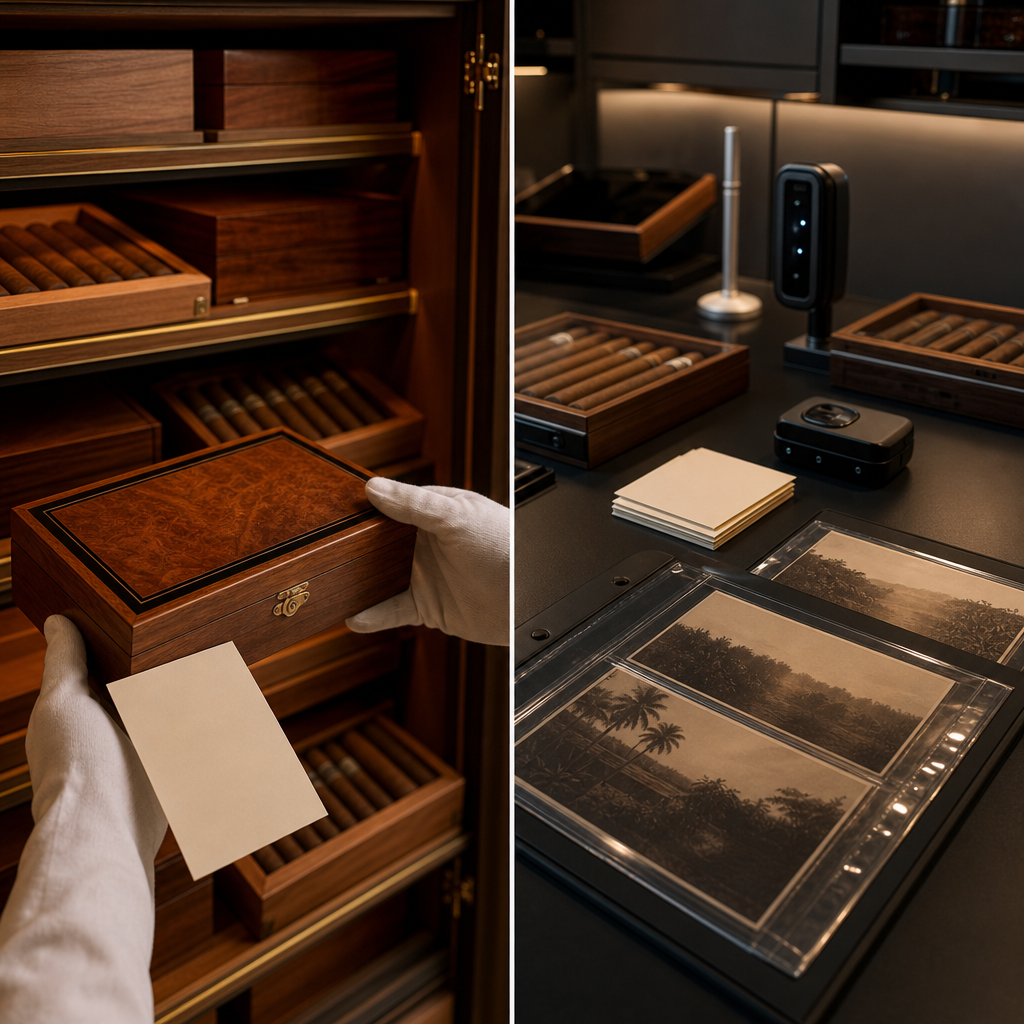
What truly allows taste to progress is not saying complex adjectives at once but leaving comparable records over time. I suggest beginners use a fixed format, recording 5 columns each time: brand model, boxing year or purchase year, storage humidity, three-part flavors, and summary comments. If you can also add pairing drinks, ambient temperature, and tasting time, looking back after half a year, you will clearly see how your taste map is formed.
The purpose of notes is not for others to admire but to understand the same cigar more accurately next time. For example, if you record a Trinidad Media Luna in 2023, with honey and wood in the first third, cream and roasted almonds in the middle third, and increased spice in the final third; when you encounter the same model in 2025, you can compare: is it the cigar's state that is different, or has your sensory matured? This kind of comparison is more valuable than single-time scoring.
You can practice in the following ways:
- Choose only 3 main flavors for each cigar, don't force 10.
- Record every 15 minutes, not recalling from memory after finishing.
- Break down "dislike" into reasons: too dry, too spicy, too stuffy, too bitter, unstable burn.
- Record at least 3 sticks of the same model before forming an initial judgment.
- Besides scoring, add a sentence "In what situation would I choose it."
In my own notes, I often see differences in the same cigar at different months. For example, the same box of 2021 boxed Robusto had sharper wood when first opened, but after stabilizing in a 67% relative humidity environment for several months, the smoke became rounder, and the sweetness more coherent. These experiences remind us: taste is not a one-time judgment but continuous observation.
Etiquette and Context: Subtle Appreciation Also Includes Consideration for Others
Cigar appreciation doesn't just happen on the tongue; it also happens between people. Beginners often focus on brand, year, and score but overlook occasion etiquette. Don't overcut the cap when cutting, don't directly burn the wrapper for a long time when lighting, don't wave the cigar widely when talking, these are not formalities but respect for the cigar and others.
True cigar etiquette is to enjoy yourself and make those around you feel comfortable. In shared spaces, ash doesn't need to be flicked frequently, but don't forcefully keep it until it affects the burn; when placing the cigar temporarily, keep the burning end outward to avoid touching the table or others' belongings. If tasting with friends, don't rush to criticize others' choices; everyone's taste sensitivity, experience, and preferences are different.
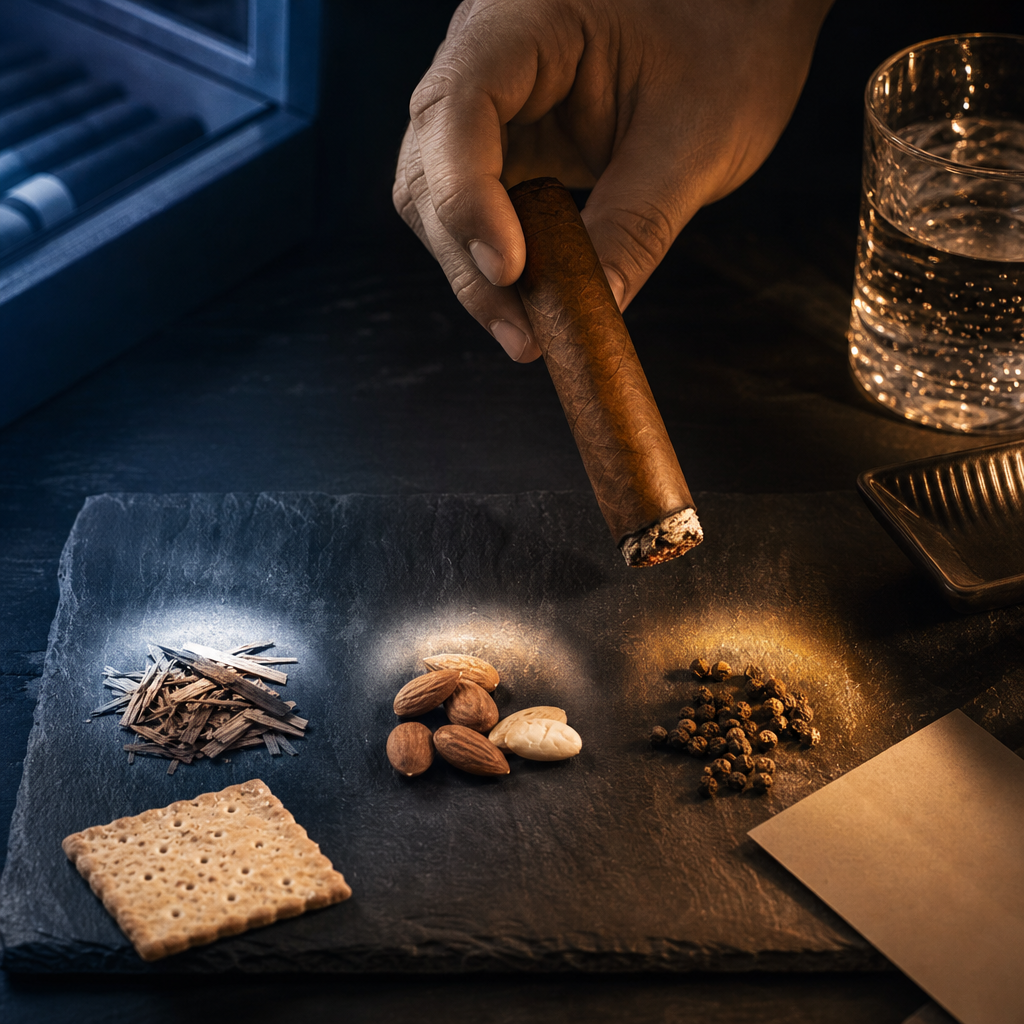
Pairing is also part of etiquette and taste. Coffee can amplify roasted and nutty tones, unsweetened tea can cleanse the palate, rum may echo caramel and spices, while whiskey should be noted whether the alcohol overpowers the cigar. Pairing a medium-strength Hoyo Epicure No.2 with black coffee often makes the creamy wood clearer; using high-alcohol, heavy-peat whiskey may make the details disappear.
Also remember, cigars are not a show-off tool. Knowing the differences between Cohiba, Partagás, and Davidoff is great, but more importantly, being able to quietly feel, moderately share, and respect the occasion. When you can maintain a steady rhythm, clean ash line, clear notes, and natural conversation in 60 minutes, you present not just knowledge but a mature taste posture.
Common Questions
Does having too few flavor words mean I don't understand cigars?
No. At the entry stage, being able to consistently distinguish wood, coffee, nuts, sweetness, spice, and bitterness is already sufficient. Using a few words accurately is more important than piling up fancy descriptions. As records increase, you will naturally differentiate cedar, roasted almonds, dark chocolate, leather, and other details.
Why does the same cigar taste different this time compared to last time?
The reasons may include storage humidity, burning speed, lighting method, dietary state, ambient temperature, and personal oral condition. Even within a box of 25, there may be rolling density differences. It is recommended to record at least 3 sticks of the same model before judging its stability and style.
Does a stronger cigar mean it's more premium?
No. Strength is just intensity, not subtlety. The subtlety of Cohiba Siglo VI, the elegance of Hoyo de Monterrey, the richness of Bolívar, can all be individually wonderful. Premium feel comes from balance, cleanliness, transitions, and aftertaste, not just sheer intensity.
What humidity should be set to better observe flavors?
Most Cuban cigars can start from 65% to 69% relative humidity, with temperature maintained around 18 to 21°C. If humidity is too high, it tends to burn stuffy, draw tight, and aroma not open; too low may result in spiciness, dry sharpness, and too fast burning.
Do I need to pursue high vintage or rare models to learn taste?
No need. Entry training is more suitable to start with stable, common, and clearly structured models, such as Montecristo No.4, Partagás Serie D No.4, H. Upmann Magnum 46. High vintage or rare models can broaden horizons, but basic observation skills are more important.
When should I stop a cigar?
When the final third becomes noticeably overheated, bitterness overpowers all aromas, or your mouth starts to tire, you can let it naturally extinguish. A cigar doesn't need to be forced to finish to the last centimeter. Knowing when to stop is also part of appreciation.
I have always believed that the art of cigars is not to make people ostentatious but to make them more patient. From aroma, taste, rhythm to etiquette, every detail reminds us: true taste is about seeing changes in slowness and distinguishing layers in quietness. May every time you pick up a cigar, it is not to prove you understand but to more honestly feel the moment.
—Cigar Prince Wilson Tsai
Smoking is harmful to health. Under 20 years old is not allowed to smoke. Quitline: 0800-636363. This article is for reference only for adults over 20 years old regarding cigar culture, preservation, and regulations, not a tobacco advertisement, promotion, or purchase suggestion.