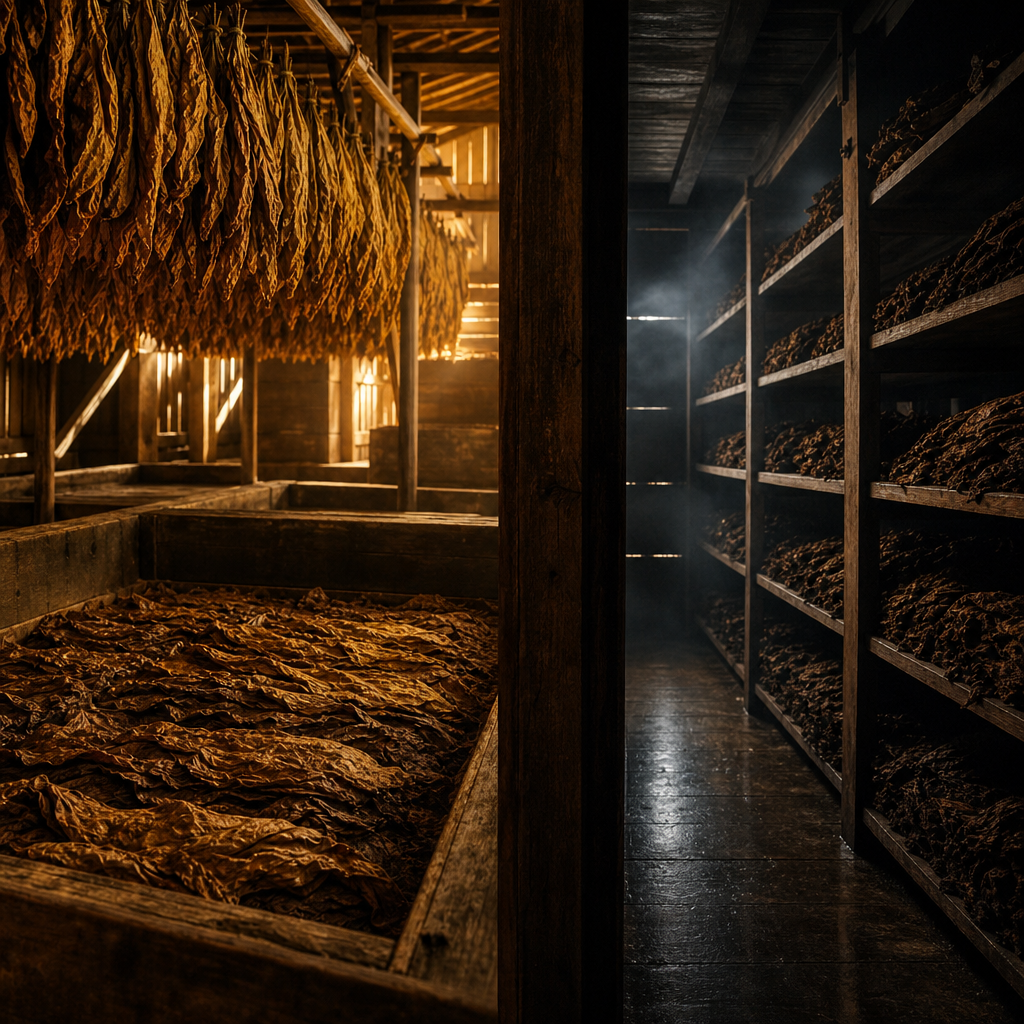
Collecting and Managing Premium Cigars: From Selection to Storage
Collecting premium cigars is not about piling up brand names, vintages, and limited editions into a humidor, but about establishing a traceable, maintainable, and comparable system. The real challenge for veterans is often not "which one is good," but "which box is worth keeping long-term, for how long, where, and how to assess its condition."
As an editor of the "Cigar Bible," I have seen too many collections lose their original value due to fluctuations in temperature and humidity, lack of source records, and chaotic box codes. This article is not about entry-level humidification but covers the complete process from selection, evaluation, documentation, compartmentalization to periodic maintenance, ensuring that premium cigars retain their distinct character even after many years.
Defining "Collection Value": Beyond Brands, Look at Vintages, Batches, and Traceability
The first layer of premium cigar collection is not price, but source and batch. Take Cuban cigars, for example, the performance of the same Cohiba Espléndidos can vary completely between 2006, 2014, and 2020; similarly, Montecristo No.2 can have differences in burn, aroma concentration, and flavor delicacy due to different box codes and storage environments. Collecting is not about chasing the most expensive, but selecting targets that can still be clearly verified in the future.
I usually break down collection value into four aspects: brand status, production scarcity, vintage evaluation, and preservation evidence. For instance, the Cohiba Behike BHK series has been a focus in the high-end market since its official launch in 2010; Trinidad Fundadores, due to its brand positioning, size, and historical sense, maintains a stable discussion among regulars. On the non-Cuban side, products like Fuente Fuente OpusX, Padrón 1964 Anniversary, and Davidoff Year of the Dragon 2012 also have collectible conditions due to their production volume and annual stories.
However, it should be noted that rising market prices do not guarantee appreciation; source preservation and market conditions still matter. Some limited editions around 2015, if the outer box is damp, the wrapper is overly oily, or the original label is missing, even with a beautiful name, will be discounted by seasoned collectors. Traceability is the second life of premium cigars; without records, a treasured collection is just a verbal story.
Evaluation Before Selection: Box Codes, Appearance, Weight, and Consistency
Veterans selecting premium cigars should not only look at a single beautiful stick but also the consistency of the entire box. For example, with a box of 25 Partagás Lusitanias, I would first check the box code and date, then examine if the color of each stick falls within a reasonable range: Colorado, Colorado Maduro can have variations in shade, but if there are obvious color jumps, gray spots, or unnatural gloss in the same box, further confirmation of the source and preservation is needed. Box consistency is more important than a single impressive stick because collecting is about time management, not instant impressions.
In terms of touch, premium cigars should have elasticity, not be dry and hard or too soft. When lightly pressing the body of the cigar, the rebound should be even; if the foot is obviously loose, it may indicate unstable rolling density. Weight is also worth comparing: for example, if a Robusto of the same size is significantly lighter, it may burn too quickly in the future; if heavier, it may have tight airflow. These differences should be recorded when the box is new; otherwise, it will be difficult to determine if the issue is due to production or preservation three years later.
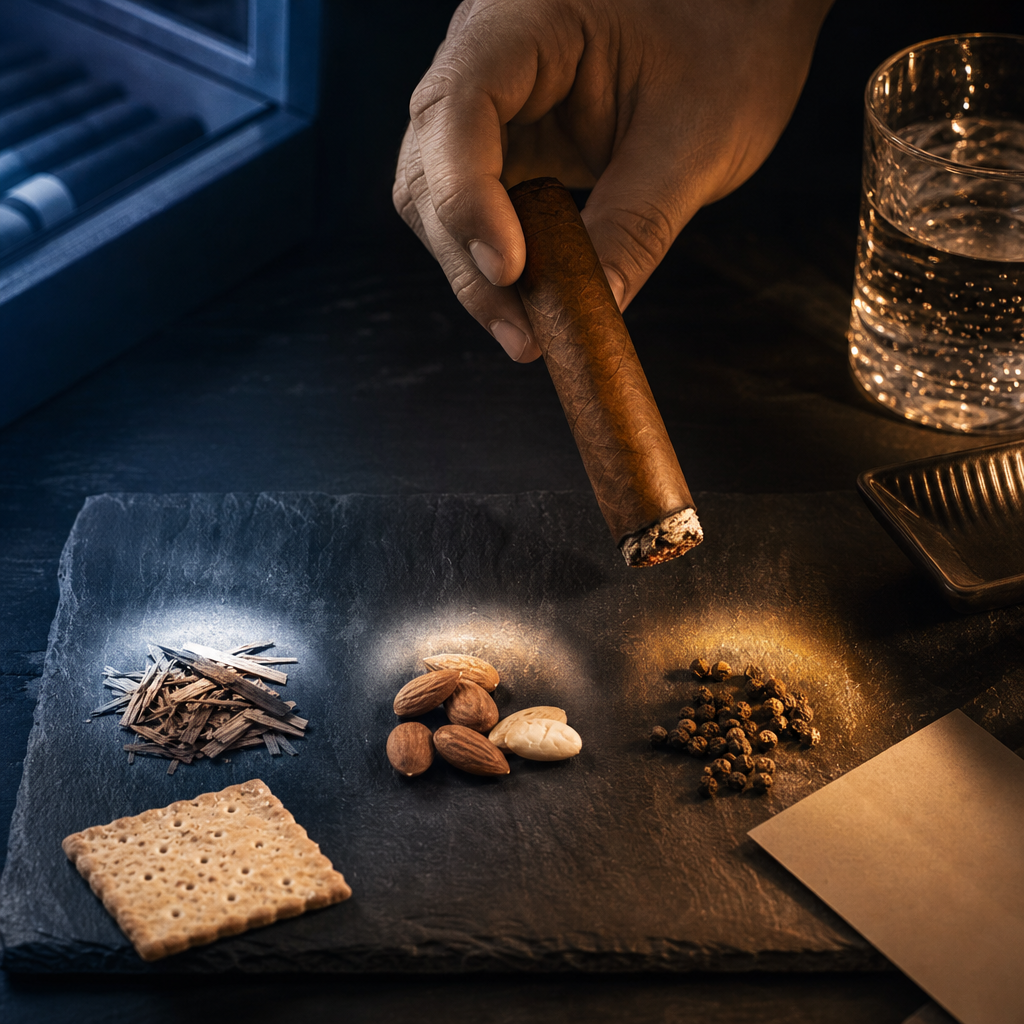
I also pay attention to the aroma. Normally aged cigars often have cedar, mature grass, leather, light cocoa, or honey notes inside the box; if there is a moldy smell, excessive ammonia, sour rot, or cardboard dampness, it is not advisable to rush into long-term collection. Cuban box codes like SEP 20, MAR 17 should be viewed along with the appearance, not judged in isolation. A good vintage does not mean every box is good, and a good box condition does not mean the preservation history is completely safe.
Building a Collection Portfolio: Core Boxes, Experimental Boxes, and Consumable Inventory
The biggest taboo in high-end collections is putting everything on a single brand. Many veterans favor Cohiba, Partagás, or H. Upmann, but if the entire cabinet is of the same style, you will lose the basis for comparison in five years. I suggest dividing the collection into three layers: core boxes, experimental boxes, and consumable inventory. Core boxes should contain classic sizes and reliable vintages, such as H. Upmann Sir Winston, Bolívar Belicosos Finos, and Ramon Allones Specially Selected; experimental boxes can include annual limited editions, regional editions, or new packaging products.
Consumable inventory is important because it allows you not to frequently open the core collection. Suppose you have a box of 2018 Cohiba Siglo VI, and another of the same model in loose sticks or a newer box from 2022, you can use the latter to observe the brand's recent performance, leaving the more mature whole box in a stable environment. A collection portfolio needs "immovable assets" and "comparable samples," both are indispensable.
In terms of proportion, I often suggest veterans use 50% classic regular models, 30% high-end limited or special editions, and 20% personal preference models. Classic models provide long-term reference, special editions offer stories and rarity, and personal preferences maintain enjoyment. If a collection only considers resale prices, it becomes rigid; if based solely on emotions, it can easily get out of control. Again, any collection discussion does not guarantee appreciation; source preservation and market conditions still matter.
Storage Equipment Selection: Wooden Cabinets, Electronic Cabinets, and Zonal Management
Premium cigars are most afraid of "seeming high-end, but actually unstable." Desktop humidors are suitable for short-term management of 50 to 100 sticks, but if the collection exceeds 300 sticks, I would recommend using electronic humidors with temperature control or independent storage spaces. In Taiwan, summer room temperatures often exceed 28°C; if relying only on passive humidification, the humidity may still be at 68%, but the temperature accelerates cigar changes, even increasing the risk of pests. The bottom line of high-end collections is stability, not equipment price.
Below is a table I often use for equipment judgment, suitable for planning collections of different scales:
| Storage Method | Suitable Quantity | Recommended Temperature | Recommended Humidity | Advantages | Notes |
|---|---|---|---|---|---|
| Spanish Cedar Box | 25-100 sticks | 20-23°C | 65-69% | Natural aroma integration | Frequent opening causes fluctuations |
| Electronic Humidor | 150-800 sticks | 18-21°C | 65-68% | Stable, can be layered | Sensors need calibration |
| Cigar Storage Room | Over 1000 sticks | 18-20°C | 64-67% | Suitable for whole box management | High cost and maintenance |
| Sealed Box with Humidification Pack | 10-80 sticks | 20-22°C | 65-69% | Low fluctuation, easy isolation | Lacks cedar interaction feel |
Zonal management is more precise than a single setting. New arrivals can be placed in a 65% to 66% area for observation for 30 days; long-term aged whole boxes can be placed in 66% to 68%; cigars prepared for recent enjoyment can have slightly relaxed humidity at 64% to 66% to improve burning. If the difference between the upper and lower layers in the cabinet exceeds 3%RH, the sensor and circulation fan should be repositioned, rather than just trusting the panel numbers.
Temperature and Humidity Control: Don't Pursue Perfect Numbers, Pursue Low Fluctuation
Many people ask me, should premium cigars be kept at 65%, 68%, or 70%? My answer is: first look at the region, equipment, and your preferred burning performance. In Taiwan's environment, I often use 18-21°C, 65-68%RH as the long-term range; if it's a large ring gauge, high oil content cigar, like Cohiba Behike BHK 56 or Padrón 1926 No.9, high humidity can cause slow burning, even requiring frequent corrections. Rather than pursuing a single magical number, daily fluctuations of less than 2%RH are more worth noting.
Sensor calibration is a step veterans cannot skip. Every 3 to 6 months, I use the 75% saturated salt calibration method or a trusted calibration pack to check electronic temperature and humidity meters; if two sensors differ by more than 2%RH, a third should be used for comparison. Many collection issues are not due to a faulty cabinet but sensor drift. You think it's set at 67%, but it may actually be 72%, and six months later, the wrapper swells, and burning becomes dull, only to find out it's too late.
Seasonal changes also require adjustments. During the rainy and typhoon seasons, external humidity often exceeds 80%, so cabinet opening frequency should be reduced; in winter, if using dehumidifiers or heaters, pay attention to moisture replenishment in the cabinet. Premium cigars are not afraid of change but are afraid of frequent and drastic changes. Dropping from 72% to 64% once is more damaging than long-term stability at 66%, especially for boxes stored for over five years.
Isolation, Documentation, and Rotation Process After Acquisition
New collections should not be mixed into the core cabinet immediately. My standard process is to isolate for 30 days, using a transparent sealed box, independent humidification pack, and a small sensor to observe for any unusual odors, mold spots, insect holes, or humidity anomalies. Even if the source is reliable and the appearance is clean, isolation should still be completed; if it's an older box, like a 2012 Davidoff Limited Edition or 2014 Cuban limited edition, the pace should be slowed down even more. Isolation is not about distrust of the source but about protecting the entire collection system.
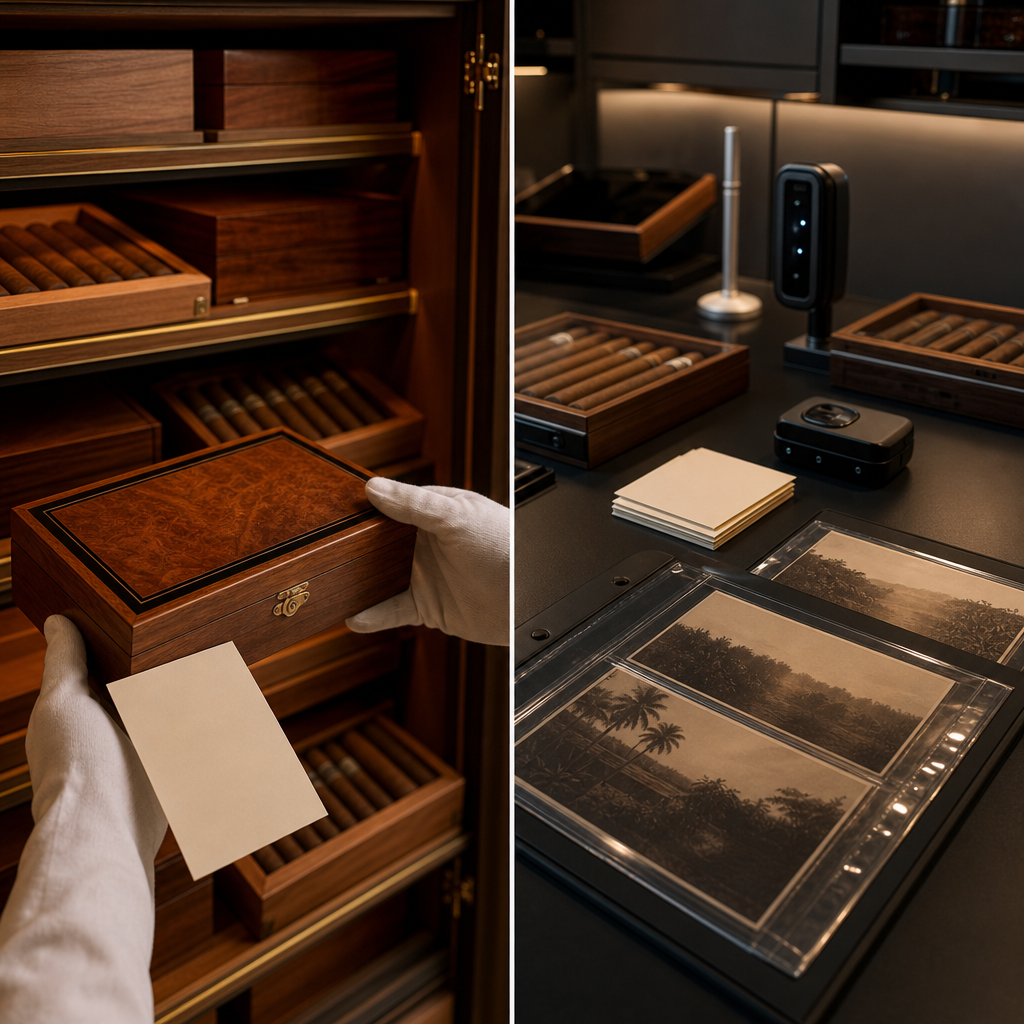
Documentation should record at least eight items: brand, name, size, box code or batch, acquisition date, source, initial condition, and storage location. Advanced players can add photos, weight, aroma descriptions, and smoking records. My habit is to take four photos of the whole box: outer box, box code, open box overview, and close-up of the wrapper. These records are very useful three years later, especially when you want to compare the same model from different years, such as Hoyo de Monterrey Double Coronas 2016 and 2019's maturation speed.
Rotation does not mean daily flipping. For whole boxes, checking once every 3 to 6 months is sufficient; loose sticks can be adjusted in position according to the cabinet's airflow every six months. If using an electronic cabinet, do not place too many loose sticks near the fan to avoid local drying. For premium cigars, less handling, stable placement, and clear documentation often outperform frequent inspections.
Evaluating Maturity: Judging the Drinking Window from Aroma, Burn, and Structure
Cigar aging is not about the longer, the better. For example, Partagás Serie D No.4 usually achieves a good balance between 3 to 7 years; H. Upmann Sir Winston can often be observed from 5 to 12 years; if Cohiba Siglo VI is well-preserved, it may still exhibit honey, cream, and delicate herbal notes after 8 years. Conversely, some cigars that are originally more elegant may lose their distinct profile if aged too long. The core of maturity is not the length of the vintage but whether the strength, aroma, and structure are simultaneously online.
Evaluation can be observed from three aspects. The first is the cold aroma: reduced ammonia, more integrated cedar and sweet notes are common positive signals. The second is burn performance: if the ash column is stable, the burn line is even, and the draw is smooth, it usually indicates good humidity management. The third is the mid-to-late performance: a truly mature good cigar will not only look good in the front section; the middle should have layers, and the end should not only have spiciness and wood shavings.
I often use the method of "opening one, recording, then deciding." Suppose a box of 2017 Ramón Allones Specially Selected, if the first stick still has a green grass taste, it can be left for another 12 to 18 months; if roasted nuts, brown sugar, and soft pepper have appeared, you can plan to gradually enjoy it over the next two years. The most fascinating aspect of high-end collections is that the same box of cigars will reveal different facets over time, but the premise is that you have records to compare.
Common Questions
Should premium cigars be stored whole or broken into singles?
If it's high-end models like Cohiba, Trinidad, Davidoff, or Fuente OpusX, I prefer whole box storage because the original box provides a cedar environment, batch integrity, and future recognizability. Singles are suitable for comparison samples but should not be all broken up. Whole box storage preserves the state, story, and traceability.
Are white spots always mold?
Not necessarily. If they are fine, even, easily brushed off, and without unusual odors, they may be crystals or a natural surface phenomenon; if they are cotton-like, green-gray, penetrate the foot, or accompanied by a moldy smell, they should be isolated and treated. Do not vigorously wipe premium cigars with a damp cloth, as this will damage the wrapper oils and structure.
Are older boxes of cigars always better than new ones?
Not necessarily. A box from 2008 with poor preservation may not be as good as a well-preserved box from 2021. Older vintages depend on source, temperature and humidity history, and appearance consistency. Aging brings flavor integration and reduced sharpness, not automatic improvement. Vintage is just a clue; condition is the answer.
Can humidification packs be used long-term?
Yes, but they should be regularly checked for hardness, water loss, or damage to the outer bag. For long-term collections, I would pair them with electronic sensors, not just rely on the humidification pack label. If multiple humidity packs with different levels are mixed in the same cabinet, it can cause regulation confusion; it is recommended to maintain the same humidity specification in the same area.
Do cigar collections need insurance or an asset list?
If the collection scale exceeds several hundred sticks, especially if it includes Behike, Gran Reserva, limited wooden boxes, or high-vintage Davidoff, I would recommend establishing an asset list. The content should at least include photos, source, date, quantity, and storage location. As for market value, remember: it does not guarantee appreciation; source preservation and market conditions still matter.
How often should the humidor be opened for inspection?
For core collections, a quick check once a month is sufficient, focusing on sensors, unusual odors, mold spots, and water source status; whole boxes can be spot-checked every 3 to 6 months. Frequent flipping will not make cigars better, only increase fluctuations and the chance of damage. Stability is the most expensive and simplest technique in high-end collections.
I have always believed that a truly mature collector is not someone who has many legendary models in their cabinet, but someone who can clearly explain why each box exists, when it entered, and what states it went through. The charm of premium cigars lies in the traces time leaves behind; our responsibility is to make those traces orderly, clean, and worth reminiscing.
—Cigar Prince Wilson Tsai
Smoking is harmful to health. Smoking is prohibited for those under twenty. Quitline: 0800-636363. This article is intended for adults over the age of twenty as a reference for cigar culture, preservation, and legal knowledge, not as an advertisement, promotion, or purchase suggestion for tobacco products.