In-depth Analysis of Cigar Fermentation and Aging Process
I often say that the true charm of cigars lies not only in the aroma when lit but in the long, quiet, and precise journey the tobacco leaves have undergone before being lit. From harvesting, drying, fermenting, to aging after rolling, each step alters its sweetness, spiciness, woodiness, leathery, and creamy texture.
For beginners, knowing how to cut, light, and slowly exhale smoke is just the first stage. To further understand why the same brand and size can vary in different years and storage conditions, one must comprehend fermentation and aging. In this article, I will take a more practical perspective to show you how time shapes the flavor of cigars.
From a Green Leaf: Fermentation is Not Just "Letting it Sit"
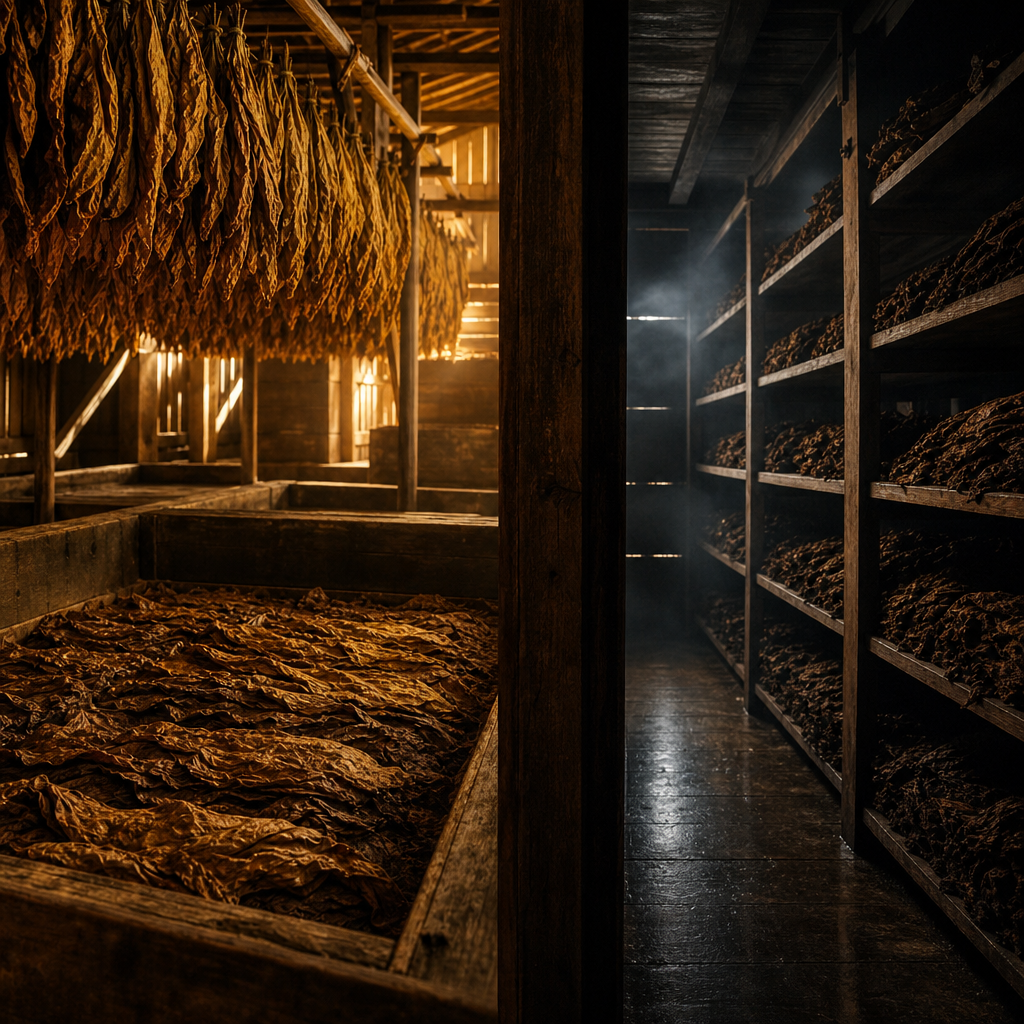
After harvesting, cigar tobacco usually enters the drying stage. For example, in the traditional tobacco barns commonly seen in the Vuelta Abajo region of Cuba, the leaves turn from green to yellow to brown over several days. During this time, chlorophyll gradually breaks down, moisture decreases, and the leaves begin to lose their raw green taste, but they cannot yet become cigars. The real key is the subsequent fermentation, which transforms the tobacco leaves from "agricultural products" into "materials that can be savored."
During fermentation, the tobacco leaves are piled into a pilón, or fermentation pile. The temperature inside the pile rises due to microbial and enzymatic activity, commonly controlled between 35°C and 50°C, adjusted according to the leaf position and use. Too low, and the reaction is insufficient; too high, and the leaves may be damaged, dulling the aroma. The essence of fermentation is to reduce the irritants in the tobacco leaves and transform the coarse plant smell into a more stable aromatic foundation.
Looking at the three common leaf positions: Ligero, Seco, and Volado, Ligero is thick, oily, and has a stronger nicotine feel, usually requiring longer and more careful fermentation; Seco has a brighter aroma, often with floral and herbal notes if well processed; Volado has good combustibility and plays a balancing role in the structure. The stability of a single cigar often doesn't come from a single leaf being excellent, but from all leaf positions being fermented to the appropriate state.
When sorting Cuban cigars from the early 2000s and the late 2010s, I often felt that earlier batches sometimes emphasized deeper soil and leather notes, while later batches might show clearer sweet aromas at a younger stage. This is not only related to the brand formula but also to the tobacco leaf processing, storage rhythm, and export timing. Understanding fermentation helps to realize that "vintage differences" are not mysticism but a symphony of agriculture, craftsmanship, and time.
Chemical Changes in Fermentation: Where Sweet, Bitter, and Spicy Come From
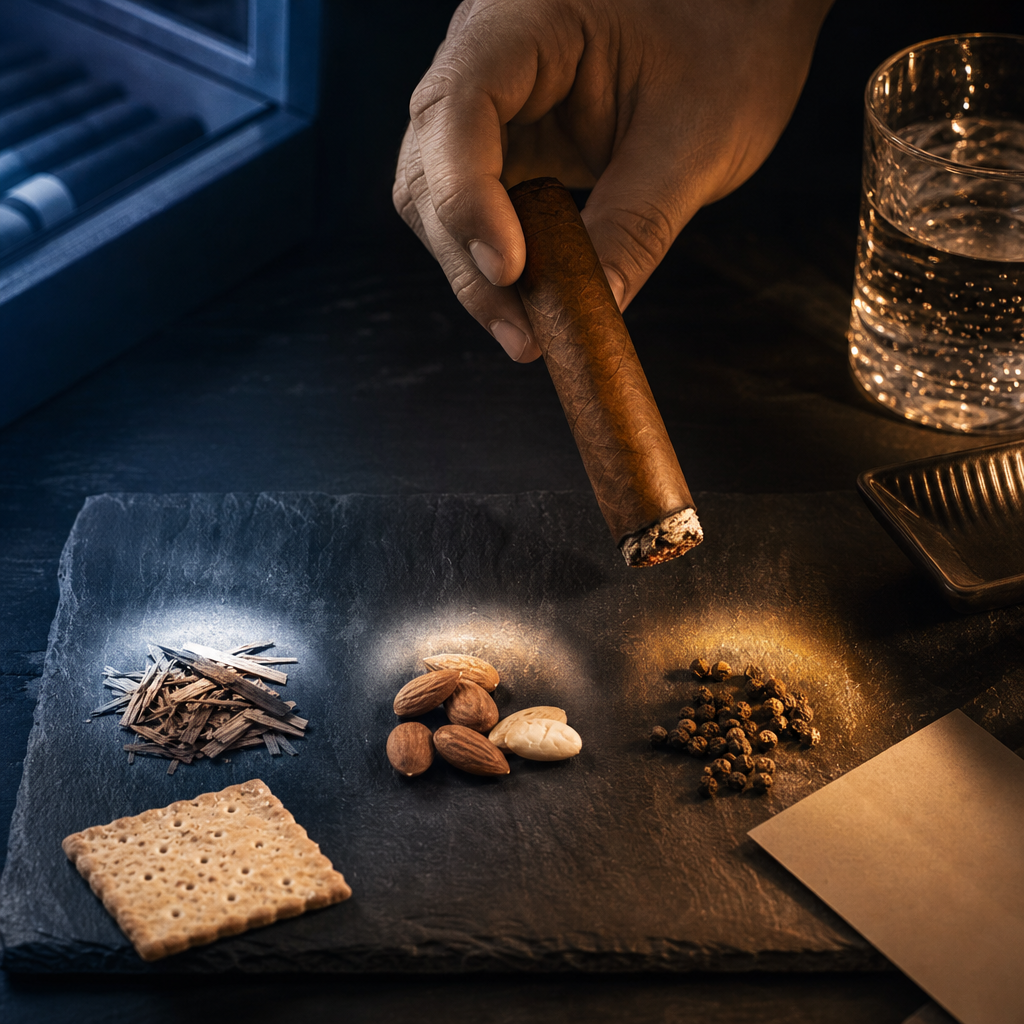
One of the most important chemical changes in cigar fermentation is the breakdown and transformation of proteins, starches, polysaccharides, and nitrogen-containing compounds. Untreated tobacco leaves often have throat irritation, bitterness, green taste, and ammonia smell; after proper fermentation, some irritants decrease, and the reaction of sugars and amino acids gradually forms impressions of roasting, nuts, and cocoa. This is why well-matured cigars don't need to be heavy on the palate but can have layers.
Nicotine and organic acids also affect perception. Nicotine is not simply "strength"; it, along with pH, leaf oil content, and combustion temperature, determines whether you feel it is robust, spicy, or sharp. If fermentation is insufficient, the spiciness might hit the throat like white pepper; if well-fermented, the spiciness will be more like cinnamon, nutmeg, and baking spices, lingering in the back of the nasal cavity. Good fermentation doesn't remove strength but organizes the rough strength into recognizable flavor lines.
Ammonia smell is a signal that many beginners encounter easily. If a newly acquired cigar has a strong ammonia smell when the box is opened, it usually means the tobacco leaves or the product are still releasing volatile substances. Lighting it in a hurry can easily result in bitter, astringent, and choking impressions. From the 1990s to the early 2000s, many collectors would place newly arrived boxed cigars in a stable humid environment for several months to let these odors dissipate.
Sweetness is also not the result of "adding something" but a joint presentation of plant chemistry and combustion. For instance, certain batches of H. Upmann, when in good condition, may have creamy, biscuit, nutty, and light honey notes; Partagás often uses soil, wood, spice, and cocoa as its framework. For a brand's personality to be seen, the premise is that fermentation reduces the noise to a low enough level; otherwise, even the best formula will be overshadowed by raw green and sharp spiciness.
Initial Fermentation, Secondary Fermentation, and Grading: Why Tobacco Leaves Need Repeated Turning
In factories and tobacco warehouses, fermentation is not a one-time linear process. Tobacco leaves are often graded by leaf position, thickness, color, oil content, and use, and then arranged for initial fermentation and subsequent sorting according to their state. The purpose of turning the pile is to make the temperature and humidity inside and outside the fermentation pile more even, avoiding overheating in the center and insufficient reaction on the outer layers. For thick wrapper leaves, if handled unevenly, they may look beautiful but could have a dull bitterness or pungency when burned.
Common observation indicators include leaf flexibility, tactile oiliness, aroma cleanliness, and main vein condition. Experienced tobacco masters will use their hands to feel, their noses to smell, and observe the veins and color changes, rather than just looking at the calendar. Regions like Estelí in Nicaragua, Danlí in Honduras, and Cibao in the Dominican Republic each have their own storage humidity and temperature challenges, so fermentation rhythms cannot be completely copied. Tobacco leaf fermentation may seem traditional, but it is actually a high-risk temperature and humidity management project.
The following table summarizes the stage differences that beginners should understand:
| Stage | Main Purpose | Common Time Concept | Flavor Impact |
|---|---|---|---|
| Drying | Reduce moisture, decompose chlorophyll | About 40 to 60 days | Reduce grassy taste, establish basic aroma |
| Initial Fermentation | Reduce irritation, stabilize leaves | Weeks to months | Bitterness decreases, wood and soil notes emerge |
| Grading and Sorting | Classify by leaf position and use | Depends on batch | Determines wrapper, binder, filler positioning |
| Product Aging | Allow structure to integrate after rolling | Months to years | Aroma becomes more rounded, combustion more consistent |
For example, Davidoff in the Dominican system emphasizes long-term leaf processing and stable style, often leaving impressions of cleanliness, creaminess, woodiness, and delicate spices; while the Padron 1964 Anniversary series often presents cocoa, coffee, brown sugar, and a robust mouthfeel. The differences come not only from the formula but also from the maturity level to which each batch of tobacco leaves is fermented. Understanding this point prevents one from evaluating cigars solely based on "strong or mild."
Aging After Rolling: Letting Different Leaves Learn to Communicate
After a cigar is rolled, it does not immediately reach its optimal balance. The wrapper, binder, and filler come from different leaf positions, even different years and farms. Once rolled together, they need time for moisture, volatile aromas, and oils to redistribute. This is the significance of product aging. A freshly rolled cigar can sometimes feel like a band just getting into position: all the instruments are there, but they haven't synchronized yet.
There is usually a resting period for finished products within the factory, which can range from weeks to months. The higher the brand positioning, the more stringent the time management tends to be. For Cuban boxed cigars, the box code can provide clues about the year and factory, such as 2014, 2017, 2020 batches, which are often used in the market to judge the general state. However, the box code is not a quality guarantee; it is just a starting point. The actual state still depends on storage conditions, humidity inside the box, and leaf activity.
During aging, the ammonia and irritating volatiles inside the cigar gradually decrease, and the aroma becomes more harmonious. A young Montecristo No.2 may have noticeable wood, coffee, and slight spice; after a few years of stable storage, if conditions are right, it may develop cream, nut, cocoa, and a hint of dried fruit. The core of aging is not to make the cigar old but to let various aromas move from dispersion to integration.
However, aging is not always better the longer it is. Some medium-strength, delicately aromatic cigars may lose their brightness if aged too long; some rich-structured, oily sizes can withstand longer periods. For example, Bolivar Belicosos Finos and Partagás Serie D No.4, which have stronger frameworks, are often considered to have better mid-term aging potential. Time will only magnify the original conditions; it will not turn poorly stored or structurally hollow cigars into masterpieces.
Temperature, Humidity, and Air: Three Keys to Home Aging
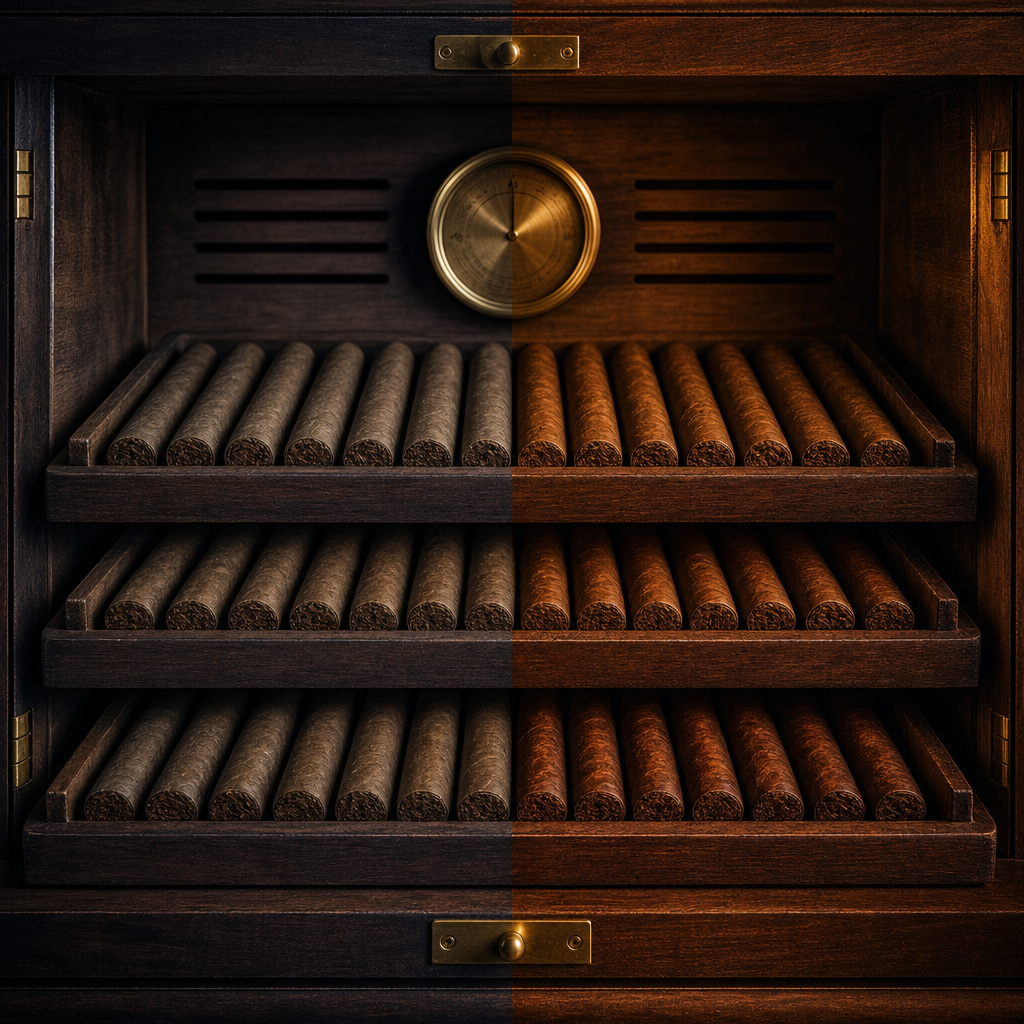
Beginners often ask me: what humidity should I maintain at home? I usually suggest focusing on stability rather than chasing perfect numbers. Most cigars are easier to maintain balance at around 65% to 69% relative humidity and 18°C to 21°C; in Taiwan's hot and humid summer, if stored above 25°C with poor ventilation, the risks of mold, pests, and musty taste increase.
Too high humidity can cause uneven burning, heavy smoke, and a dull taste, with increased bitterness in the final third; too low humidity can cause the wrapper to crack, burn too quickly, and thin out the aroma. Temperature affects the speed of chemical reactions and the risk of insect eggs. It is often mentioned that cigar beetles are more likely to hatch in warmer environments, so long-term storage should not only rely on a hygrometer. Stable temperature and humidity are the foundation for successful aging.
In practice, I recommend beginners establish simple records rather than relying on memory:
- Observe humidity and temperature on the same day each week, and avoid opening the box multiple times a day.
- Isolate and observe new boxes for 2 to 4 weeks to ensure no mold spots or odors.
- Avoid mixing cigars from different sources and states at the beginning.
- Even if using humidification packs, pair them with a reliable hygrometer for calibration.
- Pay special attention to cabinet ventilation and environmental temperature during Taiwan's rainy and summer seasons.
Cigars need air exchange but do not need frequent disturbance. Wooden boxes, humidors, and acrylic boxes each have their pros and cons; Spanish cedar can help regulate humidity and provide a woody aroma, but if the cabinet itself has a strong smell, it may also interfere with the cigars. Home aging is not about locking cigars in a time capsule but allowing them to breathe slowly in a stable environment. This patience is often more important than expensive equipment.
How Flavor Changes: From Young Sharpness to Mature Harmony
A cigar in its young stage often features clear aromas but more pronounced edges. The first third may have grassy, cedar, white pepper, or roasted notes; if the structure is good in the middle third, sweetness will gradually emerge; the final third is most likely to expose insufficient fermentation or poor humidity issues. Beginners can use "first, middle, and final thirds" to record, at least noting strength, sweetness, bitterness, spiciness, and the length of the finish.
After 1 to 3 years of stable aging, many cigars enter a more comfortable integration period. Taking Romeo y Julieta Churchill as an example, when in good condition, it often shows floral, cedar, soft leather, and light dried fruit; if stored with high humidity, these details will be overshadowed by damp wood and dull bitterness. Cohiba Siglo VI, in good condition, may exhibit cream, grassy sweetness, honey, and delicate spices, but it may also be more closed when young. The signal of successful aging is that the flavor boundaries become softer, yet the layers do not disappear.
After 5 years or more, cigars may enter a deeper mature expression, with impressions of soil, leather, dried fruit, cocoa, old book pages, and spice boxes appearing more frequently. However, this also depends on the original leaf and size. Small ring gauge, light-structured cigars may not be suitable for long waits; larger sizes or oily cigars are more likely to have support even after many years. This is why collectors often value box integrity and comparisons within the same box.
I have compared Hoyo de Monterrey Epicure No.2 and Partagás Lusitanias from around 2016: the former, if well-preserved, tends towards cream, floral, and soft wood; the latter is more likely to display dark spice, coffee, and a robust finish. Aging will not lead all cigars to the same taste but will make each brand's character more clearly emerge. This is also what I appreciate most about time.
Common Mistakes: Mythologizing Aging or Oversimplifying Vintage
Many beginners think "the older the vintage, the better," which is the first misconception. Cigars are not replicas of wine; they do not have corks to isolate oxygen, nor do they have the same liquid environment. Cigar changes are more easily affected by temperature, humidity, pests, mold, and air quality. A box from 2008, if poorly stored, may not be better than a well-preserved box from 2021. Vintage can only provide clues, not replace state judgment.
The second mistake is frequently opening boxes, turning them, and smelling them, thinking this is taking care of them. In fact, each time a box is opened, it causes fluctuations in temperature and humidity, especially in Taiwan where the indoor and outdoor humidity difference is large. Repeatedly opening it disrupts the balance. If observation is needed, a fixed cycle can be set, and simple notes can be made on the wrapper's gloss, foot aroma, and whether there are cracks or white crystalline substances.
The third mistake is confusing mold with plume. Real mold usually has a three-dimensional fuzzy feel, can be white, green, or bluish-gray, and carries an unclean smell; the so-called plume or bloom is often described as fine crystals of oil, but it is easily misused in the market. If unsure, it is better to handle it cautiously and not romanticize it. In storage management, cleanliness and stability are always more important than stories.
The fourth mistake is assuming that collecting for appreciation is a guaranteed outcome. Some limited editions, discontinued or special vintages do attract attention in the market, but collecting appreciation does not equal guaranteed appreciation; it still depends on source preservation and market. Box condition, tax stamps, source records, and storage history all affect value judgment. As the editor of "Cigar Bible," I prefer to view cigars as culture and craftsmanship before discussing market prices.
Building Your Own Aging Notes: Training Your Palate with Records
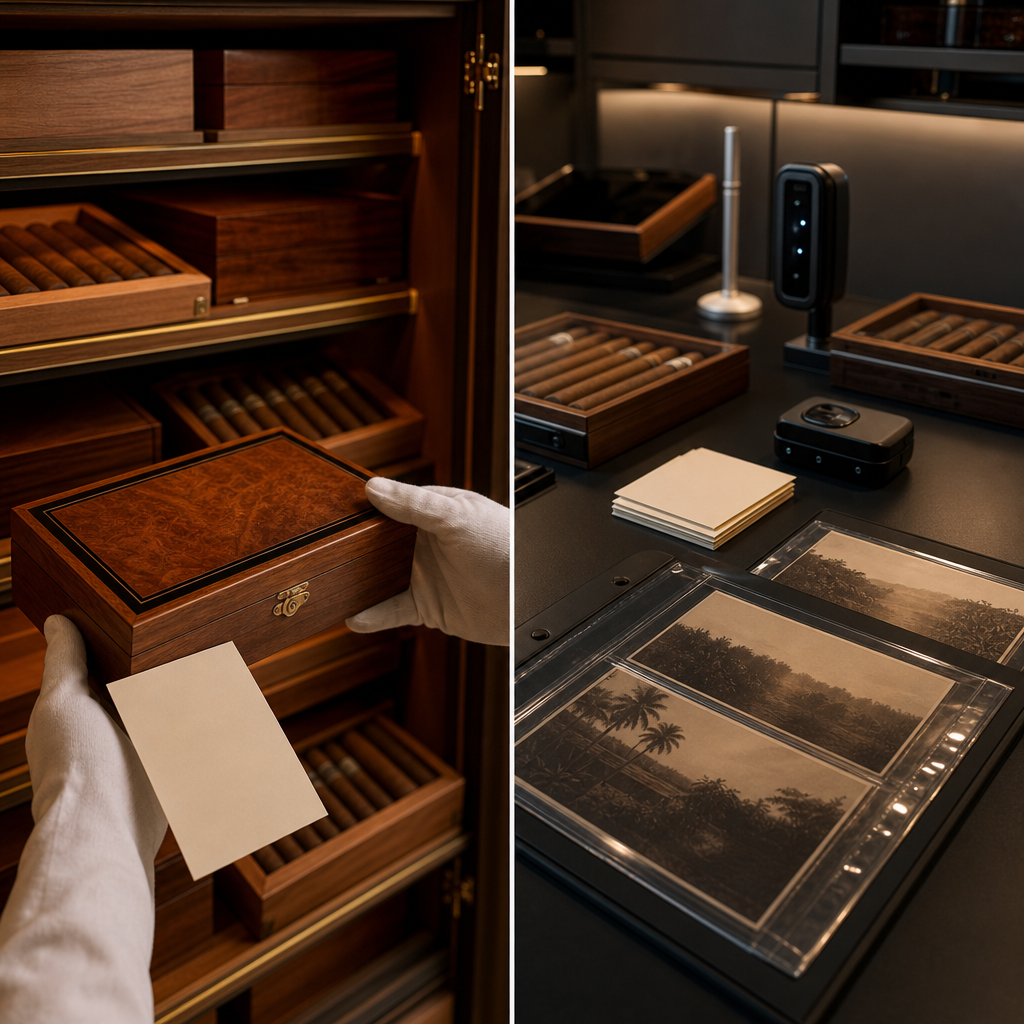
To truly improve, don't just remember "good smoke" or "bad smoke." You can create a simple note to record the brand, size, box code year, acquisition time, storage humidity, box opening aroma, combustion status, and three-part flavor. The first time you write doesn't need to be fancy; the key is comparability. After three months, look back at another cigar from the same box, and you'll begin to understand how time changes the same batch of cigars.
I suggest beginners first choose 3 to 5 brands with different styles for horizontal comparison, such as Montecristo, H. Upmann, Partagás, Romeo y Julieta, and Hoyo de Monterrey. Choose a classic size from each brand, store them in the same environment, and make records every 3 to 6 months. This is more valuable for learning than collecting too many styles at once. The core of palate training is to make comparisons under controllable conditions.
Notes can include the following fields:
- Date, brand, model, size, box code, or year information.
- Storage environment: average humidity, temperature, storage time.
- Before lighting: wrapper feel, foot aroma, cold draw impression.
- First, middle, final thirds: sweet, bitter, spicy, sour, salty, and finish.
- Combustion: ash color, ash holding, uneven burn, relight times.
- Conclusion: ready to smoke, needs more aging, or past its peak.
In my own habit, if a cigar has clear aroma in the first third, unfolds smoothly in the middle third, and strengthens but does not become sharp in the final third, I would judge it to be in good condition. If it is dull, bitter, and difficult to burn throughout, I would first check the humidity rather than immediately dismiss the brand. Good notes can separate personal preference from storage issues, making judgments more mature. This is also the most important basic skill for advanced players.
Common Questions
What is the difference between fermentation and aging?
Fermentation mainly occurs before the tobacco leaves are rolled, a process to reduce irritation, stabilize leaves, and establish an aromatic foundation; aging refers to the finished or semi-finished product continuing to integrate in a stable environment. Simply put, fermentation determines whether the material is mature, and aging determines whether the finished product is harmonious.
How long should new cigars be stored before smoking?
If the source and storage condition are stable, usually 2 to 4 weeks to balance humidity will reveal the basic state; if there is ammonia smell, high humidity, or large temperature differences during transport, it can be extended to 2 to 3 months. The focus is not on fixed days but on clean aroma, stable touch, and smooth combustion.
Is 70% humidity always bad?
Not absolutely bad, but in Taiwan's high-temperature environment, 70% can easily cause burning to become dull and increase mold risk. If the temperature can be controlled between 18°C and 21°C, short-term issues are less; if it exceeds 24°C long-term, be more conservative. Humidity numbers must be viewed together with temperature.
Can white spots on the cigar surface be wiped off?
First, determine if it is mold, mineral dust, cedar shavings, or oil exudate. If it appears fuzzy, spreads quickly, and has an odor, isolate and handle it, and check the whole box. If it's just a small amount of dry powder, gently brush it off and observe. Do not mix it back into the main cabinet if unsure, to avoid affecting other cigars.
Are old cigars always better than young cigars?
Not necessarily. Old cigars require good raw materials, suitable structure, and stable storage; lacking any of these can lead to decline. Young cigars can also be full of vitality and bright aroma. Vintage has reference value but cannot replace actual state, source records, and storage judgment. Collecting appreciation does not equal guaranteed appreciation; it still depends on source preservation and market.
What styles are more suitable for practicing aging observation?
It is recommended to start with classic regular models, such as H. Upmann Magnum 46, Montecristo No.4, Partagás Serie D No.4, Romeo y Julieta Wide Churchills, etc. They have more data and recognizable styles, making it easier to establish a comparison baseline. Understand regular models first, then look at limited or special vintages for more stable judgment.
I have always believed that the sophistication of cigars is not about making things mysterious but about respecting the time each leaf has gone through. Fermentation removes the coarseness from the tobacco leaves, and aging teaches cigars to be harmonious; in between involves agriculture, microorganisms, temperature and humidity, craftsman experience, and storage discipline. If beginners can start with records, reduce superstition, and increase observation, they will find that before each lighting, many stories have already been read.
—Cigar Prince Wilson Tsai
Smoking is harmful to health. Under 20 years old are not allowed to smoke. Quit smoking hotline: 0800-636363. This article is for reference by adults over 20 years old for cigar culture, storage, and regulatory knowledge only, not a tobacco advertisement, promotion, or purchase suggestion.