How to Identify and Evaluate the Quality of Premium Cigars
How to Identify and Evaluate the Quality of Premium Cigars
The quality of premium cigars is not only determined by the band, price, or reputation. As an editor of the "Cigar Bible," I often remind beginners: cigars are a combination of agriculture, craftsmanship, and storage conditions; the same cigar can exhibit subtle differences in different batches, humidity levels, and lighting rhythms.
Once you understand the basics of tasting, the next step is to establish a repeatable and comparable evaluation method. Below, I will break down appearance, construction, aroma, burn, flavor, origin, and recording methods, providing you with clearer judgment criteria when facing premium cigars like Cohiba, Partagás, Davidoff, or Padrón.
Judging by Appearance: The Wrapper Should Be Complete and Consistent, Not Just Shiny
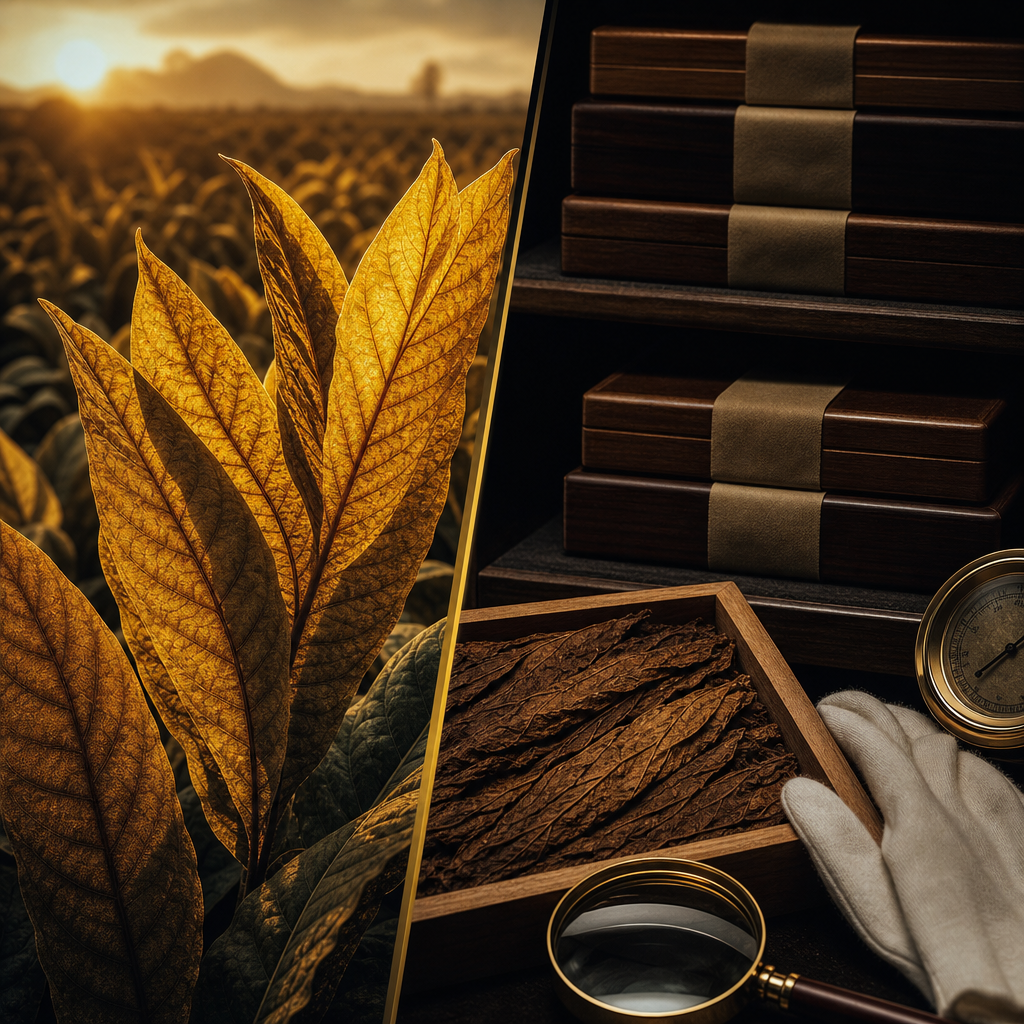
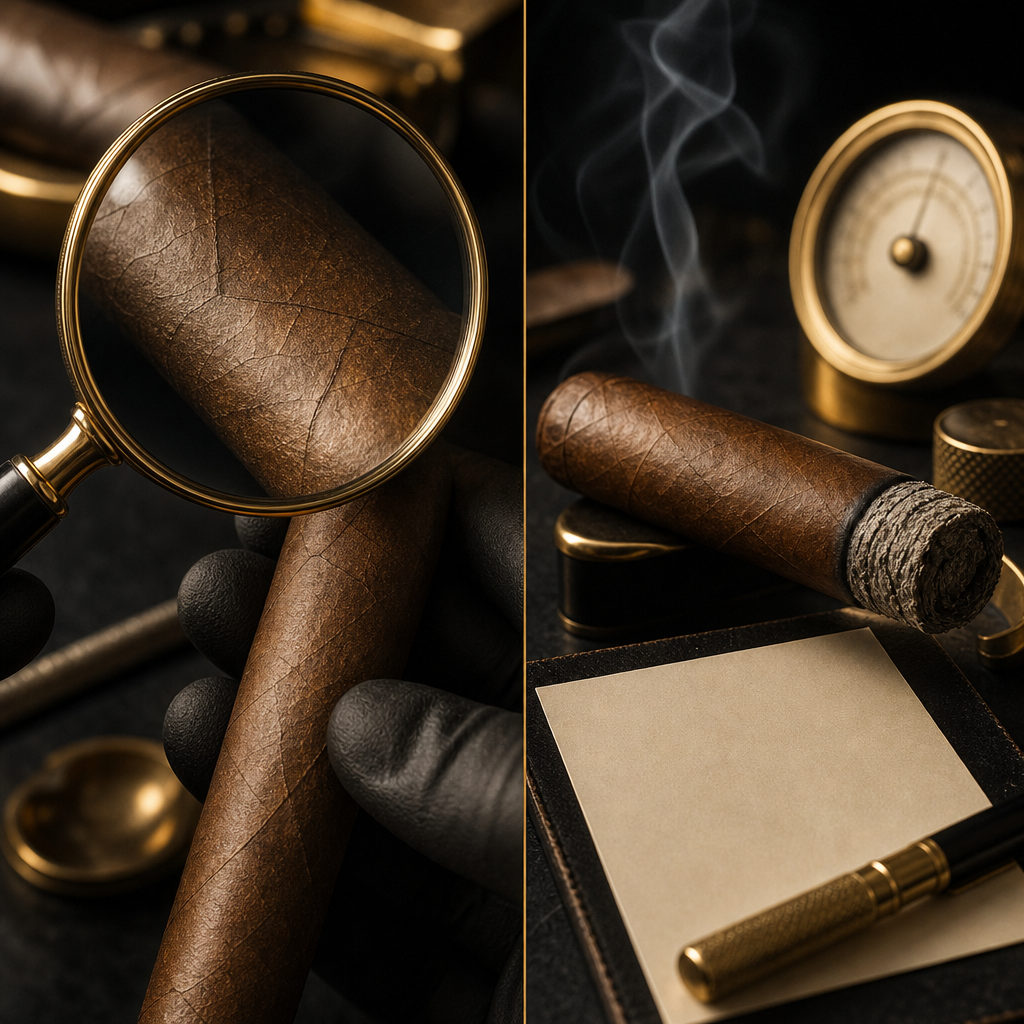
When I receive a premium cigar, I first look at the wrapper. A good wrapper should have a natural sheen, fine veins, even surface tension, and feel slightly elastic, not dry, rough, or with localized dents. For medium to large models like H. Upmann Magnum 46 or Cohiba Siglo VI, if stored well, the wrapper often appears delicately oily but should not feel sticky or soft. The key to a high-quality wrapper is not "shininess" but completeness, uniformity, and the absence of abnormal damage.
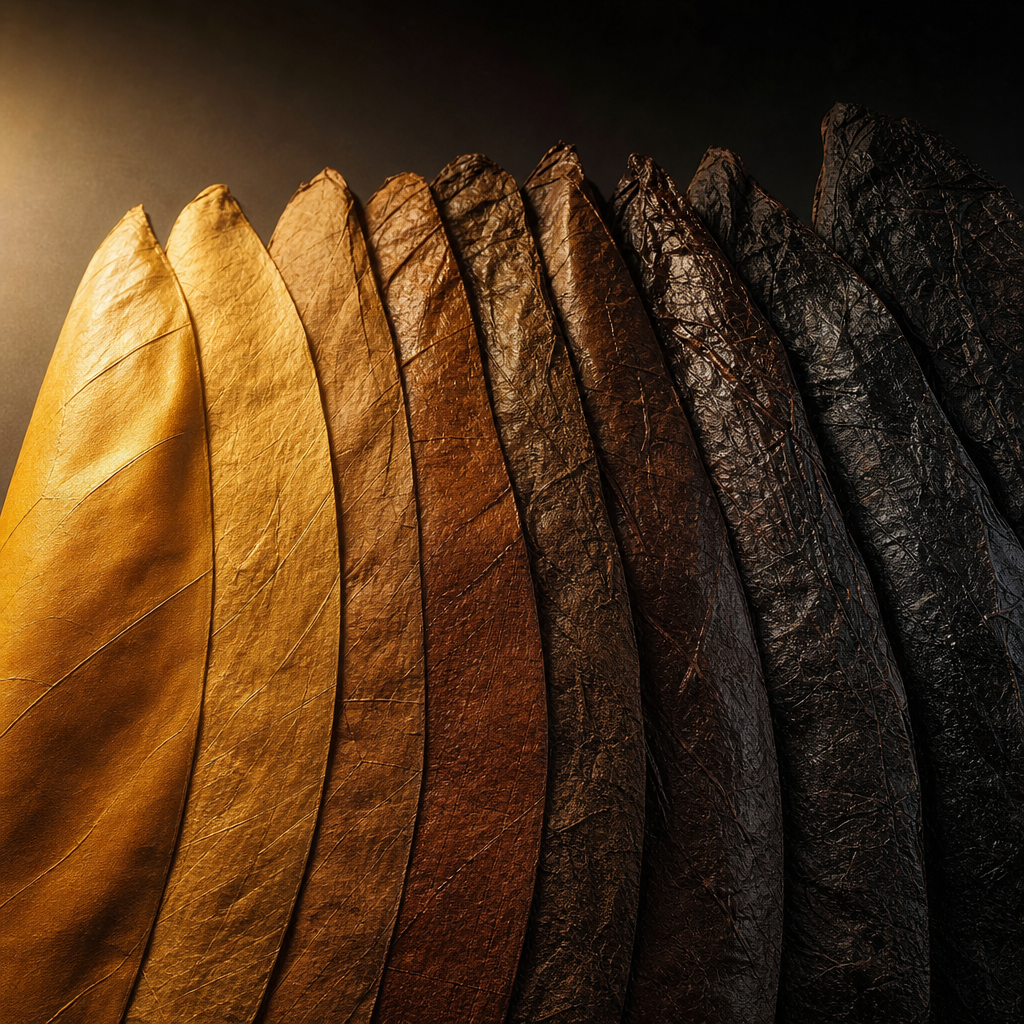
In terms of color, do not judge quality solely by lightness or darkness. Claro, Colorado, and Maduro each have their characteristics; Maduro does not necessarily mean higher quality, and Claro does not necessarily mean it is thin. You should observe whether the color is consistent throughout, especially if there is a noticeable color difference between the cap, body, and foot. In the 2010s, many New World brands, such as the Padrón 1964 Anniversary Series and Arturo Fuente Hemingway, often use dark wrappers to bring out cocoa and coffee tones, but quality still depends on leaf structure and construction details.
Also, pay attention to white spots and blemishes. Fine crystals may appear during natural aging and can usually be wiped off gently; however, if they are hairy, spreading, and have a moldy smell, be cautious. Cracks should be assessed based on location; minor cracks at the foot can sometimes be acceptable, but cracks extending to the middle of the body can cause uneven burning. The purpose of appearance inspection is to first eliminate structural risks and then further evaluate flavor potential.
Construction and Feel: Draw Resistance, Elasticity, and Filling Density Determine Stability
The construction of premium cigars is an art of balance. Too loose, and it burns too quickly, with high temperature and sharp flavors; too tight, and the draw resistance is too high, making it easy to extinguish and difficult to release aromas. I usually gently press from the cap to the foot, feeling the density every 2 centimeters. Good construction should have a bounce like ripe fruit, not hard like a stick or soft like a sponge. Even feel is the first checkpoint for stable cigar performance.
For torpedo-shaped cigars like Montecristo No.2, the pointed head affects draw resistance; cutting too little may result in a tight draw, while cutting too much can damage the cap. For robusto sizes like Partagás Serie D No.4, with a length of about 124mm and a ring gauge of 50, construction issues often manifest in the first third. If the draw is normal at first but suddenly blocks in the middle, it may be due to uneven filler distribution or high humidity.
You can do three things to judge: first, do a cold draw before lighting to check airflow; second, observe the foot's cross-section for excessive hollowness or compression; third, avoid puffing aggressively in the first 5 minutes after lighting to allow the burn line to establish naturally. Many people mistakenly believe that brand names guarantee consistent construction, but even within the same box, handmade cigars can have slight differences.
Aroma Evaluation: Cold Aroma, Lit Aroma, and Smoke Aroma Should Be Judged Separately
When evaluating aroma, I divide it into three stages: smelling the body before cutting, doing a cold draw after cutting, and observing the smoke after lighting. The unlit body often reveals storage and leaf condition; excellent Cuban cigars may have hay, honey, cedar, and light leather notes, while New World cigars may have nutty, cocoa, black pepper, or earthy tones. Cold aroma only provides direction; true quality depends on whether the aroma is clear, clean, and persistent after lighting.
For example, Davidoff Millennium Blend often features creamy, woody, white pepper, and elegant sweetness; Padrón 1926 Series tends to show cocoa, coffee, nuts, and rich earthiness. If a cigar has a pungent ammonia smell before lighting, it indicates insufficient aging or poor storage; if it has a damp cardboard, moldy, or rancid smell, it should not be overestimated, even if it looks good.
After lighting, pay attention to whether the aroma has layers. Good smoke doesn't have to be dense, but it should have a profile: can it leave a clean aftertaste upon entry, stay, and exhale? For instance, many premium brands after 2018 emphasize medium intensity and high balance, no longer just pursuing nicotine strength. Beginners can prepare an aroma chart to categorize and record wood, nuts, spices, floral, sweetness, minerals, leather, and coffee, gradually building their flavor dictionary.
Burn and Ash: Focus on Burn Line Stability, Not Ash Length
The burn line reflects moisture content, construction, and lighting method. Ideally, the burn line may have slight fluctuations but should not consistently burn unevenly, requiring frequent corrections. Cigars are generally recommended to be stored at a relative humidity of about 65% to 70% and a temperature of about 18°C to 21°C; if humidity is too high, it tends to smolder, with insufficient smoke and a skewed burn line; if too dry, it burns quickly, tastes spicy, and the wrapper may crack. Stable burning is more representative of quality and correct storage than a beautiful ash column.
Regarding ash, colors from light gray to dark gray can be normal; don't be superstitious about white ash. If the ash can maintain 2 to 3 centimeters, it usually indicates a good filler structure; however, deliberately pursuing ultra-long ash columns may cause ash to fall and affect etiquette. Cigars with larger ring gauges, like Romeo y Julieta Wide Churchills, produce abundant smoke, and the ash column looks spectacular, but the real focus is whether each puff is stable and not overheated.
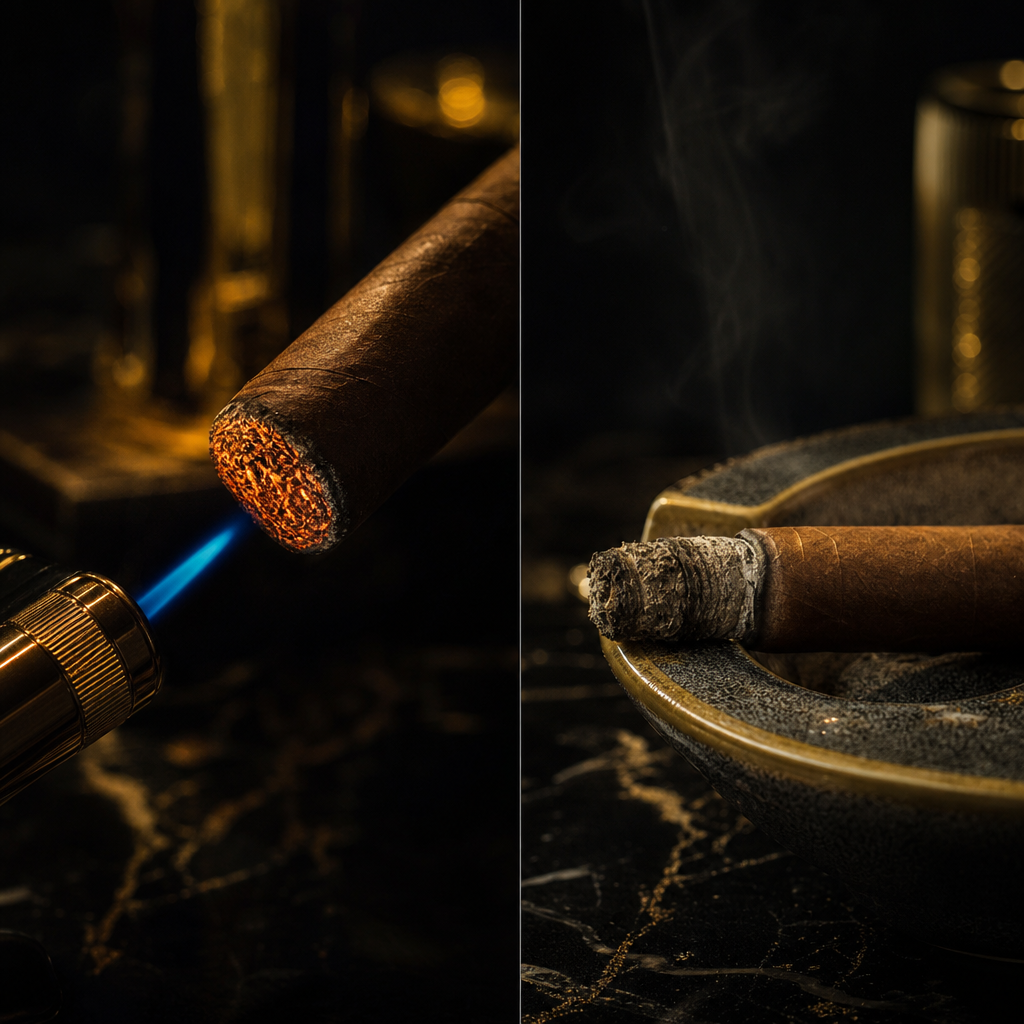
Lighting also affects evaluation. I first evenly toast the foot's outer ring, then slowly light the center, avoiding prolonged direct flame on the wrapper. If the front part burns unevenly, wait 1 to 2 minutes to observe before correcting; if the deviation exceeds half a circle, make a slight correction. Often, it's not the cigar's quality that's poor, but rather the lighting is too rushed, or the smoking pace is too fast, disrupting the originally balanced structure.
Flavor Structure: High Quality Is Not About More Flavors, But Balance, Transitions, and Aftertaste
Beginners often ask me: does more complex flavor mean higher quality? My answer is, not necessarily. High-quality cigars can be complex or extremely simple, but they must be balanced. Balance means that sweetness, bitterness, acidity, spiciness, woodiness, oiliness, and nicotine strength do not overpower each other. For example, Cohiba Behike 52 is highly discussed in the market, often expected to have delicate cream, grass, honey, and wood transitions; however, if not stored properly, it can still become bland or sharp. Truly high-quality cigars will exhibit reasonable changes in different segments, not just a single heavy flavor from start to finish.
I usually divide a cigar into the first third, middle third, and last third. The front section checks if the opening is clean, the middle section sees if the theme unfolds, and the last section assesses if the increased intensity remains smooth. For instance, Partagás Serie P No.2 often has woody, spicy, leather, and earthy notes; if the middle section can transition to slight sweetness or roasted nuts, the overall rating will improve; conversely, if the last section only has charred bitterness and heat, the score should be conservative.
Aftertaste is also important. A good aftertaste is not choking the mouth but having a clean aroma lingering 10 to 30 seconds after exhaling. You can self-test with three questions: Do I still want to slowly take the next puff? Does the flavor remind me of specific foods or scenes? Is the increased intensity in the last section still comfortable? If most answers are yes, the cigar's quality is likely at a certain level.
Origin, Storage, and Box Condition: Even the Best Brands Fear Incorrect Environments
The evaluation of premium cigars cannot rely solely on individual sticks; origin and storage are equally crucial. Cuban cigars, in particular, require attention to box codes, seals, band printing, wooden box craftsmanship, and overall box aroma. As a PCC authorized dealer, I recommend readers establish the concept of "traceable origin": you don't have to chase rare editions every time, but you must confirm whether the storage chain is reasonable, the box is clean, and the humidity is stable. Transparent origin and correct storage are inseparable parts of quality evaluation.
For example, from 2014 to 2020, many limited editions and regional editions had significant market price fluctuations, but price does not equal quality. Some Edición Limitada are sought after for their large ring gauge and beautiful packaging, but the actual flavor still depends on the year, aging state, and storage. From a collection perspective, scarcity, brand history, and market demand can be discussed, but collection appreciation does not guarantee appreciation; it still depends on origin, storage, and market.
Box condition can be assessed from several details: whether there are abnormal water stains on the outer box, whether the wood has a moldy smell, whether the inner lining paper is stained, and whether the cigars are overly compressed. If one cigar in the same box is visibly moldy, check for spread. For long-term storage, it is recommended to use a calibrated hygrometer; Boveda 65% or 69% is common in stable environments, but adjustments should be made based on climate and cabinet sealing. Premium cigars are not complete upon purchase; subsequent management is crucial for quality realization.
Establishing Your Own Rating Sheet: Use Records Instead of Impressions, Use Comparisons to Accumulate Judgments
I encourage beginners to start recording from the 20th cigar because by then, you have basic experience and are not yet bound by too many brand impressions. The record doesn't have to be complicated; you can start with a 100-point scale or a 5-star scale; I personally value comparability more, such as different sizes of the same brand, different years of the same size, and differences in the same cigar under different humidity levels. Effective evaluation is not based on one-time amazement but on seeing stability after multiple records.
Here is a simplified table that you can adjust according to your habits. It is recommended to record the date, storage humidity, cutting method, pairing drink, and smoking time each time; a robusto usually takes about 45 to 70 minutes, while a Churchill may take over 90 minutes. If the time is significantly lower than normal, it may indicate a too-fast smoking pace or dry humidity.
| Evaluation Item | Observation Focus | Suggested Score |
|---|---|---|
| Appearance and Construction | Wrapper completeness, even feel, normal draw resistance | 20 |
| Aroma Clarity | Cold aroma, lit aroma, smoke cleanliness | 20 |
| Burn Stability | Burn line, ash column, extinguishing frequency | 15 |
| Flavor Structure | Changes and balance in the first, middle, and last sections | 25 |
| Aftertaste and Comfort | Aftertaste, irritation, overall satisfaction | 20 |
When recording, avoid simply writing "good smoke" or "bad smoke"; write specific descriptions, such as "cedar and cream in the front section, transitioning to black coffee in the middle, with stronger pepper in the last section but not bitter." After three months, you will find that your preferred brands, sizes, and intensities become clearer. This kind of record will make choices more rational and prevent being led by packaging, rumors, or short-term trends.
Frequently Asked Questions
Should Beginners First Pursue Brand Names?
Brand names have reference value but should not be the only standard. Cohiba, Montecristo, Davidoff, and Padrón all have representative works, but they can also perform below expectations due to storage, batch, or personal preference. The most important thing in the beginner stage is to establish a judgment method, not just remember brand rankings.
Does White Spot on the Cigar Surface Mean It's Bad?
Not necessarily. If it's fine crystals that can be wiped off and have no odor, it may be related to long-term aging; if it's hairy, spreading, and has a damp moldy smell, be cautious. When judging, consider the smell, feel, and condition of other cigars in the box, not just photos.
Does Tight Draw Mean Poor Quality?
It could be a construction issue, high humidity, or insufficient cutting. Torpedo-shaped cigars are especially affected by cut size. You can first check the cutting method and then observe if the entire cigar is blocked; if it suddenly tightens in the middle, common causes are overly dense filler or concentrated moisture.
Does Whiter, Longer Ash Mean Better Quality?
Not entirely correct. Ash color is influenced by soil minerals, leaf material, and burn state; white ash does not equal high quality. The ash column should maintain a reasonable length, with the focus on a stable burn line, clean smoke, and flavors that are not charred or sharp. Over-pursuing long ash can also affect etiquette.
Are Premium Cigars Suitable for Long-Term Collection?
They can be, but first distinguish "storage" from "speculation." Some limited editions or classic models have collection discussion value, but collection appreciation does not guarantee appreciation; it still depends on origin, storage, and market. Without stable temperature and humidity, traceable origin, and complete records, collection risks will significantly increase.
How Do I Know If My Rating Is Accurate?
Initially, don't pursue absolute accuracy; pursue consistency. You can use the same sheet to continuously record 10 to 20 cigars and compare your descriptions for repetition. When you can clearly state "why you like it" and "where it falls short," your evaluation ability has already improved.
Finally, I want to say that the charm of premium cigars lies not in ranking each one but in understanding the land, year, craftsmanship, and time through observation. Good judgment will make you respect each cigar more and know how to appreciate it in the right occasion, rhythm, and state. Don't rush to chase the rumored masterpieces; first stabilize your eyes, nose, mouth, and records; when you can articulate details, truly good cigars will naturally emerge.
—Cigar Prince Wilson Tsai
Smoking is harmful to health. Smoking is prohibited for those under twenty. Quitline: 0800-636363. This article is for reference on cigar culture, storage, and regulations for adults over twenty and is not an advertisement, promotion, or purchase suggestion for tobacco products.