The Flavor Layering and Advanced Tasting Techniques of Cigars
The Flavor Layering and Advanced Tasting Techniques of Cigars
As the editor of "The Cigar Bible," I am often asked by veterans: Why do some people only describe a cigar as woody or leathery, while others can identify notes of cream, roasted nuts, minerals, ripe fruit, and spicy finish? The difference is not in the natural sensitivity of the tongue, but in whether one understands how to deconstruct flavors into structures and recalibrate them consistently.
Advanced tasting is not about piling on fancy adjectives but about establishing a repeatable judgment system. From the pre-light cold draw to the first third, middle, and final third, and then to the length of the finish and burn performance, each step can leave clues. When you can connect these clues, a cigar truly transitions from "good smoke" to "depth."
The Core of Flavor Layering: The Timeline is Not Just Divided into Thirds
Many people divide a cigar into the first third, middle, and final third, but the truly advanced view is to look at the timeline in conjunction with the burn temperature. Take the Cohiba Siglo VI as an example. Released in 2002, it became the representative size of the Línea 1492, with a 52 ring gauge and 150 mm length. It burns relatively slowly, and flavor transitions are usually not abrupt. If stored well at around 65% humidity, the front often features grassy, honey, and creamy notes, while roasted grains and light woodiness gradually appear in the middle.
The first principle of flavor layering is not to rush to name the flavors but to first record the timing and duration of their appearance. The same woodiness appearing at the beginning might represent the dry cedar box aroma; if it appears in the final third accompanied by black pepper and caramel, it is closer to the spicy and caramelized sensation after the burn temperature rises. A Partagás Serie D No.4, a 50 ring gauge Robusto, might be very spicy in the front if the humidity is too low or the pace is too fast.
My own notes divide a cigar into 0–10 minutes, 10–35 minutes, and after 35 minutes, rather than just writing one-third. Especially for a Corona Gorda like the H. Upmann Magnum 46, with a 46 ring gauge and 143 mm, the flavor may not change at the visual one-third mark but often unfolds after the burn core stabilizes. Veteran evaluations focus not on the number of flavors but on whether transitions are natural, continuous, and reasonable.
Cold Draw and Pre-Light Interpretation: The Real First Layer of Clues
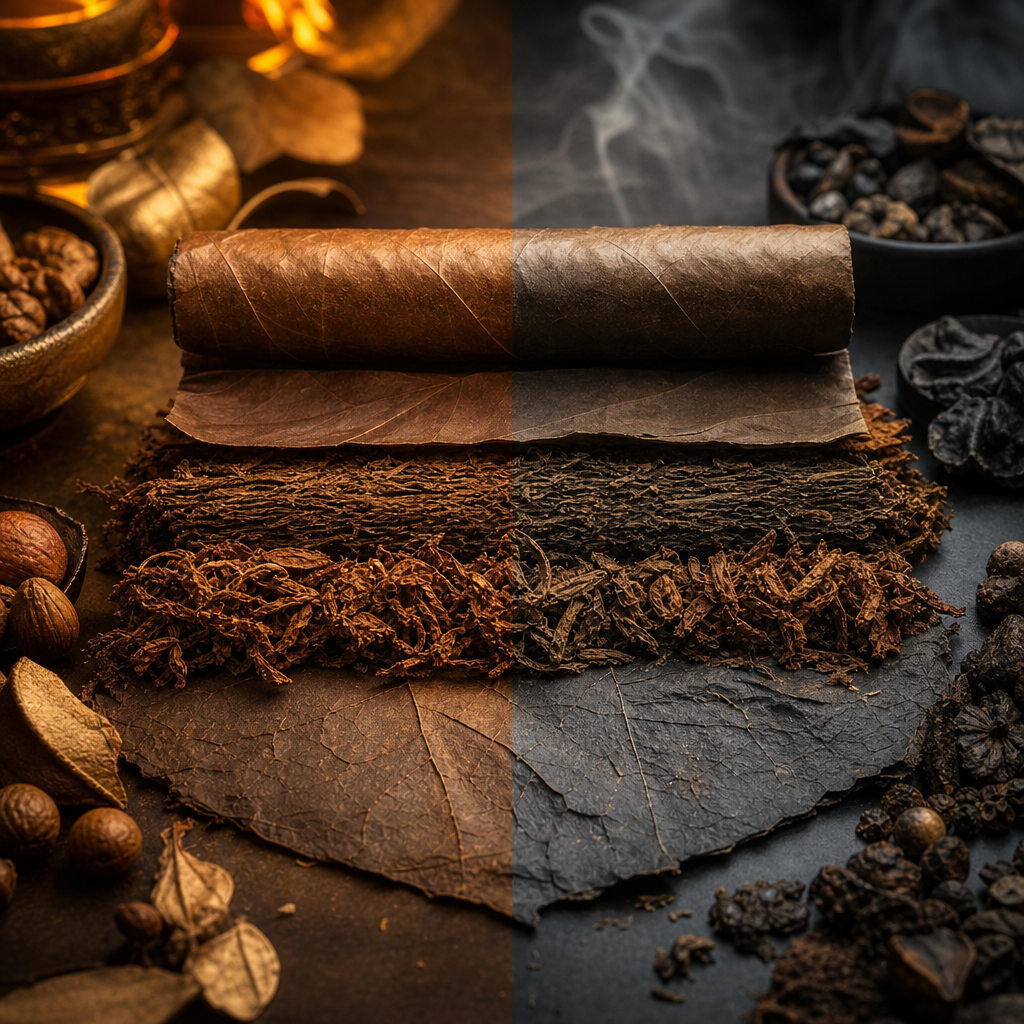
Pre-light interpretation is often underestimated. The aroma of the wrapper, the foot scent, and the cold draw after cutting can reveal fermentation and storage status in advance. Take the Montecristo No.2 as an example. This 52 ring gauge, 156 mm Pirámides, when in good condition, often has cocoa powder, dry wood, light coffee, and a hint of peanut shell at the foot. If the cold draw has a noticeable ammonia or green taste, it indicates that it still needs time to stabilize or has been poorly stored.
The cold draw is not about drawing hard but like lightly smelling the cup before drinking hot tea. After cutting, use very light force to draw in, observing resistance, sweetness, spiciness, and dryness. If the draw is too tight, the burn is likely to be uneven after lighting; if too loose, the flavor may dissipate quickly, and the smoke body may lack density. In 2019, I recorded a box of Romeo y Julieta Churchill, where 3 out of 25 cigars had loose draws, with beautiful aromas in the front but thinning after the middle, a typical imbalance.
Pre-light is not about ritual but a pre-test of quality interpretation. I record four items: wrapper glossiness, foot aroma, cold draw resistance, and cold draw sweetness. If the cold draw has clear malt, honey, and dry grass, but after lighting, only bitterness remains, the problem often lies not with the brand but with excessive fire source, too fast a pace, or over-corrected burn lines.
Mouth Position and Retrohaling: Turning Taste from Flat to Three-Dimensional
Cigar flavor is not just about the tongue. The tip of the tongue is more sensitive to sweetness and stimulation, the sides of the tongue and mouth often capture acidity and saltiness, while the back is sensitive to bitterness and spiciness. Retrohaling through the nose amplifies volatile aromas like wood, floral, dried fruit, and spices. For example, with the Davidoff Grand Cru No.2, if you only stay in the mouth, it may seem like mild cream and wood; but if you let the smoke linger in the mouth for 2–3 seconds and then slowly exhale through the nose, you can more easily capture almond, dry grass, and a hint of white pepper.
Retrohaling should not be forced, especially when the smoke temperature rises in the final third. My approach is to do a small amount of retrohaling every 5 puffs, allowing only about 10%–20% of the smoke to pass through the nose. The Fuente Fuente OpusX often has bright spiciness when young; if too much smoke passes through the nose, it will feel stimulating rather than layered. But if controlled properly, you can distinguish between red pepper, cinnamon, cedar, and ripe fruit sweetness.
The focus of advanced techniques is to observe the smoke in different positions rather than pursuing stronger stimulation. I recommend using a three-point recording method: the tip of the tongue for sweetness and sting, the sides of the tongue for acidity and saltiness, and the nose for spices and woodiness. After continuously recording 10 cigars, you'll find your judgment of brand styles more stable. For example, Padrón 1964 Anniversary often features cocoa, coffee, and brown sugar, and won't be easily misled by a single spiciness.
Flavor Vocabulary Needs Reference: Avoid Writing Adjectives as Fantasies
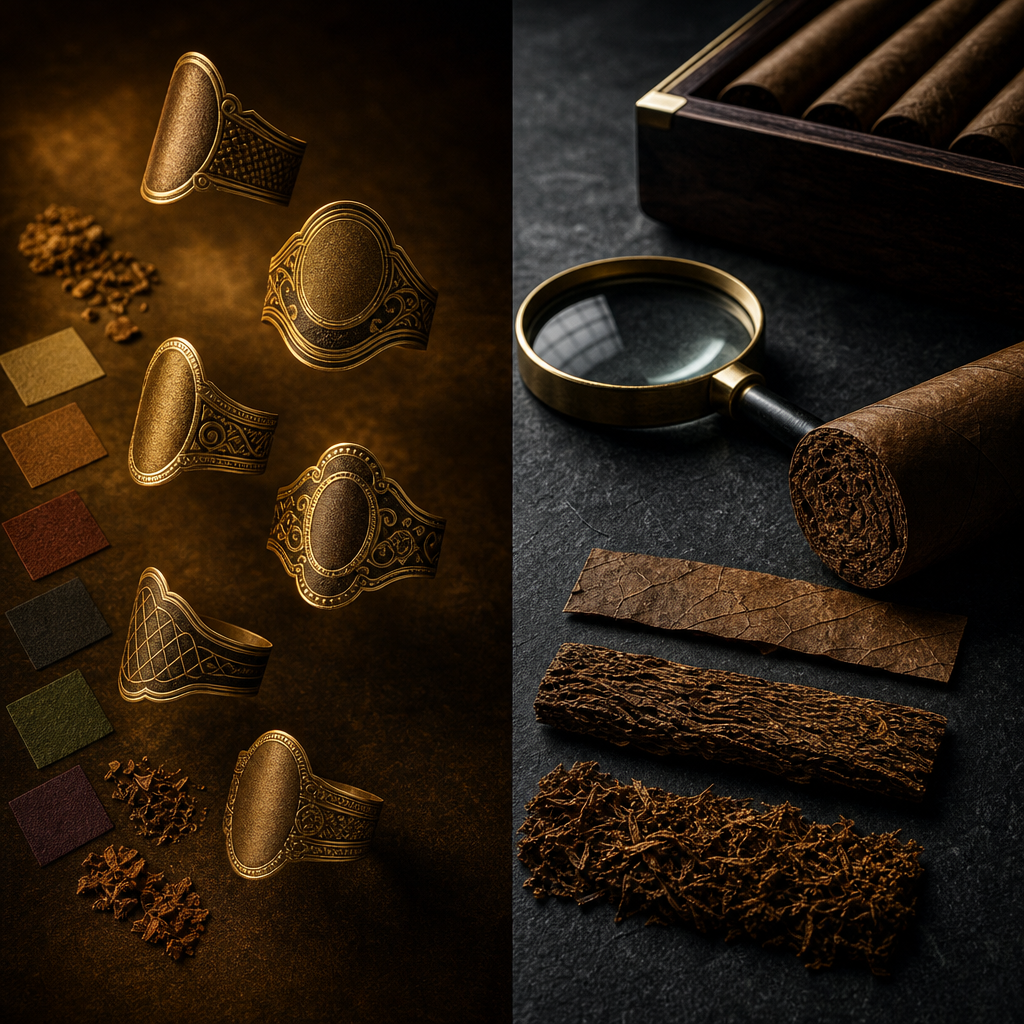
The most common mistake veterans make is not writing too little but writing too much. Without reference, "leather, earth, nuts, floral" are difficult to compare. I link flavor vocabulary to real materials: is leather a new shoe box, old book cover, or leather sofa? Is wood cedar, oak barrel, or pencil shavings? Is coffee light roasted with nutty tones or dark roasted with bitter tones? These details make notes re-readable.
Below is a table I often use to calibrate cigar flavors. It is not a standard answer but allows you to compare with the same language across different brands, years, and storage conditions.
| Flavor Family | Common Descriptions | Specific References | Common Brand Examples |
|---|---|---|---|
| Wood | Cedar, dry wood, pencil shavings | Spanish cedar box, pencil shavings | H. Upmann, Cohiba |
| Roasted | Coffee, cocoa, toast | Medium roast coffee beans, unsweetened cocoa powder | Padrón 1964, Montecristo |
| Sweetness | Honey, caramel, malt | Longan honey, roasted malt | Hoyo de Monterrey, Davidoff |
| Spiciness | Pepper, cinnamon, cardamom | White peppercorns, cinnamon sticks | Partagás, OpusX |
| Earthy | Mineral, wet earth, mushroom | Post-rain soil, dried mushrooms | Bolívar, Ramon Allones |
The more precise the flavor vocabulary, the more you can see the structure of a cigar, rather than just your imagination. For example, writing "cocoa," Montecristo No.2 might lean towards dry cocoa powder, while Padrón 1964 Maduro might be closer to dark chocolate and concentrated coffee. Both are good, but the texture is different; the former has cleaner lines, the latter has higher density, which is the starting point for comparing layers.
Burn Rhythm, Temperature, and Ash Column: Technique Will Change Flavor
The same cigar smoked too fast and too slow will feel like two different products. Generally, I recommend a Robusto at about 45–60 seconds per puff, while a Churchill or Double Corona can stretch to 60–90 seconds per puff. If every 20 seconds per puff, the burn core will heat up, sweetness will be overshadowed by bitterness, spiciness will become sharp, and the final third may feel scorching. This is not because the cigar "lacks layers," but because the rhythm has burned away the layers.
The ash column also affects temperature. Keeping a 1.5–2 cm ash column usually stabilizes the burn, but if the ash is too long and blocks airflow, the smoke volume will decrease, and the flavor may become muted. For example, the Hoyo de Monterrey Epicure No.2, a 50 ring gauge Robusto known for its gentle woodiness and creamy sweetness, if the ash column is well controlled, the middle will have toasted bread and nuts; if frequently tapping ash and relighting, it is easy to break the delicate sweetness.
Before evaluating a cigar, make sure your burn technique hasn't destroyed it. I often use three checks: whether the burn line is skewed by more than 5 mm, whether the smoke temperature feels hot on the lips, and whether it needs relighting every 3 minutes. If all three are out of control, notes should be marked "technical variables," and don't rush to judge brand performance. A veteran's maturity lies in knowing which flavors come from the cigar and which from their technique.
Aging and Vintage Differences: Time Brings Integration, Not Guaranteed Myth
A cigar that has undergone good aging often sees reduced spiciness, integrated aromas, and rounded mouthfeel, but not all cigars improve with time. Between 2008 and 2012, many Cuban box releases were discussed in the market, partly because some batches stabilized over the years, with ammonia fading and woodiness and sweetness more harmonious. However, if the original storage temperature and humidity fluctuated or were too humid for a long time, time will only amplify mold, mustiness, and burn issues.
Take the Cohiba Behike BHK 52 as an example. Officially launched in 2010, it has been a topic of discussion. Early boxes in good condition might showcase cream, honey, grass, minerals, and refined spiciness; but if stored too humidly, the draw becomes tight, and the originally delicate lines will be overshadowed by damp woodiness. Some vintages and rare sizes have price fluctuations in the collector's market, but collecting appreciation does not guarantee appreciation, depending on source storage and market.
The value of aging is not to turn ordinary cigars into legends but to make cigars with original structure more integrated. I judge whether a cigar is suitable for continued storage by looking at three points: first, whether it had a clear main theme when young; second, whether the spiciness was sharp rather than coarse; third, whether the middle had enough density. If a cigar is hollow from start to finish, time usually won't create depth out of thin air.
Blind Tasting and Comparison: How Veterans Overcome Brand Bias
Having brand preferences is a good thing, meaning you know what you like; but to advance, you must occasionally leave the label. Blind tasting allows you to discover your preconceived notions about brands, origins, and prices. In 2017, I did a private note comparison, selecting 3 each of Montecristo No.4, H. Upmann Half Corona, and Partagás Shorts, removing the bands and comparing them under the same humidity. The results were interesting: several veterans overestimated the correlation between perceived strength and price.
The focus of blind tasting is not to guess the brand but to test judgment stability. You can prepare 4 cigars of similar size, such as a Robusto combination: Partagás Serie D No.4, Hoyo Epicure No.2, Romeo y Julieta Short Churchill, Padrón 1964 Exclusivo. Record with the same fire source, same cup of water, and same time interval, avoiding coffee, whiskey, or strong tea interfering with the first round of judgment.
The most important outcome of blind tasting is to change "I thought" to "I observed." I suggest using a 100-point structure for each: aroma 25, structure 25, balance 20, burn 15, finish 15. After completion, look at the band, and you'll be clearer about your true preference for sweetness, smoke body, spiciness, or finish length. Over time, this builds a personal system more than memorizing scores.
Establishing Personal Rating Notes: Making Every Experience Recyclable
The biggest fear of advanced tasting is leaving only vague impressions. I recommend every veteran establish a fixed format, at least including date, brand, size, box code or year, storage humidity, cutting method, fire source, ambient temperature, pairing drink, burn time, and three-stage flavor. These data may seem cumbersome, but looking back after six months, you'll find that the real value is not in single reviews but trends.
For example, the same 2020 box Bolívar Belicosos Finos, if you find the draw slightly tight at 69% humidity, with heavy earth and black pepper; after lowering to 65%, you might find the burn cleaner, with clearer coffee and cocoa. This kind of comparison can only be preserved in notes. Without records, it's easy to mistake storage differences for vintage differences and personal state for cigar performance.
Good notes are not literary creations but allow your future self to reconstruct current conditions. I often add a final sentence, "Would you like to store for another 12 months," which is more practical than simply giving high scores. If a cigar has beautiful aroma but loose structure, I mark "short-term appreciation"; if the middle has sufficient density, clean finish, and spiciness still slightly sharp, I consider giving it more time. This kind of judgment is the true inventory management ability of veterans.
Common Questions
Why does the flavor still vary within the same box of cigars?
Even within the same box, cigars can vary due to differences in filler ratio, rolling tightness, and individual moisture content. If 2–3 out of 25 perform differently, do not immediately dismiss the entire box; first check draw, burn line, and storage position.
Is it suitable to pair alcohol during advanced tasting?
For the first round of evaluation, I recommend only pairing with room temperature water to avoid interference from alcohol, caffeine, and sugar. If you want to see the pairing effect, you can add whiskey, rum, or black coffee in the second round and record the differences before and after pairing separately.
Does retrohaling cause discomfort, indicating a technique error?
Not necessarily, but it is often due to too much smoke or too high a temperature in the final third. You can change to doing it once every 5–8 puffs and only let a small amount of smoke pass through the nose. If it still feels stimulating, stop and focus on the mouth layers.
How long should cigars be stored before reaching a better state?
There is no fixed answer. Generally, Cuban cigars often stabilize 3–5 years after production, while non-Cuban brands depend on fermentation and pre-market aging strategies. The key is stable storage, not just pursuing the number of years.
Do high-rated cigars always suit personal preferences?
Not necessarily. High scores usually indicate good structure, balance, and completeness, but personal preferences still vary. Those who like rich coffee and cocoa may not prefer light floral notes; those who like gentle sweetness may not like strong pepper.
When should you stop smoking a cigar?
When the smoke temperature becomes noticeably high, bitterness overwhelms all aromas, or frequent relighting is needed, you can stop. Advanced appreciation is not about smoking to the last millimeter but understanding its performance within the best range.
I view the layers of a cigar increasingly like a piece of music: the beginning should have a theme, the middle should have development, and the end should have a finish. What veterans truly pursue is not to describe every puff extravagantly but to discern how flavors form, transition, and become unbalanced. When you connect time, temperature, mouth position, and note systems, every cigar will leave a clearer answer.
—Cigar Prince Wilson Tsai
Smoking is harmful to health. Under 20 years old is not allowed to smoke. Quitline: 0800-636363. This article is for reference only for adults over 20 years old as knowledge of cigar culture, storage, and regulations, not as tobacco advertising, promotion, or purchase advice.