Cigar Flavor Labels: Analyzing Information on Labels and Selection Strategies
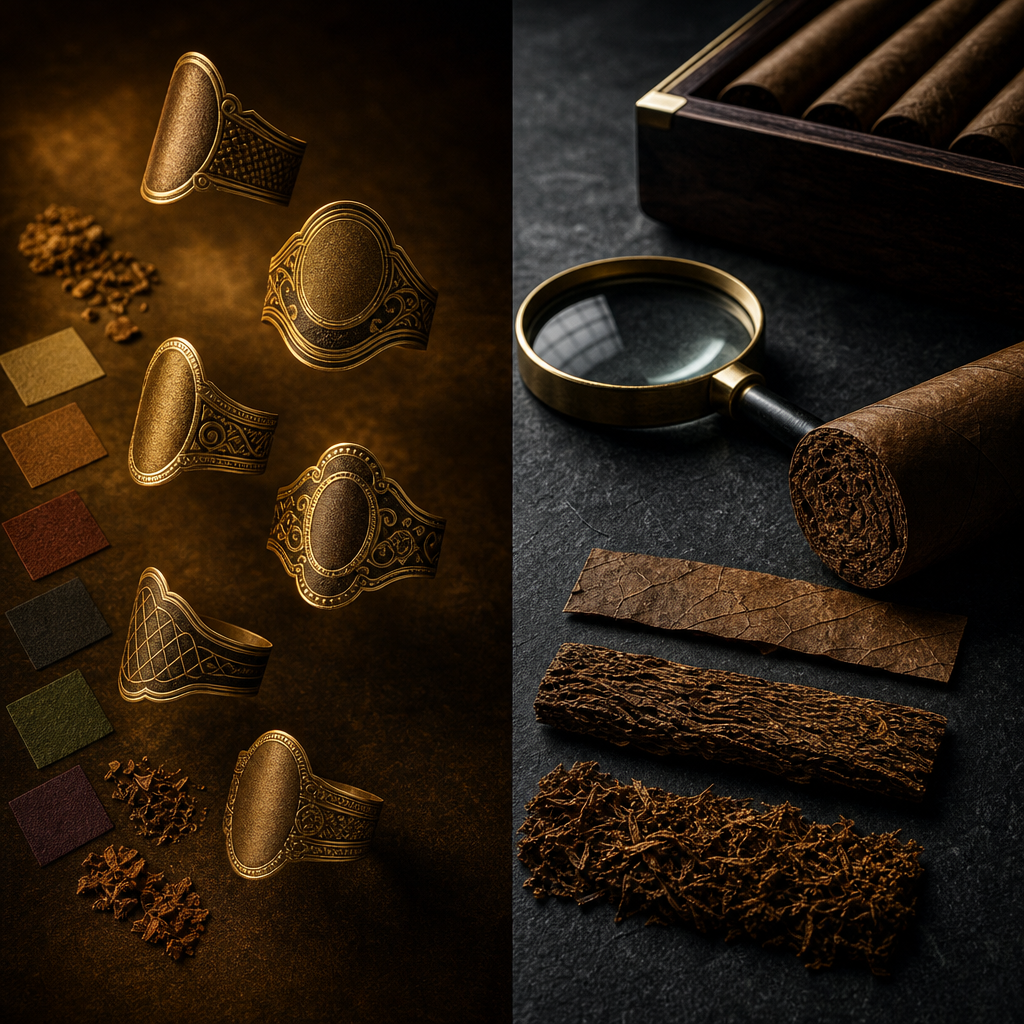
Cigar Flavor Labels: Analyzing Information on Labels and Selection Strategies
Cigar labels are often seen as decoration: a main band, a box label, a string of factory codes, plus a few flavor descriptions like "leather, coffee, cedar, spice." For veterans, the true value is not being led by adjectives, but breaking down the label into verifiable clues.
I often say that labels are not answers, but maps. They tell you about the origin, series, size, wrapper direction, brand intentions, and market positioning; whether there is cocoa in the cup or white pepper in the nose still requires cross-referencing storage, batch, size, and personal oral experience.
Flavor Labels Are Not Poems, But Coordinates Given by the Brand
Many veterans frown upon seeing "cedar, espresso, earth, leather" because these words are too frequently repeated across different brands. In the late 2000s, the U.S. market widely adopted scoring and flavor wheel language, and after 2010, new world brands from Nicaragua, Honduras, and the Dominican Republic more often included flavor words in catalogs and official pages. These descriptions are not meaningless, but they are more like the direction the brand wants you to notice first.
The first layer of function of flavor labels is to suggest "what framework the brand hopes you use to understand this cigar." For example, Padron 1964 Anniversary is often described as cocoa, coffee, nuts, and sweet spices, which aligns with its Nicaraguan tobacco, darker wrapper, and long-term stable blending style; however, the same "coffee" written for Davidoff Nicaragua may lean towards a clean roasted feel, while in Liga Privada No.9 it may lean towards dark molasses and wet wood tones.
Veterans should translate adjectives into structure: Is the sweetness from the maturity of the wrapper? Is the spice from the proportion of ligero? Is the woodiness influenced by the Spanish cedar box or the dry wood tone of the tobacco itself? If the label only says "full flavor" without explaining the origin, wrapper, or series positioning, then it can only be considered advertising; if it provides wrapper, binder, filler, and size, the interpretive value is much higher.
Wrapper, Binder, Filler: The Three Most Trustworthy Fields on the Label
If a cigar label or official information lists wrapper, binder, filler, these three items are usually more worth looking at first than "chocolate, cream, caramel." The wrapper accounts for an important proportion of the visual and burning performance of the entire cigar, and the first impression on the palate is also very obvious; the binder relates to burning and structure; the filler determines the strength, layers, and sustainability in the middle and later stages. Veterans who only look at the brand and not these three items may miss the huge differences between different series of the same brand.
When interpreting flavor labels, first read the component structure, then read the adjectives, the order cannot be reversed. For example, when Arturo Fuente Hemingway uses Cameroon wrapper, it often shows dry wood, sweet spices, and delicate spice; Oliva Serie V uses Ecuadorian sun-grown wrapper and Nicaraguan Jalapa Valley ligero, often presenting a thicker coffee, black pepper, and roasted nuts. Both can be written as "spicy," but the texture is completely different.
| Label Field | Typical Flavor Impact | Observed Case |
|---|---|---|
| Wrapper | Sweetness, spice, oiliness, first impression | Ecuador Habano often has pepper and roasting feel |
| Binder | Burning stability, structural support, middle thickness | Dominican binder often provides a clean framework |
| Filler | Strength, aftertaste, transition, later power | Nicaraguan ligero often brings spice and concentration |
| Vitola | Burning temperature, proportion, flavor unfolding speed | Robusto and Churchill have different flavor rhythms |
With the increasingly common "single origin" or "puro" labels after 2016, if a label says Nicaraguan puro, it does not mean every cigar is spicy and rugged; Padron, Joya de Nicaragua, Aganorsa have very different performances. Puro only means consistent origin, not consistent flavor. What really needs to be pursued are the differences in production area, seeds, fermentation, aging time, and brand blending philosophy.
Strength, Body, Flavor Intensity: Three Often Mislabelled Concepts
Labels often show mild, medium, full, sometimes translated into light, medium, strong in Chinese, but this only tells half the story. Strength usually refers to the nicotine feel and body load; body is closer to the weight in the mouth and smoke thickness; flavor intensity is the amount of aroma and taste signals. Many veterans fail not because they don't understand the brand, but because they mix these three into one thing.
A cigar can have very full flavor but not necessarily high strength; it can also have high strength but a single flavor line. Davidoff Grand Cru is often categorized in a more elegant and precise route, with many flavor details but not winning by impact; conversely, some short and fat sizes with high Nicaraguan ligero proportion give obvious spice and body feel in the first 20 minutes, but if stored too dry, the layers may narrow.
For example, Bolivar Royal Corona is often considered a more powerful robusto among Cuban cigars, but its "strength" is not simply spicy, but a stack of soil, coffee, wood, and dark sweetness. Cohiba Siglo VI often presents cream, grass, honey, cedar, and delicate bean aroma, with considerable body but brighter lines. If both are labeled as medium to full, brand style and size still need to supplement understanding.
I suggest veterans keep the three items separate in notes, each with a full score of 5: strength 3, body 4, flavor intensity 4, which is more useful than just writing "medium." Looking back six months later, you may find that your preference is not actually strong cigars, but "high body, medium strength, clean finish" types.
The Trap of Origin Words: Country Name Is Just the Starting Point, Production Area Is the Clue
Labels that say Dominican Republic, Nicaragua, Honduras, Cuba are just the first step for veterans. The Dominican Republic has Cibao, Jamastran has Honduran style, Nicaragua has Estelí, Jalapa, Condega differences; Cuba is often talked about Vuelta Abajo, Partido, Semi Vuelta. Country names can provide a general direction, but production areas and farms are the entrance to flavor details.
Don't treat origin as a fixed flavor; origin is a collection of variables, not a single answer. For example, Estelí is often associated with thickness, spice, power; Jalapa is often described as sweeter, rounder; Condega may bring aroma and balance. But these can all be rewritten by seeds, fermentation, filler proportion, and size. Aganorsa Leaf's Nicaraguan leaves often have obvious sweet aroma and mineral feel, not the same language as some heavy firepower brands.
Cuban cigars need to be more careful with year and box codes. After 2003, the box bottom marking system became more mature, veterans look at factory codes, month, year, and also pay attention to the stability changes of different brands between 2014 and 2019. For example, Partagás Serie D No.4, even if it's the same D4, some batches in 2017 may have crisp wood and pepper, while after 2020 some have encountered a sweeter performance; this is not something the label can fully tell you.
If the label says "Cuban seed," read carefully: it usually means Cuban seeds grown on non-Cuban soil, not Cuban cigars. This kind of labeling became common after the rise of new world brands in the 1990s, especially in Nicaragua and the Dominican Republic. Its value lies in explaining genetics and style intentions, but soil, climate, fermentation site, and blender will determine the final expression.
Year, Limited Edition, and Series Name: Understanding the Brand's True Intentions
The year on a cigar label can mean several things: brand founding anniversary, series launch year, tobacco harvest year, box year, and they cannot be confused. Padron 1926 Series commemorates Jose O. Padron's 75th birthday, it does not mean every cigar you have comes from 1926 tobacco. Romeo y Julieta Línea de Oro gained attention after 2020, but it does not mean all box years have consistent flavor.
When seeing a year, first ask if it refers to "story year" or "production clue." The Cuban box bottom codes like SEP 19, MAR 21 are important for storage and aging interpretation; but if a new world brand writes 1964, 1926, 1495, 1875 on the band, it is often about brand history, people, or series positioning. The usable value of the two is completely different and cannot be interpreted with the same method.
Limited editions also need to be dissected. Habanos' Edición Limitada formed market memory starting in 2000, usually using darker wrappers, larger sizes, and claiming longer aging of tobacco; but differences between years are significant. 2004 Partagás Serie D No.1 EL, 2010 Montecristo Grand Edmundo EL, 2019 Quai d'Orsay Senadores EL, each has different structures and market reputations.
From a collection perspective, stay calm. Some early 2000s limited editions, Reservas, Gran Reservas are indeed sought after in the secondary market, but collection appreciation does not equal guaranteed appreciation, still depends on source preservation and market. The "limited" on the label can only indicate production volume or release strategy, not automatically equal to scarce quality; clear source, stable preservation, complete box condition are the conditions veterans truly pursue.
Building a Selection Strategy with Labels: Reverse-Engineering from Preferences
Veterans choosing cigars should not just ask "what score does this cigar have," but should build their own flavor coordinates. If you often like the soft wood, cream, and nut of H. Upmann Magnum 46, you may not necessarily like the same high-scoring but spicier Nicaraguan large ring gauge; if you prefer the black pepper, cocoa, and concentration of My Father Le Bijou 1922, you may find some classic Dominican cigars too light.
The most effective selection strategy is to cross-reference label information with your historical notes, not just look at the brand name. I would suggest using a three-step reverse-engineering: first find the wrapper and origin you like, then look at size proportion, and finally look at brand description. For example, if you like the cream and hay feel of Ecuador Connecticut, you can establish a comparison from Avo Classic, Davidoff Signature, Perdomo 10th Anniversary Champagne.
- First record 10 cigars you are sure you like, marking wrapper, binder, filler, size.
- Divide each into front, middle, and back, writing down 3 stable flavors that appear.
- Mark strength, body, flavor intensity, each with a score from 1 to 5.
- Find the most repeated origin and wrapper, don't rush to chase new products.
- When encountering unfamiliar labels, only change one variable, such as the same wrapper but different origin.
Taking Robusto, Toro, Churchill as examples, the same blend in 50 ring gauge and 54 ring gauge will have different burning temperatures and wrapper proportions. After 2010, the market favored large ring gauges, many brands launched 60 ring gauge, but veterans who value wrapper performance should not blindly chase large. The size on the label is a code for flavor proportion, not just an estimate of smoking time.
Frequently Asked Questions
Does the label saying chocolate, coffee, leather mean flavors are added?
These descriptions for most traditional handmade long filler cigars are flavor associations, not a list of additives. Coffee may come from roasting feel, bitter-sweet balance, and smoke thickness; chocolate often comes from cocoa-like bitter-sweet, oiliness, and dark wrapper impression; leather is mostly a comprehensive language of dry animal, wood, and soil feel. If it's a flavored cigar, brands usually mark it as infused, flavored, etc., and the two should not be confused.
Why does the same box of cigars, with the same label, still have flavor differences?
Handmade cigars are the intersection of agricultural products and handmade products, even in the same box, they can be affected by rolling tightness, single stick moisture, and burning speed. Cuban cigars are especially often discussed by veterans for single stick differences; new world brands usually have higher consistency, but are not completely replicable. The label provides batch and blending direction, not a guarantee for every puff.
Should veterans trust ratings or labels?
Both can be referenced, but for different purposes. Ratings reflect a certain time, a certain batch of samples, and reviewer preferences; labels provide origin, size, series, and brand positioning. If a 95-point cigar's wrapper, strength, and size do not match your preferences, it may still not be your cup of tea. Conversely, a consistently rated but structurally suitable classic regular model may be more suitable for long-term personal rotation.
Which is more important: box bottom code, year, or preservation?
The three cannot be separated. The box bottom code tells you production time and some source clues; the year helps judge the aging stage; preservation determines whether it can retain its potential. A good box from 2008, if stored long-term in high temperature and humidity, may not perform better than a well-preserved box from 2021. Generally, stable 65% to 69% relative humidity, about 18 to 21°C environment, is more conducive to long-term state maintenance.
How to judge when seeing limited or commemorative editions?
First look at its limited logic: is it brand anniversary, special size, special wrapper, or just a market plan. Then look at the reputation and year performance of the same series in the past, and finally evaluate the source, box condition, and preservation. Don't overlook basic conditions because of a fancy label. If it involves collection value, still remember: collection appreciation does not equal guaranteed appreciation, still depends on source preservation and market.
What reference value does PCC authorized dealer information have?
For Cuban cigars, clear source has always been a basic skill that veterans value. The significance of PCC authorized dealers lies in clearer supply chain and regional circulation information, which helps with box labels, tax labels, and source tracking. However, even if the source is clear, box condition, humidity, year, and single stick status still need to be checked; label authenticity is just the starting point, correct preservation will allow the flavor to be fully presented.
When I look at cigar labels, I never just look at whether they are beautiful, but whether they are honest and complete in information. The real fun for veterans is piecing together brand language, origin clues, size proportions, and their own sensory memories. When you are no longer swayed by a few fancy adjectives, but can infer structure, risk, and possibilities from the label, choices become more precise and have more of your own style. —Cigar Prince Wilson Tsai
Smoking is harmful to health. Under 20 years old is not allowed to smoke. Quitline: 0800-636363. This article is for reference only for adults over 20 years old as knowledge of cigar culture, preservation, and regulations, not a tobacco advertisement, promotion, or purchase suggestion.