Cigar Etiquette and Social Culture: From Basics to Advanced Applications
Cigar Etiquette and Social Culture: From Basics to Advanced Applications
Cigar etiquette is not about making actions flamboyant, but about making yourself and others comfortable. As the editor of "Cigar Bible," I often say: A truly mature cigar social experience begins before lighting and continues after the ashes fall.
Beginners who already understand basic puffing should next learn about "situational awareness." The same Partagás Serie D No.4 can mean different things at a gathering of friends, a business dinner, a wedding terrace, or an overseas cigar bar. What to say, what to do, and when to remain silent all vary in detail.
The Core of Cigar Socializing: Not Showing Off, But Rhythm and Respect
The cultural significance of cigars in social settings originally comes not from price but from time. For a robusto with a 50 ring gauge and a length of about 124mm, enjoying it fully often takes 45 to 70 minutes; for a size like Cohiba Siglo VI with a 52 ring gauge and 150mm length, it often extends to over 90 minutes. This time allows people to slow down their speech and let conversations move from small talk to genuine exchange.
In 2018, I hosted a European guest who chose a Montecristo No.2. Instead of rushing to light it, he first asked his companions if they minded the smoke direction. At that moment, I knew: he understood not just the brand but the occasion. The first layer of cigar etiquette is to first consider the space and others' feelings before discussing flavors and collections.
In social settings, cigars often serve as "neutral topics." Discussing vintage, region, and size is gentler than directly talking about business or personal issues. For example, discussing the history of Cohiba becoming a representative Cuban brand in 1966 or the background of Siglo VI's debut in 2002 can naturally open up conversations. Knowing how to create a comfortable distance with cigars is more tactful than rushing to display knowledge.
Basic Etiquette Before Lighting: Confirm the Venue, Companions, and Time
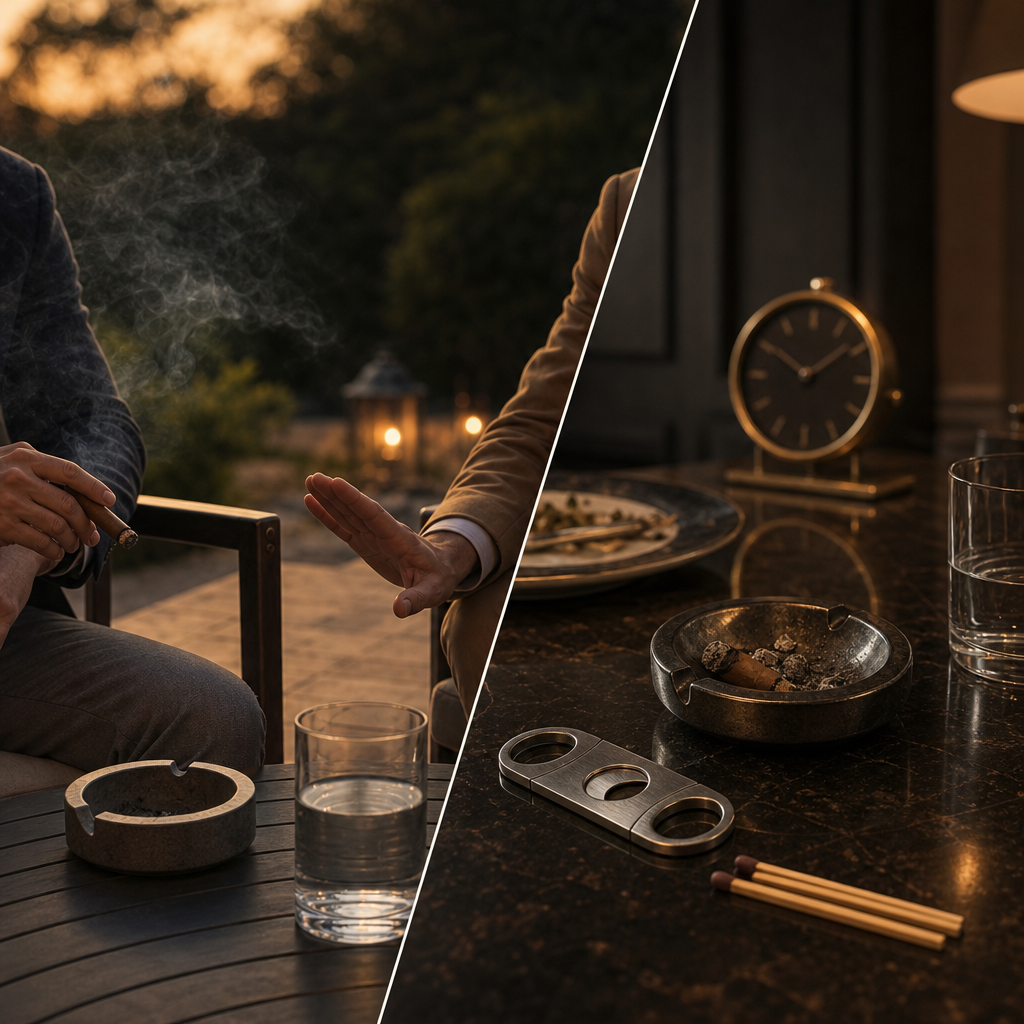
Before lighting, the most important thing is not cutting but confirming whether you can smoke, whether it's appropriate, and whether it will affect others. Even on terraces, private clubs, or hotel cigar lounges where cigars are allowed, you should first observe the wind direction and seating distance. If someone nearby is dining, drinking white wine, or discussing formal topics, it's usually more courteous to wait than to explain cigar culture.
Time is also part of etiquette. After a business dinner, if there are only 30 minutes, you shouldn't bring out a Churchill size; a Romeo y Julieta Churchill, about 178mm, often exceeds 90 minutes. At this time, choosing a petit robusto, short corona, or half corona is more appropriate, such as the H. Upmann Half Corona, about 90mm, which has a shorter rhythm and doesn't force others at the table to wait for you.
Before lighting, you can self-check with three questions:
- Is smoking cigars allowed here?
- Do my companions mind the smoke and the duration?
- Does the size of this cigar fit the upcoming schedule?
Once, after a corporate dinner in 2021, a guest initially took out a Double Corona but later switched to Partagás Shorts. It wasn't because the latter was more premium, but because there were only 40 minutes left. Choosing what's appropriate for the occasion is always wiser than choosing what's expensive.
Cutting, Lighting, and the First Puff: The Steadier the Action, the Less Performance Needed
Cutting and lighting are the social actions most likely to be magnified. Beginners often want others to see the tools and techniques, inadvertently making the rhythm tense. For a parejo straight cigar, usually, only the very end of the cap, about 1 to 2mm, needs to be cut to preserve the structure; for figurados like Montecristo No.2 or Cuaba Divinos, adjust slowly based on the tip's resistance, without cutting too deep in one go.
When lighting, it's not recommended to directly burn the foot of the cigar with the flame. You can first preheat by rotating the foot about 1 to 2 cm away with a torch or long match, allowing the outer circle to change color evenly before gently bringing the flame. Don't rush to comment on the first puff; let the burn stabilize first. A clean cut, even lighting, and saying less is the safest start in social settings.
| Action | Proper Method | Common Mistakes |
|---|---|---|
| Cutting | Trim a small amount, test the draw first | Cutting too deep, causing the cap to crack |
| Lighting | Rotate to preheat the foot | Directly burning the wrapper with the flame |
| First Puff | Let the smoke linger before exhaling | Immediately inhaling and exhaling forcefully |
| Correcting Burn | Slightly adjust with fire | Frequent showy fire adjustments |
If you use a cedar spill to light, also consider whether the place is suitable. It has a ceremonial feel, but the smoke and sparks are more noticeable; it's more appropriate outdoors or among familiar people, while in formal business spaces, it should be low-key. Tools like Davidoff, S.T. Dupont, and Colibri each have their aesthetic, but tools are just aids; stability and quietness are the focus.
Conversation Etiquette: How to Talk About Cigars Without Pressure
The most common mistake beginners make is turning every cigar conversation into a test. If someone says, "I taste coffee," there's no need to immediately correct it to cocoa, leather, or cedar. Flavor language inherently has personal memory differences; the same Hoyo de Monterrey Epicure No.2 might evoke cream and nuts for some, while others think of toasted bread first. These descriptions can all be valid.
A better approach is to extend with open questions: "Do you find the front part softer, or does it get stronger in the middle?" This is friendlier than asking, "Can you detect cardamom?" In 2019, I encountered a table of seasoned cigar enthusiasts in Hong Kong who exchanged all evening using only four sets of words: "rounder, drier, sweeter, spicier," which turned out to be more precise than piling up jargon.
When discussing brands, avoid a sense of hierarchy. Cohiba, Trinidad, Davidoff, Padrón 1964 Anniversary Series each have their status, but that doesn't mean other brands are inferior. Ramon Allones Specially Selected, Juan López Selección No.2, often appreciated by connoisseurs, can showcase a person's true experience.
The language of cigars in social settings should invite participation, not make others feel ignorant. When you can speak knowledgeably with ease and leave room for judgment, conversations naturally extend; and that ease is more precious than reciting ten brand vintages.
Applications in Different Occasions: Business, Weddings, Private Gatherings, and Travel
The focus of cigars in business settings is "restraint." After a meal, if the other party brings up cigars, you can choose a medium-strength, time-appropriate option, such as H. Upmann Magnum 46, Montecristo Edmundo, or Davidoff Grand Cru No.2. Avoid starting with high-strength, high-smoke options, as you are unsure of the other party's tolerance and subsequent schedule.
In wedding or celebration settings, atmosphere is more important. Since 2015, many Asian weddings have arranged cigar sessions in outdoor areas, but etiquette still requires avoiding the main paths of elders and the photo areas of the newlyweds. Short sizes are friendlier, like Petit Corona, Short Robusto, or small ring gauge corona, allowing participants not to leave the seat for too long and not letting the rhythm of the entire event be dominated by a few people.
Private gatherings are most suitable for deeper discussions, such as comparing Cuban and non-Cuban styles. You can contrast Cohiba Robustos with Arturo Fuente Don Carlos or Partagás Serie P No.2 with Padrón 1926 No.2, discussing spice, sweetness, structure, and burn. When traveling, first check local regulations and hotel policies, especially since many cities have become stricter about indoor spaces after 2020.
The occasion determines the size, strength, and depth of the topic of the cigar; knowing how to adapt to the situation is the true sophistication. Don't turn every gathering into an expert lecture, nor make every cigar the main focus. Sometimes, a cigar is just a reason to stay and chat for another twenty minutes.
Sharing, Gifting, and Collecting: Precision in Intent, Clarity in Source
Cigar socializing often involves sharing and gifting, but the most important thing here is the recipient's needs, not your preferences. If the recipient is a beginner, gifting a strong Nicaraguan full-body cigar may not be considerate; choosing a medium-strength, stable-burning, not-too-long option is safer. Options like Davidoff Signature, H. Upmann Connoisseur No.1, and Romeo y Julieta Short Churchills are easier to understand.
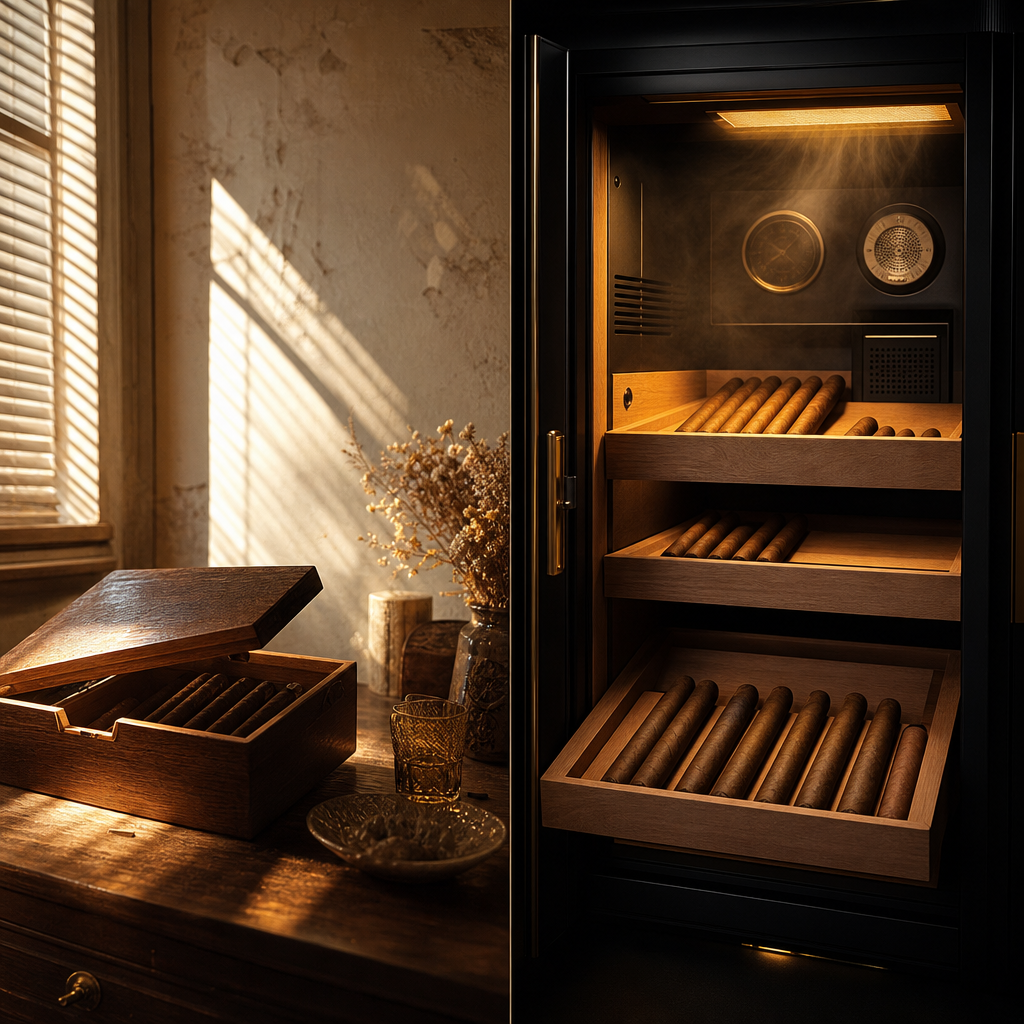
When gifting, avoid only talking about price. You can include brief information: brand, size, recommended humidity, suitable time. For example, "This robusto lasts about 50 minutes, recommended to store at 65% to 69% relative humidity." If it's a boxed or limited edition, the source and storage record are more important than a beautiful box. As a PCC authorized dealer, I've seen too many cases where the appearance is intact, but the inside is damaged due to high temperatures.
When discussing collectible value, be rational. The first batch of Cohiba Behike in 2006, the Behike BHK series in 2010, and some Edición Limitada are indeed highly regarded in the market; but collecting appreciation does not guarantee appreciation, it still depends on source preservation and market. Collecting is not completed by locking cigars in a box but by long-term management of temperature, humidity, source, and condition.
When sharing, also respect whether the other party wants to accept it. Don't push cigars in inappropriate settings, and don't require the other party to give feedback on the spot. A truly good gift allows the recipient to enjoy it naturally at the right time, not arrange a performance for them. This sense of proportion is often more memorable than the cigar itself.
Advanced Cultivation: Ash, Extinguishing, Exiting, and Post-Exchange
Ash is etiquette often overlooked by beginners. Some think the longer the ash, the better, but in social settings, safety and cleanliness are more important. Usually, keeping about 2 to 3 cm is enough to gently place in the ashtray without forcefully tapping. If the ash has begun to tilt, it should be actively handled to avoid falling on the table, clothing, or next to the glass.
A cigar should not be extinguished like a cigarette by forcefully twisting it out. If it has reached the final segment, the temperature rises, and bitterness increases, let it naturally extinguish in the ashtray. This action seems simple but reveals experience. In 2022, at a private dinner, I saw a collector stop at the last third, saying, "Leaving a bit of aftertaste is more elegant than forcing it to the end."
When exiting, pay attention to the smell. If you are returning to an indoor dining table or a closed car, you can stay in a ventilated area for a few minutes, simply tidy up your coat and hands. If you are with non-cigar smokers, actively maintain distance. This is not inferiority but respect for different lifestyles.
Post-exchange also has etiquette. You can share briefly, such as "The woody feel in the middle was comfortable today," without sending ten consecutive photos or long comments. Advanced cigar cultivation is knowing when to start, when to stop, and when to let the aftertaste linger in the heart.
Frequently Asked Questions
The core of cigar etiquette is not memorizing rules but reducing others' inconvenience and enhancing the quality of shared time. Here are some questions I am most frequently asked by beginner friends.
Can I cut or light a cigar for someone else?
Unless the other party actively asks for your assistance, do not directly pick up someone else's cigar. Cigars are very personal items, with different preferences for cut depth and draw resistance. If you want to help, just ask, "Do you need assistance with the tools?"
Is it rude if the ash falls?
Occasionally dropping ash is not a big issue; the rudeness is in not dealing with it. If ash falls on the table, immediately acknowledge it to those at the table and clean it up; in formal settings, maintaining short ash is more appropriate than pursuing long ash.
Can I drink strong liquor while smoking?
You can, but don't let alcohol cloud your judgment. Pairing a 40% ABV whiskey with a rich cigar might be too heavy for beginners; starting with coffee, unsweetened tea, sparkling water, or a milder rum is advisable.
What if the cigar goes out halfway?
If it hasn't been out for long, gently tap off the ash and relight gently. If it has been left for more than 20 to 30 minutes, the taste might become heavy; whether to continue depends on the occasion and condition, don't force it.
Should a beginner talk more or less at a cigar gathering?
Observe first, then ask questions. You can say, "I'd like to hear how everyone views the changes in the front, middle, and back sections," which is more natural than rushing to conclusions. A humble curiosity is the best social calling card for beginners.
I have always believed that the most fascinating aspect of cigars is not the smoke itself but that it makes people willing to slow down. Over the years, whether writing the "Cigar Bible," interacting with collectors, or having deep conversations with friends, the good taste I've seen is not loudly proclaimed but quietly attentive to details. Understanding how to respect space, time, and the people around you makes cigars a bridge in socializing, not a distance.
—Cigar Prince Wilson Tsai
Smoking is harmful to health. Under 20 years old is prohibited from smoking. Quit smoking hotline: 0800-636363. This article is for reference only for adults over 20 years old regarding cigar culture, preservation, and regulations, not a tobacco advertisement, promotion, or purchase suggestion.