Unveiling the Fermentation Process of Cigars: Key Techniques Influencing Flavor
Unveiling the Fermentation Process of Cigars: Key Techniques Influencing Flavor
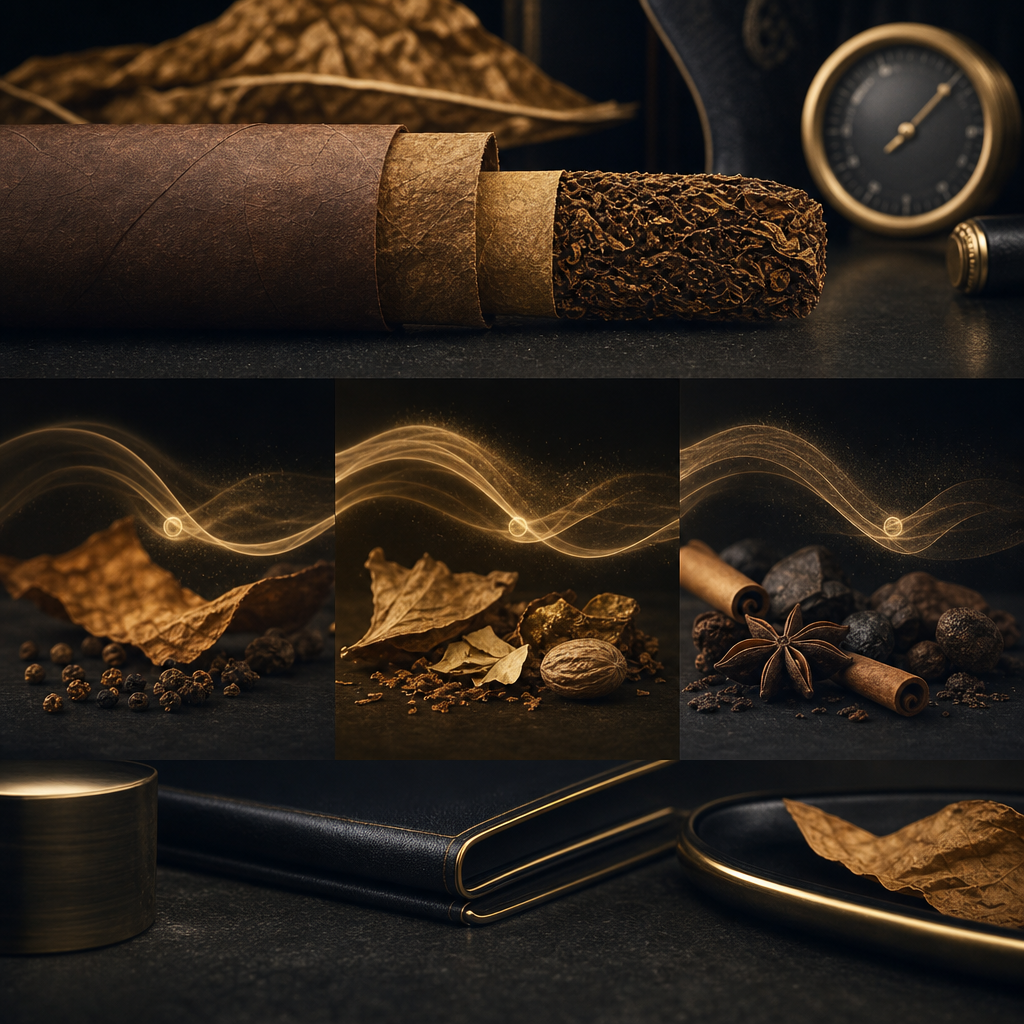
Cigar enthusiasts often describe flavors as leather, coffee, nuts, and pepper, but these flavors don't appear out of nowhere. They largely originate from the fermentation reactions that occur between the stages of harvesting, drying, piling, turning, and grading of tobacco leaves.
As the editor of the "Cigar Bible," I often remind newcomers that learning to cut, light, and taste is just the first step; truly understanding cigars means knowing what the leaves undergo in the workshop. Fermentation is the core technique for high-quality cigar flavor, smoothness, and complexity.
Fermentation is Not Just Letting the Leaves Sit: The Timeline from Harvest to Piling
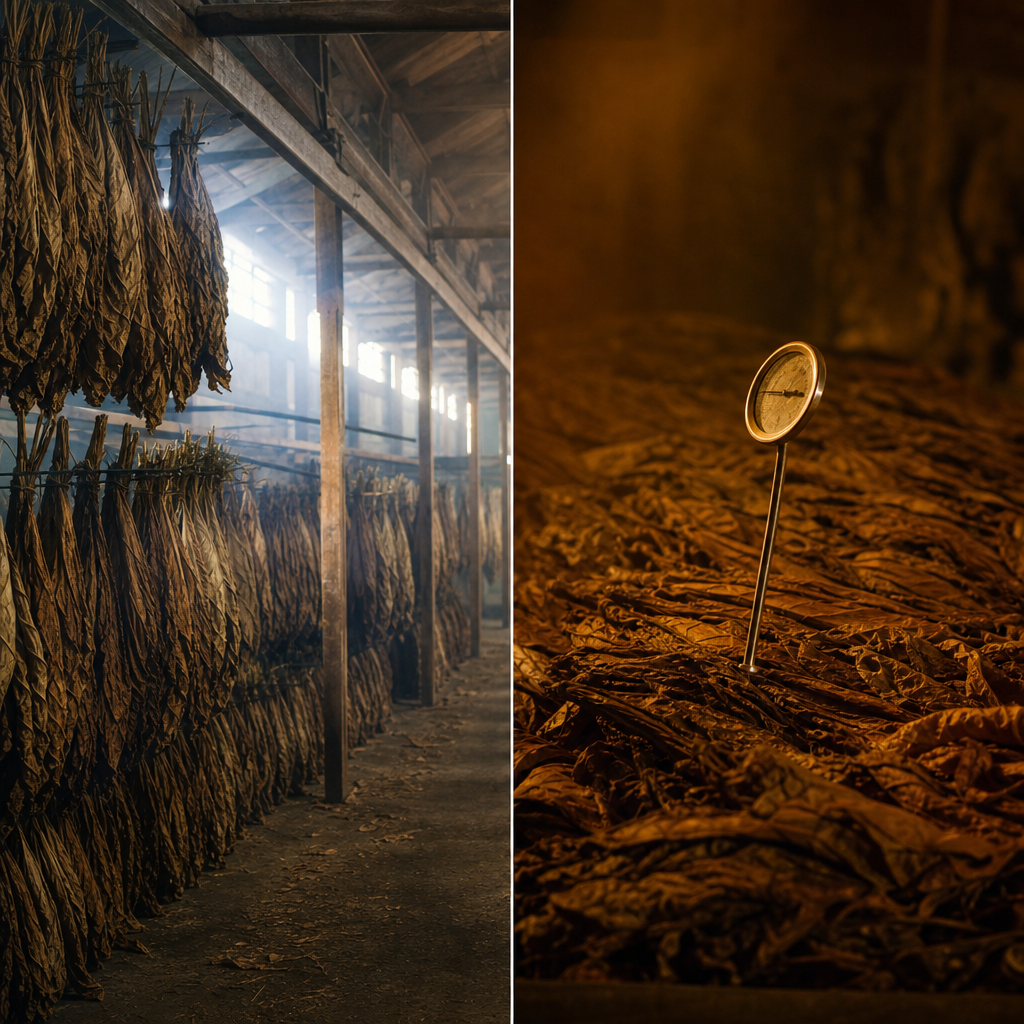
After tobacco leaves are harvested, the first stop is usually not fermentation but drying. For example, in Cuba's Vuelta Abajo or the Dominican Republic's Cibao regions, the leaves are hung in ventilated barns for about 45 to 60 days to slowly lose water, with the green chlorophyll gradually breaking down and the color turning yellow-brown or brown. At this point, the leaves still carry grassy, ammonia, and sharp stimuli, and cannot yet become a balanced cigar.
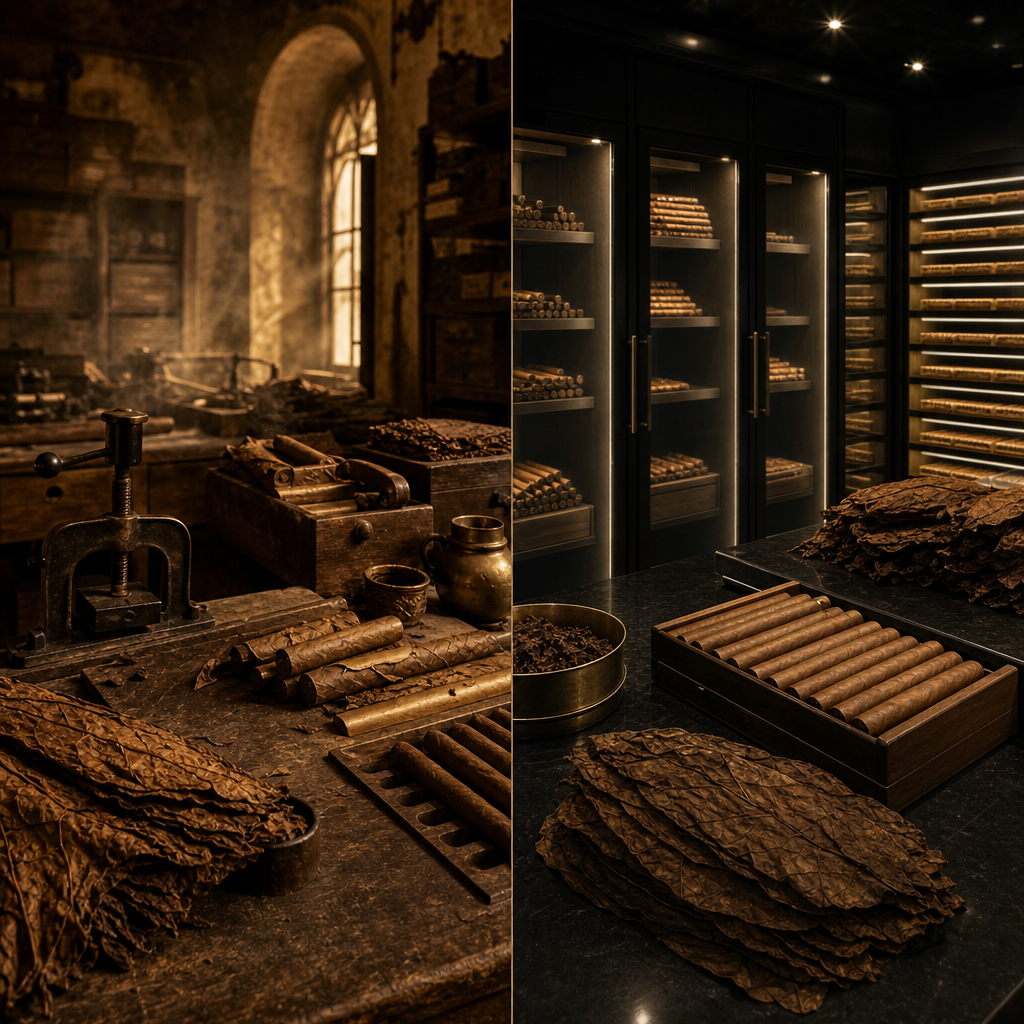
Then the real fermentation stage begins. Workers sort the leaves by position, thickness, color, and use, forming piles known as pilón. Common pile heights are about 1.2 to 1.8 meters, with internal temperatures reaching 38 to 50°C; for wrapper leaves, the temperature is usually controlled lower to prevent damage to oils and elasticity. Fermentation is not simply waiting; it is managing chemical changes through temperature, humidity, and time.
In the traditional Cuban process, the first round of fermentation may last about 30 to 45 days, and thicker ligero leaves can take longer. Non-Cuban high-end brands like Padrón 1964 Anniversary or Arturo Fuente OpusX often emphasize longer leaf preparation times to turn spiciness into acceptable depth. Time itself does not automatically bring good flavor; correct grading and turning are key.
Microorganisms, Enzymes, and Heat: The Chemical Kitchen of a Cigar
During fermentation, the enzymes inside the tobacco leaves and microorganisms in the environment work together. Sugars, organic acids, proteins, and polyphenols begin to transform, producing milder sweetness, woody tones, and nutty flavors; at the same time, ammonia and some irritating nitrogenous substances are released. Many beginners find fresh tobacco piles pungent because the ammonia and green notes have not yet dissipated.
The temperature rise is not due to external heating but the exothermic reaction within the leaves. If the core temperature is too low, the reaction is insufficient, and the flavor tends to be green; if too high, the leaves may become brittle, charred, or even produce unclean rancid odors. Cuban and Dominican workshops often use long needle thermometers inserted into the pile core, recording daily or every other day, and if it exceeds the set range, the pile must be turned to dissipate heat.
Nicotine will also be rebalanced during the process, but it does not completely disappear. Ligero leaves still retain strength, which is one reason why many remember the rich yet delicate tension of Cohiba Behike after its official launch in 2010. Good fermentation does not flatten personality but transforms rough stimuli into structured power.
Temperature, Humidity, and Turning: The Three Signals Masters Read Daily
In the fermentation room, the most important thing is not romantic imagination but discipline. Before piling, the tobacco leaves are re-moistened, with moisture content often adjusted to about 18% to 24%; too dry slows reactions, too wet risks mold or off-flavors. During turning, outer leaves move to the inside, and inner leaves move to the outside, ensuring each leaf is evenly heated, avoiding significant differences within the same batch.
Different types of tobacco leaves have different goals. Wrapper leaves emphasize integrity, gloss, and elasticity, usually processed at lower temperatures; filler leaves can withstand higher temperatures, reducing sharpness. Turning is not just physical labor; it is a technique to reshuffle flavor risks.
| Control Item | Common Range or Practice | Flavor Impact | Risk of Loss of Control |
|---|---|---|---|
| Core Temperature | About 38–50°C | Reduces green notes, increases roundness | Too high causes bitterness, too low causes greenness |
| Leaf Moisture | About 18–24% | Helps even reactions | Too wet risks mold, too dry stagnates |
| Turning Frequency | Several days to a week depending on conditions | Ensures batch consistency | Unevenness, prominent off-flavors |
| Fermentation Time | 30–90 days or more | Forms woody, sweet, leathery notes | Insufficient or excessive time leads to loss |
I once saw a batch of Nicaraguan Estelí ligero in 2018, initially very spicy and direct; after multiple turns and rests, the peppery notes remained but transformed from tongue-piercing to outlines of black pepper and cocoa. Numbers provide direction, but true judgment relies on experience, smell, and touch.
Leaf Position Determines Fermentation Strategy: Volado, Seco, Ligero to Wrapper
The fate of different leaf positions on the same tobacco plant is entirely different. Lower volado leaves are thinner and burn well, requiring relatively mild fermentation; middle seco leaves have finer aromas, important for floral, herbal, and nutty notes; upper ligero leaves receive the most sunlight, are thick, and have strong nicotine and oil content, often requiring longer and more delicate treatment.
Wrapper leaves are more like high-end suit fabrics, not only judged by taste but also by appearance, elasticity, gloss, and texture. Connecticut Shade, Ecuador Habano, Corojo, or Cuban wrapper leaves may present different colors due to fermentation temperature differences: Claro, Colorado, Maduro are not simple dye concepts but results of variety, maturity, and processing methods.
Maduro is particularly misunderstood. Dark color does not necessarily mean heavy flavor, nor does it mean higher quality; some Maduros undergo higher humidity and longer fermentation, with more pronounced sugar conversion, bringing out dark chocolate, coffee, and molasses notes. Leaf position determines strength, fermentation determines whether it is rough or elegant.
For example, Padrón 1926 Serie often presents cocoa, coffee, soil, and pepper structures with Nicaraguan tobacco; if fermentation is insufficient, these elements become dry and tense. Conversely, Davidoff Dominicana series often allows Dominican leaves to showcase creamy, woody, and spice details, thanks to more delicate grading and fermentation control.
Cuban, Dominican, Nicaraguan Cases: The Same Technique, Different Flavors
Cuban cigars are often described as having mineral, cedar, honey, leather, and delicate herbal notes, related to variety, soil, climate, and fermentation style. For example, Partagás Serie D No.4, if in good condition, often shows rich woody, coffee, and spicy notes; these are not the taste of a single leaf but the result of blending multiple leaf positions after fermentation.
Dominican representative brands like Arturo Fuente, Davidoff, La Flor Dominicana often showcase a broader technical route. Since the debut of Fuente OpusX in 1995, using Dominican sun-grown wrapper, it broke past perceptions, proving that the potential of the region can be redefined through agronomy and fermentation. If not handled well, its strength can seem overbearing, but if handled properly, it offers red pepper, woody, dried fruit, and sweet aromas.
Nicaragua often gives impressions of volcanic soil, cocoa, concentrated coffee, and black pepper. Estelí, Jalapa, and Condega have different leaf characteristics, and fermentation strategies vary: Estelí leaves are thick and powerful, Jalapa often carries sweetness and aroma, Condega is in between. The region provides raw material character, fermentation determines whether the character can be precisely expressed.
Looking at the Nicaraguan high-end cigar wave of the late 2000s, many brands no longer just pursue strength but emphasize roundness, cleanliness, and complexity. This shows that as the market matures, consumers shift from "is it strong enough" to "strong but not chaotic, powerful but not harsh."
What Flavor Does Fermentation Mistake Leave: Clues Beginners Can Identify
Beginners may not see the fermentation room, but they can infer from taste clues. If a cigar has a noticeable ammonia smell, pungent, like a cleaning agent, it may be due to insufficient fermentation or post-rolling rest; if there are wet cardboard, musty acid, or moldy earth notes, pay attention to storage and raw material conditions. These flavors do not equal a single cause but are signals worth being alert to.
Burning also reveals clues. Uneven fermentation or poor humidity management may cause crooked burn lines, frequent extinguishing, and loose gray ash. Of course, cutting, lighting, and ambient humidity also affect burning, so not all problems can be blamed on the workshop; but if multiple cigars from the same box have similar green and pungent notes, it may indicate immature batch processing.
I suggest beginners record three points: whether the first 2 cm after lighting is pungent, whether the middle section turns sweet or bitter, and whether the end section only has spiciness left. Good fermentation will let flavors gradually unfold, rather than having a single coarse and hard stimulus from start to finish.
A simple checklist for self-check:
- Is there a noticeable ammonia or grassy smell?
- Is the spiciness a front-of-mouth sting or a spice outline?
- Does the middle section show woody, nutty, cocoa, or sweet notes?
- Does the end section still have a clean aftertaste, rather than stacked bitterness?
Aging at Home is Not Fermentation: Storage, Rhythm, and Etiquette
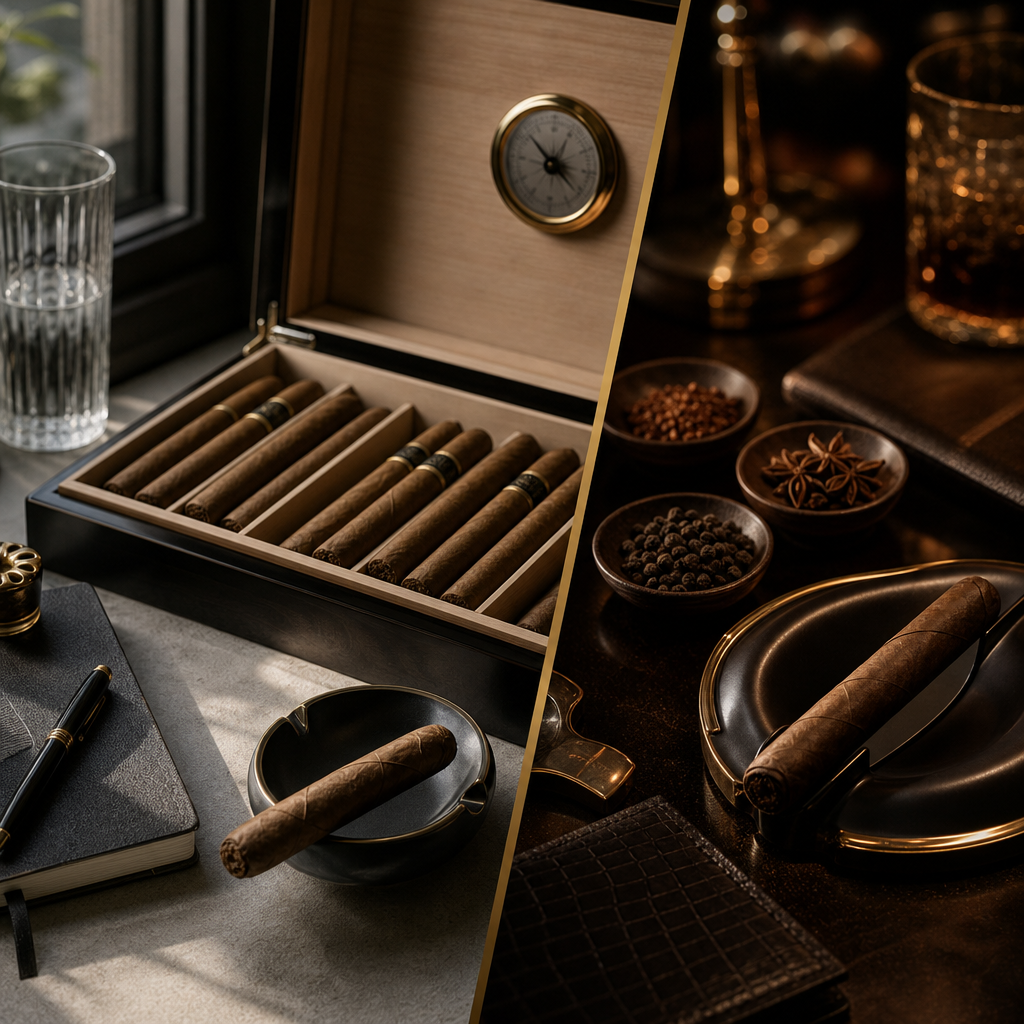
Many people confuse "fermentation" with "aging." Workshop fermentation occurs in high moisture content, piled tobacco leaves, and higher temperature environments; cigars bought home are already rolled, and what happens in the humidor is slow integration and stabilization, not re-fermentation. General storage can be set at 65% to 69% relative humidity, about 18 to 21°C, avoiding large fluctuations.
The meaning of aging is to make the moisture and aroma of the wrapper, binder, and filler more balanced. Cuban cigars sometimes become more stable 1 to 3 years after release, while non-Cuban cigars vary greatly due to different brand preparation levels before release. Brands like Davidoff or Padrón are often quite complete upon release; some Cuban limited or regional editions are chosen by some to be aged for several more years to observe changes.
But remember, collecting and market value is not simply a game of time. If discussing collection appreciation, it does not guarantee appreciation, still depending on source preservation and market. Poorly preserved rare boxes, even with beautiful years, may lose value due to over-moisture, mold damage, or cracking. Home aging can only fine-tune the finished product, unable to remedy poor fermentation and improper storage.
In terms of etiquette, beginners can start with more stable sizes, such as Robusto with about a 50 ring gauge, 124 mm, and a smoking time of about 45 to 70 minutes. Give yourself enough time, not rushing to puff continuously, keeping the temperature moderate to read the sweetness, woodiness, spices, and aftertaste brought by fermentation.
Frequently Asked Questions
Does longer fermentation make cigars better?
Not necessarily. Too short will be green, too long may exhaust aromas and tire the leaves. Good or bad is not about the length of days, but whether the leaf position, humidity, temperature, and turning match.
Is Maduro fermented the longest and the strongest in flavor?
Maduro usually undergoes deeper processing, often with coffee, cocoa, and molasses notes, but not necessarily the strongest. Strength still depends on the filler formula, especially the ligero proportion.
Why do some cigars have an ammonia smell?
Ammonia smell often indicates that the stimulating substances in the tobacco leaves have not fully dissipated, or insufficient rest after rolling. If the smell is noticeably pungent, it can be placed in a stable environment for several more months to observe.
Does fermentation reduce nicotine?
It makes the stimulation more rounded but does not mean nicotine completely disappears. High leaf position tobacco may still bring noticeable strength, and smoking on an empty stomach or too quickly can cause discomfort.
How to train oneself to understand the flavors brought by fermentation?
You can compare the same size from different regions, such as Cuban Robusto, Nicaraguan Robusto, Dominican Robusto. Recording the changes in herbal, woody, sweet, spicy, and bitter notes in the front, middle, and end sections is more effective than just recording scores.
Is the box date important?
Important, but not the only standard. The box date can estimate the aging time after release but does not show the quality of early leaf fermentation; source, storage environment, and brand craftsmanship are equally critical.
Understanding fermentation, when returning to a cigar, you will find that every puff is not just smoke but a combination of agronomy, time, temperature, and human judgment. Beginners don't need to rush to chase rare names; learning to distinguish clean, rounded, layered, and unbalanced is the most reliable advancement. The truly fascinating part of cigars is that they hide land and craftsmanship in quiet burning; knowing how to slow down allows you to read the details within.
—Cigar Prince Wilson Tsai
Smoking is harmful to health. Under 20 years old is not allowed to smoke. Quitline: 0800-636363. This article is for reference only for adults over 20 years old regarding cigar culture, preservation, and legal knowledge, not a tobacco advertisement, promotion, or purchase suggestion.