The Taste of Cigars Unveiled: A Comprehensive Exploration from Aroma to Flavor
Many people, after starting with cigars, first learn how to cut, light, and smoke, then encounter the real challenge: why do some people say cedar, leather, cocoa, while I only feel "smoke"? This is not a matter of talent, but rather a lack of sensory vocabulary, rhythm, and comparative samples.
I want to break down the aroma and flavor of cigars into a map that can be practiced. As an editor of the "Cigar Bible," I've seen too many good cigars treated hastily, and I've also seen beginners suddenly understand the layers of a cigar by mastering a few observation points.
Aroma is Not a Single Scent: First Establish an "Aroma Coordinate System"
Cigar aroma usually comes from the tobacco variety, soil of the origin, fermentation, aging, and rolling ratio. Taking the Cuban Vuelta Abajo region as an example, common aromas include cedar, honey, hay, cream, and mineral notes; Nicaraguan Estelí tends to have black pepper, roasted coffee, cocoa, and rich earthy aromas. Knowing how to place aromas into coordinates is more important than rushing to use fancy adjectives.
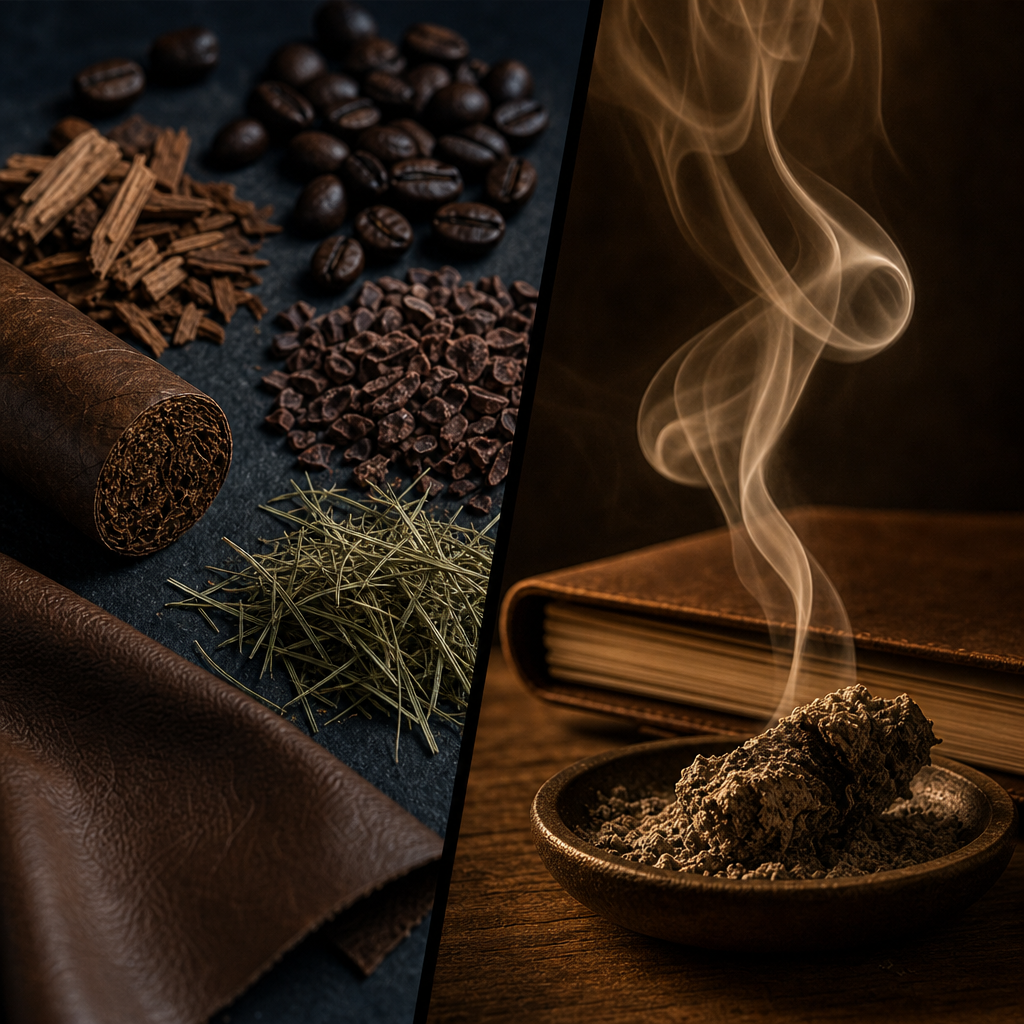
I habitually divide aromas into six categories: woody, spicy, sweet, nutty, earthy, and animalistic. For example, Montecristo No.2 is often considered to have cocoa, coffee, leather, and a hint of pepper; Hoyo de Monterrey Epicure No.2 leans towards creamy, grassy, honey, and soft woody notes. Both are classic examples of Robusto or Torpedo, but their tones are completely different.
Beginners can start by building memories with everyday ingredients: roasted almonds, black coffee, cinnamon, wet wood, old leather, toasted bread. Before each tasting, smell the wrapper, then the foot, and record in three stages after lighting. The core of aroma training is not guessing the answer, but steadily naming vague sensations.
Start Before Lighting: Cold Smell, Cold Draw, and the First Puff
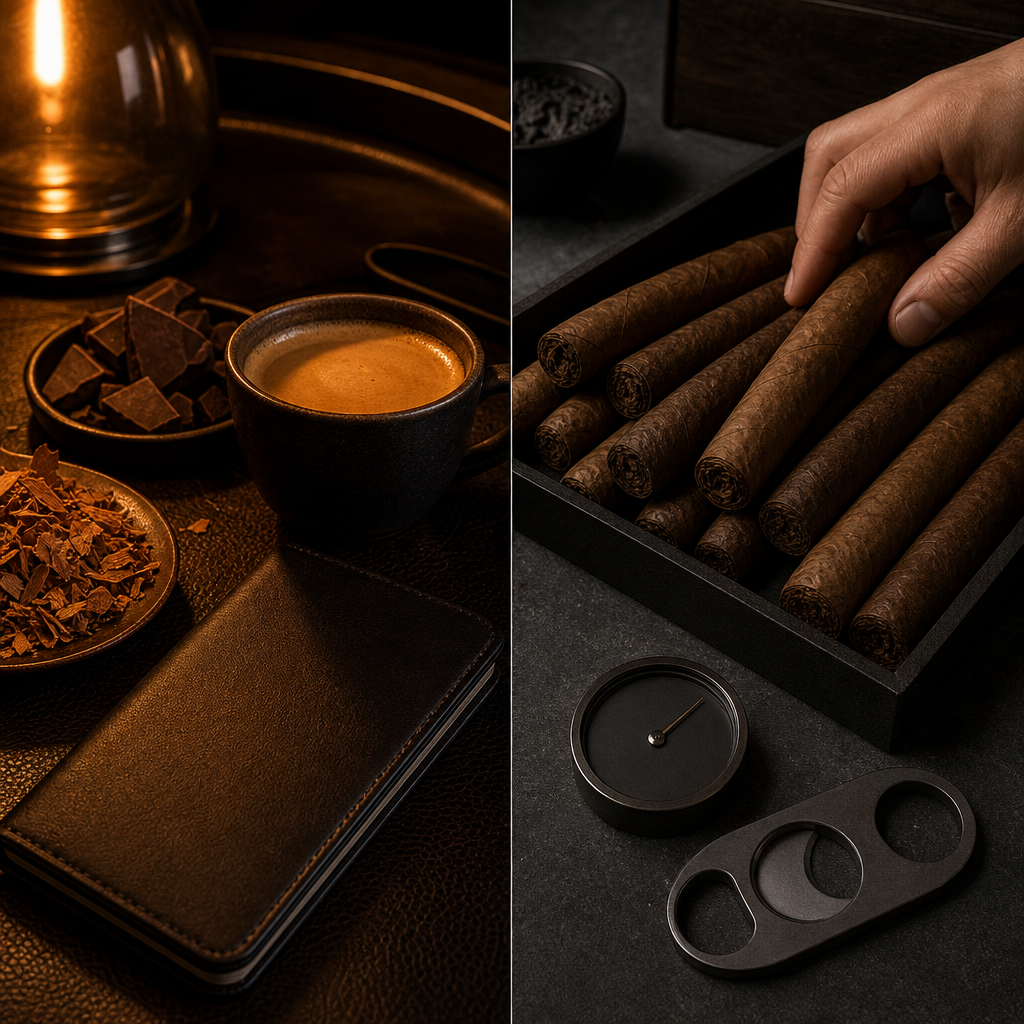
The real observation of a cigar does not start at the moment of lighting. When picking up a cigar, first look at the wrapper's oiliness, color, veins, and elasticity; for example, the Colorado Maduro shade often gives a richer psychological expectation, but it doesn't necessarily mean stronger. The Cohiba Behike series, launched in 2010, is much discussed due to the Medio Tiempo leaves, often bringing delicate grassy, coffee, and sweet woody notes during cold smell.
After cutting, you can perform a "cold draw" observation, but do it lightly, aiming to check airflow and predict aroma. If the cold draw has raisin, cocoa, or woody notes, they may not appear exactly after lighting, but they can provide a flavor direction. Partagás Serie D No.4 often shows pepper and roasted wood early on; if the initial heat is too strong, details can be overshadowed by spiciness.
Don't rush to score the first puff; I usually only ask three things: is the draw smooth, is the smoke volume stable, is the entry clean. Experienced tasters will lower their judgment volume in the first five minutes. The task of the first segment is to calibrate the rhythm, not to rush to conclude the entire cigar.
Taste, Mouthfeel, and Finish: Three Things to View Separately
Many beginners equate "strong taste" with "good flavor," which is the most common misunderstanding. Taste refers to the tongue's perception of sweet, bitter, sour, salty, umami; mouthfeel is the thickness, oiliness, dryness, granularity of the smoke; finish is the continuation left in the mouth and nasal cavity after exhaling. A good cigar is not just aromatic, but has messages at entry, stay, and exit.
For example, Padrón 1964 Anniversary often gives black cocoa, coffee, nutty, and rich sweet notes, with a mouthfeel like dark roasted coffee; since its launch in 2013, Davidoff Nicaragua presents brighter pepper, cream, and spice with Nicaraguan tobacco. Both can be said to have layers, but one leans towards richness, the other towards precision.
| Sensory Item | Observation Focus | Common Descriptions | Practice Method |
|---|---|---|---|
| Aroma | Nasal Sensation | Cedar, Cocoa, Hay | Smell the Wrapper and Foot |
| Taste | Tongue Reaction | Sweet, Bitter, Sour, Salty | Small Sips, Slow Exhale |
| Mouthfeel | Smoke Texture | Oily, Dry, Delicate | Compare Different Ring Gauges |
| Finish | Continuation After Exit | Coffee, Leather, Spice | Record Seconds |
If the finish is less than 5 seconds, it's mostly simple and direct; 10 to 20 seconds already has a certain extension; over 30 seconds without throat irritation usually indicates good tobacco processing and balance. By separating and recording taste, mouthfeel, and finish, you'll know if you prefer intensity, sweetness, or texture.
Three-Stage Reading: How to Judge the Front, Middle, and End
A cigar is not a drink to be consumed in one go, but a change over 45 to 120 minutes. Robusto, about 50 ring gauge, 124 mm in length, is often completed in 45 to 70 minutes; Churchill, about 47 ring gauge, 178 mm, can stretch to over 90 minutes. Different sizes result in different burning temperatures, smoke volumes, and change speeds.
The front usually looks at the opening aroma and cleanliness, the middle at structure and balance, the end at strength and bitterness control. Romeo y Julieta Churchill often starts with floral, cedar, and mild sweetness, shifting to roasted wood and leather in the middle; Bolivar Royal Corona may show earth, pepper, and robust strength earlier. Three-stage reading can prevent you from misjudging the entire cigar based on one puff.
I suggest taking notes every third, writing only three words each time: main aroma, mouthfeel, finish. For example, "Front: Cedar, Cream, Short Sweet; Middle: Roasted Nuts, Oily, Coffee; End: Leather, Dry, Pepper." This method is more accurate than writing long reflections, and you can compare different brand styles when looking back after six months.
Environment, Humidity, and Burning: The Invisible Conditions Behind Flavor
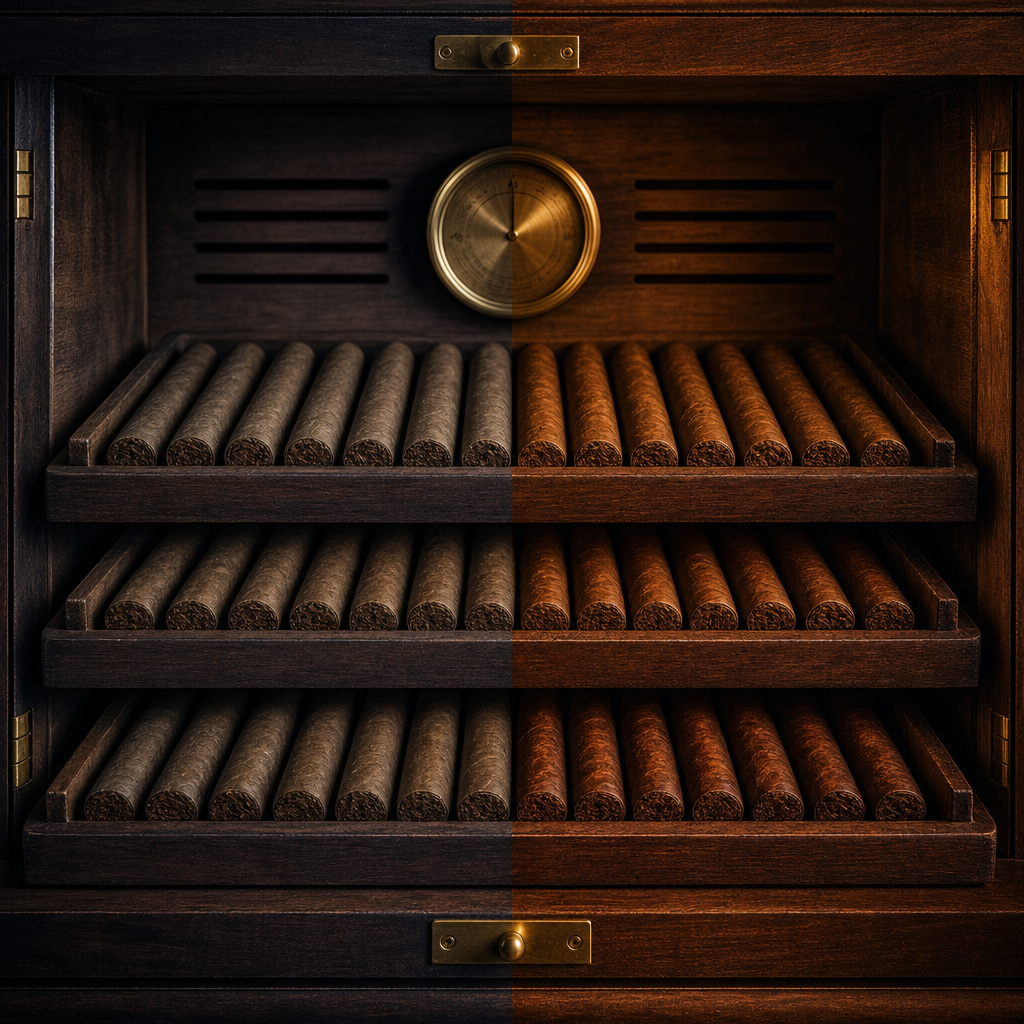
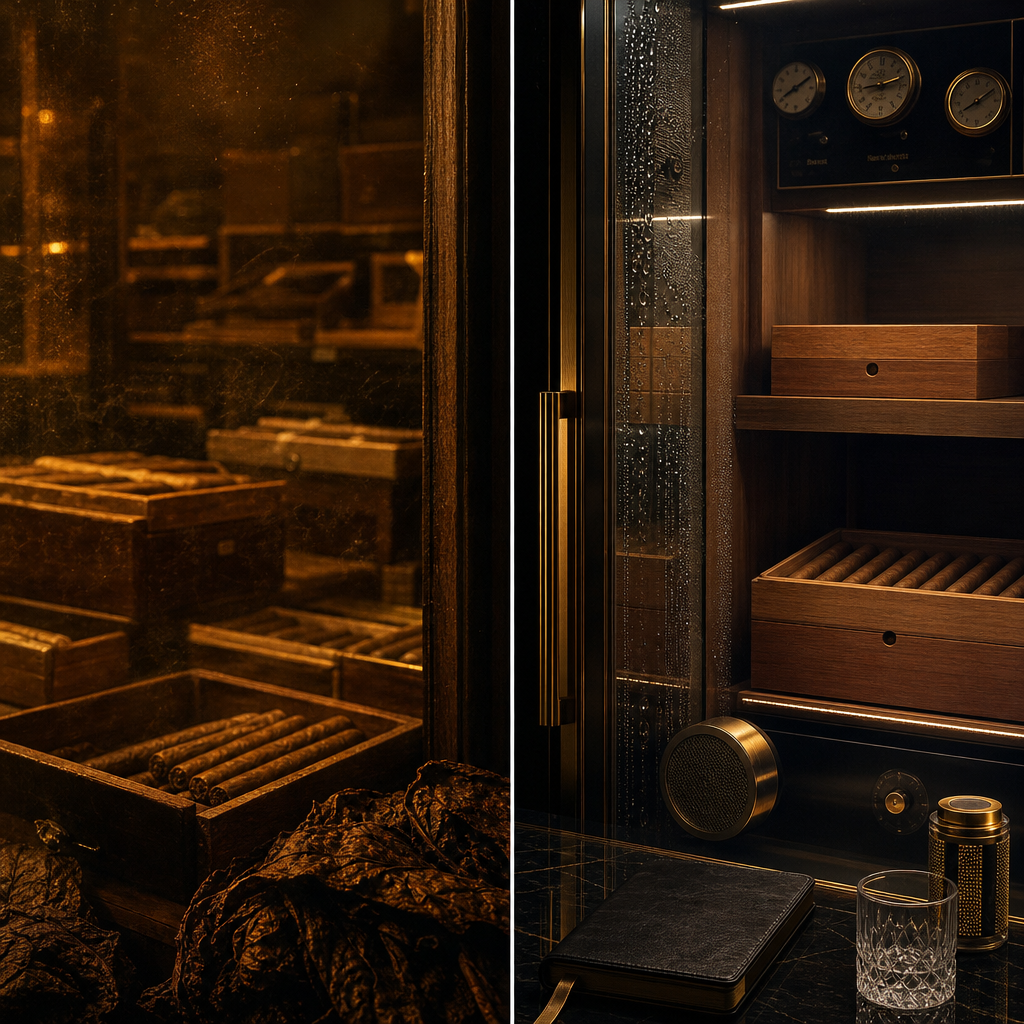
The same cigar can perform completely differently at 62%, 65%, 69% humidity. Too moist can cause slow burning, stuffy smoke, and increased bitterness; too dry can lead to overheating, spiciness, and wrapper cracking. Most handmade long cigars are more stable at 65% to 69% relative humidity, about 18 to 21°C, but it still depends on the brand and personal preference.
The burn line also affects sensory judgment. If one side burns too fast, the hot spot can bring charred bitterness, making the cigar seem rough. H. Upmann Magnum 46, a medium ring gauge work, can often present tea, woody, and soft sweet notes if stored stably; if too humid, it can seem stuffy, sour, and the smoke loose.
Basic checks can be divided into three steps:
- Lightly press before lighting to confirm consistent elasticity, without obvious hard spots or voids.
- Only roast the foot when lighting, without keeping the flame on the wrapper for long.
- Take a puff every 45 to 60 seconds to maintain stable burning temperature.
Flavor is not only determined by the brand; storage and rhythm can also rewrite the result. Many people chase famous brands but overlook hygrometer calibration and lighting distance; these details often mark the boundary between "good" and "harsh".
Practice with Brand Cases: From Cuba to the New World
Cuban cigars are often described as having earthy, herbal, woody, and elegant transitions, but each brand has a different personality. Cohiba is often creamy, grassy, coffee, and delicately sweet; Partagás leans towards woody, peppery, earthy, and powerful; Trinidad Vigía often has cream, honey, hay, and floral notes. Simply saying "Cuban flavor" is actually too rough.
Identifying new world cigars is also interesting. Arturo Fuente OpusX has been a high-end representative of the Dominican Republic since 1995, often showing red pepper, leather, and sweet woody notes; Oliva Serie V brings rich coffee, cocoa, and black pepper with Nicaraguan Ligero; My Father Le Bijou 1922 often has dark spices, cocoa, and strong structure.
If you want to build comparative ability, choose similar sizes to observe, such as using Robusto or Toro, and avoid comparing Petit Corona with Churchill simultaneously. Control size, humidity, and rhythm during comparison, and brand differences will truly emerge. I often limit each record to four items on a 10-point scale: aroma, balance, mouthfeel, finish, to avoid being led by a single reputation.
Etiquette and Sensory Training: Make Yourself More Like a Mature Connoisseur
The core of cigar etiquette is respecting space, respecting others, and respecting the work in hand. Don't treat cigars like cigarettes with frequent puffs, don't exhale smoke towards others, and don't tap ash forcefully. A good ash column can help retain heat, but it's not worth showing off if it's too long; about 2 to 3 cm of natural ash fall is usually safer.
Sensory training can be very life-oriented. Smelling coffee beans in the morning, identifying herbs and peppers at lunch, comparing roasted nuts and caramel at dinner are all ways to build vocabulary. I also recommend keeping a fixed notebook with fields including date, brand, size, storage humidity, time, pairing drinks, and three-stage flavor. Mature appreciation ability comes from repeated recording, not from encountering an expensive cigar once.
When pairing drinks, beginners can start with unsweetened sparkling water, black coffee, light whiskey, or aged rum. If the cigar is light, strong alcohol can overpower the aroma; if the cigar is rich, too sweet a drink can make the finish sticky. Both Cuban works and new world brands in the PCC authorized dealer system have their own understanding paths, the key is to find your own taste map with a stable method.
Common Questions
Why can I only smell smoke, not cedar or cocoa?
This is usually not because the nose is insensitive, but because the vocabulary bank is not enough. Start with three major categories: woody, sweet, spicy, and don't try to distinguish cedar, oak, or sandalwood at first. Identify the general direction first, then slowly subdivide, which is more effective than memorizing a flavor chart.
How long should a cigar last to be considered normal?
It depends on size and rhythm. Petit Corona may take 30 to 45 minutes, Robusto commonly 45 to 70 minutes, Churchill can go over 90 minutes. If a Robusto is finished in 20 minutes, the temperature is likely too high, leading to spiciness and bitterness.
Does whiter ash mean better quality?
Not necessarily. Ash color is influenced by soil minerals, burning temperature, and humidity, and cannot independently determine quality. A stable ash column, smooth burn line, and clean smoke are more valuable references. Don't use a single visual indicator to determine a cigar's quality.
Is it suitable for beginners to start with strong cigars?
It's possible, but not recommended on an empty stomach, nor to start with ultra-high strength. Hoyo Epicure No.2, Romeo Short Churchill, Davidoff Signature series are easier to understand for balance; if you want to challenge a strong style, gradually approach Bolivar, Oliva Serie V, or My Father.
Will cigar collections appreciate in value?
Some limited or discontinued works do have market discussions, such as Cohiba 1966 Edición Limitada 2011, certain Regional Editions, but collection appreciation is not guaranteed, still depends on source preservation and market. For beginners, it's more important to clarify storage conditions and authenticity sources than chasing prices.
Why does the same brand feel different each time?
The reasons could be year, batch, storage humidity, transportation status, or even your physical condition. Sleep, diet, residual taste in the mouth, and drinks of the day all affect perception. That's why I emphasize notes and comparison, rather than relying on a single impression to decide.
Finally, I want to say, the beauty of cigars is not in speaking in mysterious terms, but in whether you can quietly understand it. From aroma to flavor, from the front to the finish, every puff reminds us: true taste is patience, recording, and moderation. Famous brands are worth studying, but your own senses are more worth cultivating. May every time you light up, you understand yourself better than the last.
—Cigar Prince Wilson Tsai
Smoking is harmful to health. Under twenty years old is not allowed to smoke. Quit smoking hotline: 0800-636363. This article is for reference of cigar culture, storage, and regulations for adults over twenty years old only, not a tobacco advertisement, promotion, or purchase suggestion.