The Legacy and Evolution of Cigar Brands: From Founding to Modern Context
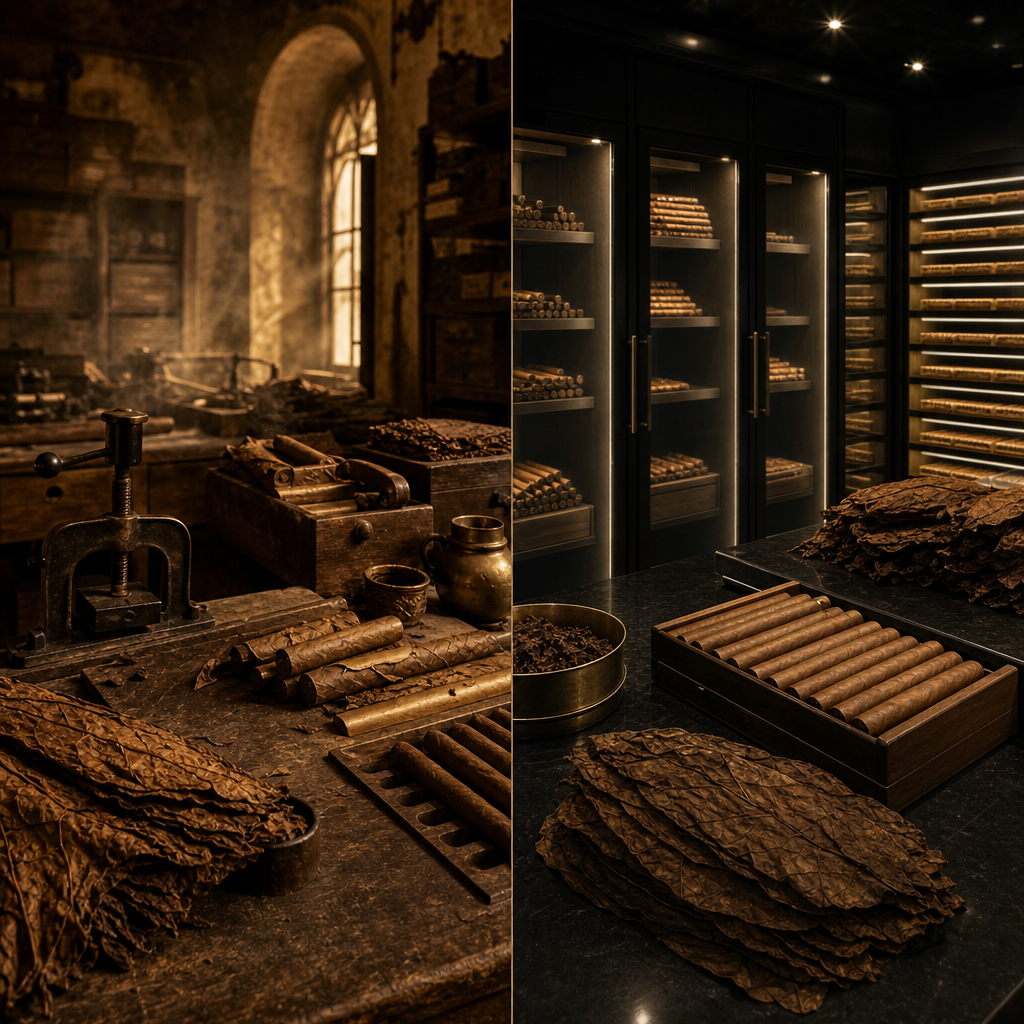
The Legacy and Evolution of Cigar Brands: From Founding to Modern Context
Veterans discussing brands cannot merely recite founding years. The true allure of cigar brands lies in how they compress land, family, factory systems, trademark rights, and market aesthetics into the burning curve of a cigar. What you smoke is not a single formula but a piece of history that has been repeatedly revised.
As the editor of the "Cigar Bible," I often remind myself: brand heritage is not about pasting old labels on new boxes, but about clearly stating "who I am" in the face of wars, revolutions, embargoes, family migrations, and changing consumer tastes. In this article, I want to dissect several important contexts from a veteran's perspective.
From Havana Trademarks to Global Symbols: The Origins of Cuban Brands
The formation of Cuban cigar brands is closely tied to the commercial system of 19th-century Havana. Partagás was founded in 1845, Romeo y Julieta appeared in 1875, and H. Upmann can be traced back to 1844. These years are not mere decorations but the result of factories, exporters, bank credits, and the European market shaping them together. At that time, British, Spanish, and French customers began to identify quality by brand, and cigars became cultural symbols that could be collected, compared, and discussed, rather than just products of origin.
Take Romeo y Julieta as an example. In the early 20th century, José Rodríguez Fernández pushed it internationally, and it is said to have had over 2,000 different band designs to serve different customers and markets. This high degree of customization shows that the brand understood "emotional projection" from the start: the name, emblem, and Shakespearean imagery on the cigar box are reasons consumers are willing to remember it. Old brands survive not just by early fame but by transforming history into recognizable taste and visual language.
The heritage of Cuban brands is also inseparable from vitola, the grammar of size and shape. Montecristo No.2's pirámide, Partagás Serie D No.4's robusto, and Hoyo de Monterrey Double Coronas' long size style all concretize brand personality. Veterans who only look at the band can easily miss this layer: a brand is not an abstract story but is continuously verified through size, leaf composition, rolling rhythm, and burning time.
Revolution, Nationalization, and Brand Divergence: "Same Name, Different Fate"
After the Cuban Revolution in 1959, the cigar industry entered a phase of nationalization in the 1960s. Many original families and owners left Cuba, and brand trademarks diverged in different jurisdictions. This is why veterans discussing Cohiba, Montecristo, Partagás, and H. Upmann cannot just say "which is authentic" but must consider market, trademark rights, and production systems. The Cuban versions continued under the state-run system, while the non-Cuban versions were developed by exiled families or subsequent enterprises in the Dominican Republic, Honduras, and Nicaragua.
The most typical example of this divergence is the same brand presenting completely different styles in different markets. The non-Cuban Montecristo in the U.S. market is operated by the Altadis USA system, often using Dominican, Nicaraguan, or Honduran tobacco combinations; the Cuban Montecristo follows the Habanos system, with No.2, No.4, Edmundo, and other models having their own taste coordinates. The same brand name does not mean the same flavor, supply chain, or historical responsibility; veterans need to understand the institutional differences behind the brand.
There is no need to simplify the issue into a binary. The charm of Cuban brands lies in the continuity formed by their land and national-level systems; the strength of non-Cuban brands lies in the re-understanding of new soil by families after migration. After the U.S. embargo in 1962, the American market was forced to separate from Cuban cigars, inadvertently accelerating the rise of high-end cigars in the Dominican Republic and Nicaragua. History is not a straight line but a series of tributaries that grew after being cut by politics.
Davidoff's Transformation: Brand Reconstruction from Havana to the Dominican Republic
Davidoff is one of the most worthy cases of study in brand evolution. Zino Davidoff was born in Kyiv in 1906, and his family later settled in Geneva. In the mid-20th century, he elevated cigar retail into a part of the European high-end lifestyle. Early Davidoff was deeply tied to Cuban cigars, including classic names like the Château series and Dom Pérignon. These works became white-glove memories for many collectors in the 1970s and 1980s.
However, in the late 1980s to early 1990s, Davidoff parted ways with Cuba and shifted production to the Dominican Republic. This was not a simple change of origin but a reconstruction of brand positioning: from "synonymous with Cuban high-end" to a "global brand of precision, cleanliness, stability, and luxurious service." The key to Davidoff is not leaving Cuba but proving that a brand can transfer its craft standards, retail experience, and style discipline to another origin and re-establish itself.
For veterans, Davidoff's case reminds us: heritage does not mean standing still. The Signature series leans towards delicate cleanliness, the Grand Cru emphasizes balance, and the Winston Churchill series expands brand culture through personal narratives. In recent years, the Nicaragua, Escurio, and Yamasa series more clearly demonstrate the brand's willingness to respond to new generation tastes with regional differences. This is a very modern heritage: not clinging to a single flavor but maintaining a consistent brand tone while continuously updating content.
Fuente, Padrón, and the Power of Nicaragua: Another Kind of Family Brand Heritage
Arturo Fuente was founded in 1912, and Carlos Fuente Sr. and Carlos Fuente Jr. made this family brand establish its core production in the Dominican Republic after twists and turns in Florida and Nicaragua. The Fuente Fuente OpusX, launched around 1995, is one of the turning points in modern cigar history: it proved that the Dominican Republic could also produce high-strength, high-complexity, collectible high-end cigars. The single path of "high-end equals Cuba" was thus opened.
Padrón represents another kind of family spirit. José Orlando Padrón was born in Cuba in 1926 and founded the brand in Miami in 1964, later building a deep reputation with Nicaraguan tobacco. The Padrón 1964 Anniversary, 1926 Serie, and Family Reserve series rely on rich, stable, box-pressed shapes and family year narratives. The commonality between Fuente and Padrón is transforming family memories into styles that can be long-term verified, rather than just printing the founder's story on the box.
Nicaragua gradually matured after the 1990s, with regions like Estelí, Jalapa, and Condega being repeatedly discussed by veterans. Brand heritage here no longer relies solely on century-old names but on soil personality and the courage of the makers. When the U.S. market favored richer flavors, brands like Padrón, Oliva, My Father, and Drew Estate responded in different ways: some held onto tradition, some embraced innovation, and some redefined young consumers' imagination of cigar culture.
Limited Editions, Regional Editions, and High-End Lines: How Heritage is Repackaged by the Market
The evolution of 21st-century cigar brands follows a clear path: strengthening brand value with high-end series and limited narratives. Cuban Habanos introduced the Edición Limitada concept in 2000, regional editions matured around 2005, and later there were Reserva, Gran Reserva, Anejados, and other classifications. These works shift the brand from daily consumption to collectible topics and make veterans pay attention to box codes, years, origins, and preservation status.
But limited does not equal better, and market topics do not equal flavor depth. Here are some commonly discussed series in a simple table to help distinguish their brand functions:
| Type | Representative Case | Brand Function | Veteran Observation Focus |
|---|---|---|---|
| Edición Limitada | Cohiba 1966 EL 2011 | Strengthen annual topics | Size, tobacco maturity, box condition |
| Reserva | Montecristo No.2 Reserva 2005 | Bind to classic models | Whether differences from regular versions are clear |
| Gran Reserva | Partagás Lusitanias GR 2013 | Establish top-level symbols | Aging potential and preservation records |
| Regional Edition | La Gloria Cubana series | Serve specific markets | Release volume, channels, and market reputation |
The value of high-end lines lies not in the word "rare" but in whether they make the brand core clearer. If a limited edition only changes size and packaging but cannot articulate the brand spirit, veterans usually see through it quickly. As for collectible appreciation, it does not guarantee appreciation, still depending on source preservation and market; truly mature collectors will first ask about flavor and preservation, then price trends.
Size, Formula, and Stability: The Technical Foundation of Brand Heritage
The heritage of cigar brands ultimately returns to technology. Veterans often say "a brand has changed," which may involve three things: changes in tobacco source, adjustments in rolling factories, or market preferences driving size changes. The rise of robusto in the 1990s and the popularity of large ring gauges after the 2000s forced many brands to increase to 52, 54, 56, or even larger ring gauges. As sizes grow, burning temperature, filler ratio, and flavor release change, and brand personality is reinterpreted.
Take Montecristo as an example. No.4 is a classic of short time and precise rhythm; Edmundo and Wide Edmundo reflect modern market demand for wider calibers and thicker smoke volumes. Partagás Serie D No.4 is firmly established in the robusto category, while subsequent Serie E No.2 and Serie P No.2 extend the brand tone to different shapes. Size is not a neutral container; changing vitola for the same brand is like retelling the brand story with different grammar.
Stability is the core of veteran judgment on brand maturity. Poor burning, tight draw, and large differences within the same box consume brand trust. Cuban cigar enthusiasts are often willing to accept year-to-year differences and handmade fluctuations; non-Cuban high-end brands emphasize batch stability and quality control. Both have aesthetics: one is like vintage wine, the other like precision watches. Appreciating differences prevents mistaking personal preference for the only standard.
How Brand Culture Influences Veterans: Identity, Memory, and Community Language
Cigar brands can exist for over a century because they provide not only flavors but also identity language. Some prefer Cohiba because it represents a modern Cuban high-end symbol; some stick to Punch or Bolívar because they like more traditional, more individual brand profiles; others choose Padrón long-term because its richness and stability match personal rhythm. Brand preference often becomes a form of self-description.
Communication among veterans often uses brands as codes. Mentioning Hoyo de Monterrey might evoke elegance, woodiness, and delicacy; mentioning Liga Privada might enter the context of American boutique cigars and fermentation technology; mentioning Trinidad might recall its transition from diplomatic gift legend to commercialization in 1998. The real impact of brand culture is giving consumers a set of shareable, debatable, and extendable common language beyond taste.
However, veterans should be wary of brand superstition. A prettier band does not mean a better state; an older year does not necessarily mean more suitable taste. My observation is that mature cigar enthusiasts do three things:
- Record box codes, sources, humidity, and actual feelings.
- Compare different sizes of the same brand rather than chasing a single name.
- Accept that brands have peaks, troughs, and transition periods without rushing to conclusions based on one experience.
Modern Competition: How New Brands Challenge the Moat of Old Brands
In the past 20 years, the rise of new world brands has made old brands unable to rely solely on history. Drew Estate opened the young market with the Acid series and entered high-end handmade cigar discussions with Liga Privada No.9 and T52; My Father Cigars, established by the José “Pepin” Garcia family, combines Nicaraguan style with Cuban traditional techniques; brands like Foundation, Warped, and RoMa Craft attract advanced players with small batches, regional narratives, and vivid visuals.
These new brands lack the 19th-century Havana aura but excel at telling modern stories: farm transparency, blender personal style, packaging design, community discussion, and batch differences. In contrast, the advantage of old brands is historical depth and model accumulation, but the disadvantage is heavier baggage, making innovation difficult. The core of modern competition is not new versus old but who can do "trustworthy" and "innovative" well at the same time.
For consumers, this is a good thing. Twenty years ago, market choices were limited; now veterans can place Partagás, Davidoff, Padrón, Fuente, My Father, and Warped in the same collection cabinet, each playing different roles for different emotions and occasions. As a PCC special distributor, I care more about clear sources, correct preservation, and transparent information than deifying brands. If a brand cannot accept comparison, heritage becomes a slogan.
Frequently Asked Questions
Are old brands always more worth collecting than new brands?
Not necessarily. Old brands have historical depth and market recognition, but new brands may be clearer in craft transparency, batch management, and style expression. Collectible appreciation does not guarantee appreciation, still depending on source preservation and market. When judging collectible value, the brand is just the first layer; year, preservation, authenticity, rarity, and actual reputation are the complete conditions.
How should the Cuban and non-Cuban versions of the same brand be compared?
Do not compare them as "who replaces whom" but treat them as different historical branches. Cuban versions usually carry the origin system and traditional models, while non-Cuban versions often reflect new soil, new markets, and new crafts after family migration. The best method is to choose similar sizes, such as robusto to robusto, and then compare burning, concentration, aroma structure, and aftertaste.
Why have many brands introduced larger ring gauges in recent years?
Because market preferences have changed. Larger ring gauges usually bring thicker smoke volume, lower burning temperature, and wider blending space, and they better meet some modern consumers' expectations for "fullness." But large does not equal complex; small ring gauges like lancero and corona gorda test blending precision and rolling skill more.
Are limited editions always better than regular editions?
Not necessarily. Limited editions may use specific year tobacco, special sizes, or higher specification packaging, but they may also be part of market narratives. Veterans should ask: does it strengthen the brand core? Are there clear differences from regular editions? Is it more complete after aging? If the answer is vague, a high price does not necessarily represent depth.
How to establish your own brand research method?
I suggest starting with three layers of records: first, record brand, size, box code, or batch information; second, record preservation humidity, cigar awakening time, and burning state; third, record changes in the first third, middle, and final stages. Over time, you will find that you do not simply like a brand but like its performance in specific sizes, years, and conditions.
Will brand heritage be diluted by market marketing?
Yes, so veterans must maintain judgment. When a brand overly relies on celebrities, packaging, or scarcity rhetoric while neglecting stable quality and flavor recognition, heritage becomes a performance. Truly confident brands, no matter how the packaging is updated, can still let you recognize their character within a few puffs.
—Cigar Prince Wilson Tsai
When I look at brand heritage, I never just look at who is older or more famous. The most honest part of a cigar is that after lighting it, all stories must undergo the test of burning. Brands that make veterans repeatedly return must simultaneously have history, stability, personality, and self-correction ability. Heritage is not about enshrining the past but about making the past still flavorful, orderly, and valuable for discussion today.
Smoking is harmful to health. Under 20 years old is prohibited from smoking. Quit smoking hotline: 0800-636363. This article is intended for adults over 20 years old as a reference for cigar culture, preservation, and regulatory knowledge, not as a tobacco advertisement, promotion, or purchase suggestion.