Personalized Cigar Selection: In-depth Exploration of Different Flavor Selection Strategies
Personalized Cigar Selection: In-depth Exploration of Different Flavor Selection Strategies
Experienced cigar enthusiasts often find themselves stuck between two extremes: either always returning to familiar brands or chasing high ratings and rarity, forgetting their own palate. My perspective is simple: cigars are not about fame but about accumulating judgment through taste memory.
As the editor of the "Cigar Bible," I am more concerned with whether a cigar can fit into your rhythm, post-meal state, humidity conditions, and flavor preferences. What follows is not an entry-level recommendation but how experienced enthusiasts can break down "liking" into repeatable, comparable, and advanced selection strategies.
From the Myth of Strength to Flavor Coordinates
Many seasoned enthusiasts claim to prefer "stronger" cigars, but strength is merely the initial impact and does not equate to complexity. Take the Partagás Serie D No.4, for example; its 50 ring gauge and 124mm Robusto size often give impressions of pepper, roasted wood, and leather. However, the same brand's Lusitanias, with a 49 ring gauge and 194mm length, presents a softer front and gradually builds intensity in the middle. The first step in choosing a cigar is not asking if it's strong, but where its flavor coordinates lie.
I usually break down flavors into four axes: sweetness, spiciness, woodiness, and oiliness. Montecristo No.2 often falls on the side of cocoa, coffee, and roasted nuts, while Bolívar Belicosos Finos frequently exhibits earthy, black pepper, and strong tea notes. Both can be described as medium to high strength, but they evoke completely different emotions: the former is like dark roast coffee, the latter more like concentrated black tea and leather.
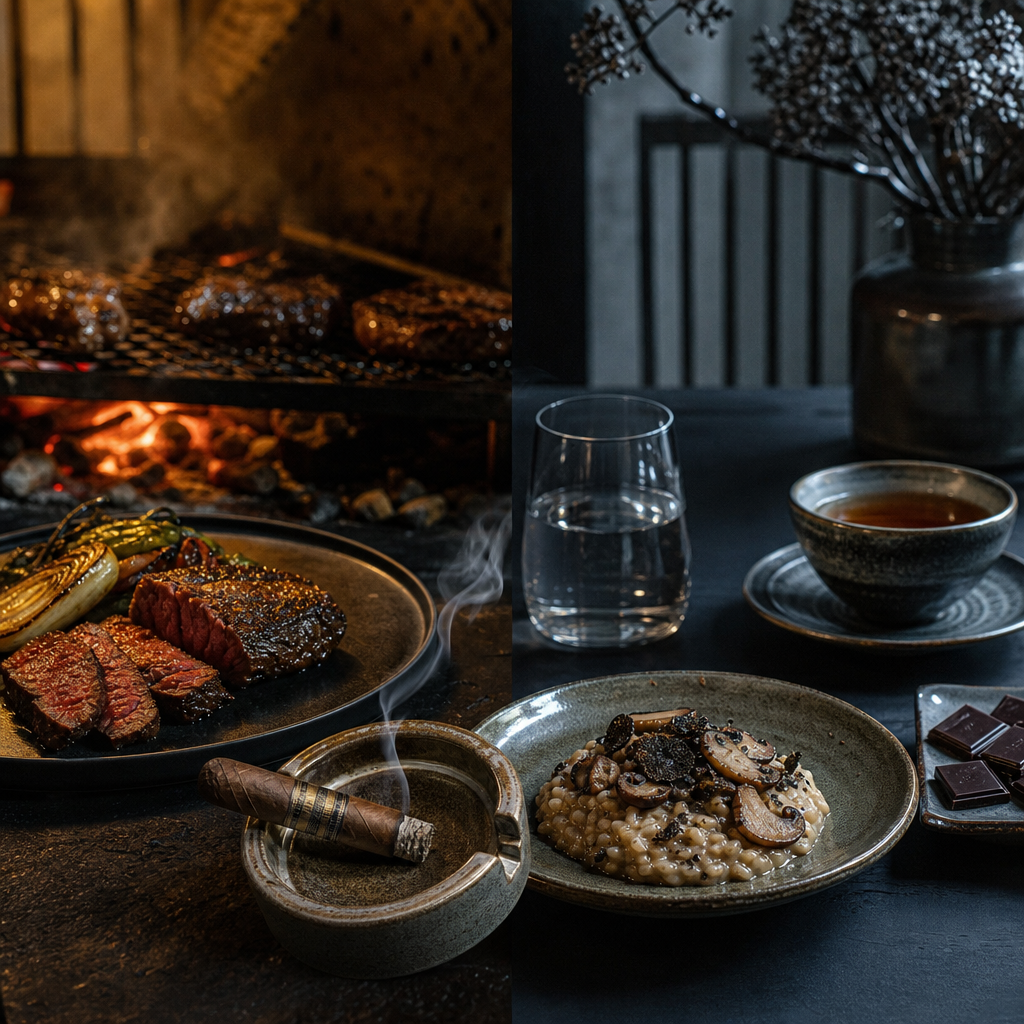
In advanced selection, you must incorporate "the state you desire today" into your judgment. After a dinner of steak, lamb, or heavy sauce dishes, options like Bolívar, Partagás, and Cohiba Maduro 5 Genios, which have more body, can sustain the palate. In the afternoon, or after white wine or light meals, Hoyo de Monterrey Epicure No.2 and Juan López Selección No.2 can better showcase details. The true freedom for seasoned enthusiasts is being able to choose the right flavor in different contexts, rather than sticking to a fixed intensity.
Brand Personality: Turning Labels into Predictable Language
Brand personality is not superstition but a flavor language accumulated through long-term leaf blending styles, size designs, and market positioning. Since its development as a high-end line in 1966, Cohiba's herbal, creamy, honey, bean, and delicate spice notes are familiar to many seasoned enthusiasts. However, the 52 ring gauge, 150mm Cohiba Siglo VI and the 38 ring gauge, 192mm Cohiba Lancero exhibit vastly different performances and cannot be generalized by brand name alone.
The charm of Romeo y Julieta often lies in floral, red fruit, cedar, and gentle sweetness, with the 47 ring gauge, 178mm Churchills being a classic size suitable for observing how the brand unfolds in the mid-section. In contrast, Ramon Allones Specially Selected more frequently presents ripe fruit, candied, rich wood, and sweet spicy notes. These characteristics are not identical in every cigar but are sufficient as a steering wheel before selection.
I recommend seasoned enthusiasts establish their own brand dictionary, not just writing "good" or "nice," but articulating the core impressions of the brand. For example: Trinidad is delicate cream and hay; Vegas Robaina is dried fruit and wood; Punch is herbal, nutty, and old wooden cabinet. When you can describe a brand with three to five words, you can more accurately predict whether the next cigar suits you.
Origin and Wrapper: The Same Sweetness, Completely Different Sources
The sweetness of Cuban cigars is often not candy-like but a natural sweetness mixed with honey, hay, cedar, cream, and cocoa powder. Non-Cuban cigars, due to the freer combination of tobacco leaves from multiple countries, often have black pepper, mineral, rich cocoa, and thick smoke from Nicaragua; while the Dominican Republic frequently exhibits cream, nuts, floral, and clean woodiness. For example, Padrón 1964 Anniversary, Arturo Fuente Hemingway, and Davidoff Nicaragua have completely different sources of sweetness.
The wrapper also changes the first impression. Claro or Colorado Claro usually makes herbal, floral, and nutty notes more prominent; Colorado to Colorado Maduro often brings out cocoa, coffee, and roasted notes; Maduro may carry brown sugar, caramel, rich chocolate, and oiliness. However, color should not be taken as an absolute answer, as the filler leaves and fermentation method are the core. Do not equate dark wrappers directly with heavy flavors; seasoned enthusiasts should look at how sweetness, oiliness, and spices balance.
For example, the Cohiba Maduro 5 series, launched in 2007, is often considered to have more dark chocolate and coffee notes than traditional Cohiba, yet it still retains the brand's delicacy and herbal undertones. Conversely, some light-colored Nicaraguan cigars may also be powerful due to high Ligero content. If you prefer clean, clear lines, don't just chase dark colors; if you seek thickness, don't overlook medium-toned but structurally complete options.
Size is Not About Length, But Flavor Rhythm
In the same brand and series, changing the size changes the flavor rhythm. A Robusto, approximately 50 ring gauge and 124mm, often enters the theme within 45 to 70 minutes, suitable for judging the brand's backbone. A Corona Gorda, about 46 ring gauge and 143mm, usually has more layered progression; a Churchill requires more time for distinct front, middle, and back sections. Seasoned enthusiasts choose size by selecting the speed of flavor unfolding and the proportion of smoke.
The advantage of a thin ring gauge is that the wrapper proportion is higher, and the aroma lines are often sharper; a thick ring gauge has a larger smoke volume, lower temperature, and rounder mouthfeel, but if the blend design is poor, it can become loose. For a slender size like Montecristo Especial No.2, coffee, wood, and slight bitterness are often more concentrated than the same brand's large ring gauge; while H. Upmann Magnum 54 wins with broad, smooth, sweet woodiness.
| Size Type | Common Specifications | Flavor Rhythm | Suitable Preference |
|---|---|---|---|
| Robusto | About 50 x 124mm | Quickly enters the theme | Want to grasp the brand core |
| Corona Gorda | About 46 x 143mm | Clear layers, balanced | Enjoy mid-section changes |
| Churchill | About 47 x 178mm | Slow, complete | Have time to observe details |
| Lancero | About 38 x 192mm | Sharp aroma, tests burn | Pursue wrapper performance |
| Double Robusto | About 50-54 x 155mm | Full smoke, round mouthfeel | Like thickness and comfort |
I often suggest seasoned enthusiasts do a simple exercise: choose two sizes from the same brand and compare them under similar humidity and post-meal conditions. For example, compare Partagás Serie D No.4 with Serie P No.2; the former is more direct, while the latter, due to the torpedo head and length, is more restrained in the front and more three-dimensional in the middle and back. This kind of comparison trains judgment more than simply chasing rare editions.
Reverse Cigar Flavor from Dietary Preferences
What you like to drink often speaks more honestly than what you say you like in cigars. Those who prefer espresso, dark roast coffee, and dark chocolate over 70% can usually accept the thicker wood and spice of Partagás, Bolívar, and Ramon Allones; those who prefer lattes, oolong tea, and honey water may find it easier to appreciate the smoothness and sweet aroma of Hoyo de Monterrey, Trinidad, and H. Upmann.
If you love the peat, sea breeze, and smokiness of Islay whisky, it doesn't mean you have to pair it with the strongest cigar, as both being strong may suppress each other. A better strategy is to choose medium-strength, clearly structured options like Romeo y Julieta Wide Churchills or H. Upmann Magnum 46, allowing the smokiness of the whisky and the woodiness of the cigar to complement each other. Pairing is not about who is stronger but about letting the main and secondary flavors take turns.
You can reverse it as follows:
- Like black coffee: look for cigars with obvious cocoa, coffee, and roasted wood notes.
- Like red tea: look for those balanced with leather, dried fruit, light spices, and wood.
- Like white wine: look for those with bright floral, herbal, creamy, and cedar notes.
- Like bourbon: look for those with vanilla, caramel, nuts, and sweet spicy notes.
- Like cognac: look for those with dried fruit, honey, leather, and delicate oiliness.
When choosing, I first ask about the state of my palate today. If I've just eaten spicy food or had high-acid coffee, my tongue is already fatigued, so it's not suitable to judge with delicate cigars. If dinner was light, it's a good time to observe details in Cohiba Siglo III or Trinidad Fundadores. True personalized selection is turning your dietary habits into a tool for choosing cigars.
Aging, Storage, and Source: The Triangle of Flavor Stability
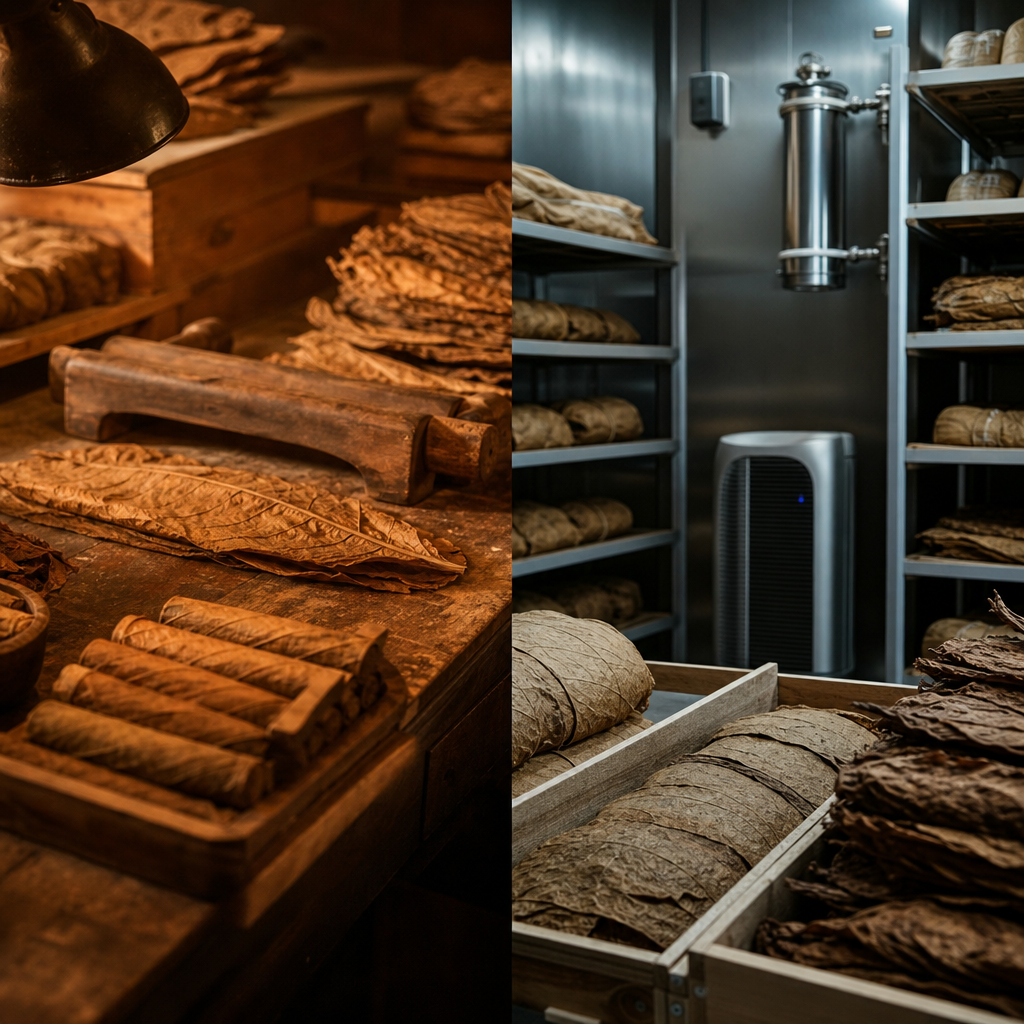
Seasoned enthusiasts know that the performance of the same box of cigars can vary greatly under different years and storage conditions. Box codes, production years, transport humidity, and stabilization periods after acquisition all affect burn and aroma. For example, many Cuban cigars from 2019 to 2021 had tighter burns and heavier ammonia when first acquired due to supply and quality control fluctuations. After 6 to 18 months of stabilization, sweetness and aroma gradually opened up.
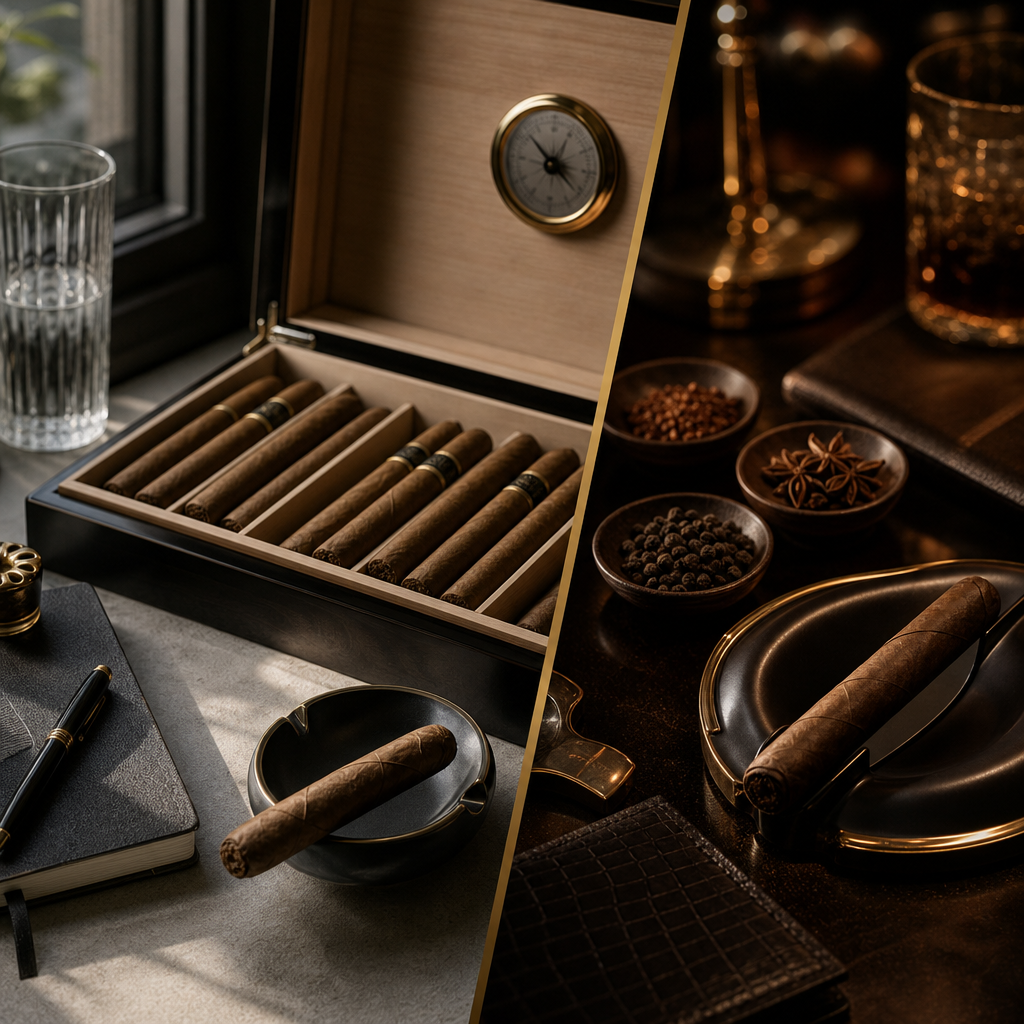
Storage humidity is not a fixed answer either. The traditional 70% RH may be too moist for some cigars, especially large ring gauges or those with dense structures, making the burn stuffy. I personally observe more often between 65% and 68% RH, with temperatures around 18 to 21°C, ensuring clean smoke and stable burn lines. Aging is not just about keeping cigars for a long time but about stabilizing source, humidity, temperature, and time together.
Regarding the source, seasoned enthusiasts should not only look at price. As a PCC authorized dealer, I've seen too many boxes that look similar but have completely different states. Some claim rarity, but their preservation history is unknown, and the flavor has long changed. If discussing collection appreciation, it must be stated clearly: it does not guarantee appreciation and still depends on source preservation and market. For those who truly value flavor, traceable sources and stable preservation are often more important than the rarity on a list.
Establishing a Personal Taste Profile: Making Preferences Reproducible
The most common mistake seasoned enthusiasts make is remembering the brand but forgetting the state. You might remember a particular 2016 box code of H. Upmann Sir Winston as very charming but forget that the humidity was 66%, two hours after a meal, paired with low-proof cognac. The next time you open the same model, if the humidity, mood, and diet are different, the conclusion naturally deviates. Flavor memory without records becomes romantic but unreliable impressions.
My notes usually consist of six items: appearance, cold smell, front, middle, back, and burn. Scores are not the focus; descriptions are. Instead of writing 92 points, write "front cream and cedar, middle turns to roasted almonds, back has white pepper but not bitter." Three months later, when you look back, you'll know if you're truly pursuing lines, sweetness, thickness, or aftertaste.
You can establish a simple template:
- Date, time, before or after a meal.
- Brand, size, box code, or year.
- Storage humidity and stabilization time.
- Pairing drink.
- Three flavor words for each front, middle, and back.
- Whether you would choose again and why.
When you accumulate records of more than 30 cigars, the outline becomes clear. For example, you might find that you don't dislike richness but dislike bitter aftertaste; it's not that you prefer Cuban but prefer cedar, honey, and hay; it's not that you dislike Nicaragua but can't adapt to excessive black pepper. At this point, choosing cigars becomes strategy rather than luck.
Frequently Asked Questions
Should seasoned enthusiasts focus on one or two brands in depth?
Yes, and it's very worthwhile. Focusing on a brand allows you to understand size, year, and batch differences. For example, continuously observing Montecristo No.2, No.4, and Edmundo will make it clearer how the brand's coffee, cocoa, and wood transform. However, also keep 20% to 30% exploration proportion to avoid locking your taste in a single style.
Do high-rated cigars suit my taste?
Not necessarily. High ratings often represent structure, balance, and market consensus, but your preference might be floral, creamy, or low-stimulation aftertaste. If a high-rated cigar excels in black pepper, rich cocoa, and thick smoke, you might not enjoy it. Ratings can be referenced but cannot replace your own flavor profile.
Why do the same cigars vary greatly from box to box?
Reasons include year, factory, tobacco batch, transport, storage humidity, and stabilization time after acquisition. Handmade cigars are not industrial beverages; differences naturally exist. Seasoned enthusiasts should not deny differences but use records to find which years, sources, and storage conditions best suit themselves.
How can I judge if a cigar is too moist or too dry?
Too moist often shows slow burn, stuffy smoke, early bitterness, and heavy draw resistance; too dry tends to heat up, become spicy, crack the wrapper, and have short aroma. If a cigar's state is questionable, don't rush to a brand conclusion; adjust humidity and give it a 2 to 4-week stabilization period before reevaluating.
Should rare editions be part of personal selection strategy?
Yes, but don't let rarity replace suitability. Limited, commemorative, and vintage boxes can indeed offer different experiences, but if your taste preference is clean, smooth, and bright, some heavy rare editions might not be suitable. Rarity is added value; suitability is core value.
Is there an effective advanced training method?
Yes, it's horizontal and vertical comparison. Horizontal comparison is different brands on the same day, similar sizes; vertical comparison is the same brand, different sizes, or years. Change only one variable each time, such as all choosing Robusto or all stored at 66% RH, so your conclusions are meaningful.
Conclusion: My Personal View
I have always believed that the greatest maturity of seasoned cigar enthusiasts is not being able to name many rare names but knowing why you like it, when it is suitable, and under what conditions a cigar can best be showcased. Brand, year, size, aging, and storage are tools; the true protagonist is your gradually clear taste judgment. May every light-up not be a show-off but a choice closer to yourself.
—Cigar Prince Wilson Tsai
Smoking is harmful to health. Underage smoking is prohibited. Quitline: 0800-636363. This article is intended for adults over the age of 20 as a reference for cigar culture, storage, and regulation knowledge, not as tobacco advertising, promotion, or purchase advice.