Exploring the Flavor Combinations of Cigars: The Art of Leaf Blending
Exploring the Flavor Combinations of Cigars: The Art of Leaf Blending
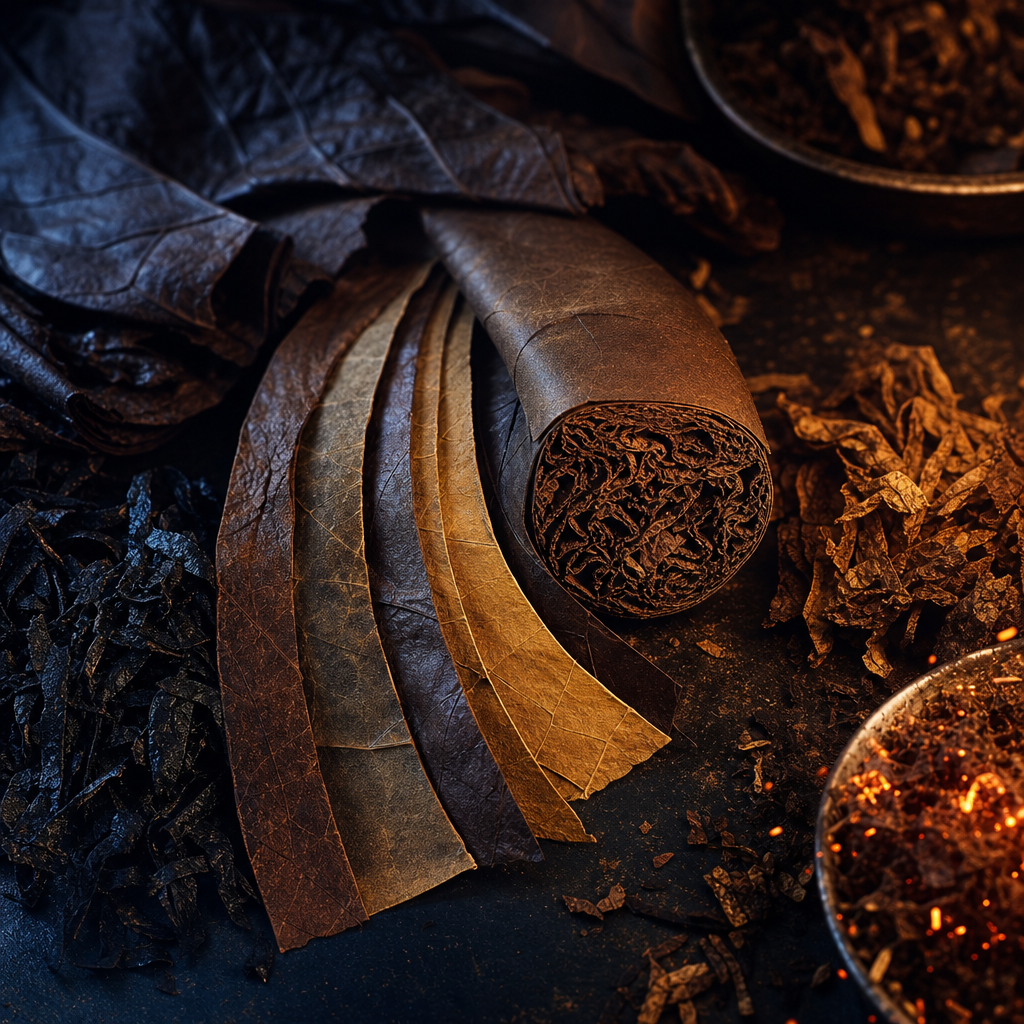
Experienced cigar enthusiasts often find themselves at a bottleneck if they only focus on brand, size, and origin. What truly defines a cigar's character is the proportion, placement, oil content, fermentation level, and burning rhythm of different leaves in the filler, binder, and wrapper.
As an editor of the "Cigar Bible," what fascinates me most is not how prominent a single flavor is, but how the blender arranges sweet, bitter, spicy, woody, leathery, earthy, floral, and mineral notes into a line with ups and downs. Here, I will dissect the core techniques of leaf blending from an expert's perspective.
Understanding Flavor Through Structure: Wrapper, Binder, and Filler Are More Than Just Three Layers
Many people say that the wrapper determines 70% of the flavor. This statement has reference value but is easily misunderstood. The wrapper indeed first contacts the lips and tongue, providing oils, sweetness, spiciness, and visual impression; however, if the filler lacks support, a beautiful wrapper will be like perfume sprayed in an empty room. Around 2006, many Nicaraguan brands began emphasizing the combination of fillers from Estelí, Jalapa, and Condega because a dark wrapper alone could not establish a complete framework.
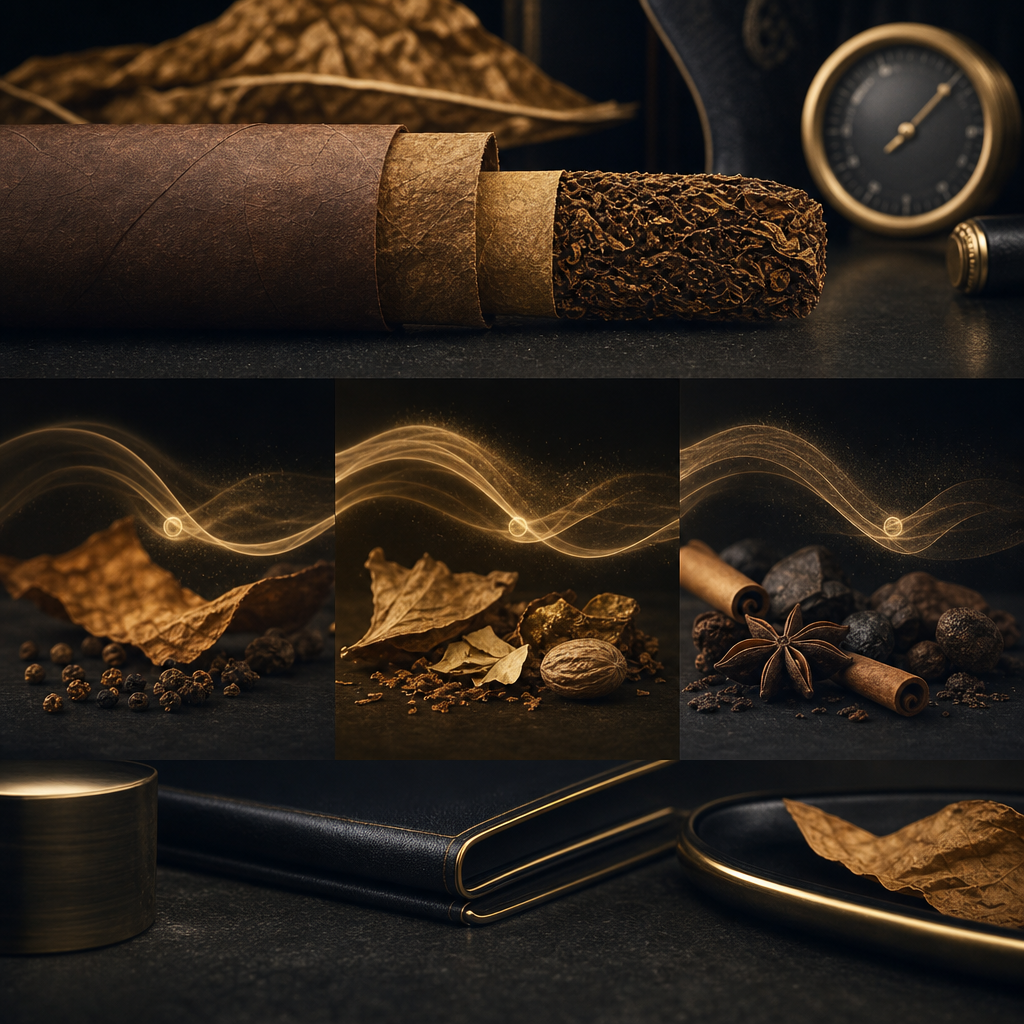
The first principle of leaf blending is to decide the framework first, then the expression. The filler usually provides strength, burning speed, and main mid-section flavors; the binder is responsible for "tying the filler into a rhythm," affecting draw resistance, burn line, and airflow; the wrapper acts as the final touch, amplifying sweetness, spiciness, or oiliness. Both the Hoyo de Monterrey Epicure No.2 and Partagás Serie D No.4 are 50-ring gauge Robustos, but the former often gives a creamy, woody, and soft herbal impression, while the latter leans more towards leather, pepper, and rich earthiness. The difference lies not just in size but in the logic of leaf configuration.
When evaluating a cigar, experts can shift their focus from "is it enjoyable to smoke" to a three-stage observation: the initial stage involves the wrapper and the volatile compounds at ignition, the mid-stage is the filler body, and the final stage is the sum of nicotine, mineral notes, and caramelized substances. If a cigar is luxurious in the beginning, hollow in the middle, and bitter at the end, it's often not a strength issue but a failure of the filler and binder to carry the flavors through.
Ligero, Seco, Volado: The Syntax of Blending Three Leaf Positions
The character of leaves varies greatly from top to bottom of the same tobacco plant. The upper Ligero receives more sunlight, has higher oil content, and stronger nicotine, often bringing black pepper, concentrated coffee, deep wood, and leather notes; the middle Seco is rich in aromatic compounds, with floral, hay, nutty, and cocoa notes often coming from here; the lower Volado is thinner, burns well, and is responsible for stabilizing the burn line. If a cigar is compared to an orchestra, Ligero is the low brass, Seco is the string melody, and Volado is the metronome.
True mastery in blending is not just adding more Ligero for richness, but giving strength layers and outlets. For example, Dominican puros often use more elegant Seco to establish aroma, then add a small amount of Ligero for weight in the final stage; if the proportion of Nicaraguan Estelí Ligero is too high, it may be shocking for the first 20 minutes, then turn bitter and dry. After 2010, many full-bodied cigars favored by the American market experienced a trend of "strength over balance," which experts can distinguish more clearly.
When I dissect a formula, I use three questions to judge whether the leaf position ratio is reasonable: First, is there only spiciness without sweetness five minutes after lighting? Second, is there a recognizable main melody in the mid-section? Third, near the end, is the bitterness like chocolate or burnt cardboard? The former may indicate the depth of a high Ligero ratio, while the latter is often due to burning, humidity, or formula imbalance.
Regional Puzzle: Complementary Roles of Cuba, Nicaragua, Dominican Republic, and Honduras
The classic charm of Cuba's Vuelta Abajo lies in the natural connection between soil minerals, cedar, honey, bean, and herbal notes. In the early 2000s, many Cuban cigars, when aged, would develop dried flower, cream, and light salty notes, a style that doesn't rely on high sweetness and serves as an important reference for traditional taste. For example, the Cohiba Siglo VI, with its large ring gauge, often allows for a loose yet not scattered aroma layer, reminding people of the importance of filler arrangement.
Nicaragua is like a blender's toolbox. Estelí provides strength and black pepper, Jalapa offers sweet wood and red earth aromas, and Condega often brings nutty and smooth herbal notes. Dominican leaves, especially from the Cibao Valley, are often creamy, almondy, hay-like, and elegantly floral; Honduras' Jamastran may offer rich wood, earth, and some spiciness. The purpose of cross-regional leaf blending is not to fill all flavors but to complement the missing edges of a single region.
Take Arturo Fuente OpusX as an example; it showcases the rare concentration of high-quality Dominican wrapper and filler; while Padrón 1964 Anniversary Series uses Nicaraguan leaves to create a profile where cocoa, coffee, pepper, and sweetness coexist. These cases remind us that "regional flavor" is not a label but the result of soil, fermentation, grading, aging, and rolling techniques.
Wrapper Selection: Connecticut, Corojo, Maduro, and Flavor Masks
Wrappers are easily misled by visuals. Claro or Connecticut Shade's light color often leads people to think it must be mild; Maduro's dark color is often assumed to be strong. In fact, Connecticut Shade can bring cream, white pepper, hay, and slight sweetness, and may have medium strength depending on the filler configuration; Maduro, undergoing longer fermentation and higher temperature processing, often has molasses, cocoa, coffee, and dried fruit notes, but the nicotine strength is not necessarily the highest.
| Wrapper Type | Common Flavors | Blending Focus | Potential Risks |
|---|---|---|---|
| Connecticut Shade | Cream, hay, almond | Suitable for highlighting aromatic Seco | Weak filler may appear hollow |
| Corojo | Red pepper, cedar, leather | Can enhance mid-section spiciness | High humidity may cause stifling spiciness |
| Habano | Wood, pepper, mineral | Balances sweetness and strength | Too much Ligero may cause dryness |
| Maduro | Cocoa, molasses, coffee | Suitable for robust filler | May mask delicate floral notes |
The wrapper is not the flavor answer but a flavor filter. The same Nicaraguan filler, when wrapped in Ecuador Connecticut, may appear nutty and smooth; when wrapped in Mexican San Andrés Maduro, it may turn into cocoa, earth, and molasses. The Drew Estate Liga Privada series gained attention after 2007, related to the rich taste brought by dark wrappers, but if one only mimics the color without understanding the internal leaf burning speed, the product can easily become stifling, hot, and bitter.
Experts can use the "mask" concept to judge whether a wrapper is successful: Does it make the filler advantages clearer? Does it smooth out sharp spiciness? Does it retain a clean aftertaste in the final stage? If the answer is no, then even the deepest, glossiest appearance is just superficial.
Proportion and Position: The Same Leaves, Different Arrangements Make Different Cigars
Most people talk about formulas by asking "what leaves are used," but blenders care more about "where to place them, how much, and how to roll." Long filler cigars are usually made by folding several whole leaves; if Ligero is concentrated in the center, it burns slower, releasing strength later; if distributed outward, spiciness and heat may appear earlier. This is why the same brand and series, Robusto, Toro, and Churchill often have different expressions, not just length differences.
When the ring gauge changes, the formula cannot be proportionally enlarged, or the balance will shift. For example, a 42-ring gauge Corona, the wrapper's influence is relatively significant, with concentrated aroma lines; a 54-ring gauge Toro, the filler proportion increases, making the taste thicker, but if Seco is insufficient, it may appear heavy. The torpedo shape of Montecristo No.2 allows for concentrated airflow in the initial stage, focusing on wood, bean, and spiciness; in contrast, larger ring gauge Double Robusto types often emphasize mid-section density.
I suggest experts make a simple record: choose three sizes from the same brand, note the changes in sweetness, spiciness, bitterness, and aroma in the first 10 minutes, mid-20 minutes, and final 10 minutes. You'll find that some brands are most spirited in Corona, some are most balanced in Robusto, and some need Churchill's length to unfold. This is not about preference being right or wrong but the geometric result of the formula under different sizes.
Aging, Humidity, and Burning: Time Begins to Speak After Leaf Blending Is Complete
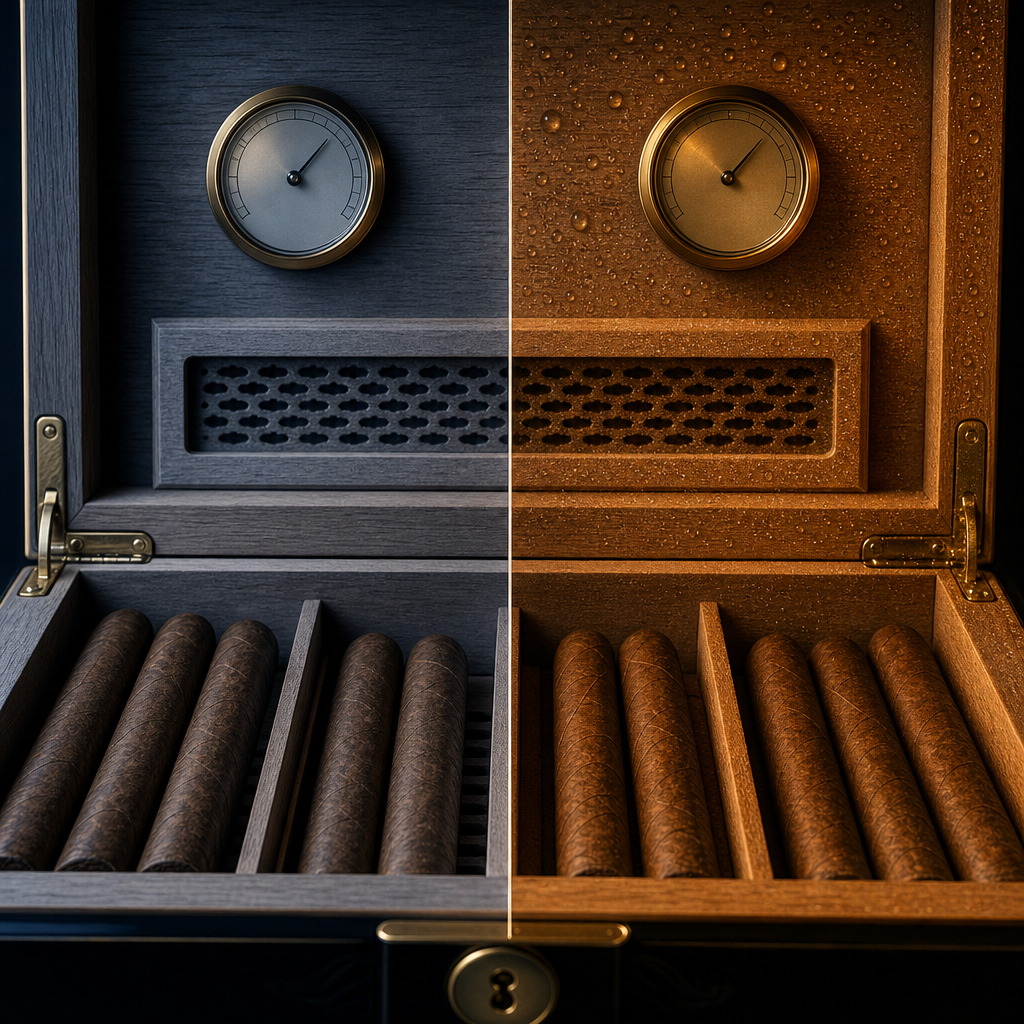
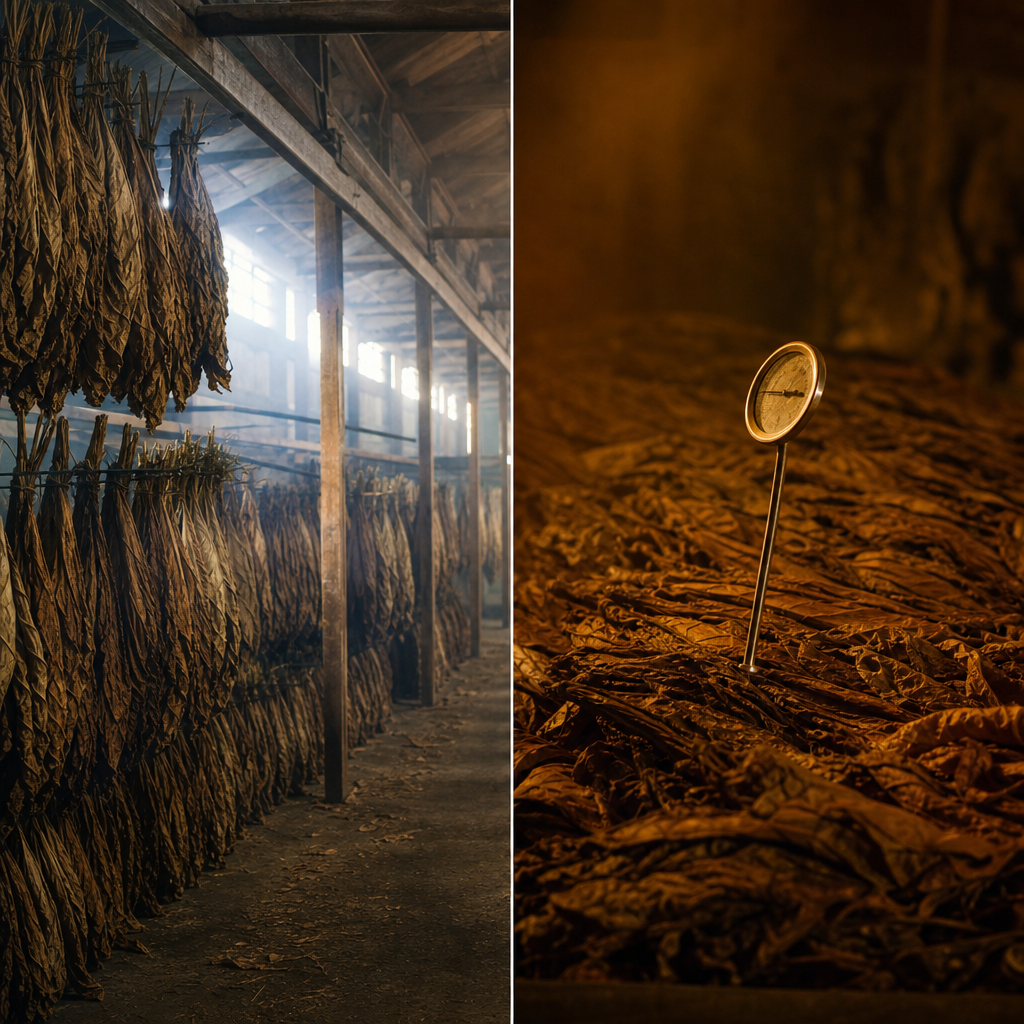
Leaves have gone through years of processes from harvesting, fermentation to rolling; however, aging after boxing can still change flavor angles. If Cuban boxes are stored in a stable environment of 18–20°C and relative humidity of 65–69%, 2–5 years can often reduce ammonia, soften woodiness, and integrate sweetness. Nicaraguan high-concentration cigars may become rounder after 12–24 months, with clearer cocoa and coffee tones.
Aging does not turn a bad formula good, but makes a good formula more orderly. If a cigar inherently has poor burning structure, uneven leaf moisture, or unstable binder tension, storing it longer will only delay the problem. Collection prices may fluctuate due to vintage, discontinuation, box condition, and source, but do not guarantee appreciation, still depending on source preservation and market. Experts should view storage as flavor management, not mere speculation.
Practically, I manage cigars in three categories: light aromatic types maintain 65–67% to avoid dulling aromas; medium to full-bodied types can find balance between 66–69%; dark Maduro, if too moist, tends to smolder and mix bitter-sweet. If the foot smells pungent with ammonia or feels hard outside and soft inside before lighting, it usually indicates unstable condition and is not suitable for hasty conclusions.
Expert Training Method: Establish Your Own Leaf Flavor Coordinates
Advancement is not about remembering more brands but establishing verifiable taste coordinates. You can break cigars into four axes: sweetness, spiciness, woodiness, thickness. Each record should avoid vague terms like "very good" or "ordinary," instead write "front white pepper 3/5, mid cedar 4/5, end caramel sweetness decreases, bitterness rises." After three months, you'll see your preferences are quite specific.
- Choose different brands from the same region, such as Padrón, My Father, Oliva, to compare Nicaraguan leaf performance.
- Choose different wrappers from the same brand, such as Connecticut, Habano, Maduro, to observe the filter effect of outer leaves.
- Choose different sizes from the same series, recording how ring gauge and length change the front, mid, and end stages.
- Change only one variable at a time, keeping humidity, drink, and time fixed.
- Use a 1–5 scale for recording, don't rely solely on memory.
True progress for experts is being able to articulate what they like and why they like it. For example, if you prefer the rich earth and leather of Bolivar Royal Coronas, it may indicate you like medium-high strength, mineral notes, and deep woodiness; if you prefer the dried fruit, spice, and rounded sweetness of Ramón Allones Specially Selected, you may value mid-section layers and aftertaste more. Translating preferences into leaf language gives you the ability to find similar profiles across brands.
Common Questions
Why is there flavor variation even in the same box of cigars?
Cigars are agricultural products, not industrial beverages. Even in the same box, year, and factory, leaf thickness, oil content, rolling density, and storage position can cause differences. If 2–3 out of 25 box cigars perform slightly differently, it's not uncommon. Experts should judge quality by overall consistency, not absolute sameness of individual sticks.
Does a dark wrapper mean higher strength?
Not necessarily. Maduro often brings cocoa, molasses, and coffee bittersweet, but strength mainly depends on the filler, especially Ligero proportion and region. Mexican San Andrés Maduro may have rich flavor, but nicotine may not be higher than some Habano-wrapped Nicaraguan formulas. Color can only provide clues, not replace actual sensory judgment.
How long should aging be?
It depends on the formula. Medium-strength Cuban cigars often show better integration at 3–5 years; rich Nicaraguan styles may have noticeable rounding at 1–2 years; light Connecticut may weaken in aroma if aged too long. The key is stable temperature and humidity, not chasing vintage numbers.
How to tell if a cigar is formula imbalanced or poorly stored?
If the burn line is crooked, draw resistance fluctuates, or smoke is heavy with moisture, it's often related to storage or rolling; if burning is normal but the front is only spicy, the mid is hollow, and the end is bitter, it's more likely a formula balance issue. Eliminate humidity and lighting technique first, then discuss leaf blending for fair judgment.
What's the biggest difference in blending philosophy between New World and Cuban cigars?
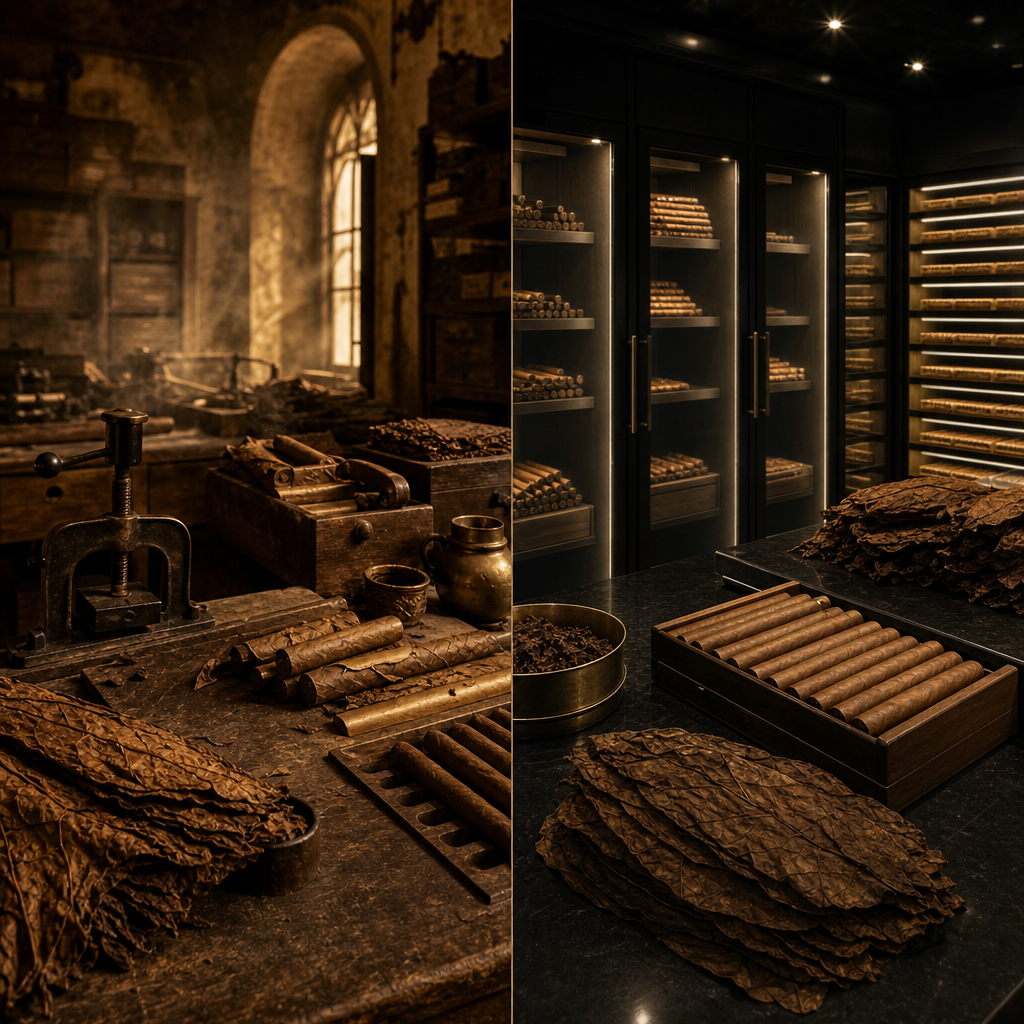
Cuban cigars often use combinations of different farms, grades, and leaf positions within a single country, pursuing regional unity; New World cigars often cross-country blend, using Nicaraguan strength, Dominican aroma, Honduran woodiness, and Ecuadorian wrappers to construct style. The former is like poetry in the same language, the latter like multi-language band arrangements.
Why do some large ring gauge cigars seem less refined?
Large ring gauges increase filler proportion, making the taste thicker, but the wrapper's influence relatively decreases. If the blender doesn't increase aromatic Seco or adjust Ligero position, it may become heavy but lack layers. This is why many experts still favor Corona, Lonsdale, Robusto sizes that better present lines.
The art of leaf blending is fascinating because it has no single formula. Some pursue Cuban-style mineral, honey, and wood connections; some love Nicaraguan cocoa, pepper, and concentration; others appreciate Dominican elegant floral notes. My view is that experts shouldn't rush to judge superiority but learn to dissect: which leaf gives sweetness, which leaf brings strength, and where the imbalance begins. When you can read the formula, cigars are not just brands but a craft of taste that can be repeatedly verified.
—Cigar Prince Wilson Tsai
Smoking is harmful to health. Smoking is prohibited for those under twenty. Quitline: 0800-636363. This article is intended for adults over twenty as a reference for cigar culture, preservation, and regulations, not as tobacco advertising, promotion, or purchase advice.