The Flavor Journey of Cigars: Enhancing Enjoyment Through Tasting Techniques
The true pleasure of cigars lies not just in the smoke after lighting, but in recognizing how it begins, transitions, and concludes. Veterans often have fixed brand preferences, but relying solely on "strength" or "smoothness" can easily miss the intricate layers of a cigar.
As an editor of the "Cigar Bible," I've seen too many people chase after vintages, limited editions, and ring gauges, neglecting taste training. In this article, I want to discuss professional evaluation methods and personalized experiences, making each cigar not just a consumption, but a journey that can be recorded, compared, and savored.
Calibrating Your Palate: Breaking Down "Good Smoke" into Readable Language
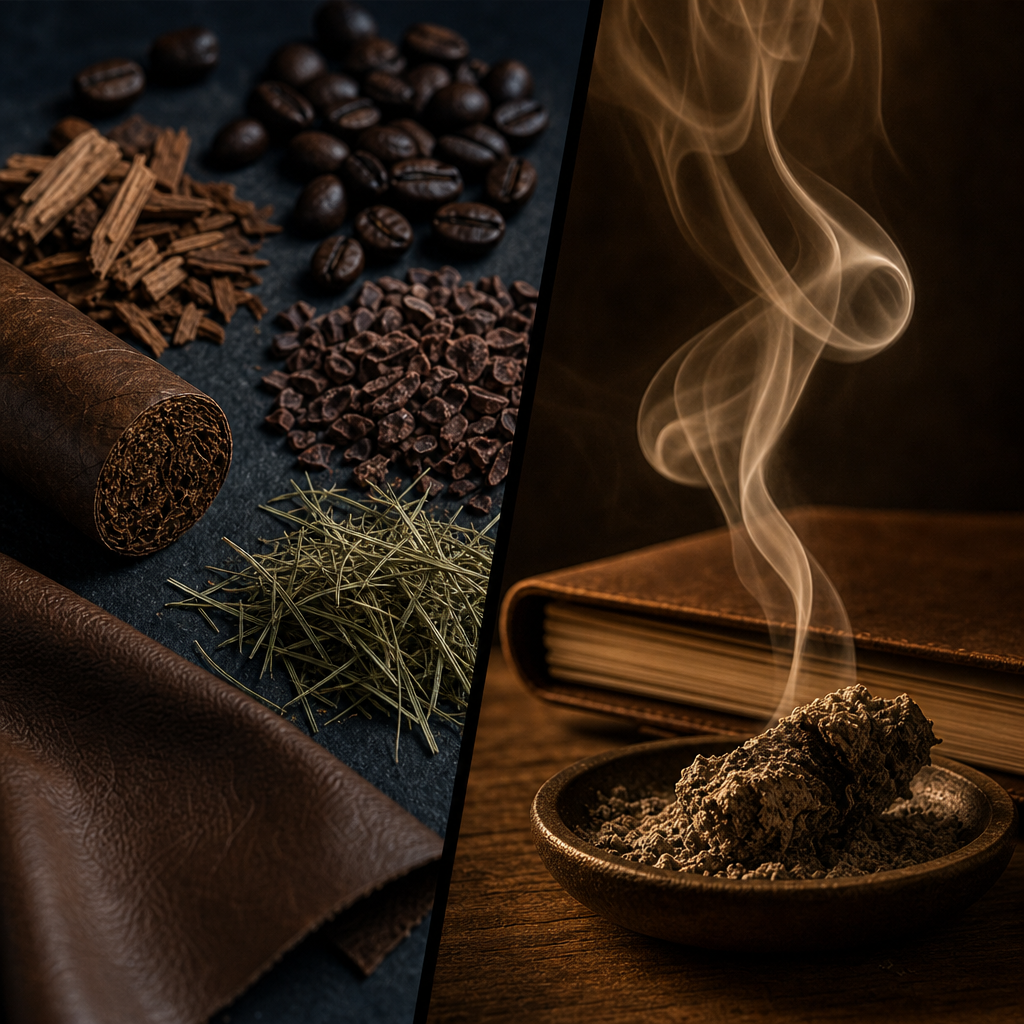
Veterans often face the bottleneck of knowing they like Cohiba, Partagás, Montecristo, or H. Upmann, but can't articulate why. Take Cohiba Siglo VI for example; some say it's delicate, others say it's creamy. Upon further breakdown, it could be a combination of wood, honey, hay, nut oil, and mid-section spice. Advanced evaluation isn't about making cigars sound fancy, but breaking down feelings into stable, repeatable language.
I usually divide taste into five aspects: sweetness, bitterness, acidity, saltiness, and spiciness. Since 2020, many Nicaraguan cigars have shown distinct black pepper and cocoa notes, such as Padrón 1964 Anniversary Maduro; while Cuban Hoyo de Monterrey Epicure No.2 often presents softer wood and cream tones. Both might be called "smooth," but their smoothness comes from different structures.
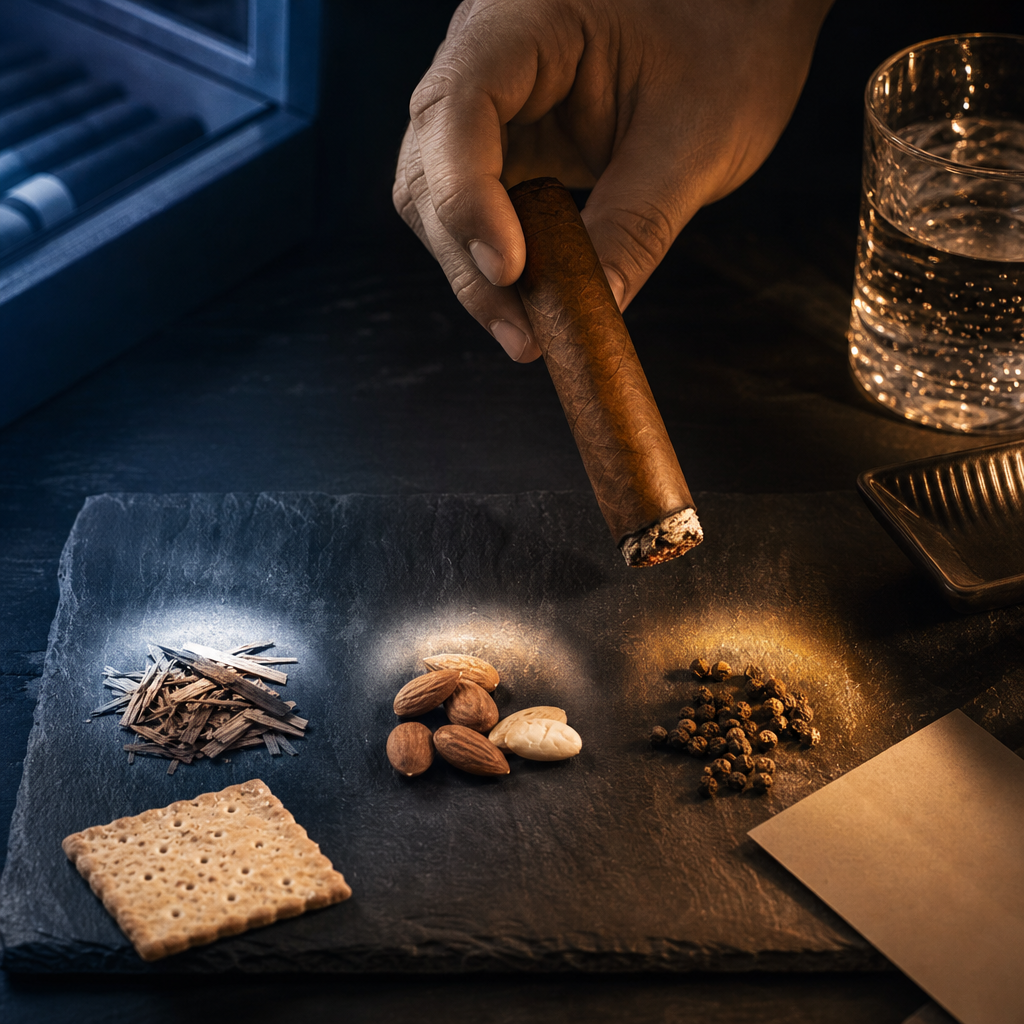
When training your palate, prepare unsweetened sparkling water, room temperature water, and plain soda crackers, avoiding coffee or spirits at the start. From the first to the fifth puff, only record the three most direct words, like "cedar, almond, white pepper." Build your flavor dictionary first, then discuss brand hierarchy for increasingly precise judgments.
Three-Stage Evaluation: Front, Middle, and Back Are Structures, Not Time
Many people divide a cigar into three equal parts, but I recommend segmenting by flavor changes, not just length. For a Robusto size, the common length is about 124mm, ring gauge 50, with a burn time of 45 to 70 minutes; but some cigars enter their main body within the first 15 minutes, while others open up in the middle section. The task of the front section is to observe whether the start is clean, the burn is stable, and the aroma is concentrated.
The middle section usually best showcases blending skills. For instance, Partagás Serie D No.4 often displays leather, earth, roasted coffee, and spices in the middle; while the Davidoff Grand Cru series might focus more on grains, cream, and light wood. A mature cigar should not just intensify in the middle but reveal clearer layers and connections.
The back section tests balance. If the temperature is too high or the draw too frequent, the beautiful cocoa and nut flavors may turn into bitter char. My approach is to slow down in the back section, about one puff every 60 to 90 seconds, keeping the burn core stable. If the aroma remains, without throat irritation or muddiness in the last third, the cigar's structure is usually quite reliable.
Cold Smell, Cold Draw, and Pre-Lighting Judgment: Many Answers Lie Before the Flame
Pre-lighting observation is often underestimated. First, check the wrapper's oiliness, leaf veins, texture, and fill uniformity. Shiny doesn't necessarily mean better, and a dry look doesn't mean poor condition; the key is whether the entire cigar is consistently elastic. If the foot is noticeably loose, the burn may be too fast; if some parts are too hard, it may cause excessive draw resistance. Pre-lighting checks are not ceremonial but a pre-judgment of the burning risks for the next 60 minutes.
For cold smell, I divide it into three areas: wrapper, foot, and cut. The wrapper often carries wood, barn, leather, or cocoa; the foot, being able to contact internal leaves, provides richer information. For example, a well-conditioned Montecristo No.2 often has cocoa powder, dry wood, light spices, and slightly sweet grains; if there's a pungent ammonia smell, it may indicate insufficient aging or unstable storage.
Cold draw can judge draw resistance and expected flavors. Ideal draw resistance is like sipping a thick milkshake through a straw, resistant but not laborious. If it's completely hollow, the burn may be too hot; if you need to draw hard, subsequent flavors will be stifled. Be restrained with the cut; torpedo shapes like Montecristo No.2 don't need a deep cut initially, you can start with a small cut and adjust if the draw is too tight.
Flame, Rhythm, and Temperature: Good Flavors Often Die from Being Drawn Too Quickly
Lighting isn't just about igniting the cigar but establishing a burn baseline. I prefer to toast the foot with the flame's outer edge, letting the edges glow evenly before drawing to light the center. If you directly flood the leaves with fire at the start, the front section often shows charred wood, bitterness, and harshness. Especially for large sizes above ring gauge 54, patience is needed to synchronize the entire burn surface. Good flame control makes the first impression of a cigar much cleaner and easier to reveal the original blend.
I recommend a draw rhythm of one puff every 60 to 90 seconds, with fuller cigars extending to 2 minutes. Stronger cigars like Oliva Serie V and My Father Le Bijou 1922, if drawn too quickly, can easily accumulate spiciness and bitterness in the back section; conversely, H. Upmann Magnum 46 often maintains elegant wood and light sweetness if the rhythm is stable.
Here is a quick adjustment table I often use for different situations:
| Situation | Possible Cause | Adjustment Method |
|---|---|---|
| Sudden bitterness increase | Too frequent draws, high temperature | Rest for 2 to 3 minutes before continuing |
| Uneven burn | Uneven humidity or lighting | Lightly touch up the low burn side, no rush for major repairs |
| Aroma thinning | Loose draw or slow rhythm | Shorten intervals slightly, observe for two or three puffs |
| Spicy throat irritation | Overheated back section or unstable leaf condition | Lower frequency, end early if necessary |
Vintage, Aging, and Source: Why the Same Cigar Tastes Different
The same cigar can vary significantly in different years. For Cuban cigars, years like 2006, 2014, 2019, and 2021 are often compared by seasoned players, not just for production but also leaf vintage, factory condition, and storage path. Even if both are Cohiba Robusto, different box codes and storage environments can result in more herbal, creamy, or pronounced woody spices.
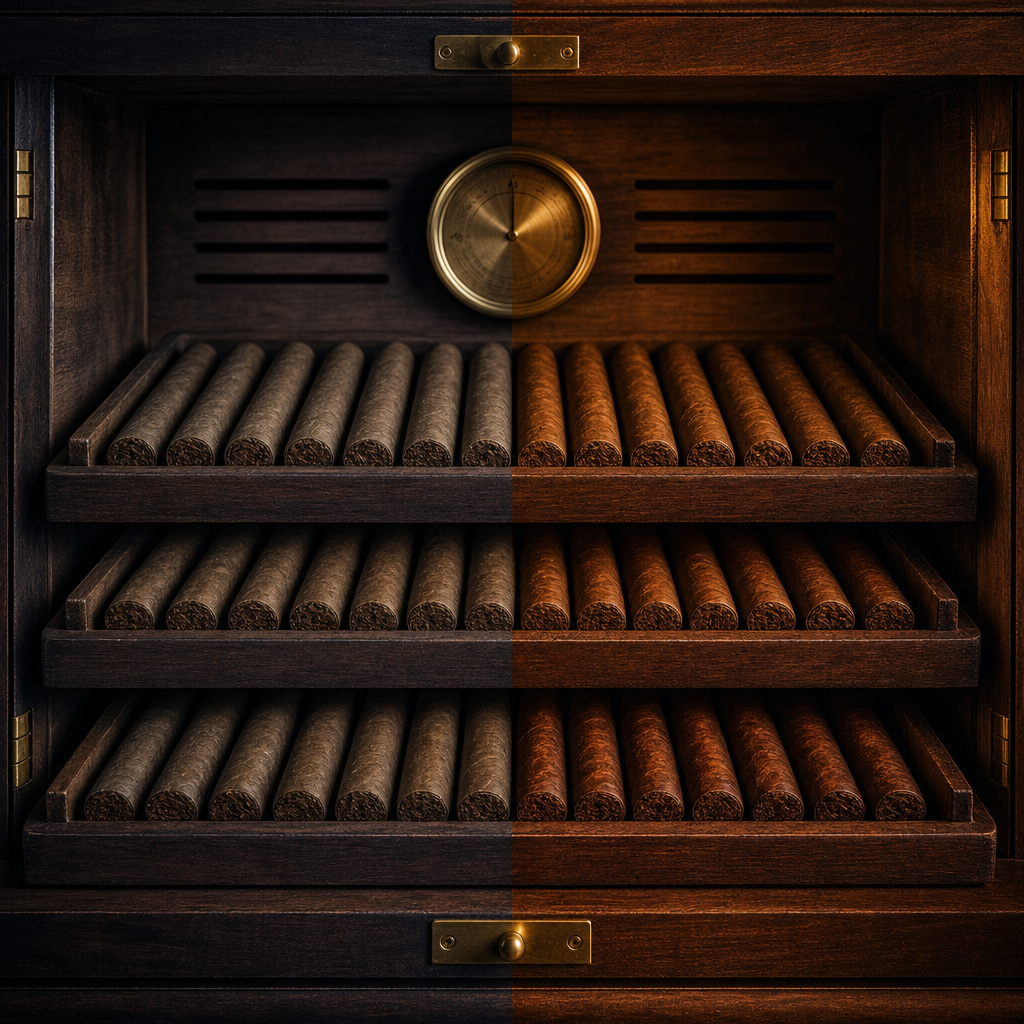
Aging isn't just about keeping cigars for a long time but allowing moisture, ammonia, oils, and aromas to gradually integrate. Generally, standard Cuban cigars become more rounded after 3 to 5 years; robust New World cigars like Padrón and Fuente OpusX may mellow in spiciness after 2 to 4 years. However, if stored above 72% relative humidity for long periods, the risk of mustiness and mold increases. Vintage is a clue, not a guarantee; the storage environment is key to flavor maturity.
Source is equally important. I place great emphasis on clear, traceable channels and storage records. As a PCC authorized dealer, I understand the importance of stable sources for condition judgment. When discussing collection appreciation, it doesn't guarantee appreciation; it still depends on source storage and market. For veterans, the value of a box of cigars lies not only in the label year but also in whether it has been properly cared for.
Building Personal Notes: Accumulate Experience, Not Just Impressions
Many veterans have smoked hundreds of cigars but rarely leave comparable records. The problem is that memory can beautify and be influenced by the scene. A Partagás Lusitanias encountered during a 2018 trip might be remembered as particularly wonderful due to the weather, post-meal state, and companions; but without recording humidity, vintage, draw time, and flavor transitions, it's hard to replicate the experience next time. Notes aren't for scoring but to know what you truly like.
I recommend recording 8 fields each time: brand, model, vintage or box code, storage humidity, start time, top three flavors, mid-section changes, and back-section performance. Scores can use a 100-point scale but don't obsess over it. Above 85 points means willing to delve deeper for comparison, above 90 points means both structure and emotional memory are outstanding.
You can also create your preference matrix. For example, you might find you prefer ring gauges 46 to 52, wood and cream over black pepper, medium strength, and cigars with a burn time of about 70 minutes. This way, when looking back at Hoyo Epicure No.2, Romeo y Julieta Wide Churchills, and Davidoff Aniversario Special R, you can more clearly see why they suit or don't suit you.
Advanced Pairing: Beverages Aren't the Main Character, They're the Magnifying Glass
A common mistake in cigar pairing is choosing overly strong drinks. Peaty whiskies, tannic red wines, and high-sugar cocktails can overshadow delicate aromas. If you have a more delicate cigar like Trinidad Reyes or Quai d’Orsay No.50, I recommend starting with sparkling water, lightly roasted coffee, or low-sweetness tea. Good pairing doesn't compete but makes the cigar's original strengths clearer.
Coffee pairing can be adjusted by roast level. The citrus acidity of medium-light roasted Ethiopian coffee may highlight the wood sweetness in cigars; deep-roasted Sumatra will enhance cocoa, nut, and caramel notes. If it's a Padrón 1926 Maduro, I avoid overly acidic coffee, opting for dark chocolate, espresso, or aged rum for more consistent thickness.
For alcohol, pay attention to alcohol content and entry sequence. Whiskies with 40% to 46% alcohol are easier to manage; cask strength, if not diluted, often numbs the tongue. My sequence is to drink water first, take two or three puffs of the cigar, then sip the drink, and finally return to the cigar to observe if the flavor is magnified or altered. If only the alcohol taste remains after pairing, it's not a bonus but an imbalance.
Frequently Asked Questions
Why does the same box of cigars taste different?
Handmade cigars are rolled from natural leaves, even within the same box, there may be differences due to leaf position, fill ratio, and burn speed. A 5% to 10% difference is common; if draw resistance, humidity, and flavor vary greatly, check storage conditions and source stability. Consistency within the same box is a quality indicator, but natural materials won't be completely identical like mechanical products.
Should humidity be fixed at 70%?
70% is just a traditional reference, not an absolute answer. In Taiwan's humid climate, I often recommend Cuban cigars at about 65% to 68%, and rich New World cigars can be kept at 66% to 69% depending on the condition. If the burn is often crooked, the smoke is stuffy, and bitterness is heavy, the humidity may be too high; if the wrapper cracks easily, it may be too dry.
Do rating scores have meaning?
Yes, but only meaningful under the same set of standards. If you give 92 points today, and the standard changes in three months, the score loses comparative value. I break down the score into burn 20, structure 30, flavor 30, and finish 20, which is more traceable than simply writing "excellent."
When should you stop a cigar?
If the back section only has bitterness, throat irritation, ammonia, or hot smoke, you can stop without sacrificing the experience to smoke to the end. Usually, when there are 3 to 4 cm left, many cigars have entered the high-temperature zone. Respecting the finish is also a mature player's judgment.
How do veterans break through fixed brand preferences?
You can compare "same size, different regions." For example, choose the Robusto size, arrange one each from Cuba, Nicaragua, and the Dominican Republic, and record under different dates and the same beverage conditions. Don't rush to judge winners, first find out your preferred sweetness, spiciness, wood, and strength range.
I always believe that the most fascinating aspect of cigars isn't the price, fame, or rarity, but that it forces us to slow down and learn to distinguish details. Those who truly understand cigars won't just chase labels but will respect time, preservation, craftsmanship, and the current physical state. When you can clearly articulate how a cigar starts, transitions, and concludes, you're enjoying not just the smoke but a complete flavor memory.
—Cigar Prince Wilson Tsai
Smoking is harmful to health. Under 20 years old is prohibited from smoking. Quitline: 0800-636363. This article is intended for adults over 20 years old as a reference for cigar culture, preservation, and regulations, not as an advertisement, promotion, or purchase suggestion.