Analysis of Cigar Taste: The Art of Different Pairings
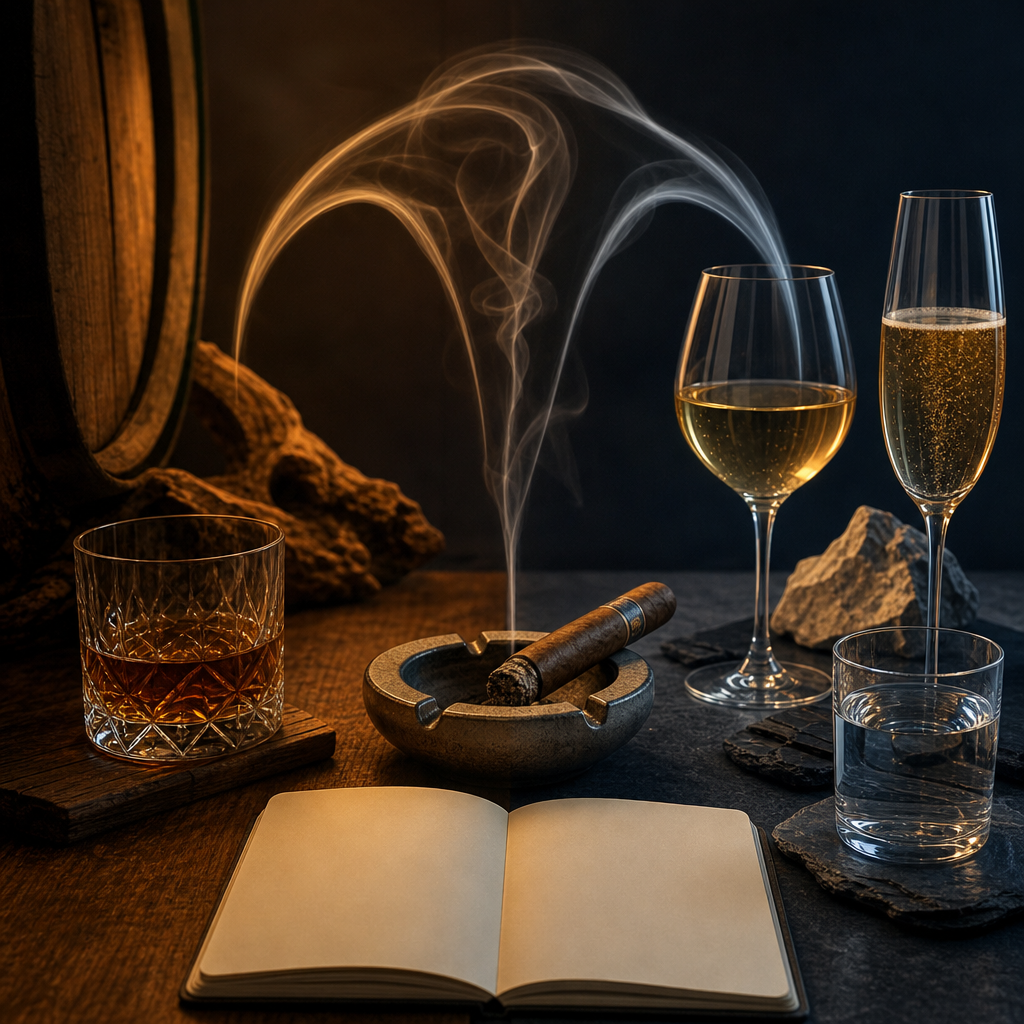
Analysis of Cigar Taste: The Art of Different Pairings
Pairing cigars with beverages is not about placing two expensive names on the same table, but about allowing the interaction of combustion, alcohol, acidity, sweetness, woodiness, and minerality. Beginners already understand basic tasting; the next step is learning how to extract the true layers of a cigar among different beverages.
As the editor of the "Cigar Bible," I often view pairing as a three-step exercise: the first puff confirms the cigar itself, the second puff adds the beverage, and the third puff returns to the cigar to see if the flavor becomes clearer, richer, or flattened. This article discusses techniques, rhythm, and etiquette, suitable for legal adult readers as a reference for flavor education.
Understand Pairing Logic: Strength, Sweetness, and Acidity
The most common mistake in cigar pairing is focusing only on brand reputation while ignoring "strength." Take Cohiba Siglo VI, for example, which became a modern Cuban representative familiar to many after its launch in 2002, often featuring creamy, grassy, honey, and roasted grain flavors. Pairing it with a heavily peated Islay whisky can easily overshadow its delicate front-end with smoky iodine notes. Conversely, Romeo y Julieta Wide Churchills, introduced in 2010, with its sweeter and rounder woodiness, has a higher tolerance for medium-bodied drinks. The first principle of pairing is to match the strength of the cigar and beverage, rather than letting one side achieve an overwhelming victory.
The second key is sweetness. The sweetness in cigars often isn't sugar but a rounded impression from cocoa, hazelnut, mature wood, cream, and hay; the sweetness in beverages may come from oak barrels, residual sugar, mature fruits, or yeast. For example, pairing H. Upmann Magnum 46 with Glenmorangie 10 Years, the orange peel, vanilla, and malt sweetness can extend the almond and cream lines of the cigar. If replaced with a high-acid, low-fruit young white wine, the front-end might become sharp.
The third variable is acidity and carbonation. The acidity in white wine and champagne acts like lemon on the dining table, cutting through mouth oils and smoke residues; however, if the acidity is too high, it can amplify tannins, spices, and pepper notes. My practice is to divide each cigar into three sections: front, middle, and back, pairing each section with one type of beverage, and noting the results of "sweeter, drier, bitter, or fresher." A truly good pairing doesn't necessarily make the flavor stronger but makes it easier to identify the original structure of the cigar.
Whisky Pairing: Oak, Peat, and Cigar Oils
Whisky is the most commonly discussed pairing with cigars for a simple reason: the maturation in oak barrels brings vanilla, caramel, coconut, dried fruit, and spices, naturally connecting with the woodiness, cocoa, leather, and nuts of cigars. For example, The Macallan 12 Years Sherry Oak paired with Partagás Serie D No.4, the raisin and dark chocolate from the sherry cask can carry the earthy, peppery, and rich flavors common in Partagás; however, if the cigar enters a spicier back-end, the alcohol can push the spiciness higher. When pairing whisky with cigars, higher alcohol content isn't better; the key is whether the barrel flavor can fill the gaps in the cigar.
Bourbon barrel styles are more suitable for cigars with clear cream, grain, and honey lines. Speyside whiskies like Glenfiddich 12 Years or Balvenie DoubleWood 12 Years can balance with Montecristo No.4 or Hoyo de Monterrey Epicure No.2: the former offers green apple, pear, and malt, while the latter brings out cocoa, nuts, and light woodiness. If you're new to pairing practice, I recommend starting with whiskies between 40% and 46% ABV to avoid cask-strength whiskies that can quickly fatigue the palate.
Peated whiskies require more caution. The sea breeze, herbs, smoke, and iodine notes of Lagavulin 16 Years or Ardbeg 10 Years are suitable for cigars with thicker structures and strong back-end energy, such as Bolivar Royal Corona or Ramon Allones Specially Selected. In terms of etiquette, there's no need to drink whisky with every puff; let the cigar smoke linger in the mouth, then sip the whisky 10 to 20 seconds after exhaling to see if the body lengthens the finish. If you only taste the alcohol's spiciness, it usually means the pace is too fast or the whisky is too strong.
White Wine Pairing: Acidity is Not the Enemy, but a Magnifier
Here, white wine refers to white grape wine. Many beginners think cigars can only be paired with spirits, but the high acidity, minerality, and fruitiness of white wine are very interesting for medium or lighter cigars. For example, Chablis Premier Cru 2020 paired with Hoyo de Monterrey Epicure Especial, the lime, green apple, and slight salinity of Chablis can cleanse the cream and hay lines of the cigar. The role of white wine is not to add thickness but to make the cigar's details more transparent.
Sauvignon Blanc is suitable for pairings with distinct grass, citrus, and elderflower characteristics. For instance, Sancerre 2021 paired with Cohiba Siglo II, both have grassy and citrus peel directions, easily forming a "similar connection" effect; however, if paired with the spicy and intense Partagás, the wine's acidity may make the pepperiness sharper. Riesling Kabinett, especially from the Mosel region in 2019 or 2021, with low alcohol, light sweetness, and acidity, pairs well with caramel and honey-flavored cigars like Por Larrañaga Petit Corona, appearing light.
There are three practical details for white wine pairing. First, the temperature should not be too low; below 8°C, only acidity and coldness remain, so start at 10°C to 12°C. Second, the cigar should not be too strong, or the white wine will disappear like a background watercolor. Third, the wine glass should retain aroma space; a standard white wine glass is sufficient, without excessive swirling. If comparing two white wines within an hour, drink the high-acid, low-alcohol one first, followed by the oakier Chardonnay, for clearer order.
Champagne Pairing: Bubbles, Yeast, and Salty Freshness
The focus of pairing champagne with cigars is the cleansing effect brought by bubbles and acidity. Ruinart Blanc de Blancs, mainly Chardonnay, often features lemon, white flowers, cream, and delicate yeast, suitable for pairing with Trinidad Vigía; this cigar, launched in 2014, is short and stout, often with coffee, honey, woodiness, and slight spice, and champagne can refine its sweetness. The most charming aspect of champagne is allowing the cigar to restart between each sip.
For a thicker pairing, choose champagnes with a higher proportion of Pinot Noir, such as Bollinger Special Cuvée. Its toasted bread, apple pie, nuts, and mature fruit flavors can form mid-range thickness with Romeo y Julieta Short Churchills or Montecristo Edmundo. Vintage champagnes like Dom Pérignon 2013, with clear acidity and tight structure, are suitable for elegant, stable-burning cigars; if the cigar is dry, the champagne's acidity will amplify the astringency, making it less pleasant.
The shape of the champagne glass also affects the result. A slender flute retains bubbles but unfolds aromas more slowly; a white wine glass can open up yeast and fruit aromas, suitable for pairing with cigars. My suggestion is to pour 90 to 120 ml, not a full glass, to keep the champagne lively. Taste the cigar alone for three to five puffs before adding champagne; if the bubbles make the mouth too clean, slow down the frequency, sipping champagne every two to three puffs to avoid making champagne the main focus.
Quick Pairing Reference: Choose Beverages Based on Cigar Strength
Beginners need not a long list but a map that quickly determines direction. Cigar strength can be roughly divided into light, medium, and strong; beverages are judged by alcohol, acidity, sweetness, barrel flavor, and bubbles. The following table is not an absolute answer but a starting point to reduce error rates. First determine the cigar strength, then decide the beverage structure; the success rate will be much higher than blindly chasing famous brands.
| Cigar Type | Flavor Example | Beverage Direction | Pairing Example |
|---|---|---|---|
| Light to Medium | Cream, Hay, Almond | Chablis, Blanc de Blancs Champagne | Hoyo Epicure No.2 × Chablis 2020 |
| Medium | Cocoa, Coffee, Honey | Speyside 12 Years, Riesling Kabinett | Montecristo No.4 × Balvenie 12 |
| Medium to Strong | Leather, Pepper, Earth | Sherry Cask Whisky, Rich Champagne | Partagás D4 × Macallan 12 |
| Rich | Dark Chocolate, Spice, Smoke | Peated Whisky, Old Vintage Sweet Wine in Small Amounts | Bolivar Royal Corona × Lagavulin 16 |
In practice, I divide a 50 to 60-minute cigar into three time segments. In the first 15 minutes, there's no rush to pair, as the cigar is still stabilizing its burn; the middle segment is the golden area to observe the beverage's effect; in the back-end, if tar and heat increase, the beverage can only modify, not save an imbalance. This is why I don't recommend having too many drinks on the table at once; two beverages are enough for comparison.
You can also think along two paths: "similar" and "contrast." Similar pairing is cocoa with sherry cask, cream with Chardonnay, grass with Sauvignon Blanc; contrast pairing is a rich cigar with high-acid champagne, spicy cigar with slightly sweet Riesling. If unsure which path to take, choose similar pairing first; to add dining table surprises, then try the contrast of acidity or bubbles.
Tasting Techniques and Gentlemanly Etiquette: Slow, Less, Accurate
The biggest fear in pairing cigars with beverages is "speed." A Robusto size usually lasts 45 to 60 minutes, while a Churchill may exceed 90 minutes; if every puff of the cigar is followed by a sip of alcohol, the palate will quickly be filled with alcohol and smoke. My rhythm is: two to three puffs of the cigar, pause for 30 seconds, a small sip of the beverage, pause for another 20 seconds, then return to the cigar. Slow down to discern whether the pairing improves the flavor or merely dulls the senses.
When tasting, the smoke doesn't need to linger forcefully. Let the smoke circle in the mouth, feeling the changes on the tongue, palate, and sides, then naturally exhale; if practicing nasal perception, only a small amount is needed, especially near rich cigars or high-alcohol beverages. The beverage doesn't need to be sipped in large amounts either; 5 to 10 ml is enough to judge the interaction. Room temperature water is important, as it is better than ice water because ice water can solidify oils, temporarily reducing olfactory sensitivity.
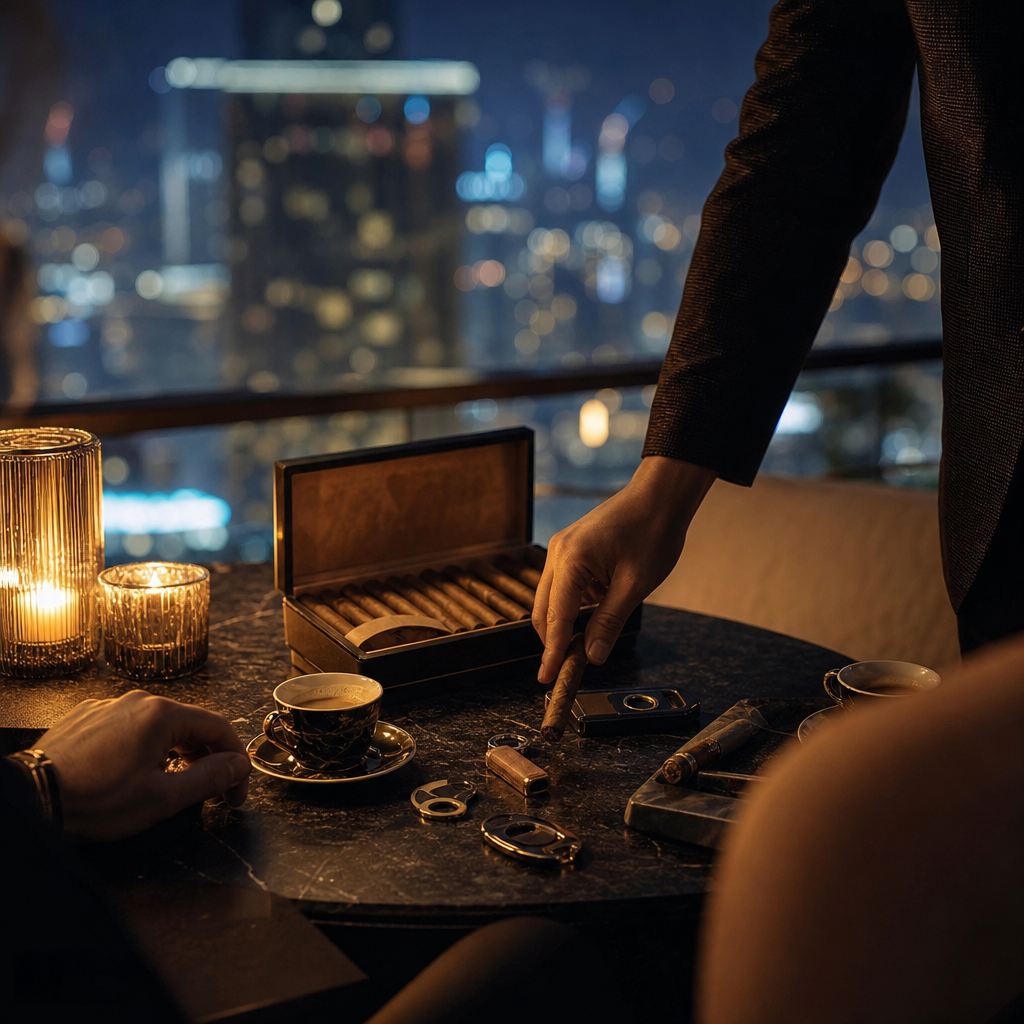
In terms of etiquette, don't frequently tap off the cigar ash; let it rest gently on the edge of the ashtray at about 1.5 to 2 cm. Also, don't dip the cigar in the drink, as this will damage the wrapper and destabilize the burn. If sharing a table with others, discuss flavors specifically but not dogmatically; for example, saying "I sense roasted nuts in the middle" is more refined than "this is the standard flavor." Flavors have objective clues, but everyone's olfactory memories are different, and respecting differences is a gentlemanly demeanor.
Common Questions
For beginners, don't strive for complexity at once; first establish a stable comparison method, which will be more useful than remembering many brands.
Q1: Should the first drink be whisky, white wine, or champagne?
If you're already familiar with whisky, start with a 12-year-old Speyside or Highland with 40% to 46% alcohol; if you want to train clarity, white wine and champagne can better show how acidity changes the cigar. The first cigar is recommended to be of medium strength, such as Montecristo No.4 or Hoyo Epicure No.2.
Q2: If the cigar is too spicy, should it be paired with a sweeter drink?
Yes, but in small amounts. Slightly sweet Riesling Kabinett or sherry cask whisky with dried fruit notes can soften the spice; however, if the cigar becomes spicy due to high temperature in the back-end, the real solution is to slow down the pace and let the cigar cool down, rather than relying on the beverage to cover it.
Q3: Is champagne only suitable for light cigars?
Not necessarily. Blanc de Blancs is suitable for light to medium cigars; champagnes with a higher Pinot Noir proportion and stronger yeast and nutty notes can support medium to strong cigars. The key is not to let the acidity amplify the cigar's astringency.
Q4: How many types of beverages can be compared in one night?
I recommend two, at most three. More than three, and the alcohol, acidity, and sugar will fatigue the palate, and notes can easily become inaccurate. Control each beverage in small amounts and pair with room temperature water to see the real differences.
Q5: Does cigar storage affect pairing?
Yes. If the humidity is too high, the burn is dull, and the smoke is thick, white wine and champagne will seem sharp; if the humidity is too low, the spiciness and woodiness are obvious, and whisky alcohol will be amplified. Generally, maintain relative humidity at 65% to 69%, then adjust according to brand and personal taste.
I have always believed that the value of pairing cigars with beverages is not in flaunting labels or chasing rarity, but in slowing down the senses for an hour. When you can articulate "why this drink makes the cigar sweeter, that drink makes the back-end drier," taste moves from feeling to understanding. May every light-up bring more restraint, clarity, and elegance.
—Cigar Prince Wilson Tsai
Smoking is harmful to health. Under 20 years old is prohibited from smoking. Quitline: 0800-636363. This article is for reference by adults over 20 years old for cigar culture, storage, and regulation knowledge, not a tobacco advertisement, promotion, or purchase suggestion.