The Taste and Brand Stories of Cigars: An In-depth Exploration of the Unique Journeys of Famous Brands
The Taste and Brand Stories of Cigars: An In-depth Exploration of the Unique Journeys of Famous Brands
The taste of cigars is never just about "strong, mild, and fragrant." Once you master the basics of tasting and exhaling, the next step is to understand a cigar in the context of its brand history, terroir, and production logic: why, even among Robustos, some are robust, some are delicate, some are expressive from the start, and some only unfold in the middle.
As the editor of the "Cigar Bible," I often remind beginners: brand stories are not marketing fluff, but sensory clues. Knowing where it comes from, for whom it is made, and how quality is maintained, transforms the cigar in your hand from a mere product into a narrative that can be read.
How Brand Stories Change Your Taste Map
Most beginners, when first encountering cigars, will ask about the origin, size, and strength; but what truly helps you progress is understanding the brand personality. Take traditional Cuban brands as an example, Montecristo was founded in 1935 by Menéndez y García, and its name comes from "The Count of Monte Cristo," a novel often read to workers by the lector in the rolling factory, thus embedding literary and workshop culture into the brand.
The taste of a brand is not a single aroma, but a character built over time through history, recipes, sizes, and production processes. A beginner who only remembers "nutty, woody, leathery" might get stuck on adjectives; but by adding brand history, classic sizes, and style changes, they can discern "this is the brand's consistent style" or "this is a difference caused by storage conditions."
I suggest making a four-column note: brand, year background, size, and flavor transitions. For example, when recording Cohiba Robustos, you might write "brand established in 1966, 124mm x 50, herbal and creamy in the front, bean and woody in the middle." Looking back three months later, you'll find that you're not just remembering more terms, but gradually building a judgment framework.
Cohiba and Montecristo: Two Main Lines of Cuban Style
Cohiba is often seen as a modern symbol of Cuban cigars, officially appearing in 1966, closely associated with diplomatic gifts and state occasions in its early years. One of its unique features is that some tobacco leaves undergo additional barrel fermentation, making the herbal, honey, creamy, and bean aromas more rounded. Take the Behike series as an example; after its release in 2010, the BHK 52, 54, and 56 sizes became focal points of discussion, with the medio tiempo leaves being a central topic.
Montecristo represents another classic: stable, balanced, and easy to establish as a standard. The No.2 Pyramid size, 156mm long with a 52 ring gauge, has been a benchmark for many enthusiasts to understand Cuban style for decades. Its charm lies not in flamboyance but in the clear structure between coffee, cocoa, dry wood, and slightly sweet spices.
Cohiba is like a precisely orchestrated state banquet symphony, while Montecristo is like a classic novel, the more you understand the background, the more layers you can read. Beginners can compare the two on the same note: does the aroma open quickly in the front, is there sweetness in the middle, does the spiciness rise in the end? Don't rush to judge high or low, first train yourself to articulate "where the differences lie."
Partagás, H. Upmann, Romeo y Julieta: The Craft Fingerprints Left by Old Brands
Partagás was established in 1845 by Don Jaime Partagás in Havana. This brand often gives a stronger impression, with classics like Serie D No.4, a Robusto size of 124mm x 50, often used to understand the "richness of Cuba": interwoven black coffee, wet earth, pepper, and wood, with a direct rhythm, not too roundabout.
H. Upmann, founded in 1844, is associated with German banker Herman Upmann. The brand style is usually more elegant than Partagás, often featuring cedar, bread, nuts, and a slight sweetness. Sizes like Magnum 46 and Magnum 50 allow beginners to feel that "medium strength does not mean thin," with details often hidden in the nasal aftertaste and the cleanliness of the finish.
Romeo y Julieta was founded in 1875, with the brand name derived from Shakespeare's play. The Churchills size, 178mm long with a 47 ring gauge, is an example for many to understand the rhythm of long sizes. The value of old brands is not just in their long history, but in how they use size, recipes, and style to establish benchmarks for successors. The more familiar you are with these benchmarks, the better you can understand the intentions of new brands.
Non-Cuban Classics: Another Language of Davidoff, Padrón, Arturo Fuente
When talking about brand stories, one must not only look at Cuba. Davidoff's modern cigar journey is closely tied to Zino Davidoff; in 1968, Davidoff established a deep connection with Cuban cigars, and after 1990, the brand shifted to production in the Dominican Republic, gradually forming a clean, delicate, and precisely controlled style. The Signature, Grand Cru, and Millennium lines each have different expressions of strength and aroma.
Padrón was founded by José Orlando Padrón in 1964 in Miami, later building a reputation with Nicaraguan tobacco. The 1964 Anniversary Series, launched in 1994, is a milestone for the brand; it often features cocoa, coffee, black pepper, and earthy notes, with a box-pressed shape that has become a distinguishing feature. Such cigars help beginners understand that "robust" does not mean coarse.
Arturo Fuente, founded in 1912, has a family story spanning Cuba, Florida, and the Dominican Republic. The Fuente Fuente OpusX, released in 1995, became a case study due to the mature use of Dominican wrapper. Non-Cuban brands remind us: terroir is not a single path, technique and family heritage can also shape classics. When comparing them, observe sweetness, spiciness, burn line, and the cleanliness of the finish together.
From Seed to Rolling: Quality is Not Just a Slogan
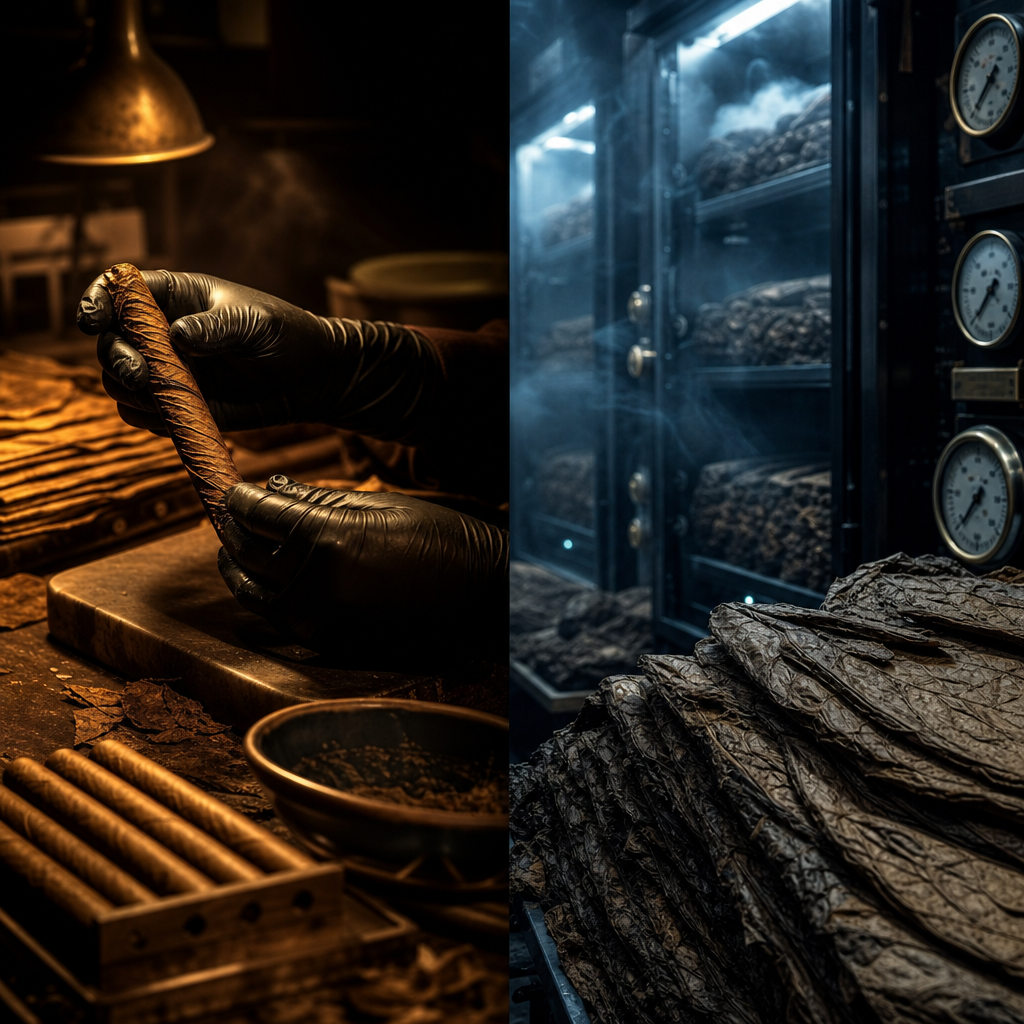
The quality of a cigar, from seed, seedling, transplanting, harvesting, fermentation, aging, grading, blending to rolling, each step can change the outcome. For wrappers, Connecticut Shade often gives a mild creamy feel, Habano wrappers may bring spiciness and thickness, while Maduro wrappers are often seen with cocoa, brown sugar, and coffee tones, but it still depends on the region and processing method.
| Production Stage | Common Time or Focus | Impact on Taste | Beginner Observation Method |
|---|---|---|---|
| Fermentation | Weeks to months | Reduces harshness, concentrates aroma | Note ammonia smell and tongue irritation |
| Aging | 6 months to several years | Enhances smoothness and balance | Compare transitions between front, middle, and end |
| Grading | By leaf position, color, elasticity | Determines blend consistency | Check if wrapper color is even |
| Rolling | Manual control of airflow | Affects burn and draw resistance | Observe burn line and draw feel |
Truly reliable quality is usually not built on a pile of single terms, but on the absence of obvious shortcomings in every detail. For example, with the same 50 ring gauge Robusto, if the filler is too tight, the draw resistance will be too high; if too loose, it burns too fast, the temperature rises, and the aroma easily thins. Beginners learning to observe these physical details will find it more useful than just memorizing origins.
Beginners Reading Brands: Etiquette, Selection, and Recording Methods
When you start understanding cigars through brand stories, etiquette must also keep up. Retain the cap structure when cutting, avoid cutting too deep in one go; when lighting, first toast the foot, then slowly rotate to ensure an even burn. The rhythm of tasting and exhaling can be controlled at 45 to 75 seconds per puff, keeping the temperature stable so that the aroma is not destroyed by overheating.
When choosing brands, don't aim for rarity or high price at the start. Use the "same size comparison method" to establish a standard: choose 3 Robustos, such as Montecristo Open Master, Partagás Serie D No.4, Padrón 1964 Anniversary Exclusivo, record changes in the front 0 to 20 minutes, middle 20 to 45 minutes, and end after 45 minutes.
- First record the size: length, ring gauge, shape.
- Then record the condition: wrapper sheen, elasticity, aroma.
- Next record the burn: whether it burns unevenly, whether correction is needed.
- Finally write a conclusion: in what occasion would you think of it.
The maturity of taste is not about making words more mysterious, but about writing feelings more accurately. If you can describe a cigar's rhythm, strengths, and limitations in 80 words, you are already closer to true understanding than just saying "good" or "strong."
Common Questions
Q1: Should beginners first study brands or origins?
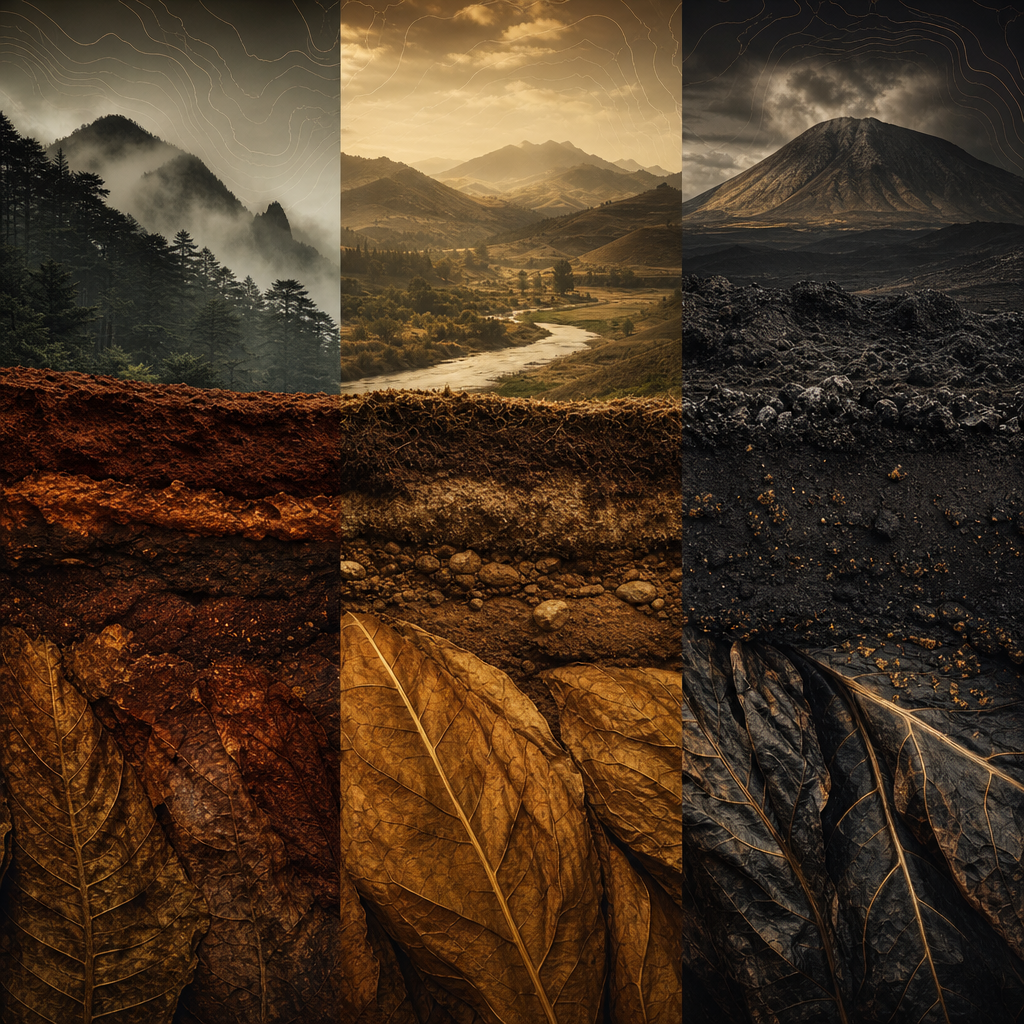
Both should be viewed together, but the order can start with brands. Brands are like the entrance, origins like the map; first know that Davidoff tends to be delicate, Padrón tends to be robust, H. Upmann tends to be elegant, then go back to understand the differences between the Dominican Republic, Nicaragua, and Cuba, it will be easier to absorb.
Q2: Do different series of the same brand taste very different?
Yes, and sometimes the differences are very obvious. For example, with Davidoff, the Signature series often features mild wood and creaminess, while the Millennium series is deeper, with more cocoa and spiciness. Don't use a single series to represent the entire brand, series are the second layer of language for understanding a brand.
Q3: Are older cigars always better?
Not necessarily. Aging can make aromas more integrated, but the premise is stable storage. If long-term temperature and humidity are imbalanced, it may result in dryness, moldy smell, or aroma loss. Generally, 18 to 21°C with a relative humidity of 65% to 70% can be used as a common reference range.
Q4: Is there investment potential in collecting cigars?
Certain limited editions, discontinued, or well-preserved boxed cigars may indeed attract market attention; however, collecting for investment does not guarantee appreciation, it still depends on source preservation and market. Beginners should first organize storage conditions, source records, and box label information before discussing collection strategies.
Q5: How do I know if I truly understand brand stories?
When you can link "taste" back to "reason," you begin to understand. For example, you can explain that Partagás's direct robustness may be related to the brand's long-term image, blend orientation, and classic sizes; you can also explain that Cohiba's delicacy is related to fermentation, leaf selection, and brand positioning.
The most fascinating aspect of cigars is that they make time readable. From H. Upmann in 1844, to Padrón in 1964, to modern multi-region blends, each brand leaves its choices in the aroma. My advice is simple: chase less fame, record more quietly; you'll find your true taste coordinates faster.
—Cigar Prince Wilson Tsai
Smoking is harmful to health. Smoking is prohibited for those under twenty years old. Quitline: 0800-636363. This article is intended for adults over twenty years old as a reference for cigar culture, preservation, and regulations, not as an advertisement, promotion, or purchase suggestion.