The Flavor Layers and Taste Analysis of Cigars: An Exploration from the First Puff to the Final Note
The Flavor Layers and Taste Analysis of Cigars: An Exploration from the First Puff to the Final Note
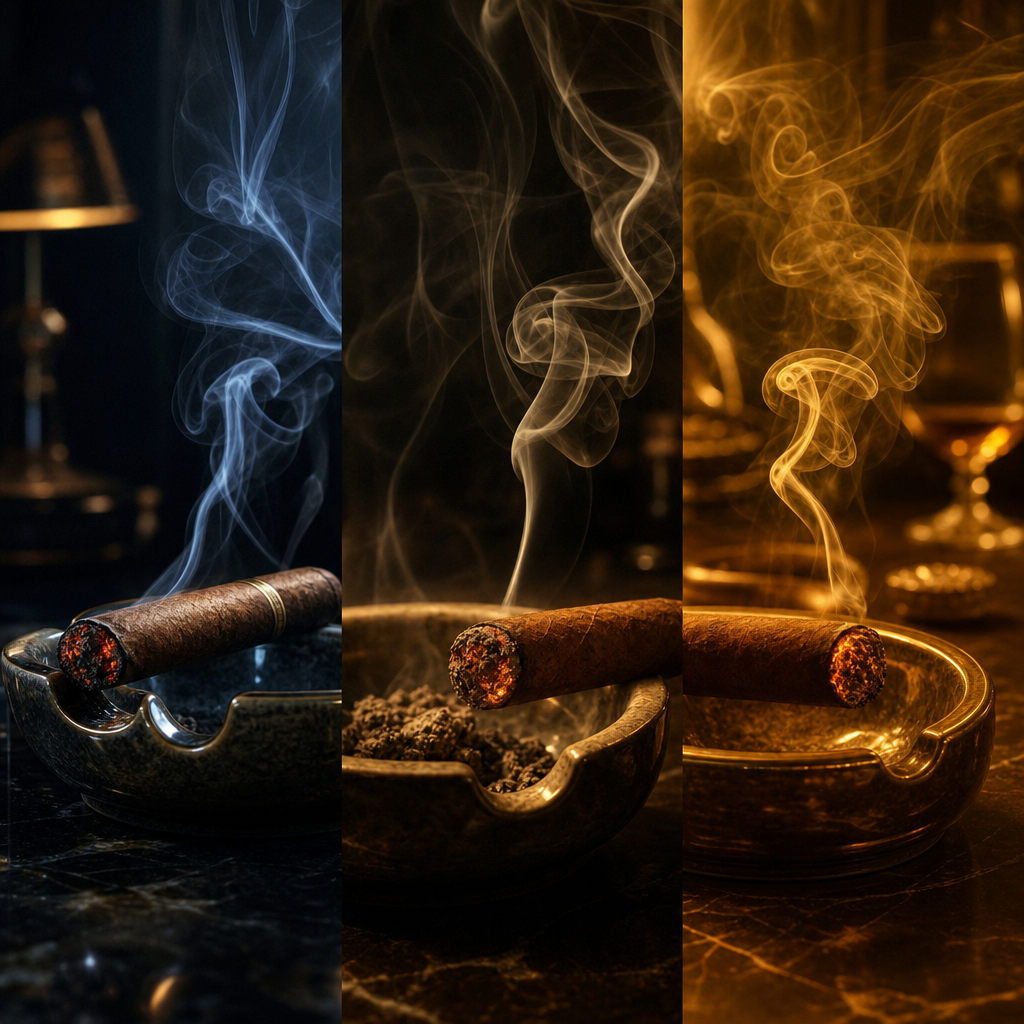
The flavor of a cigar is never just a single "aroma" or "intensity." The real intrigue lies in how it changes with the burning position, temperature, humidity, and rhythm: the first puff is like an opening statement, the middle section like the main theme, and the final note leaves the lasting character.
As the editor of the "Cigar Bible," I often remind newcomers: don't rush to judge a cigar's quality; first, learn to listen to it fully. This article guides you through a repeatable method of flavor analysis from the first puff, the initial section, the middle section, the latter section, to the final note.
Starting with the First Puff: Don't Rush to Find Answers, First Calibrate Your Senses
Many people are eager to say "there's coffee," "there's leather," "there's wood" right after lighting up, but the more important task of the first puff is to calibrate the senses. When a cigar is first awakened by the flame, the burning ring is not yet stable, and the proportions of the wrapper, binder, and filler are being rearranged. The first 3 to 5 puffs often carry more direct notes of hay, roasted wood, pepper, or slight ammonia. The first puff is not a conclusion but a baseline.
Take the 2020 box of Hoyo de Monterrey Epicure No.2 as an example, with a 50 ring gauge and 124mm Robusto size, the initial section often has soft cream, hay, and a hint of honey. However, if the humidity is above 72%, the first puff may seem muted, with suppressed sweetness. Conversely, if the humidity is between 65% and 68%, the opening will be cleaner, with floral and woody notes more likely to emerge.
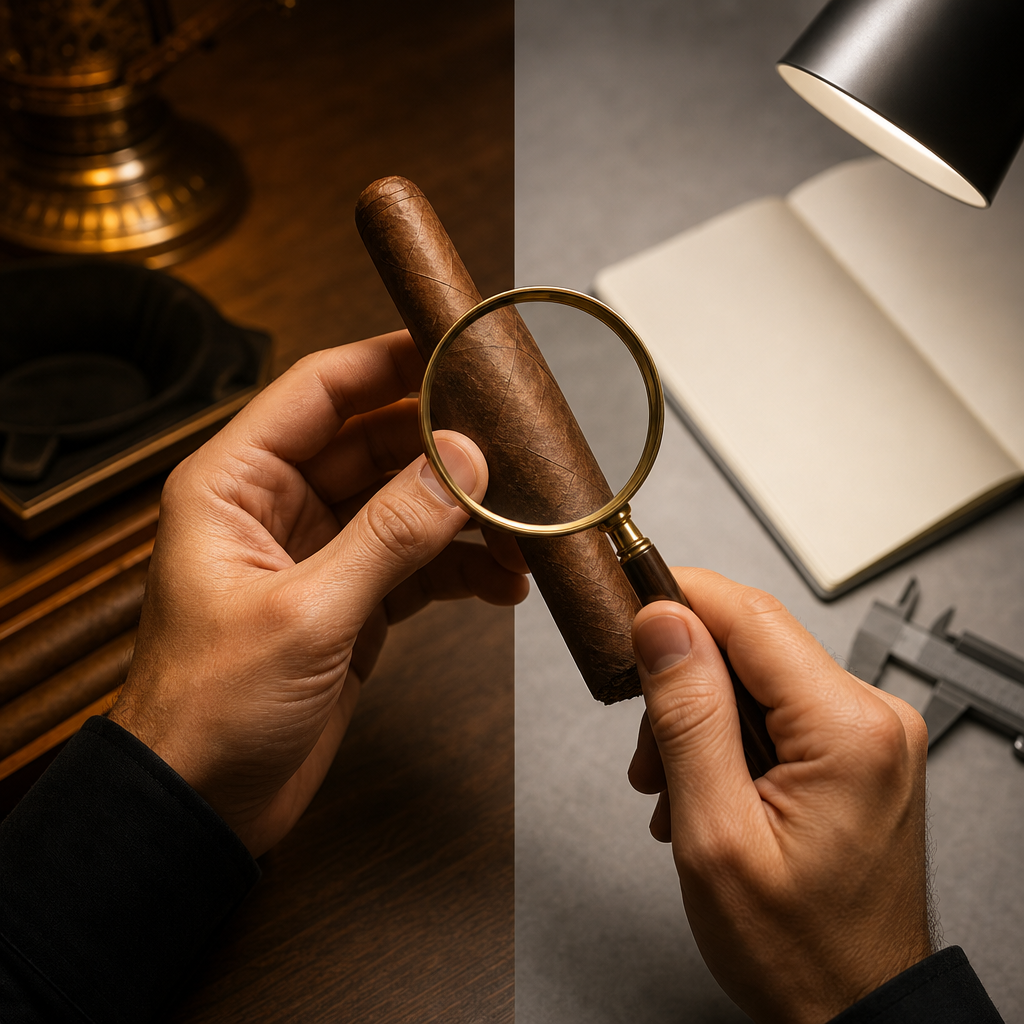
I recommend beginners not to rush to score in the first 1 cm, but to do three things: observe whether the smoke flow is smooth, note the first aroma that emerges, and confirm whether the mouth feels dry or stimulated. A good observation of the first puff leaves a reference point for changes in the latter third.
Initial Section Flavor: The Opening Statement of a Cigar is Usually the Most Honest
The initial section of a cigar is roughly before burning one-third of its length. The temperature is still low, the nicotine impact is less, and the aroma is most likely to present the essence of the raw materials. At this time, you can observe the five directions of "sweet, sour, bitter, spicy, salty" without needing to write many adjectives at once. For example, Trinidad Reyes, with a 40 ring gauge and 110mm, often starts with toasted bread, fresh grass, and light honey, suitable for practicing distinguishing delicate sweetness.
The initial section also best reveals the storage condition of a cigar. The 2018 box of H. Upmann Magnum 46, if aged in a stable environment, will have notes of nuts, cream, and refreshing wood in the initial section. If too dry, it tends to have sharp paper notes and a tingling tongue. This is not the brand's problem but the influence of moisture and burning speed on flavor release.
When practicing, I usually break the initial section into three questions:
- In the first second of entry, is it sweet, woody, spicy, or bitter?
- After the smoke stays in the mouth for 3 to 5 seconds, does it transform?
- 10 seconds after exhaling, what remains in the nose or at the root of the tongue?
The value of the initial section is in confirming whether the cigar is in good condition today.
Middle Section Flavor: Layers Unfold, the True Main Theme Emerges
As the burn enters the middle section, the temperature and humidity of the cigar reach a more stable balance, and the personalities of different leaf positions in the filler begin to unfold. Common flavors at this stage will transition from simple wood to coffee, cocoa, roasted nuts, leather, spices, or cream. Take Montecristo No.2 as an example, with a 52 ring gauge and 156mm Pirámides size, the middle section is often its most charming position, with roasted nut and cocoa notes much more apparent than in the initial section.
I once compared the 2016 and 2021 boxes of Partagás Serie D No.4, both with a 50 ring gauge and 124mm, but the differences in middle section performance were clear. The 2016 box, under stable storage, transitions from spicy to leather and black coffee; the 2021 box is more direct, with black pepper, roasted wood, and a stronger sense of power. The same cigar, different years and storage, can make the main theme of the middle section completely different.
The middle section is also the best stage for practicing "comparison." You can treat every 1.5 cm as a small section, recording smoke thickness, whether sweetness increases, whether bitterness is clean, and whether spiciness falls on the tongue tip or throat. If you find the latter section suddenly bitter, don't blame the cigar first; also check if you're puffing too frequently, causing the burning temperature to be too high. Good rhythm control allows the middle section to fully open its layers.
Mouthfeel is More Than Just Taste: Concentration, Strength, and Smoke Texture Should Be Viewed Separately
Beginners are most likely to confuse "concentration" with "strength." Concentration refers to the density of flavor, such as whether cocoa, coffee, and wood are substantial; strength is closer to the body's feeling, such as the pressure, dizziness, or throat power brought by nicotine. Davidoff Signature 2000 may have a clean and delicate flavor, with medium to low strength; while Bolivar Belicosos Finos often feels more powerful, but that doesn't mean it's necessarily more "complex."
Smoke texture is equally important. Good smoke can coat the tongue like cream or disperse quickly like dry wood shavings. Take Cohiba Siglo VI, with a 52 ring gauge and 150mm, when in good condition, the smoke thickness, sweet wood, and grassy tone will have high recognizability; if it burns too hot, the delicate herbal aroma will be overshadowed by bitterness, leaving only spiciness at the end. Concentration, strength, and thickness must be judged separately to avoid mistaking power for layers.
You can use the following table for simple recording:
| Dimension | Observation Focus | Common Descriptions |
|---|---|---|
| Concentration | Is the flavor dense? | Light, medium, substantial |
| Strength | Body pressure feeling | Gentle, medium-strong, intense |
| Texture | Smoke touch | Creamy, dry, granular |
| Sweetness | Is it sustained? | Honey, caramel, ripe fruit |
| Bitterness | Is it clean? | Cocoa, coffee, burnt bitterness |
The more precise the record, the more you can see if you truly prefer flavor or the sense of power.
Understanding Details from the Nose and Final Note: Slow Down, the Flavor Will Appear on Its Own
The aroma of a cigar doesn't just stay on the tongue. Many woody, floral, leather, and spice notes are actually easier to perceive through the back of the nose. For those who have mastered basic smoke exhalation, you can let the aroma remaining in the mouth naturally rise to the nose after exhaling a small amount of smoke, without deliberately pursuing intense stimulation. If you start with a large amount through the nose, it is more likely to be irritating, leading to inaccurate judgment.
The final note is an important clue for assessing the depth of a cigar. A good final note is not simply "long-lasting flavor," but clean, with transitions, and does not leave the mouth feeling dirty or bitter. Take Ramón Allones Specially Selected as an example, with a 50 ring gauge and 124mm, when mature, it often has ripe fruit, nuts, leather, and a slightly sweet finish; if too young or unevenly stored, the final note may turn rough and spicy.
When practicing the final note, I observe in 15-second units: what's left 5 seconds after exhaling, whether it turns sweet at 10 seconds, and whether it leaves bitterness or spiciness at 15 seconds. You can also drink a sip of room temperature water to check if the mouth quickly recovers. The final note doesn't appear only on the last puff but provides clues after every puff.
Rhythm, Temperature, and Size: Three Keys to Determine Whether the Flavor Deviates
The same cigar, enjoyed slowly versus puffed rapidly, can be like two different works. Generally, one puff every 45 to 75 seconds is more likely to maintain a stable temperature; if you take multiple puffs within 20 seconds, the burning end will heat up quickly, turning wood to char, reducing sweetness, and increasing bitterness. This is also why Robusto sizes are often recommended to reserve 45 to 60 minutes, while Churchill may require over 90 minutes.
Size also affects layers. Cigars with larger ring gauges have more space for filler blends, potentially offering wider variations; those with smaller ring gauges deliver concentrated flavors and faster transitions. For example, Trinidad Reyes can complete major changes in about 35 to 45 minutes; while H. Upmann Sir Winston, with a 47 ring gauge and 178mm, if well-preserved, will have more extended cream, nut, and wood transitions from the middle to the latter section.
Control rhythm with three simple principles:
- When the smoke gets hot, slow down, don't rush to correct.
- If the burn line is skewed by less than 5mm, observe for a while.
- If the flavor suddenly turns bitter, check the frequency first, then consider relighting.
Flavor deviation is often not because the cigar isn't good enough, but because the temperature is artificially pushed too high.
Latter Section and Finishing: Knowing When to Stop is Both Etiquette and Technique
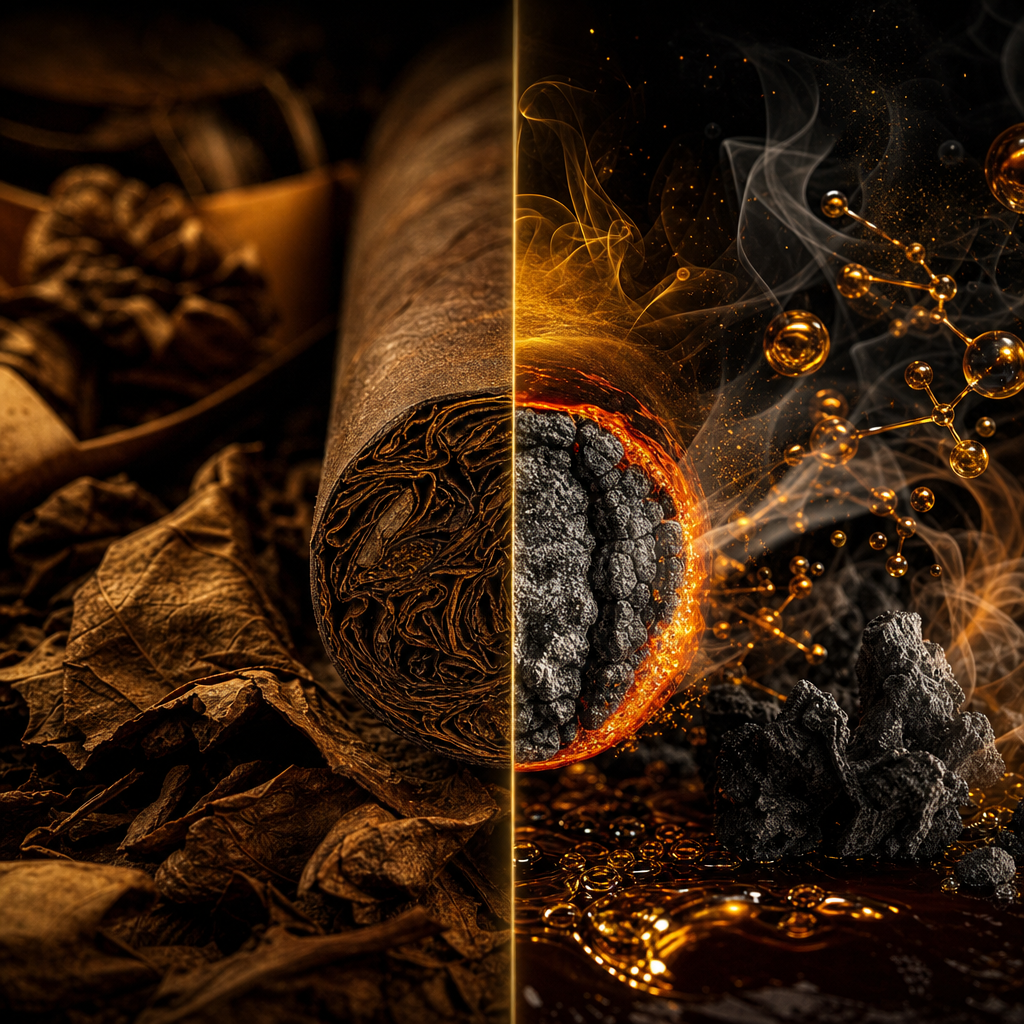
As the cigar enters the last third, tar, heat, and concentrated flavors will increase. At this point, black coffee, cocoa, leather, earth, and spices often appear, possibly accompanied by noticeable bitterness. The key is not necessarily to smoke it down to a short length but to judge whether it remains clean. If spiciness turns into throat burning, smoke becomes thin and bitter, sticking to the tongue, it indicates the best state may have passed.
Many seasoned players stop when 3 to 4 cm remain, especially for shorter sizes like Robusto or Petit Corona. Take Partagás Serie D No.4 as an example, the latter section often has rich wood and black pepper, with beautiful strength when in good condition; but if smoked too quickly, the last 2 cm can turn into harsh spiciness rather than depth. Knowing when to stop is not wasteful but respecting the best ending of a cigar.
Finishing etiquette is also simple: you don't need to stub out the cigar; just let it extinguish naturally on the ashtray. If you want to take notes, record three items in the latter section: the sweetness that remains, whether the bitterness is clean, and how long the final note lingers. After accumulating data from 20 cigars, you'll clearly see your preferred brands, sizes, and flavor curves.
Common Questions
If the first puff tastes bitter, does it mean the cigar is bad?
Not necessarily. It could be that the flame penetrated too deeply, the front end burn is not yet stable, or the storage humidity is too high. Slow down the pace, observe for 5 to 10 minutes, and then judge. A single taste cannot represent the complete performance of the entire cigar.
How should I record flavors to avoid getting more and more confused?
It's recommended to use only six columns: date, brand size, storage humidity, initial section, middle section, final note. Three words per column are enough, such as "cream, nut, wood," which is easier to compare than long descriptions.
Why do different years of the same brand vary greatly?
Tobacco harvest, factory conditions, and storage environment all affect the result. Even the same model from 2014, 2019, and 2022 boxes may differ in sweetness, spiciness, and strength. Aging can improve integration but is not magic.
What should I drink to best observe flavors?
Room temperature water is the most accurate, black coffee, and unsweetened tea can also assist. If paired with spirits, the alcohol sweetness and barrel notes may amplify or obscure cigar details, so it's not recommended to be too complex when initially recording.
If the latter section is very spicy, should I continue?
If the spiciness is clear and has a spice aroma, you can slow down and observe; if it's burning, bitter, and sticky on the tongue, you can stop. The best ending is to stop when you still want to remember it.
Does collecting cigars have investment potential?
Some limited editions or discontinued models are indeed sought after in the market, but collecting for investment does not guarantee appreciation; it still depends on the source, storage, and market. For beginners, learning to store and identify conditions is more important than chasing prices.
I have always believed that the most charming aspect of cigars is not in describing each puff as grandiose but in whether you can understand its rhythm. From the opening of the first puff to the main theme of the middle section, and then to the lingering of the final note, each observation will make your taste more mature. Slow down, write it down, and you'll see more details in the next cigar. —Cigar Prince Wilson Tsai
Smoking is harmful to health. Under 20 years old is not allowed to smoke. Quit smoking hotline: 0800-636363. This article is for reference only for adults over 20 years old regarding cigar culture, storage, and regulations, not a tobacco advertisement, promotion, or purchase suggestion.