The Art of Cigar Flavor Adjustment: From Leaf Selection to Rolling
The Art of Cigar Flavor Adjustment: From Leaf Selection to Rolling
Smoking a mature cigar, experienced smokers often don't just ask "Does it resemble a certain brand?" but rather inquire: Where does the sweetness come from? Why does the spiciness suddenly rise in the second segment? Is the uneven burn line due to humidity, filler arrangement, or rolling tension? The answers to these questions are mostly hidden in the selection of leaves and rolling techniques.
As the editor of the "Cigar Bible," I have long analyzed the styles of different regions and factories. A cigar is not the flavor of a single leaf but a symphony of wrapper, binder, and filler in time and heat; a truly advanced understanding is being able to reverse-engineer the formula logic from a finished product.
Understanding Flavor Through Leaf Roles: The Wrapper Isn't Everything, the Filler Is the Backbone
Many beginners focus on the wrapper for flavor, especially when they see a dark Maduro, instinctively thinking it must be heavy, sweet, and rich. However, seasoned smokers know that while the wrapper indeed governs the first impression, including the tactile oiliness, initial aroma, and visual expectations, whether a cigar can truly delve deep often depends on the proportion and arrangement of the filler. Take, for example, many high-intensity Nicaraguan works around 2006; if the Estelí ligero proportion is too high, the first 2 centimeters may become overly spicy, lacking mid-to-late transitions.
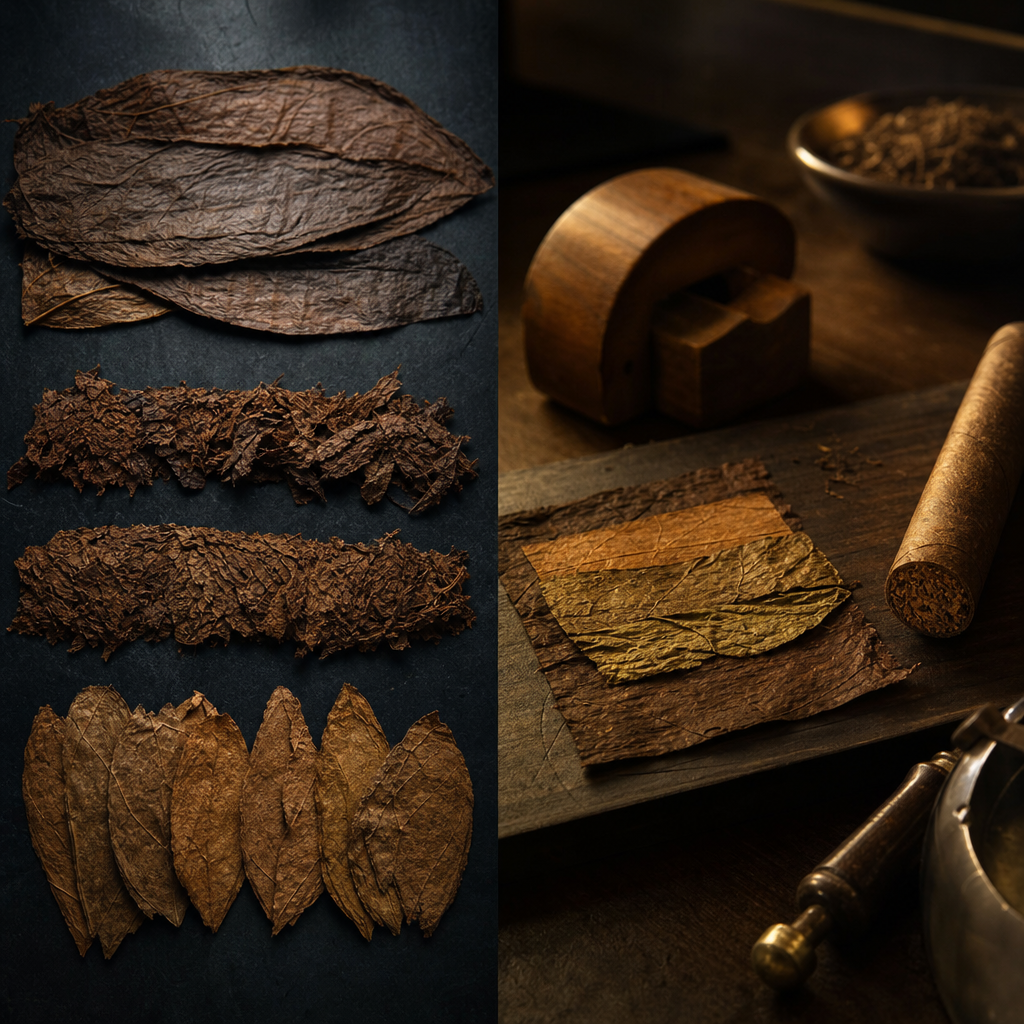
The wrapper, binder, and filler each have their roles. The wrapper is responsible for the aromatic opening and the edge of the palate, the binder acts like the structural outer wall, affecting burn and compression, while the filler determines rhythm, thickness, and finish. After Cohiba Behike was officially launched in 2010, many seasoned smokers talked about the power of medio tiempo, emphasizing not just "stronger," but the deep cocoa, roasted grain, and mineral notes that prevent the final segment from feeling empty. When blending flavors, the wrapper is the timbre, the filler is the melody, and the binder is the metronome that keeps the whole piece in tune.
I often use a three-layer logic to evaluate a cigar: First, whether the first 5 minutes are dominated by the wrapper; second, whether the filler takes over when burning reaches 2/3; third, whether bitterness arises in the final segment due to ligero or high-oil leaves. The cocoa, coffee, and nutty notes commonly found in the Padrón 1964 Anniversary Series are not solely due to the dark wrapper but are the result of long-aged Nicaraguan multi-regional leaves folding sweetness and strength into a more rounded profile. This formula is not about piling on materials but controlling the release speed of each leaf at different temperatures.
Leaf Position and Strength: The Precise Balance of Volado, Seco, Viso, Ligero
From the same tobacco plant, different leaf positions can create completely different burns and flavors. The bottom volado receives less sunlight, is thin, and burns well, often used to maintain a stable burn line; the middle seco has a delicate aroma and low strength, providing floral, hay, and woody notes; viso is between aroma and strength, with more oil; the top ligero receives the most sunlight, with the highest nicotine and flavor density, but burns slowly. If a formula only pursues a high ligero proportion, strength will rise, but balance may fall.
Take the commonly seen Vuelta Abajo leaves from Cuba as an example; seco often provides herbal, honey, cedar, and refreshing acidity, while ligero brings soil, coffee, leather, and saltiness. Comparing Montecristo No.2 and Partagás Serie D No.4, the former is often described as having more pronounced creamy, cocoa, and baked tones, while the latter more easily exhibits pepper, leather, and earthy notes; this relates to brand formula tradition, leaf position proportion, and size burn rate, not just ring gauge differences.
New World cigars also have clear examples. Oliva Serie V uses a higher proportion of ligero, and when paired with Jalapa region leaves, sweetness and concentration appear simultaneously; My Father Le Bijou 1922 often shows black pepper, cocoa, and solid woodiness. These styles are not accidental but the result of leaf position configuration. If a 52-ring gauge cigar is intensely pungent in the front and burns slowly, a common reason is a high proportion of high-position leaves, combined with humidity or rolling tension reducing burn efficiency. Flavoring is not about adding more heavy leaves but letting volado ignite, seco speak, viso connect, and ligero finish.
Microclimate of Production Areas: Estelí and Jalapa Are Completely Different Despite Both Being Habano Seed
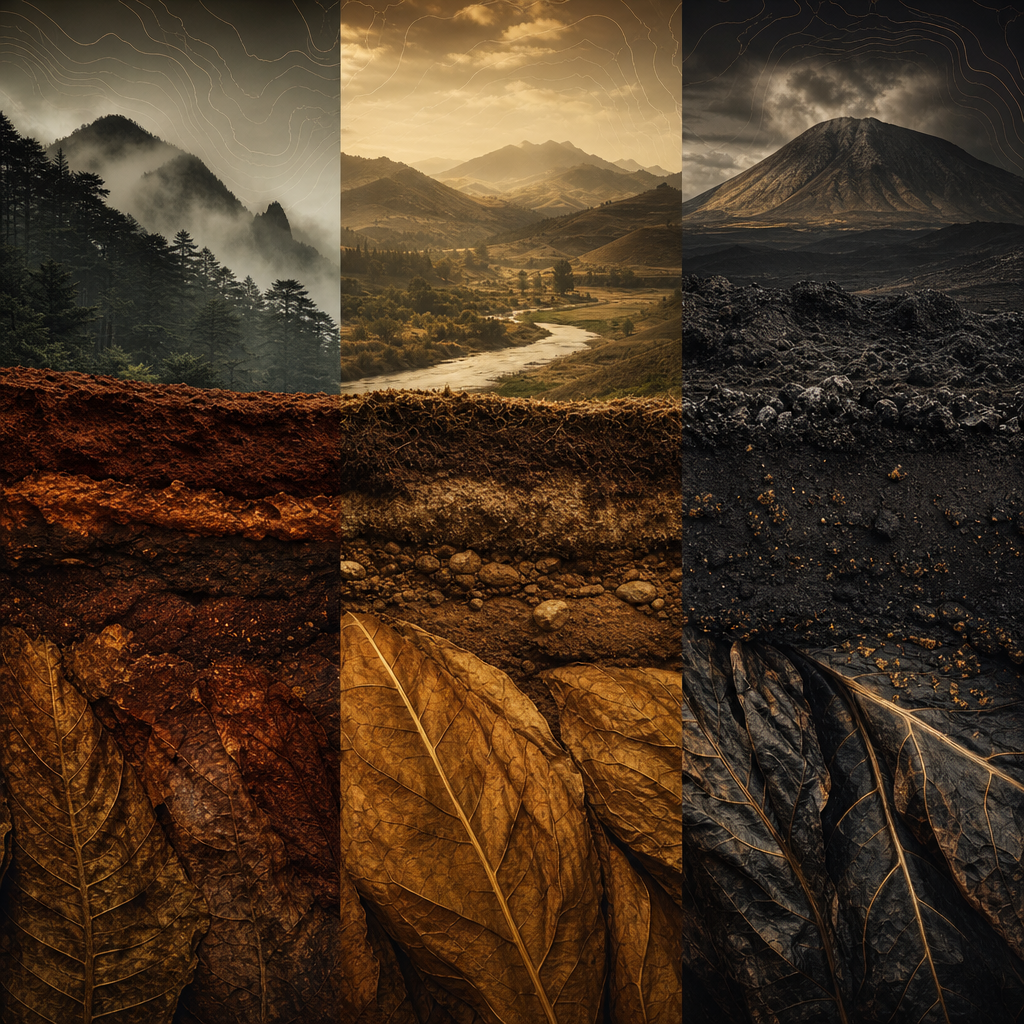
Seed names can be misleading. Habano, Corojo, Criollo, Connecticut Shade are just starting points; the true expression is determined by soil, rainfall, sunlight, altitude, and cultivation management. Nicaraguan Estelí leaves often have dark soil, black pepper, rich coffee, and high impact; Jalapa, due to different soil and microclimate, often exhibits red tea, floral, soft sweetness, and a more rounded palate; Condega is between the two, often providing wood, nuts, and dry spices. A production area is not a map label but a toolbox for adjusting acidity, sweetness, spiciness, and strength.
The style of the Dominican Cibao Valley is usually more elegant, like the Dominican system established by Davidoff after the 1980s, which has long emphasized hay, cream, white pepper, and clean lines. Conversely, Honduras' Jamastrán or Copán may present rougher wood, soil, and wild spiciness. Ecuador, with its stable cloud cover, is often used to produce smooth and glossy Connecticut or Habano wrappers; such wrappers can enhance delicate aromas but do not necessarily mean the entire cigar is mild, as the filler may still come from high-intensity Nicaraguan regions.
I once compared three combinations of the same Robusto size, about 50-ring gauge: Ecuador Habano wrapper with Nicaraguan filler, offering red pepper and caramel; Connecticut Shade with Dominican filler, showing cream, almond, and hay; Mexican San Andrés Maduro with Nicaraguan filler, presenting dark chocolate, molasses, and wet earth. Similar sizes, yet the experience is vastly different, due to the cross-design of production areas and leaf functions. Experienced smokers who only look at brands without considering the production puzzle will miss many formula clues.
Fermentation, Aging, and Moisture Content: The Invisible Processes of Flavor Adjustment
Leaves from the field do not immediately become charming cigars. Post-harvest hanging, pile fermentation, sorting, and aging are core to transforming raw ammonia into sweetness and depth. During traditional pile fermentation, the leaf pile temperature can rise to about 38°C to 48°C, requiring workers to turn the pile to prevent overheating from destroying oils. Maduro wrappers often undergo longer or more intense processing to increase sugar, dark color, and sweetness, but if handled roughly, they can become bitter and stuffy.
Different brands have very different attitudes towards time. Padrón often emphasizes long leaf aging, with the rounded cocoa, coffee, and walnut notes of its 1926 Series closely related to the waiting time of the raw materials. Arturo Fuente OpusX's Dominican Rosado wrapper became a topic in the 1990s, not just because of the rare production area, but because cultivation, sorting, and post-processing achieved recognizable spiciness, sweetness, and strength. Fermentation removes roughness, aging builds smoothness; if both are poorly done, even the best seeds are hard to express cleanly.
Moisture content directly affects flavor translation after ignition. If the finished product is long-term above 72% RH, common situations include delayed burn, thick but stuffy smoke, and sharp pepper; if below 62% RH, it may overheat, become spicy, and crack. Many seasoned smokers control daily storage at 65% to 69% RH, then fine-tune according to size and wrapper thickness. Thick Maduro or large ring gauges can be slightly lower, while slender Lanceros should avoid being too dry. The original sweetness, acidity, oils, and minerals of the leaves must be stably released through appropriate moisture.
Rolling Tension and Filler Arrangement: The Mechanics of Draw, Burn, and Layers
The impact of rolling techniques on flavor is more direct than many imagine. If packed too tightly, air channels are restricted, burn temperature is low but incomplete, leading to stuffy, sour, wet wood notes; if packed too loosely, air flow is too fast, burn temperature rises, and sweetness is overshadowed by spiciness before it unfolds. Ideal draw usually feels like drinking a thick beverage with a straw, with resistance but not effort. The flavor layers of a good cigar must be built on stable airflow; if the airflow is chaotic, even the most precise formula will be distorted.
Traditional handmade long-filler cigars often use entubado or similar tubular filler concepts, slightly rolling each leaf into independent airways before forming a bunch. This can enhance burn uniformity but requires skilled torcedores to control tension. Another more common method is accordion fold, folding the filler like an accordion, which is more efficient and can also create a stable structure. Cuban famous factories formed highly specialized divisions in the latter half of the 20th century, with rollers completing about 80 to 120 cigars daily, depending on size and grade; more challenging Figurado or Salomones numbers are even lower.
Taking the Cuaba series with its double-tapered shape as an example, if the filler density is uneven at the head and tail, the front may ignite slowly, the middle suddenly enlarges, and the tail narrows again, raising temperature. Parejo straight sizes are relatively easier to stabilize, but when Churchill or Double Corona lengths exceed 7 inches, even slight filler arrangement deviations can cause tunneling or side-burning in the middle segment. Experienced smokers evaluate a cigar not only by aroma but also by observing whether the ash column is layered and whether the burn line periodically shifts, which are fingerprints left by rolling mechanics.
Size and Formula Scaling: Different Ring Gauges in the Same Series, Flavor Won't Scale Proportionally
Many brands produce the same series in Robusto, Toro, Churchill, Lancero, but it's not just about changing length and diameter. The larger the ring gauge, the higher the filler proportion, and the less influence the wrapper has; the smaller the ring gauge, the more pronounced the presence of the wrapper and binder in the overall flavor. This is why the same formula Lancero is often sharper, with more concentrated aromas, while a 60-ring gauge large size may be rounder and thicker but sometimes lacks detail.
| Size Example | Common Specs | Flavor Tendency | Formula Challenge |
|---|---|---|---|
| Lancero | About 38 ring gauge, 7 inches | Strong wrapper presence, concentrated floral and spice | Draw can easily be tight |
| Robusto | About 50 ring gauge, 5 inches | High balance, clear front, middle, and end segments | Shorter transition time |
| Toro | About 52 to 54 ring gauge, 6 inches | Increased filler thickness, full smoke volume | Can obscure delicate aromas |
| Churchill | About 47 ring gauge, 7 inches | Long rhythm, complete layers | High rolling uniformity requirement |
Taking the Cohiba Siglo VI's 52-ring gauge Canonazo size as an example, it has more thickness and creaminess than the Siglo IV, but the aroma lines are also different; Hoyo de Monterrey Double Coronas exhibit slow unfolding of long sizes, with soft wood in the front, honey and nuts in the middle, and deeper soil notes in the end. Size is not a matter of capacity but a redesign of flavor after redistributing wrapper, binder, and filler proportions.
Scaling formulas is most challenging in maintaining brand recognition. Suppose a Robusto uses 3 main filler leaves; moving to a Toro may require adding a 4th leaf or adjusting leaf width; if only adding the same ligero, strength will change, but sweetness and burn may become unbalanced. Mature factories will retest each vitola, not only looking at aroma but also burn speed, ash color, draw, and end segment temperature. Experienced smokers wanting to understand series differences can choose 3 sizes under similar storage conditions for comparison, and the answers are often very clear.
Advanced Blending Thinking: Creating Depth with Contrast, Not Stacking
A truly brilliant formula doesn't just cram in sweet, spicy, rich, and oily but uses contrast. Sweetness needs a bit of acidity for support, wood needs oil to coat, pepper needs cream or nuts to buffer, otherwise, the flavor will feel like a single-line output. Liga Privada No.9 is known for its thick smoke volume, dark chocolate, leather, and deep sweetness, but its focus is not just on being rich, but on the Connecticut Broadleaf wrapper and multi-country filler allowing depth with layers.
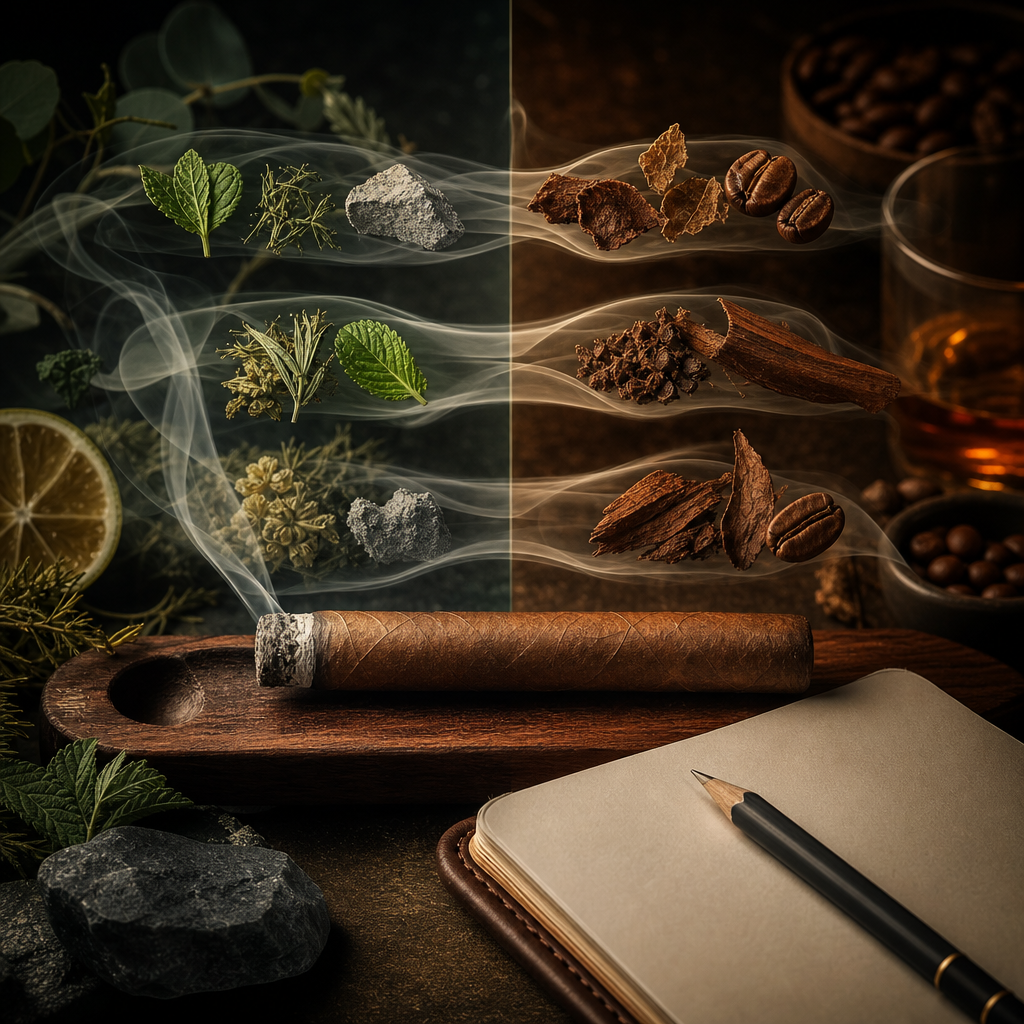
When dissecting formulas, I often use the following sequence to establish judgment:
- First, judge the first taste brought by the wrapper: sweet, bitter, spicy, oily, or floral.
- Then observe changes from 1/3 to 2/3: does the filler show nuts, soil, leather, or minerals?
- Note the end segment temperature: if bitterness rises quickly, it may be due to overheating, leaf proportion, or storage issues.
- Compare sizes: does the same brand's different vitola still retain the core style?
- Record storage conditions: RH, resting time, and box opening date all affect judgment.
Taking Fuente Fuente OpusX, Padrón 1926, Davidoff Millennium, Partagás Lusitanias as examples of different styles, their success lies in "controlled contrast." OpusX has spicy and sweet wood, Padrón 1926 has cocoa and coffee, Davidoff Millennium has white pepper and cream, Partagás Lusitanias has leather, soil, and Cuban herbs. Formula depth comes from tension: soft and strong, sweet and bitter, fragrant and earthy must hold each other, not cover each other.
From a collection perspective, one must remain calm. Certain years, box codes, or rare sizes may indeed be discussed in the market, such as the 2010 Behike, some discontinued Cuban sizes, or specific limited editions, but collecting appreciation does not equal guaranteed appreciation; it still depends on source preservation and market. For seasoned smokers, the most valuable skill is not chasing lists but understanding why a cigar is good and under what conditions it performs best.
Frequently Asked Questions
Does a darker wrapper mean a stronger cigar?
Not necessarily. Dark Maduro often carries molasses, dark chocolate, and coffee notes, but strength still depends on the filler leaf position. If the filler is mainly seco and viso, a dark wrapper can also be quite smooth. Color can only hint at processing methods, not independently determine strength.
Why do cigars from the same box taste different?
Handmade production and natural leaves inherently have variations. Differences in humidity, rolling tension, and leaf thickness within the same box can cause 5% to 15% sensory differences. If differences shrink after 3 to 6 months of storage, it usually indicates gradually balanced humidity.
Does a larger ring gauge mean more complexity?
Not necessarily. Larger ring gauges have ample smoke volume and high filler proportion, making thickness easy to achieve; but Lancero or Corona Gorda often have higher wrapper proportion and are more precise. Complexity comes from formula and burn, not just size.
Can tight draw be judged as poorly rolled?
It could be rolling tension, or it could be high humidity or foot filler expansion. If severe tightness persists after resting at 65% to 67% RH, it is more likely a structural issue. Before judging, it's best to rule out storage factors.
Are older cigars always better than new ones?
Not necessarily. Aging can soften edges and integrate aromas, but if the original leaf quality is insufficient, time won't turn flaws into advantages. Imbalanced storage can also cause aroma loss. Time is a magnifying glass, not magic; a good formula is worth waiting for.
I have always believed that the most fascinating aspect of cigars is not the fame on the label but the details left by leaves, craftsmanship, and time. Seasoned smokers are obsessed with comparison not to rank them but to understand the language behind each cigar. When you can see the formula logic from burn, draw, and aroma transitions, cigars become not just enjoyment but a craft that can be understood and respected.
—Cigar Prince Wilson Tsai
Smoking is harmful to health. No smoking under the age of twenty. Quitline: 0800-636363. This article is intended for adults over the age of twenty as a reference for cigar culture, preservation, and regulations, not as tobacco advertising, promotion, or purchase advice.