The Artful Appreciation of Cigars: A Comprehensive Guide from Selection to Detailed Experience
The Artful Appreciation of Cigars: A Comprehensive Guide from Selection to Detailed Experience
The artful appreciation of cigars lies not just in choosing a famous cigar, but in how you observe, store, cut, light, and use your senses to create memories. As the editor of "Cigar Bible," I often say: cigars are not about who knows more, but about who is more willing to slow down.
Once beginners understand the basics of tasting, the next step is to break down "whether it's good to smoke" into size, origin, vintage, humidity, rhythm, and etiquette. In this article, I will use specific brands and cases to elevate cigars from a pastime to a layered art of living.
Start with Selection: Consider Size First, Then Flavor and Occasion
Many people initially ask about brands, such as which is better: Cohiba, Montecristo, Partagás, or Romeo y Julieta; but the truly effective selection order should be to first determine "how much time you have, how strong you want it, and what occasion it's suitable for." A Robusto is usually about 50 ring gauge, 124 mm, and takes about 45 to 60 minutes; a Churchill is commonly 47 ring gauge, 178 mm, and may require more than 90 minutes. Choose the right size first to fully appreciate the structure of a cigar.
For a concrete example, the Cohiba Behike series launched in 2006, with BHK 52, 54, and 56 having different ring gauges and different speeds of flavor development; BHK 52 is more concentrated, while BHK 56 is broader. If beginners want to understand classic Cuban lines, the torpedo shape of Montecristo No.2 and the Robusto size of Partagás Serie D No.4 are often standard samples for comparison.
When choosing, also avoid the trap of "just looking at scores." Cigar Aficionado named Montecristo No.2 the cigar of the year in 2013, but the same cigar can perform differently under different box numbers and storage conditions. Fame is a reference, not a conclusion; true taste comes from being able to articulate the differences. I recommend noting each experience: brand, size, box code year, humidity, lighting time, and flavor changes.
Region and Brand Context: Don't Just Remember Names, Understand Styles
Cuban cigars are considered classics by many not just because of their long history, but because regions like Vuelta Abajo have stable soil, climate, and cultivation traditions. For example, Padrón represents the rich and robust style of Nicaragua, Arturo Fuente showcases sweetness and woody layers in the Dominican Republic, and Davidoff is known for its clean, precise, and balanced profile. Understand the character of the region before the brand, and your choices will be more directed.
For example, Partagás often has leather, earthy, peppery, and intense notes; Hoyo de Monterrey commonly exhibits softer woody, creamy, and floral aromas; Bolívar is known for its strength. Among non-Cuban brands, Padrón 1964 Anniversary Series often presents cocoa, coffee, nuts, and black pepper, contrasting with the delicate cream and hay of Davidoff Aniversario No.3, clearly showing two worlds.
Vintage is also important. Around 2010, many Cuban brand box codes were repeatedly discussed in the collector's circle, but I value storage records more than just hearsay. When it comes to collection appreciation, remember: it does not guarantee appreciation, and still depends on source preservation and the market. If the source comes from a PCC authorized dealer, at least the source judgment is clearer; but the final performance in the mouth still depends on humidity, temperature, and individual box conditions.
Size, Strength, and Time: Use a Table to Build a Judgment Framework
The size of a cigar is not just its appearance but affects the burning speed, smoke temperature, and flavor development. The larger the ring gauge, the higher the filler ratio usually, the cooler the smoke, and the broader the layers may be; the smaller the ring gauge, the more noticeable the wrapper proportion, and the more direct the aroma. Don't equate large with premium or small with simple; size is just a different expression.
| Common Sizes | Typical Specs | Recommended Time | Flavor Characteristics | Representative Examples |
|---|---|---|---|---|
| Corona | About 42 ring gauge, 142 mm | 40-55 minutes | Clear lines, fast changes | H. Upmann Coronas Major |
| Robusto | About 50 ring gauge, 124 mm | 45-60 minutes | Balanced, suitable for practice | Partagás Serie D No.4 |
| Toro | About 52 ring gauge, 152 mm | 70-90 minutes | Ample smoke, broad layers | Padrón 1964 Toro |
| Churchill | About 47 ring gauge, 178 mm | 90-120 minutes | Slow pace, distinct final third | Romeo y Julieta Churchill |
| Pirámide | Commonly 52 ring gauge, 156 mm | 60-80 minutes | Adjustable opening, high concentration | Montecristo No.2 |
Beginners can train with "three cigars a month": the first a Robusto, the second a Corona, the third a Churchill, preferably from the same region or similar strength. This way, you can distinguish whether the difference is due to size or the brand's own style. If you change brand, size, vintage, and humidity at the same time, it's hard to know the real variable.
Don't overestimate strength. Cigars like Nub, Oliva Serie V, Bolívar Belicosos Finos, which have a sense of power, can cause discomfort on an empty stomach; milder ones like Hoyo de Monterrey Epicure No.2 or Davidoff Signature No.2 are suitable for detailed observation. The purpose of choosing strength is not to challenge the body but to keep the senses awake.
Storage and Aging: Humidity is the Invisible Backbone of Flavor
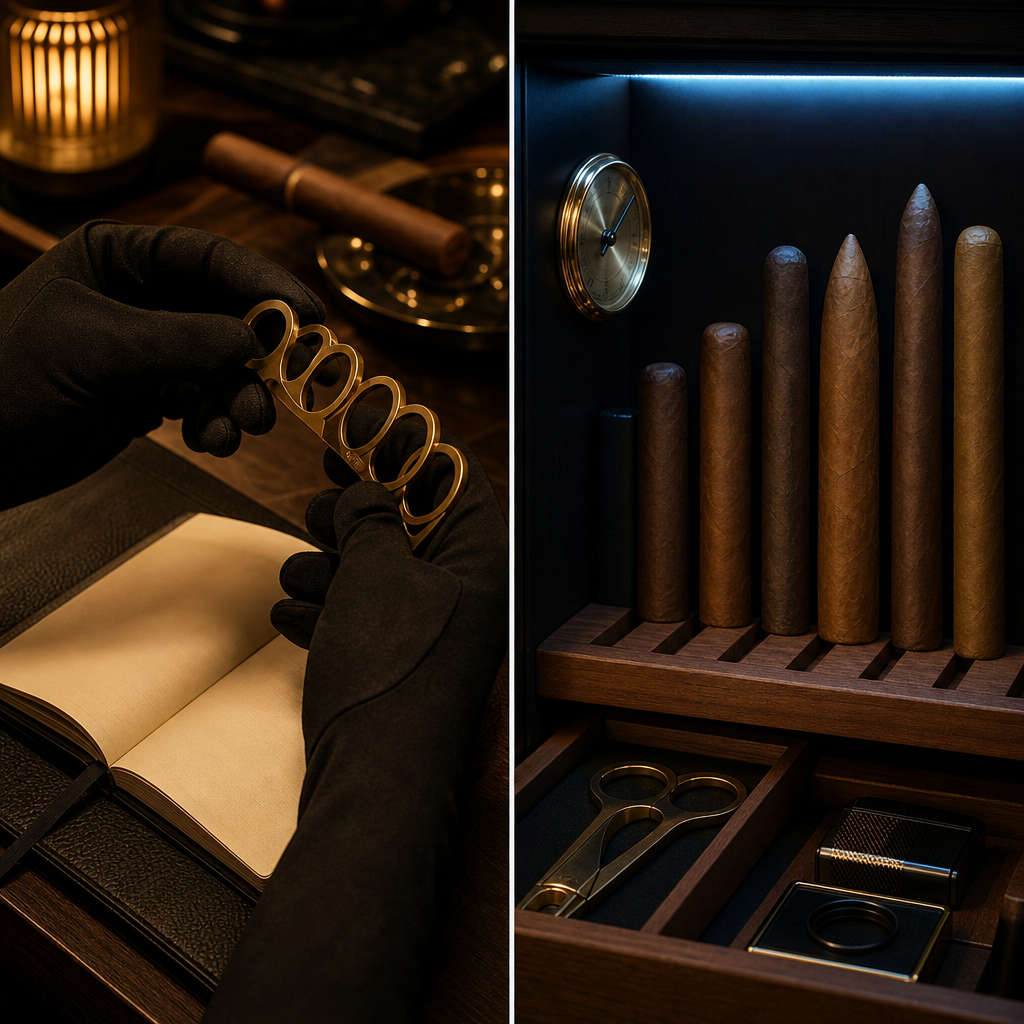
Many beginners focus on cutters and lighters but neglect storage. The general recommendation is a temperature of about 18-21°C and relative humidity of 65-70%; I personally prefer a stable range of 65-67%, especially in Taiwan's humid and hot climate, where long-term proximity to 70% or more can lead to stuffy burns and tight smoke channels. Storage is not just putting cigars in a box but creating a stable environment.
For a 25-count wooden box, if it feels like the wrapper is too moist and the foot aroma is dull when you first get it, you can let it sit in a humidor for 30-60 days before observing. Boveda 65% or 69% humidity packs are common, but they are not omnipotent and should be paired with a reliable hygrometer. Calibrating the hygrometer every 6 months is a more practical detail than replacing more expensive accessories.
Aging allows moisture, oils, and ammonia to slowly integrate. Many Cuban cigars become more rounded after 3-5 years, but not all are suitable for long-term storage; some Nicaraguan cigars have a fresh cocoa and pepper impact that is charming. If collection involves price changes, remember: it does not guarantee appreciation, and still depends on source preservation and the market. The primary goal of storage is flavor stability, not turning cigars into myths.
Cutting, Lighting, and Rhythm: Details Can Change the Entire Cigar
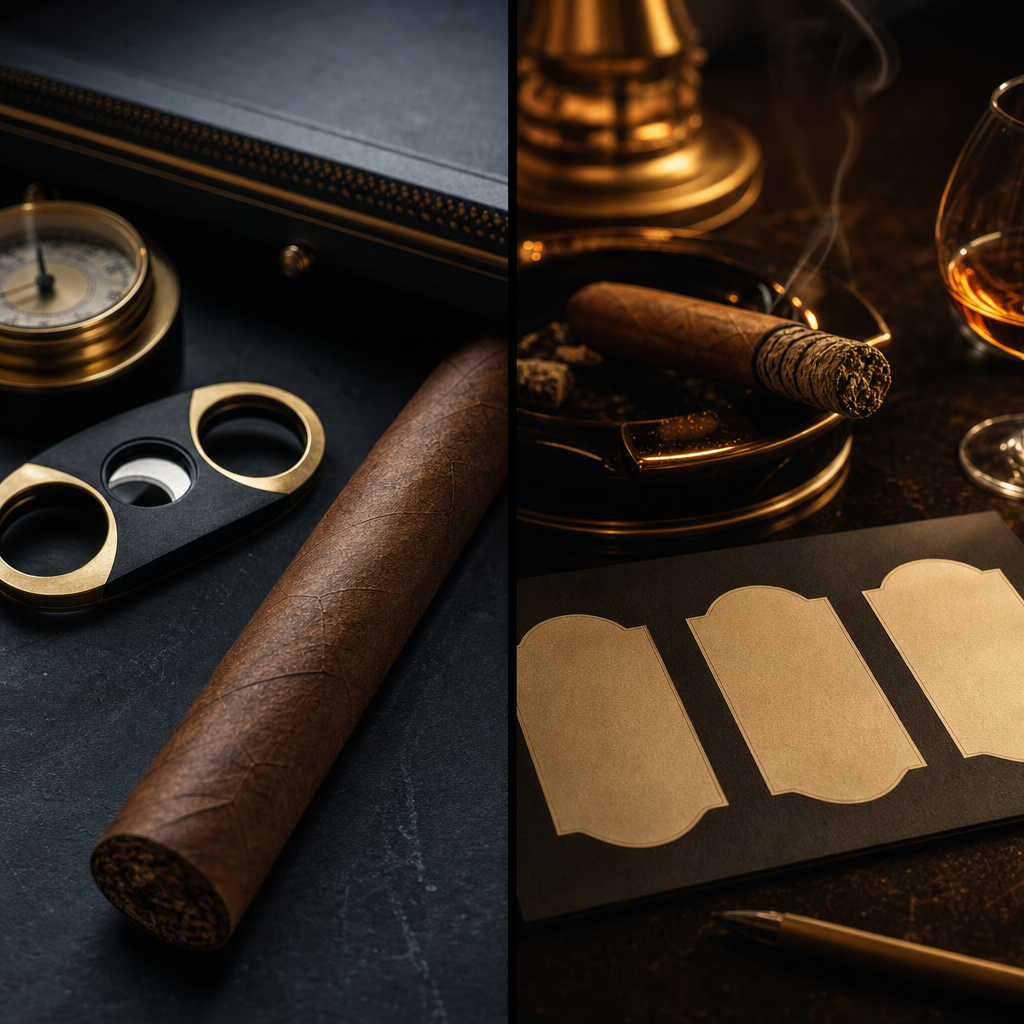
The most common mistake when cutting is cutting too deep. Parejo round-head cigars only need the cap's end cut off, about 1-2 mm, to ensure smooth draw; torpedo shapes like Montecristo No.2 can have a small cut first, adjusting if the draw is too tight. A V-cut concentrates the smoke, while a punch cut keeps the cap intact, but if the cigar is tightly packed, it may lead to more noticeable draw resistance.
When lighting, avoid holding the flame directly to the foot for too long. Use a double or single flame torch to toast the edges first, allowing the foot to change color evenly, then take a few light puffs to ensure burning. Lighting with cedar spills offers a milder aroma but requires patience. Good lighting is not just setting it on fire but ensuring the burn line is stable from the start.
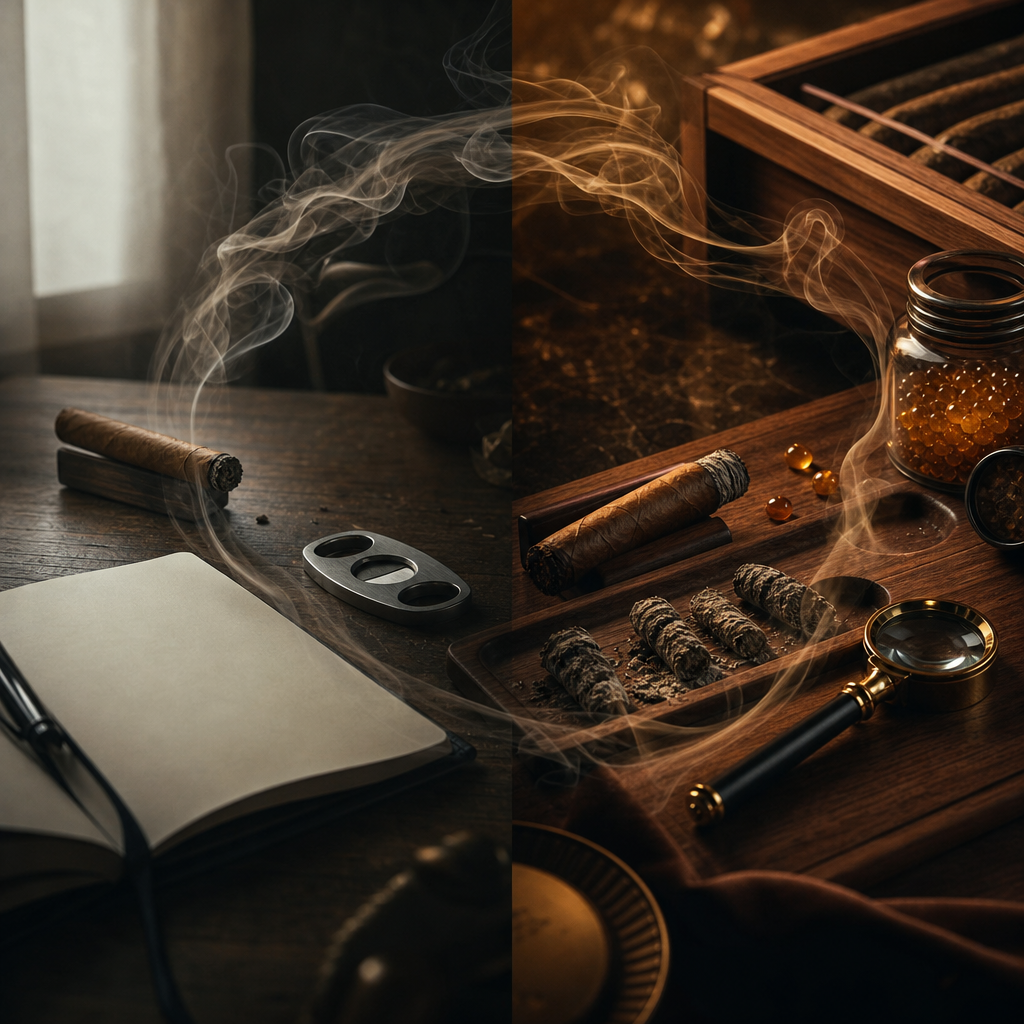
In terms of rhythm, about one puff every 45-60 seconds is suitable; too frequent can raise the temperature, bringing out spicy, bitter, and tarry notes. If the burn is uneven, rotate the cigar so the slower-burning side is down, using heat flow to correct it; if necessary, touch up with a light flame. Don't rush to tap the ash; keeping an ash column of 2-3 cm helps cool down, but in formal settings, avoid ash falling on the table or clothing.
Flavor Notes: Translate Feelings into Comparable Language
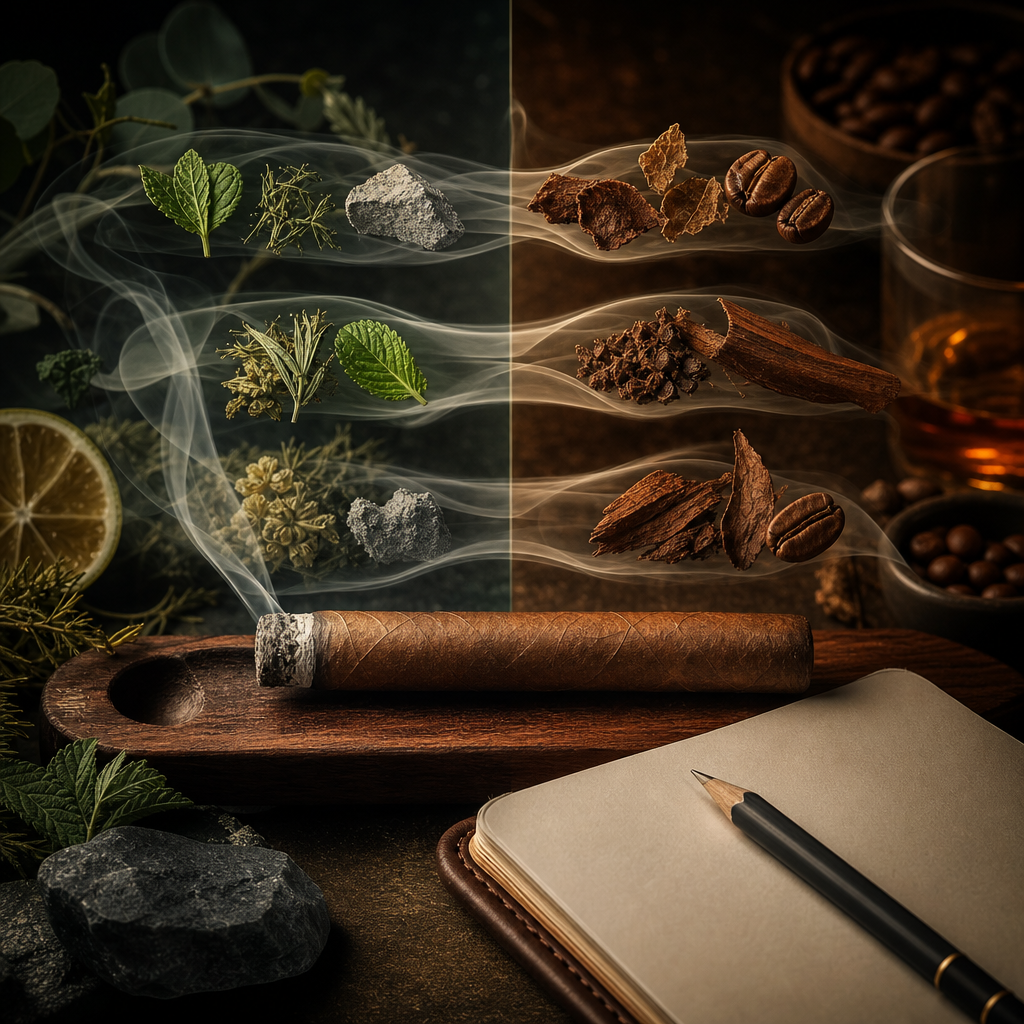
Beginners often say "smooth," "fragrant," "strong," but to improve, you need to break down the sensations. Record from five aspects: aroma, taste, strength, finish, and segment changes. The first segment might be hay, cream, white pepper; the middle turns to coffee, roasted nuts; the final segment shows leather, cocoa, and mineral notes. Flavor notes are not a literary contest but a way to establish your sensory coordinates.
I suggest using a simple table completed within 100 minutes: smell the foot before lighting, note 3 words; after 15 minutes in the first segment, note 3 words; in the middle segment, note 3 words; finally, note the finish and strength. For example, with Romeo y Julieta Churchill, common first segment floral and woody notes, middle turns to sweet spices, and the final segment has leather and tea notes; if your record is completely different, don't deny yourself, first check storage and rhythm.
When pairing with drinks, beginners should not start with high-alcohol spirits that overpower the cigar. Unsweetened black tea, sparkling water, and black coffee can help calibrate taste; if using whiskey, a sherry cask single malt around 46% ABV often complements cocoa and dried fruit. True refined taste is knowing what pairing can complement, not steal the spotlight.
Etiquette and Practice: Turn Taste into Gentlemanly Feel, Not Performance
The core of cigar etiquette is to respect space, respect others, and respect the cigar itself. Don't blow cigar smoke directly at others, don't comment on the authenticity of others' cigars, and don't touch others' collections without asking. In formal settings, the cigar band can be kept on until it burns close to avoid tearing the wrapper due to glue.
Practice can be simple: set one goal each time. For example, this time only observe the burn line, next time only practice cutting, and the time after only write flavor notes. If you try to simultaneously study brand, vintage, pairing, and storage, it's easy to get distracted. Artistic sense comes from natural repetition after practice, not deliberately displaying knowledge.
I also suggest establishing a "12-cigar annual practice list": one cigar per month, including 3 Cuban, 3 Dominican, 3 Nicaraguan, 3 Honduran or other regions. Brands can include Cohiba, H. Upmann, Davidoff, Arturo Fuente, Padrón, Oliva, Rocky Patel, etc. By the end of the year, you'll know more clearly than just listening to others: whether you prefer sweetness, wood, leather, spices, or structural balance.
Common Questions
Should beginners start with Cuban or non-Cuban?
Both are fine, but I recommend starting with "balanced types." For Cuban, consider Hoyo de Monterrey Epicure No.2, H. Upmann Magnum 46; for non-Cuban, choose Davidoff Signature, Arturo Fuente Hemingway. First establish a stable feeling, then move into high strength or rare types.
Is a cigar too bitter, is it of poor quality?
Not necessarily. Common reasons include too high humidity, drawing too fast, uneven lighting, or increased temperature near the end. First check if maintaining 65-70% humidity and if puffing every 45-60 seconds; if adjustments still result in harshness, then consider individual cigar conditions.
How long should cigars be aged to improve?
There is no standard answer. Some Cuban cigars become more rounded after 3-5 years, some non-Cuban cigars are excellent within 1-2 years. The key is stable storage and regular observation, not blindly pursuing vintage. Aging is effective, but not all cigars improve with time.
Is white powder mold?
If it's uniform, fine, and can be lightly wiped off, it may be oil crystallization; if it's hairy, green-gray, and has a moldy smell, be cautious. In uncertain situations, first isolate the cigar from others in the same box and check if humidity has been too high for a long time.
Can cigar collection be an investment?
A few limited editions, discontinued items, or well-preserved old boxes indeed have market discussions, such as certain Cohiba, Trinidad, Behike vintage boxes. But collection appreciation does not guarantee appreciation, and still depends on source preservation and the market. For me, being well-preserved and enjoyed at the right moment is the core value of cigars.
Why does the same brand feel different each time?
Cigars are agricultural products; the same brand and size can vary due to batch, box code, storage, humidity, and lighting method. This is the charm of cigars: unlike standardized beverages, each time has subtle differences. Use notes to accumulate experience to distinguish between chance and regularity.
The art of cigars is not about showing off, but about being willing to take the time to understand how a leaf becomes aroma, temperature, and memory. From choosing size, storing humidity, to cutting, lighting, and recording flavor, each step shapes your taste. When you no longer rush to conclusions but can quietly distinguish the changes in the first, middle, and final segments, cigars become not just a hobby, but a mature language of life.
—Cigar Prince Wilson Tsai
Smoking is harmful to health. Under 20 years old is not allowed to smoke. Quit smoking hotline: 0800-636363. This article is for reference by adults over 20 years old for cigar culture, storage, and regulatory knowledge, not tobacco advertising, promotion, or purchase advice.