The Climate Impact on Cigars: A Deep Dive into How the Climate of the Origin Shapes Flavor Characteristics
The Climate Impact on Cigars: A Deep Dive into How the Climate of the Origin Shapes Flavor Characteristics
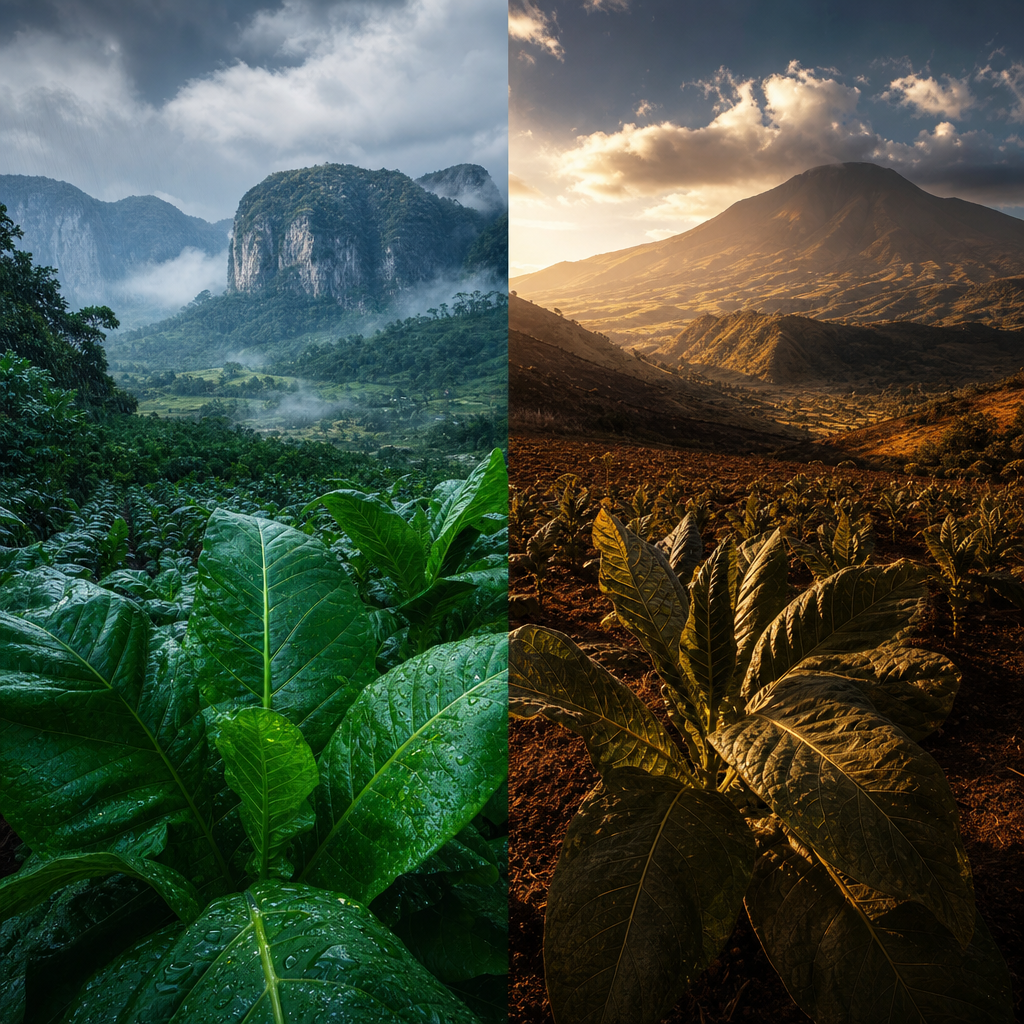
Talking about the flavor of cigars, seasoned enthusiasts often start with brand, size, year, and aging status; but when delving deeper, the answer often returns to the land and sky. When the rain comes, how strong the sunlight is, and how much the temperature drops at night will determine the sugar, oil, thickness, and burning rhythm of the tobacco leaves.
As the editor of the "Cigar Bible," I have always believed that "origin climate" is the underlying language for interpreting flavors. Understanding the climate allows one to comprehend why the same brand can have subtle differences in cream, earth, pepper, cocoa, or floral notes across different batches and years.
Climate is Not the Background, But the Starting Point of Flavor Structure
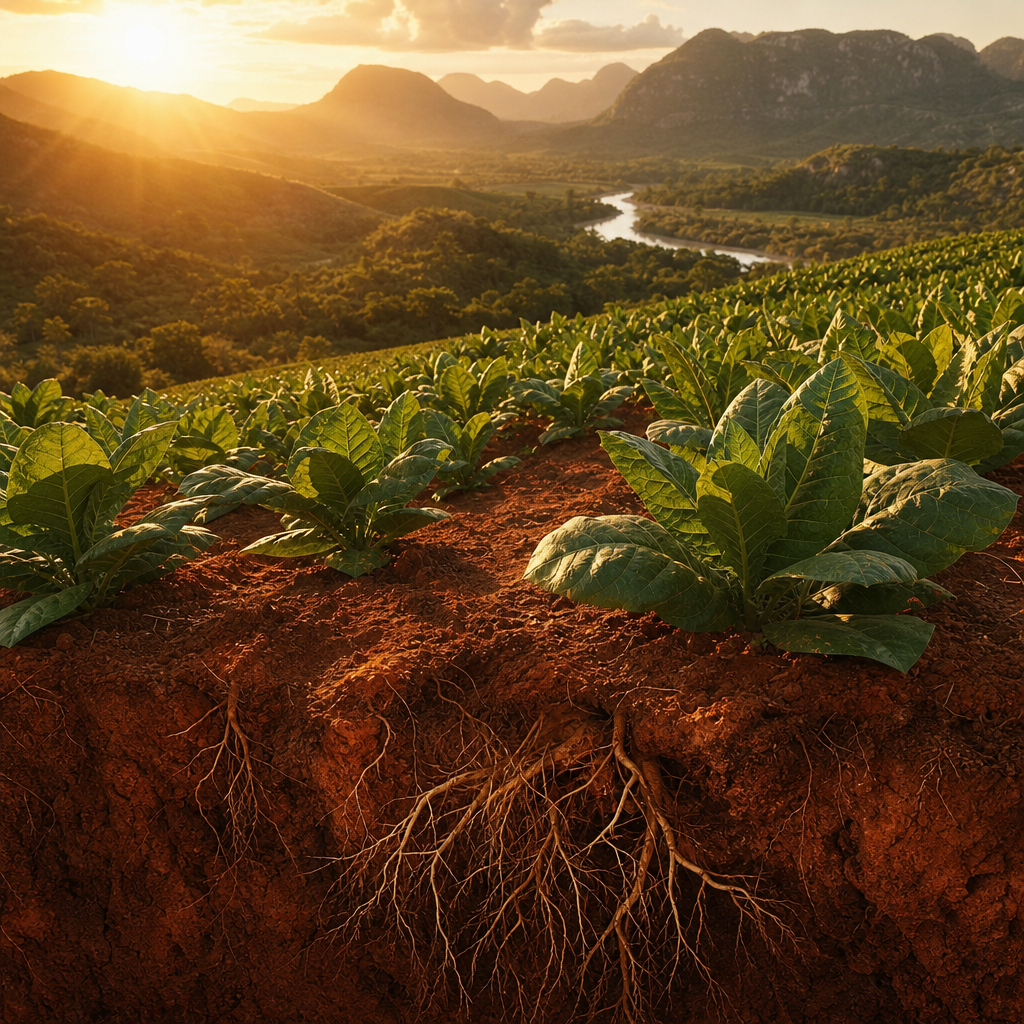
Cigar tobacco should not be simplified to "tropical is suitable." The real key is the day-night temperature difference, rainfall distribution, cloud cover, soil water retention, and the dry-wet rhythm before harvest. For high-quality tobacco, daytime temperatures of about 26 to 32 degrees Celsius and nighttime temperatures dropping to 18 to 22 degrees are more conducive to sugar accumulation and slow maturation; if the nights remain hot, the leaves tend to grow quickly but with loose structure, and the aroma is more straightforward. Climate determines not a single flavor, but the overall aroma complexity, burning speed, and weight of the palate.
Rainfall is not about having more. In Cuba's Pinar del Río, annual rainfall is about 1,400 to 1,700 millimeters, but the real impact on quality is the switch between rainy and dry seasons; Nicaragua's Estelí has lower annual rainfall, about 800 to 1,000 millimeters, resulting in leaves with higher concentration and spiciness. Excessive rain can dilute some sugars, while dryness forces roots to go deeper, bringing out mineral, woody, and more substantial flavors.
When comparing brands, seasoned enthusiasts should consider "origin climate" alongside "leaf selection craftsmanship." For example, Cohiba, Padrón, Arturo Fuente, and Davidoff do not win solely by their geographic names but by turning the materials provided by the climate into stable styles through farm management, harvest timing, and fermentation control. The same origin will not have only one flavor; climate is just the draft, and brand leaf selection and fermentation are the final strokes.
Western Cuba: Humidity, Limestone, and Resilient Mineral Feel
Cuba's Vuelta Abajo is often regarded as a crucial core area for premium cigar tobacco, especially in the Pinar del Río region, where red soil, limestone substratum, and humid air give the leaves both flexibility and aroma transparency. The dry season here is mostly from November to April, coinciding with the main growth period of tobacco; if the nights in January and February are cool, the maturation of the leaves slows down, often bringing out more delicate floral, honey, hay, and mineral tones.
Take Cohiba Siglo VI and Montecristo No.2 as examples, both can exhibit the salty mineral feel of Cuban soil, but the former often excels in cream, grass, bean aroma, and elegant woodiness, while the latter more frequently presents cocoa, coffee, and leather profiles. The Siglo VI, introduced in 2003, with a 50 ring gauge and 150 millimeters in size, allows the filler leaves to burn more leisurely; if encountering batches with higher humidity, the initial segment may be more rounded, but the concentration in the latter part will be affected by storage conditions. The charm of western Cuba lies in the resilient leaves brought by the humid climate, which can blend minerals, herbs, and creaminess together.
But humidity is also a double-edged sword. The hurricane season usually runs from June to November, and if strong winds or continuous rain affect the fields and drying barns, the oil, veins, and burning performance of the leaves will change. For instance, Partagás Serie D No.4 often centers on rich earth, black pepper, and roasted coffee; if the moisture handling of the batch leaves is not well done, seasoned enthusiasts may feel the burn line drift or bitterness increase in the middle segment. Therefore, talking about Cuba should not only focus on reputation but also on year, batch, and preservation.
Dominican Republic: Formation of Stable Breezes and Elegant Aromas
The Cibao Valley in the Dominican Republic is another climate language. It is not as dry and hard as Estelí, nor as humid as western Cuba, but forms mild, clean, and layered tobacco leaves with stable winds, balanced rainfall, and diverse altitudes. Many Dominican cigars exhibit cream, nuts, white pepper, cedar, and light floral aromas, which are related to the relatively balanced water supply during the growth period.
Davidoff's style established in the Dominican Republic is very representative. Davidoff Signature 2000 is often seen as an example of elegance, cleanliness, and creamy woodiness; while Davidoff Nicaragua, although mainly using Nicaraguan leaves, retains a more delicate balance through the brand's consistent fermentation and blending logic. Arturo Fuente's Fuente Fuente OpusX is even more special, starting in the mid-1990s to make the Dominican wrapper from Chateau de la Fuente farm the focus, proving that when shading, drainage, and harvest rhythm are well controlled, the Dominican Republic can also produce rich, spicy, and high-oil wrappers. The advantage of the Dominican climate is not explosiveness but stability and plasticity.
Seasoned enthusiasts often mistakenly think of the Dominican Republic as "light." In fact, the Dominican's strength is in the clarity of aroma lines, especially in sizes with a 46 to 52 ring gauge, where the transitions of cream, almond, dry wood, and white pepper are more easily captured. If a Dominican cigar appears overly spicy or sour, it is usually not only related to the origin but may also come from insufficient fermentation, inadequate aging time, or excessive storage humidity.
The Three Valleys of Nicaragua: Dry Stress Creates Concentration and Spiciness
The charm of Nicaragua lies in different valleys using completely different climates to shape tobacco leaves. Estelí is drier, with strong sunlight, often giving out heavy earth, black pepper, coffee, and meaty notes; Jalapa, with higher altitude and cooler air, often has leaves with sweetness, floral aroma, and soft woodiness; Condega is in between, often with spice, hay, and balanced sweet and sour. Nicaragua is not a synonym for single intensity but a structural sense composed of the climates of Estelí, Jalapa, and Condega.
Padrón 1964 Anniversary Series is a good example of understanding Nicaraguan concentration. The brand, founded in 1964, later became known for long-aged tobacco leaves, concentrated cocoa, coffee, black earth, and sweet pepper; its Maduro version often leans more towards dark chocolate and moist wood aromas. Oliva Serie V uses Jalapa Ligero leaves to show sweetness and strength, often with roasted coffee, caramel, pepper, and nuts. My Father Le Bijou 1922 is more prominent in spiciness, leather, and dark wood.
The dry stress in Nicaragua causes tobacco to accumulate higher concentration substances to survive, but it also increases fermentation difficulty. Leaves are thick and oily, and if fermentation temperature and turning rhythm are not well controlled, ammonia, harsh spiciness, or unstable burning may occur. When evaluating Nicaraguan cigars, seasoned enthusiasts might pay attention to whether the first 2 centimeters are clean, whether the sweetness opens up in the second segment, and whether the last third is just hot or still layered; these are more meaningful than simply pursuing concentration.
Wrapper Microclimate: The Same Outer Garment, Completely Different Climate Language
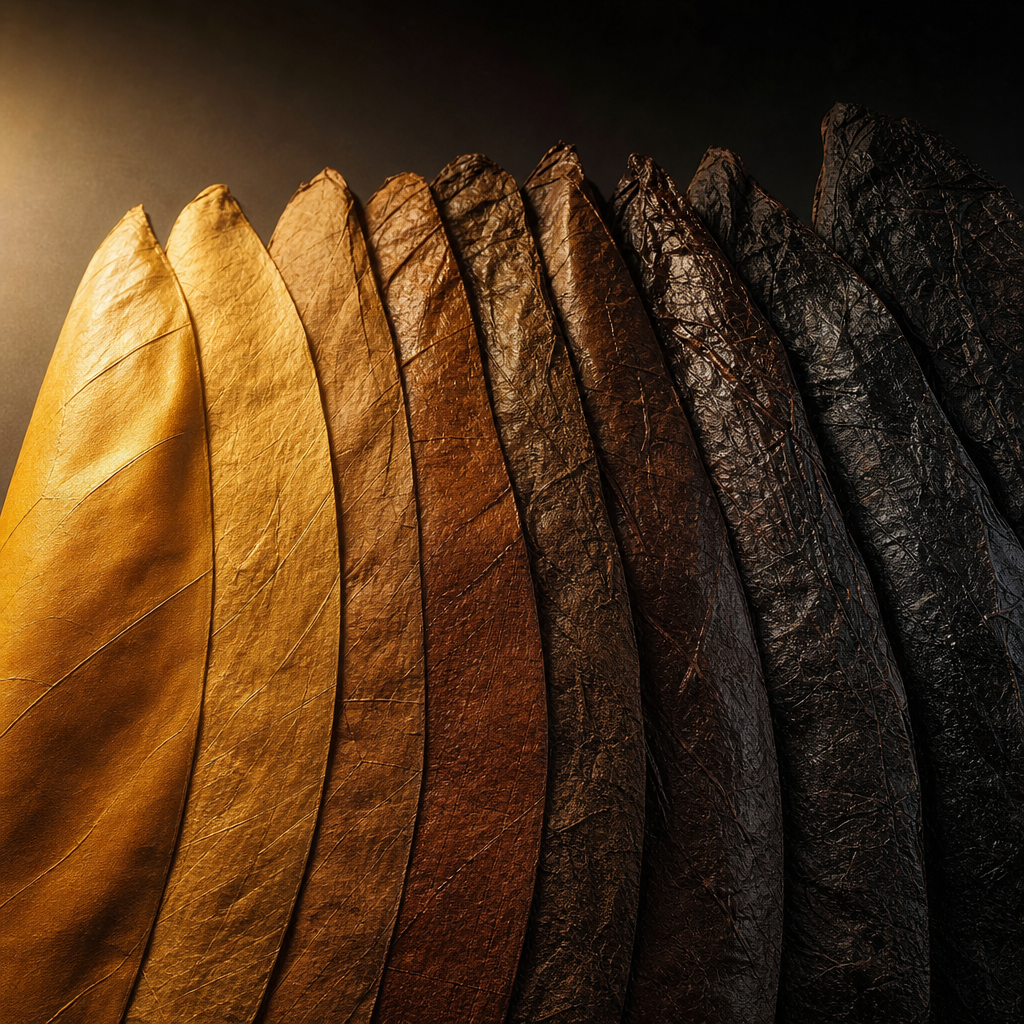
The wrapper is the part that directly contacts vision and smell and often determines the first impression. Shade-grown cultivation reduces direct sunlight, making the leaves thinner, with finer veins and a smoother touch; full-sun cultivation increases oil and thickness, with a deeper color and stronger flavor. Ecuador is known as a natural shade environment due to its stable equatorial cloud cover, which is why many Ecuador Connecticut and Ecuador Habano wrappers can combine delicacy and aroma.
| Wrapper Origin/Type | Typical Climate Conditions | Common Flavor Tendencies | Representative Examples |
|---|---|---|---|
| Ecuador Connecticut | Cloudy, gentle sunlight | Cream, grain, light wood | Rocky Patel Vintage 1999 |
| Ecuador Habano | Stable temperature difference, oilier leaves | Red pepper, wood, sweet spice | Some My Father series |
| Cameroon | Hot and humid, good soil drainage | Cinnamon, nuts, slightly sweet spice | Arturo Fuente Hemingway |
| San Andrés Maduro | Mexico's humid, fertile volcanic soil | Dark chocolate, coffee, moist earth | Some Drew Estate Liga Privada |
The climate impact on wrappers is not just about surface color but also the aroma of the initial segment, burning temperature, and mouthfeel. For example, Cameroon wrappers often have a delicate spicy sweetness, but the leaves are fragile and have limited yield; San Andrés Maduro, due to fertile soil and high humidity, often shows molasses, cocoa, and moist earth after fermentation. If storage humidity exceeds 72%, Maduro-type wrappers may become stuffy sweet and burn slowly; if below 62%, they are prone to leaf cracking and increased spiciness. Seasoned enthusiasts should look at the wrapper's gloss, elasticity, and the cleanliness of the aroma after lighting.
Year and Abnormal Weather: Batch Differences Often Hide in Climate Records
Cigars, unlike wine, do not always openly label the year, but the annual differences in crops still exist. In 2008, Cuba was affected by hurricanes Gustav and Ike, with many tobacco infrastructure damages in Pinar del Río, and subsequent years' inventory allocation and supply rhythm were discussed. The 2017 Caribbean hurricane season was active, and although the impact varied across production areas, seasoned enthusiasts comparing batches from 2018 to 2020 often notice differences in burning, draw resistance, and humidity management.
Nicaragua is often affected by drought and delayed rainy seasons. If the early growth period is dry, roots go deeper, leaf concentration increases, but yield decreases; if there is too much rain before harvest, leaves have high water content, drying time is extended, and fermentation risks increase. From 2014 to 2016, Central America was affected by the El Niño phenomenon, with many agricultural areas facing unstable rainfall, and such climate events subtly remain in cigars through leaf thickness, nicotine feel, and sugar performance. Batch differences need not be mystified; often, they are just the fingerprints left by climate, inventory, and fermentation together.
Seasoned enthusiasts can establish their own "year observation notes," not relying solely on market rumors. It is recommended to record box codes, purchase month, storage humidity, lighting date, and changes in the first and last thirds. If the same cigar shows significant differences between boxes, do not rush to judge authenticity or brand decline; instead, cross-check transport humidity, aging time, and origin climate. Collecting may have price fluctuations and topicality, but it does not guarantee appreciation, still depending on source preservation and market.
From Climate to Humidor: Preservation is Translating the Personality of the Origin
The climate of the origin shapes the tobacco leaves, but after leaving the factory, the preservation environment will rewrite its expression. Many seasoned enthusiasts are accustomed to a relative humidity range of 65% to 69% and a temperature range of 18 to 21 degrees Celsius; this is not superstition but to balance burning, aroma release, and wrapper elasticity. Cuban styles, if stored above 72%, often become stuffy, and draw resistance increases; rich Nicaraguan styles, if too dry, will have sharp pepper notes, and sweetness will retract.
My own experience is that the same Padrón 1964 Maduro performs very differently at 65% and 70%: the former has clearer dark chocolate and coffee outlines, with a clean burn line; the latter has a thicker mouthfeel but tends to become stuffy in the latter part. If a Cohiba Siglo VI is taken from a high-humidity environment and rebalanced at around 65% for 7 to 14 days, the herbal, creamy, and bean aromas often separate more distinctly. Preservation is not about leaving cigars unattended but translating the climate of the origin into a state suitable for the current environment.
Advanced methods can be more detailed:
- Delicate Cuban styles: Often can try 64% to 66% for clearer lines.
- Creamy woody Dominican styles: 66% to 68% is usually more stable.
- Rich Nicaraguan styles: 65% to 67% helps control heat.
- Thick Maduro wrappers: Avoid long-term high humidity, observe burning first, then adjust.
- Long-term aging boxes: Stable temperature is more important than frequent opening and closing.
Frequently Asked Questions
Is the origin climate really more important than the brand?
The brand determines leaf selection, fermentation, blending, and quality control, while the climate determines the raw material's upper limit and personality. The two cannot be viewed separately. When seasoned enthusiasts interpret flavors, they should first understand the origin climate and then look back at how the brand handles this batch of leaves. For example, with the same Nicaraguan leaves, Padrón's solid sweet-bitter and Davidoff Nicaragua's clean balance are different craftsmanship translations of the same climate language.
Why do Cuban cigars sometimes show more noticeable batch differences?
Cuban production areas have high humidity and hurricane risks, and different annual harvests, factory blending, and storage conditions will cause performance fluctuations. Especially delicate sizes or draw-sensitive styles are more likely to expose differences. This does not represent the good or bad of a single brand but is the result of the agricultural product's nature combined with supply chain humidity changes.
Is Maduro wrapper always sweeter and stronger?
Not necessarily. Maduro is the result of processing and fermentation, often with dark chocolate, coffee, and molasses, but if the leaf raw material is insufficient or fermentation is not clean, it may only have stuffy sweetness and bitter harshness. A truly good Maduro should have sweetness, bitterness, oiliness, stable burning, and a clean finish, not just a deep color.
What characteristics do high-altitude tobacco leaves usually have?
High altitudes often have larger day-night temperature differences, slower maturation speed, and aromas may be more delicate, with more pronounced sweetness. Jalapa is often compared to Estelí: the former leans towards sweet aroma, floral, and soft woodiness, while the latter leans towards black earth, pepper, and heaviness. Altitude is not a quality guarantee, but it often increases aroma details and maturation rhythm.
Should storage humidity be adjusted according to the origin?
Yes. Delicate, mineral, and herbal cigars are usually not suitable for too much humidity; rich thick-leaf styles should not be too dry, or spiciness will be magnified. It is recommended to find your baseline from 65% to 68% and then fine-tune based on burning speed, draw resistance, and aroma development. If a cigar is stuffy in the initial segment and the burn line is slow, it is often best to lower the humidity and observe.
Does collecting rare batches from specific origins have investment value?
Rare origins, special years, complete box conditions, and credible sources can indeed affect market prices; however, collecting appreciation does not guarantee appreciation, still depending on source preservation and market. Seasoned enthusiasts should focus on transparent sources, stable preservation, complete box conditions, and personal flavor preferences, rather than just chasing topics.
When I look at cigar climates, it is never to make the flavor sound mysterious but to clarify the "why." Rain, wind, sunlight, and soil eventually turn into the sweetness, bitterness, spiciness, woodiness, and aftertaste in a mouthful. Understanding the climate is to respect the origin of each leaf and to build one's judgment.
—Cigar Prince Wilson Tsai
Smoking is harmful to health. Smoking is prohibited for those under twenty. Quitline: 0800-636363. This article is for reference by adults over twenty years old for cigar culture, preservation, and legal knowledge, not tobacco advertising, promotion, or purchase advice.