Temperature and Humidity Control of Cigars: Microclimate Management Affecting Flavor
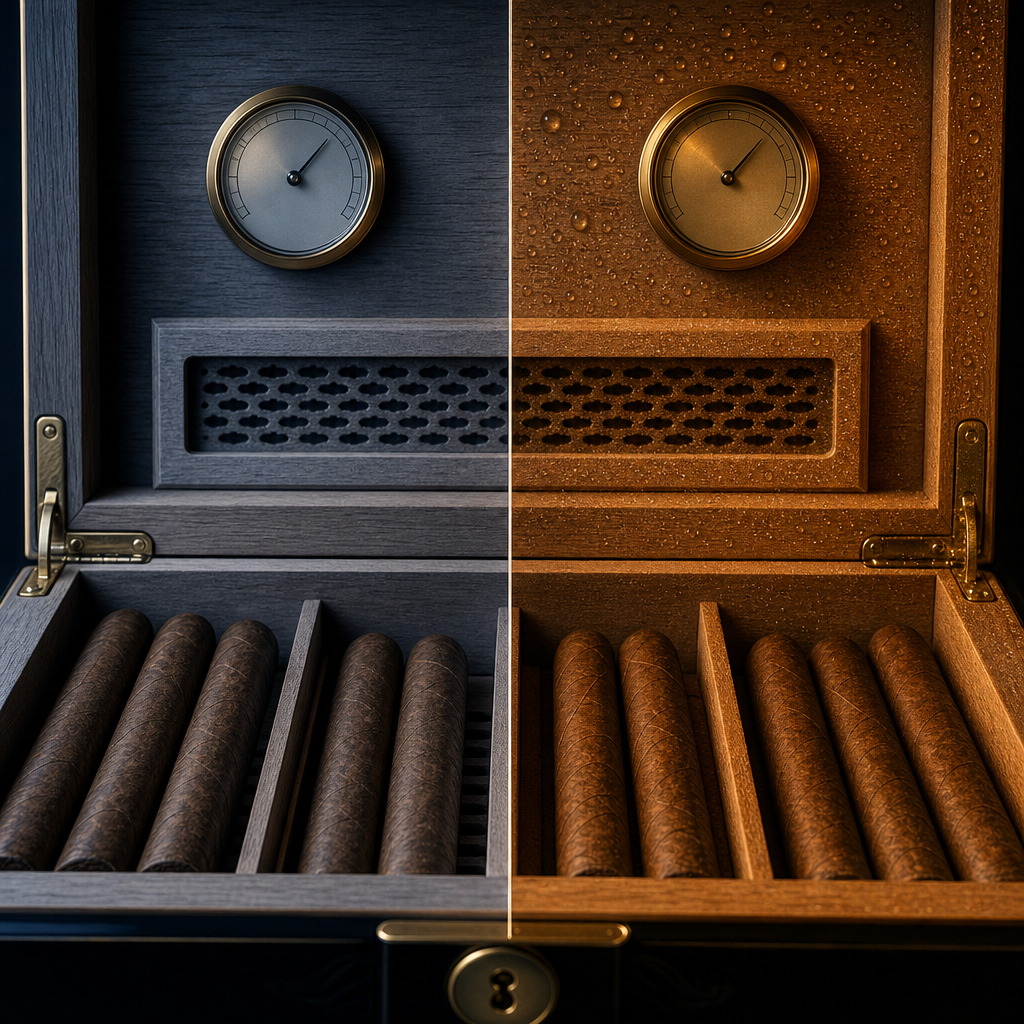
Temperature and Humidity Control of Cigars: Microclimate Management Affecting Flavor
Placing cigars in a humidor does not guarantee their safety. What truly influences flavor is the "microclimate" within the box, which undergoes slight changes daily, weekly, and seasonally: temperature, relative humidity, air exchange, moisture absorption and release by the wooden box, and the balance of moisture content in the cigars themselves.
As the editor of the "Cigar Bible," I am often asked by beginners: Why does the same brand sometimes taste sweet, sometimes spicy, and sometimes burn unevenly? The answer often lies not in the cut or lighting but in the invisible storage environment.
Temperature and Humidity Are Not Two Knobs, but a System
Many people consider the 69% they see on the hygrometer as the absolute answer, neglecting that when temperature changes, relative humidity also affects the moisture state of the cigars. For example, in 2020, when I organized a batch of Partagás Serie D No.4, even when stored at 69% RH, if the room temperature rose from 20°C to 27°C, the wood, packaging paper, and cigars inside the box would re-exchange moisture, potentially changing the taste from clean woody to heavy and stuffy.
Cigars do not just need a specific humidity number; they need a stable temperature-humidity relationship. Beginners can start with 18°C to 21°C and 65% to 69% RH; if indoor temperatures in Taipei during summer often exceed 26°C, I would slightly lower the humidity target to 62% to 65% to prevent the cigar surface from becoming too moist, which could lead to bitterness or uneven burning after lighting.
I often compare a cigar box to a small wine cellar: you are not "humidifying," but establishing a slow, predictable balance. From 2017 to 2019, many enthusiasts began transitioning from traditional desktop humidors to electronic temperature-controlled cabinets, not to show off equipment, but because the temperature fluctuations in subtropical cities are too large, making it difficult to maintain a stable microclimate with just humidification packs.
The Triangular Relationship of Relative Humidity, Moisture Content, and Taste
Relative humidity is the percentage of water vapor saturation in the air, but the key to whether a cigar tastes good is actually the moisture content of the tobacco leaves. For larger ring gauge models like Cohiba Siglo VI, Hoyo de Monterrey Epicure No.2, and Montecristo No.2, the filler leaves absorb and release moisture more slowly than the outer layers; even if the hygrometer shows 67%, the filler might not have caught up, leading to a discrepancy where the outer layer is soft, but the center is dry when lit.
The hygrometer measures the air, not the inside of the cigar; stability over time is more important than a single reading. When handling new box arrivals, I usually observe for at least 14 days without rushing to make judgments. If a box of 25 Ramón Allones Specially Selected transitions from a drier environment to 68% RH, the weight increases rapidly in the first 3 days, slows down after the 7th day, and only approaches equilibrium by the 14th day.
In practice, you can cross-reference touch, burn, and aroma: when too dry, the foot tends to crack, the front section is sharp and spicy, and the ash is white and loose; when too moist, the draw becomes heavier, the smoke sticky, the woody aroma becomes stuffy, and the tail section is prone to ammonia or bitterness. For beginners, if you remember one thing, it's not to chase numbers daily; giving cigars time is more effective than frequent adjustments.
Temperature: Flavor Maturation, Oil Expression, and Pest Risk
Temperature affects reaction speed. Cigars will slowly mature in a suitable environment, reducing the harshness of the tobacco leaves, and making the wood, nut, cocoa, leather, and sweetness easier to blend. For example, with a 2014 box of Bolivar Belicosos Finos, if maintained at 18°C to 20°C and 65% to 67% RH over the years, by 2021, the strength is often still there, but the roughness is reduced; if consistently above 27°C, changes occur faster but are not necessarily more elegant.
Higher temperatures do not mean better maturation; overly rapid changes often sacrifice detail and cleanliness. A more practical risk is tobacco beetles. Generally, 24°C to 25°C is considered a warning zone; if the environment is consistently above this range and humidity is high, the risk of egg hatching increases. This is not a scare tactic but a real management issue in cigar storage.
I recommend keeping cigars away from west-facing walls, heat-dissipating areas of appliances, and windows in home environments. In 2022, a friend placed a Spanish cedar desktop humidor on the top shelf of a display cabinet, where it was affected by heat from lamps and walls in the afternoon, with temperatures inside reaching 28°C during the day and 23°C at night. Two months later, several Trinidad Vigía showed flavor dullness and wrapper wrinkling; moving it to a lower, cooler spot significantly reduced fluctuations.
Microclimate Differences in Various Storage Tools
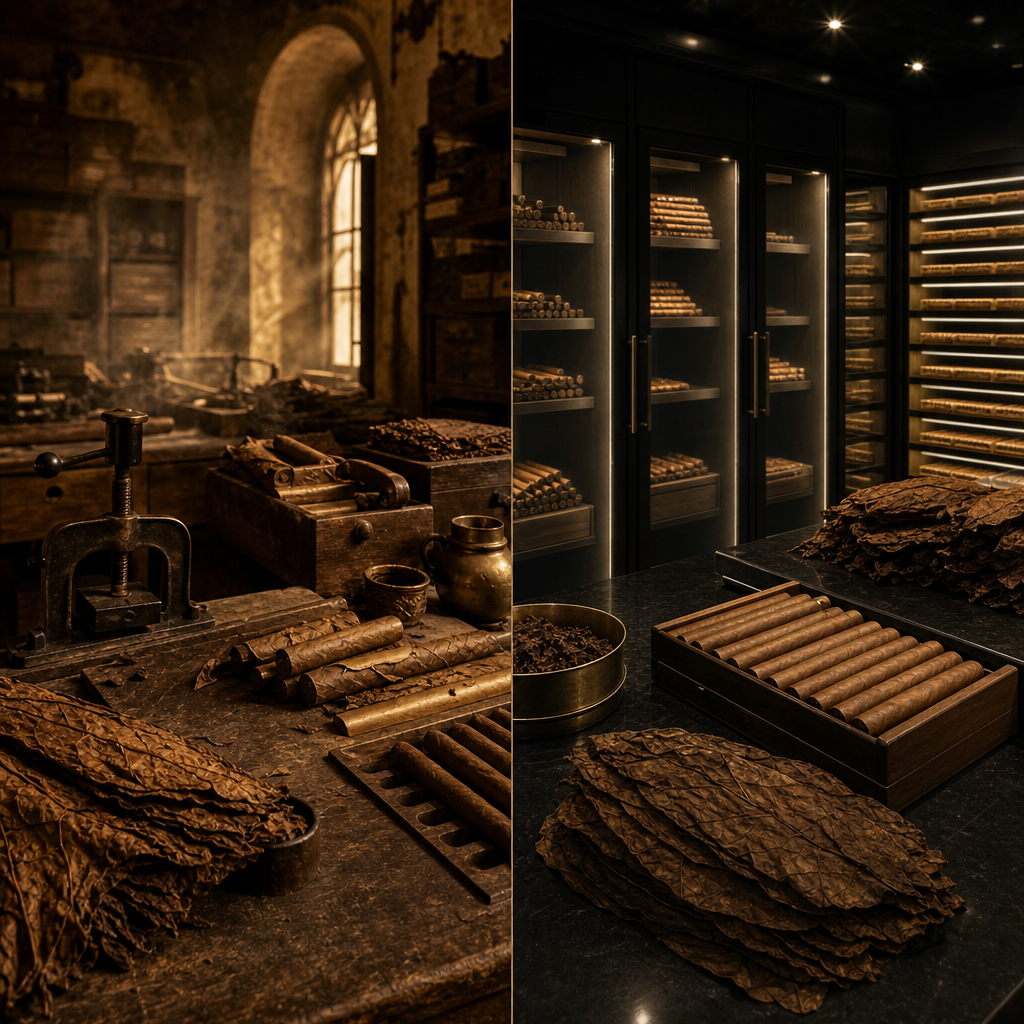
Desktop Spanish cedar humidors, sealed plastic boxes, electronic temperature-controlled cabinets, and whole-box storage in original wooden boxes each have different characteristics. Desktop boxes look nice and have strong moisture absorption and release capabilities, but are also significantly affected by the external environment; sealed boxes are stable and low-cost but lack the buffering and air exchange of wood; electronic cabinets are suitable for large collections, but fans, drainage, and calibration need management.
There is no absolute superiority in tools, only whether they suit your quantity, climate, and maintenance habits. If you have only 20 to 50 cigars, a Boveda 65% or 69% with a sealed box is often more reliable than a leaky desktop box; if you have more than 200 cigars and the local summer room temperature often exceeds 26°C, temperature-controlled equipment will significantly reduce management difficulty.
| Storage Tool | Suitable Quantity | Advantages | Risks and Recommendations |
|---|---|---|---|
| Spanish Cedar Desktop Box | 25-100 cigars | Great aroma, strong sense of ritual | Check for tightness, calibrate hygrometer every 6 months |
| Sealed Plastic Box | 10-80 cigars | Stable, easy to control | Avoid complete lack of ventilation, can briefly air out every 2-4 weeks |
| Electronic Temperature-Controlled Cabinet | 100 cigars or more | Controllable temperature, suitable for subtropics | Watch for condensation, direct fan blowing, and sensor placement |
| Whole Box Storage | Multiples of 25 cigars | Preserves microenvironment inside the box | Needs stable external environment support |
In 2018, I placed the same batch of H. Upmann Magnum 46 in both a desktop box and a sealed box for 90 days; the desktop version had a more open aroma and more pronounced woodiness, while the sealed version burned more evenly but had a more restrained aroma. This reminds us that storage tools change the rhythm, not just serve as preservation containers.
Climate in Taiwan and South China: Seasonal Management Is More Important Than Formulas
In Taiwan, Hong Kong, Macau, and South China cities, the real challenge is the transition between spring and summer and the typhoon season. During the plum rain season, external humidity often exceeds 80%, and even with air conditioning indoors, humidity can rebound after it stops; during the winter northeast monsoon, indoor humidity can drop below 55% RH. Using the same settings from January to August can easily lead to fluctuations in cigar condition.
The core of subtropical cigar management is reducing seasonal fluctuations, not rigidly adhering to a single standard. My approach is to set the summer target at 63% to 66% RH, and return to 66% to 69% RH in winter; for temperature, maintaining 18°C to 22°C is ideal, but if not possible, at least avoid consistently exceeding 25°C.
A simple seasonal checklist can be used:
- Check if humidification packs have hardened or failed around March each year.
- Increase temperature recording from May to September, especially monitoring afternoon peaks.
- After typhoons or continuous rain, observe if the box has a sour wood smell or if the cigar foot is soft.
- In winter, if using heating, avoid placing the humidor near the air outlet.
- Verify hygrometer error every 6 months using the salt test or calibration packs.
In the summer of 2023, a friend in Kaohsiung found that the humidity inside his cabinet consistently showed 70%, but the cigars were still dry. It was later discovered that the sensor was placed in a spot directly blown by the fan, affecting the reading with localized air. Moving the sensor to the center of the middle layer and adding a comparison gauge revealed a 4% RH difference between the upper and lower layers.
New Cigars Entering the Box: Isolation, Buffering, and Recording
When new cigars arrive, I do not recommend immediately mixing them into long-term collections, especially cigars from different sources and packaging conditions. Even if they are both 2021 boxed, the storage, transportation, and store environments they have experienced may vary greatly in moisture content. Placing wetter new items into a stable old box may raise the microclimate of the entire box; placing drier singles into a small box may also absorb environmental moisture.
Isolating new cigars for 7 to 14 days is basic etiquette to protect existing collections. I use an independent sealed box with a 65% or 69% humidification pack to first observe the wrapper, smell, and touch. If there is an abnormal moldy or ammonia smell or foot powder, do not mix them; if it is just white crystalline oil frost, it needs to be observed under magnification to distinguish it from the fuzzy feel of mold spots.
Recording is the fastest way to advance from beginner to advanced. You can create fields in your phone's notes: brand, size, box code or year, acquisition date, initial humidity, storage location, first lighting date, and taste. For example, the 2016 Romeo y Julieta Churchill and the 2019 Punch Punch, even though both are Cuban classics, have different stabilization periods and flavor developments; with records, you can identify whether the issue is with the cigar, the environment, or your own pace.
Micro-Adjustments Before Lighting: Dry Box, Warming, and Burn Judgment
An ideal storage environment does not mean every cigar is in optimal condition before lighting. Especially for Robusto Extra, Double Corona, or Gran Toro with a ring gauge of 54 or above, the moisture content difference between the center and the surface is more pronounced. I often place cigars I plan to enjoy that day in an unhumidified small cedar box for 30 to 90 minutes to let the surface dry slightly, resulting in a clearer burn line.
A brief dry box before lighting is not a remedy for all issues but a micro-adjustment of surface humidity. If the cigar is already too dry, further drying will only make the wrapper more brittle; if it is consistently too moist, an hour is not enough to balance the filler leaves. For beginners, start with 30 minutes, observe if the cut cracks, and if the front section becomes sharp, then gradually adjust.
Warming is also important. If a cigar is taken from an 18°C temperature-controlled cabinet and immediately placed in a 28°C outdoor environment, the surface may condense a small amount of moisture, affecting ignition and the aroma of the front section. My habit is to let the cigar sit at room temperature for 15 to 30 minutes. For delicate structures like Behike 52 and Davidoff Aniversario No.3, this waiting period often results in a cleaner start.
Common Questions
What is the ideal humidity for cigars, 65% or 70%?
There is no single answer. If the temperature is between 18°C and 21°C, 65% to 69% is generally feasible; if room temperature is often above 25°C, slightly lower is usually more stable. Humidity should be considered alongside temperature, not just a single number.
Why are cigars still unsatisfactory even when the hygrometer shows normal readings?
It could be the sensor location, calibration error, or the cigar's internal imbalance. It is recommended to cross-check with two hygrometers and allow new cigars to settle for 14 days before judging. Consider burn, touch, and aroma together.
How many humidification packs are enough?
A common calculation is one 60g humidification pack per 25 cigars, but seal quality, wood absorption, and box opening frequency all affect this. If it's a new desktop box, the wood absorbs more moisture initially, so increase the number and observe for 2 weeks.
Is the white stuff on the cigar surface a sign of spoilage?
Not necessarily. Oil frost usually appears as fine crystalline powder, more uniform, and can be brushed off; mold spots often have a fuzzy feel and irregular edges, possibly accompanied by a moldy smell. If suspected to be mold, isolate it and do not mix with other cigars.
Will long-term storage increase the value of cigars?
Some vintages, brands, and storage conditions are indeed valued by the market, but collection appreciation does not guarantee value increase; it still depends on source preservation and the market. First ensure proper storage, then flavor and condition can be discussed.
I have always believed that the most fascinating aspect of cigar management is not controlling numbers like a laboratory, but finding a rhythm between stability and change. Every box has its own temperament, and every city has its own humidity character. When you learn to understand temperature, humidity, touch, and burn, cigars are not just preserved but well cared for.
—Cigar Prince Wilson Tsai
Smoking is harmful to health. Under 20 years old is prohibited from smoking. Quitline: 0800-636363. This article is for reference by adults over 20 years old on cigar culture, preservation, and regulatory knowledge, not a tobacco advertisement, promotion, or purchase suggestion.