Visualization Techniques in Cigar Tasting: Enhancing the Experience through Visual Inspection
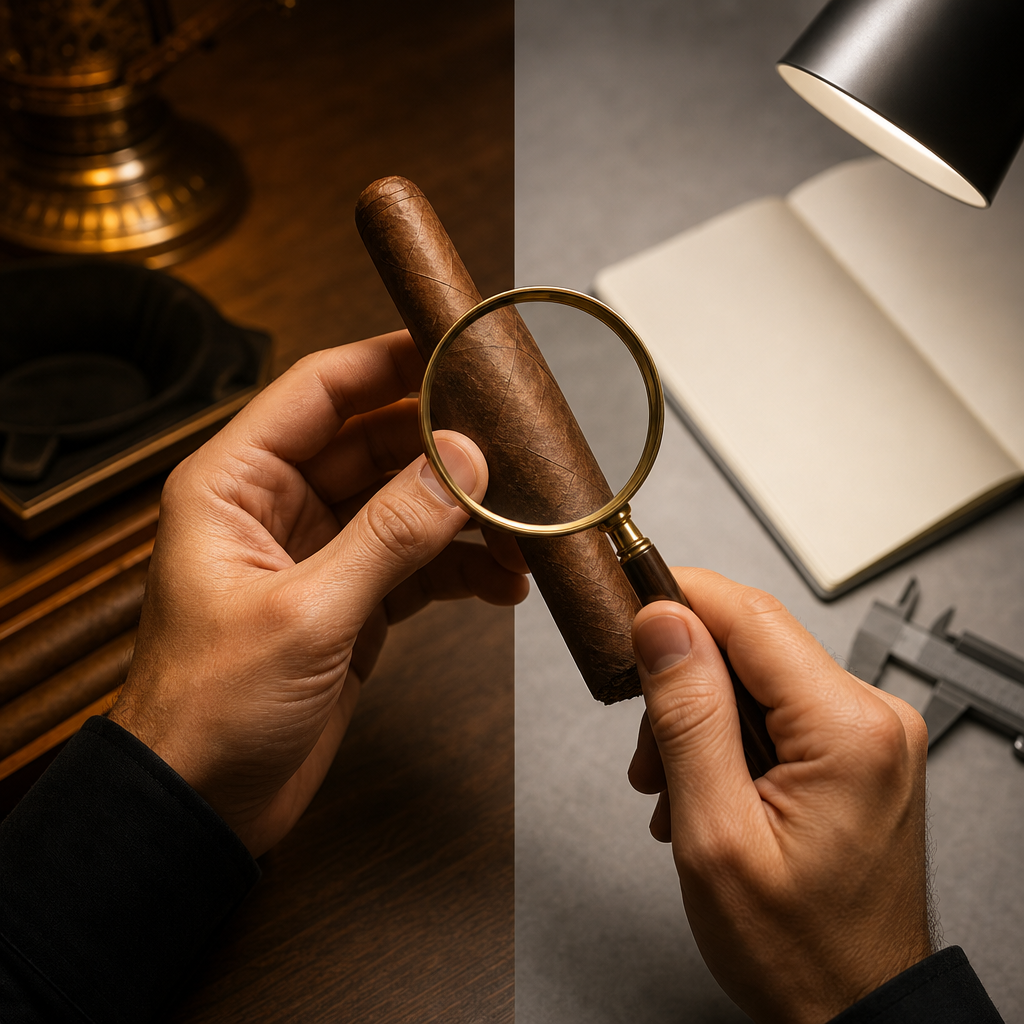
Visualization Techniques in Cigar Tasting: Enhancing the Experience through Visual Inspection
The taste of a cigar is not only experienced in the mouth. A truly mature tasting training begins with the eyes: observing color, shape, construction, and burn, then corroborating visual clues with aroma, taste, and rhythm.
As an editor of the "Cigar Bible," I often remind newcomers: visual inspection is not about being picky, but about building understanding. When you can read a cigar before lighting it, you'll find it easier to understand why it tastes sweet, bitter, or suddenly becomes tight or loose after lighting.
Visual Inspection is Not Just for Show: Establishing a 90-Second Observation Process
I recommend beginners develop a "90-second visual process": when you receive a cigar, don't rush to cut or light it. First, under natural light or neutral lighting around 4000K, observe if the wrapper color is even, if the sheen is natural, and if the veins are prominent. Then, gently rotate it to check the seams and cap. These 90 seconds may seem simple, but they allow you to grasp more than half of the state information before your taste buds even begin.
A good visual process is not for judging whether a cigar is expensive or cheap, but for predicting the rhythm it might present next. For example, when I sorted a batch of Hoyo de Monterrey Epicure No.2 in 2021, some cigars in the box of 25 had noticeably higher sheen, and the creamy and woody sweetness in the early stages was more pronounced; conversely, some with a drier surface and grayer color tended to burn at higher temperatures.
You can divide the observation into three layers: the first layer is "appearance," including color, gloss, and spots; the second layer is "shape," including diameter, length, and straightness; the third layer is "structure," including the cap, foot, seams, and filling density. Each layer only requires 20 to 30 seconds of observation, forming a basic judgment in total.
The practical sequence can be as follows:
- First, check if the overall color is consistent.
- Then, observe the sheen and vein thickness of the wrapper.
- Rotate the cigar to check seams and damages.
- Observe if the foot filling is even.
- Finally, gently squeeze the entire length to feel for elasticity and hard spots.
Color and Wrapper: Visual Clues from Claro to Maduro
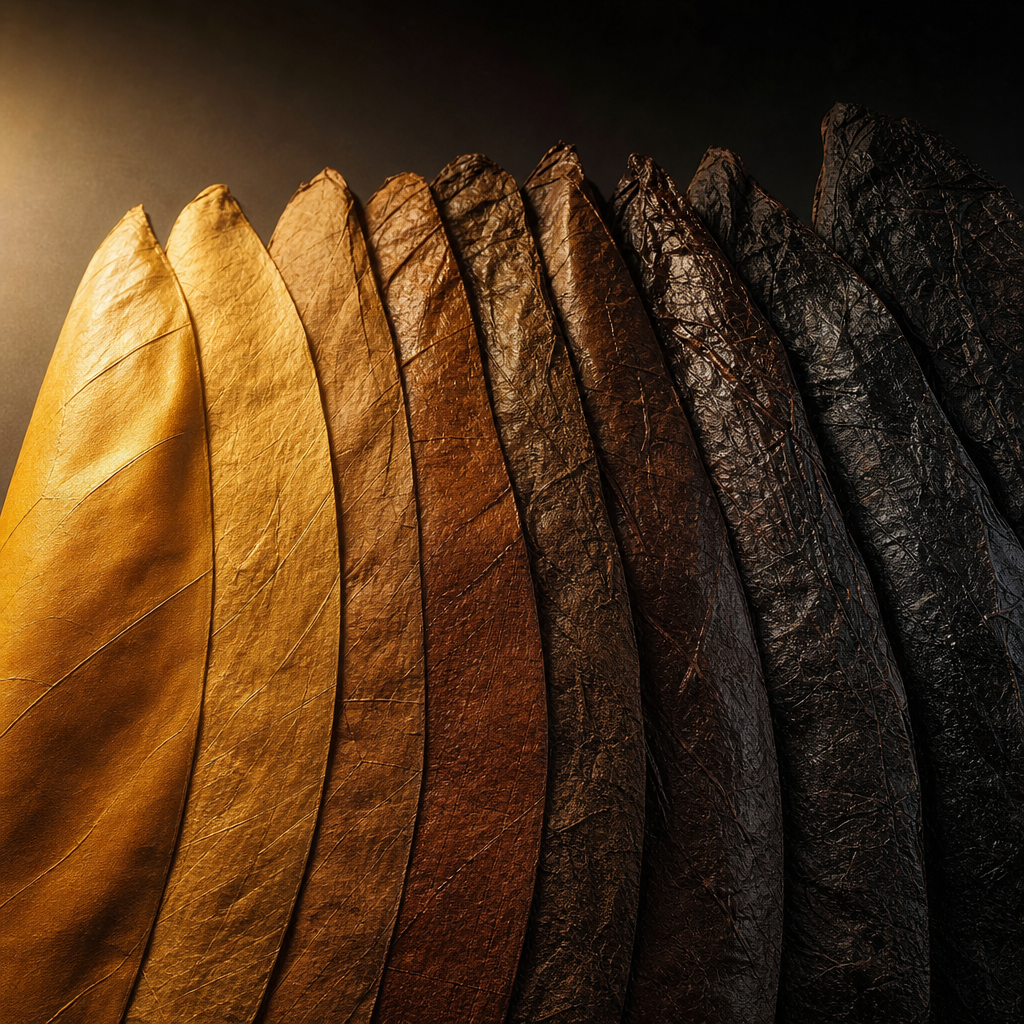
Wrapper color is often misunderstood by novices as "the darker, the stronger." In reality, color can only provide direction and cannot solely determine strength. Taking the commonly seen Colorado Claro to Colorado shades of Cohiba Siglo VI as an example, the appearance may evoke associations of honey, cedar, hay, and light nuts; whereas Partagás Serie D No.4, if the wrapper leans more towards Colorado Maduro, visually suggests more pronounced leather, coffee, and spice.
Wrapper color is a hint of flavor, not a verdict. Even within the Maduro color range, the flavor logic of a Nicaraguan Padrón 1964 Anniversary Maduro and a Cuban Romeo y Julieta Wide Churchills with a dark batch is completely different; the former often has cocoa, concentrated coffee, and black pepper, while the latter may still retain floral, tea, and woody sweetness.
| Wrapper Visual | Common Color Descriptions | Possible Flavor Associations | Observation Focus |
|---|---|---|---|
| Claro | Light brown, straw color | Hay, cream, light wood | Check for dryness, grayness |
| Colorado Claro | Honey brown, golden brown | Cedar, nuts, light sweetness | Is the sheen even? |
| Colorado | Medium brown, chestnut | Wood, spice, tea | Color variation and seam condition |
| Colorado Maduro | Dark brown, coffee color | Leather, cocoa, roasted notes | Are veins too thick? |
| Maduro | Dark coffee, near black brown | Dark chocolate, coffee, caramel | Is there a dyed appearance or excessive moisture? |
When observing the wrapper, also note the difference between "natural sheen" and "abnormal gloss." Natural sheen is like a thin layer of satin, with a soft luster when rotated; if the surface is wet and shiny like a coating, or if local colors appear wiped or dyed, be more cautious. Around 2018, some non-Cuban brands with dark wrappers gained market popularity, and I've seen cases where the appearance was beautiful but the burn was unstable, often due to fermentation and moisture conditions not keeping up.
Shape and Size: How Vitola Predicts Rhythm
Vitola, which refers to size and shape, is the most easily underestimated aspect of visual inspection. Length, ring gauge, tapered or straight shapes all affect burn speed and flavor concentration. For example, Montecristo No.2, with a length of 156 mm and a 52 ring gauge, has a more concentrated Torpedo head, where the cut size directly affects draw resistance; while the commonly seen Robusto, about 124 mm with a 50 ring gauge, has a more direct rhythm, with changes often occurring faster in the early to mid-stages.
Understanding size allows you to predict the timing and flavor unfolding of the cigar. For example, a Cohiba Robusto usually takes about 45 to 60 minutes, while a Churchill size like Romeo y Julieta Churchills might extend to 75 to 100 minutes. Novices who choose long sizes when time is insufficient often become impatient in the later stages, leading to increased temperature and bitterness, which is not the cigar's fault but a mismatch in rhythm.
Shape also affects cutting strategy. The cap of a Parejo straight cigar is clear, and cutting 1 to 2 mm is usually sufficient; for Figurados like Piramides or Belicosos, enough taper should be retained, as cutting too deep can cause excessive smoke flow and faster burn. In 2017, I recorded a Partagás Serie P No.2 where the first cut was too small, resulting in tight draw; after a slight adjustment, the earth, pepper, and toasted bread aromas truly opened up.
Moreover, a larger ring gauge does not necessarily mean higher quality. In recent years, large sizes over 60 ring gauge have become popular, but larger ring gauges often increase the proportion of filler leaves, cooling the smoke, which may round out the flavor but dilute details. Conversely, slender sizes like Lonsdale or Corona Gorda, if well-rolled, can present floral, woody, and spicy notes more delicately. When you see the size, you should start planning the time and rhythm in your mind.
Structural Observation: Cap, Foot, Seams, and Filling
Structure is the most practical part of visual training because it is highly related to smooth draw. First, look at the cap: Cuban cigars often have triple caps, which should be snug and round, without lifting or cracking. Then check the seams; the wrapper should naturally adhere, with visible but not raised seam lines. If there are breaks near the seams, they may crack due to thermal expansion after lighting.
The quality of the structure directly affects burn, draw resistance, and stability in the later stages. I once compared the same box of 2020 batch Bolívar Royal Coronas, where one had a noticeably empty foot, resulting in large smoke volume but loose flavor and faster burn in the early stages; another with even foot filling had stable ash, with more complete layers of leather, earth, and licorice.
The foot is a visual entry point often overlooked. You can see the distribution of filler leaves from the foot: if the center is obviously hollow, it may burn too quickly; if one side is too tightly packed, the burn line may skew; if there are too many leaf fragments, ash stability may be poor. Of course, these are not absolute judgments, but they help you understand how to adjust the rhythm after lighting.
When gently squeezing the cigar, use your thumb and forefinger to slowly feel along the entire length, without pressing hard. Ideally, it should be elastic and naturally rebound; if any section feels as hard as a rock, draw resistance may be tight; if any section is too soft, it may burn too quickly or be hollow. This action is especially suitable for checking long sizes like Double Corona, as the longer the cigar, the more structural consistency affects overall performance.
Burn Line, Ash, and Smoke Volume: Dynamic Indicators to Observe While Enjoying
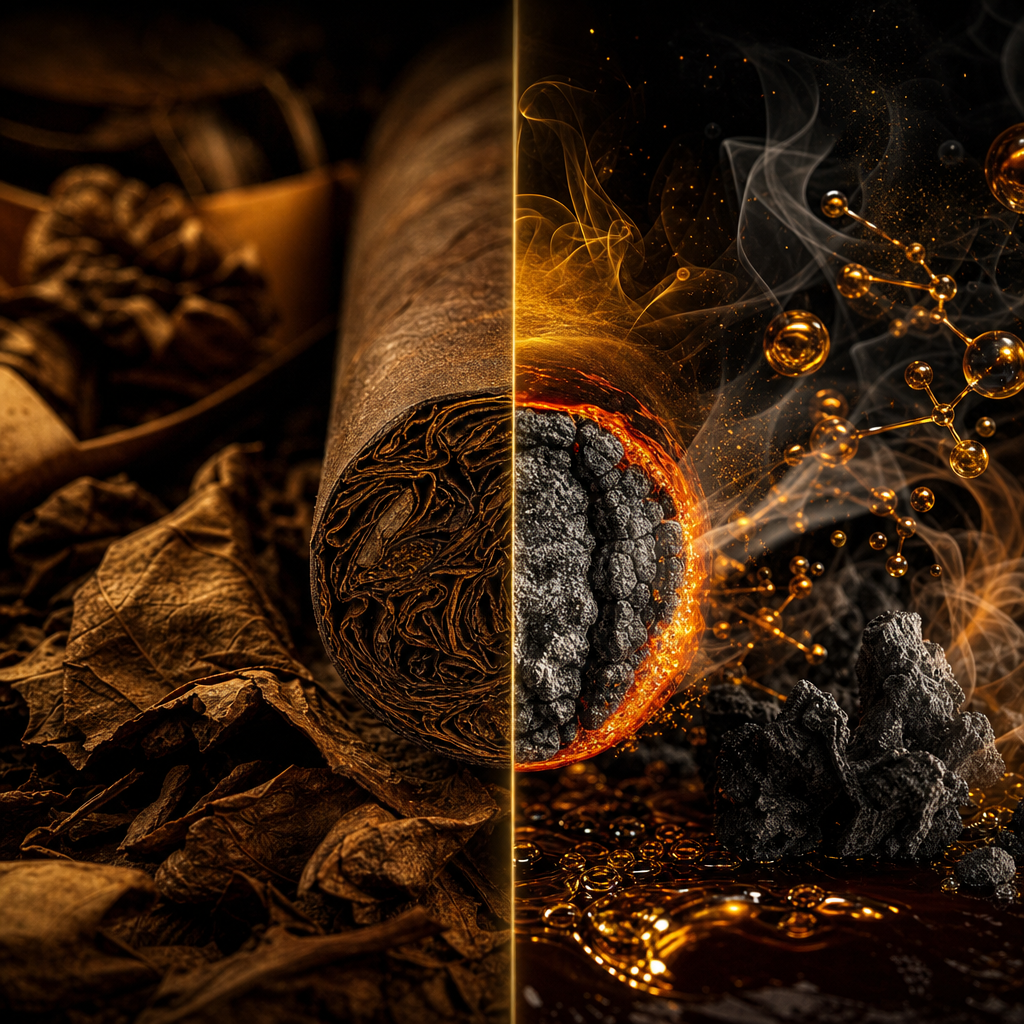
After lighting, visual training enters the second stage: observing the burn line, ash, smoke volume, and burn speed. An ideal burn line doesn't have to be perfectly straight like a ruler but should self-correct within a few minutes. If one side consistently leads by more than 5 mm, it may relate to lighting, humidity, rolling, or holding angle. In this case, slowing down the rhythm is more effective than rushing to correct the burn.
The burn line is the real-time ECG of the cigar's state, while the ash is like a slowly unfolding structural report. For example, when an H. Upmann Magnum 46 is well-preserved, the ash often presents a finely layered silver-gray, with the ash column maintaining 2 to 3 cm; if humidity is too high, the ash will be darker and looser, and the smoke will be more stifled, with wood and nut flavors suppressed by moisture.
Observing smoke volume also requires technique. A large smoke volume doesn't mean a strong flavor, and a small smoke volume isn't necessarily bad. In 2019, I recorded a Trinidad Reyes with modest smoke volume in the early stages, but clear white pepper, honey, and light floral notes; conversely, some large ring gauge non-Cuban cigars had abundant smoke volume but developed bitterness in the mid-stage due to a fast rhythm. When you see the smoke volume, return to your tongue to confirm the texture.
You can use three indicators for dynamic recording:
- Check the burn line every 5 minutes for skewing.
- Let the ash fall naturally around 2 cm to avoid forcing it.
- If the smoke becomes hot and bitterness increases, slow down for 30 to 60 seconds before judging.
Cigars are not a race; the faster the burn, the more details are likely to be scorched. Visual inspection can remind you: when to slow down, when to relight, and when to do nothing at all.
Packaging Year, Edition, and Authenticity Clues: Using Your Eyes to Protect the Experience
Visual inspection is not only about the cigar itself but also about box labels, seals, printing, box bottom dates, and overall consistency. Cuban cigar boxes often have factory codes and month-year codes, such as "AGO 19" for August 2019. This information helps you understand aging time and batch background. Properly stored cigars aged 3 to 5 years often become more rounded than when first released, provided the source is clear and humidity stable.
Understanding packaging information is the first line of defense for protecting taste experience. For example, the Cohiba Behike series, launched in 2010, has seen high market attention and many counterfeits. Authenticity is not just about a single anti-counterfeit sticker but also about box arrangement, band printing, gold embossing, cap neatness, and consistency in size. Judging only by "the box looks new" carries high risk.
Limited and commemorative editions should also be viewed rationally. For instance, the Romeo y Julieta Maravillas 8 launched in 2020 and the Montecristo Supremos Edición Limitada 2019 have sparked discussions, with market prices fluctuating due to supply and demand; however, collection appreciation does not guarantee value increase, still depending on source preservation and market. For beginners, learning to identify status is more important than chasing lists.
If you see significant color differences within a box, don't jump to conclusions. Some natural leaf colors may have slight variations, but if the same box shows obvious dryness, mold spots, lifted wrappers, pungent or damp odors, be more vigilant. True visual technique involves interpreting brand, year, packaging, preservation, and body status together, not just trusting a pretty label.
Lighting, Background, and Etiquette: Making Observations Graceful
Visual training requires environmental cooperation. Ideally, use soft daylight by the window or neutral lighting between 4000K and 5000K; too yellow light makes Claro look like Colorado, while too white light weakens sheen layers. The background should preferably be a white, light gray, or dark wood-colored table, avoiding red or blue strong tablecloths that interfere with wrapper color judgment.
Observing cigars requires focus, but don't lose etiquette; graceful observation doesn't disturb others or harm the cigar. In public spaces, don't bring someone else's cigar close to your nose or repeatedly press others' collections with your fingers. If the other party is willing to share information, you can ask about the year, size, and storage humidity; if merely curious, appreciating from a distance is enough.
Photography is also an important tool for modern taste recording. I recommend taking three fixed photos: a full-body shot before lighting, a close-up of the foot, and an ash shot at one-third burn. In 2022, I started requiring myself to write down at least the date, brand, size, humidity, first-stage flavor, and burn state for each record, and after half a year, the progress was very noticeable.
A common mistake for beginners is rushing to make comments while observing. In fact, visual inspection is just a clue; ultimately, it must return to the mouth, nose, and time changes. You can say "this wrapper is dry, so I expect it to burn fast," but if it performs steadily after lighting, adjust your judgment. True taste is not always guessing right but being willing to let facts update your experience.
Frequently Asked Questions
Does a shinier wrapper mean a better cigar?
Not necessarily. Shine usually indicates good preservation and leaf surface condition, but it cannot solely determine quality. If the sheen is soft and the texture elastic, it's usually a good sign; if wet, sticky, or with a stifling aroma, humidity may be high. Sheen should be considered alongside elasticity, aroma, and burn performance to be meaningful.
Are white spots on the wrapper a sign of spoilage?
Distinguish between crystalline natural exudation and mold spots. The former is usually dry and can be lightly brushed off, while the latter may have a fuzzy texture, irregular spread, and even a moldy smell. If the area is large or penetrates the foot, don't just rely on appearance for reassurance. Long-term storage above 72% relative humidity increases risk.
Why do cigars in the same box have different colors?
Natural leaf material inherently varies, and even within the same box of 25, there may be light and dark variations. Cuban brands often try to match colors, but they cannot achieve complete consistency like industrial printing. The key is whether the differences are natural and whether they are accompanied by dryness or odors. Color variation itself is not scary; what is scary is the preservation or source issues behind it.
Should I immediately correct a skewed burn line?
No need to rush. If the skew is within 3 to 5 mm, slow down and let it self-correct. If it continues to expand, lightly touch up the lagging side with a flame. Many novices correct too frequently, causing local temperature to rise, leading to bitterness and char. The purpose of visual inspection is to help you make fewer mistakes.
Which visual skill should beginners practice first?
Start with "observing the foot before lighting" and "observing the burn line after lighting." These two directly affect the experience and are the easiest to establish feedback. Record brand, year, size, humidity, and burn state each time, and after accumulating 20 cigars, you'll find yourself starting to predict draw resistance, burn speed, and flavor development.
Does taking photos for records seem too deliberate?
No, as long as the action is natural and doesn't affect others. Photography is not about showing off but building your taste database. I suggest taking only 3 to 4 photos each time, accompanied by brief text, such as "2023 box code, Robusto, 65% humidity, early-stage cedar and cream." After half a year, these records will be much more reliable than memory.
The charm of visual techniques is that they turn cigars from "good or bad to smoke" into "what did I see, what did I understand." When the eyes calm down first, the mouth becomes more sensitive; you don't have to rush to become a critic, just look a little more and note a little more with each cigar, and taste will gradually develop its own outline. For me, this is the most gentlemanly and intriguing aspect of cigars.
—Cigar Prince Wilson Tsai
Smoking is harmful to health. Under 20 years old is not allowed to smoke. Quitline: 0800-636363. This article is intended for adults over 20 years old as a reference for cigar culture, preservation, and regulations, not as tobacco advertising, promotion, or purchase advice.