The Evolution of Cigar Taste: Transition from Novice to Connoisseur
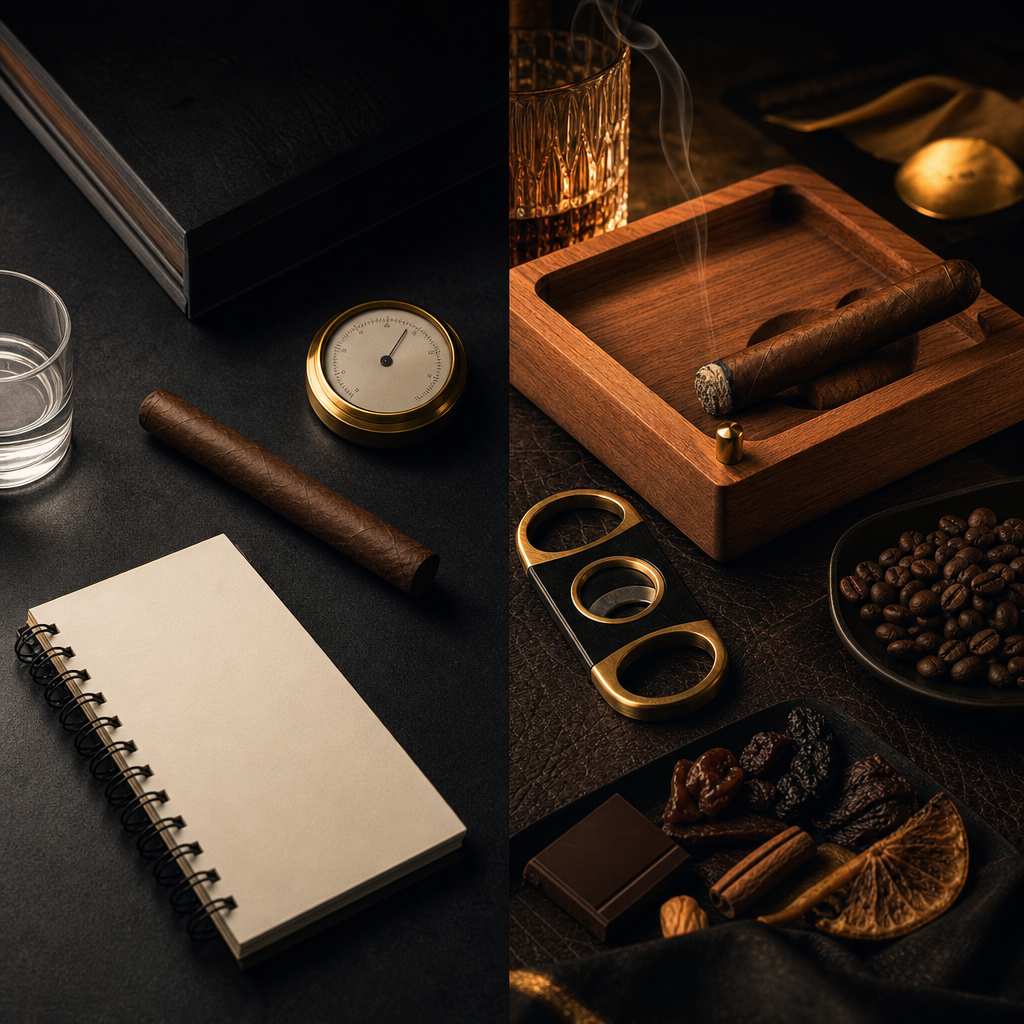
The Evolution of Cigar Taste: Transition from Novice to Connoisseur
When first getting into cigars, most people are concerned about whether they "understand" what they're smoking. After a few dozen cigars, you'll realize that the real transformation isn't about memorizing more brands but about discerning the relationship between flavor, burn, humidity, rhythm, and occasion.
As the editor of "Cigar Bible," I often view the evolution of cigar taste as a journey from sensory experience to judgment. Beginners seek answers, intermediates establish methods, and connoisseurs understand how to see time, craftsmanship, and their own state in a single cigar.
From "Is it good?" to "Why is it good?": The First Turning Point in Developing Taste
Beginners often describe cigars as "smooth," "strong," "fragrant," or "spicy." These are genuine feelings but not enough to form a judgment. Take Montecristo No.4 as an example; this Marevas size is about 129mm with a ring gauge of 42 and is the starting point for many people exploring Cuban cigars. Beginners might only notice medium strength with obvious wood and coffee notes, while intermediates will ask: Is the front clean? Does the middle have a creamy feel? Is the bitterness in the tail a characteristic of the tobacco leaf or due to overheating?
The first step in evolving taste is not to describe flavors in a fancy way but to break down "feelings" into observable reasons. The same Partagás Serie D No.4, if stored at 70% humidity for too long, might taste dull with an unstable burn line; if stabilized at 65% to 67% relative humidity for two weeks, the spicy, leathery, and sweet notes are usually easier to distinguish.
I suggest beginners focus on three key points each time: strength, balance, and change. Strength is a bodily sensation, balance is whether sweet, bitter, spicy, and sour flavors counteract each other, and change is whether there is progression from the front to the tail. When you can describe the differences between Hoyo de Monterrey Epicure No.2 and Bolivar Royal Coronas using these three points, you are no longer just saying "like or dislike," but beginning to understand the language of cigars.
Recording is Not a Ritual, but Training for Taste Memory
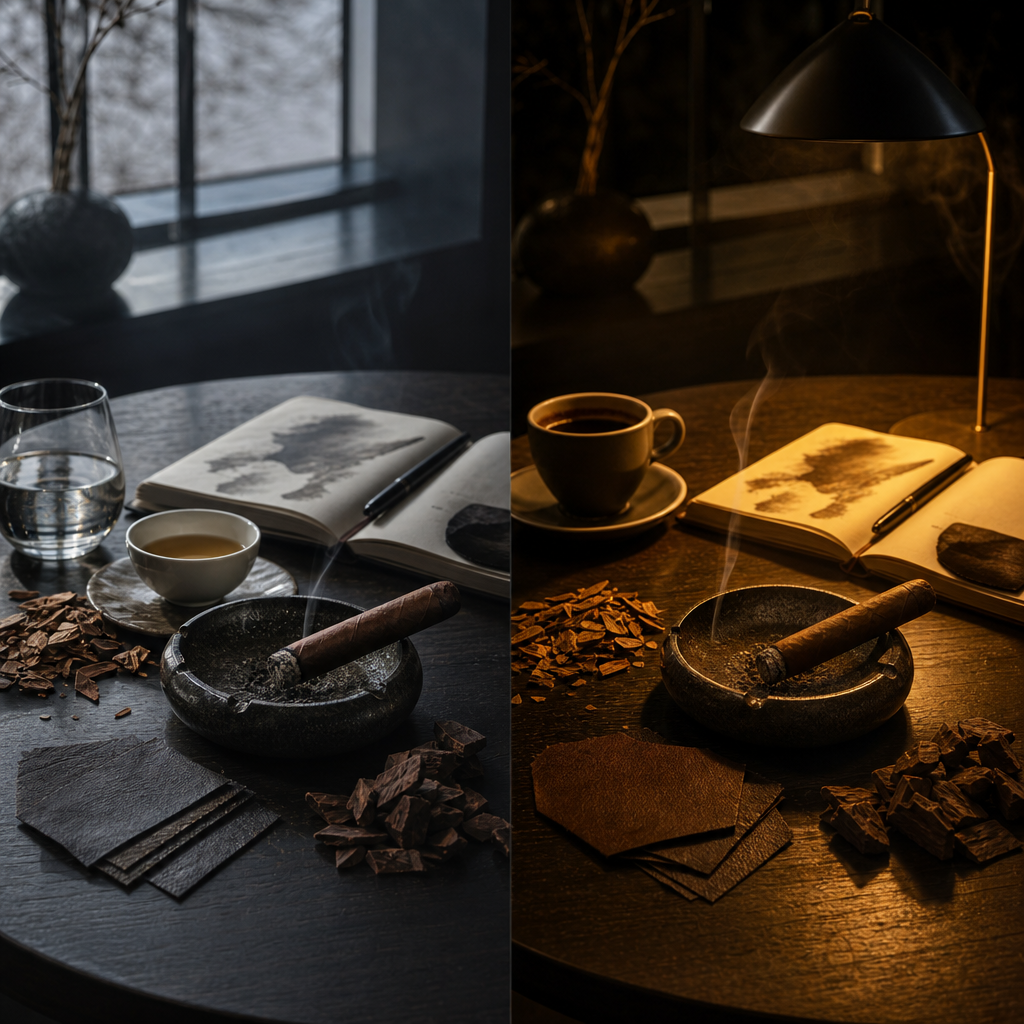
Many people buy a beautiful notebook and stop after writing two pages. The reason is usually that the records are too complicated, like writing exam answers. In fact, effective cigar notes don't need to be long essays; the key is a fixed format. In 2018, I organized a batch of community notes and found that those who persisted for more than 30 cigars usually recorded only 6 to 8 fields per cigar and completed them within 10 minutes after smoking.
Taste memory is not innately sharp but is slowly built through repeated comparisons. The difference between Cohiba Robustos and Ramon Allones Specially Selected, both Robusto sizes, is not just in brand reputation; the former often has grassy, creamy, and honey notes, while the latter leans towards dried fruit, nuts, and dark sweetness. If you only note "very good," you won't remember what was good about it six months later.
For beginners advancing, I recommend using simple fields:
- Date, brand, type, year, or box code information
- Storage humidity and resting time after removal
- Two flavor words for each of the front, middle, and tail
- Burn, draw resistance, ash color, and correction times
- Pairing drinks and physical state of the day
- Total score out of 10 and willingness to choose again
Looking back after three months, you'll see your preference curve. For example, you might think you love strong flavors, but your notes actually show more stable scores for Trinidad Reyes and H. Upmann Magnum 46. At this point, taste begins to shift from impression to evidence-based self-understanding.
Technical Details Determine the Upper Limit: Cutting, Lighting, Rhythm, and Temperature
Beginners often blame the cigar itself for problems, while intermediates first check their own operations. Cutting too deep can cause the cap to crack; cutting too shallow can make the draw too tight. For a 52-ring gauge Pirámides, cutting just 1mm more at the pointed end can completely change the airflow sensation. There is no absolute superiority between straight cut, V cut, and punch; the key is to stabilize airflow rather than pursue visual effects.
True advancement is not about using expensive tools but about consistently reproducing the intended state of a cigar. If you only burn the center when lighting, the outer ring may not be fully heated, leading to uneven burning later; if over-roasted, the first puff will taste burnt and bitter. My habit is to toast the foot's outer ring for 20 to 30 seconds, then lightly puff to confirm the entire circle is glowing, and slow down the pace for the first 5 minutes to avoid raising the temperature.
Rhythm is a watershed of taste. Many Robustos last about 45 to 70 minutes, while Double Coronas can reach 90 to 120 minutes; if you finish a Lusitania in 50 minutes, it's no wonder the tail is bitter. A puff every 45 to 75 seconds is a range most people can control well, but it still depends on size and humidity. When you can adjust bitterness, temperature, and smoke volume with rhythm, you truly begin to master control.
Building a Comparison Framework with Brands, Sizes, and Regions
Relying solely on individual experiences makes it difficult to build a taste map. Intermediates will view brands, sizes, regions, and years together rather than in isolation. Cohiba, Montecristo, Partagás, H. Upmann, and Romeo y Julieta each have typical expressions; Nicaraguan, Dominican, and Honduran cigars present different routes in soil, fermentation, and blending logic.
A comparison framework can help you avoid detours, knowing whether you like brand personality, size ratio, or a specific batch state. For example, Montecristo No.2's Pirámides and No.4's Marevas are not just scaled up or down; ring gauge, burn rate, and filler ratio all affect sweetness and concentration. This is why a mature enthusiast won't conclude with "a certain brand is strong."
| Comparison Aspect | Common Beginner View | Advanced Observation Method | Example |
|---|---|---|---|
| Brand | The bigger the reputation, the better | See if the style matches | Cohiba is delicate, Partagás is spicy and robust |
| Size | The thicker, the better | Look at ring gauge and length ratio | Robusto 50×124mm, Churchill about 47×178mm |
| Year | Older is always better | Look at storage and aging state | A poorly stored 2016 box may not surpass a well-stored 2022 |
| Region | Cuban is the best | Look at blending and personal taste | Padron 1964 and Davidoff Aniversario are different aesthetics |
After establishing a framework, choices become more precise. You'll know that for a refreshing morning, the Hoyo series is a consideration; for post-dinner richness, Bolivar or Partagás has more presence; for exploring non-Cuban blends, Arturo Fuente Don Carlos, Padron 1926, and Davidoff Grand Cru are comparable cases.
Aging and Storage: From "Storing for a Long Time" to "Storing Correctly"
Many people only look at the box label year when discussing aging, ignoring the storage history. Cigar aging is not about throwing it in a cabinet and expecting it to naturally improve; it's the combined effect of temperature, humidity, ventilation, and original state. A typical home cigar cabinet can maintain a relative humidity of 65% to 69% and a temperature of about 18°C to 21°C; if the environment consistently exceeds 72%, flavors tend to be dull, and burning may be inconsistent.
The core of aging is not the length of time but allowing the irritants, sweetness, and aroma in the tobacco leaves to integrate at a stable pace. The Cohiba Behike series, launched in 2010, is often discussed for collection due to its production, positioning, and market attention; however, if the source is unclear and storage is inconsistent, even if the appearance is intact, it cannot be judged solely by age. Collection appreciation does not guarantee value increase; it still depends on source storage and market.
I've seen a box of 2014 H. Upmann Magnum 50 stored at about 66% humidity for a long time, with wood, cream, and floral notes very harmonious by 2021; I've also seen the same brand from 2012 with a musty smell and damp foot due to high temperature and humidity, completely unbalanced flavor. Advanced enthusiasts will inquire about box codes, storage conditions, and transportation status, allowing cigars to stabilize in their own cabinets for at least 2 to 4 weeks before evaluation.
Etiquette and Occasion: Connoisseurs Know How to Make Others Comfortable
Cigars are personal enjoyment and often appear in social settings. Beginners tend to focus on display: large ring gauges, limited edition boxes, expensive lighters; mature individuals care more about respecting space, companions, and rhythm. Since 2000, many cities have stricter regulations on indoor smoking; understanding regulations and venue rules is basic etiquette, not a constraint.
The core of cigar etiquette is ensuring your enjoyment doesn't become a burden to others. Before cutting a cigar, ensure the tool is clean, don't hold someone else's cigar for too long, and don't criticize others' choices; ash doesn't need to be flicked frequently, maintaining about 2 to 3 cm of natural ash fall can stabilize the burn. If a cigar goes out, clear the ash first, lightly blow, and relight the outer ring to avoid a burnt taste.
Occasion also affects choice. For a 45-minute post-business dinner, a Robusto is more suitable than a Churchill; for afternoon reading, the rhythm of a Corona Gorda is often more delicate than larger sizes; for important gatherings, sharing a stable, recognizable cigar is more considerate than presenting a rare one. Connoisseurs don't always choose the most expensive but know how to make cigars part of the atmosphere on the right occasion.
Advanced Needs: From Seeking More to Seeking Precision
In the middle of the cigar journey, many people fall into the anxiety of "what am I missing": lacking limited editions, old boxes, or high-scoring cigars. In fact, what is most worth pursuing after advancing is precision, not quantity. You can set a learning plan of 60 to 120 cigars a year, which is more rewarding than aimlessly filling a cabinet.
The hallmark of a connoisseur is knowing what they are looking for and what doesn't suit them. For example, someone might like the expansive sweetness of Cohiba Siglo VI but not the earthy richness of Bolivar Belicosos Finos; someone might appreciate the cocoa and coffee of Padron 1964 Maduro but find Davidoff Signature too light. This isn't about level but about the clarity of taste contours.
I suggest using "annual themes" to train depth:
- First Quarter: Compare the same size, such as six Robustos
- Second Quarter: Different sizes of the same brand, like Montecristo No.2, No.4, Edmundo
- Third Quarter: Different brands from the same region, like five Nicaraguans
- Fourth Quarter: Different years or storage conditions of the same type
When you use this method for a year, you'll clearly feel that you're no longer led by labels. You'll judge whether a cigar is young, damp, overheated, or truly not to your taste; you'll also know when to rest because fatigued taste buds can't make fair evaluations. In the end, taste is about the ability to choose and self-restraint.
Frequently Asked Questions
The most important thing in moving from beginner to intermediate is not smoking more but having comparisons and corrections each time. Here are some of the most frequently asked questions, suitable for friends who have just crossed the beginner stage for self-checking.
Do I have to start with Cuban cigars?
Not necessarily. Cuban cigars have a rich history and unique style, but Nicaragua and the Dominican Republic also have very mature blends. When advancing from beginner, it's recommended to compare Cuban and non-Cuban simultaneously to understand whether you like regional characteristics, brand style, or a certain strength and sweetness.
How often should I taste?
If the goal is learning, 1 to 2 cigars per week is sufficient. Too high a frequency can fatigue the taste buds and make notes lose accuracy. Instead of continuous smoking, I recommend a fixed time and environment to reduce variables.
Does a cigar being too spicy mean it's bad?
Not necessarily. Spiciness can come from young tobacco, overheating, unsuitable humidity, or personal constitution. First, slow down the pace to check if the interval between puffs is too short; if still sharp, let it age in a stable environment for a while before rushing to conclusions.
Do I need to buy a lot of tools?
No. Initially, a clean and sharp cutter, stable fire source, reliable hygrometer, and storage space are sufficient. Advanced tools can add convenience but won't replace basic skills.
How do I know I've advanced?
When you can explain why a cigar suits a certain time, drink, and occasion, and point out its strengths and limitations, you've advanced. True maturity is no longer just asking "is it good," but "under what conditions is it best."
I see the evolution of cigar taste not as flaunting rarity or chasing lists but as training the senses into judgment, turning collections into understanding, and treating each lighting as a dialogue with time. The enthusiasm of beginners is precious, and the patience of intermediates is even rarer; may you walk slower, remember more details, and enjoy more deeply.
—Cigar Prince Wilson Tsai
Smoking is harmful to health. Under 20 years old, smoking is prohibited. Quit smoking hotline: 0800-636363. This article is intended for adults over 20 years old as a reference for cigar culture, storage, and regulatory knowledge, not as tobacco advertising, promotion, or purchase advice.