In-Depth Physics of Torcedor Cigar-Rolling Craft: Entubado vs Bunch & Book, the Science of Filler Density, and the Tactile Physics of Draw Resistance
In-Depth Physics of Torcedor Cigar-Rolling Craft: Entubado vs Bunch & Book, the Science of Filler Density, and the Tactile Physics of Draw Resistance
A top-tier cigar is not only a victory of tobacco-leaf quality, but also the result of cigar-rolling physics accumulated through 5-10 years of training by a Torcedor (Spanish for cigar roller). With the same tobacco blend, cigars rolled by Torcedores of different skill levels may differ completely in draw-channel resistance, burn rate, and layered rhythm. This article focuses on the physical foundations of Torcedor cigar rolling, the two major crafts of Entubado and Bunch & Book, filler-density ranges, and the corresponding principles between vitola and density. It does not repeat artisan lineage or historical background (already included in W Cigar Bar Cigar Bible veteran article 13).
Physics note: The fluid-mechanics and materials-mechanics descriptions in this article are qualitative principles. Specific values vary greatly according to tobacco varieties, vitola, and individual differences among Torcedores. They are reasonable representative values, not precise physical formulas.
The Three-Layer Physical Structure of a Cigar
A cigar has a three-layer structure, from inside to outside:
Filler: The core bundle of tobacco leaves, composed of three primings: Volado (lower leaves, good combustion), Seco (middle leaves, provides aroma), and Ligero (upper leaves, provides strength and fullness). The Liga T blend of Cohiba Behike additionally includes Medio Tiempo (the topmost sun-exposed leaves, extremely rare, about 1-2 leaves per plant) as a fourth priming. The uniformity of filler arrangement directly determines whether the burn channel is unobstructed. Any localized clumping or void will cause tunneling or canoeing.
Binder: The intermediate layer between the filler and wrapper, selected from sturdier but flavor-neutral tobacco leaves. Its main function is structural support and combustion buffering. It is the "skeleton" of a cigar's physical stability. Its quality requirements are toughness plus burn consistency, not flavor.
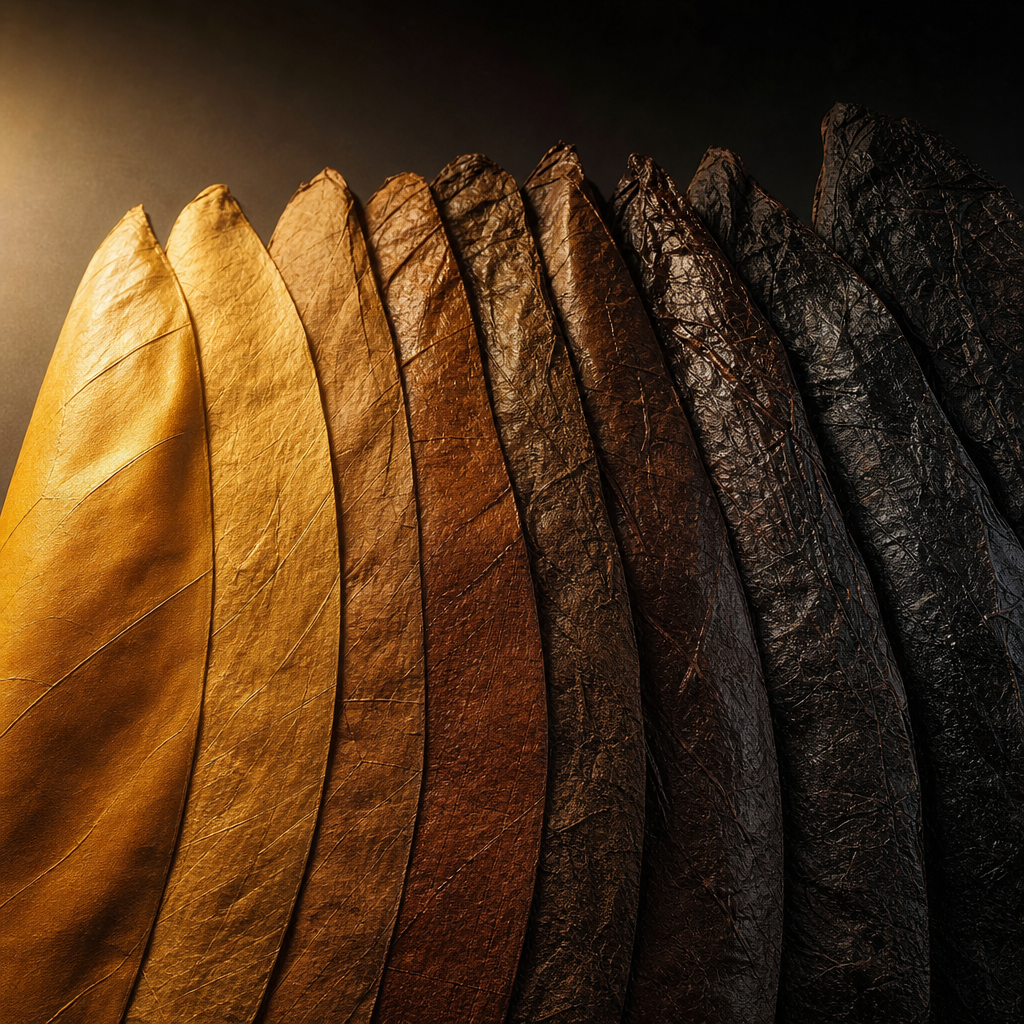
Wrapper: The outermost layer, thin, supple, and visually uniform. Quality requirements are consistent color, fine texture, sufficient elasticity to withstand rolling without cracking, and the formation of even white ash after combustion. Although the wrapper contributes only 5-10% of flavor (most flavor comes from the filler), visual appearance is the first impression and the "face" of cigar grade.
Entubado Rolling Method: The Core Craft of Top-Tier Cigars
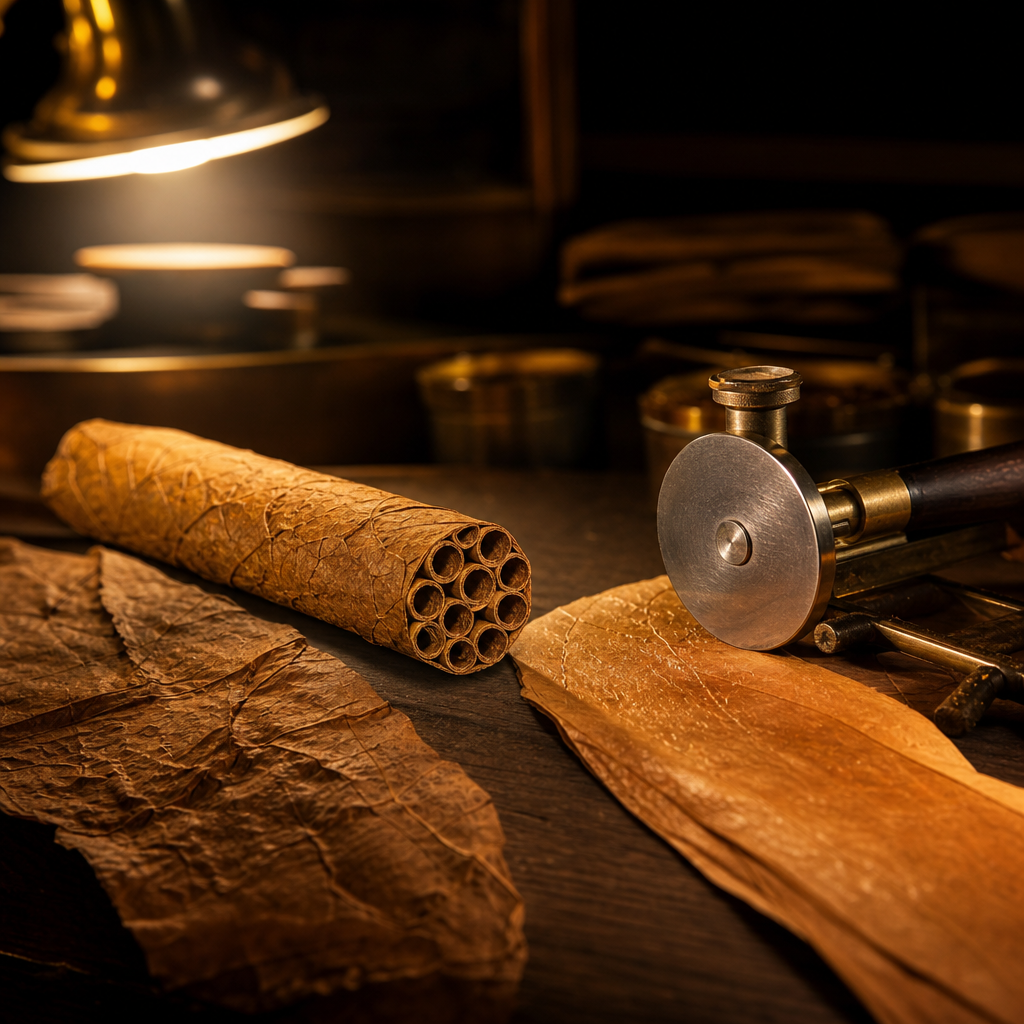
Entubado (Spanish for "tubular") is the core rolling method for top-tier Cuban and Dominican cigars. Each filler leaf is first rolled along its axis into a small tube with a diameter of 2-3 mm, and these tubes are then gathered in parallel to form the filler. It has three physical advantages:
1. Multi-channel airflow: The hollow center of each small tube, plus the gaps between tubes, forms dozens of parallel airflow channels inside the filler. Even if a single channel is blocked by leaf expansion or combustion byproducts, the overall airflow resistance is hardly affected. In fluid mechanics, this is the advantage of parallel ventilation - the influence of any single-channel blockage on total impedance is dispersed.
2. Uniform burn rate: The small tobacco-leaf tubes are evenly distributed, and the burn front advances backward at a synchronized rate, avoiding tunneling and canoeing. In practice, this corresponds to top-tier cigars being able to burn steadily for 60-90 minutes without frequent relighting.
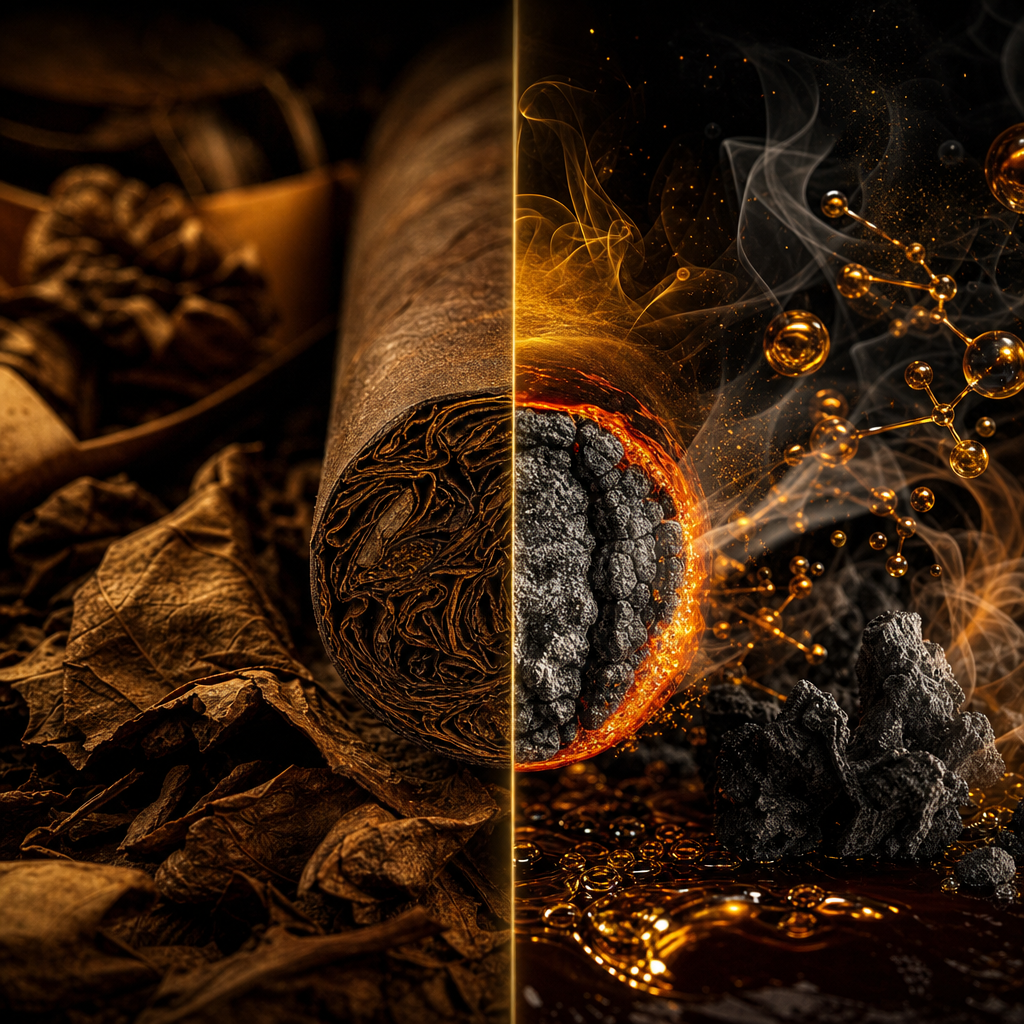
3. Clear flavor-stage layering: The small tobacco-leaf tubes from the three (or four) primings each retain their own chemical molecules. During combustion, ester molecules from each priming are released in sequence, forming the stage layering of top-tier cigars: "first 25 minutes -> middle 25-55 minutes -> final 55-90 minutes."
The cost is slowness: A top-tier Torcedor using Entubado can roll only 60-100 medium-vitola cigars such as Robusto or Corona per day, and requires 5-10 years of training to consistently reach top-tier level. With Bunch & Book, the same Torcedor can roll 100-150 cigars per day.
Bunch & Book Rolling Method: The Mainstream for Mid-Priced non-Cuban Cigars
Bunch & Book ("bunch + book") is the mainstream craft for mid-priced non-Cuban cigars. The filler leaves are laid flat and stacked one by one (like the pages of a book), then rolled together to become the filler.
Physical defect: The airflow channels formed by flat, layered tobacco leaves tend toward an "interlayer" structure - airflow mainly passes through the thin gaps between leaves. Once a leaf expands and blocks the path or burns unevenly, the resistance of the entire section of the channel rises significantly. In fluid mechanics, this is the disadvantage of series ventilation - a blockage at a single node affects the whole system.
Practical consequences: Burn-channel uniformity is poorer than Entubado, the incidence of tunneling/canoeing is higher, and appreciation is more likely to require relighting or abandonment. But costs are significantly lower, making it suitable for the mid-priced market.
Top factories - El Laguito (Cohiba's exclusive Cuban factory), Tabacalera de Garcia (under Altadis in the Dominican Republic, Montecristo/H. Upmann/Romeo Dominican, etc.), and the Padron Esteli factory - all use Entubado. Most mid-priced non-Cuban factories use Bunch & Book or a "Booking" variant between the two. Entubado vs Bunch & Book is the core physical dividing line between top-tier and mid-priced cigars.
The Physical Range of Filler Density
Filler density is the core variable controlled by the Torcedor's tactile sense, and it determines draw resistance. There are three ranges:
Under-packed: Density is too low, draw resistance is too small, tobacco burns too quickly, smoke becomes overheated, the sensation during appreciation becomes overly sharp and spicy, smoke volume becomes too large, and smoke quality declines. A 60-minute vitola may burn out in only 30 minutes.
Over-packed: Density is too high, draw resistance is too great, smoke is difficult to draw, blockage is likely, and the burn front advances unevenly. A draw poker is often needed for rescue, but only limited recovery is possible.
Ideal range: Draw resistance corresponds to a tactile sensation of "resistance but no effort" when drawing. Smoke is stable and even, the burn front advances in a symmetrical circle, ash structure is tight, and an ash length of 2-3 cm can be maintained without falling.
After finishing a cigar, a top-tier Torcedor will test it by pinching with the fingers. The filler of a Cohiba Behike BHK 56 should show the elastic characteristic of "slight indentation but quick rebound." If it is too hard and does not rebound, or too soft and collapses, it will be returned by quality control for rework. This tactile judgment cannot be fully replaced by instruments; it is the foundation of muscle memory developed through 5-10 years of training.
Corresponding Principles Between Vitola and Filler Density
Different vitolas correspond to different ideal densities. There are three corresponding principles:
Principle 1 - The larger the ring gauge, the looser the density should be: Cigars with larger ring gauges (such as Behike BHK 56, ring gauge 56/64 inch) have smoke passing through more tobacco leaves, so resistance is naturally greater. If the density is the same as a small ring gauge, the overall cigar will be too tight. Therefore, large-ring-gauge cigars are relatively looser. This is also why larger ring gauges are actually more difficult to roll - the tolerance is smaller.
Principle 2 - The longer the length, the tighter the density should be: In longer cigars (such as Partagas Lusitanias, length 194 mm, ring gauge 49/64 inch), smoke must pass through a longer burn channel. If density is too loose, the cigar will burn too fast, the appreciation time will be shorter than expected, and later-stage flavors will not have time to unfold.
Principle 3 - Sectional density for Piramide vitolas: Piramide vitolas such as Montecristo No.2, Bolivar Belicosos Finos, and Hoyo Piramides Extra - with the head tapering to 12-14 mm and the foot at 52-54. Physically, the head should be tighter (corresponding to the small-ring-gauge principle), while the foot should be moderate (corresponding to the large-ring-gauge principle). Different sections of the same cigar require different densities; this is the core challenge of Piramide craft. A Torcedor who can consistently roll a good Piramide is among the very few top talents in traditional Cuban workshops.
The Contemporary Meaning of Torcedor Craft for Gentlemen's Club Members
The core Cuban and non-Cuban flagship inventory in the 33 VIP cigar lockers at W Cigar Bar Da'an flagship store (Cohiba Behike, Trinidad, Montecristo No.2, Padron Family Reserve, Fuente OpusX, etc.) all uses Entubado craft. The meaning of understanding cigar-rolling physics lies in:
Entry level - being aware of draw resistance during appreciation: Blind-appreciate Cohiba Robustos versus mid-priced Bunch & Book brands, and feel the difference in draw force and smoke uniformity. This is the most accessible cross-section for appreciating cigar-rolling craft.
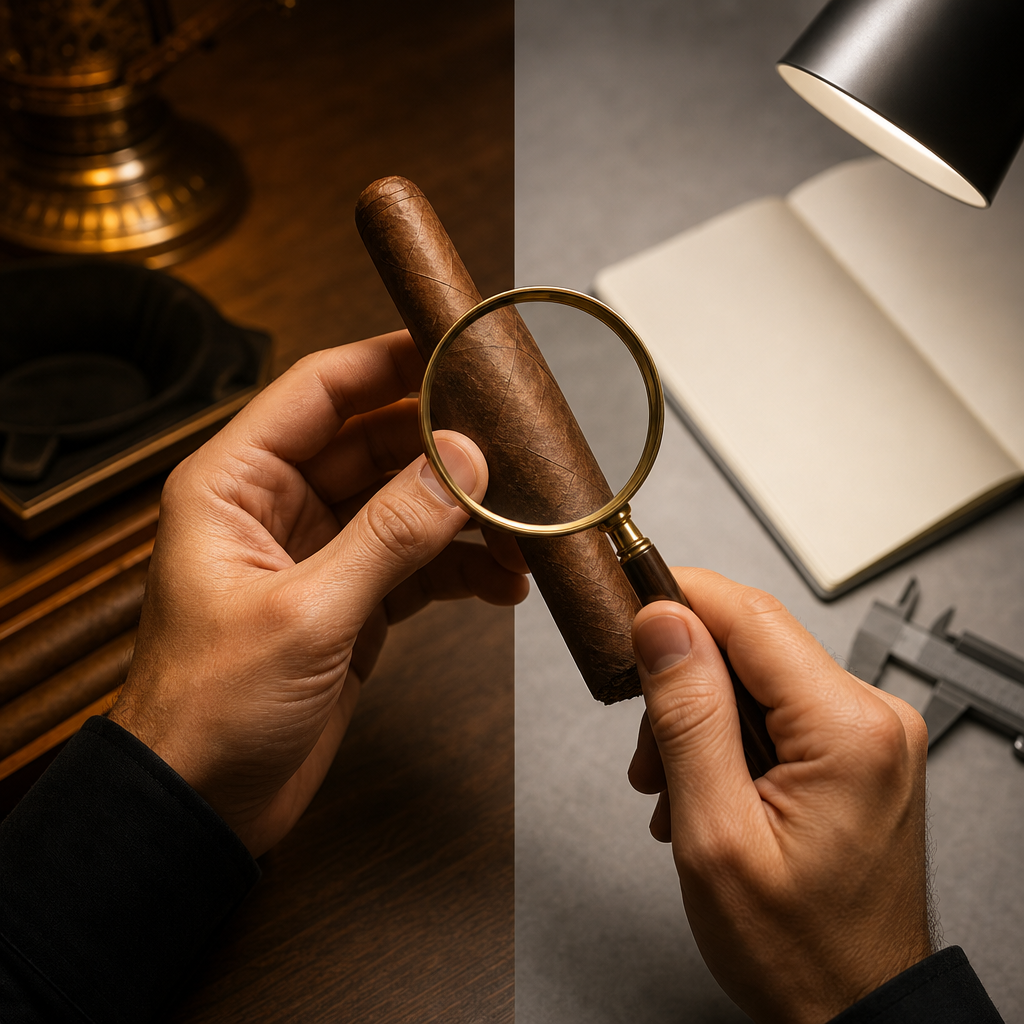
Intermediate level - observing burn-rate uniformity: After lighting, observe for 5-10 minutes whether the burn front advances symmetrically, whether the ash forms an even white-ash disk, and whether there are signs of canoeing. The symmetrical advancement of Entubado is a craft indicator visible to the naked eye.
Deepest level - experiencing sectional density in Piramide vitolas: When appreciating Montecristo No.2, deliberately observe the physical sensory difference between the first 15 minutes at the head (tight, concentrated strength, condensed smoke) and after burning past the largest ring-gauge section (from 28-35 minutes onward, resistance drops and layers unfold). One cigar, two sections of physics - this is the most complete appreciation experience of Torcedor craft.
Torcedor cigar-rolling craft in one sentence: A top-tier cigar is not drawn into existence; it is multi-channel fluid physics rolled into existence by a Torcedor over 5-10 years.
--
Sourcing: Cuban cigars through four official channels (PCC authorized dealers, official Cuban state-run stores, Swiss general distributor, Spanish general distributor).
LUBINSKI accessories official website: https://cigarclub.tw/
Venue information: https://share.google/d9NIeFEetij9qWKj0
This site is for adults aged 20 and above only. Smoking is harmful to health. Smoking cessation hotline: 0800-636363.
W Cigar Bar Gentlemen's Cigar Lounge, written and planned by Cigar Prince Wilson Tsai.