Sake x Cuban Cigar Pairing in Depth: The Eastern Gentleman's Pairing Philosophy of Three Schools, Junmai, Daiginjo, and Taru
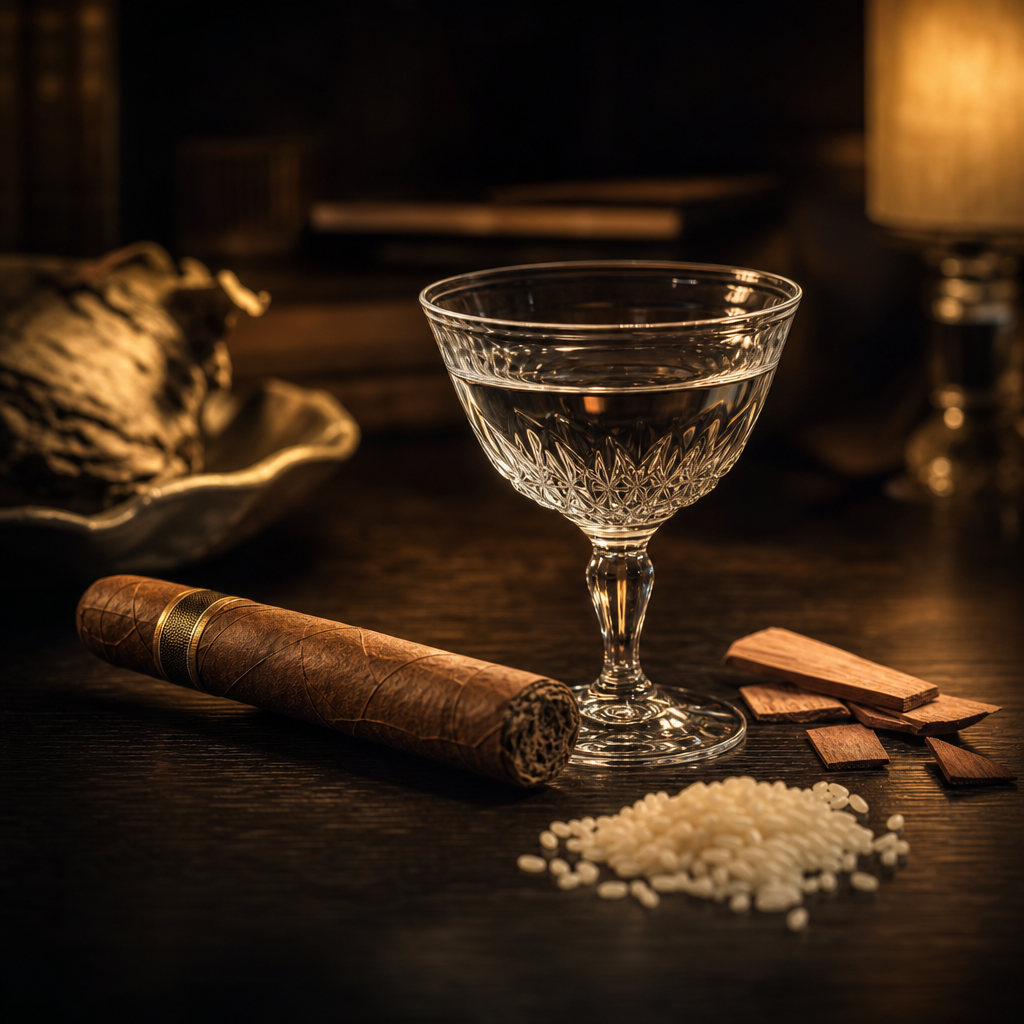
Sake x Cuban Cigar Pairing in Depth: The Eastern Gentleman's Pairing Philosophy of Three Schools, Junmai, Daiginjo, and Taru
When whisky, cognac, and champagne have already been explored repeatedly by the predecessors of the cigar world, sake, as a pairing partner, instead retains a distinctive sense of freshness. At least within Taiwan's gentlemen's club circles, this combination remains a secret known only to a small minority.
Sake is composed of four elements: rice, water, yeast, and koji (Koji). The rice polishing ratio (Seimaibuai) determines its range of styles. From the floral, fruity lightness of highly polished Daiginjo to the earthy weight of Junmai, which is closer to the original grain, the spectrum of sake is actually broader than many people imagine, broad enough to find a conversational partner for Cuban cigars of different strengths.
Understanding Sake: From Rice Polishing Ratio to Style Range
Before entering into pairings, it is necessary to first establish the classification framework of sake:
| Type | Rice polishing ratio | Style characteristics |
|---|---|---|
| Junmai (pure rice) | No fixed requirement (usually below 70%) | Weighty, earthy, rice aroma, pronounced umami |
| Ginjo | Below 60% | Fruity and floral aromas, light and refreshing, delicate |
| Daiginjo | Below 50% | The most refined, sheer floral and fruit aromas, almost no off-flavors |
| Taru | Regardless of polishing level | Aged in cedar casks, woody smoky aroma |
| Kijoshu | Regardless of polishing level | Brewed with sake replacing brewing water, sweet and smooth like dessert |
The lower the rice polishing ratio (the more of the outer layer is polished away), the more thoroughly the outer proteins and fats are removed, and the fewer off-flavors remain. However, it also loses the substantial grain depth of Junmai. This trade-off is precisely the core tension of sake pairing.
Daiginjo x Light Cuban Cigars: A Subtle Dance of Florals, Fruit, and Tobacco
Suggested sake: 獺祭 二割三分, 久保田 萬寿, 醸造元 大吟釀
Suggested cigars: Hoyo de Monterrey Le Hoyo du Roi, Cohiba Coronas Especiales, Trinidad Reyes
Daiginjo's aroma is centered on flowers, pear, cantaloupe, and green apple, with a texture so light it is almost transparent. Paired with the creamy lightness of Hoyo de Monterrey or the elegant herbal character of Cohiba Coronas Especiales, the refinement of both can reflect each other. The toasted combustion notes of the cigar will not cover the floral aroma of the sake, while the sake's cool clarity can cleanse the palate between each draw, making the opening flavors of the next draw more vivid.
Practical suggestion: Keep Daiginjo at 8-12°C, and use a tall, narrow glass (Flute style or sake white wine glass) to maintain a low temperature. If Daiginjo becomes too warm, it will lose its volatile floral and fruit aromas, greatly reducing its pairing effect with cigars.
Junmai x Medium- to Full-Strength Cuban Cigars: An Honest Meeting of Earth with Earth
Suggested sake: 竹鶴 純米, 菊水 旨口本釀, 廣島 賀茂鶴 純米
Suggested cigars: Partagás Serie D No.4, Bolívar Royal Coronas, Montecristo Edmundo
The umami character of Junmai, that savory, weighty quality reminiscent of aged rice, fermented tofu, and cooked fresh mushrooms, has a remarkable affinity with the black pepper, leather, and roasted coffee of Partagás. Neither is overly polished; both are full of earthiness, and both possess layers that make one want to spend more time with them.
In the appreciation experience of W Cigar Bar, Junmai is most suitable for pairing with cigars when served at room temperature (20-22°C). This temperature allows the mellow richness of the rice to fully unfold, forming a two-way amplification with the tobacco sweetness in the middle section of the cigar. The cigar makes the sake seem rounder, while the sake gives the cigar's roasted bean character more layers.
Taru x Any Cuban Cigar: The Hidden Resonance of Cedar
Suggested sake: 菊正宗 樽酒, 剣菱 特別版
Suggested cigars: Any Cuban cigar aged for more than 2 years in a cedar humidor
This is the most underestimated combination.
Taru sake is aged in cedar casks, carrying an aroma of dry cedar wood. The humidor used for Cuban cigars also happens to be made primarily of Spanish cedar (Cedrela odorata). When you smoke a Montecristo No.2 aged for three years in a cedar humidor, then take a small sip of Taru sake, that sense of cedar connection is very real: the cedar aroma in the cigar and the cedar wood aroma in the sake merge in the mouth, creating a completeness that feels as though "this is how it should be."
This is a cross-cultural coincidence of flavor, and also one of the pairing experiments W Cigar Bar most often suggests to experienced enthusiasts. It is worth mentioning that Cuban cigar boxes themselves are also made with Spanish cedar. The woody aroma at the moment the box is opened and the woody character of Taru sake already form an echo in both sight and smell.
Kijoshu x Light Cigars: A Dessert-Like Eastern Full Stop
Suggested sake: 月桂冠 貴醸酒, 梅乃宿 貴醸酒
Suggested cigars: Cohiba Siglo II, H. Upmann Connoisseur No.1
Kijoshu is a special type made by replacing part of the brewing water with sake. It is extremely sweet, with ripe, sweet fruit aromas such as raisin, honey, and ripe apricot, approaching the palate of a dessert wine. Enjoyed chilled (below 10°C), and paired with the lighter-bodied Cohiba Siglo II or the gentle H. Upmann Connoisseur No.1, the sweet and smooth sake becomes a sweet frame for the cigar's light floral and herbal aromas. This combination is especially suited to the transitional moment after a meal, as one enters cigar time.
Practical Sake Pairing: Four Principles for Gentlemen
- Match the strength: Pair light sake with light cigars and weighty sake with powerful cigars. Do not let one side overwhelm the other
- Temperature management: Daiginjo chilled (8-12°C), Junmai at room temperature or slightly warm (20-40°C), Taru at room temperature (18-22°C)
- Choice of vessel: When pairing, an aroma glass (sake Wine Glass) captures volatile aromas better than a traditional Ochoko
- Rhythm and spacing: Sake has a palate-cleansing character. Take a small sip after every 2-3 draws of the cigar, allowing the rhythm to form naturally
Conclusion: A Gentlemen's Meeting Between the East and the Caribbean
Sake and Cuban cigars are 13,000 kilometers apart geographically, but in the language of taste within gentlemen's clubs, distance has never been a problem. The polishing philosophy of rice and the aging of tobacco Ligero are both pursuing the same thing: removing the unnecessary and preserving the essence, allowing the purest flavors to speak.
At W Cigar Bar, we encourage members to step outside the familiar framework of whisky pairings and try the Eastern perspective brought by sake. When the pear aroma of a glass of 獺祭 二割三分 meets the creamy lightness of Hoyo de Monterrey, or when the cedar aroma of a glass of Taru meets the leathery strength of Bolívar, that moment is a private whisper belonging to this generation of gentlemen's clubs.
Procurement sources: Cuban cigars from four major authorized channels (PCC authorized dealers, official state-owned stores in Cuba, Swiss general distributor, Spanish general distributor).
LUBINSKI accessories official website: https://cigarclub.tw/
Appreciation reservation: https://share.google/d9NIeFEetij9qWKj0
This website is for adults aged 20 and above only. Smoking is harmful to health. Smoking cessation hotline: 0800-636363.
W Cigar Bar Gentlemen's Cigar Lounge, written and planned by Cigar Prince Wilson Tsai.