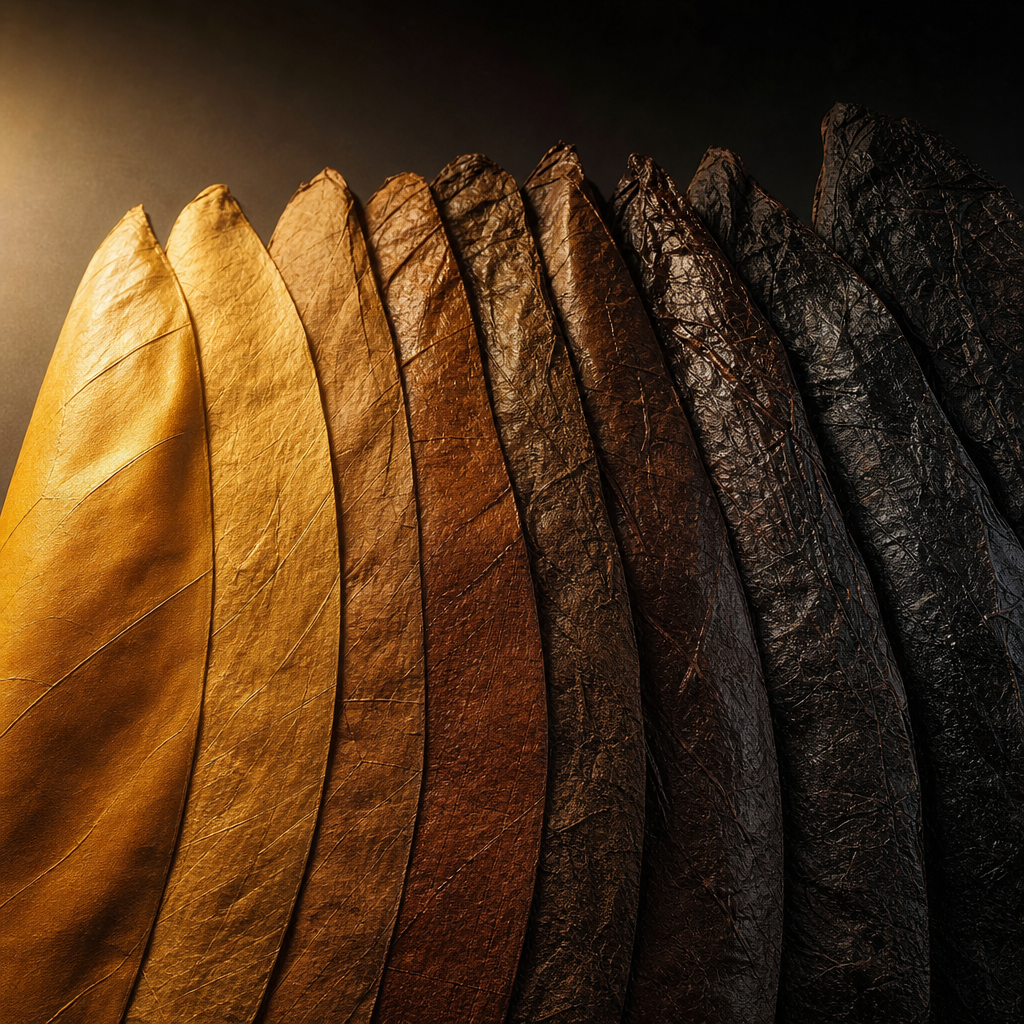
Plume White Bloom Molecular-Chemical Deep Dive: Physics of Ester Crystallization, Microscopic Identification of Fungal Hyphae and Mold, and the Industry's Still-Unsettled Scientific Controversy
Plume White Bloom Molecular-Chemical Deep Dive: Physics of Ester Crystallization, Microscopic Identification of Fungal Hyphae and Mold, and the Industry's Still-Unsettled Scientific Controversy
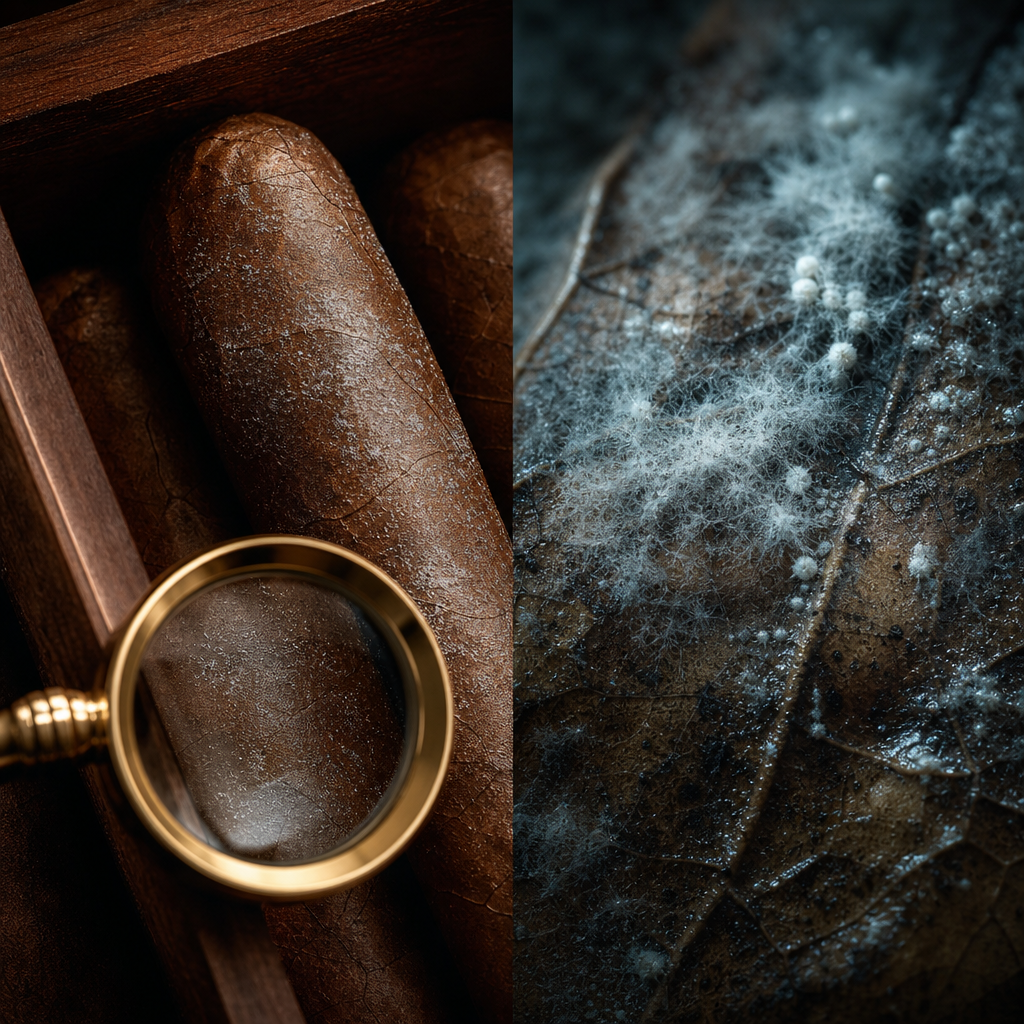
After long-term aging, two kinds of white substances may appear on the surface of the tobacco leaves of premium cigars. One is traditionally called Plume (white bloom, bloom) in the industry, and is regarded as a "valuable medal of deep aging"; the other is fungal hyphae and mold (mold), an alarm signal that the storage environment has gone out of control. Visually, they can be extremely similar; in serious cases, a microscope may even be required to distinguish them.
But this article must first put one fact on the table: the claim that Plume is "ester crystals" is not a settled scientific conclusion. Traditional industry voices such as Cigar Aficionado and JR Cigars have long argued that tobacco leaf oils/esters precipitate to the surface and crystallize during aging. After the 2010s, however, the Friends of Habanos (FOH) forum invited mycologists to test samples, and their conclusion was that "all submitted samples were some type of mold." FOH once publicly offered a USD 250 / AUD 350 reward for a cigar that could be laboratory-confirmed as crystalline material (non-fungal), and the reward has still not been awarded. W Cigar Bible faces this controversy honestly and does not endorse either side; instead, it lays out the evidence from both camps, practical identification methods, and the handling principles for gentlemen's club members.
This article does not repeat practical naked-eye identification (already included in W Cigar Bar W Cigar Bible starter article 13, plume-vs-mold-identification). It focuses on the physical-chemical arguments and microscopic identification methods of the two camps.
The Crystallization Theory (Traditional Industry Camp): Physical-Chemical Arguments
The core claim of the crystallization theory is: during deep aging of more than 5 years, esters, waxes, and sugars in tobacco leaves reach saturation, slowly migrate from the interior of the leaf to the surface, and precipitate into tiny crystals in a stable low-temperature environment. There are three arguments:
Argument 1 - the chemical substrate truly exists: A small amount of natural wax (cuticular wax, a mixture of cutin and long-chain alkanes) does indeed naturally exist on the tobacco leaf surface. In addition, volatile and semi-volatile molecules such as acetates, benzoates, and phenethyl esters are formed after fermentation. In theory, solid-state diffusion can allow some molecules to migrate to the surface on a 5-10 year timescale. This part is known tobacco chemistry.
Argument 2 - the physical conditions correspond: The crystallization theory predicts that Plume requires three conditions: long-term aging (usually more than 5 years), stable low temperature (16-18°C, exceeding the solubility limit of esters inside the tobacco leaf), and slight fluctuations in relative humidity (65-72%, driving trace evaporation of surface moisture and carrying solutes outward). In practice, Plume-like deposits do indeed most often appear within this storage-condition range.
Argument 3 - differences in visual characteristics: The crystallization theory describes Plume under 50-100x magnification as having a "uniform granular powder" appearance (single crystals at the 1-10 μm scale), different from the obvious "filamentous branching" structure of fungal hyphae. The reproducibility of the visual characteristics is the strongest observational evidence for the crystallization theory.
The Mold Theory (FOH Mycology Camp): Microbiological Arguments
The core claim of the mold theory is: the vast majority (or even all) of the white deposits regarded as Plume are actually extremely mild non-pathogenic surface mold, or the visual manifestation of early-stage mycelial growth. There are three arguments:
Argument 1 - microscopy/culture test results: The mycologists invited by FOH cultured fungi in multiple sample tests. Common findings included spores from Aspergillus (green/gray-white), Penicillium (blue-green), Cladosporium (dark green to black), and some rare non-pathogenic fungi. Not a single submitted report returned the conclusion "pure crystalline material, no biological source."
Argument 2 - hyphal distribution and conditions: Mold typically concentrates at moisture-accumulation points (leaf vein intersections, depressions on the tobacco leaf surface, cigar heads) and appears as spots. However, extremely mild and very early-stage mycelium can be very uniform, visually close to "powdery," and easily mistaken for crystals.
Argument 3 - the crystallization theory lacks third-party verification: To date, no peer-reviewed chemical analysis report (GC-MS, XRD, SEM-EDS) has confirmed the molecular-level claim that "Plume = ester crystals." Traditionalists such as Cigar Aficionado mostly cite the tobacco-chemistry inference that "the molecules do indeed exist," rather than direct evidence that "the white deposits are indeed these molecules."
A Middle Position Between the Two Camps
In practice, what gentlemen's club members need is not an academic final verdict, but an operable set of judgment criteria. A middle position can be stated as follows:
- A small amount of natural waxes and esters will migrate on the tobacco leaf surface. This chemistry is real, but there is currently no public conclusion on whether it appears as visible white crystals.
- Most white deposits seen in practice that are "uniform, easily brushed off, without musty odor, and with aged tobacco aroma," regardless of their actual nature, do not affect the smoking experience. Years of practical experience have not reported cases of illness after smoking cigars with traditional Plume.
- Most deposits seen in practice that are "spotty, lightly adherent and difficult to brush off, with mold/earth/basement odor," whether Aspergillus, Penicillium, or Cladosporium, should be handled as mold: isolate, evaluate, and abandon if necessary.
- The real identification clues are not "whether it is white," but distribution pattern (uniform vs. spotty), adhesion (easily brushed off vs. adherent), and odor (aged tobacco aroma vs. musty odor).
Three Microscopic Identification Methods
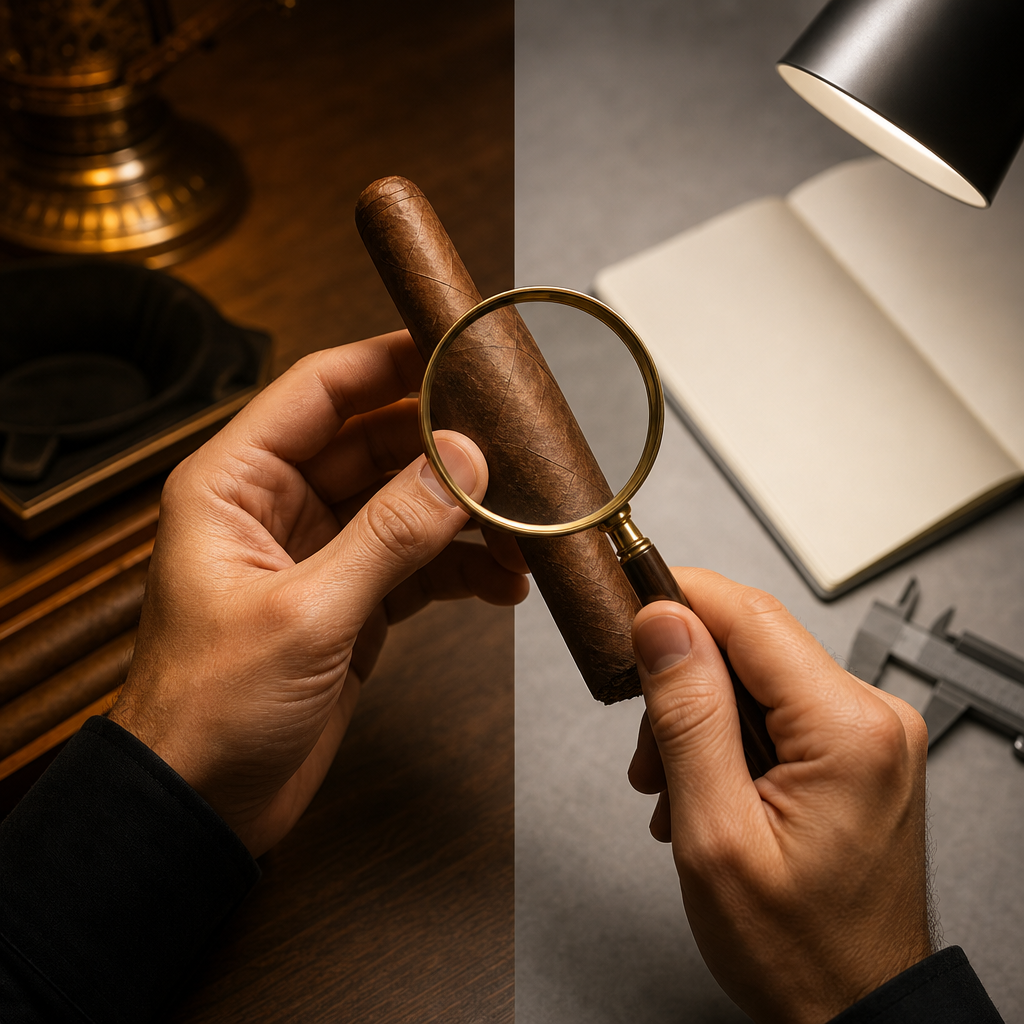
Method 1 - 50-100x jeweler's loupe: Plume-like deposits appear as uniform granules/powder under 50-100x magnification; hyphae show filamentous branching structures (a single hypha is 5-10 μm in diameter and can reach several hundred μm in length, visually "fuzzy"). This is the basic daily identification equipment for collectors; top cigar collectors will have a jeweler's loupe.
Method 2 - tactile test: Plume-like deposits feel like fine powder and fall away with a light touch; hyphae adhere slightly, are not easily brushed away, and often leave subtle stains or traces after brushing.
Method 3 - odor test: Plume-like deposits still maintain the rounded aroma of aged tobacco; hyphal contamination has an obvious moldy, earthy, damp-basement odor. This is the final line of identification, the gentlemen's club member's "nose test."
If any one of the three methods leans toward mold characteristics, even if the visual appearance resembles Plume, it should be handled as hyphae. Suspicious samples should not be risked.
The Contemporary Meaning of Plume on Premium Cigars
Regardless of whether one accepts the crystallization theory or the mold theory, the observational fact of white deposits on top aged cigars is solid: Pre-Revolution / Pre-Embargo antique cigars and long-term stably stored batches (60-80 years) often show a uniform fine powdery distribution; the Cuban Davidoff 1968-1989 series commonly shows this after 30-50 years of aging; early batches of Cohiba Behike BHK 56 (2010-2012) have aged 14-16 years by 2026, and some batches have begun to show trace distribution.
The practical consensus in collecting circles is: uniform, easily brushed, tobacco-aromatic white distribution does indeed accompany deep aging and is itself a visual indicator of "sufficient age and sufficiently stable storage." This observational conclusion is not affected by the controversy between the crystallization theory and the mold theory. At international auction houses (Bonhams, Christie's cigar auctions), when Pre-Embargo batches show uniform Plume-like distribution, 30-50% price-difference premiums are indeed often seen (industry estimates, with very large differences among auction houses). This is an observational fact already internalized by the market.
Three Emergency Handling Steps for Fungal Hyphae and Mold
Once hyphal contamination is confirmed as spotty, adherent, and musty-smelling, the full three-step process must be followed:
Step 1 - immediate isolation: Immediately remove the contaminated cigar from the shared humidor to prevent spores from spreading to other cigars.
Step 2 - environmental inspection: Check whether the humidor temperature and humidity are out of control (recommended 18°C / 70%, with the smaller the fluctuation range the better). Check whether the Spanish cedar lining is damp or seeping water, whether the humidifier is leaking, and whether there are condensation points.
Step 3 - professional evaluation: Mild contamination (only localized, with a small amount at leaf vein intersections) may be recoverable after dry isolation; moderate to severe contamination (large area, penetrating into the leaf) is usually recommended for abandonment. Do not risk the entire collection because of reluctance to give up one cigar.
The environmental control of the 33 VIP cigar lockers at W Cigar Bar Da'an main store (maintained by dedicated personnel 24 hours a day) is the core protection mechanism for gentlemen's club members. Wilson Tsai provides personal professional evaluation services, helping members avoid facing handling judgments alone.
Advanced Understanding Path for Gentlemen's Club Members
Beginner level - naked-eye identification training: observe the uniform fine powdery distribution on deeply aged collections such as Pre-Embargo H. Upmann Sir Winston 1959-1962; compare it with the spotty hyphae of accidentally contaminated samples. Develop the first intuitive judgment.
Intermediate level - 50-100x loupe microscopic identification: use a jeweler's loupe to observe distribution patterns (granular powder vs. filamentous branching) and learn to distinguish based on visual characteristics.
Deepest level - ultimate odor and tactile identification: treat the nose and fingertips as the final gate. Plume-like material falls away with a light brush and carries aged tobacco aroma; hyphae adhere slightly and carry moldy/earthy odor. This is the final criterion when the loupe cannot decide.
Remain scientifically open: the arguments of both camps have their evidentiary basis. The chemical arguments of the crystallization theory are real, and the mycological tests of the mold theory are also real. The truly gentlemanly attitude is to know where the controversy lies, use the three practical tests to protect one's collection, and not be carried away by absolutist claims from either side.
One industry sentence on Plume: the white deposits on premium cigars, whatever their nature, are physical traces jointly left by time and stable storage. The responsibility for judgment lies in your eyes, your nose, and your fingertips.
--
Stocking sources: Cuban cigars from four major official channels (PCC authorized dealers, official Cuban state-run stores, Swiss general distributor, Spanish general distributor).
LUBINSKI accessories official website: https://cigarclub.tw/
Venue information: https://share.google/d9NIeFEetij9qWKj0
This site is only for adults aged 20 and above. Smoking is harmful to health. Smoking cessation hotline: 0800-636363.
W Cigar Bar Gentlemen's Cigar Lounge, written and planned by Cigar Prince Wilson Tsai.