The Origin of Cigar Names and Brand Stories
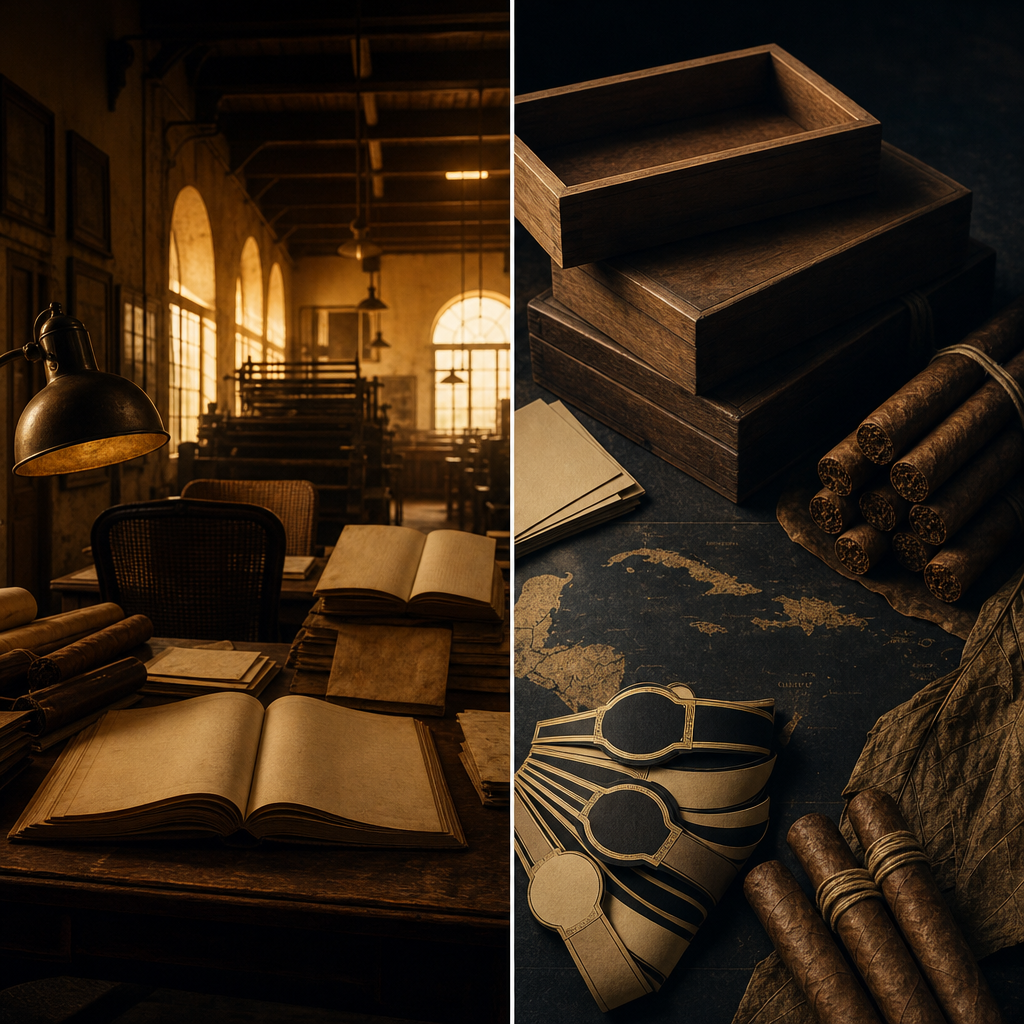
Cigar names are never just text on a box. Experienced enthusiasts look at brands not only for flavor profiles, ring gauges, and vintages but also to read a narrative repeatedly calibrated by time: family, colonial history, literature, production regions, political symbols, and how the market turns these stories into recognizable cultural assets.
I often say that true advanced cigar knowledge is not about memorizing a few popular models but understanding "why it is called this name." If you delve deeply into the origin of a name, you can often deduce the brand's positioning, core clientele, and even see how an era imagines luxury, power, and taste.
A Name is Not Decoration: It is the First Layer of Brand Flavor
Many seasoned enthusiasts judge a cigar by its size, vintage, origin, and factory code, but if you take a step further, the name itself is the first clue. When Cuban brands emerged in large numbers in the 19th century, trademarks often combined European literature, noble imagery, estate names, and the founder's surname. By the latter half of the 20th century, brands added revolutionary narratives, limited vintages, and family commemorations, transforming cigars from consumables into cultural symbols.
The power of a name lies in its ability to place a cigar into a memorable story. For example, Montecristo evokes the reader and "The Count of Monte Cristo," Romeo y Julieta connects to a tragic love story, and Cohiba ties indigenous language, national protocol, and a high-end image together. These names are not accidental but the result of a brand's long-term accumulation of recognition.
Advanced players study names by looking at least three layers: the first is etymology, the second is the founding era and figures, and the third is how the market later repackaged it. In collection discussions, storytelling does affect attention; however, collection appreciation does not guarantee value increase, as it still depends on source preservation and market. If you only look at the popularity of names and ignore the preservation state and circulation context, you can easily mistake the narrative for value itself.
Cohiba: From Taino Language to a National Symbol
The name Cohiba comes from the Taino language of the Caribbean indigenous people and is said to be related to rolled tobacco leaves. The brand was officially established in 1966 and was not initially a commercial brand but used for diplomatic and national protocol occasions; it only debuted on the international market in 1982. This path of "having an internal symbol first, then entering the market" made Cohiba not just an ordinary trademark from the start but a synonym for power and scarcity.
In the 1960s, Cohiba established its image with slender sizes like Lanceros, closely linked to the images of high-level figures at the time. In 1992, the Línea 1492 was launched, including Siglo I to Siglo V, commemorating the 500th anniversary of Columbus's arrival in the Americas; after 2002, Siglo VI became an important member of the series. By 2010, Behike BHK 52, 54, and 56 were officially launched, further pushing the brand towards ultra-high-end narratives.
Cohiba's naming strategy compresses etymology, political protocol, and anniversary commemorations into a highly identifiable symbol. It does not rely on romantic literature or family surnames but builds a market image with a sense of being "chosen." Experienced enthusiasts read Cohiba not only for flavor but also for how it combines scarcity, ritual, and national image, forming a cultural aura that other brands find difficult to replicate.
Montecristo and Romeo y Julieta: How Literature Becomes Cigar Memory
Montecristo was founded in 1935 and is often traced back to Alonso Menéndez acquiring the brand and developing its market image. Its name comes from Alexandre Dumas's novel "The Count of Monte Cristo," closely linked to the tradition of readers in Cuban cigar factories. From the late 19th to early 20th century, readers read newspapers and novels to the rolling workers in factories, thus integrating literary plots into the production scene and brand naming.
Romeo y Julieta was founded in 1875, and its name derives from Shakespeare's tragic love story. The brand expanded in the early 20th century under José “Pepín” Rodríguez Fernández, reportedly accumulating a large number of personalized cigar bands for different customers. Winston Churchill's fondness for the brand also closely linked the Julieta No.2 size with the "Churchill" name, with a classic proportion of about 47 ring gauge and 178 mm length.
The success of literary names lies in making cigars not just products but like a piece of narratable civilization memory. Montecristo conveys revenge, fate, and adventure; Romeo y Julieta carries love, tragedy, and English social imagination. These two brands prove that if a name can transcend language and generations, it can make the market image last longer than a single flavor.
Partagás, Hoyo de Monterrey, H. Upmann: Authority of Names and Land
Partagás was founded in 1845 by Jaime Partagás in Havana. The brand is named after the founder's surname, carrying the authority of a 19th-century commercial family. Partagás's story is also often linked to the tradition of factory readers because large factories were not just production sites but spaces for information, politics, and cultural dissemination. When a brand puts a surname on the box, it turns the founder's credit into a product guarantee.
Hoyo de Monterrey was founded in 1865 by José Gener, with the name pointing to the Monterrey estate in the Vuelta Abajo region. "Hoyo" can be understood as a low-lying valley, suggesting specific land conditions. H. Upmann was founded in 1844 and is associated with German banker Hermann Upmann; the banking background gave the brand an early impression of financial credit and European trade networks, although the Upmann bank later faced a crisis in the 1920s, the brand continued its name.
The core of names with surnames and estate names is to bind trust to people and land. Partagás emphasizes human skills and factory tradition, Hoyo de Monterrey emphasizes production regions and land plots, and H. Upmann connects finance, travel, and European upper-class consumption. For seasoned enthusiasts, these names remind us that the authority of cigar brands often first comes from identifiable sources.
Padrón, Arturo Fuente, Davidoff: Family Narratives of New World Brands
Brands outside Cuba often establish legitimacy through family stories. Padrón was founded by José Orlando Padrón in 1964 in Miami, USA, later building a reputation with Nicaraguan tobacco. In 1994, the Padrón 1964 Anniversary Series was launched to commemorate the brand's 30th anniversary; the series often features box-pressed shapes, numbering systems, and stable styles, making "1964" not just a year but the core of the brand's self-mythology.
Arturo Fuente's history dates back to 1912, starting in Tampa, Florida, and later establishing an important base in the Dominican Republic. Fuente Fuente OpusX became a market focus around 1995, as its Dominican puro positioning broke many players' existing imaginations about the source of top tobacco. Davidoff was shaped by Zino Davidoff's personal style, becoming famous in the 1960s with the Cuban-era Château series, and re-establishing brand language after turning to the Dominican Republic in the 1990s.
New World brands excel not in imitating Cuba but in writing migration, family, and production breakthroughs into their names. Padrón uses years to commemorate family roots, Fuente uses OpusX to express technical ambition, and Davidoff uses the founder's taste to establish an international image. These names let consumers understand that legitimacy comes not only from geography but also from continuous family investment and quality control.
Series Names, Size Names, and Market Codes: Names Experienced Enthusiasts Should Understand
In the cigar world, besides brand names, there are also series names and vitola names. Robusto, Toro, Churchill, Lancero—these words are not just sizes but market communication codes. Robusto usually has about a 50 ring gauge and around 124 mm, suggesting a full performance in a short time; Lancero commonly has about a 38 ring gauge and around 190 mm, emphasizing the delicate balance of filler and wrapper. Size names affect expectations and can change brand narratives.
| Name Type | Representative Case | Name Source | Market Signal |
|---|---|---|---|
| Literary Name | Montecristo | Novel "The Count of Monte Cristo" | Cultural depth, classic feel |
| Character Name | Partagás, Davidoff | Founder or family name | Trust, heritage |
| Place Name | Hoyo de Monterrey | Estate and land | Source feel, land plot imagination |
| Anniversary Name | Padrón 1964 | Brand commemorative year | Family history, scarcity narrative |
| Power Symbol | Cohiba Behike | Indigenous language and high-end series | Protocol feel, top positioning |
Understanding series names and size names is equivalent to understanding how the brand wants you to perceive it. For example, "Reserva" and "Gran Reserva" often point to the concept of more selected or longer-aged tobacco; "Edición Limitada" links the market to years, rarity, and box markings. Experienced enthusiasts should not only look at the grandeur of names but also inquire about production year, factory, preservation, and version differences, to avoid being led by packaging language.
Frequently Asked Questions
Why do many Cuban brands like to use literary or European names?
In the 19th century, Cuban cigars were largely aimed at the European market, and literary, noble, and Spanish romantic elements were more easily understood by international consumers. These names turn cigars from local products into exportable cultural symbols.
Is the name important for different series of the same brand?
Yes. Series names often reveal the direction the brand wants to emphasize, such as anniversary, selection, aging time, or specific sizes. Experienced enthusiasts should not only look at the brand but also at series positioning and launch years.
Is "Churchill" a brand name or a size name?
In most contexts, it is a size name, often linked to the historical connection with Romeo y Julieta's Julieta No.2. It later became widely used, becoming a market language for long sizes and more formal occasions.
Does a name with a story mean it's more worth collecting?
Not necessarily. Stories enhance recognition, but collection appreciation does not guarantee value increase, as it still depends on source preservation and market. Box condition, humidity records, version authenticity, and circulation transparency are more crucial.
What is the biggest difference in naming between New World brands and Cuban brands?
Cuban brands often rely on historical, geographical, and literary halos; New World brands more often emphasize family migration, anniversary commemoration, and production breakthroughs. Both are establishing legitimacy, just from different narrative sources.
As the editor of "Cigar Bible," I always believe that the advancement of experienced enthusiasts lies not in memorizing brand rankings but in understanding the power, land, family, and market language behind names. The flavor of cigars will age over time, and the meaning of names will be deepened by history layer by layer. The next time you pick up a box of cigars, don't rush to look at the ratings; first ask: why is it called this name?
—Cigar Prince Wilson Tsai
Smoking is harmful to health. Under 20 years old is not allowed to smoke. Quit smoking hotline: 0800-636363. This article is for reference only for adults over 20 years old regarding cigar culture, preservation, and regulations, not a tobacco advertisement, promotion, or purchase suggestion.