The Value Assessment of Cigars: Analysis of Collection and Market Trends
Discussing the value of cigars cannot be limited to the price on the box or simply because "it's said to be rare." What seasoned collectors truly need to grasp is the interplay between brand, vintage, size, preservation, origin, and market liquidity; missing one aspect can easily distort the valuation.
As an editor of the "Cigar Bible," I've seen the same cigar take completely different price trajectories under different storage conditions, batches, and market sentiments. Collecting can be enjoyable and disciplined; however, collection appreciation does not guarantee value increase, as it still depends on origin preservation and the market.
Core of Value Assessment: Not Price, but "Verifiable Scarcity"
The market value of cigars is not primarily about asking "how much it sells for now," but rather "why it stands at this price." Take Cuban brands as an example; even within Cohiba, the valuation logic is entirely different for a regular Siglo VI, the early 2003 released Behike, or the officially launched Behike BHK series in 2010. The former relies on stable demand, while the latter looks at historical milestones and market memory.
The starting point of cigar valuation is breaking down "rarity" into five verifiable items: production volume, vintage, size, condition, and origin. Many people only look at the limited edition label but ignore box codes, seals, tax stamps, release markets, and preservation records. For example, the 2008 Partagás Serie D No.4 is different from the 2008 limited edition; the former is a classic regular, while the latter requires checking for a complete wooden box, outer box stickers, band condition, and wrapper oils.
My evaluation habit is to first establish "three-tier pricing." The first tier is the official or mainstream market retail benchmark of the year, the second tier is the transaction range in the secondary market over the past three to five years, and the third tier is the price of substitute products of the same brand and size. For example, if a certain year's Montecristo No.2 price is abnormally high, one should compare the substitution effect of Partagás Serie P No.2, H. Upmann No.2, and Romeo y Julieta Churchill, rather than looking at the single product in isolation.
How to Quantify Rarity: Limited Editions, Discontinued Sizes, Special Sizes, and Box Condition
Rarity is the easiest to exaggerate and the most in need of digitization. Cuban Edición Limitada has been an important series since 2000, with high market discussion for items like the 2001 Cohiba Pirámides, 2004 Partagás Serie D No.1, and 2010 Montecristo Grand Edmundo, but "limited" does not mean every item has the same appeal. Size, brand popularity, flavor maturity curve, and inventory levels will rearrange value.
True rarity that can enhance collection value is usually "rare and still being sought after." Discontinued sizes are a typical example, such as Punch Super Selection No.1, Diplomáticos No.4, and Ramon Allones 898, which have loyal followers in specific circles; however, if the brand visibility is low and discussion volume is insufficient, even if discontinued for many years, it may not have strong liquidity.
I use the following points to quickly judge whether rarity is solid:
- Whether the box code and vintage are clear and correspond to brand history.
- Whether it is discontinued, regional edition, limited edition, or commemorative edition, rather than regular.
- Whether the size is representative, such as Double Corona, Piramides, Laguito No.1.
- Whether there are recent public transactions or collector exchanges of the same item.
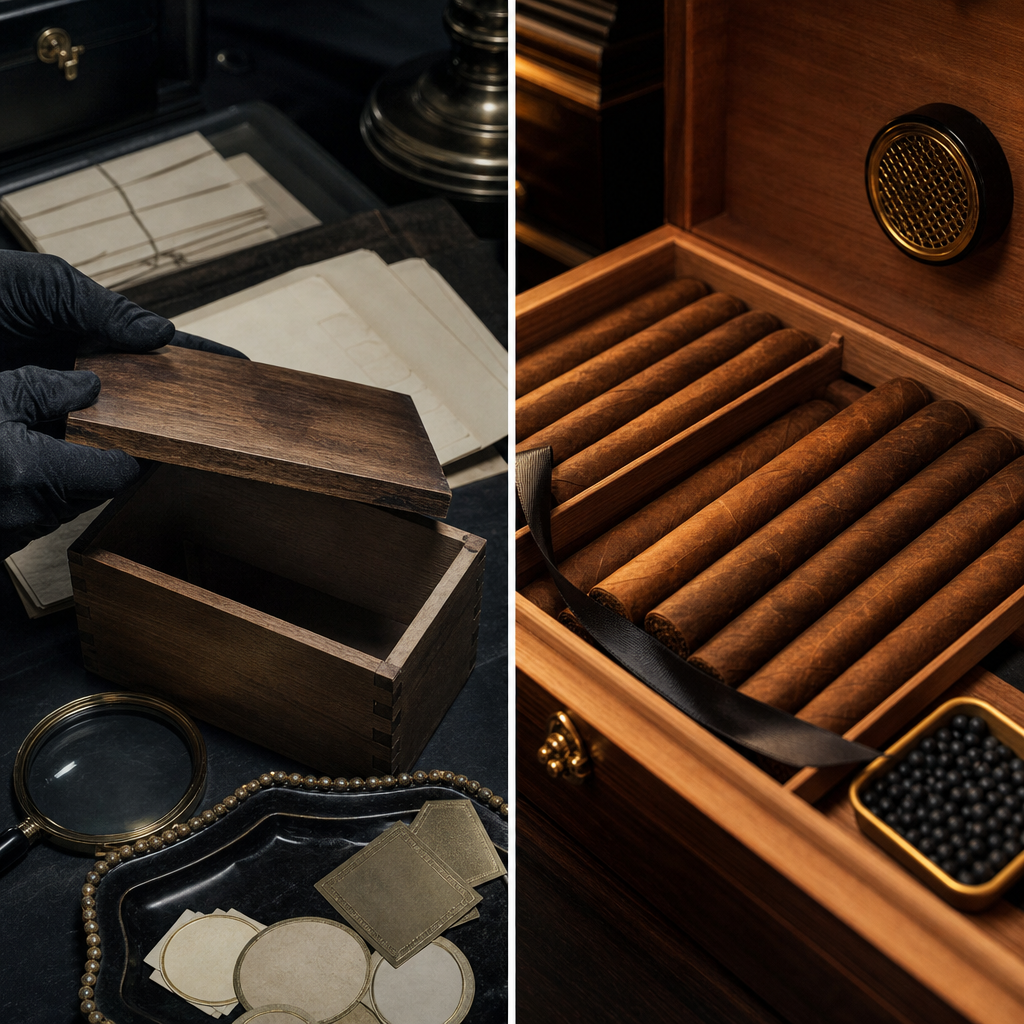
- Whether the outer box, inner lining paper, ribbon, seal, and tax stamp are complete.
For example, the 2007 Hoyo de Monterrey Regalos EL and the 2011 Ramón Allones Extra EL are both popular limited editions, but if a box is stored in a long-term high humidity environment above 70%, with noticeable wrapper swelling and mold spots, even if the reputation is high, the valuation must be significantly discounted. Rarity is just the ticket; preservation is the score after entering.
Brand Influence: Cohiba Premium and the Counterattack of Non-Mainstream Brands
Brand is the factor in cigar valuation most akin to "large-cap stocks" in the financial market. Cohiba has long enjoyed a premium, especially the Behike, Reserva, Maduro 5, and Siglo series, which have high recognition in Asian and European markets. After the launch of BHK 52, 54, and 56 in 2010, due to limited supply and complete brand narrative, they have long become market observation indicators.
Brand premium is not superstition, but the sum of liquidity, recognition, and trust cost. A box of Cohiba 1966 Edición Limitada 2011, even if expensive, is still easier to find collectors who understand its value; however, a regional edition of a niche brand, even if the flavor is excellent, may take longer to resell due to a narrower audience.
However, seasoned collectors cannot only chase big brands. In the past decade, Ramon Allones, La Gloria Cubana, Diplomáticos, and Bolívar have had many highlights in the regional edition market. For example, the 2015 La Gloria Cubana Glorias LCDH, 2016 Bolívar Belicosos Finos Reserva, and some Asia Pacific regional editions have brought previously low-key brands back into discussion. These items often have the characteristic of "low brand base, high single-item topic."
My judgment method is to divide brands into three categories: the first category is high-recognition brands like Cohiba, Montecristo, Partagás; the second category is brands preferred by seasoned collectors like Ramón Allones, Bolívar, H. Upmann; the third category is niche but historically deep brands like Saint Luis Rey, Sancho Panza. Different categories cannot be viewed with the same price-to-earnings ratio, otherwise, it is either overvalued or missing value.
Vintage and Box Code: Why the Same Cigar Can Differ in Two Markets
Vintage is not superstition, but vintage must be viewed together with box code, factory, and preservation status. The Cuban cigar box code system has undergone several changes, and the letter month and factory code after 2000 are important clues for determining batches. Some vintages, due to tobacco supply, production stability, or market reputation, form the so-called "good vintage" impression, but it is not an absolute formula.
The essence of vintage value is the trust generated by time, batch reputation, and preservation results. For example, between 2006 and 2008, some H. Upmann, Partagás, and Bolívar are often mentioned by seasoned collectors for their good maturity performance; however, the same year may also have individual differences such as poor draw, over-tight filling, or improper preservation. Only looking at the vintage and not the actual item is a valuation taboo.
I have seen two boxes of the same 2014 Montecristo 520 Edición Limitada, one with a complete wrapper gloss and a clean aroma inside the box, with leather, cocoa, and dried fruit notes; the other also appeared complete but had a dull aroma and loose foot due to long-term high temperatures. Although nominally the same model and year, the reasonable price difference can reach 20% to 35%, or even higher.
When evaluating vintage, seasoned collectors can grasp three levels: first, look at the launch background of the item, such as the 2012 Cohiba 1966 being a 45th-anniversary limited edition; second, look at market memory, whether there is long-term discussion and repeated transactions; third, look at the physical condition, including wrapper elasticity, oil content, aroma cleanliness, and humidity traces inside the box. Vintage is a clue, not a verdict.
Preservation Status and Origin: The Most Easily Underestimated Hard Indicators in Valuation
Cigars are not gold bars; they cannot be priced solely by name and vintage. Preservation status determines whether it can still maintain its original aroma structure. Common long-term storage environments are around 16 to 20 degrees Celsius, with relative humidity of 62% to 68%; if long-term above 72%, the risk of mold spots, swelling, uneven burning, and aroma dulling increases.
For collectible cigars, clear origin and stable preservation often support the price more than rarity labels. PCC authorized dealers, official channel records, complete tax stamps, and invoice data can reduce discounts due to authenticity and unknown preservation. Conversely, even high-profile items from 2003 or 2004 must be conservatively valued if the origin is unclear.
When evaluating preservation, I usually observe from four aspects:
- Visual: Whether the wrapper is cracked, faded, and whether the oil content is natural.
- Tactile: Whether the body is uniformly elastic, with no hard spots or voids.
- Olfactory: Whether there is an ammonia smell, mold smell, cardboard damp smell, or other odors inside the box.
- Documentation: Whether the box code, seal, import label, and preservation records are consistent.
Some collectors overly pursue "unopened," but if the outer box has been in a poor environment for a long time, unopened may just seal the problem inside. Conversely, items that have been opened for inspection but have complete preservation records and excellent condition may not be worse than unopened. Seasoned collectors look at verifiable status, not superstition of appearance rituals.
Building a Valuation Model with Tables: Turning Subjective Preferences into Scores
Market discussions are often disturbed by personal preferences. Some prefer the richness of Bolívar, some pursue the green, creamy, and honey tones of Cohiba, and some only collect Double Corona. Preferences are not wrong, but valuation needs to be comparable. My approach is to use a 100-point model, dividing cigars into six aspects: brand, rarity, vintage, condition, origin, and liquidity.
The purpose of establishing a score model is not to turn cigars into cold commodities, but to avoid being led by emotions, rumors, and short-term trends. Below is a simplified version suitable for seasoned collectors, which can be used for evaluating single boxes or high-end items.
| Evaluation Item | Weight | Key Judgment | High Score Example |
|---|---|---|---|
| Brand Influence | 20% | Global recognition, historical status, demand stability | Cohiba, Montecristo, Partagás |
| Rarity | 20% | Discontinued, limited, regional edition, special size | Cohiba 1966 EL 2011 |
| Vintage and Batch | 15% | Clear box code, vintage reputation, maturity performance | Some classics from 2006-2008 |
| Preservation Status | 20% | Stable temperature and humidity, no odor, complete wrapper | Long-term 62%-68% humidity |
| Origin Evidence | 15% | Official channels, seals, tax stamps, records | PCC authorized dealer source |
| Market Liquidity | 10% | Whether there is stable discussion and transactions | Behike, classic limited editions |
When using this table, I suggest scoring first, then discussing the price. If a box of cigars has high brand and rarity but only 10/20 in preservation, the total score may be pulled down; if a niche regional edition has a low brand score but clear origin, excellent condition, and mature vintage, it may also have high cost-effectiveness. Scores are not the end, but a common language for negotiation and judgment.
Future Market Trends: Supply, Asian Demand, and the "High-End" Cycle
After 2020, the global high-end cigar market has clearly entered a price reassessment period. Logistics costs, exchange rate fluctuations, tight supply, and high-end consumption demand have led to price increases in both Cuban and non-Cuban high-end lines. Cohiba and Trinidad have particularly noticeable adjustments in some markets, prompting collectors to start re-evaluating the value of non-Cuban high-end items like Davidoff, Arturo Fuente, Padron, and Oliva.
In the next five years, the core trend of the cigar market is not simply price increases, but more emphasis on items that are "verifiable, preservable, and tradable." The Asian market will still prefer cigars with stories, brands, and complete box integrity; seasoned collectors in Europe and America will focus more on smoking performance and vintage preservation. The intersection of these two demands will make truly well-preserved old boxes more scarce.
Another trend is "size differentiation." In the past, large ring gauges like 54, 56, and 58 were popular in emerging markets, but the seasoned collector circle still has a strong preference for classic proportions with ring gauges between 42 and 50. Sizes like Lancero, Corona Gorda, Churchill, and Robusto Extra are being re-discussed due to their burning rhythm and flavor layers. This will affect future collection selection, not just bigger is better.
I will pay attention to three trends: first, whether the price of high-end Cuban brands continues to separate from regular lines; second, whether non-Cuban top series establish secondary market trust; third, whether regional editions and commemorative editions shift from short-term topics to long-term demand. Chasing only the heat is easy to stand at the peak; chasing structure is the opportunity to see the next market outline.
Advanced Collection Strategy: Layering, Rotation, and Risk Control
Mature collection should not be just about piling up boxes but establishing a structure. I suggest dividing cigars into three layers: the first layer is core classics like Cohiba Siglo VI, Montecristo No.2, Partagás Serie D No.4; the second layer is rare collections like limited editions, regional editions, discontinued sizes; the third layer is personal taste positions, such as the elegance of H. Upmann, the thickness of Bolívar, or the dried fruit sweetness of Ramón Allones.
A good collection strategy is to balance the three purposes of "want to smoke, want to keep, want to exchange." If everything is high-priced rare items, daily enjoyment becomes stressful; if everything is regular items, it lacks the storytelling brought by time. Seasoned collectors should ideally review box conditions and structure once a year, rather than only opening the humidor during price fluctuations.
In practice, I manage using the "3-5-10" principle: observe the performance of young limited editions within 3 years, check whether their aroma enters a stable period within 5 years, and reassess preservation risks and market demand after 10 years. Limited editions from 2014, 2016, and 2019 are now suitable for this method of phased review, rather than never touching the whole box.
Risk control is also important. Do not concentrate the budget on a single brand, single vintage, or single origin; do not chase high due to market rumors; and do not neglect insurance, temperature control backup, and long-term power stability. The most charming aspect of cigar collection is that it requires both sensibility and discipline. Only by understanding restraint can every box of cigars have a clear position.
Frequently Asked Questions
Q1: Is a limited edition always more collectible than a regular edition?
Not necessarily. Limited editions have topics and vintage identification, but regular editions, if they are classic sizes, in excellent condition, and mature vintage, may also have more stable demand. For example, Montecristo No.2, Partagás Lusitanias, and Hoyo de Monterrey Double Coronas have long-term support from seasoned collectors. Collectible value comes from demand, condition, and origin, not just from the word "limited."
Q2: How long does it take for preservation to enter a suitable collection stage?
Usually, 3 to 5 years will begin to show flavor integration, and more than 8 to 10 years will more clearly exhibit a sense of time, but different brands vary greatly. Rich Bolívar and Partagás are often long-lasting, while delicate Hoyo or H. Upmann should avoid overly aggressive preservation environments. The key is not the number of years, but whether the condition is clean and stable.
Q3: Does single-stick collection make sense, or does it have to be a whole box?
Whole boxes usually have an advantage in valuation because box codes, origin, and condition consistency are better; single sticks are suitable for researching flavor, vintage, and size. If it is a high-priced rare item, the valuation discount is often greater than imagined after losing the original box data. The higher the level of collection, the more complete packaging and traceable records are needed.
Q4: Do non-Cuban cigars have collectible potential?
Yes, but the logic is different. Davidoff limited series, Arturo Fuente OpusX, Padron 1964 Anniversary, Padron 1926 Serie, etc., have formed stable followings in some markets. The advantage of non-Cuban items is stable production and batch consistency; the challenge is that the secondary market culture and vintage narrative are still different from Cuba.
Q5: How to avoid buying overpriced popular items?
First, check the recent transaction range of the same item, then compare the substitutes of the same brand, and finally return to preservation and origin. If the price is more than 30% above the market, there must be very clear reasons, such as rare vintage, complete original box, excellent preservation records, or special commemorative significance. High prices without reasons are mostly emotional premiums.
Q6: What is the most common mistake in cigar collection?
The most common is only looking at the brand, not the condition; only listening to stories, not looking at evidence; only chasing high prices, not managing the environment. Cigars are not static collectibles; they are affected by temperature, humidity, handling, and time. The real skill in collection is not only in selection but also in the daily discipline of preservation.
Cigar value assessment ultimately is not about converting each one into a price but understanding its place in history, craftsmanship, time, and market. I like old boxes with stories and also respect classic regulars that can consistently bring joy. If collection only remains numbers, it will lose the soul of the cigar itself; but if there is no discipline at all, it is easy to be led by the market. May every seasoned collector find their own rhythm between reason and passion.
—Cigar Prince Wilson Tsai
Smoking is harmful to health. Under 20 years old is not allowed to smoke. Quit smoking hotline: 0800-636363. This article is for reference by adults over 20 years old on cigar culture, preservation, and legal knowledge, not tobacco advertising, promotion, or purchase advice.