The Art of Cigar Pairing: Creating a Unique Taste Experience
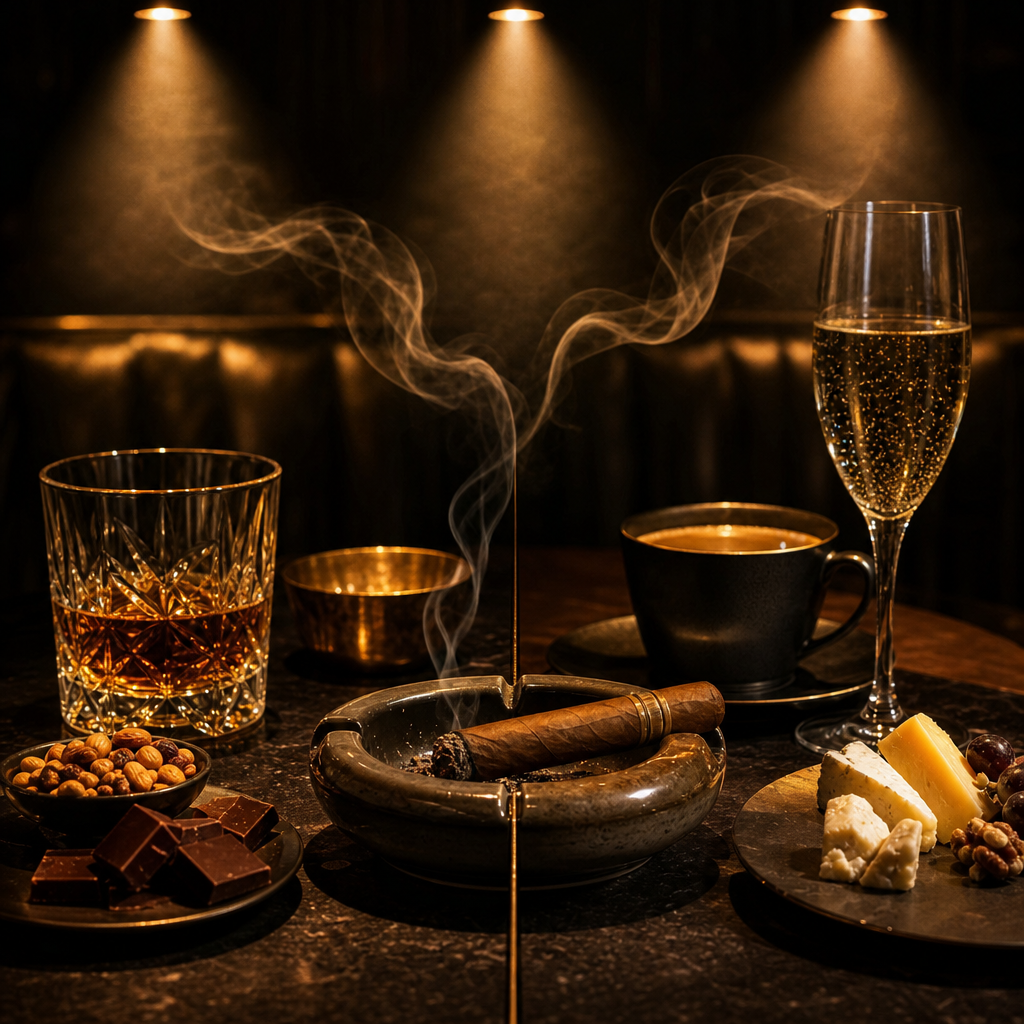
The Art of Cigar Pairing: Creating a Unique Taste Experience
The art of cigar pairing is not about placing the most expensive liquor, the strongest cigars, and the most luxurious food on the same table. The truly enchanting aspect is allowing the wood, leather, cocoa, nuts, spices, and sweetness to echo each other in different rhythms, leaving a clean and memorable finish.
As an editor of the "Cigar Bible," I often encounter beginners asking, "I already know the basics of tasting and exhaling, what should I learn next?" My usual answer is: learn to pair. Pairing allows you to see the layers of a cigar more clearly and can correct overly spicy, bitter, or dry sensations.
First Understand the "Strength, Flavor, Time" Triangle of Cigars
Many people initially consider "strength" as the only standard, but true cigar pairing focuses on three aspects: strength, flavor, and burning time. Take Partagás Serie D No.4 as an example, with a size of about 50 ring gauge, 124mm, commonly featuring leather, pepper, and earthy notes; if paired with a light white wine, the wine can easily be overpowered. Conversely, Hoyo de Monterrey Epicure No.2, about 50 ring gauge, 124mm, with more pronounced cream, cedar, and gentle sweetness, is suitable for more delicate wines and foods.
The first principle of pairing is to judge the weight changes of the cigar in the front, middle, and back stages, rather than just looking at the brand reputation. For example, Montecristo No.2, about 52 ring gauge, 156mm, often has cocoa and nut notes in the front, transitions to coffee and wood in the middle, and may show more pronounced spice in the back. If the whole session lasts about 70 to 90 minutes, the drink should accompany it through all three stages, not just taste good in the first 20 minutes.
I recommend beginners use a small card to record four items: first, the cigar brand and size; second, the main flavors after 15, 35, and 60 minutes; third, the sweetness and alcohol sensation of the drink; fourth, whether the food makes the mouth dry or oily. After recording 10 times, you will find whether you prefer sweetness, umami, creaminess, or spicy support.
Pairing with Spirits: Different Roles of Whiskey, Cognac, and Rum
Whiskey is the most commonly used spirit for pairing with cigars, but not all whiskeys suit all cigars. For example, The Macallan 12 Sherry Oak paired with Romeo y Julieta Churchill, where common dried fruit, orange peel, and cedar can connect; if replaced with the peaty Laphroaig 10 Year, it is more suitable for pairing with thicker Maduro, such as Padrón 1964 Anniversary Maduro, allowing the smoky and cocoa flavors to converse.
Cognac and Armagnac have the advantage of roundness. Rémy Martin 1738, Hennessy XO, with roasted oak, raisin, and vanilla, can make the nutty notes in the middle of Cuban cigars smoother. If it's H. Upmann Magnum 46, about 46 ring gauge, 143mm, commonly featuring cream, toasted bread, and a hint of honey, pairing with cognac is usually more stable than with heavily peated whiskey.
Higher alcohol content is not better; the key is that alcohol stimulation should not overshadow the cigar's details. I usually drink slowly with 15ml to 30ml portions, always with room temperature water nearby. Spirits with 40% to 46% ABV are easier to handle; if it's cask strength whiskey, above 55%, a few drops of water can open up the aroma and reduce tongue numbness.
Rum is suitable for those looking for sweet support. Ron Zacapa 23, with toffee, banana chips, caramel, and oak, pairs comfortably with shorter, aroma-focused cigars like Arturo Fuente Hemingway Short Story with woody sweetness. If the cigar itself is already sweet, the drink should not be overly sweet, or the finish can become cloying.
Wine and Sparkling Wine: Acidity is More Important than Body
Many people think red wine always suits cigars, but if the tannins in red wine are too high, they can amplify the bitterness of tobacco. A young 2018 Bordeaux left bank wine with a high proportion of Cabernet Sauvignon, with tight tannins, can make the mouth drier when paired with strong cigars. In contrast, a more mature Rioja Reserva, or a Merlot-dominated wine from around 2015 with softer tannins, is often more agreeable.
White wine is not impossible to pair, but the structure must be chosen. Oaked Chardonnay, such as a 2020 Burgundy village-level white wine, with butter, hazelnut, and mineral notes, can pair with Hoyo Epicure No.2 or Davidoff Grand Cru No.2. Too acidic or thin Sauvignon Blanc can make cigars seem bitter and dry, unless the cigar itself is very light.
When pairing wine with cigars, I focus on acidity and tannin management: acidity is used to cleanse the palate, and tannins should not clash with bitterness. Champagne is also a good choice, especially vintage Brut, such as a 2012 Champagne with toasted bread, citrus peel, and delicate yeast notes, which can make medium-strength cigars appear brighter.
Sweet wines should be used cautiously. Sauternes 2009, Tokaji Aszú 5 Puttonyos, or 20-year Tawny Port can pair with cocoa, coffee, and dried fruit cigars; but the quantity should not be excessive, 60ml is sufficient. The role of sweet wine is to refine the finish, not to turn the whole session into a dessert table.
Food Pairing: Approaching from Salty, Oily, and Sweet Routes
Pairing food with cigars is more prone to errors than with drinks because food directly changes the mouth's oiliness, saltiness, and sweetness. If you want to go the umami route, Iberian ham, 24-month-aged Parmigiano Reggiano, and roasted almonds are very useful. They can increase saliva secretion, making cigars seem less dry, especially suitable for pairing with brands like H. Upmann and Romeo y Julieta, which have elegant woody notes.
The oily route is suitable for medium to high-strength cigars. Dry-aged ribeye steak, foie gras, and charcoal-grilled lamb chops can support the spiciness and thickness of Partagás, Bolívar, or Nicaraguan Maduro. For example, a 300g ribeye, medium rare, seasoned only with sea salt and black pepper, when paired with Padrón 1964 Maduro, the cocoa, coffee, and meat juices intertwine vividly.
The role of food is not to steal the spotlight but to adjust the mouth's state: salt makes flavors clearer, oil makes spiciness rounder, and sweetness softens bitterness. If a dish has too much garlic, chili, cumin, or sauce, the cigar's details will be overshadowed; beginners should start with simple cooking.
Desserts should focus on cocoa content. 70% to 75% dark chocolate suits most medium-strength cigars; above 85% may amplify bitterness, more suitable for sweet, well-aged cigars. Tiramisu, caramel pudding, and walnut tart can also work, but in small quantities, or the finish may end up with just sugar and cream.
A Chart to Understand Common Pairing Directions
If you're still unsure how to choose, you can start with the "flavor axis" rather than price. Below is a simplified chart I often use in courses and private collection records, suitable for beginners to make the first round of selection. The actual results will still be affected by storage humidity, vintage, box condition, personal taste, and daily diet.
| Cigar Style | Representative Brand or Model | Suitable Drinks | Suitable Food | Avoid Directions |
|---|---|---|---|---|
| Elegant Woody, Creamy | Hoyo Epicure No.2, Davidoff Grand Cru No.2 | Champagne Brut, Oaked Chardonnay | Almonds, White Cheese, Roasted Chicken | Heavy Peat, Spicy Dishes |
| Medium Cocoa, Nutty | Montecristo No.2, H. Upmann Magnum 46 | Cognac, Sherry Cask Whiskey | Dark Chocolate, Ham, Walnuts | High Tannin Red Wine |
| Spicy Leather, Full-bodied | Partagás Serie D No.4, Bolívar Royal Corona | Rum, Bourbon, Cask Strength with Water | Steak, Lamb Chops, Aged Cheese | Too Sweet Cocktails |
| Sweet, Coffee | Padrón 1964 Maduro, Oliva Serie V Melanio Maduro | Tawny Port, Zacapa 23 | Tiramisu, Caramel Nuts | Extremely Bitter Chocolate |
The safest pairing for beginners is to place cigars and drinks on a similar flavor axis and then use food for fine-tuning. For example, if you choose Montecristo No.2, first find common languages like nuts, cocoa, coffee, and oak, rather than suddenly pairing with a high-acid lemon cocktail.
In practice, I suggest changing only one element at a time. Today, fix the cigar and food, only change the whiskey; next time, fix the drink and cigar, only change the dark chocolate ratio. After three to five times, you will know whether the most influential factor is alcohol content, sweetness, or food oiliness, rather than guessing anew each time.
Occasion and Etiquette: Making Pairing More Appropriate
Cigar pairing is not only about taste but also about occasion. Starting 30 minutes after dinner is usually more stable than before a meal, as both alcohol and nicotine sensations are amplified on an empty stomach. If it's a 60 to 90-minute cigar, it's best to confirm seating ventilation, ashtray position, water, and meal rhythm to avoid frequent interruptions that disrupt the burning state.
Cutting and lighting also affect pairing. V-cut can concentrate smoke, suitable for larger ring gauges like 54, 56 cigars; straight cut is universal, suitable for most Robusto, Toro; punch cut has a more concentrated entry, but if the cigar's humidity is high, it may cause draw resistance. When lighting, I use a flavorless butane lighter, first toasting the foot, then slowly rotating to avoid bitter flavors interfering from the start.
Good etiquette is to enjoy yourself without forcing others to participate in your flavors. In public or private spaces, respect the venue's regulations and the feelings of companions; cigars should not be casually ashed on the dining table, nor should cigar smoke be blown directly at others. Ash about 2 to 3 cm before gently placing it in the ashtray is usually more elegant.
When pairing with alcohol, control the pace. My rhythm is about one puff of the cigar every 45 to 60 seconds, a small sip of alcohol every 5 to 8 minutes, interspersed with room temperature water. If you feel your tongue is dry, your heart rate increases, or your taste becomes dull, stop and rest; true mature taste is not about enduring but knowing when to leave space.
Building Your Own Pairing Notes and Collection View
The fastest way to improve is to establish records that can be reviewed. My notes usually include the date, ambient temperature, humidity, cigar box code or vintage, storage humidity, drink vintage, and food content. For example, in 2023, I recorded a set: Trinidad Vigía paired with Yamazaki 12 Year and 72% dark chocolate, with noticeable honey and wood in the front, roasted nuts in the middle, and chocolate slightly amplifying bitterness in the back.
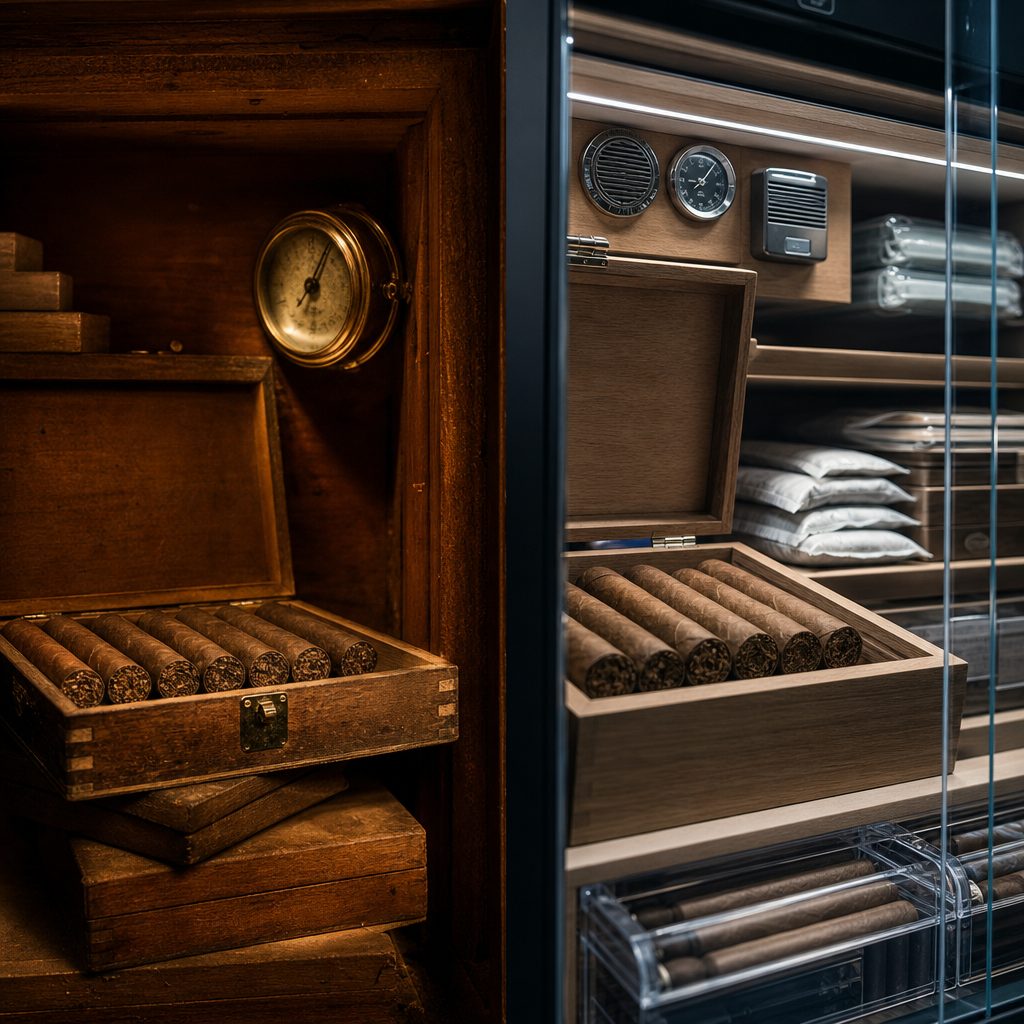
Humidity will also change pairing results. The same cigar stored at 65% RH and 72% RH will have different burning speeds, smoke volume, and bitterness performance. For comparison, I suggest beginners first stabilize daily storage at 65% to 69% RH, 18 to 21°C, before discussing drink and food differences; otherwise, you might think the drink is unsuitable when the cigar is too moist.
Collection and pairing are two related but different things: collection focuses on source and storage, pairing focuses on current state and context. Some Cuban cigars boxed in 2016, 2017, after good aging, will have more integrated wood and sweetness; but if the source is unclear and storage is unstable, even beautiful vintages may not perform well.
When it comes to collection value, I often remind friends that there are indeed some discontinued models, limited editions, or well-preserved old vintages that receive attention in the market; but this does not guarantee appreciation, still depending on source preservation and market. Focus on enjoyment as the core, use records as a tool, so that collection does not become a burden.
Frequently Asked Questions
Do cigars have to be paired with whiskey?
Not necessarily. Whiskey is just one option, cognac, rum, champagne, Port, coffee, tea, and even room temperature water can work. Beginners who are afraid of alcohol interfering with taste can start with unsweetened black coffee or roasted oolong tea, which makes it easier to see the cigar's own changes.
What cigars are suitable for pairing with coffee?
Medium to dark roast coffee suits cigars with noticeable cocoa, nutty, and woody notes, such as Montecristo No.2, H. Upmann Magnum 46. If the coffee is too acidic, it may amplify bitterness; I would choose Central and South American beans, with a hand-brewed concentration of about 1:15, or a clean cup of American coffee.
What is the safest first pairing for beginners?
You can start with a medium-strength Robusto, paired with 70% dark chocolate, roasted almonds, and a glass of cognac or unsweetened coffee. Keep the size at 50 ring gauge, about 120 to 130mm, with a time of about 45 to 60 minutes, making it easier to observe flavors without being too tiring.
Should cigars be paired before or after meals?
I recommend after meals. Before meals on an empty stomach, taste is sharp, but alcohol and nicotine sensations are also more pronounced; 20 to 30 minutes after meals, the mouth state is stable, pairing with sweet wine, cognac, or coffee is more leisurely. If the meal is very spicy, it's best to drink water and rest before starting.
Can the same cigar be paired with two types of alcohol?
Yes, but the order is important. Start with lower alcohol, fresher drinks, then move to heavier, sweeter, or stronger alcohol. For example, champagne first, then cognac; 40% whiskey first, then cask strength with water. Don't start with strong-flavored alcohol pushing taste to the peak.
What if the pairing feels bitter?
First check three things: is the cigar smoked too quickly, is the alcohol too stimulating, is the food too dry. You can slow down, drink room temperature water, add a small amount of nuts or oily cheese. If still noticeably bitter, next time try a higher sweetness drink, or lower the chocolate cocoa ratio.
The charm of cigar pairing lies in the fact that there is no single answer, yet there is a clear logic. When you can distinguish strength, sweetness, acidity, oiliness, and time, you no longer just follow others' lists but start building your own taste map. For me, a good pairing is not about leaving an expensive wine label, but remembering how that mouthful of wood, cocoa, and slightly sweet finish intersected years later.
—Cigar Prince Wilson Tsai
Smoking is harmful to health. Under 20 years old is not allowed to smoke. Quitline: 0800-636363. This article is for reference only for adults over 20 years old regarding cigar culture, preservation, and legal knowledge, not a tobacco advertisement, promotion, or purchase suggestion.