The Impact of Cigar Regions: The Connection Between Flavor Characteristics and Geographical Conditions
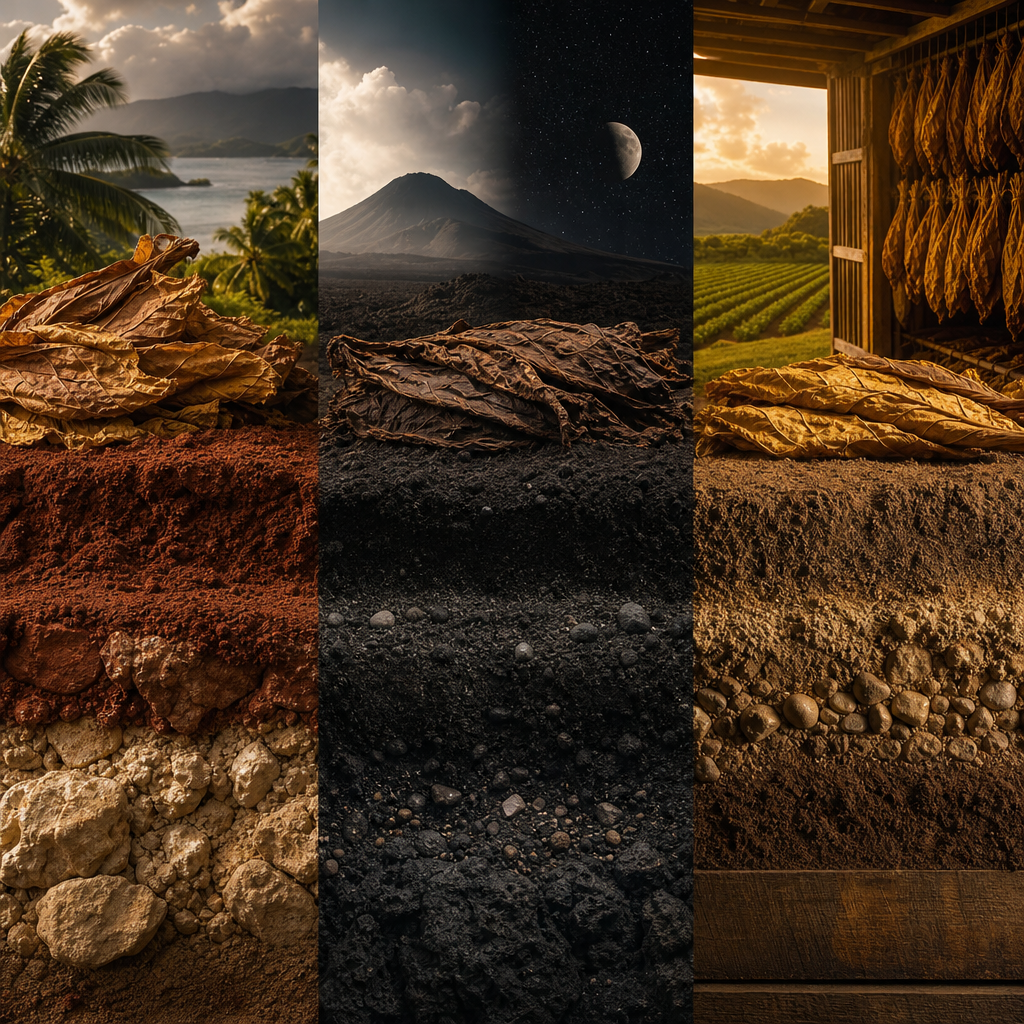
Talking about cigar regions, one cannot stop at mnemonic phrases like "Cuba is like minerals, Nicaragua is like pepper, and the Dominican Republic is like cream." What true connoisseurs pursue is how the clay ratio in the soil, the temperature difference between day and night, fermentation pile temperature, and rolling tension gradually transform into sweetness, bitterness, spiciness, saltiness, and woody notes on the tongue.
As an editor of the "Cigar Bible," the most frequently asked advanced question over the years is not which cigar is good, but "Why does the character change when the same brand changes year, ring gauge, or region?" In this article, I will use the three core regions of Cuba, Nicaragua, and the Dominican Republic to dissect the causal chain between geographical conditions and flavor.
Regional Flavor is Not Mysticism, But a Cross-Result of Soil, Climate, and Craftsmanship
Many people speak romantically about "terroir," but cigars are actually very physical. Tobacco roots absorb potassium, magnesium, calcium, and trace elements, affecting burn rate, ash color, saltiness, and mineral feel; leaves accumulate sugars and nicotine in high humidity and temperature, then through harvesting, drying, fermentation, and aging, transform the rough green taste into woody, nutty, cocoa, or leather notes. A region is not a single flavor but a fingerprint left by a set of natural conditions and human techniques.
For common long filler cigars, the wrapper, binder, and filler may come from different sources. After the 1990s, many non-Cuban brands more frequently used multinational blends, such as Nicaraguan filler paired with Ecuadorian Connecticut wrapper, or Dominican filler paired with Cameroon wrapper. This means "brand nationality" does not equal "all tobacco leaf sources," and interpretation should consider the growing area, seed system, and factory blending philosophy.
When comparing regions, I suggest not comparing completely different sizes at once. A Robusto is about 50 ring gauge and 5 inches long, while a Toro is about 52 to 54 ring gauge and 6 inches long; the burn temperature and smoke concentration differ. If you want to compare Cuba's Vuelta Abajo, Nicaragua's Estelí, and the Dominican Republic's Cibao Valley, choose samples with similar ring gauges, similar concentrations, and stable storage conditions. A truly reliable regional comparison must first eliminate interference from size, humidity, and year.
Cuba: Delicate Mineral Feel Created by Limestone Soil, Sea Breeze, and Traditional Fermentation
Cuba's most core premium tobacco region remains Pinar del Río province, especially Vuelta Abajo. The reddish-brown soil here contains clay, sandy, and limestone components, with good drainage but not overly dry, combined with the humid air of the Caribbean Sea, allowing the leaves to mature at a relatively slow pace. Classic brands like Cohiba, Montecristo, Partagás, and H. Upmann often have their premium lines described by connoisseurs as an interplay of cedar, honey, leather, coffee, and a faint salty mineral.
The key to Cuban flavor is not just the land but also traditional grading and fermentation rhythms. Ligero leaves are higher up, with more sunlight, offering more strength and spice; Seco leans towards aroma, and Volado aids in burning. Cuban factories have long excelled at creating layers within medium strength, such as Partagás Serie D No.4, often showing earth, black pepper, roasted coffee, and solid wood; H. Upmann Magnum 46 is often considered more nutty, creamy, and hay-like. The charm of Cuba lies in the fact that the strength may not be the highest, but there are often very continuous flavor transitions.
Specific years are also important. Around 2000, Cuba faced production pressure, and the box condition and rolling stability were discussed by many collectors; after 2003, the box code system became more emphasized, with connoisseurs often tracing factory codes and months. By the 2010s, Cohiba Behike 52, 54, 56 gained significant attention due to the Medio Tiempo leaf concept, with its aroma density and price fluctuations further illustrating: regional conditions are the root, while brand grading and year supply and demand are the branches and leaves.
Nicaragua: Volcanic Soil, Day-Night Temperature Difference, and High-Tension Style
Nicaraguan cigars rapidly rose after the 1990s, with main regions including Estelí, Jalapa, Condega, and Ometepe. Estelí's soil is dark, rich in volcanic ash minerals, hot during the day, and cool at night, with leaves often accumulating higher concentrations and oils; Jalapa is relatively gentle, often with sweet wood, floral notes, and a rounded palate; Condega is between the two, with more pronounced spice and herbal notes. Nicaragua's most distinctive feature is the ability to simultaneously present strength and sweet-spicy notes.
If you look at brands, the Padrón 1964 Anniversary series is often a textbook example: cocoa, coffee, brown sugar, pepper, and solid smoke body are very direct, but a good version is not just strong. The Oliva Serie V Melanio was highly rated by international cigar media in 2014, showcasing a balance of cream, coffee, spice, and sweetness using Nicaraguan Habano tobacco. Brands like My Father, AJ Fernandez, and Tatuaje push Estelí's spice and thickness to more modern expressions.
Another focus of Nicaragua is the producers' openness to blending. Compared to Cuba, which mainly uses domestic leaves, Nicaraguan brands often use tobacco from different farms, different leaf positions, and different aging times, even pairing with Ecuadorian, Mexican, or U.S. Connecticut Broadleaf wrappers. This allows the same country to offer anything from medium creamy sweetness to thick dark chocolate and chili notes. For connoisseurs, reading Nicaragua is not just about the country name but also about the roles Estelí, Jalapa, and Condega play in the formula.
Dominican Republic: Cibao Valley, Stable Craftsmanship, and Elegant Aroma Engineering
The Dominican Republic's advantages are often underestimated because it doesn't make a powerful first impression like Nicaragua, nor does it have the historical aura of Cuba. But in terms of stability, precise rolling, and clean aroma, the Dominican Republic is a very mature system. Cibao Valley, the area around Santiago, and Bonao provide well-drained loam and stable tropical climate, with leaves often presenting cream, almond, hay, floral notes, light coffee, and white pepper.
The 1990s were an important phase for Dominican cigars. The Arturo Fuente OpusX became a market focus in 1995, proving that the Dominican Republic could also grow high-strength, oily, and deeply structured wrappers and fillers. After 1991, Davidoff shifted its focus to the Dominican Republic, further pushing its precise, clean, and elegant brand language to the global market. The Dominican Republic is not "mild," but rather excels at wrapping strength in a tidy structure.
From a technical perspective, Dominican factories place great emphasis on fermentation control and rolling consistency. Many famous factories will subdivide and store filler leaves by leaf position, year, and farm, then have blenders establish stable formulas. This is why the same Davidoff Grand Cru, Avo Classic, or Fuente Hemingway usually has smaller cross-box differences. For connoisseurs, the pleasure of the Dominican Republic lies not in intense impact but in aroma lines, burn stability, fine ash columns, and end bitterness control.
Quick Comparison of the Three Major Regions: Don't Just Ask About Strength, Ask Where the Structure Comes From
When comparing the three major regions, connoisseurs easily fall into the simplification of "Cuba is delicate, Nicaragua is strong, the Dominican Republic is soft." This statement has reference value but is not precise enough. A better method is to break down soil, climate, leaf position, fermentation, and brand formulas; for the same medium-high concentration, Cuba may rely on leather and minerals, Nicaragua may push forward with cocoa and pepper, and the Dominican Republic may maintain balance with cream, wood, and aroma purity.
| Region | Typical Geographical Conditions | Common Flavor Clues | Representative Brand Examples | Connoisseur Interpretation Focus |
|---|---|---|---|---|
| Cuba Vuelta Abajo | Limestone, clay, and sea breeze humidity | Cedar, leather, honey, salty minerals | Cohiba, Partagás, H. Upmann | Look at year, box code, rolling, and aging status |
| Nicaragua Estelí / Jalapa | Volcanic soil, day-night temperature difference | Cocoa, coffee, black pepper, brown sugar | Padrón, Oliva, My Father | Distinguish whether strength comes from wrapper or filler |
| Dominican Republic Cibao | Well-drained loam, stable tropical climate | Cream, almond, hay, floral notes | Fuente, Davidoff, Avo | Look at aroma purity and end control |
A true advanced comparison is not about ranking regions but finding the flavor problems each region is best at solving. If you want delicate transitions, Cuba often gives you more linear changes; if you want thickness and sweet-spicy tension, Nicaragua is very convincing; if you want stability, cleanliness, elegance, and precise craftsmanship, the Dominican Republic is often very reliable.
Wrapper, Binder, Filler: The Greatest Regional Impact is Not Just on the Surface
Many people think that the darker the wrapper color, the stronger the flavor, which is only half correct. Maduro wrappers undergo longer fermentation, often bringing sweetness, cocoa, or coffee, but if the filler itself is mild, the overall flavor will not automatically become heavy. Conversely, a light-colored Colorado Claro wrapper covering a high proportion of Ligero filler can also have very strong end strength. Regions should be viewed through the three-layer structure together, not just by focusing on the exterior color to draw conclusions.
Cuban cigars, due to long-term use of domestic tobacco leaves, often have a "same language" continuity between wrapper, binder, and filler; Nicaraguan brands often use multi-farm blends to create contrasts, such as Estelí Ligero providing strength, Jalapa Seco providing sweet aroma, and Condega leaves supplementing herbs and burning. The Dominican Republic often does very fine precision layering, allowing the front to open with floral and cream, the middle to show nutty wood, and the end to give white pepper or coffee bitterness.
When interpreting, three actions can be taken. First, look at the leaf sources announced by the brand, but don't be completely led by the copy; second, record changes in the front, middle, and end, especially the 2nd cm, halfway, and last third; third, compare different ring gauges of the same brand, such as Robusto and Churchill. As the ring gauge increases, the filler proportion rises, often amplifying regional characteristics; smaller sizes like Corona Gorda make the wrapper influence more apparent, and the aroma may also be more concentrated.
Fermentation, Aging, and Year: The Same Region Can Change Expression Over Time
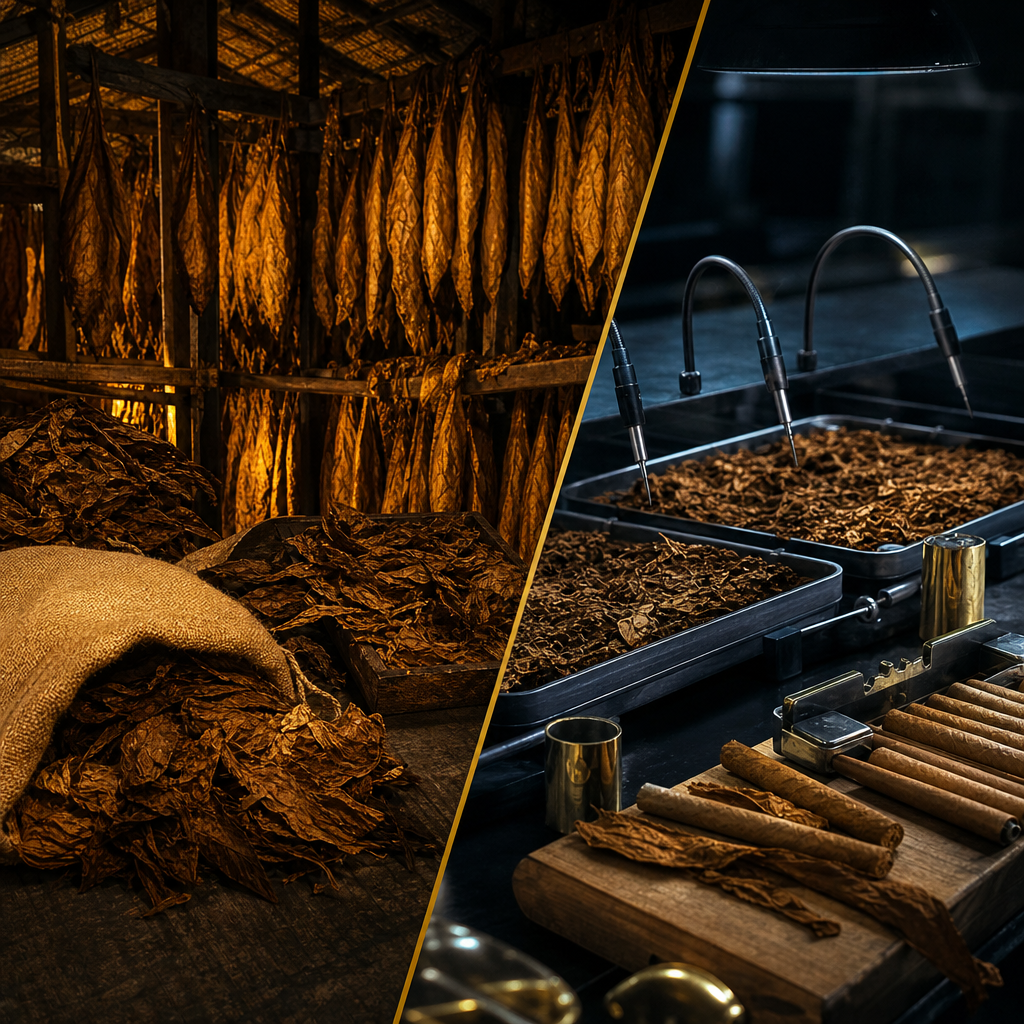
From harvest to stable enjoyment, cigars usually undergo drying, initial fermentation, grading, re-fermentation, post-rolling rest, and aging. If fermentation pile temperature is not well controlled, ammonia, rough bitterness, and tongue-stinging sensations will remain; if well controlled, sugars, oils, and aromatic substances will become rounder. Traditional Cuban flavors often need time to open up, Dominican craftsmanship often allows for a cleaner young state, and Nicaraguan thick types often see edges soften after 1 to 3 years.
Specific cases are very clear. Cohiba Siglo VI was launched in 2002, and early versions, if well preserved, are often sought after by connoisseurs for their fusion of honey, herbs, cream, and minerals; Padrón 1926 Serie, due to the brand's long-term tobacco processing, often remains relatively round in a young state; Fuente OpusX is often considered to need more time to integrate spice, sweet wood, and strength. Year is not magic; time can only amplify good preservation and good raw materials, not repair serious flaws.
From a collection perspective, stay calm. Some limited editions, commemorative editions, or specific box codes may rise in price due to supply and demand, but collection appreciation does not guarantee appreciation; it still depends on source preservation and market. If storage conditions exceed 72% relative humidity for a long time, it may cause musty taste, uneven burning, or even mold spots; if below 62%, oils and aromas will be weakened. My benchmark is usually 65% to 69% relative humidity, about 18 to 21°C, and regular observation rather than frequent flipping.
Practical Comparison Method: Establish Your Own Regional Coordinates with Three Cigars
If you already have brand preferences, the next step is not to blindly expand the list but to establish coordinates. Choose three cigars of similar size, stable preservation, and medium to medium-high concentration: one Cuban like H. Upmann Magnum 46 or Partagás Serie D No.4; one Nicaraguan like Padrón 1964 Anniversary Exclusivo or Oliva Serie V Melanio; one Dominican like Davidoff Aniversario No.3 or Fuente Hemingway Signature. Recording three cigars in a fixed format is more useful than remembering a hundred adjectives.
When recording, I divide into five columns: cold aroma, front, middle, end, burn, and structure. Cold aroma is only a reference because the main body is after ignition and thermal decomposition; the front looks at opening cleanliness, the middle looks at whether sweetness and main axis are clear, and the end looks at whether bitterness is out of control. If Cuba performs well, details often start to change in the middle; Nicaragua often has clear thickness in the front and middle; the Dominican Republic often excels in stable rhythm and clean aroma.
- Use the same cutter and the same lighting method to reduce tool variables.
- Space each cigar at least one day apart to avoid taste fatigue.
- Pair with room temperature water or unsweetened sparkling water, avoiding interference from spirits initially.
- Record humidity, box code, or purchase year for meaningful future reference.
After three rounds, you will begin to see that your preference is not "which country you like," but which structure you like. Some love Cuba's salty minerals and hay, some love Nicaragua's brown sugar pepper, and some love the Dominican Republic's creamy nuts. Understanding regions ultimately does not confine you to regions but helps you more precisely find the taste you want.
Frequently Asked Questions
Are Cuban cigars necessarily more delicate than Nicaraguan or Dominican cigars?
Not necessarily. High-level Cuban works often have beautiful transitions, but if poorly preserved, rolled too tightly, or in the wrong year state, they can also be off. Nicaragua and the Dominican Republic have made great progress in the past twenty years, with many works very mature in stability, aroma purity, and craftsmanship precision. Regions can provide personality direction but cannot replace the actual state of a single cigar.
Why does the regional feel differ for the same brand in different sizes?
Size changes the wrapper and filler ratio. Smaller sizes usually make wrapper aroma more noticeable, while larger ring gauges amplify filler formulas; switching from Robusto to Toro in the same line can change burn temperature, smoke volume, and end strength, so regional personality will be rearranged.
Are all Nicaraguan cigars strong?
No. Estelí often provides strength and pepper, while Jalapa can offer sweetness, floral notes, and soft wood. Many brands use different regional leaves to blend, allowing Nicaraguan cigars to range from medium to high concentration. Describing Nicaragua as only "strong" misses its sweetness and layers.
Are Dominican cigars suitable for connoisseurs?
Very suitable, especially for those who value craftsmanship details. The charm of the Dominican Republic lies in stable burning, clean aroma, and end bitterness control, not just in pursuing impact. Brands like Davidoff, Fuente, and Avo allow connoisseurs to observe structure in a quieter way.
Which has a greater impact on flavor, region or preservation?
Both are significant, but in different orders. Region determines original personality, while preservation determines whether it can express normally. A good region, if too wet for a long time, becomes musty and burns slowly; if too dry, aroma flattens. My advice is to stabilize preservation first, then discuss year and regional comparison, otherwise judgment is prone to bias.
Regions are not labels but a key to understanding cigars. Cuba gives me history and detail, Nicaragua gives me tension and sweet-spicy, and the Dominican Republic gives me order and elegance. The real pleasure is finding your taste coordinates between different lands, years, and craftsmanship. When you can say "why you like it," you are not just collecting brands but reading the journey of a leaf.
—Cigar Prince Wilson Tsai
Smoking is harmful to health. Under 20 years old is prohibited from smoking. Quit smoking hotline: 0800-636363. This article is for reference by adults over 20 years old for cigar culture, preservation, and legal knowledge, not a tobacco advertisement, promotion, or purchase suggestion.