Cigar Lighting Techniques: The Art from Ignition to Continuous Burning
Cigar Lighting Techniques: The Art from Ignition to Continuous Burning
Lighting is an aspect often underestimated by beginners, yet it can significantly alter a cigar's performance. A well-cut cigar can still taste bitter or burn unevenly if lit hastily; conversely, a stable light can result in cleaner flavors and a more relaxed pace.
As an editor of the "Cigar Bible," I often compare lighting to controlling the temperature before cooking a steak: it's not about having the biggest flame, but about balancing heat, distance, time, and rotation. Below, I break down a method that can be practiced repeatedly, covering tools, gestures, touch-ups, and etiquette.
The Three Minutes Before Lighting: Check Humidity, Foot, and Environment
Many burning issues are actually set up before the flame appears. For Cuban cigars, commonly stored at a relative humidity of 65% to 69%, if it exceeds 72% for a long time, the filler becomes too moist, leading to a smothered, bitter, and steamy light; if below 60%, it burns too fast, the ash becomes loose, and the spiciness is amplified. Post-2000 boxed cigars are generally more clearly labeled, but stable storage environments are still necessary, not just relying on the production year.
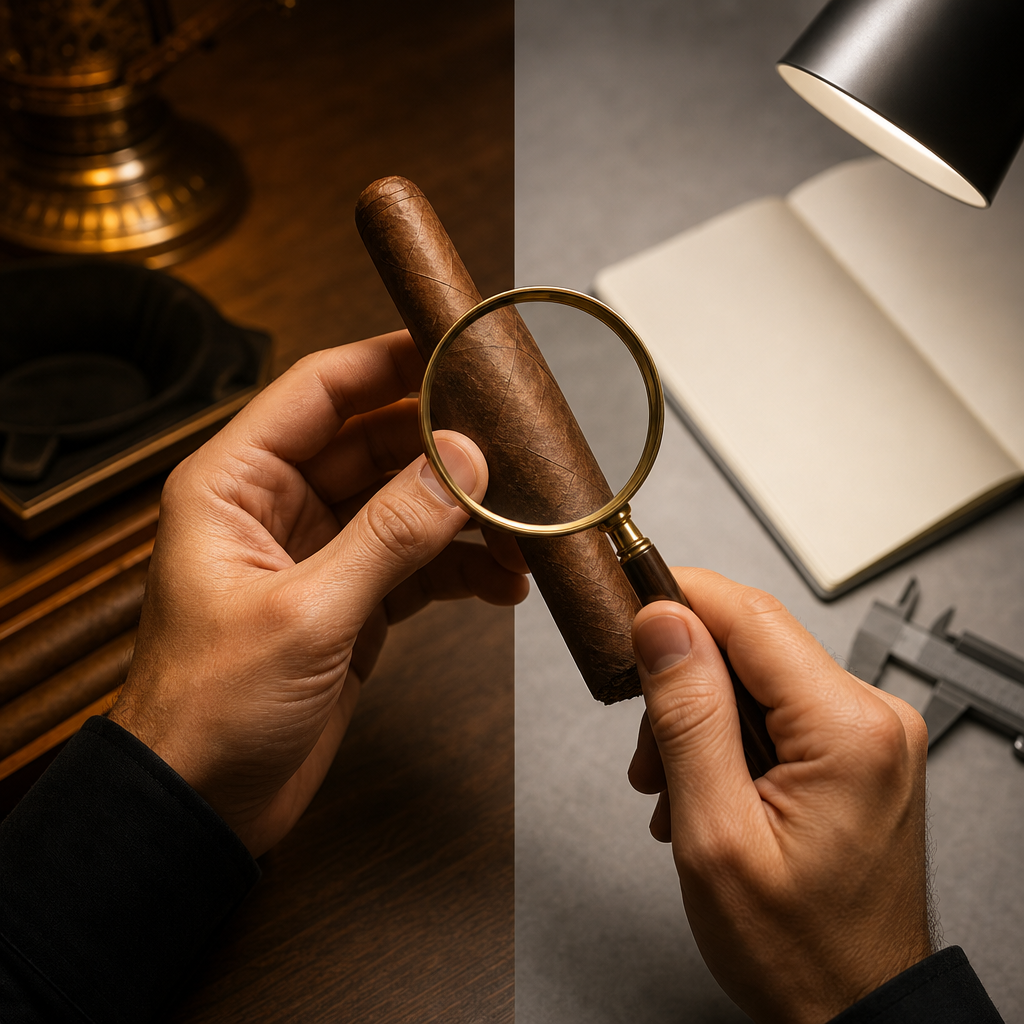
Before lighting, I check three things: whether the cigar foot has cracks, if the wrapper is lifting, and if it feels elastic in hand. For instance, the Partagás Serie D No.4 with a 50 ring gauge and 124 mm length has a substantial foot area; if there are micro-cracks at the edges, applying strong fire directly can easily cause irregular burning from the cracks. The purpose of pre-lighting checks is not to pick on the cigar but to pre-determine how slow, far, and gentle the fire should be.
The environment is also crucial. Air conditioning vents, side winds on balconies, and air purifiers on tables can cause the flame to lean to one side, resulting in uneven heating of the cigar foot. Outdoors, instead of stubbornly using a single flame to slowly touch up, it's better to find a wind-sheltered spot, reduce wind speed, and then use a dual or triple flame to quickly establish an even carbonized surface. Whether a cigar can burn stably often depends on the judgment made in those three minutes before lighting.
Choosing Lighting Tools: Matches, Soft Flames, and Torches Each Have Their Place
There is no absolute superiority among cigar lighting tools, only suitability for the size, humidity, and scene at hand. Long matches are suitable for ceremony and gentle heating, but struggle with larger sizes above a 54 ring gauge; soft flame lighters are gentle in heat, suitable for thinner ring gauges or more delicate wrappers; torches are efficient, especially stable outdoors or on large ring gauge cigars. Tools are not status symbols; the real focus is whether the flame is clean, stable, and controllable.
| Tool | Suitable Scenario | Advantages | Precautions |
|---|---|---|---|
| Long Matches | Indoors, thin ring gauge, slow pace | Gentle fire, easy to control distance | Wait for sulfur smell to dissipate before approaching the foot |
| Cedar Spills | Ceremony, delicate wrappers | Gentle aroma, even heating | Avoid forcing when the flame is unstable |
| Soft Flame Lighters | Small size, windless indoors | Less likely to scorch the wrapper | Requires longer rotation time |
| Single Flame Torch | 46 to 52 ring gauge | Precise touch-up | Too close can create hot spots |
| Dual/Triple Flame Torch | Above 52 ring gauge, outdoors | Quick carbonization | Must keep distance to avoid charring |
Fuel quality also matters. The higher the purity of butane, the less off-flavors; cheap fuel can leave metallic or oily tastes in the early stages. From the most common issues I compiled from reader cases in 2023, it's not that the lighter brand is bad, but that the flame height is set too high and the distance too close, causing the outer circle of the foot to blacken while the center hasn't truly ignited. Good tools reduce error rates but don't replace patience and a sense of distance.
Cutting, Preheating, and Toasting: Letting the Cigar Foot "Wake Up"
Lighting doesn't start the moment you press the lighter, but from the first cold draw after cutting. Cold draws allow you to judge airflow resistance; if a torpedo like the Montecristo No.2 is cut too small, it can concentrate suction and overheat the center after lighting; if cut too large, the smoke volume may be too strong, coarsening the early stage. For regular round-headed cigars, cutting 1 to 2 mm off the cap is sufficient, while torpedoes should be cut sparingly, adjusting based on airflow.
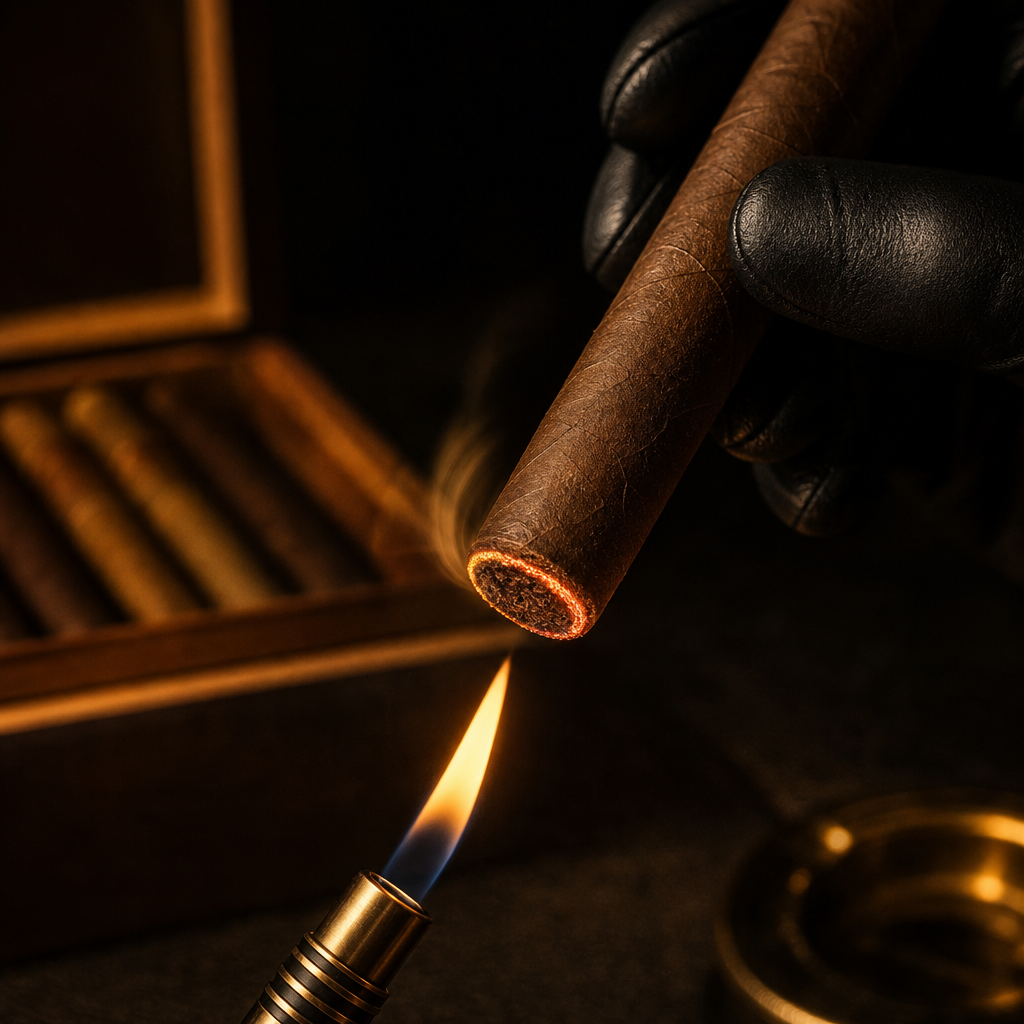
"Toasting" involves placing the flame 1.5 to 3 cm below or in front of the cigar foot, allowing heat to evenly carbonize the outer circle rather than inserting the flame directly into the foot. You can hold the cigar at a 45-degree angle to the heat source, slowly rotating for 10 to 20 seconds until the foot edge shows an even dark red. For a Cohiba Siglo VI with a 52 ring gauge and 150 mm length, if only the center is lit, the outer circle can easily lag behind, creating a concave burn. The essence of toasting is to establish an even starting line using heat, not fire.
After toasting, I usually don't take a draw immediately but gently blow on the foot to see if the red glow spreads evenly. If there's a noticeably darker area, touch it up with the edge of the flame for 2 to 3 seconds instead of re-burning the entire foot. This small action can reduce bitterness in the first draw and make the burn line more beautiful in the first five minutes. Truly delicate lighting often involves not rushing to take the first draw.
Official Ignition: Rotation, Angle, and the Rhythm of the First Draw
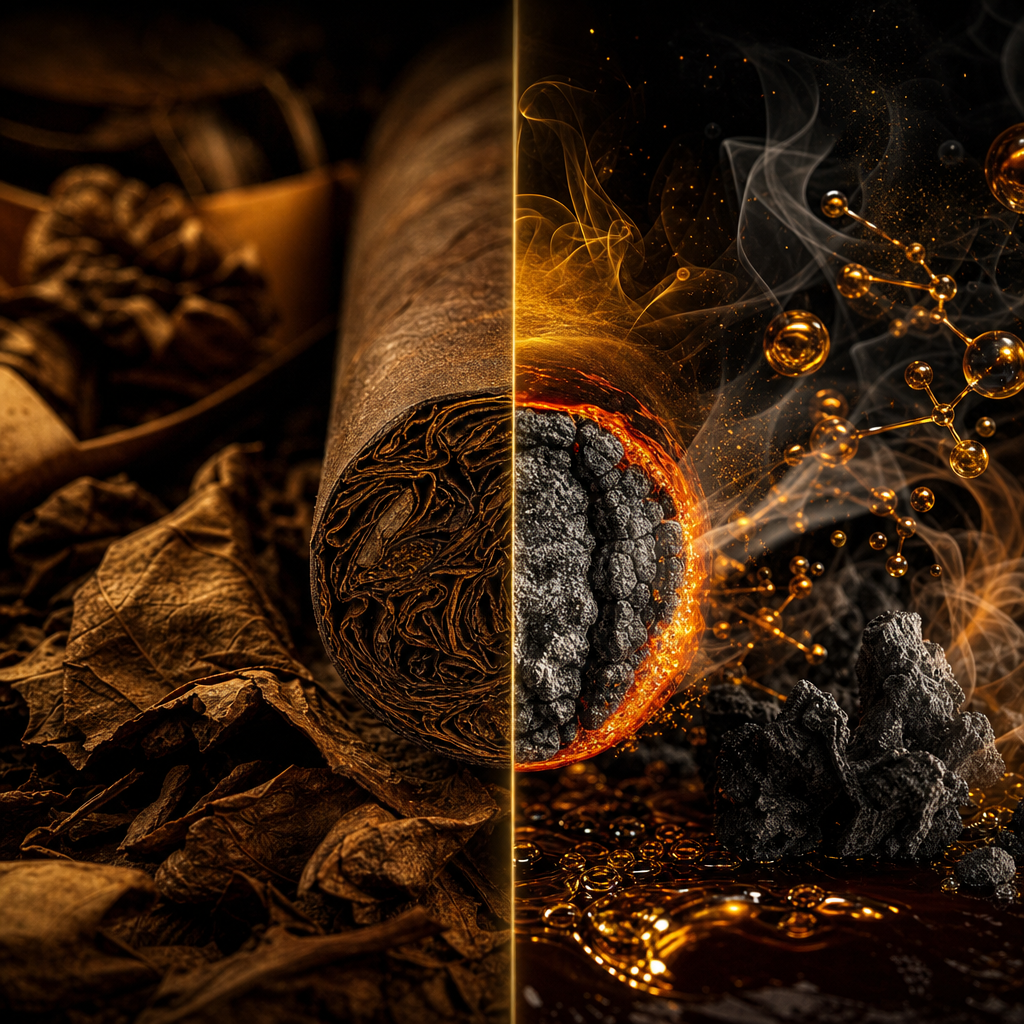
When officially lighting, the most common mistake is holding the cigar in the mouth, pressing the flame against the foot, and taking continuous strong draws. This can cause the filler to heat up instantly, pulling out tar and ammonia, resulting in a bitter and spicy early stage. A more prudent method is to first rotate the foot above the flame, ensuring both the outer circle and center light up, then establish the burn with short and light draws. The first draw is not about chasing smoke volume but confirming whether the burn is even and airflow is smooth.
I divide the official lighting into four steps, especially suitable for common beginner sizes around a 50 ring gauge, such as the Hoyo de Monterrey Epicure No.2 or Ramón Allones Specially Selected:
- Keep the flame about 2 cm away from the foot, avoiding direct contact of the blue flame core with the wrapper.
- Rotate the cigar once, letting the outer circle light up first, then attend to the center.
- Take 2 to 3 light draws, with at least a 10-second interval between each.
- Observe the foot facing upwards; if the red glow is uneven, touch up locally.
In terms of angle, the cigar doesn't need to be inserted vertically into the flame; 45 degrees is usually safer as hot air naturally rises. If using a triple flame torch, the coverage area is large, so the distance should be farther than with a single flame; if using matches, wait for the sulfur smell to burn off, then slowly heat with the top edge of the yellow flame. In 2019, I saw a friend light a Bolivar Belicosos Finos too aggressively, resulting in a slanted burn within ten minutes; after readjusting with a slow pace, the middle section regained its robustness. Lighting with composure provides room for later enjoyment.
Continuous Burn Control: Uneven Burn, Tunneling, and Touch-Up Judgment
Cigar burning doesn't end with lighting; it's a dynamic management process over the next 40 to 90 minutes. For a Robusto size with about a 50 ring gauge and 124 mm length, a normal pace is about one draw every 45 to 75 seconds; if drawing every 20 seconds, the temperature rises, and the flavor sharpens; if left for over 2 minutes, it may extinguish or produce a cold bitterness. The secret to stable burning is not frequent touch-ups but maintaining a steady pace and making minor corrections.
Uneven burns can be categorized into three types. The first is a slight slant, with a burn difference of less than 5 mm, usually not requiring immediate touch-up; rotate the cigar so the slower side faces down, allowing natural correction through rising heat. The second is a noticeable lag on one side, with a difference of 8 to 10 mm; use a single flame to lightly touch up the lagging edge for 2 seconds. The third is tunneling, where the center burns inward while the outer circle remains, often due to high humidity or lighting only the center; in this case, let the cigar rest, then trim the outer circle, avoiding continuous strong draws.
When touching up, don't aim at already bright red spots, as this will make that area hotter and more bitter. The correct position is the leading edge of the lagging area, using the outer edge of the flame to gently heat it to catch up with the overall burn line. If the cigar has been extinguished for over 5 minutes, before relighting, gently blow on the foot to expel residual cold smoke, then scrape off excessive ash. Aged cigars from 2008 may burn more gently, but if stored with fluctuating humidity, edge burning issues can still occur.
Ash Column, Temperature, and Etiquette: Extending Lighting Techniques Throughout the Process
The ash column isn't about length for show but about balancing stability and safety. Generally, retaining a 1.5 to 2.5 cm ash column helps insulate, stabilizing the burn temperature; but if the ash has cracked or appears loose, gently place it on the edge of an ashtray to let it fall naturally. Especially for Churchill sizes with a common 47 ring gauge and 178 mm length, as time extends, the ash column's weight increases, and forcing it can cause it to fall on clothing or the table. The value of the ash column lies in temperature control, not performance length.
Cigar temperature can be judged by taste. If you feel tongue prickling, throat dryness, and the smoke becomes thin and bitter, it's usually due to too frequent draws or excessive touch-ups. In this case, don't rush to drink strong alcohol to suppress the taste; first, put it down for 1 to 2 minutes to let the burning end cool. Pairing drinks doesn't have to be about high alcohol content; in 2021, while organizing after-dinner pairing notes, I found that unsweetened tea, sparkling water, and light roast coffee actually help beginners distinguish woody, nutty, cocoa, and leathery tones more clearly.
In terms of etiquette, cigars don't need frequent ashing like cigarettes, nor should you blow large clouds of smoke at others. If you need to pause, place the cigar on the ashtray groove without pressing it out; if it's in the last third, with higher tar and temperature, put it down if the taste becomes unbalanced. For collections, some boxed cigars from the 1990s or early 2000s are sought after due to clear provenance and good preservation, but this doesn't guarantee appreciation, as it still depends on provenance, preservation, and the market.
Common Questions
Lighting is a process that can be practiced; mastering distance, rotation, rhythm, and touch-up judgment will significantly reduce errors. Below are the most common questions I get from beginners, with answers that aren't flashy but can be directly applied to the next cigar.
Do cigars have to be lit with a torch?
Not necessarily. Indoors, for thin ring gauges or sensitive wrappers, long matches or soft flames are gentler; outdoors, with wind, or for large sizes above a 52 ring gauge, torches are more efficient. The key is not to let the blue flame core directly contact the foot.
Is the first draw after lighting bitter because the cigar is bad?
Not necessarily. Common causes are the flame being too close, drawing too quickly, or insufficient toasting, leading to localized charring. First, check if the foot is evenly glowing red, then slow down the pace in the first five minutes; many bitter flavors will decrease.
Should uneven burning be immediately touched up?
If the difference is less than 5 mm, observe first, letting the slower side face down often allows self-correction. If the difference is close to 1 cm, use a single flame to touch up the lagging edge, not re-burn the entire circle.
How long after extinguishing can it be relit?
If it's only extinguished for 2 to 5 minutes, gently blow to expel cold smoke before touching up. If left for over 20 minutes, relighting may result in heavier bitterness; whether to continue depends on personal tolerance.
Why is the same brand sometimes easy to light and sometimes difficult?
Storage condition, year, environmental wind speed, ring gauge, and rolling density all affect it. Even for post-2020 boxed cigars, if one box is stored at over 70% humidity long-term and another is stable at 65% to 67%, lighting and burning performance can vary greatly. Don't blame all issues on the brand; first, review storage and lighting processes.
Lighting is the most fascinating basic skill in the cigar world. It may not be as glamorous as brand stories, but it honestly reflects in every puff. In my experience, those who truly understand lighting also understand waiting: waiting for the flame to stabilize, for the foot to glow, for the pace to slow down. When you no longer rush to light it but let it awaken evenly, the cigar naturally rewards you with clearer, more three-dimensional layers.
—Cigar Prince Wilson Tsai
Smoking is harmful to health. Under 20 years old is prohibited from smoking. Quitline: 0800-636363. This article is intended for adults over 20 years old as a reference for cigar culture, preservation, and regulatory knowledge, not as tobacco advertising, promotion, or purchase advice.