The Art of Cigar Aromatics: How to Use Spices to Enhance the Tasting Experience
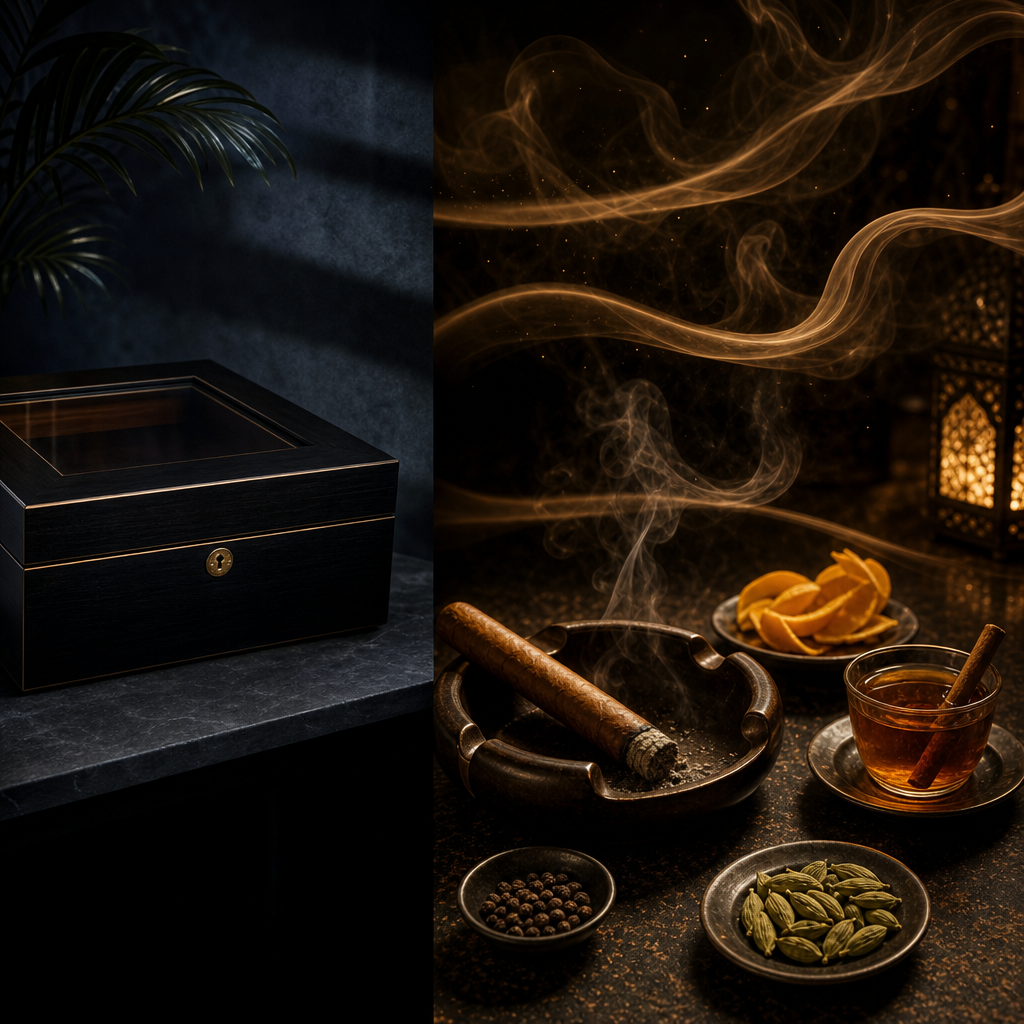
The Art of Cigar Aromatics: How to Use Spices to Enhance the Tasting Experience
When delving deep into cigars, it's not just about strength, size, origin, and vintage; the truly fascinating aspect is how a cigar unfolds its woody, leathery, nutty, cocoa, peppery, floral, and sweet notes during the burning process. After beginners learn the basic tasting techniques, the next step is to understand "borrowing aromas": using spices, beverages, utensils, and ambient scents to make the original layers clearer.
As the editor of the "Cigar Bible," I often view cigars as a three-act play. The first part is the opening, the middle part is the main theme, and the last part is the conclusion; spices are not the main actors but the lighting and soundtrack. When used well, the different styles of Cuba, Nicaragua, and the Dominican Republic can all be highlighted; overuse, however, can turn a good cigar into a muddled one.
Spices Are Not Flavor Additives: Distinguish Between "External Pairing" and "Changing the Cigar"
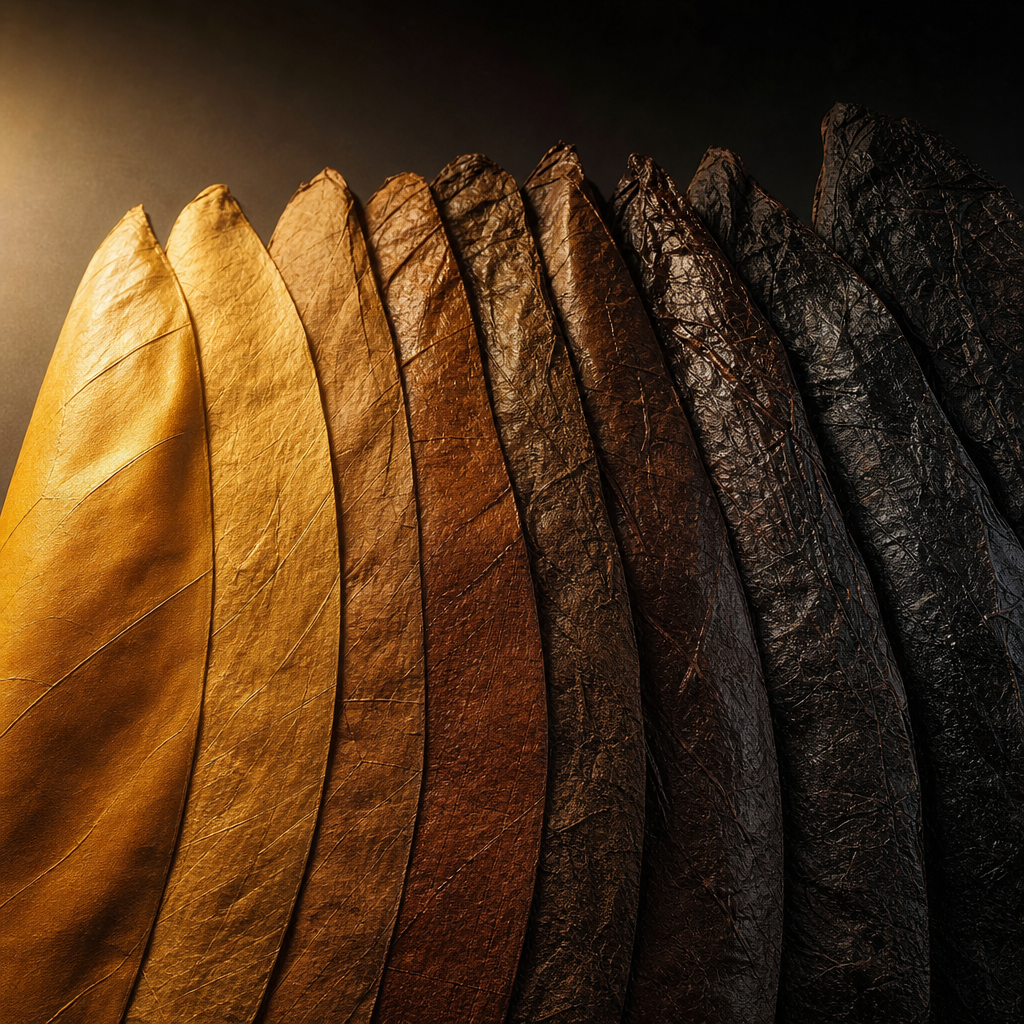
Many beginners, upon hearing "cigars and spices," instinctively think of putting vanilla, cinnamon, and cloves directly into the cigar box, or even letting the cigar wrapper absorb the aroma. This is the least recommended approach. The core value of a cigar comes from the tobacco leaves themselves: the growing area, fermentation, rolling, aging, and storage conditions. Any external aroma that seeps in over time can disrupt the original balance. Take the Cuban Partagás Serie D No.4 as an example; its earthy, peppery, and roasted woody notes are already very distinct. If vanilla pods are stored in the same box for a long time, the aftertaste can become sweet and unclean.
The first principle of spice pairing is to keep the spices at the "environment, beverage, food" level, rather than directly altering the cigar itself. For example, placing a small piece of orange peel on the table, stirring hot tea with a cinnamon stick, or garnishing desserts with cloves are all controllable external pairings; but stuffing spices into a humidor or placing them close to the cigar wrapper can easily cause irreversible flavor contamination. In my experience, if a cigar is exposed to strong spices in a closed space for more than 24 hours, the aroma may linger.
From the 1970s to the 1990s, many European clubs paired medium-strength cigars like H. Upmann and Romeo y Julieta with cognac, coffee, and spiced desserts; the key was not to make the cigar sweet but to provide an "aroma bridge" through food and drink. Truly skillful aromatics make it easier for you to understand the original flavors of the cigar, rather than turning the cigar into something else. If this boundary is well-managed, the techniques that follow will have meaning.
Creating an Aroma Map: Corresponding Pepper, Woody, Sweet, and Floral Notes
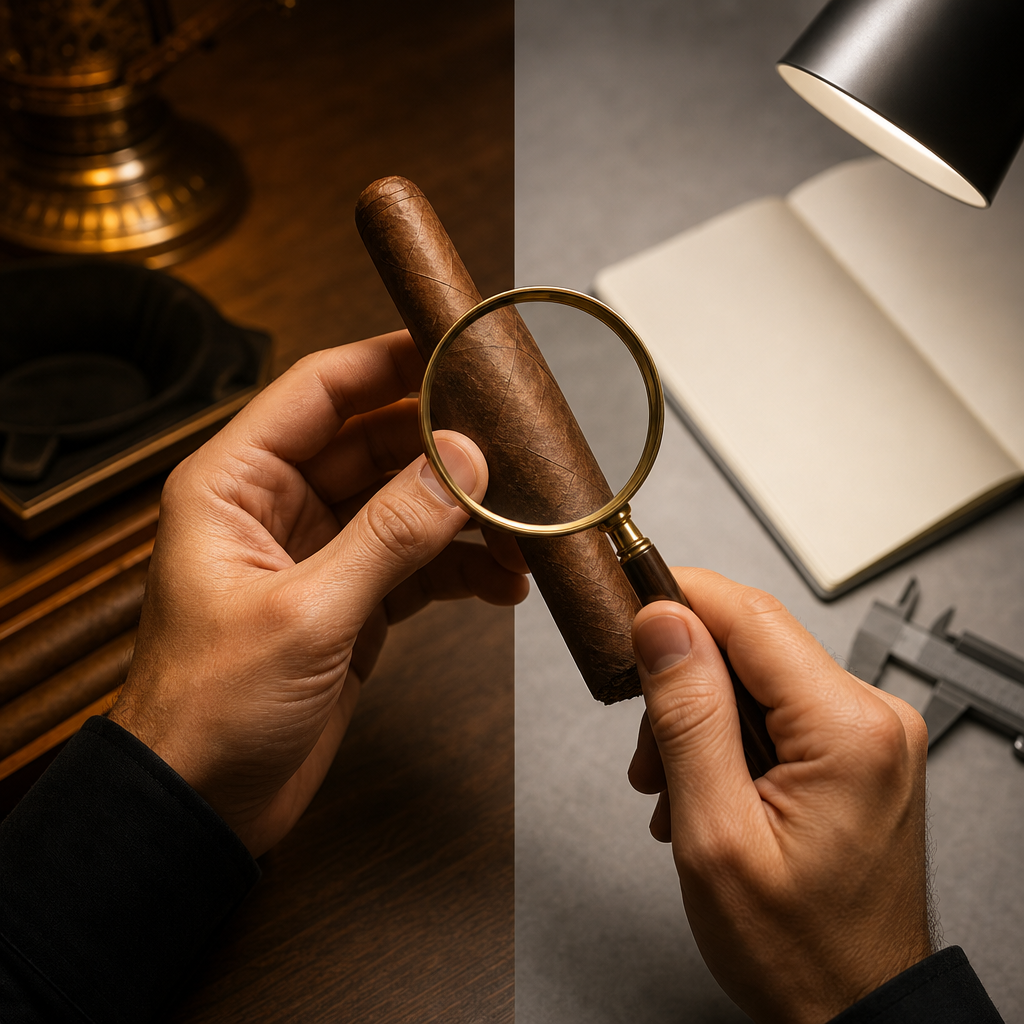
Before learning spice pairing, I recommend creating your own aroma map. Common cigar flavors can be roughly divided into four groups: spicy, woody, sweet, and herbal. Spicy includes black pepper, white pepper, and chili powder sensations; woody includes cedar, oak, and sandalwood; sweet includes cocoa, caramel, honey, and vanilla; herbal includes dried flowers, grass, tea leaves, and herbal notes. For instance, Bolivar Royal Corona often features earthy and black pepper notes, while Cohiba Siglo VI often carries creamy, grassy, and honey notes, requiring different spice directions.
First identify the existing aromas of the cigar, then decide whether to "extend" or "contrast," which is much more important than blindly piling on spices. Extension is about amplifying similar flavors, such as using unsweetened cocoa powder desserts, dark roast coffee, and a small amount of cinnamon to extend the cocoa and coffee notes of Montecristo No.2; contrast is about using opposite aromas to bring out layers, such as using orange peel and the bergamot scent of Earl Grey tea to enhance the floral and cedar notes of Romeo y Julieta Churchill.
I often record aroma intensity on a scale of 1 to 5: pepper 4, woody 3, sweet 2, floral 1, indicating that this cigar is relatively heavy, so it shouldn't be paired with too much clove or star anise. If it's a Hoyo de Monterrey Epicure No.2 acquired around 2021 and has been stably aged for two to three years, it often has creamy, hazelnut, and grassy notes, so the spices should be light, such as cardamom, white pepper, or lemon peel. Write down the scores and record 10 cigars in a row, and you'll find your taste judgment becoming more stable.
Safe Usage and Pairing Table for Five Beginner Spices
Beginners don't have to pursue rare spices right away. I recommend starting with five easily accessible and controllable spices: black pepper, cinnamon, vanilla, cardamom, and orange peel. Black pepper is suitable for cigars with higher strength and pronounced earthy and leathery notes; cinnamon is suitable for cigars with cocoa, coffee, and roasted notes; vanilla is suitable for creamy and woody tones; cardamom is suitable for fresh herbal and nutty tones; orange peel is suitable for floral, tea-like, and cedar tones.
It's better to use so little spice that it's barely noticeable than to use so much that it becomes the main focus of the table. The following table is a simplified reference for beginners, emphasizing "detecting the direction without overpowering the cigar." If you're using a Robusto with a 50 ring gauge and a burn time of about 60 minutes, the presence of spices should be concentrated in the first 20 minutes to establish an impression, allowing the cigar to speak for itself in the middle and later stages.
| Spice | Suitable Style | Example Brands | Suggested Amount |
|---|---|---|---|
| Black Pepper | Earthy, Leathery, Robust | Bolivar Royal Corona, Partagás Serie D No.4 | Grind a small pinch next to savory snacks |
| Cinnamon | Cocoa, Coffee, Roasted | Montecristo No.2, Oliva Serie V | Half a cinnamon stick in a hot drink |
| Vanilla | Creamy, Cedar, Sweet Woody | Davidoff Aniversario, Cohiba Siglo VI | Vanilla pod for aroma, not in humidor |
| Cardamom | Herbal, Hazelnut, Fresh | Hoyo Epicure No.2, H. Upmann Magnum 46 | Lightly press 1 pod into tea |
| Orange Peel | Floral, Tea-like, Bright | Romeo y Julieta Churchill, La Aroma de Cuba | 2 cm orange peel on the rim of a glass |
In practice, use three steps: first, taste the cigar alone for 5 to 8 minutes to record the first impression; then add a spice medium, such as tea, coffee, or dessert; finally, observe whether the aftertaste becomes longer and cleaner. If the answer is no, immediately remove the spice. A good pairing will clarify the layers, while a poor pairing will leave only a mass of sweetness, spiciness, or bitterness in the mouth.
Beverages as the Best Carrier: How Tea, Coffee, and Spirits Carry Spices
Spices, when directly in the mouth, can often be too strong; using beverages as a carrier is more elegant. Tea is my most recommended carrier for beginners to practice with, as the temperature, astringency, and aroma of tea are easy to adjust. Oolong tea can carry cedar and nutty notes, black tea can carry cocoa and leathery notes, and ripe Pu-erh tea can bring out earthy and sweet woody notes. Adding a lightly pressed cardamom pod to 300 ml of hot tea will make the aroma much softer than directly chewing the spice.
Beverages are not used to wash away the cigar flavor but to calibrate the palate, making the next puff more accurate. Take H. Upmann Magnum 46 as an example; its 46 ring gauge and 143 mm size give it a bit more linear change than a Robusto; the front often has hay and nutty notes, with deeper woodiness in the middle. At this time, using lightly roasted oolong with a bit of orange peel can better highlight the freshness than high-sugar drinks. Conversely, pairing with heavy peat whisky might cover all the details.
Coffee is suitable for cigars with cocoa, leathery, and roasted bread notes. Montecristo No.2, with its 52 ring gauge and 156 mm length, is a familiar torpedo-shaped representative; it pairs well with medium-dark roast coffee and a small amount of cinnamon. However, I would avoid adding too much sugar, as sweetness can cause the bitterness in the later stages to be misinterpreted as "rich." As for cognac, rum, and sherry cask whisky, they are suitable for trying after gaining experience, and only one spice clue, such as vanilla or orange peel, should be added at a time.
Aromatic Rhythm for Different Stages: Don't Let Spices Overpower from Start to Finish
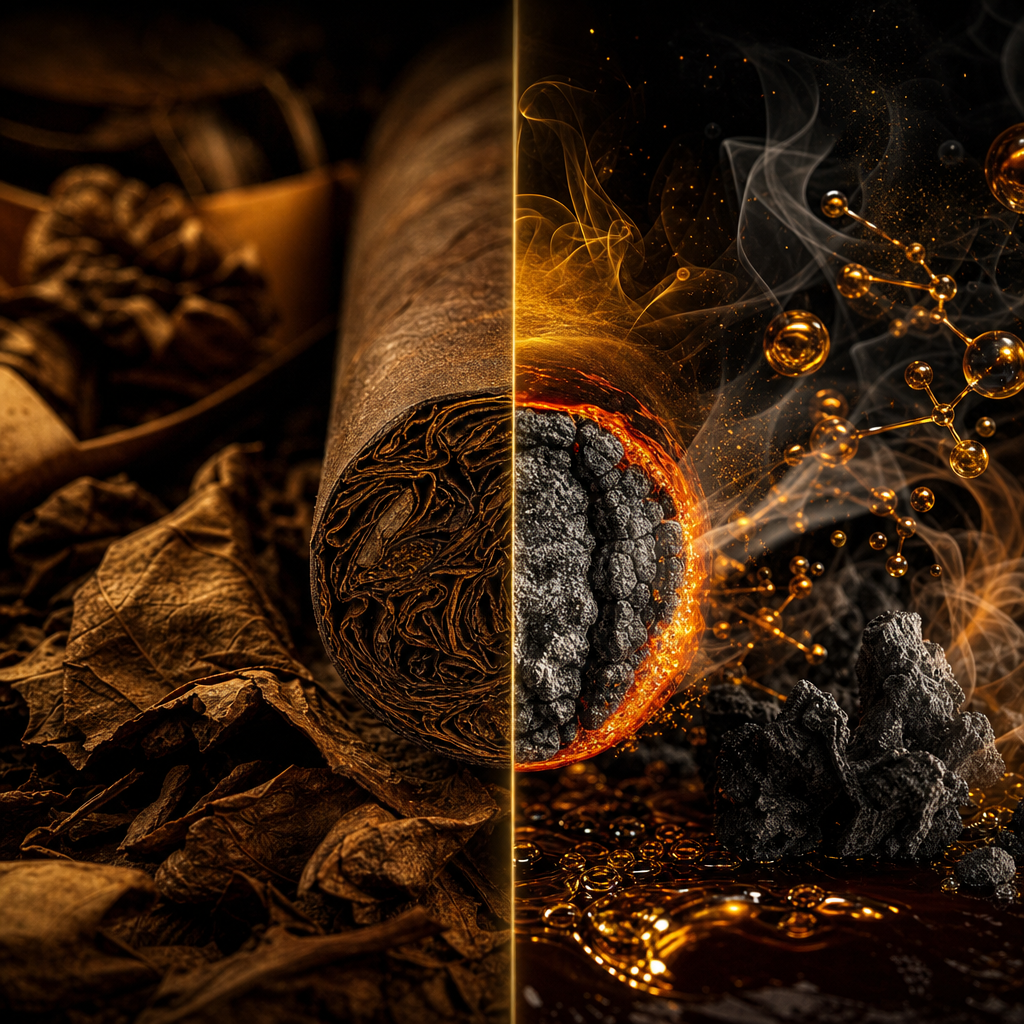
A cigar is not static. For a commonly seen Robusto with a 50 ring gauge and 124 mm length, within 45 to 70 minutes, the front may be fresher, the middle most balanced, and the back stronger. Aromatics should also have a timeline, rather than using the same strong spices from the first puff to the last. The front is suitable for bright aromas like orange peel, white pepper, and floral tea; the middle is suitable for cocoa, nuts, and cinnamon; if the nicotine and spiciness increase in the back, reduce the spices rather than add more.
The front can open the window, the middle can build a bridge, and the back should be restrained; this is the most practical rhythm for cigar aromatics. For example, Romeo y Julieta Churchill, with its 47 ring gauge and 178 mm length, has a longer duration; the first 30 minutes can use Earl Grey tea or orange peel to bring out floral notes; when transitioning to cedar and nuts in the middle, switch to warm water or light tea; if spiciness rises in the last 30 minutes, stop spice intervention. This can prevent the back from becoming chaotic.
In 2018, I made a set of private notes: the same Partagás Serie D No.4, once paired with cinnamon coffee throughout, and once only paired for 15 minutes in the middle. The latter had clearer leather, black pepper, and roasted wood notes, while the former started to become sweet and bitter mixed together from the middle onwards. This shows that spices are not better the longer they last. A skilled aromatic expert knows when to retreat at the most beautiful moment. If beginners remember just this point, the error rate will be greatly reduced.
Etiquette and Preservation: Respect Both the Table and the Cigar, No Matter How Beautiful the Spices
In cigar etiquette, scent boundaries are very important. Overly strong perfume can already interfere with others, let alone strong penetrating spices like star anise, cloves, and cinnamon. If using spices in public or semi-public spaces, the amount should be small, and avoid powder scattering. Ideally, spices should only exist in your own cup or plate, not becoming the main theme of the entire table. Especially cloves and star anise, which can linger in enclosed spaces for a long time, I usually don't recommend beginners use them.
No spices should enter the humidor, nor should they directly contact the cigar wrapper, cap, or foot. The task of the humidor is to maintain a stable environment, such as 18 to 21°C, with a relative humidity of 65% to 69%, which is a range many players are accustomed to; once spices are added, the wooden box, cedar sheets, and other cigars may absorb the aroma. Especially high-priced or vintage cigars, keeping them clean is more important than creating additional aromas. Collections may attract attention due to rarity, but it doesn't guarantee appreciation; it still depends on source preservation and market.
If you want to practice with spices, prepare an "external pairing plate": a piece of orange peel, a small pinch of cocoa crumbs, half a cinnamon stick, and a glass of clear water. All spices should be kept at least 30 cm away from the cigar, and removed immediately after use. As a PCC authorized dealer, I place more emphasis on source, preservation, and condition judgment; only a clean cigar is qualified to discuss pairing. Etiquette is not about restriction, but about allowing yourself and those at the table to read the original details of the cigar.
Frequently Asked Questions
Will spices make a cigar more premium?
They won't automatically make it more premium. Spices can only amplify or embellish the layers you already perceive, they can't turn a loosely structured, poorly preserved, or unstable burning cigar into a masterpiece. First, get the cutting, lighting, temperature, and rhythm right, then spices can add value. Beginners can start practicing with a stable Robusto, such as Hoyo Epicure No.2 or Arturo Fuente Hemingway Short Story, recording the differences in the front, middle, and back stages, then adding orange peel or cardamom.
Can vanilla pods be placed in the cigar box?
Not recommended. Vanilla pods contain strong aromatic molecules that can easily be absorbed by cedar wood and cigar wrappers in a closed environment, and the whole box may carry a sweet aroma after a few days. This is not aging but flavor contamination. If you want to use vanilla, it's best to let it appear in a cup, next to a dessert, or in a scent cup, and keep it away from the cigar. The humidor should be clean, stable, and minimally disturbed, which is more important than any creativity.
Which cigars are best for beginners to practice aromatics?
I would choose medium-strength, clearly flavored, and not too long-sized options. Robusto, Petit Corona, and Corona Gorda are suitable, with a duration of about 40 to 75 minutes, making it easy to observe changes. Example brands include H. Upmann Magnum 46, Montecristo Edmundo, Davidoff Nicaragua Toro, and Oliva Serie V Melanio. A high Ligero proportion can easily unbalance the spices; a too mild cigar may be overpowered by the spices.
How many spices can be used at once?
Start with just one, at most two. Black pepper with cinnamon, orange peel with cardamom, is enough to establish contrast. If you use cinnamon, cloves, star anise, vanilla, and coffee all at once, your taste buds will quickly fatigue, leaving only "very fragrant" without being able to describe the cigar itself. My practice method is to change only one variable at a time: the same cigar, similar preservation state, the same beverage, with the only difference being the spice.
Will spice pairing affect the collection value?
If it's just external pairing, not directly contacting the cigar, it usually doesn't affect it; but if spices enter the humidor causing flavor contamination, it can degrade the condition and affect the evaluation. Especially for limited editions, regional editions, or vintage box cigars, clean sources and preservation records are very important. Collection topics often excite people, but remember: it doesn't guarantee appreciation; it still depends on source preservation and market.
When I look at cigar aromatics, I fear "overdoing it" the most. Truly mature taste is not about how many exotic spices are on the table, but being able to illuminate the original beauty of the cigar at the right moment with a piece of orange peel, a sip of tea, or a bit of cocoa. If beginners are willing to record the year, brand, size, humidity, and pairing reactions, they will noticeably feel their taste becoming more refined after six months. Spices are tools, not answers; respecting the cigar itself is the starting point of all pairings.
—Cigar Prince Wilson Tsai
Smoking is harmful to health. Under 20 years old is not allowed to smoke. Quitline: 0800-636363. This article is for reference by adults over 20 years old for cigar culture, preservation, and regulatory knowledge, not a tobacco advertisement, promotion, or purchase suggestion.