The Flavor and Smoke Physics of Cigars: Chemical Changes During Combustion
The Flavor and Smoke Physics of Cigars: Chemical Changes During Combustion
Experienced cigar enthusiasts often find that simply describing cigars with terms like "woody, leathery, coffee, spicy" quickly hits a ceiling. The true depth comes from understanding combustion: the same cigar can transform into a different experience under varying humidity, rhythm, ignition sources, and airflow conditions.
As an editor of the "Cigar Bible," I often view flavor as the intersection of chemistry, physics, and agriculture. From the debut of the Cohiba Behike in 2006 to the renewed discussions on humidity and burn lines post-2020, the core question remains the same: how do the leaves transform into smoke in the fire?
Combustion is More Than Just "Lighting Up": Cigars Actually Have Three Reaction Zones
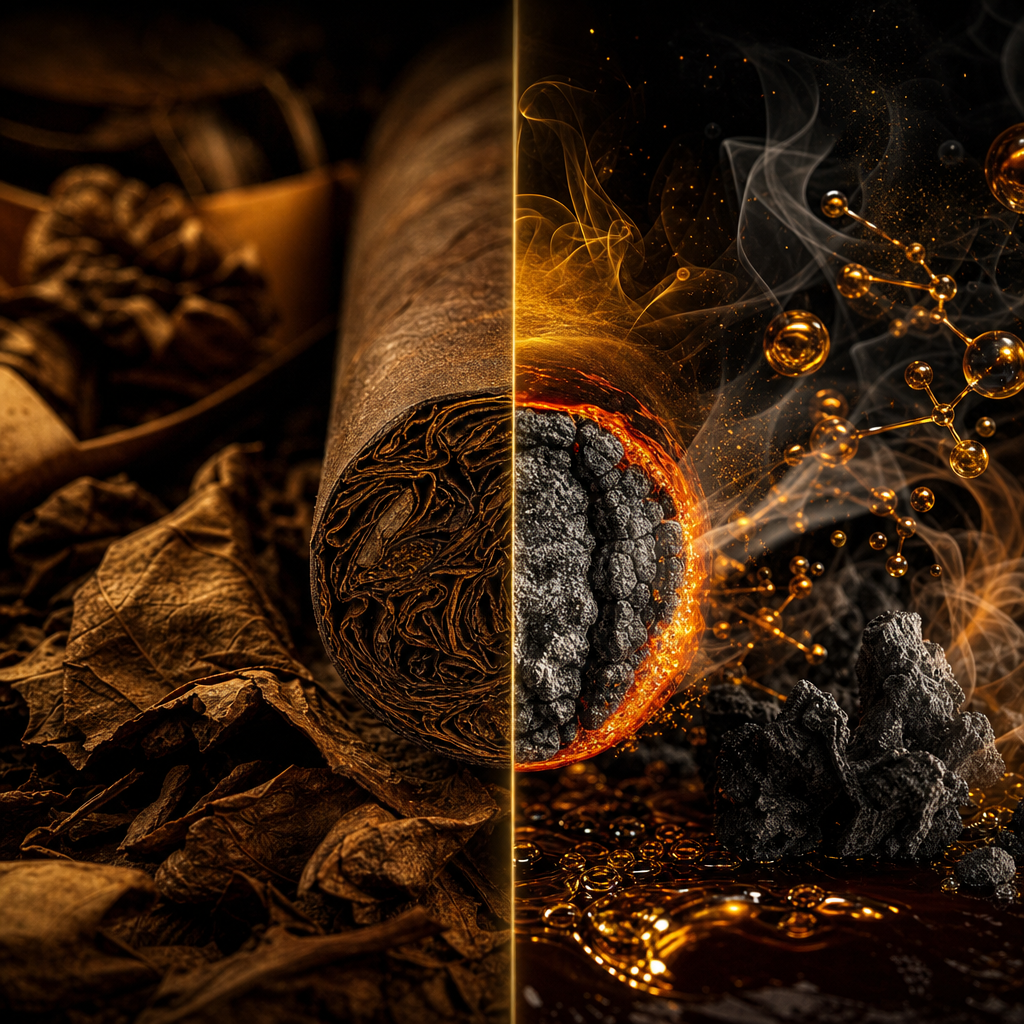
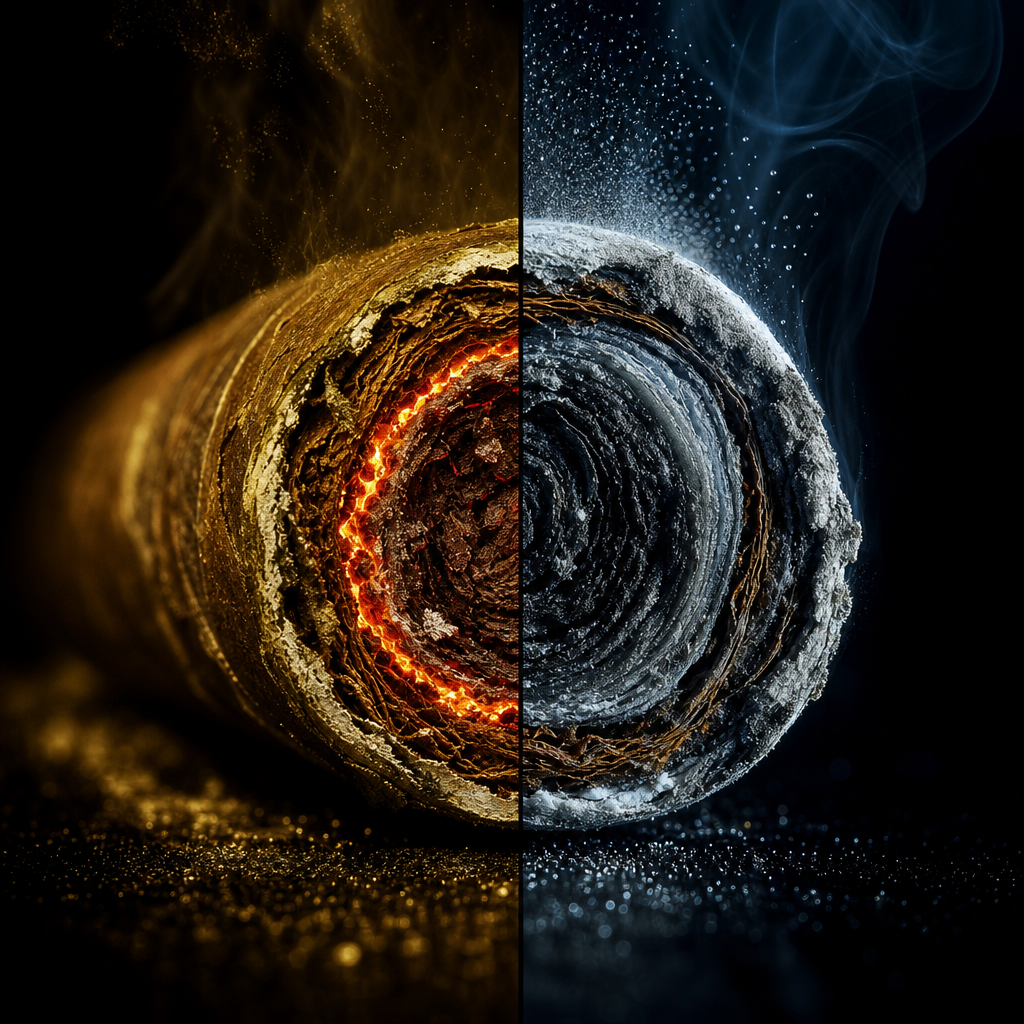
The front end of a cigar may appear to be just a ring of embers, but it can actually be divided into at least three zones: the red-hot combustion zone, the pyrolysis zone, and the condensation smoke zone. The temperature in the red-hot zone can reach about 650–900°C, where cellulose, hemicellulose, and lignin are oxidized with sufficient oxygen. A few millimeters back, the temperature drops to about 200–500°C, where the leaves are not fully burned but have already begun pyrolysis, producing aldehydes, ketones, phenols, and nitrogen-containing compounds.
Take a Robusto like the Partagás Serie D No.4, with a ring gauge of 50 and a length of 124mm, for example. The heat is concentrated at the burning end, and if the rhythm is too fast, the pyrolysis zone will be forced to move back, raising the smoke temperature, and the black pepper, caramel, and earthy notes may turn bitter. Conversely, if the rhythm is too slow and the humidity is high, there will be insufficient heat, causing the burn line to tilt, bringing out ammonia and grassy notes.
Flavor is not the direct release of the original taste of the leaves but the result of continuous generation at different temperature levels at the burning end. After 2013, many experienced enthusiasts began to emphasize "slow sipping, stable burning, and minimal relighting" for this reason: you are controlling not just the flame surface but the entire heat field. When the heat field is stable, leather, nuts, cocoa, and cedar will appear in sequence, rather than being compressed into a single burnt taste by high temperatures.
Temperature Gradient: The Threshold from Sweetness and Spiciness to Bitterness
The burning temperature of a cigar is not the higher, the better. Below about 100°C, mainly water evaporates and some volatile aromas are released; between 150–250°C, sugars and amino compounds begin to produce Maillard reaction-related aromas, bringing out toasted bread, nuts, and malt notes; above 300°C, pyrolysis increases rapidly, and if oxygen is insufficient, it may accumulate pungent tar and bitterness.
For example, the Hoyo de Monterrey Epicure No.2, when in good condition, often has creamy, woody, and slightly sweet aromas. If a strong torch is used for a long time, the first puff can easily become sharp; it's not that this cigar suddenly loses its elegance, but that the front leaves are overheated, and the mild aromas have not yet formed a balance before being overshadowed by charring reactions.
| Temperature Range | Main Phenomenon | Common Flavor Expression | Risk |
|---|---|---|---|
| 80–120°C | Water evaporation, aroma preheating | Herbal, light woody aroma | Stuffy when humidity is high |
| 150–250°C | Sugar and amino reactions | Toasted bread, nuts, sweetness | Insufficient heat results in thinness |
| 300–500°C | Enhanced pyrolysis | Spices, leather, cocoa | Insufficient oxygen causes bitterness |
| 650°C and above | Significant oxidative combustion | Smoke volume, stable embers | Overheating leads to spicy bitterness |
Good flavors usually appear when the temperature gradient is stable, not when the flame is intense. This is also why many enthusiasts after 2019 discuss "cold burn lines" and "slow rhythm": true sweetness often comes from moderate pyrolysis and sufficient cooling, not from burning the cigar like a torch.
Oxygen and Airflow: Why the Same Cigar Suddenly Turns Bitter
Oxygen supply determines whether combustion leans towards complete oxidation or incomplete combustion. Complete oxidation can maintain clean embers and stable ash columns; incomplete combustion will increase carbon monoxide, tar particles, and some irritating compounds. When the airflow is too tight, the filler leaves are too dense, or the puffing frequency is too high causing local overheating, the smoke becomes heavy and bitter.
For a Torpedo like the Montecristo No.2, if the tapered head is cut too small, the ventilation cross-section is insufficient, and the front may feel concentrated and powerful, but the middle and back oxygen supply becomes unstable, leading to burnt coffee and wet wood flavors. Conversely, if the cut is too large, the airflow becomes too fast, the burning end overheats, and the original delicate cocoa and floral notes are overshadowed by spiciness.
The "smoothness" of a cigar is not just about draw resistance but about whether oxygen, heat, and smoke speed are balanced. Experienced enthusiasts can use three observation points to judge: whether the burn line self-corrects within 3–5 minutes, whether the ash column is uniform and layered, and whether the smoke at the entrance transitions from warm to hot. If the third point occurs, it is usually not that the brand style has suddenly changed, but that the burning end has overheated.
The Role of Humidity: 65%, 69%, 72% Are Not Beliefs, But Variables
Humidity affects not only storage but directly changes the physics of combustion. When the moisture content of a cigar is high, the burning end must first expend energy to evaporate water, leading to incomplete pyrolysis, and the smoke will appear wet, stuffy, and sour, with the burn line more prone to waviness. When too dry, the leaf burns too quickly, the smoke becomes thin, the sweetness decreases, and spiciness and woodiness are amplified.
Many players are familiar with 69% or 72% humidity packs, but different regions and cabinets may not yield the same results. In Hong Kong's summer, if the indoor temperature is 24–26°C for a long time, coupled with frequent cabinet openings, 72% may make large ring gauge cigars appear soft; in Taipei's winter, if the air conditioning dehumidifies strongly, 65% may be slightly dry for some thin ring gauges like Trinidad Reyes. The numbers must be matched with temperature, cabinet sealing, and turnover time.
Higher humidity does not equate to more oiliness; only humidity that allows stable combustion will reveal the oily feel. My experience is that if a 2020 batch of Ramón Allones Specially Selected frequently goes out in a 69% environment, try balancing it at 65–67% for 2–3 weeks and observe if the burn line and smoke become cleaner, rather than immediately attributing it to leaf issues.
Smoke Particles: Why Creaminess, Thickness, and "Mouthfeel" Vary
Cigar smoke is not a pure gas but an aerosol of gas, tiny droplets, and solid particles. Particle size, temperature, and moisture content affect the tactile sensation in the mouth; more stable and delicate smoke often brings a creamy, velvety, cocoa powder-like coverage; when particle distribution is coarse, temperature is high, or tar proportion increases, it tends to feel scratchy, dry, and throat-irritating.
The Davidoff Aniversario No.3 is often described as clean and delicate, partly due to blending and fermentation control, and also due to more uniform smoke particles during combustion. Conversely, a Nicaraguan puro like the Padrón 1964 Anniversary Series often has a richer cocoa, coffee, and black pepper feel; this is not simply a "concentration" issue but a mouthfeel density shaped by oils, sugars, nitrogenous substances, and burn rate.
The thickness of smoke is a tactile sensation caused by both chemical composition and particle physics. Experienced enthusiasts comparing two cigars might fix three conditions: the same room temperature, similar humidity, and a puff every 45–60 seconds. Otherwise, what you might be comparing is the difference in rhythm, not the brand difference. This is also why blind tests often surprise people: smoke physics can amplify or mask the signature flavors you are familiar with.
Ash, Burn Line, and Relighting: Reading Combustion Chemistry from Appearance
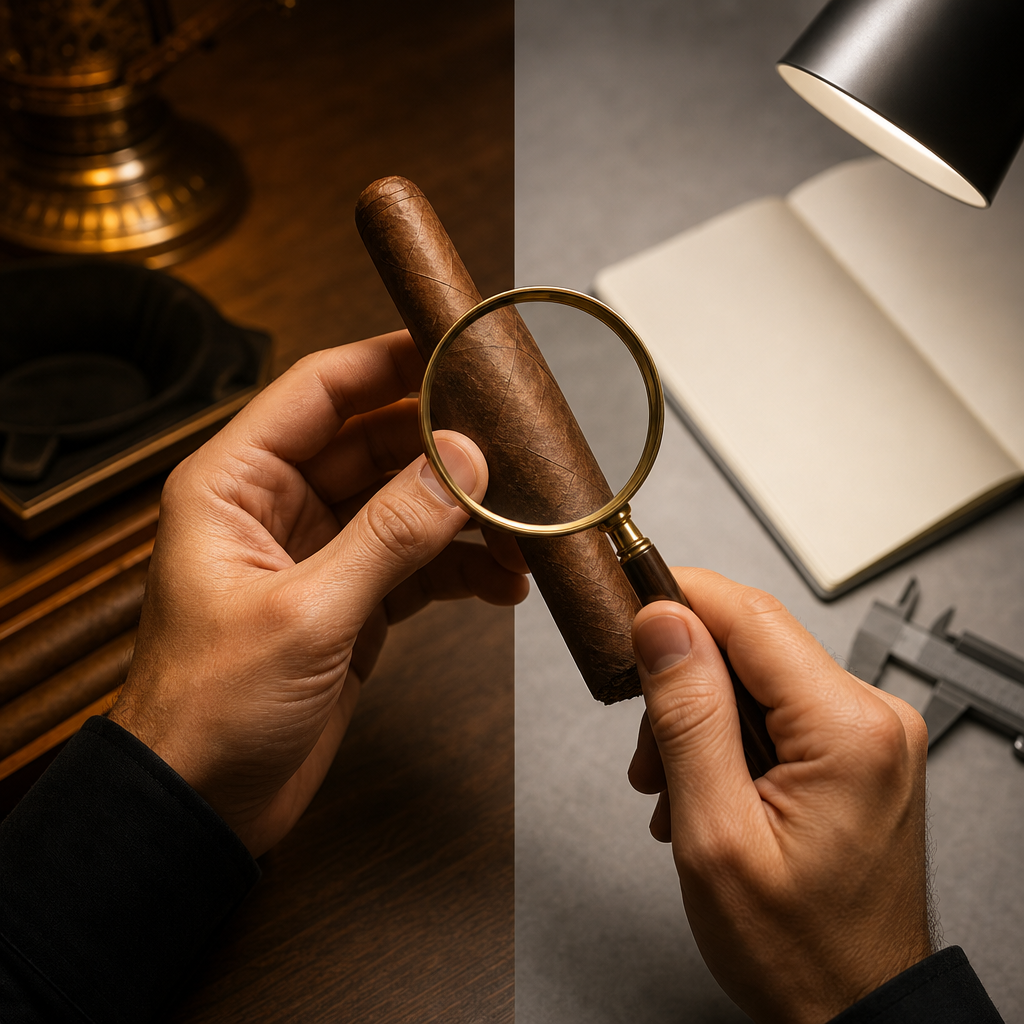
Gray ash is not a quality guarantee, but it can reveal mineral content, burn temperature, and ventilation status. Calcium, potassium, magnesium, and other inorganic salts leave ash after burning, and if the ash column is light gray and evenly layered, it usually indicates more stable combustion; if there are obvious black spots, it may be due to insufficient oxygen, high humidity, or differences in rolling density causing incomplete combustion.
The Cohiba Siglo VI, with a ring gauge of 52 and a length of 150mm, if stored and lit stably, often maintains a beautiful ash column. But even a famous brand can have uneven burn rates due to environmental wind direction. Outdoor breezes can provide more oxygen to the windward side, raising the temperature, while the leeward side smolders, eventually skewing the burn line. Frequent large-scale relighting often turns the problem into a bigger burnt taste.
The purpose of relighting is not to perfect the appearance into a perfect circle but to restore a stable heat field. I follow a few principles:
- First, rotate the cigar to let the slower-burning side face down or into the wind for observation.
- If it cannot self-correct within 1–2 minutes, use the edge of the flame to gently touch it.
- After relighting, let it sit for 20–30 seconds to allow the overheated area to cool.
- Avoid directly scorching the wrapper, as the thin leaves are most likely to char first.
Aging and Batch: How Time Changes Combustible Material and Flavor Pathways
Cigars, when aged in a suitable environment, will gradually reduce irritating volatiles, decrease ammonia, and make aromas more harmonious. However, time is not magic; if the original leaf structure is insufficient, fermentation is poor, or storage fluctuates too much, it will not automatically become a classic over time. Players often discuss batch differences in Cuban products from 2003, 2008, 2014, and 2019, which essentially are the accumulation of agriculture, fermentation, rolling, and subsequent storage.
Take the Bolívar Belicosos Finos, for example, which often has strong earthy, black coffee, leather, and spicy notes when young; after several years of stable aging, the sharpness may decrease, turning into dried fruit, cocoa, and old wood notes. However, if long-term high humidity persists, it will still feel stuffy during combustion, even extinguishing in the middle. In other words, time only changes the chemical background; the actual moment of entry is still determined by combustion conditions.
Aging can improve flavor edges but cannot replace correct humidity and stable combustion. As for collectible value, there are indeed people in the market who focus on limited editions, discontinued models, and specific box codes, but this does not guarantee appreciation; it still depends on source preservation and market. For experienced enthusiasts, rather than just chasing years, it's better to record temperature and humidity, box opening dates, and each burn performance; this data is more reliable than rumors.
Frequently Asked Questions
Why are some cigars in the same box particularly bitter?
Even within the same box, there may be differences in filler density, humidity distribution, and individual leaf variations. If bitterness is concentrated in the middle and back sections, common causes are puffing too quickly, tar accumulation, or overheating of the burning end. First, eliminate rhythm and humidity, then determine if it's an individual stick's condition difference.
Does a cigar frequently going out mean it's of poor quality?
Not necessarily. High humidity, incomplete lighting, outdoor low temperatures, or tight airflow can all cause extinguishing. If a cigar repeatedly goes out in a 69% environment, try lowering it to 65–67% for a few weeks and then observe its performance.
Why do larger ring gauges tend to have thicker smoke?
Larger ring gauges can accommodate more filler combinations, and the burning end area is also larger, usually resulting in more smoke. However, if puffed too quickly, larger ring gauges can also overheat. Thickness does not equal delicacy; the key is still smoke particles and combustion stability.
Does using a torch lighter ruin the flavor?
The torch itself is not the problem; the issue is being too close or for too long. It's recommended to slowly heat with the outer edge of the flame, avoiding directly charring the foot of the cigar. After lighting, let the embers even out before starting to puff formally.
Does an older cigar burn better?
Not necessarily. Aging can reduce irritants, but if the storage history is unstable, with wrapper cracking, internal dryness, or long-term high humidity, it will affect combustion. Age is just a clue, not a quality conclusion.
Why does the last third often become spicy?
Tar and heat accumulate in the back section, the smoke path shortens, and the smoke temperature at the entrance is also higher. You can slow down the rhythm, extend the interval, or stop when the taste becomes noticeably bitter; there's no need to burn every millimeter for formality.
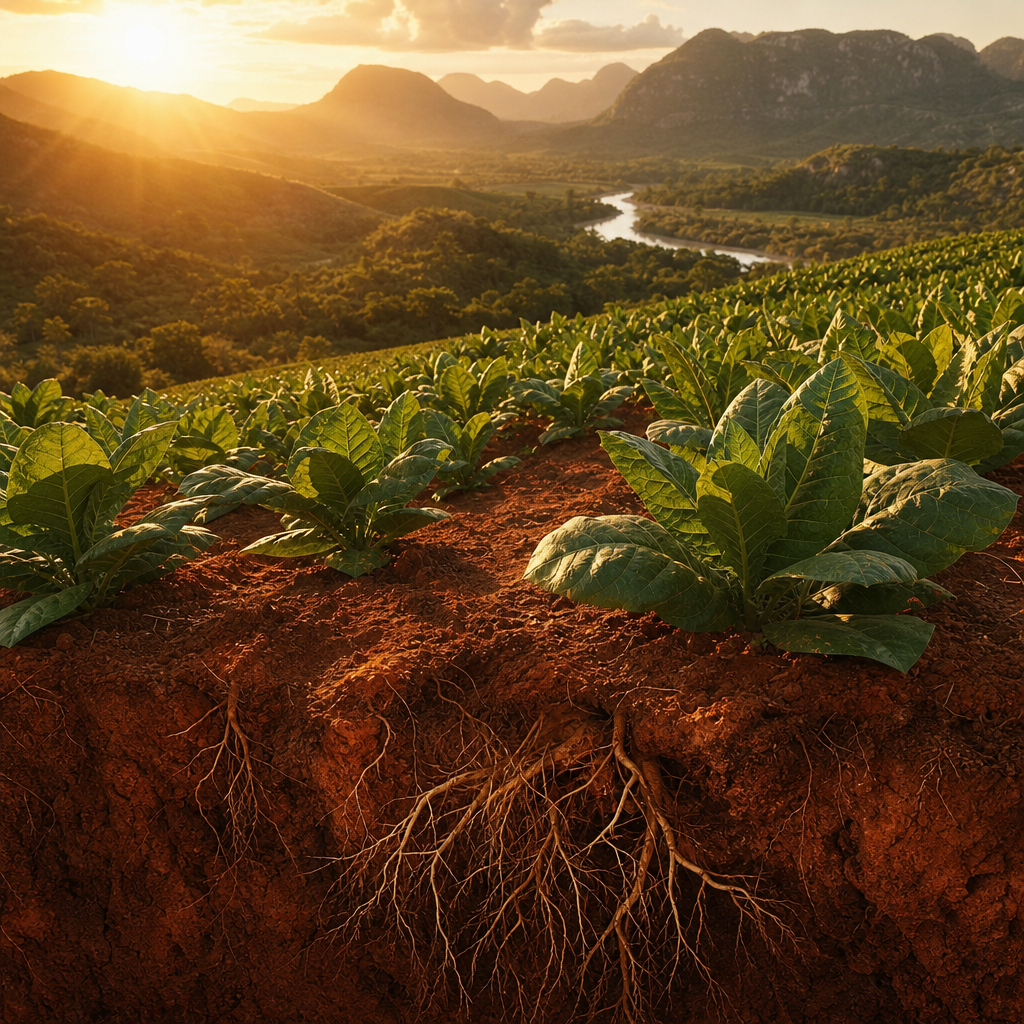
I have always believed that the truly fascinating aspect of experienced enthusiasts is not how many brands and years they can recite, but how they can read the reasons from a burn line, a puff temperature, and an ash column. The flavor of a cigar begins with the land, goes through fermentation, rolling, and aging, and finally completes in the fire. Understanding and respecting this combustion process is the key to appreciating why each cigar is unique.
—Cigar Prince Wilson Tsai
Smoking is harmful to health.
Smoking is prohibited for those under twenty.
Quitline: 0800-636363.
This article is intended as a reference for cigar culture, storage, and regulatory knowledge for adults over the age of twenty, and is not an advertisement, promotion, or purchase suggestion for tobacco products.