The Impact of Cigar Cutting on Flavor: In-Depth Techniques and Practices
The Impact of Cigar Cutting on Flavor: In-Depth Techniques and Practices
Cutting a cigar may seem like just a second before lighting, but it actually determines the rhythm for the next forty minutes to two hours. A cut that's too small increases draw resistance and thins the smoke; a cut that's too large can make the smoke harsh, cause tar to accumulate quickly, and even loosen the cap, turning an elegant cigar into a messy one.
As the editor of "The Cigar Bible," I often compare cutting to opening wine: you can still drink a 2016 Bordeaux with the wrong glass, but it lacks complexity. The same goes for cigars like Cohiba, Partagás, Davidoff, and Arturo Fuente, each with its own ring gauge, filler, and cap design. If the cutting method complements the structure, the flavors become clearer.
Cutting is Not Just Making a Hole, But Controlling Airflow and Combustion
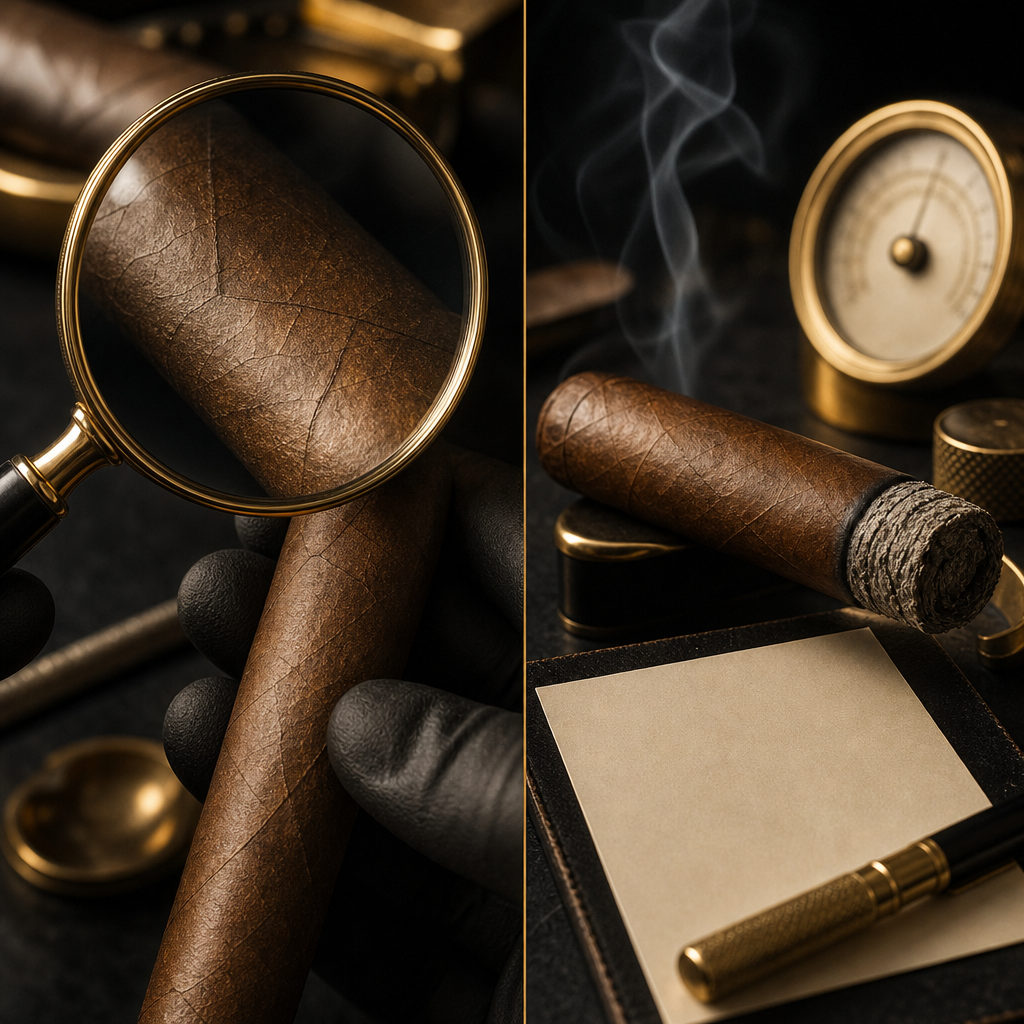
The head of a cigar is sealed with a cap, usually visible with one or two cap lines; traditional Cuban handmade cigars often have triple caps, such as the Cohiba Siglo VI and Montecristo No.2, which show delicate finishing. The purpose of cutting is not "the more you cut, the smoother it is," but to open enough airflow without damaging the cap's support. A good cut should be clean, flat, and just below the cap line, not slicing off the entire head.
Airflow affects smoke density, combustion temperature, and aroma performance. When the cut is too small, the smoker tends to draw harder, raising the core combustion temperature, amplifying pepper, wood, and bitterness; when the cut is too large, the smoke rushes into the mouth, making the initial part strong, but the latter part more prone to tar. For example, with a 52-ring gauge Hoyo de Monterrey Epicure No.2, cutting about 2 millimeters usually retains more cream and cedar wood aroma than cutting 5 millimeters.
In 2019, while organizing records of beginners in the store, the most common issue was not lighting but cutting too deep, causing the wrapper to crack. The Robusto size is often considered easy to handle, but with a 50-ring gauge and short body, the smoke channel is already direct; if cut too large, the concentration rises quickly. The core of cutting is to let the cigar burn at its own pace, not to speed it up with your mouth.
Straight Cut: The Most Versatile, Yet Tests Blade and Feel
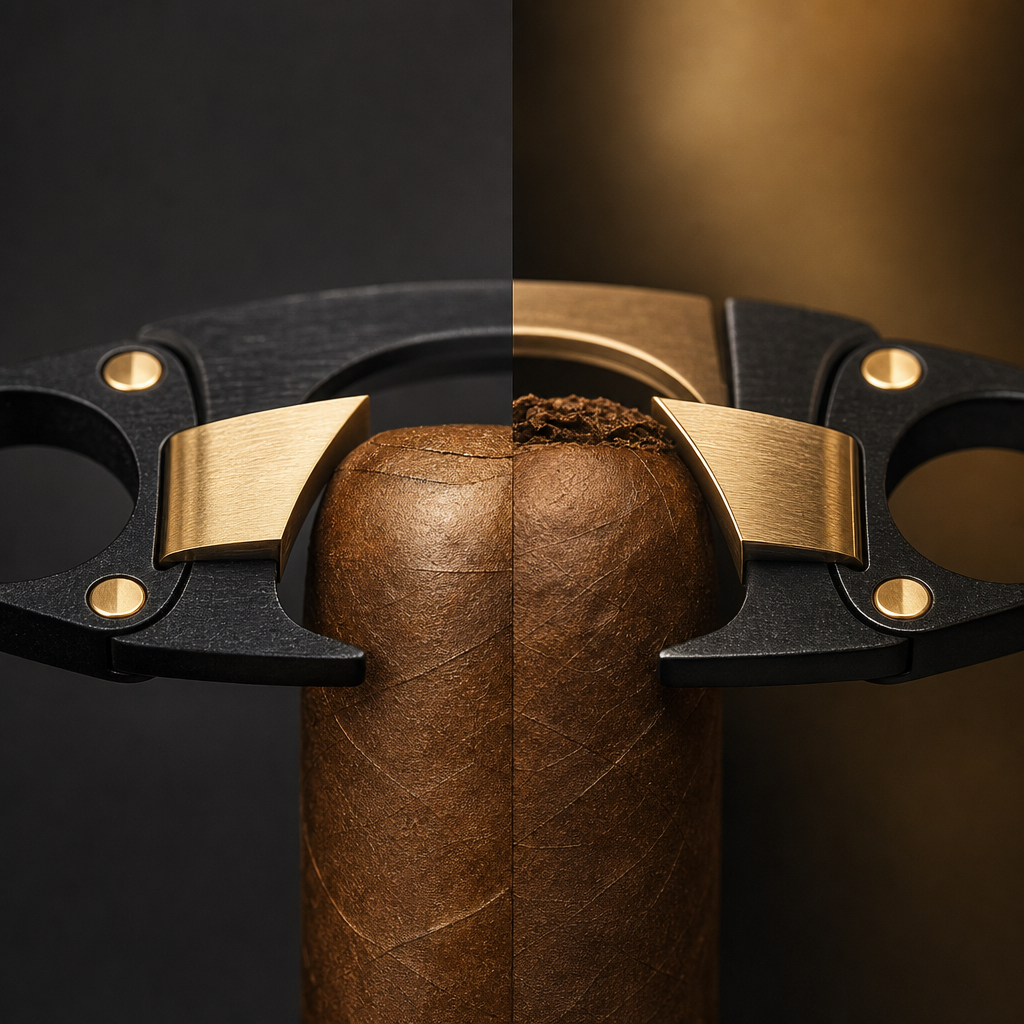
The straight cutter is the first tool most people own, commonly available in single and double blades. Double-blade cutters apply force from both sides towards the center, making it easier to leave a smooth cut surface; Xikar, S.T. Dupont, and Colibri all have mature designs. For the large ring gauge cigars popular after 2020, ranging from 54 to 60, whether the cutter's opening is large enough is crucial, as a small blade can crush the cigar head, causing the wrapper fibers to tear.
Straight cuts are suitable for Parejo straight shapes, such as Partagás Serie D No.4, Romeo y Julieta Short Churchills, and Davidoff Grand Cru No.2. When operating, I first find the cap line, letting the blade fall about 1 to 2 millimeters below it, closing quickly and decisively. Do not saw slowly, nor cut while rotating; slow movements can compress the wrapper with about 69% humidity, causing burrs. The advantage of a straight cut is open smoke and easy judgment; the downside is low tolerance, as cutting too deep can quickly go out of control.
In practice, after a straight cut, you can do a cold draw to feel if the airflow is as natural as drinking room temperature water through a straw. If the draw resistance is heavy, don't rush to cut more; you can first use a thin needle to gently clear the center; if still tight, trim another 0.5 to 1 millimeter. In 2017, I compared the same box of Montecristo No.4, cutting the first one about 4 millimeters deep at once, resulting in intense smoke and bitterness in the latter part; the second one was trimmed twice, and the hazelnut and cocoa notes were significantly more stable, with a very specific difference.
V-Cut: Concentrating Smoke Flow for More Pronounced Sweetness and Thickness
The V-cut, also known as a wedge cut, creates a groove in the cigar head, retaining more cap structure while increasing the concentration of smoke contact with the tongue. In recent years, many seasoned customers have rediscovered the V-cut, especially on Robusto, Toro, and Double Robusto cigars with a ring gauge above 50, balancing draw resistance and flavor thickness. Cigars like Padron 1964 Anniversary Maduro and Oliva Serie V Melanio, which already have cocoa, coffee, and molasses notes, often become more cohesive in the middle section with a V-cut.
The biggest concern with a V-cut is a dull blade or too deep an angle. A good V-cutter will press out a clean groove at once, with a depth of about 3 to 5 millimeters, without needing to cut it like a canyon. If cut too deep, the ends of the groove may approach the cap line, making it easy to inhale fine tobacco leaves when held in the mouth. The V-cut is not to make the smoke larger but to concentrate the smoke flow and give the flavor more contour.
I often suggest to those who have mastered the straight cut to use the V-cut on cigars that are "flavor-wise loose" or "ring gauge-wise large." For example, many Nicaraguan brands launched 6 x 60 sizes after 2018, where a straight cut sometimes results in a large smoke volume but scattered layers; switching to a V-cut, black pepper, roasted nuts, and leather notes become more focused. However, for Lancero or Corona with a ring gauge of 38 to 42, a V-cutter can easily cut too much, making a small straight cut more precise.
Punch Cut: Strong Sense of Etiquette, But Not Suitable for Every Cigar
The punch cut, also known as a punch cut, uses a circular blade to drill a hole in the center of the cigar cap, commonly with diameters of 7, 9, or 11 millimeters. Its advantage is retaining the most cap, keeping the entry end clean, and being convenient for standing conversations or short breaks. Many business occasions prefer this cutting method because the cigar head doesn't easily scatter, and there are fewer ashes and fragments. The punch cut is most suitable for cigars with a flat head, medium to large ring gauge, and not too tight filler.
For cigars like H. Upmann Magnum 50, Cohiba Robustos, and Davidoff Winston Churchill The Late Hour Robusto, with a ring gauge around 50, a 9-millimeter punch is usually sufficient. If the airflow feels tight, you can use the "double punch" method, drilling another small hole next to the center, but the two holes should not be too close to the edge, or it may damage the cap line. The punch cut is not suitable for Torpedo or Piramides cigars, as the contact surface is insufficient, making it difficult to stabilize the drilling position, and the smoke flow can become overly concentrated.
The punch cut has a noticeable impact on flavor: it makes the smoke entry finer and faster, often concentrating the aroma in the initial part, but the sweet and mellow feeling may not be as open as a straight cut. In 2016, I tried the same batch of Romeo y Julieta Wide Churchills, one with an 11-millimeter punch and one with a straight cut of about 2 millimeters; the punch version had sharper wood notes, while the straight cut version had broader cream and floral notes. If you like to savor slowly and feel the aroma unfold, the punch may not always be the best answer.
Torpedo, Pyramid, and Perfecto: Tapered Cigars Require Segmental Thinking
Torpedo, Piramides, Belicosos, and Perfecto, these non-straight shapes, are most charming for the smoke flow changes brought by the tapered head. Montecristo No.2 is a classic Piramides, 156 millimeters long with a 52-ring gauge; Bolívar Belicosos Finos is shorter and more powerful. If such cigars are cut too deep in one go, it is equivalent to cutting off the concentrated smoke channel arranged by the designer, making the flavor go from delicate to heavy. Tapered cigars should be trimmed in small amounts multiple times, gradually opening the draw resistance and smoke flow.
My approach is to first cut off about 2 to 3 millimeters of the tip and perform a cold draw test; if the draw resistance feels like sucking a thick milkshake, trim another millimeter. The angle of the taper can also be adjusted: a flat cut will balance the smoke flow, while a slightly angled cut will direct the smoke to one side of the tongue, which is interesting for those who like to observe the position of sweetness and spiciness. But the angled cut must keep the blade sharp, or the wrapper will be unevenly stressed, and the crack will easily expand after lighting.
Perfecto requires even more caution because it tapers at both ends, and the foot often needs time to open. Arturo Fuente Hemingway Short Story is a frequently discussed example, about 4 inches long with a 49-ring gauge, and the smoke volume won't explode immediately in the early stages of lighting; if the head is cut too large, the first 10 minutes will seem hot. When the body widens in the middle section, the smoke volume naturally increases, which is its structural highlight. Don't rush to use a large cut to hasten a shaped cigar; its rhythm is inherently different.
Tools, Humidity, and Hygiene: Good Cutting Starts with Maintenance
The quality of cutting depends not only on technique but also on the condition of the tools. A dull blade will crush the wrapper, a rusty blade will leave an odor, and a tar-stained punch will introduce off-flavors during a cold draw. For regular use, I recommend wiping the blade with a dry cloth every 20 to 30 cigars; if there's a sticky feeling, use a small amount of high-concentration alcohol to wipe and then dry completely. If the cigar's storage humidity is consistently above 72%, the wrapper is softer, making the cut more prone to burrs; below 62%, it may crack with one cut.
| Tool Type | Suitable Cigars | Flavor Tendency | Common Risks |
|---|---|---|---|
| Double-Blade Straight Cut | Robusto, Corona, Churchill | Open, Balanced | Too Deep Cut, Loose Cap |
| V-Cut | Toro, Double Robusto | Concentrated, Thick | Groove Too Deep |
| Punch Cut | Flat Head Above 50 Ring Gauge | Clean, Concentrated | Tight Draw |
| Cigar Scissors | Large Ring Gauge or Special Sizes | High Freedom | Unstable Hand Causes Slant Cracks |
Tool selection is also related to hand strength. Cigar scissors may seem elegant but require stable pressure from both sides, which may not be easier for beginners than a double-blade cutter; tabletop guillotines make beautiful cuts but are inconvenient to carry outside. No matter how expensive the cutter, if the blade is dull or the usage is hesitant, it is not as good as a clean, sharp basic double-blade cutter.
When I go out, I usually carry a double-blade cutter that can cut a 60-ring gauge and a 9-millimeter punch. When encountering aged cigars from the 1990s, where the wrapper is more sensitive to moisture, I lightly press the head with my fingers to check elasticity before handling with a shallower cut. Aged cigars can be straight cut, but it's important to avoid applying too much pressure at once, so the wrapper preserved for many years doesn't suffer excessive tension in a second.
Practical Process: From Observing the Cap to Adjusting Draw Resistance
Beginners don't need fancy cutting methods but a stable process. Before lighting each time, first look at the cigar head: where is the cap line, are there any cracks in the wrapper, is the head dry? Then feel the body, gently pressing from the foot to the head to check for hard spots. If the area near the head is particularly hard, opening the cut wide may not improve it, as the blockage might be inside the filler. The 15 seconds of observation before cutting often prevent 60 minutes of trouble later.
You can practice according to the following sequence, and after recording 10 cigars consecutively, you'll clearly know your preference for draw resistance and smoke volume:
- Find the Cap Line: Let the cut fall 1 to 2 millimeters below the cap line.
- Quick Cut: Complete in one cut, no dragging, no rotating.
- Cold Draw Test: Check airflow, sweetness, wood, or herbal notes.
- Micro Adjustment: Trim only 0.5 to 1 millimeter at a time.
- Observe After Lighting: Don't rush to draw in the first 5 minutes, let the burning surface stabilize.
If the draw is too heavy after cutting, don't continuously draw hard. You can gently knead the hard spot on the body or use a draw tool to slowly enter 2 to 4 centimeters from the center of the head; for long Churchill sizes like Romeo y Julieta Churchills, 178 millimeters long, it's not advisable to forcefully go all the way through to avoid deviation. If it's too loose after cutting, there's less room for remedy, so slow down the pace, drawing every 60 to 90 seconds to avoid overheating.
In 2021, I recorded a teaching session with three cigars from the same box of Partagás Serie D No.4: the first was cut too deep, intense in the initial part but bitter after 25 minutes; the second had a small straight cut plus a draw tool, with smooth draw and clear earthy and leather notes; the third was V-cut, with concentrated sweetness but slightly faster tar in the latter part. This shows that no single cutting method always wins; the key is to understand the structure and the day's condition.
Common Questions
Does a cut with loose tobacco mean the cigar is bad?
Not necessarily. Loose tobacco may result from a dull blade, high cigar humidity, or cutting too close to the cap line. First check the tool and cutting position, then assess the cigar's condition. If it's just a small amount of loose tobacco, gently blow the cut; if the cap is loose, slow down when puffing to prevent saliva from expanding the crack.
Which cutter should beginners buy first?
I recommend starting with a double-blade straight cutter, with an opening that can accommodate at least 54 to 60 ring gauges, to handle Robusto, Toro, and Churchill. Once you can consistently cut smooth surfaces, add a V-cut or punch. Tools don't need to be top-notch right away, but the blade must be clean and sharp.
Why does the same cigar taste better when my friend cuts it?
It could be due to differences in cut size, draw frequency, or storage humidity. Cigars stored at 69% humidity and those at 72% will have different cutting and burning speeds; the same Cohiba Siglo II will feel more refined with a small straight cut, but too large a cut can make it spicy.
Can a torpedo be V-cut?
Yes, but it depends on the cutter angle and the width of the tip. If the tip is too narrow, a V-cut can easily go too deep, damaging the taper design. I usually start with a small straight cut, check the draw resistance, and then decide whether to trim larger. For classic tapered cigars like Montecristo No.2, small and multiple cuts are the safest.
Can a bad cut be fixed?
If it's just a burr on the cut, use a sharp cutter to trim another 0.5 millimeters; if the cap falls off completely, use your fingers to hold the entry end, reduce moisture, and slow down the draw. If the crack extends along the body, don't force perfection; instead, use it as an opportunity to observe the structure.
Does a punch cut concentrate tar more?
It's possible, especially when the burning temperature rises in the latter part, a smaller aperture can concentrate tar near the entry. If bitterness increases, pause for 2 to 3 minutes, or switch to a straight cut for a slight adjustment. Any cutting method should match the pace; the cut is just the beginning, not everything.
Conclusion: My Perspective on Cutting
For me, cutting a cigar is not about showing off skills but respecting the final process left by the maker on the cap. From a 42-ring gauge Corona to a 56-ring gauge Double Robusto, each has its own breathing method. Cutting shallower, observing more, and rushing less often results in more complete flavors. True mature cigar etiquette is not cutting beautifully for others to see but understanding what the cigar wants to say in a quiet rhythm.
—Cigar Prince Wilson Tsai
Smoking is harmful to health. Smoking is prohibited for those under twenty. Quitline: 0800-636363. This article is intended for adults over twenty as a reference for cigar culture, preservation, and regulatory knowledge, not as an advertisement, promotion, or purchase suggestion.