The Craft and Techniques of Cigars: A Dialogue Between Antique and Modern
The Craft and Techniques of Cigars: A Dialogue Between Antique and Modern
I often feel that experienced cigar enthusiasts should not stop at brand, vintage, and size, but should return to the craft site: how a leaf is judged, folded, rolled into an airway, and finally becomes a stable and layered burning body. As the editor of the "Cigar Bible," I value not the mystique, but those verifiable techniques.
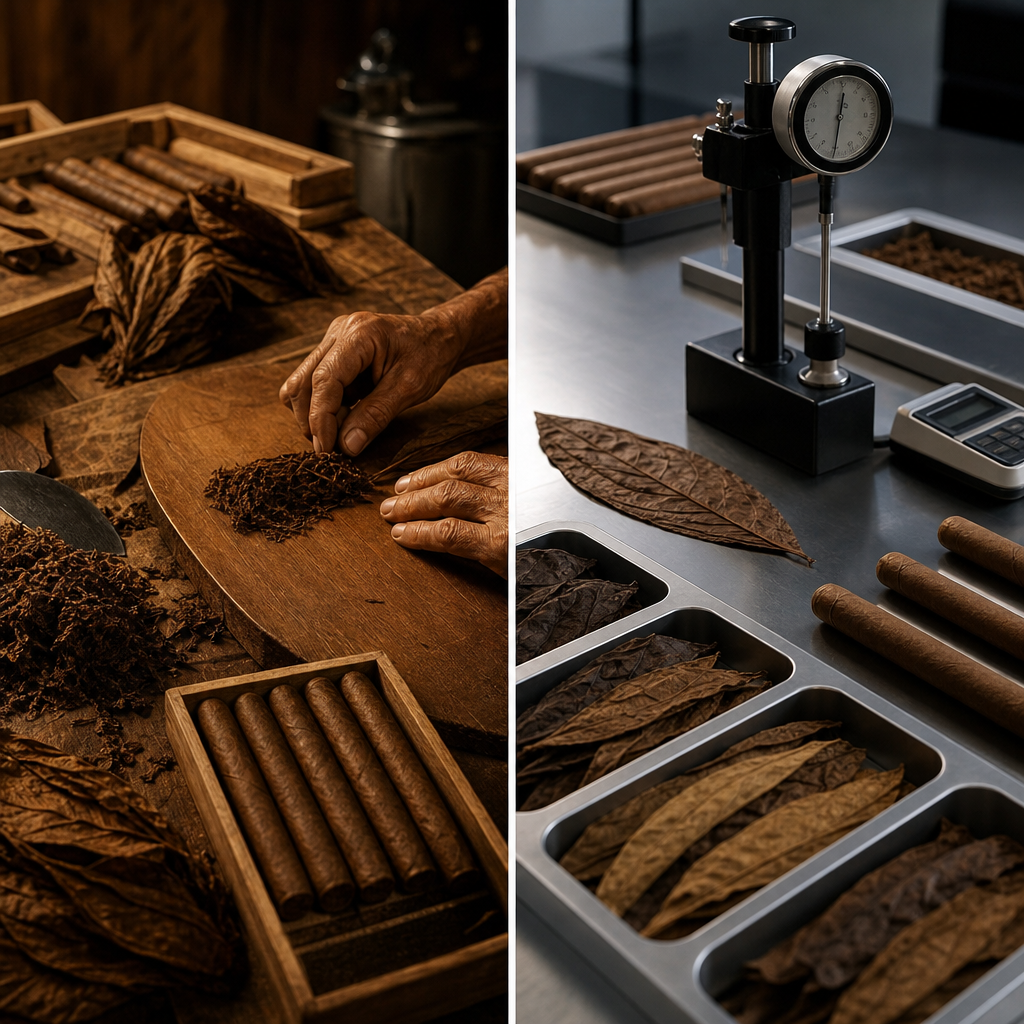
"Antique" is not outdated, and "modern" is not necessarily better. From 19th-century Cuban factories to modern quality control rooms in Nicaragua and the Dominican Republic, the real key has always been balance: the memory of the hand, the personality of the leaf, the patience of time, and whether each cigar can consistently reproduce the same character.
The Core of Antique Techniques: Touch is Not Romantic, But a Measuring Tool
In factories like Partagás, founded in 1845, and Romeo y Julieta, founded in 1875, early factories did not have today's electronic draw machines or temperature and humidity recorders. Rollers relied on the pressure of their fingers, the feel of the leaf veins, and burning experience. Old-school masters, when feeling the filler, would first judge the thickness, oiliness, elasticity, and moisture content of the leaf before deciding whether to place it in the core or outer layer. This is not a random guess, but a body ruler accumulated over the years.
The most precious aspect of antique craftsmanship is that it converts the "state of the leaf" into "structural judgment." For example, ligero leaves are high in oil and burn slowly; if too much is placed or concentrated on one side, the cigar is prone to uneven burning. Seco is aromatic and bright but lacks support; volado burns well but cannot solely establish the framework. The wisdom of the old method is to arrange the three like building a bridge.
The master-apprentice system, common in Cuban factories from the 1930s to the 1950s, usually took 2 to 5 years before a newcomer could move from simple sizes to complex vitolas. Shapes like figurado and perfecto, which taper at both ends, require higher filler density; too tight at the ends can stifle, while too loose in the waist can make the front section hollow. The value of old-school techniques lies not in slowness, but in connecting each step with the burning result.
Leaf Processing: Time Control from Fermentation Piles to Aging Rooms
The first watershed in cigar craftsmanship is not at the rolling table but in the leaf warehouse. Traditional Cuban and Dominican methods involve drying the harvested tobacco leaves in curing barns before entering the pilón fermentation pile. The pile height is usually 1 to 1.5 meters, with internal temperatures rising to 40 to 50 degrees Celsius. Workers need to turn the pile based on smell, temperature, and leaf color. If this stage is rushed, ammonia and greenness will remain in the later stages.
Modern innovation is not about shortening time but making time more controllable. Many Nicaraguan winery-style tobacco processing plants use probes to record the core temperature of the pile and compare changes within 24 hours. Some brands even ferment different field areas and picking levels separately to prevent high-oil ligero from affecting the thinner seco. This gives the blender more stable materials for subsequent formulas.
For example, the Padrón 1964 Anniversary series is often described by veterans as a stable combination of cocoa, coffee, wood, and pepper, relying not only on the formula but also on long-term tobacco aging. Davidoff's system in the Dominican Republic tends to be clean, precise, and with clear aromatic lines. Although the aesthetics of the two differ, they both illustrate one thing: aging is not waiting in a warehouse but managing humidity, temperature, and batches.
Rolling Structure: Entubado, Booking, and the Trade-offs of Mixed Methods
Veterans often discuss why the same cigar sometimes draws beautifully and sometimes seems blocked or empty. The answer often lies in bunching, the way the filler is bundled. The traditional Cuban entubado involves rolling each filler leaf into small tubes before gathering them, aiming to create multiple fine airways. Booking folds the leaves like book pages, which is faster and more structurally flat, but if pressed too tightly, airflow will be restricted.
No single rolling method always wins; the key is the thickness of the leaf, size, and the brand's desired burning rhythm. For modern cigars with large ring gauges of 54 to 60, relying entirely on traditional small tube rolling may not be the most effective, as the increased leaf volume amplifies the burning speed difference between the center and outer circle. Some factories adopt mixed methods, using tubes in the center to establish airflow and flat folds on the outside to stabilize the shape.
| Rolling Method | Classical Features | Modern Adjustments | Possible Flavor Impact |
|---|---|---|---|
| entubado | Multiple airways, high manual demand | Often used in high-end lines or small batches | Clearer layer unfolding |
| booking | High efficiency, stable shape | Adjusted with draw test corrections | More direct taste |
| accordion | Leaves folded in waves | Suitable for medium to large ring gauges | More even burning |
| mixed bunch | Multiple methods used | Adjusted according to size and leaf | Higher balance |
After 2010, many factories in Nicaragua and Honduras have focused more on "reproducibility." A skilled torcedor can complete about 80 to 150 cigars a day, depending on size, but production is not the only indicator. If the proportion of poor draw in every 50 cigars is too high, brands would rather slow down. This is where antique techniques and modern quality control dialogue: the technique is still in the hands, but the standard is corrected by data.
Molds, Pressing, and Draw: The Invisible Shape Engineering
Many people think the shape of a cigar is mainly determined by the wrapper, but in fact, molds and pressing are the skeletal engineering. Traditional wooden molds are very common in old Cuban factories. A set of molds usually has 10 to 20 slots, where the already rolled bunch is placed and pressed to form a stable cylinder or box-pressed shape. The pressing time can range from 30 minutes to several hours, with flipping in between to avoid seam concentration and pressure.
A good cigar's draw is often determined 70% before the wrapper is applied. If the filler itself has uneven density, even the most beautiful capa later will only cover the problem. Modern factories use draw test machines to test the airflow resistance of each bunch before wrapping. Some equipment presents it as a water column or digital pressure value, and brands set acceptable ranges, with anything outside the range being returned for rework.
Box-pressed is a shape language loved by both antique and modern. Early square boxes naturally pressed cigars, later becoming a style choice. The box-pressed feel of the Padrón 1926 Serie is crisp, making the burning surface and hand feel more stable. The Oliva Serie V Melanio also uses box-pressing to bring out modern precision. In contrast, the traditional cylindrical parejo emphasizes even tension more. Veterans should compare not which is more advanced, but which is more suitable for the formula.
Wrapper and Cap: One Cut, One Paste Determines the Final Expression
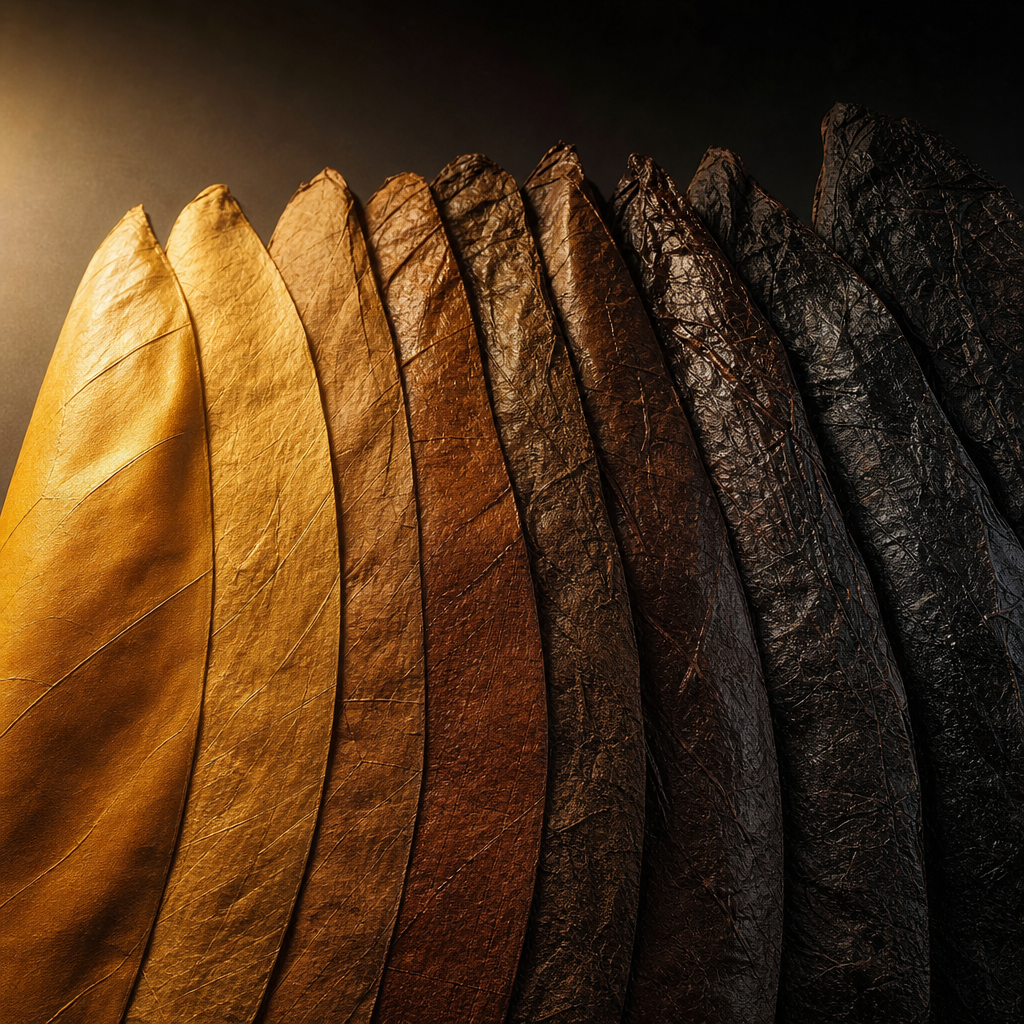
The wrapper is the most visible and most easily misunderstood part. Capa is not just responsible for beauty; it affects touch, burning speed, and the first layer of aroma. For Connecticut Shade, Ecuador Habano, Mexican San Andrés, Cameroon wrapper, the differences in thickness, oiliness, and elasticity are significant. Old-school masters, before cutting the wrapper, would first look at the direction of the leaf veins to let the burning line follow the natural fibers as much as possible.
The highest realm of wrapper craftsmanship is not to make the appearance flawless but to make the tension even, seams quiet, and burning undisturbed. The traditional chaveta half-moon knife seems simple, but the angle is very particular. If cut too straight, it is easy to pull when wrapping; if cut too slanted, seams increase, and burning may have unnecessary variables. This is why the same batch of leaves, when given to different masters, results in subtle differences in the finished product.
The cap is something veterans should look at closely. The Cuban triple cap is often regarded as classic, especially in lines like Cohiba, Montecristo, H. Upmann, where neat finishes are common. Dominican and Nicaraguan brands may use single caps, double caps, or pigtails depending on the size. The cap is not decorative; it determines whether the cut end is stable. If too much glue is used, the mouth end will be hard; if not enough, it may loosen during burning, disrupting the rhythm.
Modern Innovation: Data, Grading, and Small Batches Do Not Mean Losing Soul
After the 1990s, non-Cuban cigars rose rapidly, with Nicaragua's Estelí, the Dominican Republic's Santiago, and Honduras's Danlí becoming important production areas. When Fuente Fuente OpusX was launched in 1995, the possibilities of Dominican puros were re-discussed. Around 2009, many boutique brands emphasized single farms, limited batches, and special fermentation. These modern vocabularies are actually extending old craftsmanship.
Valuable modernization is about reducing uncontrollable variables, not removing people from the craft. Today's excellent factories record field areas, harvest cycles, fermentation batch numbers, aging times, roller numbers, and draw results. When a batch of robustos shows overheating in the middle of burning, the factory can check the ligero ratio, moisture content, and pressing time, rather than just saying "this batch of leaves is wilder."
- Leaf grading: Subdivided by priming, field area, color, oiliness.
- Environmental control: Common storage relative humidity is about 65% to 70%.
- Draw testing: Eliminate blockages or looseness before wrapping.
- Batch tracking: Link flavor issues back to raw materials and processes.
- Small batch blending: Create a clear personality with limited leaf sources.
As a special distributor for PCC, I have observed that mature collectors are increasingly concerned about origin, preservation, and batch context, not just the band. When discussing collection value, I always remind: it does not guarantee appreciation, still depends on origin preservation and market. The benefit of modern information transparency is that veterans can understand a cigar more rationally, rather than being led by stories.
Balancing Heritage and Innovation: How Veterans Should Interpret a Cigar
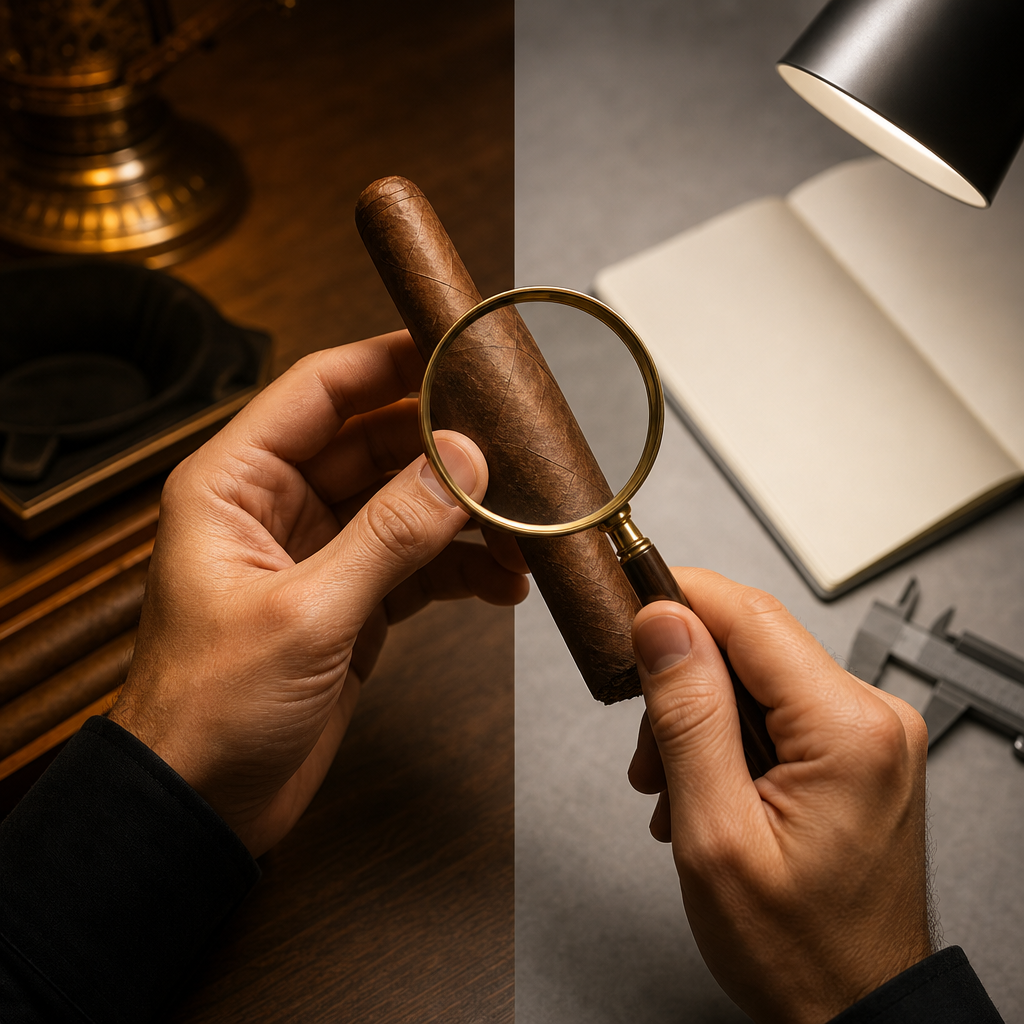
Interpreting craftsmanship is not about using a magnifying glass to pick faults, but understanding production choices. When you get a cigar, you can first look at whether the wrapper's oil sheen is natural, whether the seams are smooth, and whether the foot's filler is even. Then gently press the head, middle, and tail sections to feel whether the elasticity is consistent. Too hard does not necessarily mean good, too soft is not necessarily bad; the key is whether the pressure feels continuous, without sudden collapse or hard spots.
The advanced ability of veterans is to trace burning phenomena back to craftsmanship reasons. A blocked front section may be due to too dense filler at the head or insufficient cut; uneven burning in the middle may be due to uneven ligero distribution or uneven wrapper tension; a bitter and hot back section may be related to smoking rhythm, high humidity, or insufficient leaf fermentation. If the same phenomenon occurs in multiple cigars from the same box, it is more likely a batch or preservation issue, rather than a single cigar difference.
I suggest veterans establish their own craftsmanship notes, rather than just writing "tasty" or "strong." You can record 5 indicators: draw, burn line, ash stability, temperature feel, flavor transition. For a 90-minute robusto, you can make a brief note at 10, 30, and 60 minutes after lighting. Looking back six months later, you will find that some brands are not simply to your taste, but are particularly trustworthy in craftsmanship stability.
Frequently Asked Questions
Are antique rolling methods always better than modern ones?
Not necessarily. The value of antique rolling methods lies in delicate touch, while modern methods value stable reproduction. Truly skilled factories combine both, rather than choosing one side.
Why is there still draw variation in the same box of cigars?
Cigars are agricultural products and handmade items. Even with the same batch of leaves and size, there are slight differences in leaf thickness, moisture content, and rolling pressure. Modern draw testing can reduce issues but cannot completely eliminate natural variations.
Does a larger ring gauge better showcase complexity?
Not necessarily. A larger ring gauge can accommodate more leaf proportion, offering more blending space; but if the structure is loose, flavors can become scattered. Smaller ring gauges like corona gorda often present more concentrated, sharp lines.
What is the difference in craftsmanship between box-pressed and cylindrical cigars?
Box-pressed requires additional pressing to shape, providing a more stable feel and less rolling when placed, with possibly a flatter burning surface. Cylindrical relies more on even tension. There is no superiority between the two; the focus remains on the formula and pressing control.
How can you tell if the wrapper craftsmanship is delicate from the appearance?
You can look at whether the seams are smooth, whether the leaf veins are excessively raised, whether the cap is clean, and whether the foot is even. A beautiful appearance does not guarantee excellent flavor, but rough seams and loose caps often increase burning risk.
Is craftsmanship important when collecting old cigars?
Yes, it is important. If the original rolling density of old cigars is not good, the problem becomes more apparent after long-term storage. When discussing collection, remember: it does not guarantee appreciation, still depends on origin preservation and market. Craftsmanship, condition, and circulation context are indispensable.
Finally, I want to say that the charm of cigars is not only in the smoke but in how they compress agriculture, time, craftsmanship, and judgment into a readable work. Antique techniques remind us to respect touch, modern innovations remind us to respect data; the real fun for veterans is seeing the artisan's choices between the two. Understanding these, then discussing brand and vintage, the taste will have a deeper coordinate.
—Cigar Prince Wilson Tsai
Smoking is harmful to health. Under 20 years old is not allowed to smoke. Quit smoking hotline: 0800-636363. This article is for reference only for adults over 20 years old as knowledge of cigar culture, preservation, and regulations, not as tobacco advertising, promotion, or purchase advice.