Maturation Is Not a Myth: The Ongoing Chemical Changes Inside Cuban Cigars
Smoking is harmful to health. Persons under the age of twenty may not smoke. Smoking cessation hotline: 0800-636363. This article is provided solely for adults aged twenty and above as a reference on cigar culture, storage, and regulatory knowledge. It is not tobacco advertising, promotion, or purchase advice.
The true fascination of Cuban cigar maturation and storage does not lie in the oversimplified slogan, "the longer you keep them, the better they become," but in understanding the dynamic balance among tobacco leaves, humidity, temperature, time, and the boxed environment. For experienced enthusiasts already familiar with the characters of Cohiba, Montecristo, Partagás, H. Upmann, Bolívar, and other brands, the advanced key is not chasing vintage labels, but judging when a cigar enters its optimal smoking window, when it needs to rest, and when it may miss its peak because of storage imbalance. The following discusses the art of Cuban cigar maturation and storage from chemical changes, environmental numbers, long-term management, and practical cases.
Maturation Is Not a Myth: The Ongoing Chemical Changes Inside Cuban Cigars
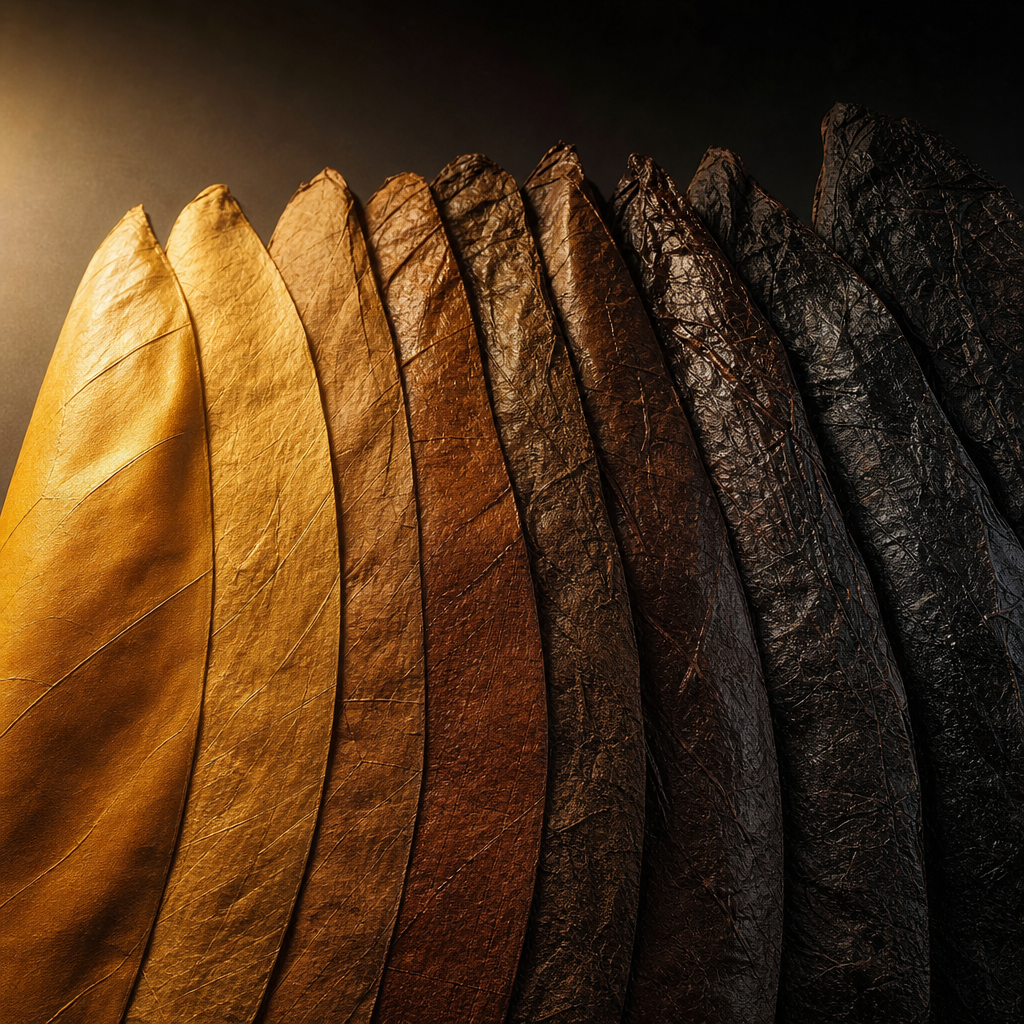
After a Cuban cigar has been rolled, it does not mean the changes in the tobacco leaves have stopped. Taking the 2014 boxed H. Upmann Sir Winston, the 2016 Montecristo No.2, and the 2019 Partagás Serie D No.4 as examples, the greenness, ammonia finish, and rough woody sensation often found when they first leave the factory usually come from volatile compounds still remaining after tobacco fermentation. After entering a stable environment, ammonia compounds gradually dissipate, organic acids and alcohols undergo slow esterification, some polyphenols oxidize and polymerize, spicy irritation is rounded off, and sweetness, nuts, leather, hay, cocoa, and coffee tones gradually emerge. This is not a single reaction, but the accumulated result of dozens of subtle reactions over a scale of 2 years, 5 years, and 10 years.
Experienced enthusiasts often say, "three years to see structure, five years to see integration, ten years to see the soul." Although this is not a scientific formula, it has practical meaning. Taking Ramón Allones Specially Selected as an example, young boxes often show rich dried fruit and earthy notes, but the opening may be slightly restless. If kept at 18 to 20°C and around 64% relative humidity for 4 to 6 years, the dried-fruit sweetness usually becomes more concentrated, and the burn line becomes more stable. Conversely, if the environment remains above 72% RH for a long time, maturation will not be accelerated into elegance. Instead, the tobacco may swell, burning may become sluggish, and the risk of mold may rise. The core of maturation is not to "stew" a cigar until ripe, but to let irritants decline, aromatic molecules rearrange, and structure slowly integrate under low-fluctuation conditions.
The Golden Range of Temperature and Humidity: Why Experienced Enthusiasts Often Adopt the 65/65 Mindset
Cuban cigars mostly use natural long filler. The leaves contain oils, sugars, and minerals, and are quite sensitive to environmental changes. Traditional advice commonly cites 70°F / 70% RH, which is about 21°C / 70% RH, but in hot and humid Asian regions, this set of numbers is often on the high side. If indoor temperatures remain at 27 to 30°C in summer, together with 70% RH, the risk of cigar beetle hatching and mold growth increases noticeably. Therefore, many enthusiasts with long-term storage experience adopt a range of 18 to 21°C and 62 to 66% RH, referred to as a mindset close to "65/65": temperature about 18.5 to 20°C, and humidity about 64 to 66%.
For cigars with delicate flavors and layers that depend on clean combustion, such as Cohiba Siglo VI and Trinidad Fundadores, storage at 68 to 70% RH may make the entry seem fuller, but the burn rate may be slower, the smoke more muffled, and bitterness more likely to accumulate in the final third. If reduced to 63 to 65% RH, the smoke profile becomes clearer, and bean aroma, honey, grassy sweetness, and creaminess usually show more layers. However, cigars with strong structures, such as Bolívar Belicosos Finos and Partagás Lusitanias, should not be kept too dry either. Long-term storage below 60% RH may cause the wrapper to lose elasticity and make the aroma seem dry and rigid. Advanced storage is not about pursuing a single number, but about controlling temperature and humidity fluctuations within a very small range. For example, keeping daily humidity movement to no more than 2% and temperature movement to no more than 1.5°C is far more important than occasionally achieving beautiful numbers.
Boxes, Singles, and Microclimates Inside the Cabinet: Different Containers Bring Different Maturation Rhythms
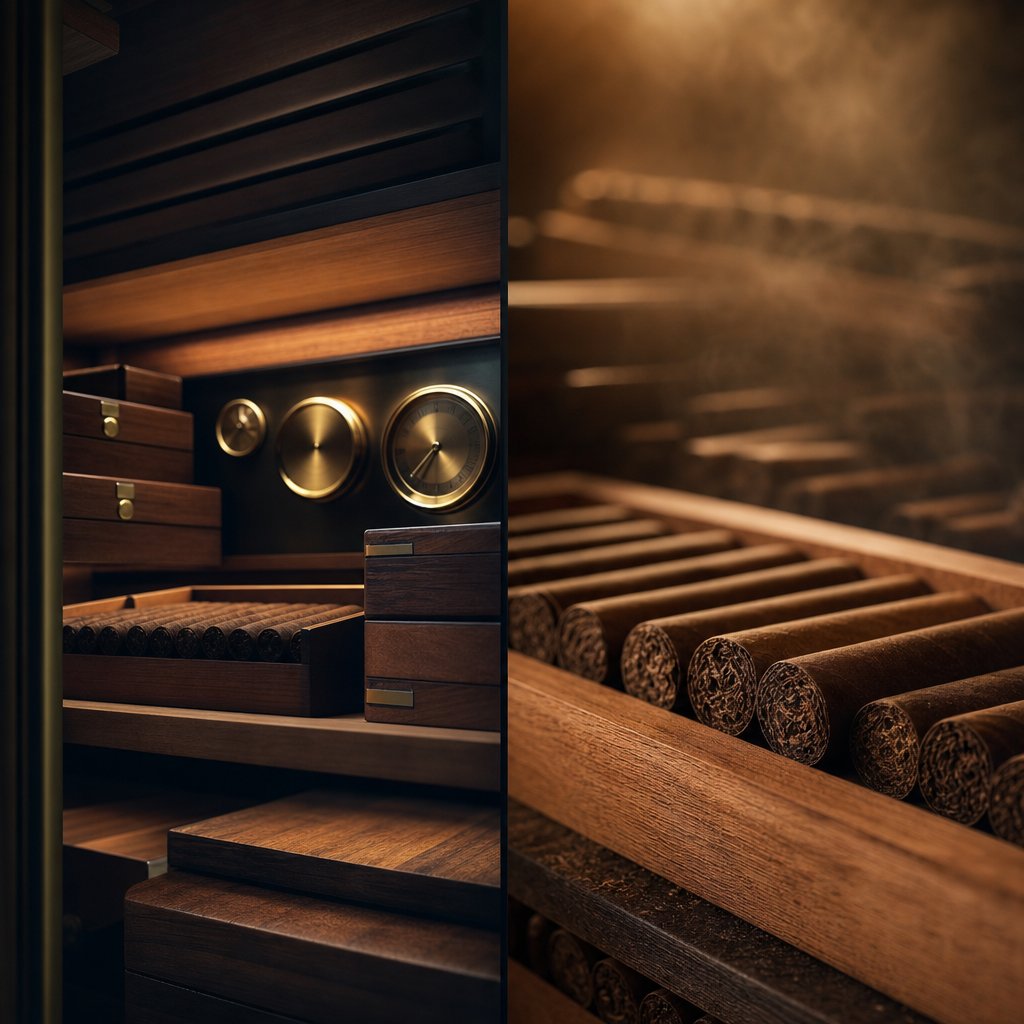
For the same Cuban cigar, the maturation rhythm differs depending on whether it is kept in its original wooden box, wrapped in cellophane, placed bare in a humidor, put into an aluminum tube, or stored in a ceramic jar. The common Cuban 25-count wooden box itself has a buffering effect. Spanish cedar can absorb and release moisture, and it also provides a faint woody aroma. Taking the 2018 boxed Montecristo Especial No.2 as an example, if the whole box is stored intact, it can usually retain a more complete brand framework after 5 years. If individual cigars are placed loose in the cabinet, they are affected more directly by environmental fluctuations, and aromatic development may be faster, but the overall depth may not be the same. Tubed cigars such as Romeo y Julieta Churchill A/T or H. Upmann Magnum 46 A/T have a more enclosed microenvironment inside the tube, slower moisture exchange, and a slower decline in youthful harshness, making them suitable for observation over a longer cycle.
The following are practical differences among containers often used by experienced enthusiasts. They are not absolute standards, but are useful for building judgment:
| Storage Form | Suitable Time | Main Advantages | Main Risks | Practical Suggestions |
|---|---|---|---|---|
| Original wooden box, full box | 3 to 15 years | Stable, good integration, beneficial for long-term maturation | If too wet when boxed, internal moisture is not easy to dissipate | Check the aroma inside the box once every 3 to 6 months |
| Single cigars placed bare | 3 months to 3 years | Condition changes quickly, convenient for observation | Easily affected by fluctuations inside the cabinet | Suitable for short- to mid-term management and flavor comparison |
| Aluminum tube storage | 5 to 20 years | Isolates fluctuations, strong aroma preservation | Humidity correction is slow; if originally too wet, it may become trapped | The tube can be opened periodically for a few minutes of airing, then replaced |
| Cellophane retained | 1 to 10 years | Reduces friction and cross-contamination of aromas | Exchange speed is slower | Precious wrappers can retain the protective layer |
| Sealed box with humidity-control packs | 6 months to 5 years | Low cost, stable numbers | Aromas become dull when ventilation is insufficient | Briefly exchange air each month and check for condensation |
The real detail lies in "do not intervene frequently." Many experienced enthusiasts initially over-handle and over-correct humidity, but the result is that they disrupt the microclimate. If a box of 2020 Hoyo de Monterrey Epicure No.2 has already been stable at 64% RH for 8 months, there is no need to rush to adjust it just because a single day shows 66%. Long-term storage depends on trends, not single-point numbers.
Vintage Windows and Brand Character: Not Every Cuban Cigar Suits the Same Timetable
The maturation potential of Cuban cigars is related to brand blend, size, leaf strength, rolling density, and initial condition. Generally speaking, smaller sizes such as Petit Corona, Minutos, and Perlas have less tobacco and faster oxygen exchange, so they often enter a good performance range within 2 to 5 years. Larger sizes such as Double Corona, Churchill, and Prominentes may need 5 to 12 years to show depth. For example, Partagás Shorts often show clear pepper, wood, and sweet earth after 2 to 4 years. But if Partagás Lusitanias is kept for only 2 years, the opening may sometimes be powerful while the middle and final thirds are not yet fully integrated. After 8 to 10 years, leather, roasted coffee, licorice, and mineral notes become more three-dimensional.
Cohiba maturation is also highly representative. Siglo VI usually sheds its green herbal quality after 3 to 5 years, while 7 to 10 years brings more refined honey, bean aroma, and creamy wood. Because of its special size and blend, Behike 52, if well stored, often shows a more rounded oiliness after more than 5 years. However, not all Cuban cigars should be kept for 15 years. Some Hoyo de Monterrey Epicure Especial from 2017 to 2019 were already quite balanced. If one seeks refreshing floral aroma and creamy tones, 4 to 7 years may be just right. Keeping them too long may instead cause them to lose liveliness. Experienced enthusiasts should establish their own "box-opening records": box code, year acquired, initial humidity, each sampling date, burn performance, and flavors in the first, middle, and final thirds. At least 3 to 5 cigars should be recorded before one can judge which stage the whole box has entered.
The Three Lines of Defense for Long-Term Storage: Beetles, Mold, and Fluctuation Prevention
The three greatest fears in long-term Cuban cigar storage are cigar beetles, mold, and severe fluctuations. The risk of cigar beetles often rises in environments around 24°C or above. Especially if warehousing or transportation in summer has involved high temperatures, eggs may hatch and leave tiny round holes and powder on the cigar surface. After receiving a new box, experienced enthusiasts often first conduct quarantine observation for 2 to 4 weeks, confirming that there is no off odor, no beetle holes, and no abnormal powder before placing it into the main cabinet. Some enthusiasts use freezing treatment, but it must be done very cautiously. A common process is to seal first, refrigerate for 12 to 24 hours, freeze for 48 to 72 hours, return to refrigeration for 24 hours, and finally warm slowly at room temperature. The purpose is to prevent condensation from directly damaging the wrapper. Whether to use this method depends on the source, year, transportation conditions, and personal risk tolerance.
Mold must also be distinguished from cigar plume. Cigar plume mostly appears as fine white crystals or powder, can be gently wiped off, and does not penetrate deep into the veins. Mold may appear hairy, green-gray, or blue-gray, and be accompanied by a moldy smell. If it appears deep in the foot, even more caution is required. During long-term storage, hygrometers should be calibrated at least once every 6 to 12 months. Salt tests or dedicated calibration packs can be used. Do not blindly trust electronic meters that have not been calibrated for years. Preventing fluctuations is the most commonly overlooked part. Humidors should not be placed near windows, air-conditioner vents, kitchens, or bathroom walls. If using a compressor-type cigar cabinet, pay attention to humidity swings caused by start-stop cycles. If necessary, use cedar trays, humidity-control packs, and circulation fans to buffer by layers. Truly good storage means allowing the cigars to almost forget the seasonal changes outside.
Source, Box Codes, and Practical Cases: The Upper Limit Is Decided from the Moment of Storage Entry
For experienced enthusiasts, the art of storage does not occur only in the home humidor. It begins with the source and inspection upon entry into storage. The bottoms of Cuban cigar boxes often have factory codes and month-year codes. For example, boxed cigars from different periods such as 2014, 2016, 2019, and 2022 can vary greatly in condition on the market. Two boxes of Montecristo No.2 from 2018 may perform very differently even with the same box code if one was kept steadily in an environment of 18 to 20°C and 65% RH, while the other spent several months in a high-temperature warehouse. The significance of a PCC authorized dealer lies in providing a clearer supply-chain context and storage responsibility, but home management after acquisition still determines the second half of the cigar's fate.
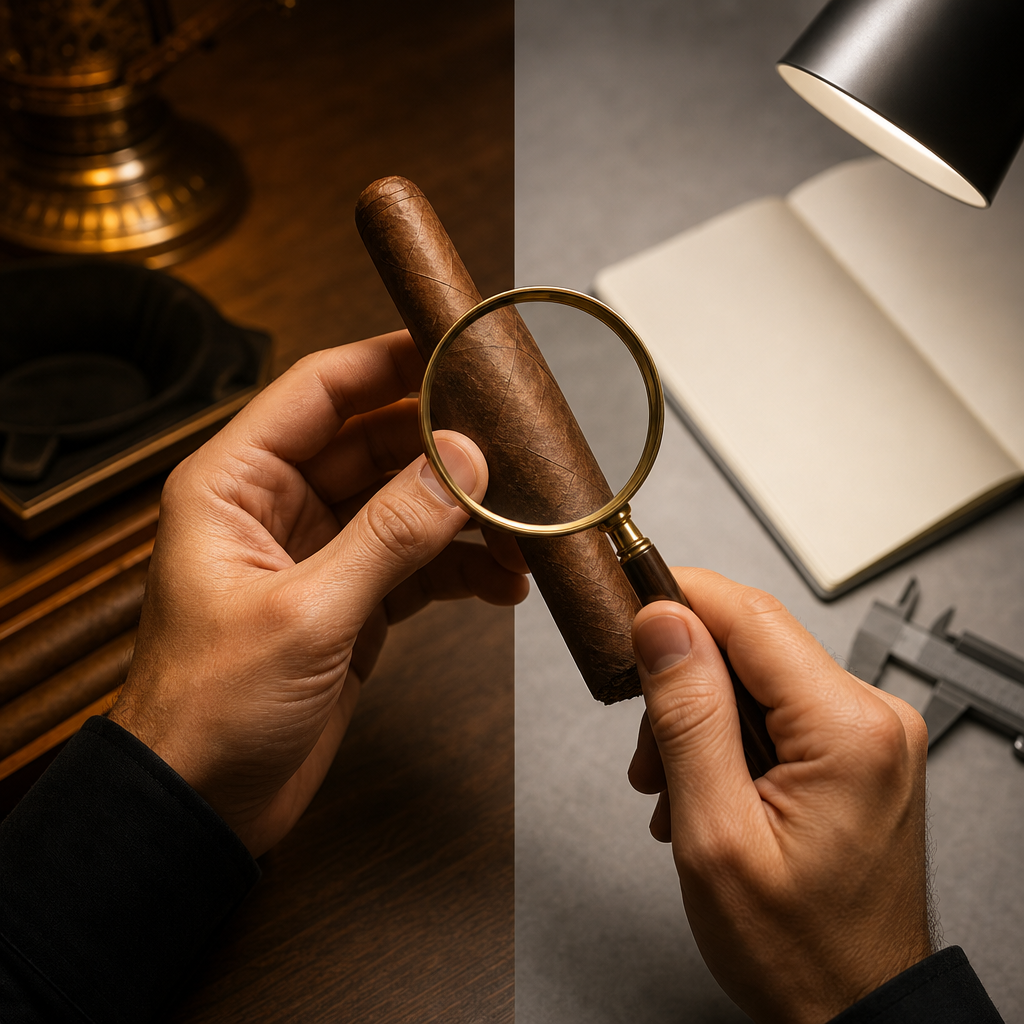
I often recommend that experienced enthusiasts conduct a four-step inspection after receiving a full box. First, look at whether the external seals, marks, and wooden-box aroma are natural. Second, examine whether the wrappers have sheen, color variation, cracks, or compression damage. Third, smell the foot for ammonia, mold, rancidity, or excessive sawdust odor. Fourth, measure the initial humidity inside the box and place it in quarantine. Taking a 2021 boxed Juan López Selección No.2 as an example, if it is slightly wet when it first enters storage, it can be rested in an environment of 62 to 64% RH for 60 to 90 days before deciding whether to place it in the long-term area. As for the meaning of age, it must be viewed rationally: aging does not necessarily mean improvement; source, storage, and the cigar's own condition still matter. What is truly worth investing effort in is not the number of years it is placed aside, but whether, after 5 or 10 years, you can open the box and still smell the complete interweaving of clean cedar, mature tobacco, cocoa, and leather.
Frequently Asked Questions
1. Do Cuban cigars get better the longer they are kept?
No. Maturation has a peak, and it also has decline. Small sizes such as Cohiba Siglo I and Montecristo No.4 often already show mature performance in 3 to 7 years. Larger cigars such as H. Upmann Sir Winston and Partagás Lusitanias may need more than 8 years to become more complete. But if storage is too dry, too wet, or at high temperature for a long time, even 15 years will not naturally make them better. Experienced enthusiasts should judge by brand, size, box condition, and sensory records, not by year alone.
2. For long-term storage, should I choose 62%, 65%, or 70% RH?
If in Taiwan or a similar hot and humid environment, 62 to 66% RH is generally recommended for long-term storage. 70% RH can be feasible in an environment that is stable and relatively cool, but the risk is higher during summer heat. If you prefer clean burning and clear lines, 64 to 65% is often more suitable. If the cigar is thinner or the wrapper is more brittle, it can be raised slightly to 66%. The key is stability, not chasing daily numbers.
3. How long should newly acquired Cuban cigars be rested?
If the transportation environment is unclear, at least 60 to 90 days of rest is recommended. If a full box has obvious ammonia, it can be extended to more than 6 months. For young Partagás Serie D No.4 or Bolívar Royal Coronas, harshness usually decreases after resting, and combustion becomes more balanced. During the resting period, do not open the box frequently. Checking once every 2 to 4 weeks is sufficient.
4. Does the appearance of white spots on the cigar surface mean it has gone bad?
Not necessarily. If they are even, fine, white crystals that can be gently wiped away, they may be cigar plume. If they are hairy, patchy, green-gray or blue-gray, and accompanied by a damp moldy smell, a high level of caution is needed. Especially if mold has penetrated into the foot, it is not recommended to simply wipe the surface and continue storing it in the same cabinet. It should be isolated, and the other cigars in the same box should be inspected.
5. Does full-box storage require regular turning?
Frequent turning is not necessary. If humidity and temperature distribution are stable, inspection once every 3 to 6 months is sufficient. In a large cigar cabinet, the upper and lower positions of boxes can be adjusted every six months to avoid localized excess moisture or dryness. Frequent handling can easily cause wrapper friction and disrupt the microclimate inside the box, which is instead unfavorable for long-term maturation.
6. Are old boxes of Cuban cigars more worth collecting?
The charm of old boxes lies in the flavor integration and sense of history brought by time, but the prerequisites are a clear source, correct storage, and verifiable condition. Cuban cigars from the 1990s or early 2000s may, if stored in imbalance, be left only with dry wood, paper notes, and hollow smoke. Aging does not necessarily mean improvement; source and storage condition still matter. For experienced enthusiasts, judging condition is always more important than chasing the year.
- Cigar Prince Wilson Tsai
I view the maturation of Cuban cigars like the time management of a gentleman: it cannot be rushed, and it cannot be left unattended. Temperature, humidity, source, box condition, and records are the fundamentals of long-term storage. Brand reputation and vintage are only the beginning, not the answer. As editor of Cigar Bible, founder of W Cigar Bar, and a PCC authorized dealer, I believe even more that stability, patience, and honest records are the keys that allow a box of Cuban cigars to retain depth and dignity many years later.
Smoking is harmful to health. Persons under the age of twenty may not smoke. Smoking cessation hotline: 0800-636363. This article is provided solely for adults aged twenty and above as a reference on cigar culture, storage, and regulatory knowledge. It is not tobacco advertising, promotion, or purchase advice.