Exploring Rare Varieties of Premium Cigars

Exploring Rare Varieties of Premium Cigars
The rarity of premium cigars is not just about high prices or beautiful boxes; the true key lies in the land, vintage, craftsmanship, release system, and preservation records. Experienced collectors pursue not labels, but verifiable rarity: why it is rare, where it is rare, and to what extent.
As the editor of the "Cigar Bible," I often remind collectors: rarity does not equal myth. Cuba, the Dominican Republic, and Nicaragua each have their own top-tier logic; understanding the context behind them helps determine whether a cigar is worth studying or merely inflated by market noise.
The True Definition of Rare Premium Cigars: Not Just Rare, but Hard to Replicate
Many seasoned collectors initially understand "rare" as limited edition, but in the world of premium cigars, limited quantities are just the first layer. True rarity usually meets three conditions: specific tobacco leaf sources, traceable release background, and long-term market consensus. For example, the Cuban Cohiba Behike officially launched the BHK 52, 54, and 56 in 2010, using medio tiempo top leaves, which do not consistently appear on every plant, making supply inherently limited.
The core of rare cigars is not about "being unavailable," but about "even with funds, the same conditions cannot be quickly replicated". Like the Dominican Fuente Fuente OpusX, the key is not just the brand name, but the historical breakthrough of growing high-quality wrappers at Chateau de la Fuente in the Dominican Republic. Before the 1990s, many believed the Dominican Republic was unsuitable for stable production of top-grade wrappers, and OpusX was the counterexample.
To determine whether a cigar has advanced collectible value, I look at four things: first, whether there is a clear vintage or batch; second, whether there is an official release logic; third, whether the box, seal, tax label, and source are consistent; fourth, whether the preservation status can support future aging. Market value can be referenced, but collectible appreciation does not guarantee appreciation, still depending on source preservation and market.
Experienced collectors should especially avoid "rare rhetoric." For example, some regional limited editions appear rare because they are only released in a single market, but if the size, blend, and brand history connection are weak, long-term appeal may not surpass classic large sizes in regular lines. The essence of rarity is being remembered by professional players after time verification.
The Cuban High-End Rare Lineage: Cohiba, Trinidad, and the Power Structure of Limited Editions
When discussing rare premium cigars, Cuba remains an unavoidable core. Cohiba was born in 1966 as a diplomatic brand and was only commercialized in 1982; this history gives Cohiba a special status in the collectible market. The Siglo series was launched in 1992, the Maduro 5 in 2006, and the Behike officially debuted in 2010, each expansion affecting the market's imagination of "top Cuban."
Trinidad's story is more low-key. It was long regarded as a diplomatic gift until it was publicly launched in 1998. The early Trinidad Fundadores with its spear-like size, delicate draw, and linear aroma holds a high position among seasoned players. After the brand's 50th anniversary in 2019, the launch of Trinidad Media Luna, Esmeralda, and Topes regularized the line, increasing market attention, but veteran players still seek early box releases and discontinued sizes.
The value of Cuban rare items is often determined by the "political nature of the brand, discontinued sizes, and vintage status". For example, the Cohiba 1966 Edición Limitada 2011, with a size of 52 ring gauge and 166 mm, and carrying the brand's 45th-anniversary theme, has been long discussed in the collector circle after its launch. Montecristo 80 Aniversario 2015 and Partagás Serie E No.1 Edición Limitada 2013 are also similar cases.
However, not all Cuban limited editions are equally important. The Edición Limitada was institutionalized in 2000, often featuring darker wrappers and non-standard sizes; some years perform excellently, while others are affected by preservation and batch differences. For seasoned collectors, rather than chasing all limited editions, it's better to establish a "vintage-brand-size" cross table and focus on styles with historical nodes and accumulated reputation.
Non-Cuban Rare Nobles: OpusX, Davidoff, Padrón's Different Top Languages
The rarity logic of non-Cuban premium cigars is not entirely the same as Cuba. Cuba emphasizes national origin and brand history, while non-Cuban emphasizes estate control, family craftsmanship, and series narrative. Since its official debut in 1995, Fuente Fuente OpusX has proven that the Dominican Republic can also produce rich, structurally deep, and long-aging top cigars. Especially branches like OpusX Forbidden X, BBMF, and Lost City often become targets for advanced collectors.
Davidoff's rare route emphasizes elegance and balance. After ending Cuban production in 1991 and turning to the Dominican Republic, Davidoff re-established layers such as the White Label, Millennium, Winston Churchill, Chef’s Edition, and Royal Release. The second edition of Davidoff Chef’s Edition in 2017 invited several Michelin chefs to participate in concept design, with rarity not only coming from quantity but also from cross-border narrative and brand aesthetics.
Padrón is the most family-recognizable representative among high-end Nicaraguan cigars. The 1964 Anniversary Series, 1926 Serie, and Family Reserve correspond to different commemorative points; among them, the 1964 series commemorates the company's 30th anniversary, and the 1926 series pays tribute to José O. Padrón's birth year. The most charming aspect of non-Cuban rare cigars is that each family defines "top" in its own way.
When I look at non-Cuban high-end models, I pay special attention to stability. Because brands from Nicaragua, the Dominican Republic, and Honduras often have more transparent factory and estate contexts, if the same series can maintain consistent burning and aroma framework across many years, it has research value. These cigars may not need the Cuban aura to become the mainstay of a mature collection cabinet.
Rare Varieties and Tobacco Leaves: The Roles of Medio Tiempo, Corojo, and Connecticut Broadleaf
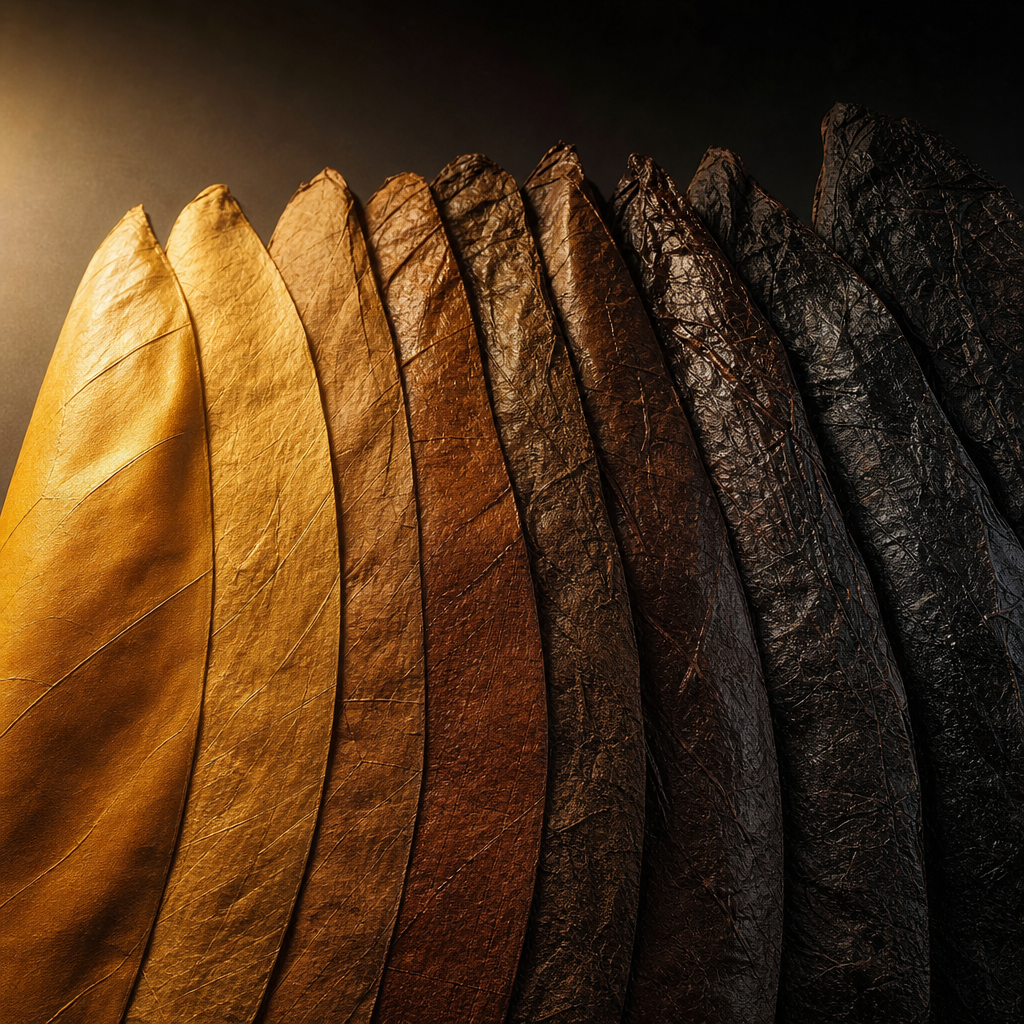
When discussing high-end rare cigars, it's not just about brands but also about tobacco leaves. The most frequently mentioned medio tiempo of Cohiba Behike is a small leaf formed at the top of the plant under specific conditions, with high oil content and concentrated flavor, but unstable yield. Not every top leaf can meet the requirements, nor is there enough usable proportion every year, which is one of the fundamental reasons for the long-term limited production of the BHK series.
Corojo is also a keyword. The original Cuban Corojo, as a wrapper variety, shone in the mid-20th century, but disease resistance issues made the pure old system increasingly rare. Later, many origins used improved varieties, such as Corojo 99 and Corojo 2006, trying to retain the spicy, leather, and red pepper sensations while improving field stability. Brands like Aganorsa Leaf, Eiroa, and Camacho have all shaped their identity with Corojo lineage.
Truly worthy of studying rare varieties are not just those with special flavors, but those involving agricultural risks, fermentation costs, and long-term supply limitations. Connecticut Broadleaf is another rare high-end language, especially important in Maduro cigars. Its leaves are thick, high in sugar, and have a long fermentation time, often bringing black chocolate, coffee, molasses, and soil sensations; but to achieve a high-end feel, it cannot just be deep in color but must avoid ammonia and bitter char.
When comparing these leaf types, seasoned collectors are advised not to just ask "which is more high-end," but to ask "what role does it play in this cigar." Medio tiempo provides concentrated power, Corojo provides a spicy profile, and Broadleaf provides a sweet and thick base. When a brand can integrate rare leaf types into the structure rather than using them as promotional labels, it is truly high-end.
Viewing Value from Vintage and Box Codes: Market Performance is Not an Oracle
The market value of premium cigars usually comes from the combined effects of supply and demand, reputation, preservation, authenticity risks, and macro market. Taking Cuba as an example, from 2014 to 2019, many limited editions and regional editions gradually increased in price; after 2020, due to changes in global logistics, supply, and pricing strategies, the price fluctuations of top lines like Cohiba and Trinidad became more apparent. However, price increases do not mean every batch is worth pursuing.
| Type | Representative Case | Source of Rarity | Key Points for Advanced Observation |
|---|---|---|---|
| Cuban Limited Edition | Cohiba 1966 EL 2011 | Anniversary Node and Special Size | Box Condition, Vintage Reputation, Source Consistency |
| Diplomatic History Brand | Early Trinidad Fundadores Box | Brand History Before and After Public Listing | Seal, Box Code, Humidity Preservation Marks |
| Estate High-End Line | Fuente OpusX BBMF | Specific Tobacco Field and Limited Size | Wrapper Integrity, Vintage Aging State |
| Family Commemorative Line | Padrón 1926 Serie | Family Narrative and Stable Quality | Band Version, Box Integrity |
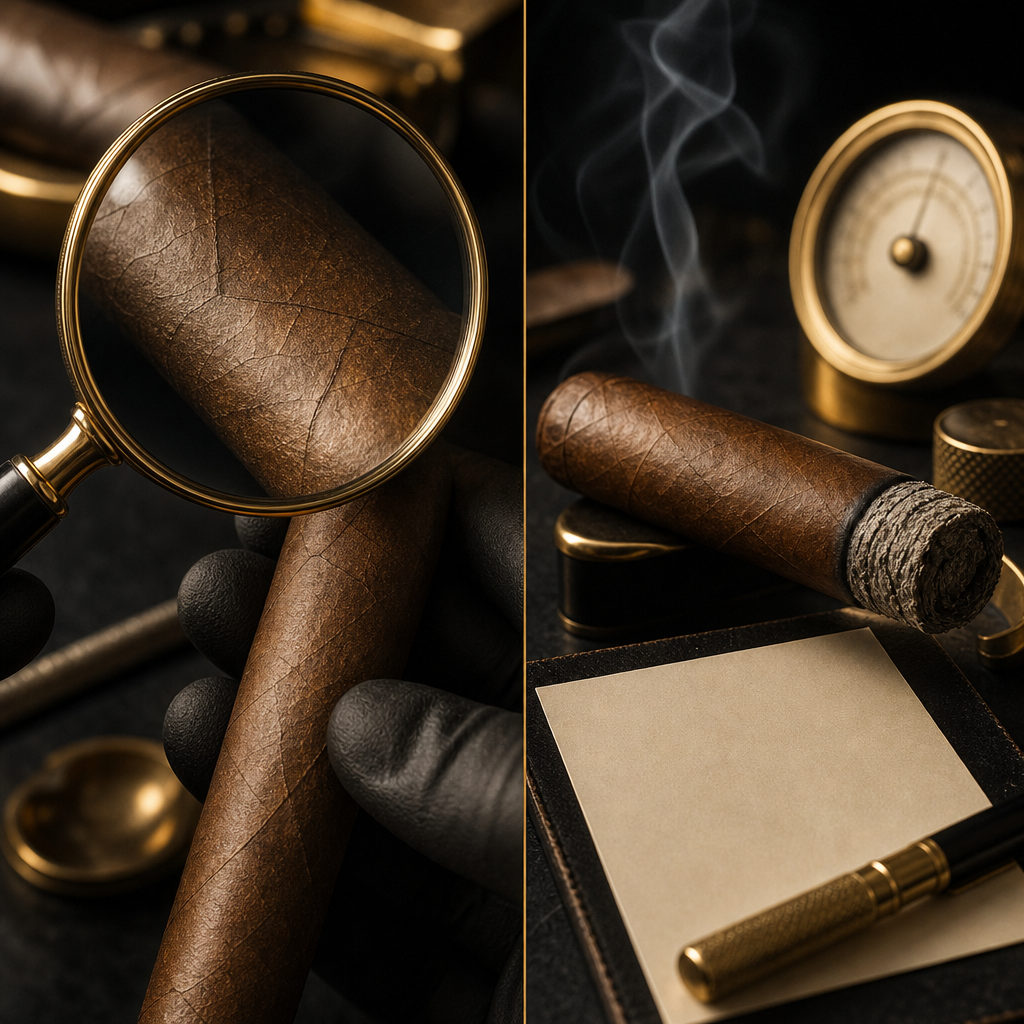
Price can only tell you market sentiment, not whether a cigar is healthy, authentic, or worth long-term storage. When I look at a box of premium cigars, I first check whether the box code and appearance are reasonable, then look at the wrapper's oil content, elasticity, foot aroma, mold spots, or wormhole marks, and finally look at the recent transaction range. If the order is wrong, it's easy to be led by the market.
Collectible appreciation does not guarantee appreciation, still depending on source preservation and market. Especially for high-end Cuban cigars, the risk of counterfeiting always exists; non-Cuban limited editions may also experience price declines due to version confusion and overheated secondary markets. The real advantage of seasoned collectors is not being more daring to chase than others, but knowing when to let go and when to wait for clear sources.
Advanced Preservation and Aging: Rare Cigars Fear Being Mismanaged
If rare premium cigars are improperly preserved, their value will quickly diminish. Generally, I set long-term preservation at 18 to 20°C, with relative humidity between 65% and 69%; if the environment is hot, I prefer to slightly lower the humidity to avoid over-ripening, swelling, and mold spots. For Cuban cigars, excessive humidity often leads to increased draw resistance; for Broadleaf Maduro, excessive moisture can dull sweetness and disrupt the burn line.
Aging is not about leaving cigars unattended, but controlling the rate of change. For high-end models like Cohiba Behike, Montecristo Línea 1935, Davidoff Royal Release, and OpusX Forbidden X, the first 3 years may still have strength and stimulation; after 5 to 8 years, if preservation is stable, wood, cream, leather, cocoa, and spices will be more integrated. But not all cigars are suitable for long-term storage; the blend itself must have a framework.
The highest principle of preservation is that stability is more important than pursuing perfect numbers. Hygrometer calibration, air circulation, and box management are more important than daily adjustments. If a box of cigars has entered a long-term collection state, I do not recommend frequent box opening for observation; every temperature and humidity fluctuation may subject the wrapper to unnecessary stress.
In practice, a three-tier management can be adopted: the frequently used cabinet stores cigars that will be smoked soon; the mid-term cabinet stores boxes to be observed within 1 to 3 years; the long-term cabinet stores rare items with confirmed sources and stable conditions. Each box establishes a record, including the year and month of acquisition, source, box code, initial state, and each inspection date. High-end collections are not about piling up numbers but leaving a verifiable time track.
Establishing a Rare Cigar Collection Strategy: Start with Themes, Not Prices
Mature collectors should first establish themes rather than chasing high prices. Themes can be "Cuban diplomatic brand transformation from 1998 to 2010," "Fuente OpusX special sizes," "Padrón family commemorative lines," "Davidoff limited projects," or "medio tiempo and high-concentration leaf research." With a theme, the collection forms a knowledge structure; without a theme, it's just piling up expensive boxes.
I suggest seasoned collectors use a three-part allocation: 60% on core brands they truly understand and will track long-term, 25% on cross-origin comparisons, and 15% reserved for high-risk rare items. For example, if the core is Cohiba and Trinidad, use a small amount of Davidoff, OpusX, and Padrón for contrast; if the core is non-Cuban estate style, then reverse research on how Cuban limited editions construct historical aura.
The art of high-end collecting is turning desire into a system and rumors into verifiable records. Before each acquisition, I ask myself five questions: Why is this rare? Can rarity be proven? Is preservation credible? What is its connection to the existing collection? If the market cools in the future, would I still want to keep it? If it passes these five questions, it's worth entering the collection cabinet.
- Establish a main axis with brand history, not with short-term heat.
- Keep box packaging, seals, receipts, and source records to reduce future disputes.
- If there are multiple vintages of the same model, prioritize comparing batch differences rather than blindly chasing old ones.
- Conduct at least one collection inventory per year, eliminating items that no longer fit the theme.
- Manage combustible and pure collectible items separately to avoid psychological account confusion.
Frequently Asked Questions
Are rare premium cigars better the older they are?
Not necessarily. Cigars need enough structure to be suitable for long-term aging; otherwise, aging may just lead to aroma decline. Some limited editions of major Cuban brands, OpusX, Davidoff high-end lines, and Padrón 1926 do have more long-term storage cases, but preservation is still key. Vintage is just a clue; condition is the answer.
Are Cuban rare items always more worth collecting than non-Cuban ones?
Not necessarily. Cuba has history, origin, and brand aura, and top models of Cohiba, Trinidad, and Montecristo have long been valued; but Fuente, Davidoff, Padrón, Arturo Fuente Casa Cuba, and Tatuaje high-end limited editions also have clear collector groups. Mature collections should compare across origins, not just by nationality.
How to avoid the risk of counterfeit high-end cigars?
First, look at the source, then the packaging details, and finally the price. For Cuban cigars, check box codes, seals, laser marks, printing quality, and stick arrangement; for non-Cuban limited editions, look at the outer box, band version, and official release information. If the price is far below the reasonable range, it is usually not luck but a risk signal.
Are rare cigars suitable for single-stick storage after box opening?
If the focus is on collecting, complete box packaging usually has more record value; if the focus is on flavor research, taking out a small number of single sticks to track changes is also reasonable. I keep the main body of the original box and use small independent boxes to record single-stick observations. The key is not to mix cigars in different humidity states to avoid flavor interference.
Can collecting high-end cigars be considered an investment?
You can study the market, but you cannot simplify it into an investment commodity. Collectible appreciation does not guarantee appreciation, still depending on source preservation and market. Cigars also have preservation costs, authenticity risks, circulation restrictions, and appearance depreciation issues. If you do not understand the brand and vintage, just treating it as a price curve, the risk will be higher than imagined.
What brands should seasoned collectors study next?
If leaning towards Cuba, delve into Cohiba Behike, early Trinidad and discontinued sizes, Montecristo Línea 1935, Partagás limited editions. If leaning towards non-Cuban, study Fuente OpusX, Davidoff Royal Release, Padrón 1926, Foundation, Aganorsa Leaf, and high-end Corojo series. The focus is not on the list but on establishing a comparative framework.
—Cigar Prince Wilson Tsai
I have always believed that the most fascinating aspect of rare premium cigars is not boasting about how hard they are to obtain, but how they condense agriculture, craftsmanship, time, and market psychology into a handcrafted piece. True connoisseurs respect the vintage behind each tobacco leaf and acknowledge that the market always has uncertainties. Collections can have passion, but judgment must be calm; knowing how to verify, how to wait, and how to let go at the right time is what makes one worthy of those truly rare fine cigars.
Smoking is harmful to health. Under 20 years old is not allowed to smoke. Quitline: 0800-636363. This article is intended for adults over 20 years old as a reference for cigar culture, preservation, and regulatory knowledge, not as tobacco advertising, promotion, or purchase advice.