The Science of Cigar Storage and Aging: How It Affects Flavor and Quality
The Science of Cigar Storage and Aging: How It Affects Flavor and Quality
Storing cigars is not as simple as placing the box in a humidor. When a cigar leaves the rolling table, the tobacco leaves are still breathing slowly; moisture, temperature, oxygen, and time together rewrite its burn, aroma, taste, and stability.
As the editor of the "Cigar Bible," I often view storage as the "second phase of production." The factory completes the framework, and the subsequent environment determines whether it becomes mellow, unbalanced, or prematurely declines. Below, I will explain the scientific principles and practical judgments in a way that beginners can also operate.
Why Cigars Are Affected by the Environment: Moisture, Oils, and Volatiles
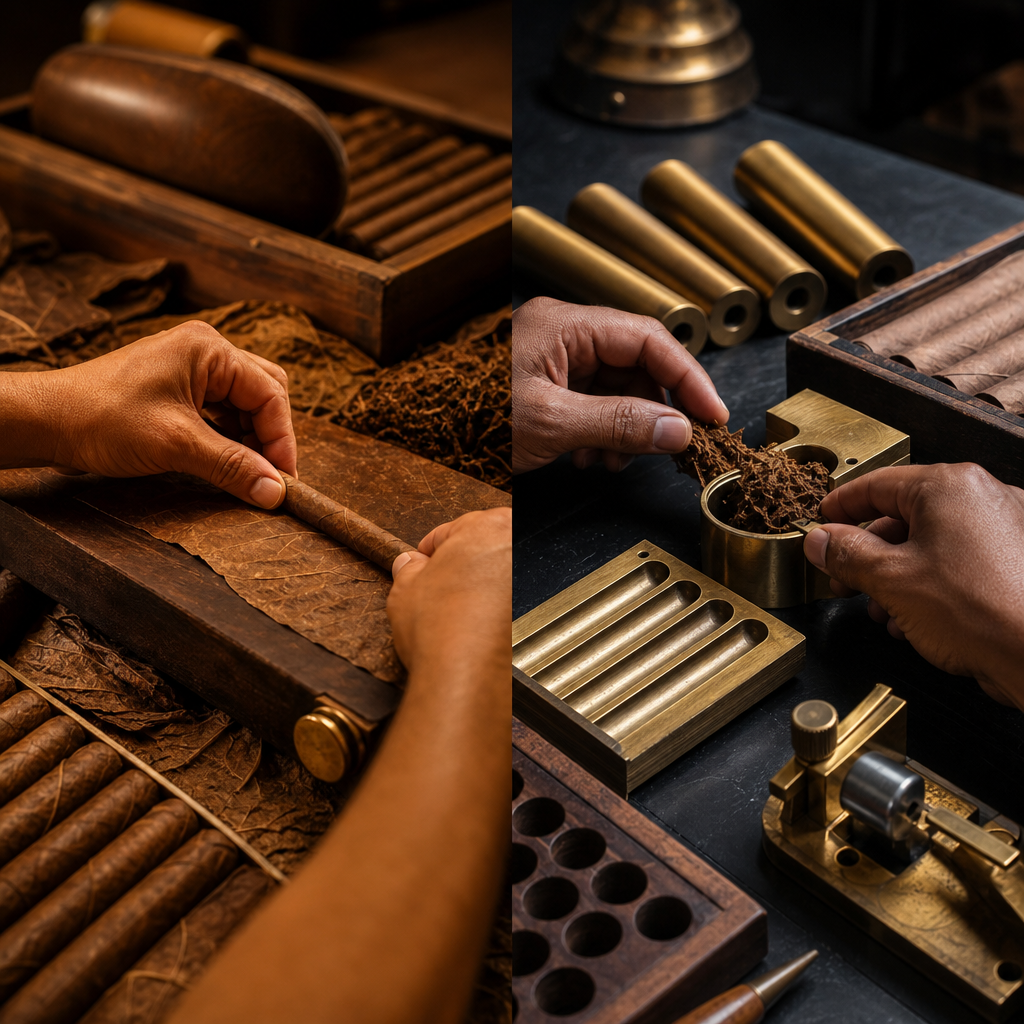
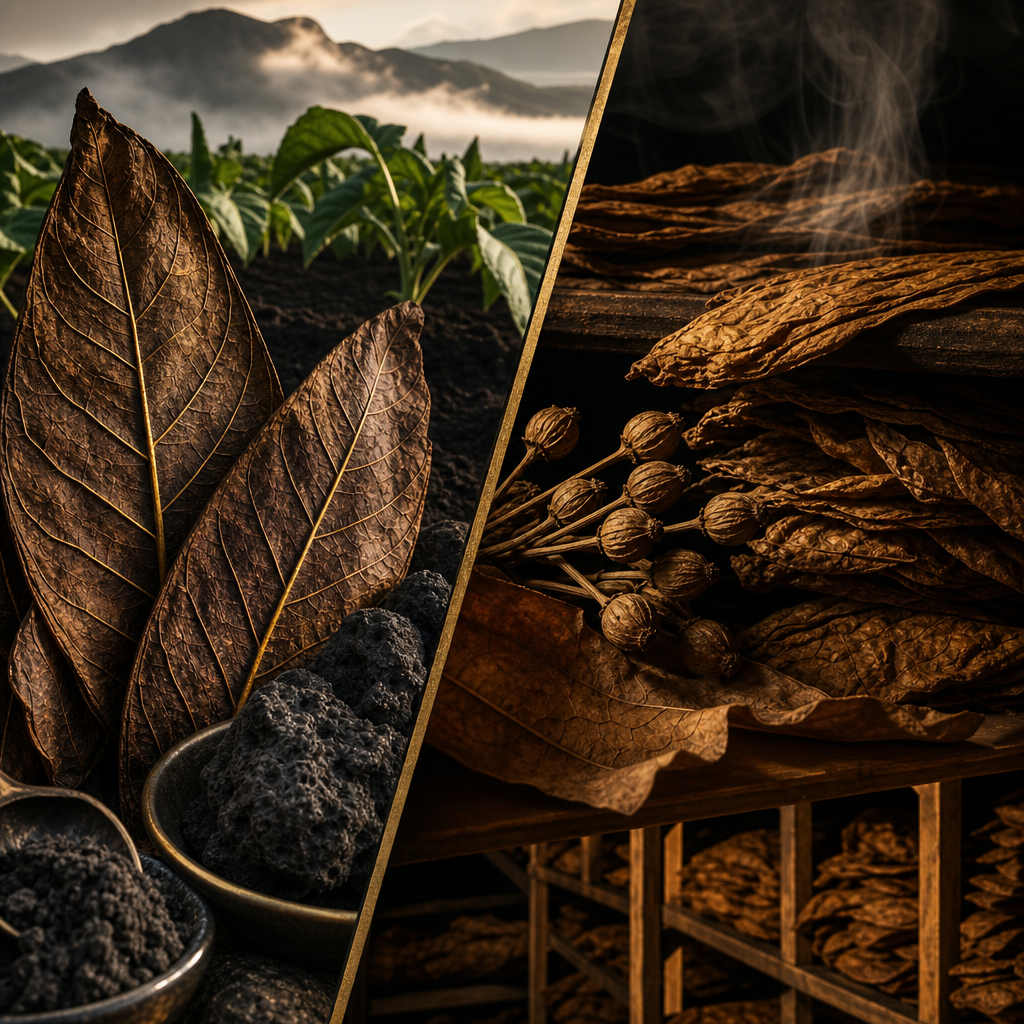
Cigars are agricultural products and also handmade products after fermentation. Taking the commonly seen long filler leaves of Cuba as an example, after the tobacco leaves are harvested in the field, they undergo drying, fermentation, grading, further aging, and rolling; when they reach the consumer, the leaves still contain moisture, sugars, nitrogen compounds, plant oils, and aromatic volatiles. These components do not stop changing, only the speed slows down. If the environment is too dry, the wrapper will crack, the burn will be too fast, and woody, peppery, and bitter flavors will be amplified; if the environment is too humid, the burn line is prone to skew, the smoke becomes dull, and even ammonia or mold risks may appear.
In 2021, I compared two boxes of the same batch of Partagás Serie D No.4, one maintained at 65% relative humidity and the other fluctuating between 72% and 75%. After three months, the former had a cleaner entry, with clear notes of black coffee, leather, and earth; the latter had a large smoke volume at the beginning but developed a damp wood sensation in the middle, requiring more frequent corrections for burning. This is not a matter of brand quality, but the environment leading the same cigar to different outcomes.
Cigar quality is not solely determined by the brand; the storage environment directly changes the burn, aroma release, and taste balance. Beginners who can manage moisture well often find it more effective than pursuing expensive cabinets.
Judging moisture status can start with three simple clues: whether the cigar body is elastic when lightly pressed with a finger, whether the wrapper has a natural sheen, and whether the aroma is clear and not pungent when cold smelling. Too dry cigars sound brittle, while too wet cigars may feel heavy like a sponge. The ideal state is slightly elastic when pressed, slow and steady recovery, stable burn upon entry, and a solid ash structure that is not overly wet and soft.
The Golden Range of Temperature and Humidity: Don't Just Focus on One Number
When discussing storage, most people first remember "70/70": 70°F, 70% relative humidity. This mnemonic is easy to start with but should not be taken as a hard rule. In Celsius, 70°F is about 21°C; for many Asian cities, indoor temperatures in summer can easily reach 26°C to 30°C, and if paired with humidity above 70%, it can increase the risk of mold and tobacco beetles. My daily recommendation is usually 18°C to 21°C, with relative humidity of 62% to 68%, adjusted slightly based on cigar size and origin.
Different cigars react differently to humidity. Cuban cigars like H. Upmann Magnum 46 and Montecristo No.2 often show clearer layers and smoother draw resistance when stored around 65%; some rich Nicaraguan or Dominican options, like Padrón 1964 Anniversary and Arturo Fuente Hemingway, due to the density of the filler and the oiliness of the leaves, some people prefer a slightly higher 66% to 69%. However, if it exceeds 72% for a long time, I would be particularly cautious, as the chances of dullness, sourness, and poor burning increase significantly.
| Storage Scenario | Recommended Temperature | Recommended Relative Humidity | Common Results |
|---|---|---|---|
| Daily short-term storage 1 to 3 months | 18°C to 22°C | 64% to 68% | Stable burn, clear aroma |
| Long-term aging 6 months to 3 years | 16°C to 20°C | 62% to 66% | Slower changes, cleaner flavors |
| High-temperature summer environment | 16°C to 19°C | 60% to 65% | Reduced risk of pests and mold |
| Dry areas or winter heated rooms | 18°C to 21°C | 65% to 69% | Avoid wrapper cracking |
Temperature and humidity should be viewed together; pursuing high humidity alone does not equate to a better state. High temperatures amplify the risks of high humidity, while low temperatures slow down aroma release and moisture exchange.
In practice, beginners are best prepared with two calibrated digital temperature and humidity meters, placed in different positions in the humidor, recording once a week. Do not adjust nervously due to a day's fluctuation; intervention is needed only if it deviates from the target range for three to five consecutive days. Cigars are not afraid of short-term small fluctuations but of long-term incorrect environments and frequent large changes.
Humidors, Cigar Cabinets, and Sealed Boxes: Tools Have No Highs or Lows, Only Whether They Match
Humidification tools can be roughly divided into wooden humidors, electronic cigar cabinets, and sealed boxes with two-way humidification packs. Wooden humidors have the aroma and buffering capacity of Spanish cedar, suitable for those collecting between 20 and 100 cigars; electronic cigar cabinets can manage temperature, suitable for hot summers or larger collections; sealed boxes are low-cost, have good airtightness, and are very practical for beginners. The value of the tool is not in the price but in whether it can stably maintain the set range.
In 2020, I made a simple record: 25 Romeo y Julieta Short Churchills were placed in a new wooden box that was not fully seasoned, and another set in a sealed box with a 65% two-way humidification pack. After four weeks, the new wooden box, due to the wood absorbing a lot of moisture, once dropped to 58%, with some wrappers slightly dry and wrinkled; the sealed box maintained 64% to 66%, with a more even state. This shows that if a new humidor is not seasoned first, it may become a source of moisture competition.
For beginners seeking stability, a sealed box with a two-way humidification pack is often more reliable than high-priced equipment that is not properly calibrated. As the collection grows, upgrading to an electronic cabinet or zone management will be more directional.
The basic setup process can refer to the following steps:
- Season a new wooden box empty with moisture for 7 to 14 days until the wood moisture stabilizes.
- Calibrate the temperature and humidity meter using the salt test method or calibration pack, controlling the error within ±2%.
- Do not fill the humidor completely after placing cigars, leaving at least 20% space for airflow.
- Slightly adjust the position of the upper and lower layers every two weeks to avoid local over-moisture or dryness.
- If the room temperature exceeds 25°C in summer, prioritize dealing with the temperature rather than blindly increasing humidity.
If using an electronic cabinet, note that cigars near the air outlet may be drier, while those around the water box may be more humid. Do not rely solely on the panel numbers; it is best to place a small temperature and humidity meter on the upper, middle, and lower layers to observe for two weeks. A truly mature storage system is knowing where its deviations are, not assuming the machine display is always correct.
The Science of Aging: How Flavor Transitions from Sharp to Mellow
Aging refers to the process where cigars, in a stable environment, through slow oxidation, integration of volatiles, redistribution of moisture, and reduction of residual irritants, form a more mellow taste. Newly manufactured cigars may sometimes have green, ammonia, and spicy sharp edges, which, after 6 months to 2 years, commonly change to increased sweetness, reduced bitterness, wood turning to nutty or creamy, and pepper changing from sharp to warm. This is not magic but the joint action of chemistry and time.
Taking Cohiba Siglo VI as an example, boxes from around 2014, if stored properly, often exhibit honey, hay, cream, and a hint of cardamom by 2020; but the same model, if stored long-term in high humidity, may have dulled aromas, leaving only wet wood and heavy smoke. Similarly, Montecristo No.2, which often has cocoa, coffee, and distinct woodiness when young, after 3 to 5 years of proper aging, the bitter-sweet ratio becomes more integrated, and the rough spicy sensation in the later stages is less likely to appear.
The goal of aging is not to make all cigars bland but to make the aroma elements more integrated and the taste edges softer. Time only adds value in the correct environment; the wrong environment only magnifies problems.
Different types of cigars are suitable for different times. Small ring gauge, short sizes like petit corona, usually show significant changes in 1 to 3 years; Robusto and Torpedo can be observed for 2 to 5 years; large Churchill, Double Corona, or rich large ring gauge models, if the base tobacco is good enough, may still develop in 5 to 10 years. Non-Cuban brands are the same, for example, Davidoff Winston Churchill The Late Hour often has more coordinated smoky wood and sweet aromas after 1 to 2 years of rest; but if aged too long, it may lose its original vitality.
Box Storage, Single Stick Storage, and Rotation: Management Methods for Stable Maturation of Cigars
If collecting whole boxes, I usually prefer box storage. The original box has a relatively stable small environment, with cedar sheets, packaging paper, and cigars forming a more balanced moisture exchange. Especially for 25-count Cuban dress boxes, if stored at 62% to 66% relative humidity, 18°C to 20°C, it usually maintains consistency better than frequent opening, single stick movement. Checking the box is fine, but not every day, as each opening causes air exchange and small fluctuations.
Single stick storage is suitable for comparing different brands and years. My approach is to zone by origin, strength, and expected years, avoiding the long-term influence of rich cigars on delicate ones. For example, placing Padrón 1926 and Oliva Serie V in the same area, and Hoyo de Monterrey Epicure No.2 and H. Upmann Sir Winston in another area. This is not an absolute rule, but it helps maintain the clarity of aroma profiles.
Whole boxes are suitable for long-term stability, single sticks are suitable for learning comparisons; both methods can be used together, no need to choose one or the other. The important thing is to establish labels and records, turning time into data, not just relying on impressions.
I recommend recording at least four pieces of information for each stick or box: purchase date, box code or production year, storage interval, and entry impressions. If you put a box of 2022 H. Upmann Magnum 50 in 2024, you can take one stick each at the 3rd month, 12th month, and 24th month to compare, recording burn, aroma, strength, and finish. This kind of longitudinal observation trains the palate better than one-time scoring.
Avoid excessive rotation. A slight position adjustment each month is sufficient, no need for a major move every week. If using a desktop wooden box, the upper layer is usually closer to external air, the lower layer more stable; if using an electronic cabinet, the fan path and water source position will cause differences. The purpose of rotation is to give each cigar a similar environment, not to increase interference.
Common Risks: Mold, Spots, Pests, and Overdrying
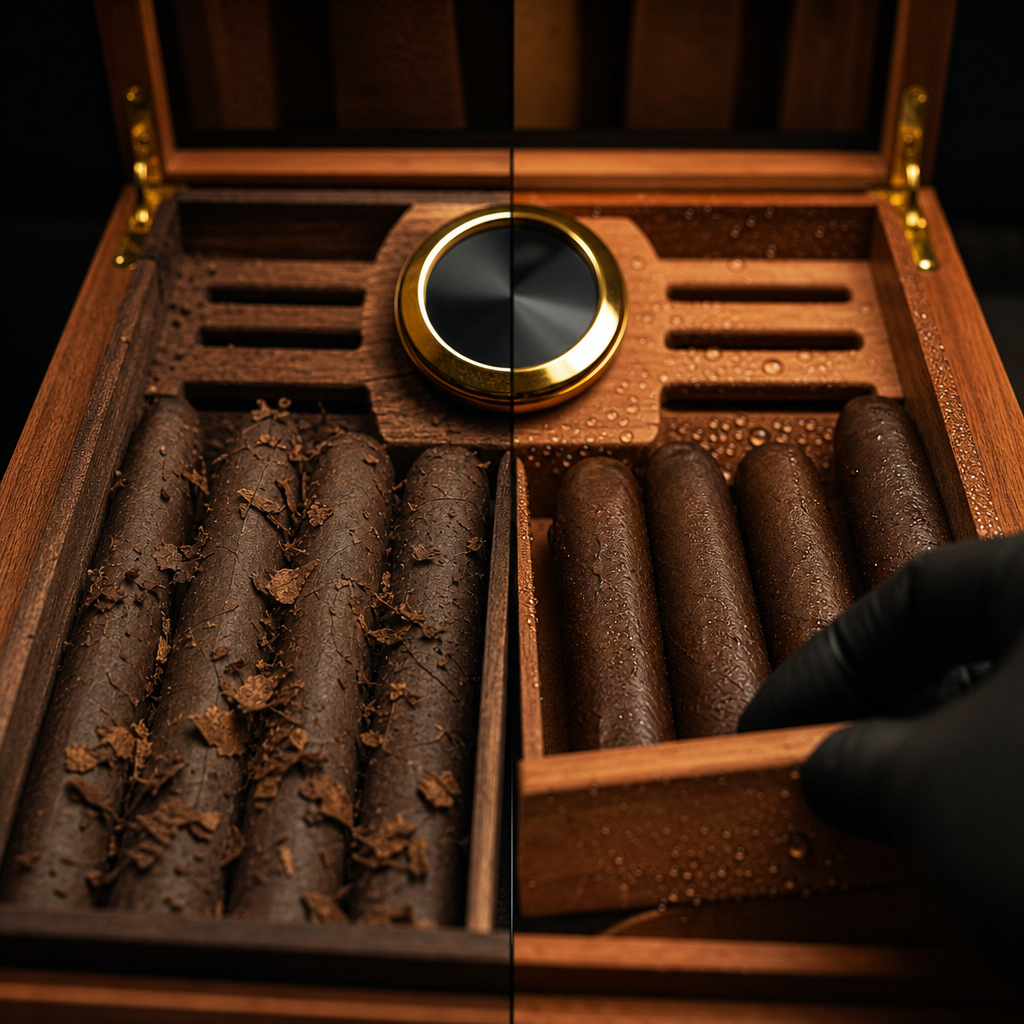
What makes beginners most nervous is the appearance of white substances on the wrapper. True mold usually has a hairy, three-dimensional, spreading structure, possibly white, green, blue, or gray in color, and may penetrate the foot; while natural oil crystals or mineral bloom often appear as fine powder, can be easily wiped off, and rarely have a fuzzy structure. If unsure, isolate and observe first, do not continue placing suspicious cigars in the center of the box.
Pest issues are highly related to temperature. Tobacco beetle eggs are more likely to hatch in higher temperature environments, especially when room temperature exceeds 25°C for a long time. If you find pinholes in the wrapper or fine powder at the bottom of the box, immediately isolate the entire box. Some collectors use freezing treatment: seal first, refrigerate for 24 hours, then freeze for 48 to 72 hours, then return to refrigeration for 24 hours, and finally return to normal humidified environment. The key is gradual temperature changes to reduce damage from condensation.
White marks are not necessarily mold, but if there is a hairy spread or penetration into the foot, it must be dealt with seriously. The core of storage risk is not panic but isolation, judgment, and record.
Overdry cigars can also be slowly recovered, but not in a rush. If a Cohiba Robusto drops below 55% due to travel or storage environment, it is not recommended to throw it directly into a 70% high humidity environment, as the wrapper may expand and crack. A gentler method is to place it in a 60% to 62% environment for two weeks, then raise it to about 65%, the whole process may take 4 to 8 weeks. The more aggressive the rescue, the higher the risk of structural damage.
Another common mistake is storing aromatic substances, coffee beans, or spirits with cigars long-term. Cigars will absorb odors, which may seem interesting in the short term but will mask the original leaf blend characteristics in the long term. Unless it is a clear experiment, I do not recommend putting non-tobacco scents into the main storage space.
Travel, Box Opening, and Pre-Entry Adjustment: The Last 48 Hours Are Crucial
Once cigars leave a stable environment, their state will quickly be affected by the outside world. When traveling, I use a hard-shell travel case or sealed bag, paired with a small 65% or 69% two-way humidification pack, adjusting according to the destination climate. If going to humid and hot cities like Hong Kong or Singapore, I lean towards 65%; if going to dry cold regions like Japan in winter or Europe, I might use 69%. The key is to avoid placing them in cars, windows, or luggage compartments for long periods at high temperatures.
The "dry resting" before entry is also worth learning. If cigars are slightly humid in the humidor, especially large ring gauge or naturally slow-burning models, they can be moved to a lower humidity environment, such as 60% to 62%, 12 to 24 hours before entry, allowing the surface moisture to slightly decrease. For example, if Ramón Allones Specially Selected is stored long-term at 69%, I would reduce humidity a day in advance, usually resulting in a more stable burn line and the sweetness not being suppressed by moisture.
The last 48 hours determine the surface moisture and burn performance, and will not change the long-term aging results. Therefore, do not use temporary operations to make up for long-term incorrect storage.
After opening the box, let the cigars adapt to the new environment. If just taken out from a low-temperature cabinet, do not immediately cut and light, first let it sit indoors for 20 to 40 minutes to reduce temperature differences and surface condensation risks. Especially when taking from a 16°C cabinet to a 24°C room in winter, the surface may temporarily absorb moisture, affecting the wrapper and burn.
In terms of etiquette, do not repeatedly display or squeeze others' cigars in public. If you need to observe the state, use your eyes and nose; finger pressing should be light and short. Cigars are fragile leaf structures, respecting their state is also respecting the people you share with.
Value, Vintage, and Market Myths: Collecting Is Not Just About Age
Many people associate aging with vintage and collectible value. Indeed, well-preserved rare box codes, discontinued models, or limited editions may attract market attention due to supply and demand. For example, Cohiba Behike 52, launched in 2010, has long been discussed by collectors due to its production volume, positioning, and brand halo; classic large sizes like H. Upmann Sir Winston and Partagás Lusitanias are also often seen as suitable for long-term storage. But these cases cannot be simplified to "the older, the better."
Vintage value must be viewed in terms of source, preservation, integrity, and market demand. The same 2015 Montecristo No.2, one box with a clear box code, original box preservation, and good humidity records; another box experiencing high temperatures, dull wrappers, and box odors, the states are completely different. Collecting appreciation does not guarantee appreciation, still looking at source preservation and market. I must make this clear because time can only amplify strengths, and it will also amplify flaws.
Old vintage is not a guarantee of quality, preservation records and actual state are the core of judgment. If viewing cigars as a collection, please prioritize risk management before expecting returns.
Beginners do not need to rush to chase high-priced vintages. A better learning method is to buy the same model from different production years or different sizes from the same brand, building your own taste database. For example, compare Bolivar Belicosos Finos from 2020, 2022, and 2024, observing changes in strength, woodiness, cocoa, and finish; or compare Cohiba Siglo II and Siglo VI from the same year, understanding the impact of size on aging speed.
If involving Cuban cigar sources, I only recommend paying attention to credible supply chains and preservation transparency; I am familiar with the PCC authorized dealer system and deeply understand the importance of clear sources. For beginners, buying cigars with reliable status and proper preservation is more practical than chasing topics.
Frequently Asked Questions
Should cigars be stored at 65% or 70%?
For most daily storage, I would start with 65% to 67% relative humidity and then fine-tune based on burn and taste. If your city is hot and humid, 65% is usually safer than 70%; if winter indoor is very dry and cigars are brittle, you can temporarily adjust to 68% to 69%. Do not just look at the numbers, look at whether the burn is stable, the draw is smooth, and the aroma is clear.
Are cigars better the longer they are stored?
Not necessarily. Cigars suitable for aging usually need sufficient structure, oils, and leaf blend depth; too light or already mature models may become bland if stored too long. Generally, Robusto can be observed for 1 to 3 years, large sizes or rich models can be looked at for 3 to 5 years or more. Time is a tool, not a guarantee.
How often should the humidor be opened?
If the system is stable, checking the data once a week is enough; whole boxes stored long-term can even be opened every two weeks. Frequent opening causes environmental fluctuations, especially more noticeable in small wooden boxes. If you are seasoning a box or adjusting humidity, more frequent observation is needed.
Can dry cigars be saved?
They can be tried, but slowly. First place in a 60% to 62% environment for two weeks, then gradually return to about 65%, the whole process may take one to two months. If the wrapper is severely cracked, and the filler is loose, even if rehumidified, the burn and taste may not fully recover.
Is the white stuff on the surface mold?
Not necessarily. If it is powdery, thin, easily wiped off, and has no odor, it may not be a serious issue; if it is hairy, three-dimensional, green, blue, or gray in color, or extends into the foot, it should be isolated and dealt with. When in doubt, it is better to separate and observe.
Can opened whole boxes of cigars be stored long-term?
Yes, as long as the environment is stable. Opening does not mean losing aging ability, but the small environment of the original box is opened, causing more frequent moisture exchange. It is recommended to keep the original box, cedar sheets, and packaging, and avoid major flipping every few days.
Do different brands need to be stored separately?
Not necessarily short-term, but long-term it is recommended to zone. Rich, heavily aromatic models may affect the aroma performance of delicate ones. If space is limited, at least manage Cuban, Nicaraguan, Dominican, or different strengths in layers.
—Cigar Prince Wilson Tsai
I have always believed that cigar storage is an art of restraint. The real skill is not in filling the equipment but in knowing when not to move it. Temperature, humidity, time, and records will teach you to understand the personality of each cigar. When you can read the storage state from the burn line, ash color, cold smell, and finish, cigars are no longer just consumables but a flavor journey that can be carefully tended.
Smoking is harmful to health. Under 20 years old is not allowed to smoke. Quit smoking hotline: 0800-636363. This article is for reference by adults over 20 years of age for cigar culture, storage, and legal knowledge, not a tobacco advertisement, promotion, or purchase suggestion.