1. What is a Cigar Punch Cutter? Fundamental Differences from a Cigar Cutter
⚠️ Smoking is prohibited for those under 20 years old, and smoking is harmful to health. Quit smoking hotline 0800-636363. This article is for cigar accessories and knowledge research only, not as a suggestion for tobacco sales or purchases.
1. What is a Cigar Punch Cutter? Fundamental Differences from a Cigar Cutter
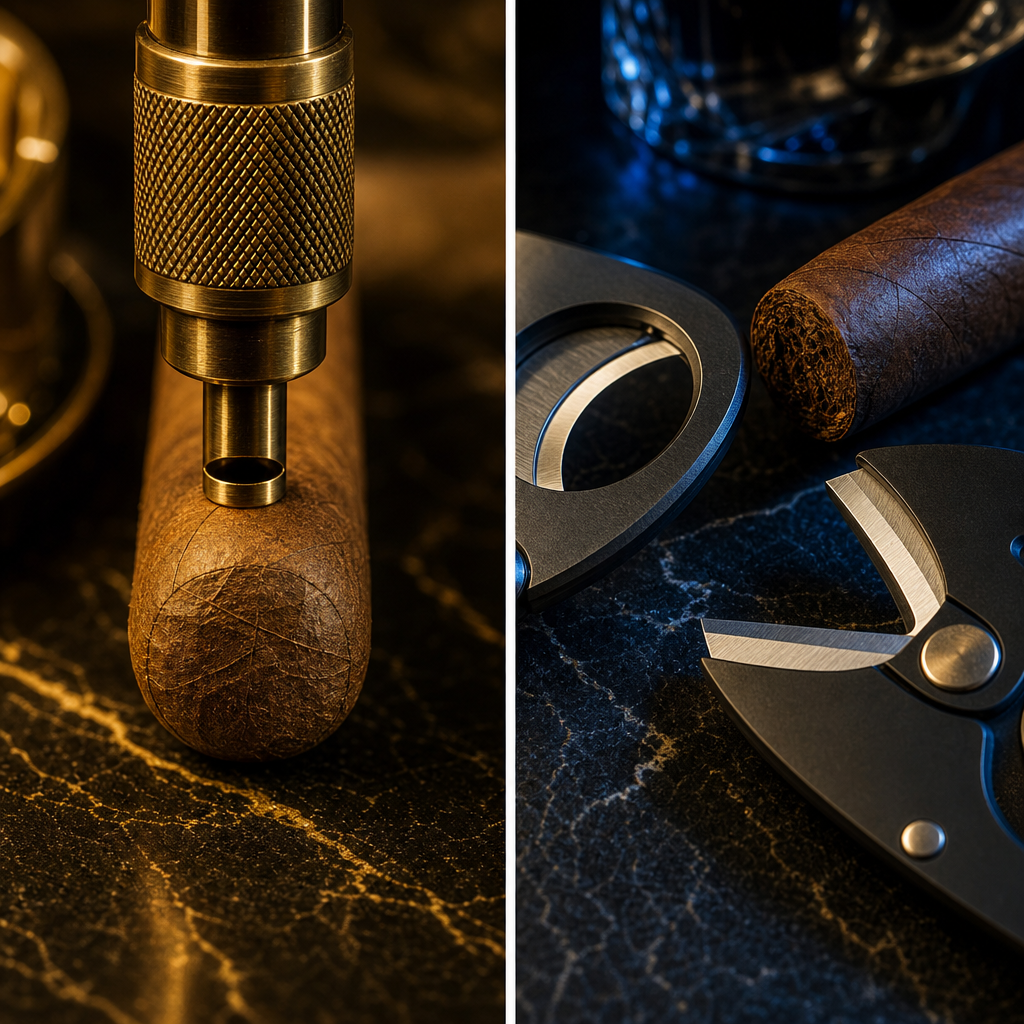
Punch Cutter does not cut off the cigar cap but drills a round hole in the center of the cap. This is its fundamental difference from a cigar cutter:
- Cigar Cutter: Removes the entire top of the cigar cap, large opening, more airflow.
- Punch Cutter: Only makes a small round hole, retaining most of the cap structure, with the smallest cut.
Retaining the cap has an advantage—the wrapper and cap are less likely to unravel, especially when smoking outdoors or while moving, reducing the chance of leaf detachment and saliva backflow covering the cigar head.
2. Punch Cutter vs. Straight Cut vs. V Cut: Differences in Draw Resistance and Flavor
Using different tools on the same cigar results in a very different experience:
- Straight Cut: Largest opening, lowest draw resistance, largest smoke volume, most "open" flavor.
- V Cut: Medium cut surface, concentrated smoke, higher intensity.
- Punch Cutter: Smallest diameter, most concentrated airflow, more restrained smoke volume, more focused flavor. The downside is that if the hole is too small, draw resistance may be high, especially noticeable with tightly rolled cigars.
In a word: If you want a larger opening and lower draw resistance, choose a straight cut; if you want a smaller cut and more concentrated smoke, choose a punch cutter.
3. How to Choose the Diameter: 7mm, 9mm, Multi-stage Adjustable
The most important specification of a punch cutter is the diameter:
- Around 7mm: Most common, suitable for medium ring gauge (48–52).
- Above 9mm: Suitable for larger cigars or those who prefer smoother airflow.
- Multi-stage/Adjustable: Covers multiple diameters in one tool, higher versatility, suitable for varying sizes and those who want an all-in-one solution.
If you only smoke a fixed size, a single diameter is enough; if sizes vary and you want an all-in-one solution, choose a multi-stage adjustable.
4. Draw Poker: A Rescue Tool for High Draw Resistance
Draw Poker is a thin metal needle, strictly speaking, not a cutting tool but a rescue tool. When a cigar is rolled too tightly and draw resistance is high (making it hard to smoke), gently insert it from the cut to loosen the filler, improving airflow. Many punch cutters integrate the draw poker into the same tool, serving two purposes. Use it lightly and shallowly; inserting too deeply will damage the burn structure.
5. Which Cigars are Suitable for Punch Cutting, and Which are Not Recommended
- Suitable: Medium to large ring gauge, round head (parejo) cigars, punch cutting is clean and neat.
- Not Recommended: Pointed Torpedo/Belicoso with tapered caps—designed to be "cut" to your desired opening size, punch cutting wastes that tapered structure; also, cigars that are already tightly rolled, a punch cutter will only exacerbate draw resistance, making a straight cut more suitable.
6. Steps and Common Mistakes
- Align with the center of the cap, press down vertically.
- Press and rotate simultaneously to cut a clean round hole.
- When pulling out, bring out the tobacco debris and gently tap to clean it off.
Common mistakes: Drilling at an angle (the hole will be crooked, the cut rough), pressing too deep (damaging the burn surface), not rotating and poking hard (cracking the cap). Remember the principles of vertical, rotating, and appropriate depth.
Another tip is that the depth of the hole can be adjusted: A shallower hole results in higher draw resistance and more concentrated flavor, a deeper hole allows smoother airflow. With the same punch cutter, you can adjust the airflow feel by the pressing depth, making it more flexible than a fixed cut straight cutter. After use, remember to clean off the remaining tobacco debris and keep the blade dry to avoid debris affecting the cleanliness of the next cut.
Further Reading and Related Tutorials
For physical options, refer to W Cigar sister store (specializing in cigar accessories): W Cigar Punch Cutter Category (Sister Site), W Cigar Cutter Category.
Further reading:
Frequently Asked Questions (FAQ)
Q: What is the biggest difference between a punch cutter and a cigar cutter?
A cigar cutter removes the entire top of the cigar cap, creating a large opening; a punch cutter drills a small round hole in the cap, retaining most of the structure, with the smallest cut. A punch cutter is convenient to carry, and the cap is less likely to unravel, but if the hole is too small, draw resistance may be high.
Q: What diameter should I choose for a punch cutter?
Around 7mm is the most versatile, suitable for medium ring gauge (48–52); above 9mm is suitable for larger cigars or those who want smoother airflow. If you smoke various sizes, choosing a multi-stage adjustable is the most economical, covering multiple diameters in one tool.
Q: Can a pointed Torpedo be used with a punch cutter?
Not recommended. The tapered caps of Torpedo, Belicoso are designed to be cut, allowing you to decide the opening size, and punch cutting wastes that tapered structure. For these pointed cigars, a straight cut or V Cut is more suitable.
Q: What is a draw poker used for?
A draw poker is a rescue tool, not a cutting tool. When a cigar is rolled too tightly and draw resistance is high, gently insert it from the cut to loosen the filler and improve airflow. Use it lightly and shallowly, as inserting too deeply will damage the burn structure. Many punch cutters integrate the draw poker, serving two purposes.
Q: What are common mistakes when using a punch cutter?
Drilling at an angle (the hole will be crooked, the cut rough), pressing too deep (damaging the burn surface), not rotating and poking hard (cracking the cap). The correct method is to align with the center, press down vertically, and rotate while pressing, bringing out the tobacco debris and cleaning it off when pulling out.