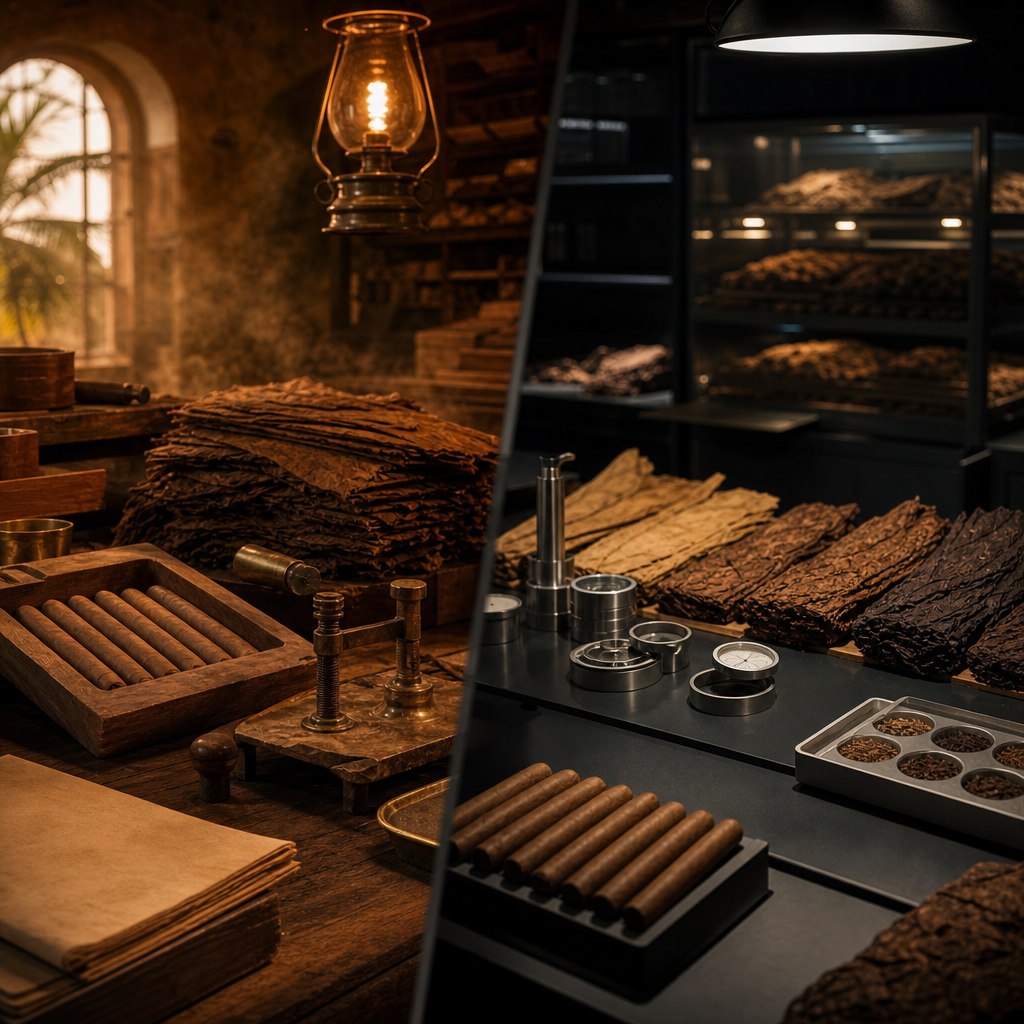
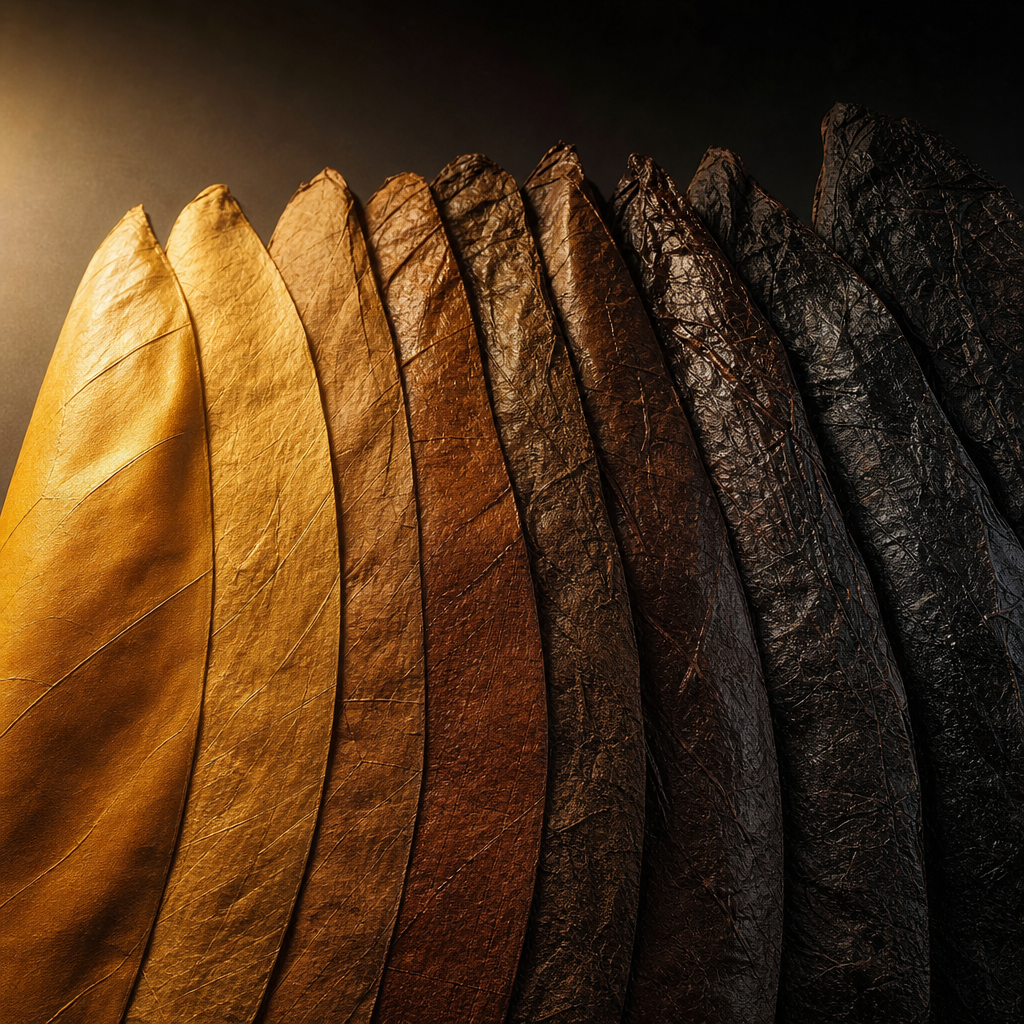
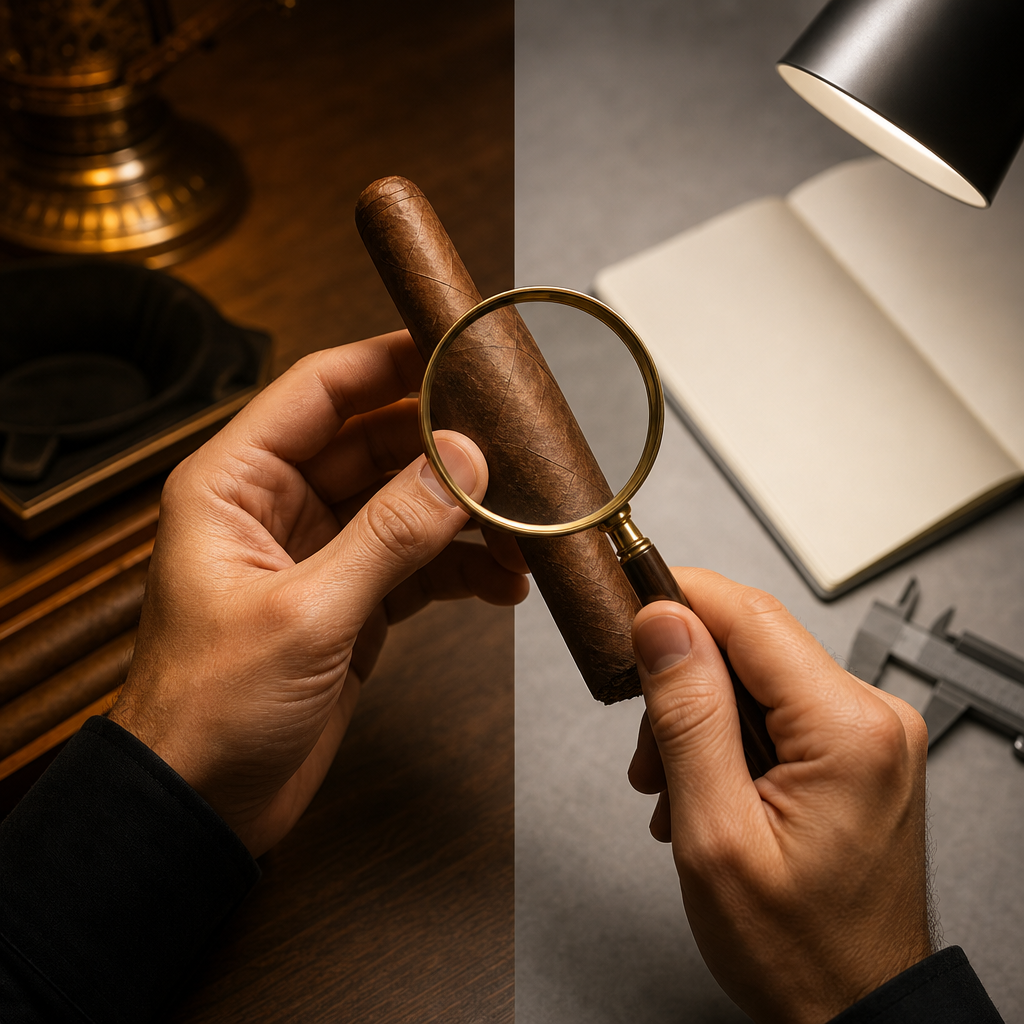
The Art of Lighting and Extinguishing Cigars: Techniques and Considerations
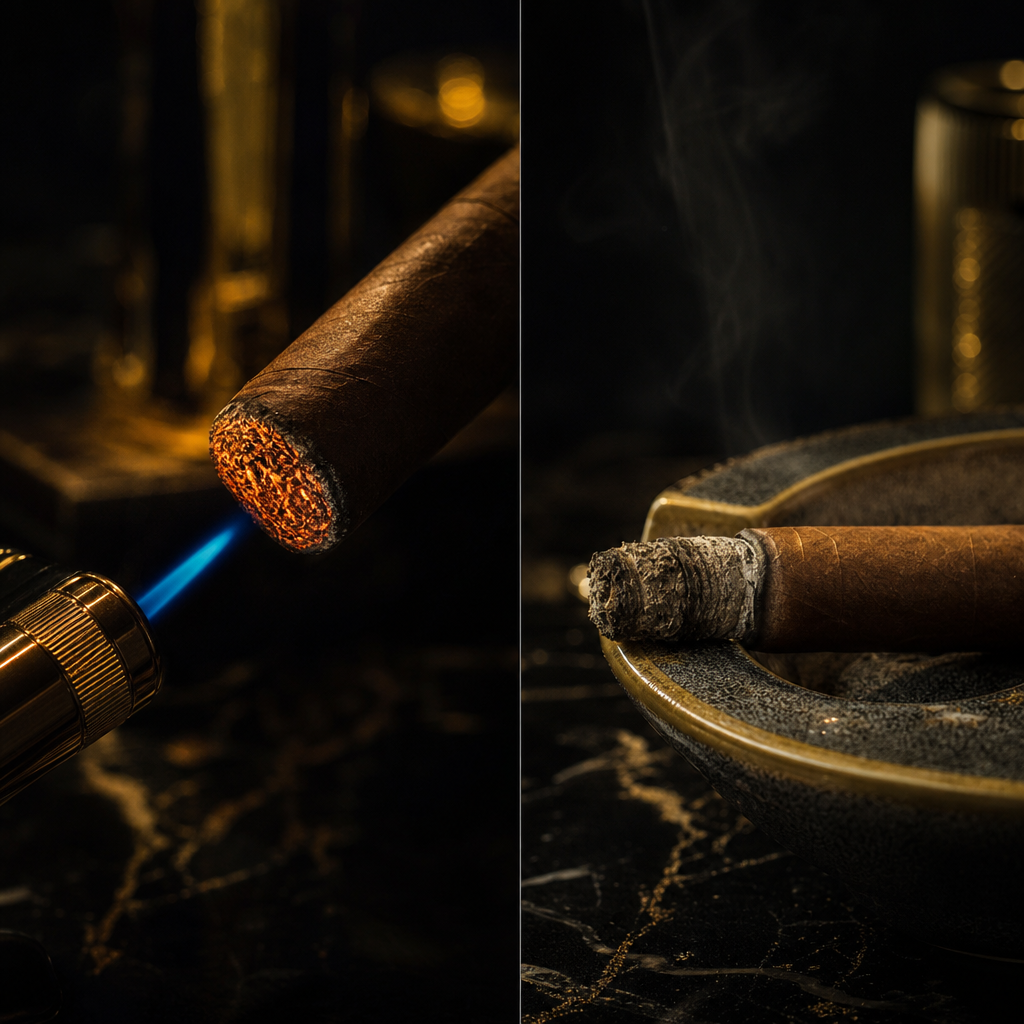
The Art of Lighting and Extinguishing Cigars: Techniques and Considerations
Lighting and extinguishing a cigar may seem like mere beginnings and endings, but they actually determine the expression of a cigar in the first 10 minutes and the final impression left in the mouth. Many beginners already know how to savor slowly, but often overlook details in flame, angle, rhythm, and etiquette.
I often say that a cigar should not just be "lit" but gently awakened. Since the popularization of jet lighters after 2010, and the recent renewed attention to long matches and cedar spills, the choice of tools actually involves the science of combustion, flavor purity, and the appropriateness of the occasion.
Preparation Before Lighting: Humidity, Cut, and the First Cold Draw
Whether a cigar can be smoothly lit is already half-decided before lighting. For a common Cuban Robusto size, with a length of about 124 mm and a ring gauge of 50, if stored at 65% to 69% relative humidity and 18 to 21 degrees Celsius, it usually burns more stably. If it exceeds 72% for a long time, the foot tends to smolder, and the ash becomes thick and black; below 60%, it may heat up too quickly, and the spiciness comes out prematurely. Lighting is not a magic remedy for storage mistakes; proper humidity is the foundation for stable combustion.
The cut also affects the lighting rhythm. In 2021, I compared three Partagás Serie D No.4 from the same box using straight cuts and V-cuts; the straight cut allows open airflow, burning faster in the early stages, while the V-cut concentrates the smoke stream, making the center hotspot more pronounced if lit too aggressively. After cutting, a cold draw can be performed to taste the woody, cocoa, herbal, or slightly salty flavors, while checking if the resistance feels like sipping a thick milkshake through a straw, rather than being completely hollow.
Before lighting, observe the foot. If there are fine cracks in the outer wrapper, avoid directing the flame at the crack; if the cigar has just been taken out of the humidor, let it sit for 3 to 5 minutes to balance the surface with the indoor air. This is not about ritual but avoiding the cold, moist wrapper from shrinking instantly when exposed to high heat, causing subsequent uneven burning. The more detailed the preparation, the fewer actions needed during actual lighting, and the more elegant it becomes.
Tool Selection: Matches, Cedar Spills, Soft Flame, and Jet Flame
There is no absolute superiority in lighting tools, only suitability for the situation. The advantage of long matches is their gentle flame, suitable for indoor, windless, leisurely-paced occasions; the downside is the sulfur head has an odor when first lit, requiring 2 to 3 seconds for the flame to stabilize before approaching the cigar. Cedar spills, often found in premium cigar boxes, can bring out a clean wood aroma but require patience and are not suitable for windy environments. Soft flame lighters like the S.T. Dupont Ligne 2 have the advantage of a delicate flame but are harder to control outdoors.
Jet lighters like Xikar, Colibri, and S.T. Dupont Megajet have become mainstream among many cigar enthusiasts since 2015 due to their high efficiency and wind resistance, especially suitable for Toro or Double Robusto with a ring gauge above 54. However, the temperature of a jet flame can exceed 1,300 degrees Celsius; if placed directly on the foot, the wrapper oils can be scorched, leading to bitterness and metallic taste in the early stages. The stronger the tool, the lighter the hand; the flame should not be as close as possible but as controllable as possible.
| Tool | Suitable Occasion | Advantages | Considerations |
|---|---|---|---|
| Long Matches | Indoor, slow-paced | Gentle flame, low cost | Wait for sulfur smell to dissipate before use |
| Cedar Spills | Quiet savoring, ritualistic | Clean wood aroma, moderate temperature | Not suitable for windy environments |
| Soft Flame Lighter | Indoor, smaller ring gauge | Less likely to scorch wrapper | Longer lighting time |
| Single Jet Flame | Daily use, Robusto | Easy to control, efficient | Avoid prolonged burning at a fixed point |
| Triple Jet Flame | Outdoor, large ring gauge | Quick heating, wind-resistant | Keep a distance of 3 to 5 cm |
My suggestion for beginners is to first prepare a reliable single jet flame and practice flame distance with long matches. Don't rush to pursue expensive tools; first, learn to observe the flame, rotate the cigar, and stop when you smell burning. Only when you can light a uniform burn ring with different tools have you truly mastered the "fire control."
Correct Lighting Steps: Toast the Foot, Then Form an Even Burn Ring
The most common mistake is to put the cigar in the mouth and light it directly. The correct method is to first "toast the foot," which means bringing the flame close but not touching the foot, at a distance of about 2 to 4 cm, slowly rotating the cigar 360 degrees. You will see the outer wrapper and inner leaves gradually turn dark red, with the edges slightly glowing, which is when you enter the ignition stage. For a Torpedo size like Montecristo No.2, pre-toasting for 20 to 35 seconds is common, so there's no need to rush.
Then you can put the cigar in your mouth, still keeping the flame from directly touching the foot, gently puffing or slowly drawing 2 to 3 times, with a few seconds between each. The focus is not on maximizing smoke volume but on awakening the entire cross-section simultaneously. After lighting, check if there is a complete red ring at the foot; if one side is dark, you can use the flame to touch up the outer edge of that area. The standard for completing the lighting of a cigar is an evenly glowing burn surface, not how thick the first puff of smoke is.
Practice according to the following sequence:
- Check humidity and cut, ensuring smooth airflow.
- Toast the foot with the outer edge of the flame, avoiding direct contact with the wrapper.
- Rotate every 5 to 8 seconds, observing if the red spots are even.
- After placing in the mouth, gently draw 2 to 3 times, avoiding continuous rapid puffs.
- After lighting, let it rest for 20 to 30 seconds before officially savoring.
In 2019, I compared Cohiba Robustos and Romeo y Julieta Churchill; those who rushed the lighting often experienced pepper skin, charred wood, and bitter tea flavors in the first 5 minutes, while those who toasted slowly could better preserve the layers of cream, grass, and nuts. The highest realm of lighting is to make the first puff like an overture, not an explosion.
Flame Distance and Temperature Control: The Key to Avoiding Bitterness
The flavor of a cigar comes from the combustion balance of multiple layers of leaves; excessive temperature will quickly carbonize sugars and oils, producing bitterness. Many people think the bigger the cigar, the more aggressive the flame should be, but a large ring gauge only means a larger burning area, not that it can withstand rough heating. For a 56 ring gauge Hoyo de Monterrey Epicure Especial, when using a triple jet flame, I would keep the distance at 4 to 5 cm, using the heat wave rather than the flame core to heat.
The blue inner flame of a jet lighter is the high-temperature zone, while the outer transparent heat flow is more suitable for toasting the foot. If you hear a "sizzling" sound or see the foot turning white or cracking instantly, it's usually too close. Even with a soft flame lighter, you shouldn't keep the flame fixed on the same spot for more than 5 seconds, or it will still cause local hot spots. The flame should be like toasting bread, not welding metal; even heating is more important than intense heating.
Outdoor environments require more judgment. In the summer of 2022, Taipei's humidity often exceeded 80%, and many cigars had a wetter outer layer. If on a terrace with wind, the flame can be blown off course, causing one side to overheat and the other to remain unlit. In this case, stand with your back to the wind, shielding with your hand, but don't let your hand get too close to the flame; you can also complete the lighting indoors before moving outdoors. In strong winds, it's better to use a single jet multiple times for correction rather than sweeping the entire foot with a multi-jet flame.
Temperature control also includes your rhythm. If you puff continuously and intensively after lighting, the internal temperature of the cigar will rise rapidly, amplifying the spiciness in the early stages. It's recommended to have an interval of 45 to 60 seconds between puffs, observing if the ash column is stable and the burn line is even. Those who truly understand fire know how to continue cooling after ignition.
Burn Correction: Uneven Burn, Tunneling, and Canoeing Phenomenon
Even if storage and lighting are correct, cigars may still experience burn deviations due to wrapper thickness, rolling density, or environmental wind direction. The most common is uneven burn, where one side burns faster and the other lags. If the difference is less than 5 mm, you can temporarily leave it, as many cigars will self-correct within a few minutes; if the difference exceeds 8 to 10 mm, lightly touch up the outer edge of the lagging side with the flame. The principle of burn correction is small amounts multiple times, not burning it all at once to make it even.
Tunneling is when the inner layer burns faster and the outer layer can't keep up, often seen when the center is overheated during lighting or when puffing too aggressively. You'll see the center of the foot glowing red while the outer ring remains black, and the smoke becomes empty and hot. The handling method is to pause for 1 to 2 minutes to cool down, then gently toast the outer ring, allowing the wrapper and binder to catch up. If the outer layer's humidity is too high, it may require more patience; don't rush to cut off the entire section unless severe bitterness has occurred.
Canoeing is when one side of the wrapper burns rapidly upward, like a boat hull being shaved. Outdoor wind direction is the main cause, especially for long sizes like Churchill and Double Corona. In such cases, first rotate the cigar so the fast-burning side faces down, using the natural tendency of heat to rise to let the slow side catch up; touch up with flame if necessary. In 2020, I dealt with a Bolívar Belicosos Finos after a private dinner, where the wind was blowing from the right side, and after adjusting the holding direction, the burn line returned to an acceptable range in about 6 minutes.
Don't view every unevenness as a failure. Hand-rolled cigars are agricultural products and crafts, and the leaves inherently have character. What truly needs to be avoided is over-correction: frequent touch-ups will raise the temperature of the entire cigar, making every puff taste like burnt caramel. Understanding deviations and knowing when not to act is the judgment of a mature cigar enthusiast.
Extinguishing and Pausing: No Crushing, No Pinching, No Unpleasant Odors
One of the biggest etiquette differences between cigars and cigarettes is the extinguishing method. Cigars don't need to be forcefully extinguished like cigarettes, as cigars have a higher moisture content and burn slower; simply resting them on an ashtray will usually extinguish them naturally in 2 to 5 minutes. Crushing them will squeeze out high-temperature tar and leaf fragments, producing a pungent odor, which is very impolite to those at the same table. The way a cigar ends should be a quiet exit, not a rough execution.
If you're only leaving briefly, such as for 3 to 7 minutes, gently exhale a puff to expel the hot smoke from the burning end, then rest it on the groove of the ashtray. If there's still a faint red core when you return, a gentle draw is enough, not necessarily requiring a relight. If it's been more than 15 to 20 minutes, it's likely extinguished, and before relighting, check if the front end has a heavy charred smell; if necessary, cut off 3 to 5 mm of the charred section before re-toasting the foot.
A crucial step in relighting is called purge, which can be understood as "exhausting." The method is to first not inhale, but gently blow air into the cigar from the mouth end for 1 to 2 seconds, allowing the bitter and charred gases inside to be expelled from the foot; then reheat with the outer edge of the flame. This is particularly helpful for brands with a richer style like Partagás and Bolívar, reducing bitterness after a second lighting. The key to elegantly relighting is to first purge the old hot air, then give it new fire.
As for whether a cigar can be relit the next day, I personally do not recommend it. Even if placed in a sealed tube, the tar and moisture from combustion will backflow into the leaves, often resulting in sour, bitter, and ammonia flavors the next day. If absolutely necessary, let it cool completely and store it separately from unlit cigars to avoid contaminating the humidor's aroma. A better approach is to choose the size based on time: if you only have 40 minutes, choose a Petit Robusto; if you have 90 minutes, consider a Churchill.
Occasion Etiquette and Safety: Fire, Ash, and Odor Must Be Measured
Lighting is not just a personal technical performance; it's also social etiquette. When at the table with friends, don't let the flame pass in front of others; before using a jet lighter, make sure there are no loose napkins, alcohol wipes, or flammable decorations nearby. Many cigar bars have switched to large ashtrays since 2008 to allow cigars to rest flat, avoiding rolling off and burning the table. The core of cigar etiquette is to ensure your enjoyment doesn't become a burden to others.
Ash management is also important. Beginners often rush to tap off the ash, but a stable ash column can retain heat, making the burn smoother. For a Robusto, usually accumulate 1.5 to 2 cm before gently twisting off the ash; for a Lancero, due to its thin ring gauge, the ash column is more fragile and can be handled more frequently. Don't tap like flicking a cigarette with your fingertips, as it can damage the burn line and appear coarse. If the ash is already bent or cracked, gently rotate it off at the edge of the ashtray.
Odor management is a sign of maturity. When lighting with matches, place the burnt matchstick in the corner of the ashtray, not in a glass or plate; if the extinguished cigar has produced a strong odor, ask the staff to replace the ashtray or move it to a ventilated area yourself. When wearing wool or suede jackets, be mindful of smoke adherence, especially in winter when indoor air conditioning is weak, and odors linger longer.
Safety should not be overlooked. Don't leave lighters in the car exposed to the sun, as the temperature inside a car can exceed 60 degrees Celsius in summer; most airline regulations restrict jet lighters, so check the rules before traveling abroad. If enjoying on an outdoor balcony, ensure there are no red spots before leaving after extinguishing. Many people can light a fire, but those who can safely and decently put it out truly understand the gentlemanly measure of cigars.
Frequently Asked Questions
There are no mysterious shortcuts to lighting and extinguishing; the most important things are temperature, rhythm, and etiquette. Beginners only need to correct a few common habits to significantly improve flavor purity.
Can I light a cigar with a gas stove or candle?
Not recommended. Gas stove flames are too large and hard to control, and candles have wax and incomplete combustion odors that easily adhere to the foot, ruining the initial flavor.
Why is the first puff spicy after lighting?
Common reasons are the flame being too close, lighting too quickly, or the cigar being stored too dry. Slow down the pace, with intervals of over 45 seconds between puffs, allowing the temperature to drop.
Do I need to immediately correct an uneven burn?
Not necessarily. If within 5 mm, observe first, as hand-rolled cigars often self-correct; if the difference grows, touch up the lagging edge.
Does extinguishing midway mean the cigar is bad?
Not necessarily. Long intervals between puffs, high humidity, or wind changes can cause extinguishing. If the flavor is still clean, purge and relight.
How short can a cigar be smoked before stopping?
Most people stop when about 3 to 4 cm remain, as the temperature rises and tar concentrates, making the flavor bitter. If still balanced, decide based on personal taste.
Why shouldn't a cigar be crushed to extinguish?
Crushing squeezes out high-temperature tar and leaf odors, creating a pungent smell, and doesn't conform to cigar etiquette. Letting it extinguish naturally in an ashtray is most appropriate.
As the editor of "The Cigar Bible," I've seen too many people focus on brands, vintages, and scores, yet overlook the lighting in their hands. The beauty of a cigar often lies in the details of not rushing, not being aggressive, and not showing off. Lighting should give the leaves time, and extinguishing should respect the occasion; how you start and end a cigar also reflects how you understand the rhythm and measure of life.
—Cigar Prince Wilson Tsai
Smoking is harmful to health. Under 20 years old is not allowed to smoke. Quitline: 0800-636363. This article is for reference only for adults over 20 years old regarding cigar culture, storage, and regulations, not as tobacco advertising, promotion, or purchase advice.