The Flavor Blending of Cigars: Exploring the Art of Balancing Aroma and Taste
The Flavor Blending of Cigars: Exploring the Art of Balancing Aroma and Taste
The allure of cigars lies not only in the first whiff of smoke upon lighting but in how a cigar arranges different leaves, origins, fermentation, and rolling ratios into a journey of fluctuating flavors. After beginners learn to cut, light, and taste, the next step is understanding "why it tastes so good."
As the editor of the "Cigar Bible," I often compare cigar blending to arranging a music band: the wrapper is like the main melody, the binder stabilizes the structure, and the filler is responsible for rhythm, thickness, and aftertaste. Understanding the role of each leaf means you're not just smoking a cigar but reading the work of a blender.
Cigars Are Not a Single Leaf, But a Set of Flavor Structures
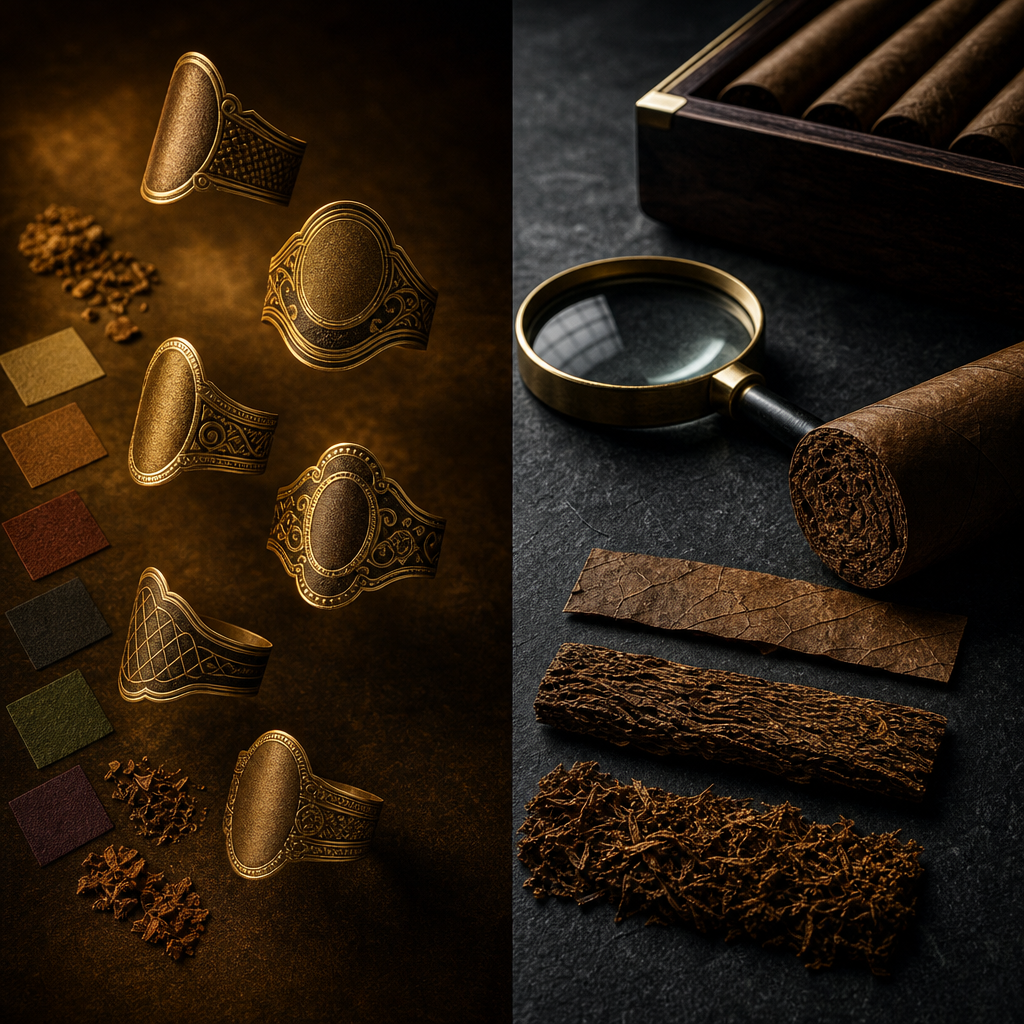
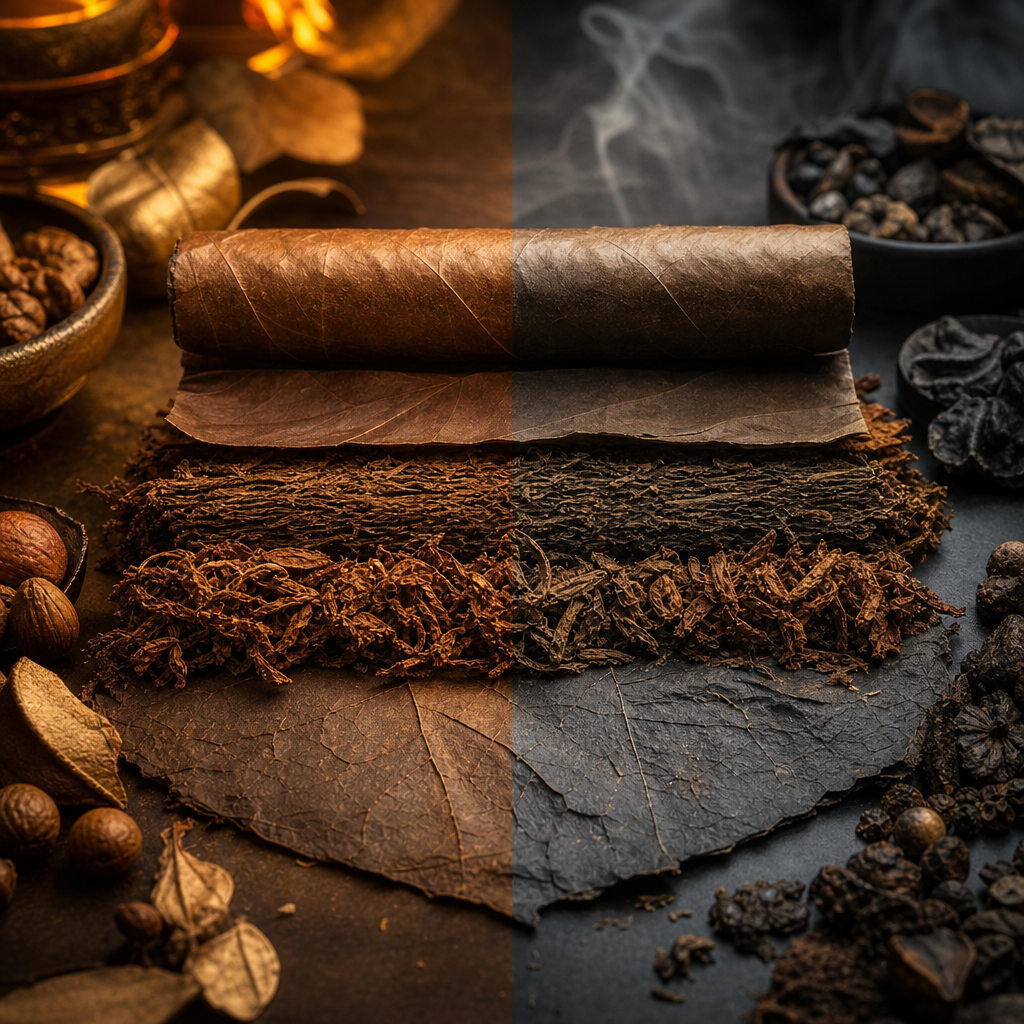
A traditional handmade long cigar usually consists of three layers: wrapper, binder, and filler. The wrapper is the outermost layer, the first seen by the eye, but it’s more than just appearance; it affects the sweetness upon entry, aroma clarity, and burning finesse. The binder acts like a skeleton, covering the filler and maintaining a stable burn line, often providing a background of wood, herbs, or spices.
The filler is the core of flavor blending, composed of long leaves from different parts and regions. Taking Cuban classics like Montecristo No.2 and Partagás Serie D No.4 as examples, even with the same Cuban tobacco, different proportions and leaf positions result in the former often presenting cocoa, coffee, and creaminess, while the latter leans more towards pepper, leather, and solid wood. Cigar flavor is not determined by a single leaf but is the result of the combined push of the three-layer structure.
I suggest beginners do an exercise: compare two cigars of similar size but with distinctly different wrappers, such as Connecticut Shade and Maduro styles. The former often carries cream, almond, and hay; the latter may exhibit brown sugar, coffee, cocoa, and a deeper sweetness. This comparison helps establish tongue memory faster than rote memorization of origin names.
Leaf Positions: How Seco, Viso, Ligero Change Strength
The tobacco plant, from bottom to top, receives varying degrees of sunlight and nutrients, altering its flavor. Seco is often taken from lower positions, with delicate aroma and good burnability, often carrying herbal, floral, and soft woody notes; Viso is in the middle, with more concentrated oils and aromas, often bringing nuts, roasted notes, and mild spice; Ligero is at the top, with the most sunlight, and more pronounced nicotine and thickness.
In blending logic, Seco is like the bright light of aroma, Viso is the middle flesh, and Ligero is the bass and power. If too much Ligero is used, beginners may find it bitter, spicy, and dizzy; if too much Seco, the aroma is clear but the end may be thin. Many Cuban brands adjust proportions within a ring gauge of 42 to 52 to balance burn speed and flavor output. Strength is not about being stronger or more advanced; coordinating aroma, thickness, and smoothness is good blending.
I once compared different batches of Robusto size around 2020, finding that with the same 50 ring gauge and approximately 124 mm length, if the Ligero proportion is increased, the first half will have more pepper and mineral notes; but if fermentation and aging are insufficient, the end may be rough. Conversely, if Seco and Viso are well-matched, even with moderate strength, the 45-minute process can maintain layers.
The Role of the Wrapper: First Impression and Last Memory
The wrapper is often misunderstood as just "the darker, the stronger." In fact, color is just a clue; the real key lies in variety, fermentation, oil content, and preservation. Connecticut Shade, due to shade-grown cultivation, has a delicate leaf surface, often seen in milder lines like Davidoff and Macanudo; Ecuador Habano, due to stable cloud conditions in Ecuador, often presents nutty, white pepper, and moderate sweetness.
Maduro-type wrappers undergo longer fermentation and darker color development, often showing dark chocolate, coffee, molasses, and ripe fruit aromas. However, Maduro does not necessarily mean strong, like Padrón 1964 Anniversary Maduro, with obvious thickness but also high mature sweetness; while some Connecticut Broadleaf Maduro, if well-handled, can have a rich yet smooth taste. The wrapper determines not just strength but the way aroma enters the nose and tongue.
Practically, I would ask beginners to observe three things: first, whether the wrapper’s oil sheen is natural, not wet and shiny; second, whether the leaf veins are too coarse and affect burning; third, whether the cold smell before lighting has mold, pungent ammonia, or excessive hay smell. A good wrapper is like a clean opening statement, not loud, but can give the filler a better stage.
Origin and Soil: Why the Same Leaf Type Tastes Different
Names like Corojo, Criollo, and Habano often appear in cigar introductions, but the same variety grown in different countries can perform completely differently. Nicaraguan Estelí tobacco often has pepper, earth, cocoa, and heaviness; Jalapa is sweeter, rounder; Condega is in between. Dominican tobacco often shows creamy, woody, nutty, and vanilla-like smoothness.
Honduran Jamastran often has leather, dry wood, and spices; Mexican San Andrés, due to volcanic soil and fermentation methods, is often used as Maduro wrappers, bringing dark chocolate, coffee, and wet earth notes. Cuban Vuelta Abajo has long been considered a classic region, not just because of the soil, but also the climate, traditional seedling, fermentation, and rolling system’s overall coordination. Origin is not a label but a flavor fingerprint left by soil, climate, farming, and craftsmanship.
For example, the Cohiba Behike series launched in 2011 has been discussed by many collectors, with a key being its use of specific leaf materials and high-standard selection, making cream, grass, honey, wood, and mineral notes highly recognizable. But collecting does not guarantee appreciation; it still depends on source preservation and market. For learners, it is more important to use it as a case to understand regional and blending logic rather than just looking at fame.
How Blenders Arrange Three-Stage Flavor
Many people think cigars taste the same from start to finish, but good blending arranges changes in the front, middle, and back stages. The front stage usually has more obvious wrapper and initial burn aromas, which may be creamy, woody, floral, or peppery; the middle stage fully activates the filler proportion, and nuts, coffee, leather, and sweetness become clear; the back stage, with rising temperature, increases nicotine and caramelized flavors, also testing balance the most.
Taking a milder classic Robusto like Hoyo de Monterrey Epicure No.2, the front stage often sees cream, cedar, and faint sweet grass; the middle stage shows almonds, honey, and fine wood; if well-preserved, the back stage will have a rounder roasted feel. Conversely, Partagás Serie D No.4 usually has more pepper and leather, with more defined middle-stage strength. Three-stage change is an important clue to judge blending depth.
Beginners can record in 5-minute units, without writing literarily, just marking aroma, sweetness, spiciness, bitterness, burn, and mouthfeel. When you accumulate records of more than 20 cigars, you will find some brands have a stable rhythm, and some sizes tend to heat up in the back stage. These observations can help you choose sizes and styles that better suit your rhythm.
Size, Ring Gauge, and Burn: Changing Proportions, Changing Flavor
The same brand and series often have different flavor focuses in different sizes. For example, a Robusto with about a 50 ring gauge and 124 mm length burns for about 40 to 60 minutes, with a higher filler proportion and direct flavor output; a Corona Gorda with about a 46 ring gauge and 143 mm length has a relatively clear wrapper influence and a finer rhythm; a Churchill with about a 47 ring gauge and 178 mm length tests long-term stability more.
A larger ring gauge does not mean a stronger flavor, but more space for filler configuration. A poorly blended large size with a 60 ring gauge may seem loose; a small size with a 42 ring gauge, if the wrapper and filler proportions are precise, can have clear aroma and sharp changes. Cohiba Siglo VI with a 52 ring gauge and Siglo II with a 42 ring gauge are often compared for differences in thickness and refinement within the same series. Size is not just about length and thickness but a design tool for blending proportions and burn speed.
| Size Type | Common Specs | Flavor Tendency | Suitable Observation Focus |
|---|---|---|---|
| Petit Corona | About 42 ring gauge, 129 mm | Clear wrapper influence, fast rhythm | Front stage aroma and back stage temperature |
| Robusto | About 50 ring gauge, 124 mm | Direct thickness, easy-to-identify balance | Middle stage filler performance |
| Toro | About 52 ring gauge, 152 mm | Full mouthfeel, longer time | Sweetness and strength changes |
| Churchill | About 47 ring gauge, 178 mm | Extended layers, fine changes | Burn stability and patience |
Building Your Blending Map from Tasting Records
To learn to identify blending, you can't rely solely on others' adjectives. My suggestion is to establish a fixed-format record, including brand, size, year or batch, storage humidity, pre-light aroma, changes in front, middle, and back stages, ash color, burn line, draw resistance, and overall impression. Observing differences in humidity between 65% and 69% RH is recommended, as many cigars can be stuffy, bitter, and burn poorly when too moist.
When recording, don’t rush to conclude "good" or "bad." First, write observable things, such as "obvious white pepper in the front stage, turning to almond after 5 minutes," "sweetness increases in the middle stage, bitterness is low," "high temperature in the back stage, charred wood increases." Three months later, looking back, you will know if you prefer the aroma brought by Seco, the nuts of Viso, or the thickness of Ligero. The purpose of tasting records is not to flaunt vocabulary but to build your sensory database.
I usually suggest beginners practice in the following ways:
- Compare two cigars of the same size but different wrappers within the same week.
- Record every 5 to 10 minutes, don’t puff continuously.
- Use nasal retrohale to observe aroma, without pursuing excessive complexity.
- If a cigar is in poor condition, first check humidity and preservation, don’t rush to dismiss the brand.
- Accumulate at least 20 records before determining your preference direction.
Etiquette and Rhythm: Let Blending Be Read Correctly
No matter how brilliant the cigar blending is, if the rhythm is wrong, it will be overshadowed by high temperatures and bitterness. Every 60 to 90 seconds per puff is a safe range I often give beginners; puffing too frequently raises the burning end temperature, amplifying the filler’s bitterness and spiciness, overshadowing the original cream, wood, nuts, and sweetness. Don’t treat cigars like cigarettes; they need pauses.
Lighting is also crucial. First, toast the foot, then light evenly, avoiding direct flame burning the center for too long. If the burn line is slightly slanted, don’t rush to correct it; if it exceeds 5 mm and continues to expand, lightly adjust with fire. Ash doesn’t need to be deliberately long; about 2 to 3 cm naturally falling is safer. Correct rhythm is not about formality but allowing the blender’s designed aroma to unfold completely.
There are also details in social settings: don’t blow your cigar smoke towards others, don’t compare others’ cigars for authenticity and price, don’t request an exchange before the other party shares. When discussing flavors, it’s best to say "I feel" rather than "this is." Taste is greatly affected by humidity, pre- and post-meal, coffee or alcohol, and physical state; staying open allows for better learning space.
Common Questions
Q1: Does a darker wrapper mean a stronger cigar?
Not necessarily. Dark wrappers often carry cocoa, coffee, brown sugar, and ripe fruit aromas, but strength also depends on the filler proportion, especially the amount of Ligero used. Maduro may be rich yet sweet, and Connecticut may have significant strength due to filler configuration. Color can only provide clues, not judge strength alone.
Q2: Why does the same cigar taste different each time?
Reasons may include year batch, storage humidity, transportation status, aging time, and your physical state. Even the same brand and size, batches from 2021 and 2023 may differ. If you want to compare, it is recommended to fix diet, time, and humidity conditions for more reference-worthy records.
Q3: Should beginners learn origin first or leaf position first?
I would suggest learning leaf position first, then origin. Seco, Viso, and Ligero help you understand the source of aroma, thickness, and strength; origin lets you distinguish styles, such as Estelí’s spiciness, Dominican’s smoothness, San Andrés’s dark sweetness. Combining both makes judgment more accurate.
Q4: Is a cigar too bitter due to poor blending?
Not necessarily. Excessive bitterness may come from being too moist, puffing too quickly, high back-stage temperature, or uneven lighting. Of course, it could also be due to insufficient fermentation or rough blending. First, slow down the rhythm, check humidity and burn line, then decide if it’s the cigar itself.
Q5: Can aged cigars be used as an investment?
I prefer to see it as a cultural and flavor collection. Certain years, limited editions, or well-preserved works indeed have market discussions, but collecting does not guarantee appreciation; it still depends on source preservation and market. For beginners, it’s more important to focus on preservation, identification, and recording than chasing prices.
To me, the most fascinating part of cigar blending is how it connects agriculture, time, craftsmanship, and human senses. You don’t have to identify twenty aromas at first; just being able to distinguish freshness from heaviness, sweetness from spiciness, balance from imbalance means you’re on the right path. Slowly taste, slowly record, and let each cigar teach you something.
—Cigar Prince Wilson Tsai
Smoking is harmful to health. Smoking is prohibited for those under twenty. Quitline: 0800-636363. This article is for reference on cigar culture, preservation, and regulations for adults over twenty and is not a tobacco advertisement, promotion, or purchase suggestion.