The Craft and Techniques of Cigars: A Comparison from Traditional to Modern Technologies
The Craft and Techniques of Cigars: A Comparison from Traditional to Modern Technologies
When discussing cigar craftsmanship, enthusiasts often fall into two extremes: one believes only in traditional Cuban handcrafting, while the other thinks that modern temperature, humidity control, and quality management are the answers. My view is that neither replaces the other; instead, they represent different eras' trade-offs between "stability, flavor, yield, and character."
As the editor of "Cigar Bible," I have long observed the differences in production processes in Cuba, Nicaragua, the Dominican Republic, and Honduras. What truly deserves in-depth exploration is not just brand reputation, but how cultivation, fermentation, rolling, aging, and quality control step by step determine a cigar's burn, draw, complexity, and finish.
Starting from the Field: The First Divergence Between Traditional Farming and Modern Agronomy
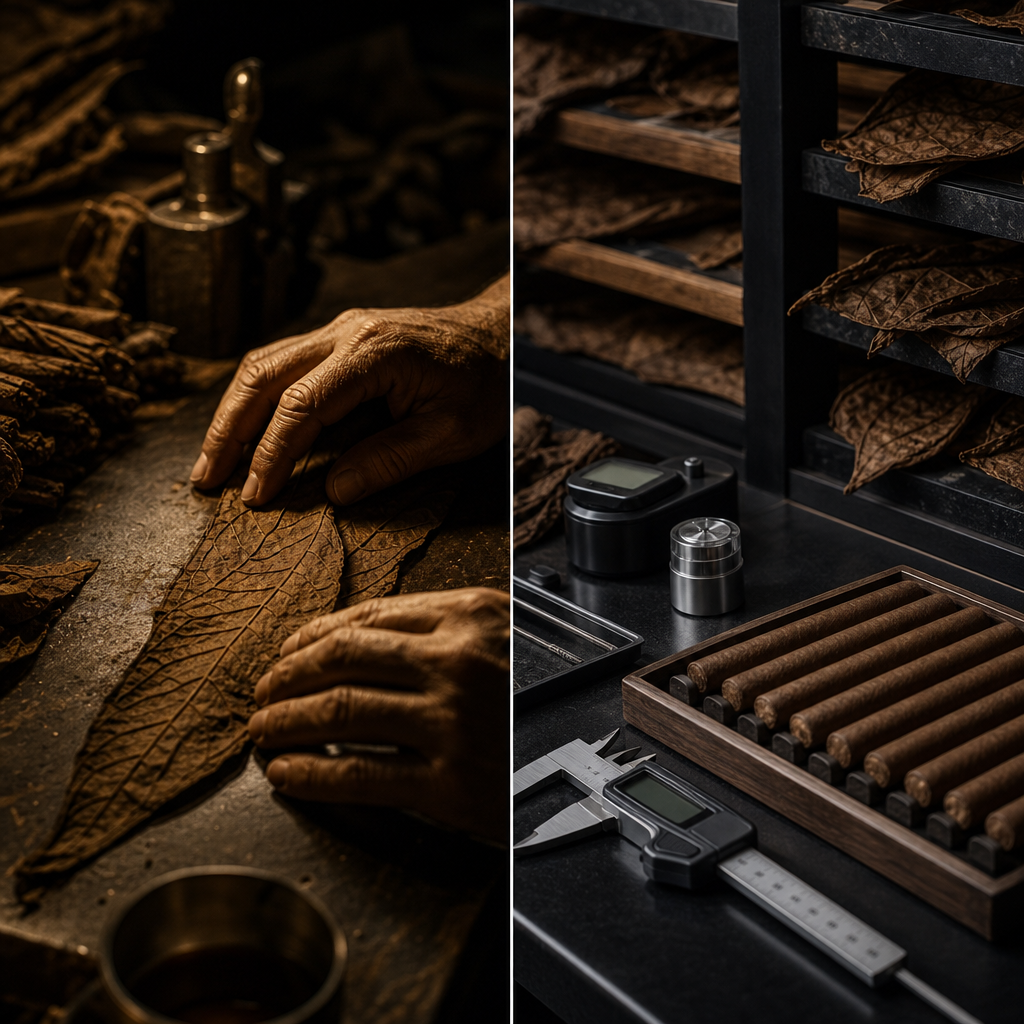
The core of traditional Cuban cigar craftsmanship is not set at the rolling table but is determined in the fields of regions like Vuelta Abajo. Take Pinar del Río as an example, where local farmers arrange the use of different tobacco leaf parts based on sunlight, soil drainage, and wind direction; Ligero, Seco, and Volado are not just strength classifications but functional divisions for burning, aroma, and structure. The styles of brands like Cohiba, Partagás, and Hoyo de Monterrey are built upon this field leaf selection logic.
Modern agronomy emphasizes predictability. Since 2000, Nicaragua's Estelí, Jalapa, and Condega have established more precise irrigation, shading, and soil management systems, allowing the same brand to maintain more consistent performance across different batches. For example, the stable rich cocoa, coffee, and pepper notes of the Padrón 1964 Anniversary Series largely come from agronomic control and long-term inventory management.
Traditional farming pursues the character of the land, while modern agronomy pursues batch stability; a seasoned enthusiast must first discern whether a cigar aims to express terroir or precision. This also explains why Cuban Robustos often have more vintage fluctuations, while New World cigars usually offer higher consistency.
Fermentation Techniques: The Temperature of the Pilón Determines the Depth of Aroma
Traditional Cuban fermentation often relies on the pilón, stacking tobacco leaves into large piles where the leaves' own moisture and microbial activity raise the temperature. Before the mid-20th century, many processes relied more on the maestro's touch, smell, and sight to judge temperature and humidity. If the temperature is too high, the leaves might lose delicate floral notes; if insufficient, ammonia and greenness remain, making the taste sharp and pungent.
Modern processes introduce more temperature recording and batch management. Brands like Arturo Fuente in the Dominican Republic and Drew Estate in Nicaragua arrange different fermentation cycles based on leaf thickness, sugar, and oil content. The fermentation logic of Connecticut Shade wrappers and Maduro wrappers is entirely different: the former emphasizes smoothness and creaminess, while the latter requires longer periods to bring out sweetness, woodiness, and bittersweet chocolate.
Fermentation is not about aging the leaves but transforming roughness into a readable aroma structure. For example, some well-preserved late 1990s Cuban boxes can emit a blend of honey, leather, hay, and cedar upon opening; conversely, even if it's a famous brand, if early fermentation is incomplete, subsequent aging can only embellish, not create a clean structure from scratch.
Rolling Techniques: The Subtle Differences Between Entubado, Booking, and Draw Resistance
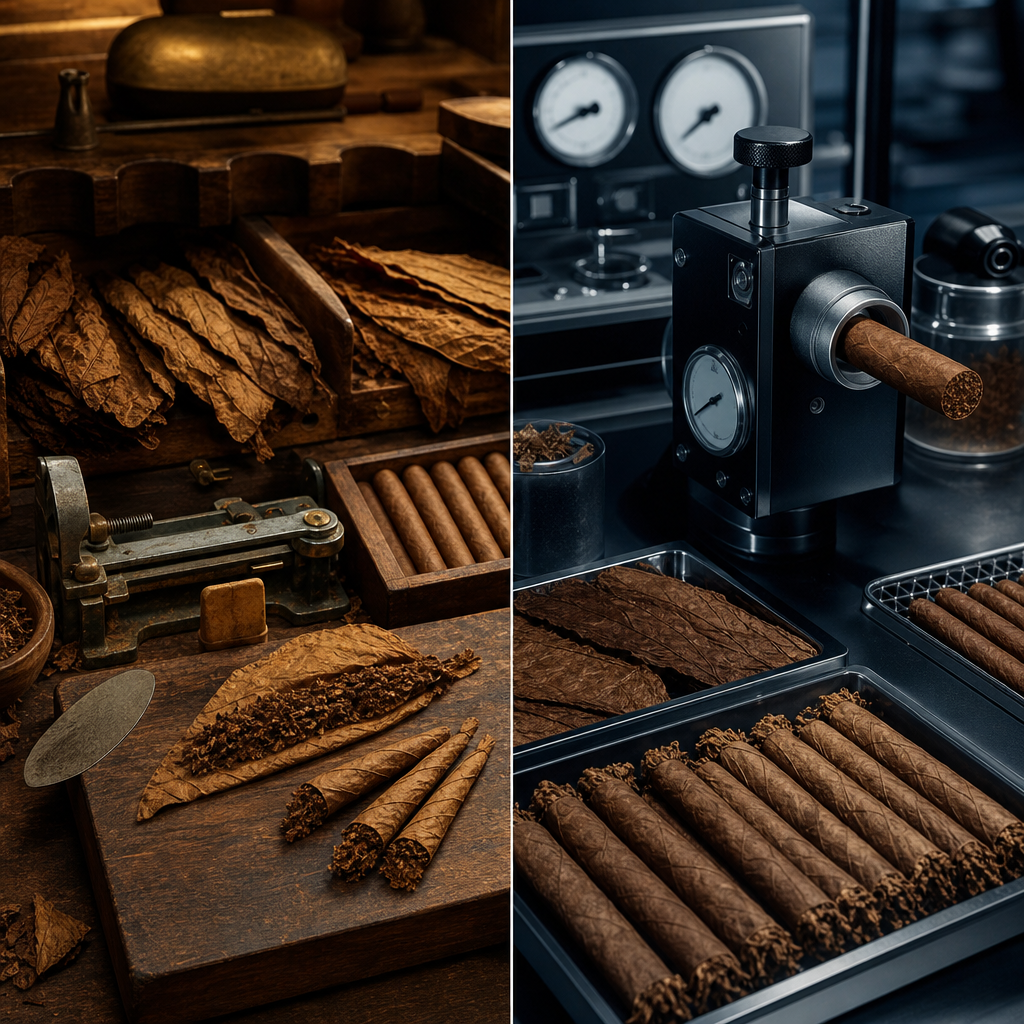
Traditional Cuban long-filler cigars often use the entubado method, where each filler leaf is rolled into small tubes before being bundled together. This method allows for more natural airflow, enabling each layer of tobacco to release flavors gradually during burning; however, it heavily tests the torcedor's touch, as uneven force can lead to local tightness or uneven burning. Classic sizes like Montecristo No.2 and Partagás Serie D No.4 especially showcase the master's skill.
Many New World factories use booking or modified bunching, folding the filler leaves like book pages before bundling. This method is faster and helps control draw consistency. For mass-export brands like Rocky Patel and Oliva Serie V, modern tables, molds, and draw test machines allow sizes like Toro, Robusto, and Churchill to maintain more consistent airflow performance across different batches.
| Rolling Technique | Common Features | Advantages | Potential Risks |
|---|---|---|---|
| Entubado | Each filler leaf forms a tube | Clear layers, natural airflow | Highly dependent on the master's touch |
| Booking | Leaves folded into a bundle | High efficiency, easier draw consistency | Layers may be more direct |
| Mixed Methods | Adjusted by leaf type | Balances stability and complexity | Requires stricter quality standards |
Draw resistance should not be too loose or too tight; ideal draw should balance burn rate, smoke temperature, and flavor release. When judging rolling quality, enthusiasts should not only look at the beauty of the ash column but also whether the rhythm remains consistent from start to finish.
Wrapper Treatment: Traditional Cuban Gloss and Modern Aesthetic Standards
The wrapper is the most intuitive language of cigar craftsmanship. Traditional Cuban standards for wrappers emphasize oil, elasticity, veins, and aroma balance, not just uniform color. Looking at classic boxes from H. Upmann, Punch, and Romeo y Julieta, some wrappers may not be as flawless as those in display cases, yet they might exhibit delicate transitions of floral, nutty, and creamy woody notes during burning.
The modern market places more emphasis on visual consistency. Since the 1990s, the U.S. market's preference for dark Maduro and Oscuro wrappers has become evident, prompting brands from the Dominican Republic, Nicaragua, and Honduras to be more meticulous in grading, color selection, and surface treatment. Arturo Fuente Hemingway, La Flor Dominicana Andalusian Bull, and My Father Le Bijou 1922 all demonstrate a high degree of integration between wrapper appearance and brand identity.
The wrapper is not the sole source of a cigar's flavor, but it determines the first impression, burn boundary, and many high notes. Traditional Cuban cigars often let the wrapper play an elegant decorative role; modern New World cigars often push the wrapper to the forefront, making sweetness, spice, or dark chocolate tones more pronounced.
Molds, Pressing, and Size: How Vitola Changes Flavor Proportions
The same blend placed in different vitolas can taste like a different cigar. Traditional Cuban factories use wooden or metal molds to press the bundled cigars into shape, then the master trims the wrapper and cap. Sizes like Laguito No.1, Mareva, Julieta No.2, and Robusto are not merely different in length and thickness but alter the filler leaf proportions, burn rate, and smoke temperature.
Modern processes are better at using size to create serialized products. The rapid popularity of 52, 54, and 56 ring gauges after 2000, for example, allows brands to include more leaves from different regions, resulting in thicker, sweeter, and cooler profiles; but the trade-off is that subtle changes are sometimes overshadowed by the thick smoke volume. Conversely, Lancero or Panetela, due to the small filler leaf proportion and high wrapper influence, demand extremely high standards for rolling and leaf balance.
Size is not a packaging option but part of the formula; seasoned enthusiasts comparing cigars from the same series should view vitola as a variable in the flavor structure. For example, Cohiba Lancero and Cohiba Robusto, even though they belong to the brand's core vocabulary, the former leans linear with clear floral and herbal notes, while the latter is more robust with direct creamy and woody notes.
Quality Control Technology: From Master's Touch to Draw Test Machines
Traditional Cuban quality control has long relied on experienced workers and supervisors patrolling the tables. Masters would use their fingertips to judge density during bundling and check weight, length, ring gauge, and appearance after completion. The advantage of this method is that human experience can detect problems that machines find hard to define, such as overly hard veins in a section, insufficient wrapper elasticity, or inconsistent humidity among leaves in the same bundle; the downside is that results are easily influenced by personnel experience and production pressure.
Modern factories widely introduce draw test machines to check the semi-finished product before the wrapper is applied using negative pressure values. Many export-oriented brands set acceptable ranges, with too tight or too loose being sent back for rework. Since 2000, large factories in Nicaragua and the Dominican Republic have become increasingly complete in weight grading, humidity monitoring, storage barcoding, and batch tracking, which is also an important reason for the improved stability of New World cigars.
- Traditional checks emphasize: touch, appearance, experience, immediate correction
- Modern checks emphasize: numbers, batches, records, repeatability
- The best state is usually: master's judgment plus equipment verification
Modern technology cannot replace a good master, but it can reduce the chance of bad batches being released. For seasoned enthusiasts, if multiple cigars in a box exhibit the same burning problem, it is usually not a single accident but could be a systemic signal in humidity, rolling, or batch management.
Aging and Storage: Traditional Patience and Modern Environmental Control
Cigars do not reach their best state immediately after leaving the rolling table. Traditional Cuban methods allow cigars to rest in the escaparate, ranging from weeks to months, allowing moisture to redistribute, ammonia to decrease, and aromas to integrate. Many Cuban boxes from around 1998, 2001, and 2006, if stored under stable conditions, exhibit softer leather, honey, woody, and dried fruit notes after more than a decade.
Modern storage emphasizes precise temperature and humidity control. Generally, 18 to 21 degrees Celsius and relative humidity of 65% to 69% are common ranges used by many collectors, but different wrappers and origins still require fine-tuning. Maduro wrappers with heavier oils may burn slower at high humidity; thin-ring-gauge Cuban cigars may lose floral and sweet-salty notes if too dry.
The essence of aging is flavor integration, not magical transformation; cigars with poor raw materials and processes will not automatically become classics over time. When discussing collection value, it must also be viewed rationally: it does not guarantee appreciation and still depends on source preservation and market conditions. Especially for old boxes, limited editions, and discontinued models, clear provenance, intact sealing, and temperature and humidity records are often more important than rumors.
The Flavor Results of Tradition and Modernity: How to Read Craftsmanship in the Cup, Nasal Cavity, and Burn Line
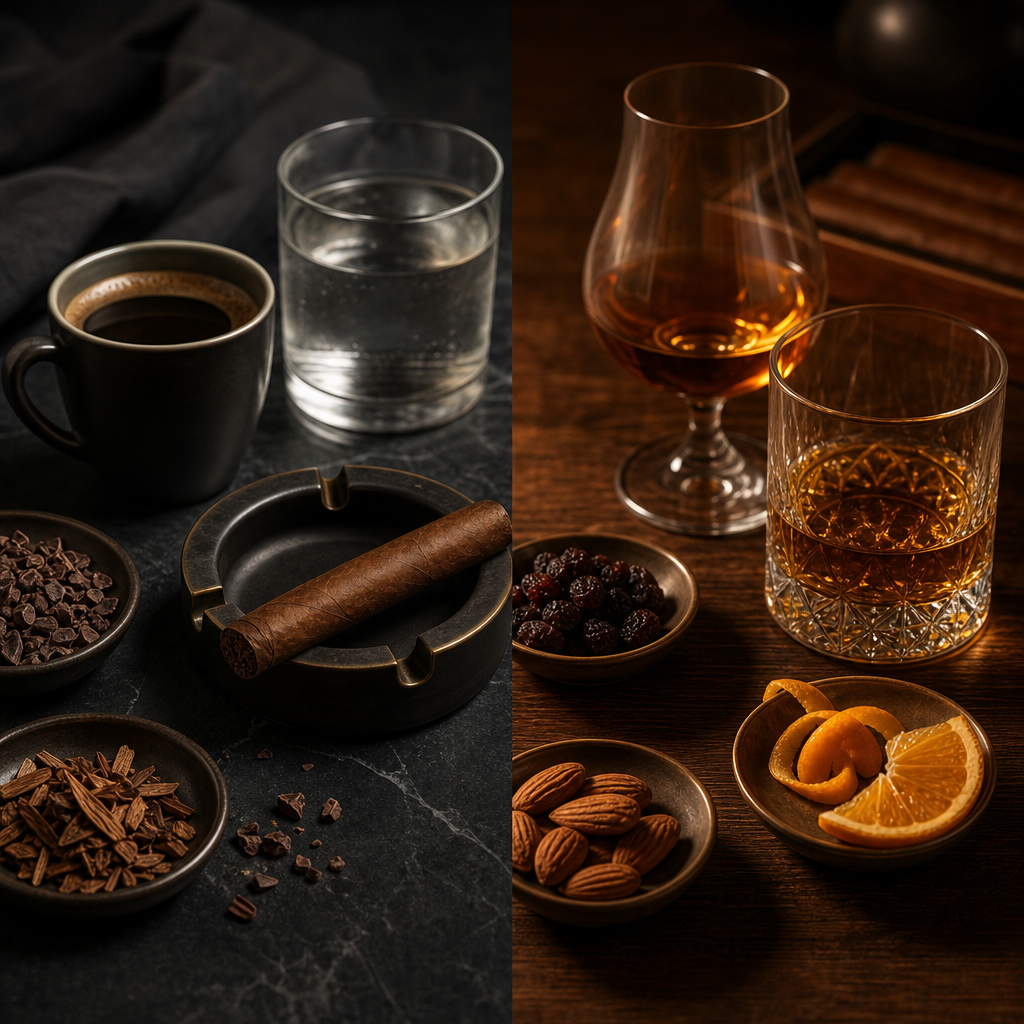
When a cigar enters actual tasting, craftsmanship differences manifest in three aspects: first is burn rate, second is smoke texture, and third is aroma transitions. The charm often seen in traditional Cuban cigars is the initial hay, floral, creamy wood, transitioning to leather and nuts in the middle, and ending with mineral, salty, or slightly sweet finishes. This change may not be intense but is very narrative.
Modern New World cigars often win with clear themes. For example, the concentrated coffee and cocoa of the Padrón 1926 Series, the cream, nuts, and sweet spices of the Oliva Serie V Melanio, and the white pepper and roasted grains of the Davidoff Nicaragua all exhibit a high degree of design. Their advantage is high recognizability, good stability, and easier maintenance of core styles in different environments.
Traditional craftsmanship lets flavors unfold like a slowly opening book, while modern processes make themes clearer and more predictable. Seasoned enthusiasts comparing the two might fix ring gauge, length, and storage conditions, then record burn, temperature, and aroma changes every 15 minutes. This method offers more judgment than simply saying "Cuban is more elegant" or "New World is richer."
Common Questions
Is traditional Cuban handcraft always better than modern processes?
Not necessarily. Traditional Cuban craftsmanship excels in terroir, subtlety, and historical vocabulary, but batch differences are more pronounced; modern processes excel in stability, control, and formula design. True excellence is not a regional label but the simultaneous alignment of raw materials, fermentation, rolling, and preservation.
Why does draw resistance vary within the same box of cigars?
The reasons may stem from filler leaf humidity, rolling force, vein position, or storage environment. If the same box shows significant differences, it is often not a single factor issue but could accumulate variables from bundling, molding to storage.
Does a larger ring gauge mean richer flavor?
Not necessarily. A larger ring gauge can accommodate more leaf types, often resulting in a thicker profile, but details may be overshadowed by smoke volume. Sizes like Lancero and Corona Gorda can amplify wrapper and formula precision.
How long should aging be suitable?
There is no fixed answer. Cuban subtle types can observe changes over 3 to 5 years, while some rich New World types are well-integrated within 1 to 3 years. The focus is on stable environments and regular records, not blindly chasing vintage.
How to judge whether a cigar's craftsmanship is mature?
Look at three things: whether the draw is stable, whether the burn is balanced, and whether the flavor transitions are orderly. If the front is sharp, the middle is empty, and the end is bitter and hot, even if the brand is prominent, it may indicate gaps in fermentation, formula, or preservation.
Will modern machine testing make cigars lose their soul?
No. Machines only eliminate obvious defects; the soul still comes from tobacco leaves, formulas, and the master's touch. The ideal craftsmanship is using modern quality control to maintain the baseline, then allowing traditional craftsmanship to create character.
I always believe that seasoned enthusiasts pursue not myths but understanding. When you can see the choices behind the fields, fermentation, and rolling from the wrapper's oil, draw, burn line, ash color, smoke temperature, and aroma rhythm, cigars are not just a brand list but a living history of craftsmanship. Tradition deserves respect, modernity deserves study; the truly fascinating part lies at the intersection of the two.
—Cigar Prince Wilson Tsai
Smoking is harmful to health. Under 20 years old is prohibited from smoking. Quitline: 0800-636363. This article is for reference only for adults over 20 years old as knowledge of cigar culture, preservation, and regulations, not a tobacco advertisement, promotion, or purchase suggestion.