The Craft and Techniques of Cigars: A Dialogue Between Antique and Modern
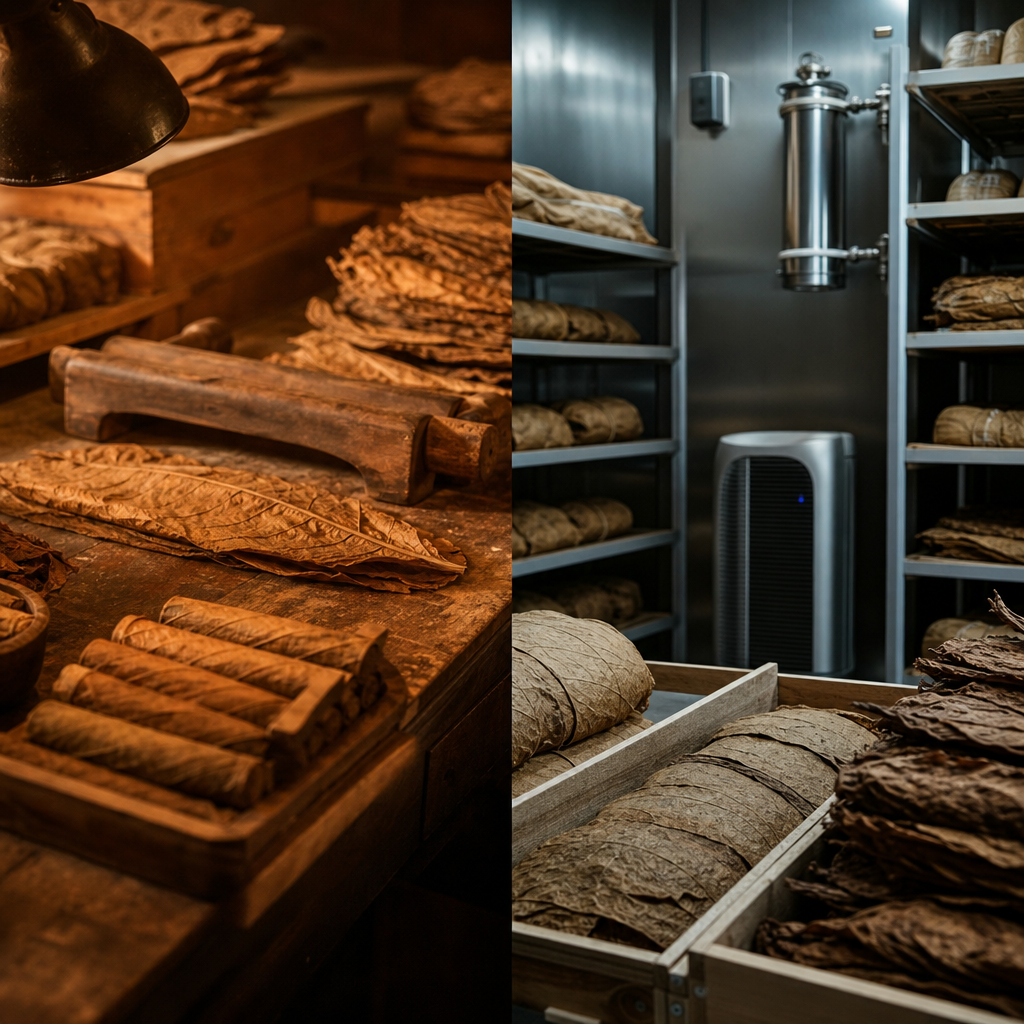
The Craft and Techniques of Cigars: A Dialogue Between Antique and Modern
As an editor of "The Cigar Bible," I am often asked by veterans: Is the allure of antique cigars due to the passage of time, or the craftsmanship of the past? My answer is usually not a binary choice, but rather "time magnifies both the strengths and weaknesses of craftsmanship."
The precision, humidity control, and grading management of modern cigars are indeed more mature than in the mid-to-late 20th century; however, the tactile sense of old-school rollers, the selection of leaves, and the personality of batches have left many details that are difficult to replicate today. The true excitement of the dialogue between antique and modern lies here.
Antique Cigars Are Not Just "Old," But Craftsmanship Magnified by Time
When discussing antique cigars, one cannot only look at the year. Take, for example, the H. Upmann from the 1980s, Partagás 8-9-8 from the 1990s, and the Cohiba Siglo series around 2000. Even after more than twenty years of aging, some will exhibit honey, old wood, leather, and dried floral aromas, while others will only have paper taste and emptiness. The difference often lies not in age, but in raw materials, rolling density, preservation, and whether early fermentation was solid.
Antique cigars should not be mythologized. Havana cigars from the 1950s to the 1970s are often seen as a golden age, but there were also batch differences, unstable transportation conditions, and imbalanced humidity within boxes. What is truly worth studying are those works that maintain burn line, draw, and complexity after many years, as they prove that the structure was complete from the start. The value of antique cigars is not in the year itself, but whether the year makes the original structure more clearly emerge.
When I look at antique boxes, I first check three things: whether the wrapper oil is dry and cracked, whether the foot end filler is loose, and whether the box aroma is clean. If there is mold, ammonia, or cardboard mustiness, even a beautiful year should be approached conservatively. Sometimes the market sentiment pushes up collection prices, but collection appreciation does not guarantee value increase; it still depends on source preservation and market. What veterans should truly pursue is not "old," but old with structure, order, and a sense of life.
From Old-School Tactile Sense to Modern Standards: The Evolution of Rolling Techniques
In mid-20th century Cuban factories, the experience of rollers often determined the filler ratio and tactile sense. Brands like Partagás, Romeo y Julieta, and Hoyo de Monterrey had clear process divisions, but "people" had a heavy influence; the same Churchill might present different draw and burn rhythms in the 1970s and 1990s. Handcraft is not a romantic term, but the tension balance of each seco, volado, and ligero.
Modern factories emphasize process management more. Many brands in the Dominican Republic, Nicaragua, and Honduras have strengthened leaf moisture content records, batch tracking, sampling tests, and even use draw testers to control draw since the 2000s. This allows brands like Davidoff, Padrón, Fuente, and Oliva to maintain stability in mass production. The core of modern technology is not to replace handcraft, but to reduce the uncertainty in handcraft to a manageable range.
| Craft Aspect | Common Features of Antique Cigars | Common Features of Modern Cigars |
|---|---|---|
| Draw | Greater batch differences, more determined by tactile sense | More frequent sampling tests |
| Filler Configuration | Based on the experience of masters and factory tradition | Documented formulas, batch tracking |
| Humidity Management | Relies on storage experience | Digital monitoring and zonal management |
| Flavor Personality | Large variations, occasional surprises | High stability, predictable curves |
I do not believe that antique necessarily surpasses modern. Antique excels in soul and difference, modern excels in precision and repeatability. Veterans who want to advance should understand both: a 1998 Bolívar Royal Corona might be rough and deep, while a recent Padrón 1964 Anniversary might exhibit cocoa, coffee, and pepper with high consistency. This is not about superiority, but two sets of languages.
Fermentation, Aging, and Humidity: Invisible Crafts Most Determine Flavor
The most easily overlooked aspect of cigar craftsmanship is leaf processing before rolling. After tobacco leaves are harvested, they go through hanging, pile fermentation, classification, re-fermentation, and resting before entering the rolling stage. Taking production areas like Cuba's Vuelta Abajo, Nicaragua's Estelí, Jalapa, and Condega as examples, the same variety in different soils and fermentation strategies will have completely different spicy, sweet, and mineral tones.
Before the 1990s, many factories relied on masters to judge pilón temperature and turning timing; modern times more often use temperature and humidity records as assistance. If fermentation is insufficient, there will be obvious ammonia when young, and burning will be pungent; if over-fermented, sweetness and oils may be lost. The charming leather, mushroom, old wood, and honey notes of antique cigars are mostly not solely formed by years in the box, but because the early fermentation had a clean foundation. Aging can only embellish and integrate, it cannot turn failed raw materials into great cigars.
The storage environment is equally crucial. Personally, I prefer a range of 18 to 21°C, with relative humidity between 62% and 67%; for antiques over 20 years, it is better to have slightly lower humidity rather than long-term high. Over-humidity can cause burning to be dull, woodiness to become muddy, and even mold risk; too dry can cause wrapper cracking and aroma evaporation. Truly mature storage is not about setting the hygrometer to a nice number, but observing cigar resilience, box aroma, and burn performance.
After Ring Gauge Increases, Flavor Logic Also Changes
In the era of antique cigars, Lonsdale, Corona, Panetela, and Churchill were classic sizes familiar to many veterans. The proportion mainly between 42 and 47 ring gauge allows for closer interaction between wrapper, binder, and filler; the spice, floral, leather, and woodiness of the wrapper are more easily magnified. Montecristo No.1, Cohiba Lanceros, and H. Upmann Sir Winston all show the linear changes brought by small ring gauges and long sizes.
After 2000, the market gradually favored Robusto, Toro, Gordo, with 50 to 60 ring gauges becoming more common. Larger ring gauges can accommodate more filler combinations, allowing blenders to create a wider structure between ligero, seco, and volado, and also making burn temperature relatively stable. But the cost is reduced wrapper influence, and flavors may become heavy and less refined. Ring gauge is not simply an appearance choice, but it changes the entire cigar's burn temperature, leaf ratio, and flavor focus.
This is also why different sizes of the same brand cannot be compared only by "strength." For example, the directness, richness, and woody spiciness of Partagás Serie D No.4 and the development, leather, and sweet aroma of Lusitanias are not the same rhythm; Padrón 1926 No.35 and 80 Years Maduro are not just length differences. Veterans studying modern cigars should view size as part of the formula, not just a specification. Understanding size helps to understand what the roller is designing.
The Era of Wrappers: From Natural Oils to Modern Precision Grading
Antique cigar enthusiasts often say that old Havana wrappers have a "soft and shiny oiliness." This description is not just visual; it relates to leaf maturity, fermentation depth, and preservation status. Corojo, Criollo, Habano, Connecticut Shade, Ecuador Habano, San Andrés Maduro wrappers each represent different eras of technical choices. Especially Ecuador's cloud conditions allow Connecticut Shade and Habano seed to form delicate leaf surfaces with less artificial shading, becoming an important source for modern high-end cigars.
Maduro technology is also a clear example of the difference between old and new. Old-school Maduro often involves long fermentation and natural darkening, while modern times emphasize temperature control and batch consistency. Works like Arturo Fuente Añejo, Padrón Maduro series, and Liga Privada No.9 make dark wrappers not just sweet, but with black coffee, molasses, mineral, pepper, and bittersweet chocolate. A good wrapper is not about being darker, but about achieving balance between oil, elasticity, aroma, and burn.
But wrappers can also be misleading. A beautiful colorado maduro does not guarantee internal structure, and a thin and delicate claro does not mean blandness. Veterans observing wrappers should also look at leaf veins, texture, seams, cap, and burn ash color. If a cigar looks excellent on the outside but shows uneven burn, bitterness, and unstable draw early on, the problem is often not on the surface but in the binder wrap or filler distribution. Both antique and modern are the same: the wrapper is the entrance, structure is the answer.
Innovative Techniques: Modern Is Not a Betrayal of Tradition, But a Recalibration
The most obvious innovation in cigar craftsmanship over the past two decades is in production area blending and batch management. In the past, many people asked if a cigar was Cuban or non-Cuban; today, a more precise question is how Estelí ligero, Jalapa seco, Dominican piloto cubano, Brazilian Mata Fina, and Mexican San Andrés are combined. Fuente OpusX, for example, grows strongly individualistic wrappers and fillers in the Dominican Republic, changing many people's perceptions of production area limitations after 1995.
Another key is the management of small batches and limited formulas. Brands like Tatuaje, My Father, Foundation, and Warped combine traditional Cuban sizes, American market flavors, and Nicaraguan raw materials to form a new language. These brands often use more explicit batch narratives, letting consumers know the year, farm, or formula direction. Of course, limited does not equal quality, and special editions are not necessarily more mature than regular ones; judgment still needs to return to burn, balance, finish, and consistency. True innovation is not about making cigars more exaggerated, but about making flavor design more purposeful.
The modern technology I admire respects tradition without being bound by it. For example, draw testers help reduce blockage rates, cold storage pest control processes reduce pest risks, and precise humidification equipment protects long-distance transport quality; these may not seem romantic, but they make cigars more reliable. If antique cigars teach us to appreciate the depth of time, modern technology reminds us: a good cigar should not rely on luck, but should be supported by craftsmanship, management, and sensory experience.
Advanced Interpretation for Veterans: How to Compare Antique and Modern
Comparing antique and modern cigars, the biggest taboo is using a single standard. Antique cigars should be evaluated based on preservation, source, box condition, and box consistency; modern cigars should be evaluated based on batch stability, formula completeness, and whether the brand style is clear. If comparing a 1990s Cohiba Espléndidos with a recent Cohiba Robusto, one should not only say which is stronger or sweeter, but ask: do they each complete their task in terms of size, formula, and era conditions?
I suggest veterans establish their own record system, not complicated, but consistent. For each cigar, at least note the year or purchase time, storage humidity, size, changes in the front, middle, and back sections, burn, and draw. After recording more than 50 cigars, you will find that what you truly prefer is not the brand name, but certain structural characteristics: for example, low-temperature burn, woody sweetness, mineral finish, or obvious mid-section transitions. Advancement is not about smoking more, but being able to more accurately articulate why a cigar is established or unbalanced.
In practice, I use the following points for cross-judgment:
- Antique Cigars: First check if the box aroma is clean, then check wrapper elasticity and foot end filler.
- Modern Cigars: First check brand stability, then check if the size can express the core of the formula.
- Comparing the Same Brand: Avoid crossing too many sizes, preferably use Robusto to Robusto, Churchill to Churchill.
- Comparing Different Eras: Do not only look at strength, but look at aroma development speed and finish cleanliness.
- Evaluating Collection: Price, source, preservation records, and market liquidity should be considered together.
Frequently Asked Questions
Are Antique Cigars Always Better Than Modern Cigars?
No. If well-preserved, antique cigars may exhibit softness, depth, and complex aged aromas rarely seen in modern cigars; but if they have been long-term over-humidified, over-dried, or temperature uncontrolled, the flavor will collapse. Year only provides possibility, not guarantee of quality. Modern cigars often have advantages in stability, burn, and draw control, and both should be evaluated separately.
What Humidity Should Be Used to Store Cigars Over Twenty Years Old?
I usually recommend 62% to 65% relative humidity as a starting point, with temperature controlled between 18 and 21°C. If the cigar is in a dry state, it can be slowly re-humidified, avoiding rapid humidity increases. The wrapper of old cigars is fragile, and rapid changes can easily cause cracks. The focus of judgment is not the hygrometer number, but the feel, aroma, and burn.
Are Larger Ring Gauges More Suitable for Modern Formulas?
Most modern blends indeed make good use of the space of 50 ring gauge and above, arranging more filler ratios and layers. However, larger ring gauges can also make flavors dull, especially when the filler sweetness and strength lack transitions. Veterans who like details can still return to sizes like Corona Gorda, Lonsdale, and Lancero for linearity.
How to Judge If an Antique Cigar Still Has Vitality?
First smell the box aroma, which should be clean wood, leather, hay, honey, or a faint mushroom aroma, not moldy, sour, or musty cardboard. Then check if the wrapper still has elasticity and if the foot end is complete. If lighting up results in bitterness, loose white ash, and chaotic draw early on, it usually indicates preservation or structural issues.
What Conditions Should Be Considered for Cigar Collection?
Brand, year, and rarity are just surface factors; more important are source, preservation records, box condition, and market acceptance. An intact original box, clear tax stamps, and box codes are usually easier to judge than loose sticks. When discussing collection appreciation, remember: collection appreciation does not guarantee value increase; it still depends on source preservation and market.
Will Modern Technology Cause Cigars to Lose Their Handcrafted Soul?
I do not see it that way. Draw testing, temperature and humidity monitoring, and batch tracking are not meant to turn cigars into industrial products, but to reduce unnecessary errors. The true soul still lies in leaf selection, formula design, and rolling tactile sense. Good technology should make handcraft more stable, not flatten personality.
Antique cigars are like old records, with the air of the era in the noise; modern cigars are like high-resolution recordings, with clear details and precise control. I do not place the two in opposition, because true cigar craftsmanship is inherently a combination of land, time, hand, and management. If veterans can understand both old-school tactile sense and modern technology, they will see the deepest layers of a cigar. My enjoyment also lies in this dialogue.
—Cigar Prince Wilson Tsai
Smoking is harmful to health.
Smoking is prohibited for those under twenty.
Quitline: 0800-636363.
This article is for reference on cigar culture, preservation, and regulations for adults over twenty years old only, not a tobacco advertisement, promotion, or purchase suggestion.