The Brand Stories and Origins of Cigars: Exploring the Evolution of Classic and Emerging Brands
The Brand Stories and Origins of Cigars: Exploring the Evolution of Classic and Emerging Brands
As the editor of "The Cigar Bible," I am often asked by veterans: Where does a cigar's "brand flavor" truly come from? Is it the Cuban soil, factory traditions, family recipes, or the deliberate identity crafted by new world brands over the past two decades? The answer is often not a single source but the result of a long-term overlay of history, raw materials, sizes, and market choices.
A truly advanced understanding of brands involves more than just remembering the names Cohiba, Partagás, Padrón, or Fuente. It means understanding why they changed in different eras, why they persisted, and why style differences appear within the same brand. Here, I will guide you through the evolution of classic and emerging brands using timelines, craftsmanship, and flavor syntax.
Classic Cuban Brands: From 19th Century Workshops to Global Symbols
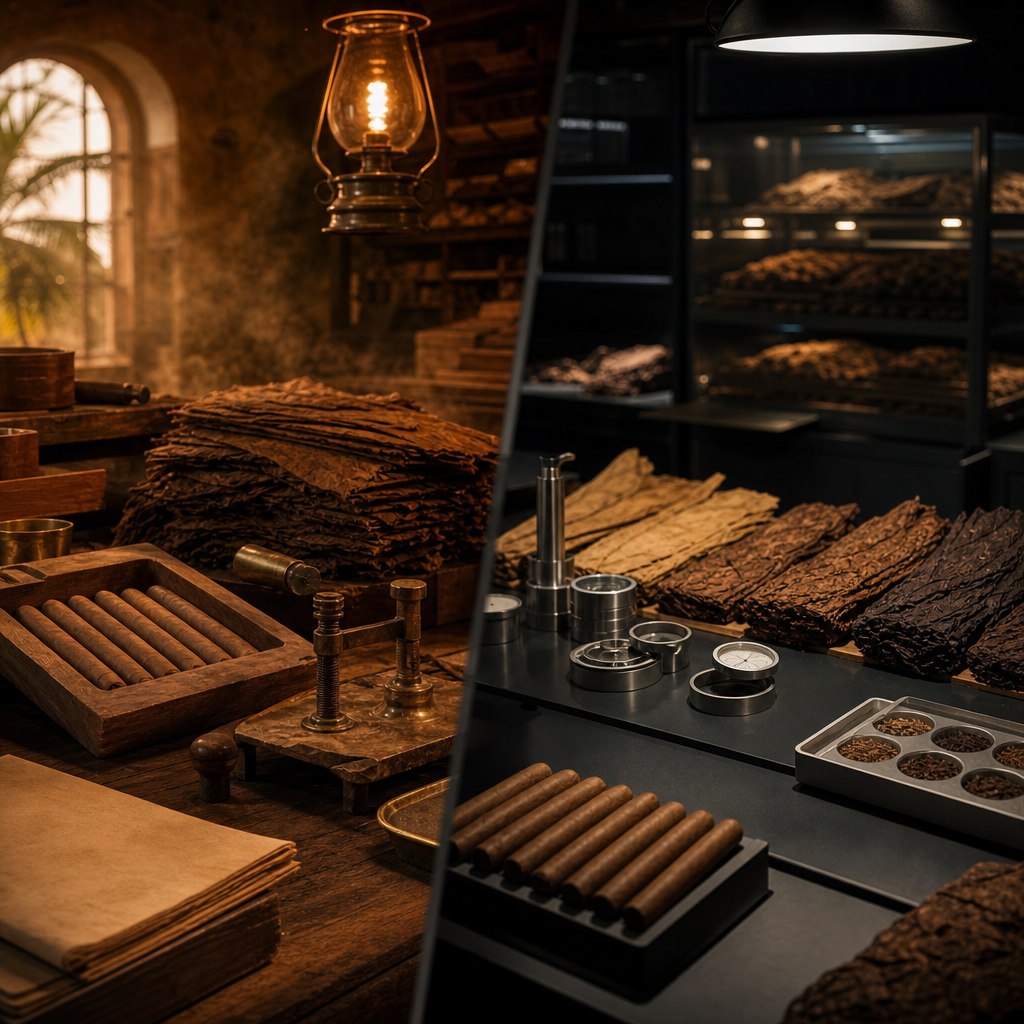
The 19th century Havana was the core stage for the formation of modern cigar brands. H. Upmann can be traced back to 1844, Partagás was founded in 1845, Hoyo de Monterrey debuted in 1865, and Romeo y Julieta established its reputation in 1875. At that time, brands were not merely trademarks but a combination of factories, families, networks, and export markets. The value of old Cuban cigars lies in their ability to transform workshop reputation into a recognizable flavor language.
Take Partagás as an example. The Real Fábrica de Tabacos Partagás, established by Jaime Partagás in Havana, has long been regarded as a representative of rich, spicy, leathery, and earthy flavors. In contrast, H. Upmann is often described by veterans as cleaner, woody, nutty, with a delicate sweetness; Hoyo de Monterrey is associated with elegance, floral, and creamy tones due to its Vuelta Abajo leaf source.
| Brand | Year Founded | Common Style Impressions | Representative Sizes |
|---|---|---|---|
| H. Upmann | 1844 | Woody, nutty, delicate sweetness | Magnum 46, Sir Winston |
| Partagás | 1845 | Spicy, leathery, substantial earthy | Serie D No.4, Lusitanias |
| Hoyo de Monterrey | 1865 | Floral, creamy, soft woody | Epicure No.2, Double Coronas |
| Romeo y Julieta | 1875 | Red fruit, cedar, balance | Churchill, Wide Churchills |
These brands have crossed over a century not because they remain exactly the same every year, but because they retain a "recognizable direction." After the nationalization of Cuba, brands transitioned from private family trademarks to part of a national system, but many classic sizes and flavor positions were still continued. Studying Cuban brands requires looking beyond the years to see how brands maintained their character after institutional changes.
Cohiba and Montecristo: How Myths Became Institutionalized
Montecristo was founded in 1935, named after "The Count of Monte Cristo." In the era when readers would read novels aloud in rolling factories, this brand quickly became the standard answer for the export market. The Montecristo No.2, a torpedo-shaped size, has long been considered a textbook for understanding the balance of Cuban cigars: cocoa, coffee, wood, bittersweetness, and medium to medium-high strength are the starting points for many veterans to establish coordinates.
Cohiba, on the other hand, is a different story. In the mid-1960s, it initially carried the colors of official reception and diplomatic gifts, with 1966 often regarded as the brand's starting point, and it officially entered the commercial market in 1982. The Siglo series was launched in 1992 to correspond with the 500th anniversary of Columbus's arrival in the Americas; the Behike concept was elevated again in 2006, and the Behike BHK 52, 54, 56 became the symbols of modern high-end Cuban cigars in 2010. The uniqueness of Cohiba lies not only in its price or scarcity but in its combination of political narrative, tobacco selection, and brand ritual into a complete myth.
Veterans should not just chase fame with Cohiba. The slender proportions of the Lancero will amplify fermentation and rolling precision, while the Robusto more directly showcases grass, honey, cream, and roasted notes. If Montecristo No.2 is well-preserved, it often turns sharp wood into more rounded coffee and cocoa after three to five years; but if the humidity is too high, it is prone to stuffiness, bitterness, and poor combustion.
These two brands illustrate the same point: classics are not static. Montecristo represents the stable model established during the export era, while Cohiba represents the pinnacle of modern brand management and scarcity narrative. Both are worth studying, but the method of study must look at size, year, box code, preservation, and actual status together.
The Rise of Non-Cuban Brands: The Counterattack of the Dominican Republic and Nicaragua
Non-Cuban brands truly entered the veteran's field of vision not just because of embargoes or market gaps but due to mature craftsmanship. Davidoff began to establish a high-end image with Cuban cigars in 1968, and after 1991, it fully shifted to Dominican production, making "non-Cuban can also be elegant" a reality. Davidoff's white label series is often known for its clean, creamy, nutty, white pepper, and precise combustion.
Arturo Fuente represents the resilience of family craftsmanship. The Fuente family can be traced back to 1912, having gone through fires, relocations, and rebuilding. In 1995, they launched Fuente Fuente OpusX, challenging the then-imagination that "top wrapper can only come from specific regions." The success of OpusX is not only in its intensity but in proving that soil, shade-grown cultivation, fermentation management, and brand patience can reshape the reputation of a region. The core breakthrough of non-Cuban brands is turning regional restrictions into craftsmanship choices.
Nicaragua rose rapidly after the 1990s. The Padrón 1964 Anniversary Series was launched in 1994 to commemorate the brand's 30th anniversary, with common styles being cocoa, coffee, black pepper, and substantial sweetness; the 1926 Series was launched in 2002 to commemorate José Orlando Padrón's birthday, with deeper and more delicate structures. Estelí, Jalapa, Condega, and other regions have made Nicaragua form a rich but multi-layered style.
If you look at Davidoff, Fuente, and Padrón together, you will find that they are not imitating Cuba but establishing new coordinates. Davidoff emphasizes lines and elegance, Fuente excels in spices, sweetness, and drama, while Padrón uses box pressing, aged tobacco, and stable blending to create an old-school thickness.
Emerging Boutique Brands: From Personal Aesthetics to Small Batch Identification
After 2000, the rise of boutique cigar brands changed the way veterans view brands. Tatuaje was founded by Pete Johnson in 2003, in collaboration with the García family, initially opening the market with "Cuban-style profiles plus Nicaraguan strength." My Father Cigars also gradually established its brand universe around 2003, with Don Pepin García's rolling and blending background giving the brand a distinct black pepper, roasted wood, and rich spice feel.
Foundation Cigar Company was founded by Nicholas Melillo in 2015. He previously participated in Drew Estate's Liga Privada series and later established his own cultural narrative with works such as El Güegüense and Tabernacle. Brands like Warped, Illusione, and Crowned Heads attract veterans familiar with mainstream brands through small batches, retro labels, specific factory collaborations, and transparent blending. The most important innovation of emerging brands is not making cigars heavier but making the brand personality clearer.
These brands often reveal more detailed information, such as labeling the wrapper as Ecuadorian Habano, Mexican San Andrés, or Connecticut Broadleaf, and explaining that the filler comes from Estelí, Jalapa, or Ometepe. For veterans, this is equivalent to providing a set of reverse analysis tools: you can infer flavors from the formula and then verify the sources of combustion, sweetness, and spiciness.
However, boutique brands also have risks. Small batches may bring surprises but can also cause batch differences; limited narratives can add interest but do not mean every box is worth long-term storage. My approach is to first record three versions: initial impressions, six months later, and two years later, then compare whether the aroma has integrated. If brand stories are not supported by craftsmanship, they will only remain as pretty labels.
Craftsmanship and Flavor: Brand Personality Actually Lies in Proportion
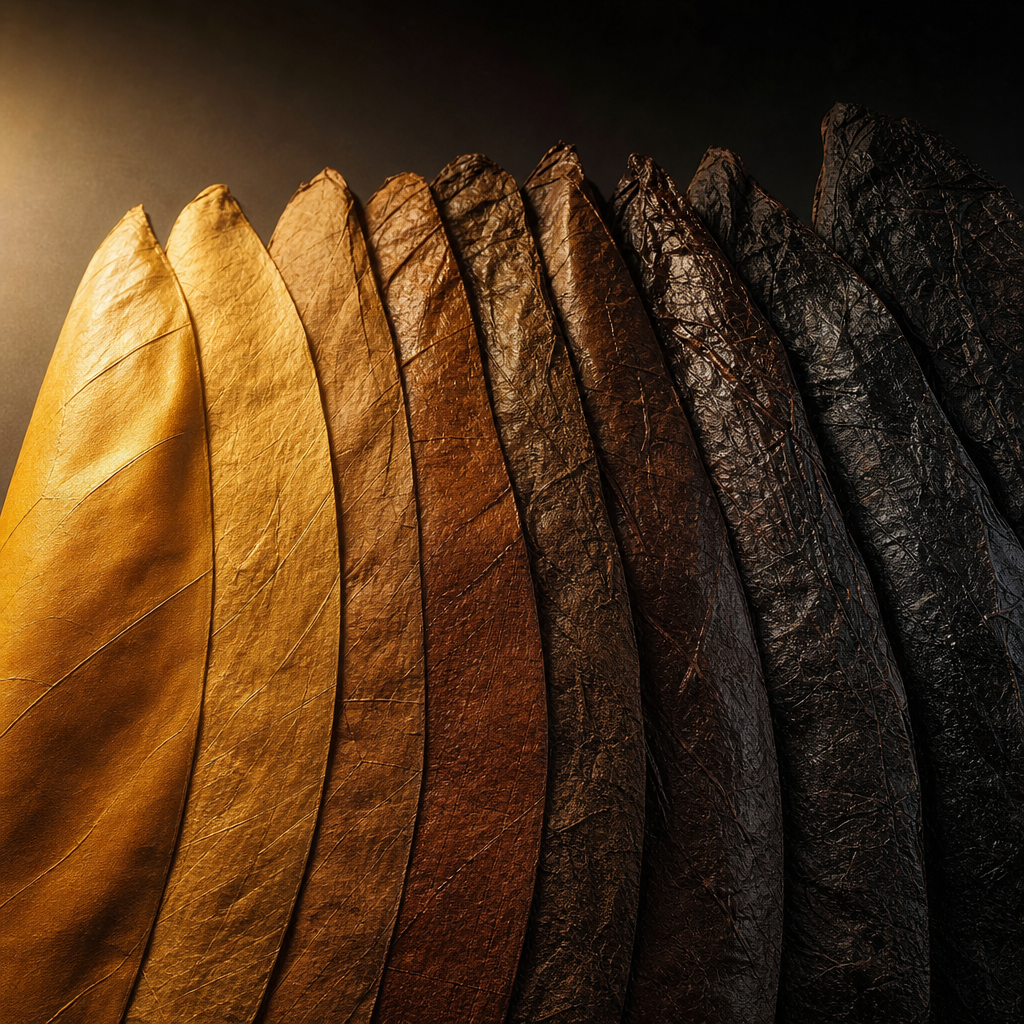
When veterans talk about brands, they must eventually return to craftsmanship. Cigars are composed of wrappers, binders, and fillers. The wrapper affects the aroma entry and visual impression, the filler determines the main structure, and the binder acts like a skeleton, stabilizing the burning speed and tension. If the same brand is switched from Robusto to Churchill, the flavor proportions may be completely different because the length, ring gauge, and leaf burning area have all changed.
For a Robusto with a 50 ring gauge and about 124 mm, it is usually more direct, quickly entering the theme in the early stage; Churchill, commonly about 178 mm and 47 ring gauge, has a slower pace and longer layering; Lancero, about 38 ring gauge, has a high wrapper proportion, and any fermentation flaws or rolling issues will be magnified. Brand style is not an abstract adjective but the result of leaf proportion, size, and aging time.
Aging also profoundly affects brand performance. Cuban cigars often become more rounded after three to five years, but not all sizes are suitable for long-term storage; rich Nicaraguan cigars, if the tobacco has been pre-aged for many years, may reach a beautiful balance within one to three years. Works like Fuente OpusX, Padrón 1926, and Cohiba Siglo VI, storage conditions are more important than years.
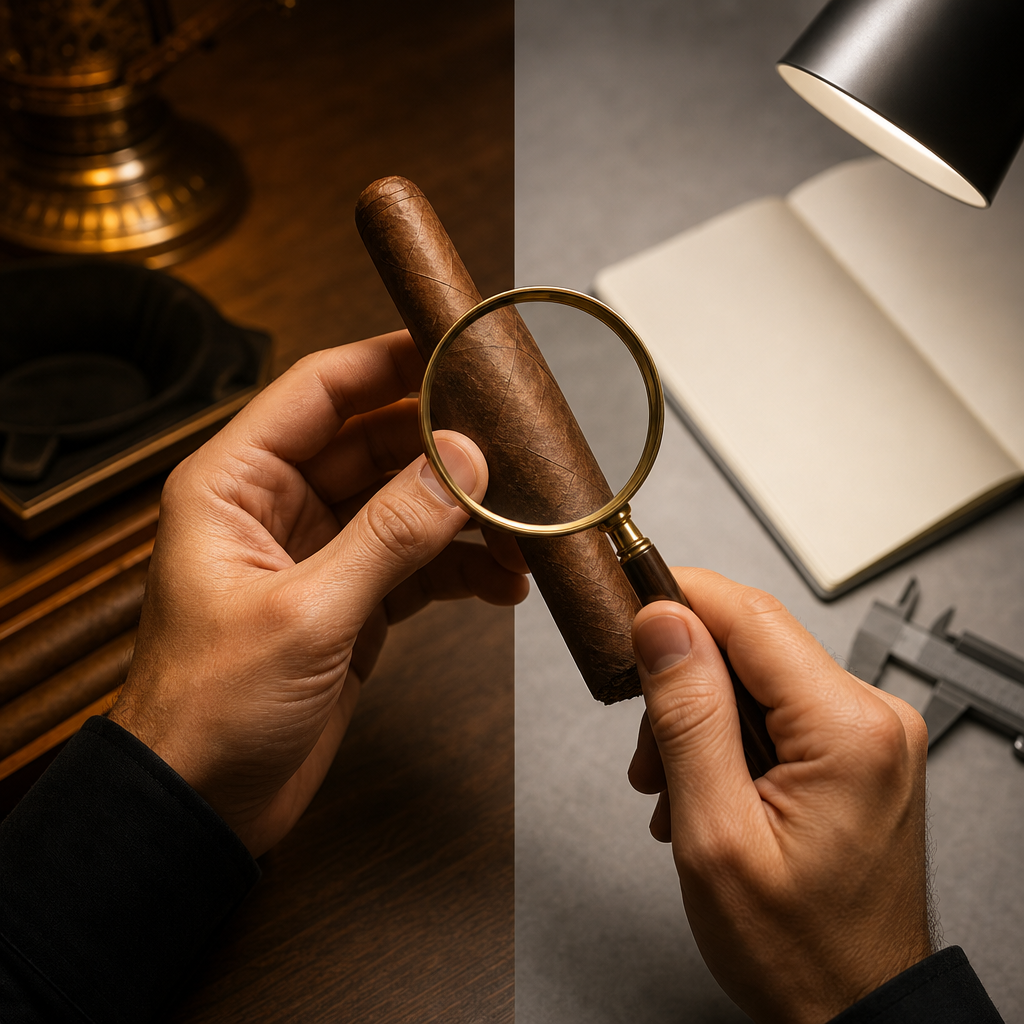
I suggest veterans establish their own brand notes rather than relying solely on scores:
- Record box code, year, source, and storage humidity.
- Compare at least two sizes of the same brand, such as Robusto and Churchill.
- Separately describe aroma, strength, mouthfeel thickness, and aftertaste.
- Retest every six months to a year without rushing to conclusions.
- If the source involves PCC authorized dealers and other information, it can be used as a reference for authenticity and circulation context.
Collection Perspective: How Brand Stories Affect Scarcity and Market
When discussing brand evolution, the collection market cannot be avoided. Cohiba Behike, Trinidad Fundadores, old boxes of Partagás Serie D No.4, Montecristo Reserva, or Gran Reserva often become topics due to brand, year, packaging, and production volume. The 2003 Cohiba Double Corona Edición Limitada, 2014 Cohiba Robustos Supremos, 2017 Partagás Serie No.1, etc., are examples often discussed by veterans as cases of era style.
But collecting is not just about names. Box condition, seals, tax stamps, source documents, storage records, and whether they have been dampened will directly affect value judgment. Many old cigars may appear intact on the outside but may actually have moldy smells, ammonia residue, or poor combustion due to high humidity; some ordinary years, due to excellent preservation, may instead exhibit surprising balance. Collection appreciation does not guarantee appreciation, it still depends on source preservation and market.
When I look at collectibles, I first ask three questions: Does it represent a brand historical node? Is there a sufficiently clear circulation context? Can storage conditions be reasonably inferred? For example, Cohiba 50 Aniversario was launched in 2016, with strong brand significance; but if lacking a credible source, the market narrative will be discounted. Trinidad's early image due to diplomatic reception and smaller production does have a unique status, but it still needs to return to the condition.
Brand stories can add cultural weight but cannot replace judgment. For veterans, the most interesting part of collecting is not chasing high but seeing the era through a box of cigars: which year large ring gauges were popular, which market preferred limited editions, which factory performed outstandingly at a certain stage. This is the truly fascinating part of brand history.
Frequently Asked Questions
Are classic brands necessarily more worth studying than emerging brands?
Not necessarily. Classic brands provide historical coordinates, such as H. Upmann, Partagás, Montecristo, which can help you understand how Cuban styles were defined; emerging brands offer contemporary blending thinking, such as Foundation, Tatuaje, Crowned Heads, allowing you to see new syntax in region and wrapper choices.
Why is there a big difference in different sizes of the same brand?
Because the ring gauge and length change the proportion of wrapper, binder, and filler. Lancero will amplify wrapper aroma and rolling precision, Robusto is more direct, and Churchill emphasizes rhythm and layering. Veterans must look at size when viewing brands, otherwise, it is easy to misjudge brand personality.
How should Cuban and non-Cuban brands be compared?
Do not compare from the perspective of who replaces whom. Cuba is strong in traditional regions and delicate changes, non-Cuba is strong in craftsmanship transparency, batch stability, and multi-region blending. When comparing, you can choose similar sizes, such as Robusto to Robusto, and record strength, sweetness, combustion, and aftertaste.
Are limited series of emerging brands worth long-term storage?
It depends on the formula, tobacco aging degree, and storage environment. Some limited works are designed to be vivid when young, and may not be better after long storage; some high-intensity works need time to integrate. Do not conclude just because the label is beautiful or the production is small.
What should veterans record most in brand notes?
I would record brand, size, box code or batch, year, source, humidity, changes from the first segment to the last, and whether there is bitterness, spiciness, astringency, stuffiness, or burning deviation. More than three records can better reveal the true outline of the brand.
The most fascinating part of brand stories is that they are not history textbooks but cultures that can be verified by smell, taste, and time. Classic brands show me heritage, emerging brands show me ambition; between the two, there is no absolute high or low, only whether the craftsmanship is honest and the style is clear. What veterans truly pursue is not a list but judgment.
—Cigar Prince Wilson Tsai
Smoking is harmful to health. Under twenty years old is not allowed to smoke. Quit smoking hotline: 0800-636363. This article is for reference by adults over twenty years old as knowledge of cigar culture, preservation, and regulations, not a tobacco advertisement, promotion, or purchase suggestion.