The Science of Cigar Aging and Maturation: Behind the Changes in Flavor
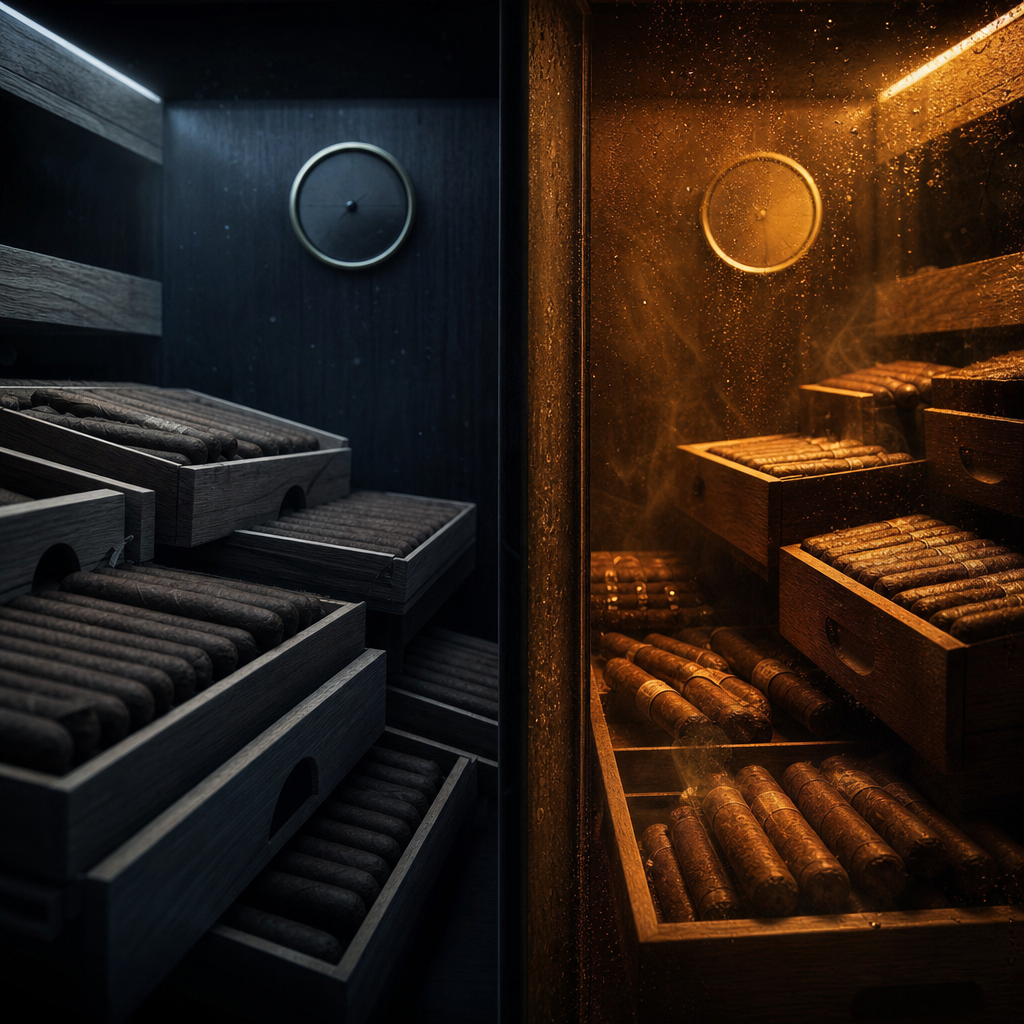
The Science of Cigar Aging and Maturation: Behind the Changes in Flavor
Those who truly understand aging don't just ask "how many years is this box," but rather delve into: how its leaf composition, size, box condition, storage humidity, and production batch collectively alter a cigar's burn, aroma, and taste. As an editor of the "Cigar Bible," I am most fascinated by these seemingly quiet yet continuously operating details.
Experienced enthusiasts discussing aging often fall into two extremes: one believes the older, the better, while the other believes freshness brings vitality. My perspective is closer to the intersection of science and experience: aging is not magic but the result of condition management; whether a cigar can develop complexity depends on how it is treated over time.
Aging Is Not Just About Time: The Chemical Basis of Flavor Changes
When a cigar rests in its box, the first changes are in its sharpness and green notes. After fermentation, rolling, and boxing, a small amount of ammonia, volatile acids, and sharper vegetal aromas remain; in stable humidity, these molecules slowly dissipate or recombine. Take, for example, a Partagás Serie D No.4 boxed around 2020; a new box often has pepper, wood, and noticeable strength, but by 2023 or 2024, the spiciness usually shifts from "sharp" to "warm."
The core of aging is not to dilute the taste but to reduce sharp molecules and make the aroma structure rounder. This is why experienced enthusiasts often say a cigar has "opened up": it's not that the aroma suddenly increases, but that the sweetness, nuts, leather, and cocoa, which were originally masked by ammonia, wet grass, or rough tannins, gradually become recognizable.
Chemically, sugars, amino acids, polyphenols, and oils in the tobacco leaves continue to undergo slow reactions. The Maillard reaction is most evident in high-temperature roasting, but in the low-temperature environment of cigars, there is also extremely slow browning and aroma recomposition. Oil oxidation can bring nutty, waxy, leathery, and dried fruit aromas; if stored too dry, oil volatilization and leaf surface brittleness can cause aroma breakage, making the taste like dry wood chips.
I often use "three lines" to judge whether aging is healthy: the first is whether the sharpness decreases; the second is whether the sweetness emerges; the third is whether the burn becomes more stable. If a 2018 Hoyo de Monterrey Epicure No.2 is still harsh and bitter by 2024, the issue may not be insufficient aging but rather storage imbalance.
Temperature and Humidity Are the Translators of Aging
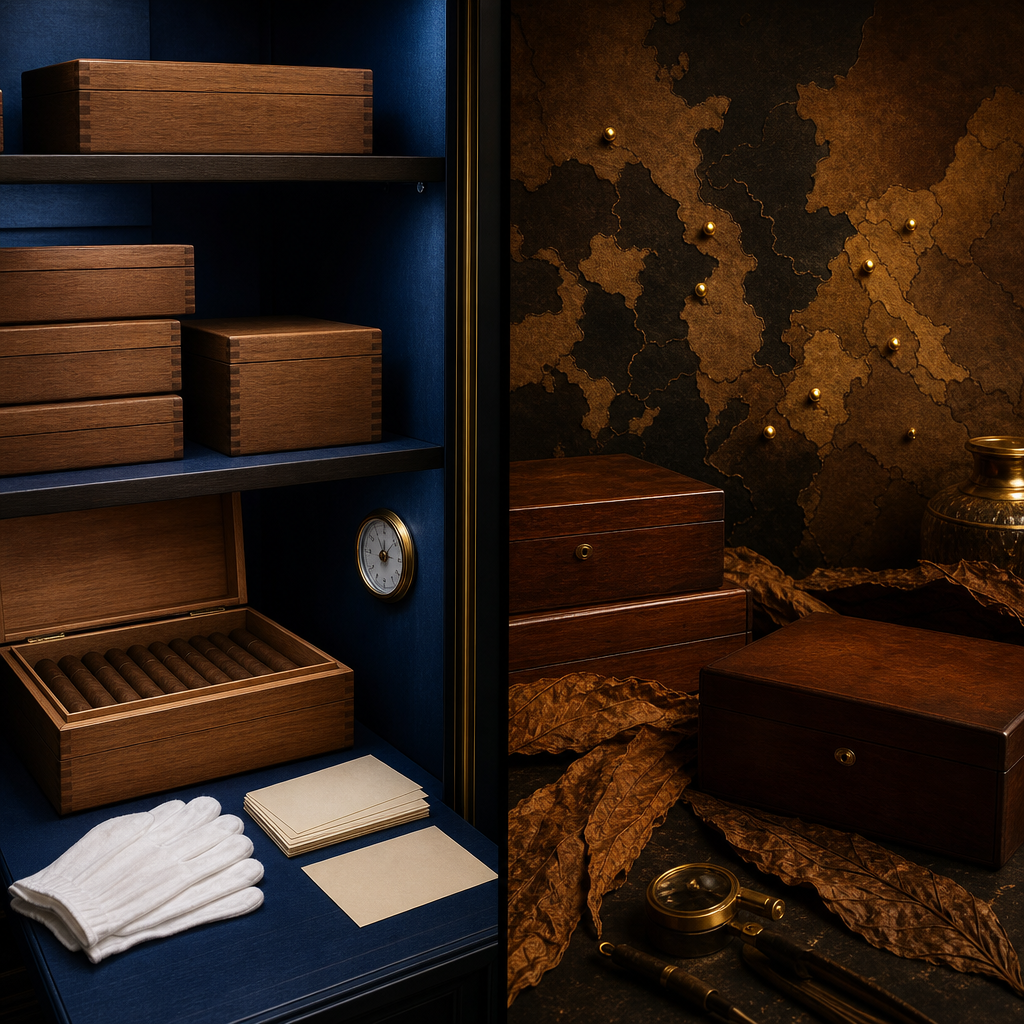
The same 5-year-old cigar stored at 18°C, 65% RH, and at 28°C, 75% RH can yield completely different results. The former changes slowly with good detail preservation; the latter changes quickly but is prone to sourness, mold spots, or overly moist burns. Most high-end collectors control long-term environments at 16–20°C, 62–68% RH, while daily-use boxes often see settings of 65–69% RH.
Aging only records time; temperature and humidity determine how time acts on the tobacco leaves. I've seen a 2016 Cohiba Siglo VI stored long-term above 70% RH, with thick smoke but slow burn and heavy tar when smoked; I've also seen a 2019 version in a 65% RH, 18°C environment, presenting clean honey, grains, and creamy wood by 2023, with even more beautiful lines.
When humidity is too high, ammonia and moisture do not easily dissipate, increasing draw resistance and smoke temperature, making the latter part bitter. When humidity is too low, the wrapper loses elasticity, burns too quickly, and the aroma dissipates before it unfolds. Many mistakenly believe old cigars are always light; in fact, a well-preserved 10-year-old Ramón Allones Specially Selected can still have rich cinnamon, coffee, and candied sweetness.
My practical advice is layered management: use lower humidity for long-term boxes, slightly higher for frequent-use boxes; adjust for different countries and seasons. In Taiwan's summer, if indoor temperatures often exceed 26°C, even if the humidity gauge shows well, there is still risk. Temperature management is the watershed from "storing more" to "storing well" for many experienced enthusiasts.
From New Boxes to Over Ten Years: Flavor Stages of Different Ages
Age interpretation can be roughly divided into four stages, but don't treat it as an absolute formula. Different brands, sizes, and leaf compositions change speed, for example, Bolivar Royal Corona usually has noticeable strength, easier to integrate after 3 years; while Quai d’Orsay No.50, with its delicate floral, creamy wood, may lose brightness if aged too long. Below is the observation framework I often use.
| Box Age Stage | Common Flavor Performance | Suitable Observation Focus | Representative Case |
|---|---|---|---|
| 0–2 years | Grass, pepper, ammonia, distinct strength | Leaf composition potential, burn state | 2022 Montecristo No.2 |
| 3–5 years | Rising sweetness, softened spiciness, clear woodiness | Balance and mid-section layers | 2019 Partagás Serie E No.2 |
| 6–10 years | Leather, dried fruit, nuts, cocoa | Aroma integration and aftertaste | 2016 H. Upmann Magnum 46 |
| Over 10 years | Waxy, old wood, herbal, aged citrus | Preservation integrity, vitality | 2012 Punch Punch |
3–5 years is often the window where many Havana cigars most easily enter a stable state. Especially robusto and pyramid sizes, if fully fermented before boxing, this stage often combines strength, sweetness, and recognizability; for experienced enthusiasts, this is the key time to judge whether a batch is worth further observation.
Over 10 years requires more caution. Old flavor is not simply light but the aroma changes from a straight line to a curve, not necessarily explosive at the entrance, but with a long nasal return. If only cardboard, dust, dry grass remain, and no sweetness supports it, it usually indicates preservation has been depleted. The higher the age, the more "integrity" rather than "age" should be used for judgment.
Brand Personality and Leaf Composition: Not Every Cigar Is Suitable for Long Aging
Some cigars are naturally suited for waiting, while others are beautiful in their youthful vitality. Cohiba's signature feature is that some tobacco leaves undergo additional barrel fermentation, with young notes of grass, cream, citrus peel, and honey; after 5–8 years, good batches turn into grains, nectar, wood, and delicate spices. In contrast, Partagás has a thicker base of earth, pepper, and leather, often needing over 3 years to round off edges.
Judging aging potential requires looking at brand style, size ratio, and wrapper oil content simultaneously. Large ring gauge, long sizes usually have more leaf volume and slower changes, such as Lusitania, Sir Winston, Double Corona types, often needing more time to integrate than Petit Corona. Short sizes release aroma quickly, long aging may not have an advantage, possibly missing the most vibrant stage.
Take H. Upmann Sir Winston as an example, different batches from 2014, 2016, 2019 have varied market evaluations, but the common point is that the mid-section's creamy wood, almond, light leather are very dependent on preservation conditions. If humidity is too high, delicate sweetness becomes dull; if too dry, it loses its signature smooth lines. This type of cigar doesn't conquer with strength but persuades with cleanliness and layers.
On the other hand, brands like Bolivar, Ramón Allones, Partagás with stronger styles often have impact when young, showing brown sugar, roasted coffee, dried fruit, and leather after aging. Experienced enthusiasts preferring strength can choose 3–7 years box age; those preferring details can pursue over 8 years but must strictly check the state.
Look at Box Codes, Sources, and Each Cigar's Body Language
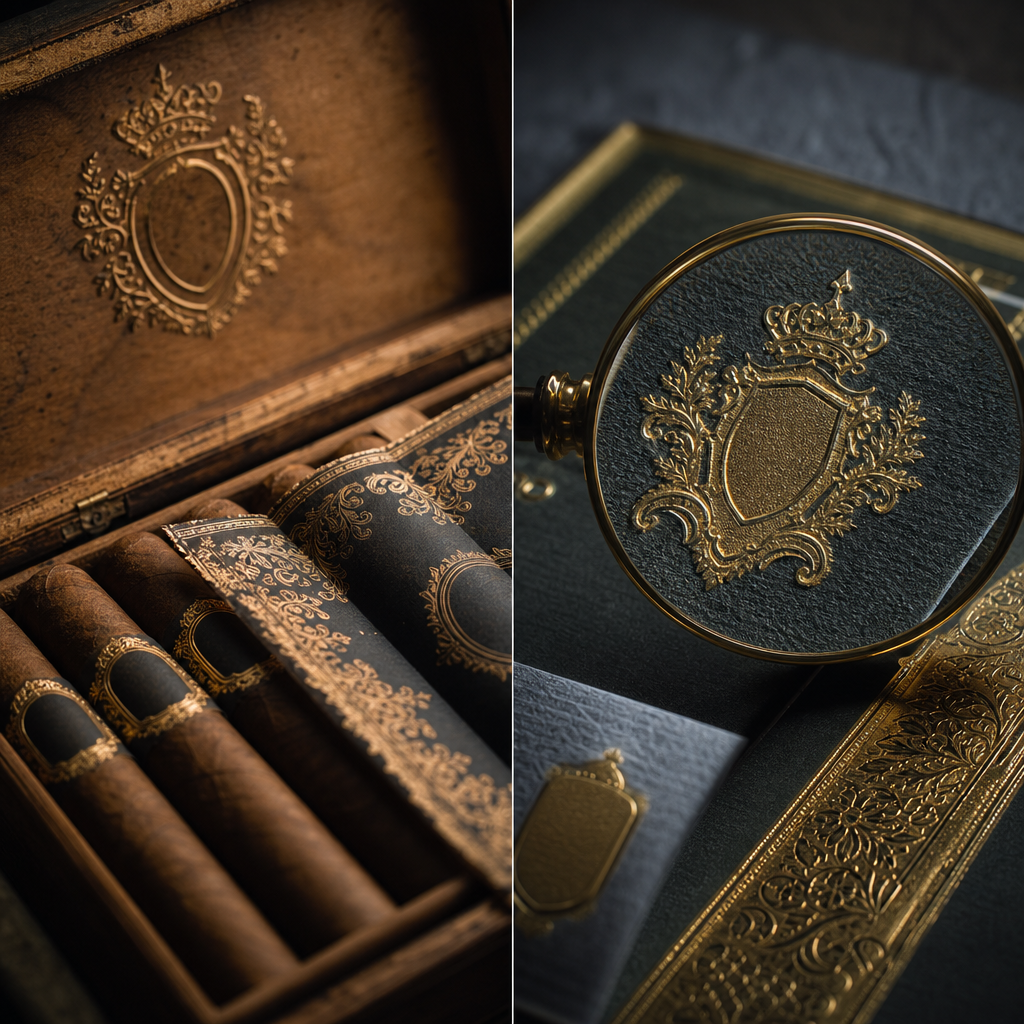
Experienced enthusiasts selecting age don't just look at the paper age. Cuban cigar box bottoms often have factory codes and month-year, such as "ABR 19" representing April 2019 boxing; but box codes only tell you the production time, not the journey of the next 5 years. Especially from 2019 to 2021, influenced by logistics and production capacity fluctuations, differences in dry and wet states between batches are more pronounced.
Box codes are the starting point, not the conclusion; the real answer lies in the wrapper, aroma, elasticity, and burn performance. I first look at whether the wrapper is oily rather than sticky, whether the veins are natural, whether the box aroma has clean wood, honey, herbal, or cocoa; if there is moldy, sour, or wet cardboard smell, even if the age looks good, caution is needed.
Practical checks can be conducted in sequence:
- Look at the box bottom: month-year, stamp clarity, whether the box condition is consistent.
- Look at the wrapper: oil content, color uniformity, whether there are cracks or water stains.
- Smell the box aroma: cedar, herbal, sweet aroma are good signals; moldy and rotten smell are abnormal.
- Lightly press the cigar body: should have rebound, should not be like overly wet sponge or overly dry twig.
- Record the burn: slant burn, extinguishing, bitter tail may reflect preservation issues.
When discussing collection value, I must also remind: rare ages, limited editions, or discontinued models may be sought after by the market, but collection appreciation does not guarantee appreciation, still depending on source preservation and market. PCC authorized dealer systems can provide clearer circulation context, but collecting should still be based on knowledge, records, and risk awareness.
How to Appreciate Different Ages: Compare with the Same Standard
To understand age differences, the most effective method is not relying on impressions but establishing repeatable comparisons. Choose the same brand, same size, different ages, such as Montecristo No.2 from 2022, 2019, 2015; or Partagás Serie D No.4 in 1 year, 4 years, 8 years versions. Environment, cut, lighting, and smoking rhythm should all be consistent, otherwise, you may be comparing temperature or humidity differences.
The focus of age comparison is to find changes in sharpness, sweetness, aroma continuity, and aftertaste length. I habitually divide a cigar into the first third, mid-section, and last third for recording, writing 3–5 key words for each section. Young versions often have the most explosive power in the first section; middle-aged versions are most stable in the mid-section; if well-preserved, old ages may show charming tea, old wood, and dried fruit in the last section.
Smoking speed also affects judgment. One puff every 45–60 seconds usually shows more detail than continuous quick puffs; overheated smoke will burn off sweetness, making any age bitter. Pairing drinks should also be restrained: water, light oolong, low-sugar coffee can help identification; high-sweet wines, although charming, will obscure the cigar's own sweet-sour balance.
I suggest experienced enthusiasts establish their own age notes: date, box code, environmental humidity, cutting method, lighting tool, smoking time, aroma description, and rating. Looking back six months later, you will find your taste preferences more important than market ratings. Some love the vitality of 3 years, some love the stability of 12 years, the key is not to chase labels but to find your rhythm.
Frequently Asked Questions
Is it always better to age cigars longer?
Not necessarily. Good aging comes from healthy tobacco leaves, stable preservation, and suitable consumption windows, not simply accumulating time. If the wrapper is cracked, the box aroma is hollow, and sweetness disappears, even high age is just depletion.
How many years is best to start observing?
Most Havana cigars can be seriously observed around 3 years, check integration around 5 years, and vitality over 8 years. Rich brands can wait longer, delicate brands should avoid aging until losing brightness.
Is white powder mold?
Not necessarily. Bloom is often drier and can be lightly wiped, while mold spots usually have fuzz, odor, and may penetrate the wrapper. If there is moldy, sour, or wet cardboard smell, it should not be ignored.
Do single cigars and whole boxes age at the same speed?
No. Whole boxes have more stable microenvironments due to wood boxes and arrangement, usually changing slower and more consistently; single cigars are more affected by external factors, with more noticeable humidity fluctuations if the humidor is frequently opened and closed.
Should older cigars be stored at lower humidity?
Usually slightly lower, such as 62–65% RH, helps with burn and aroma clarity, but not too dry. Older cigars have fragile wrappers, best allowed to acclimate in a stable environment before lighting.
How to avoid being misled by age?
Look at box codes, sources, appearance, box aroma, and actual burn simultaneously. Age is a reference, state is the core. Collection value also does not guarantee appreciation, still depending on source preservation and market.
I have always believed that the age of a cigar is not a number for showing off, but a period of well-cared-for time. Young cigars have sharpness, middle-aged cigars have balance, old ages have quiet depth; all three deserve respect. The true advanced pleasure is being able to read the intersection of preservation, leaf composition, craftsmanship, and time from a puff, not just asking how old it is. May every lighting deepen your understanding of your taste and the weight of time.
—Cigar Prince Wilson Tsai
Smoking is harmful to health. Under 20 years old is prohibited from smoking. Quitline: 0800-636363. This article is intended for adults over 20 years old as a reference for cigar culture, preservation, and regulations, not as a tobacco advertisement, promotion, or purchase suggestion.