Starting from Ancient America: Tobacco was originally a ritual, not a luxury
Understanding the basics of puffing, many begin to ask: why are cigars always associated with gentlemen, diplomacy, literature, victory, or contemplation? It is not merely a roll of tobacco but a cultural thread that spans religion, colonization, commerce, craftsmanship, and etiquette.
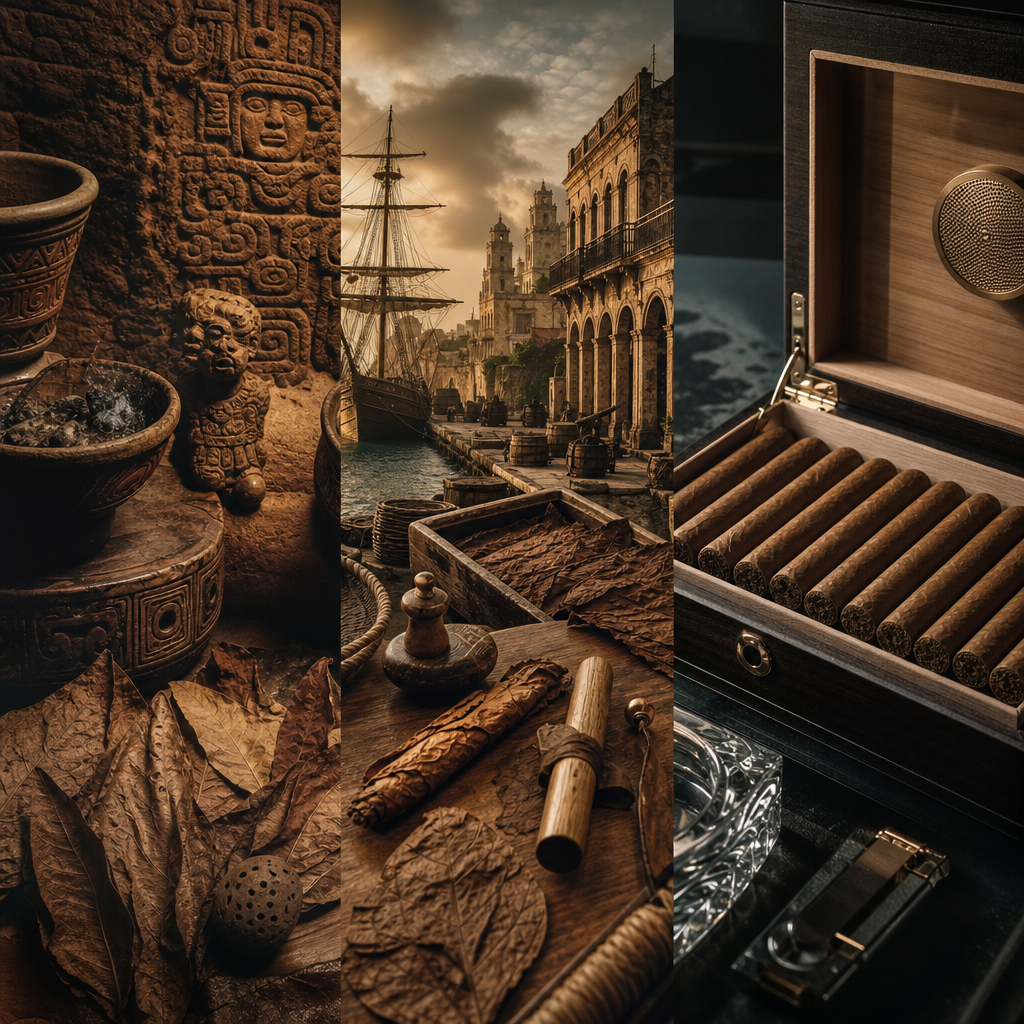
I often say that the charm of cigars lies in their ability to turn time into readable layers. From ancient American rituals to the handcrafted rolling in Havana workshops, and finally to the stable preservation in today's humidors, each cigar is like a piece of compressed history.
Starting from Ancient America: Tobacco was originally a ritual, not a luxury
Before Europeans arrived in the Americas, tobacco had been used in Central and South America for thousands of years. Archaeological research often traces tobacco use back to the Andean and Central American civilizations thousands of years BCE; Mayan pottery, deity reliefs, and priest images all depict people associating tobacco with prayer, healing, and divination. The forms at the time might not resemble today's cigars, sometimes being bundles of leaves, sometimes burned in pipes, or mixed with other plants.
After Columbus arrived in the Caribbean in 1492, sailors recorded the Taino people rolling dried leaves and lighting them, which is often seen as a significant moment in Europe's recognition of the precursor to cigars. Later, the term "tabaco" entered the Spanish-speaking world, with different interpretations for the object, plant, and usage. The origin of cigars is not a salon show-off but a medium used by ancient civilizations to communicate with gods, the body, and the community.
This history is crucial for beginners because it reminds us that the pace of cigars was originally slow. Ancient people did not measure it by speed but placed it within ritual time. Today, when we talk about lighting, holding, cutting, ash columns, and resting, we are continuing an attitude of "not rushing to finish." Understanding cigar history starts with restoring it from a consumer product to a cultural object.
After 1492: The Formation of Spanish Empire, Cuba, and Cigar Trade
After the 16th century, tobacco quickly entered Spain, Portugal, France, and England. Initially, Europeans had a contradictory attitude toward tobacco: on one hand, doctors and nobles saw it as a novel plant, while on the other, religion and governments worried about its uncontrolled popularity. Seville, Spain, became an important processing center in the 17th century, where leaves from the Americas were sorted, processed, and then sent to European markets.
Cuba's rise was related to geography, soil, ports, and colonial systems. Havana Port was a crucial node in the Spanish Empire's fleet system, with frequent ship movements; the soil and microclimate of areas like Pinar del Río and Vuelta Abajo gradually became recognized as suitable for high-quality tobacco leaves. By the 18th century, the Spanish royal family controlled tobacco through a monopoly system, generating substantial tax revenue and turning tobacco from a local crop into a part of the empire's finances.
The key to this period is not just "Cuba becoming famous," but cigars being integrated into the global trade network. Leaves, craftsmen, ports, tax systems, and consumer classes together shaped the later world of brands. When we say Cuban cigars have historical weight today, it's not just because of romantic origins but because they stood at the intersection of global markets and imperial routes early on.
The Golden Age of the 19th Century: Brands, Workshops, and the Havana Myth
The 19th century was the golden age of cigar branding. H. Upmann was founded in 1844, Partagás dates back to 1845, and Romeo y Julieta was established in 1875; these names are still discussed by enthusiasts today. At that time, the hand-rolling techniques in Havana workshops matured, and wooden boxes, labels, seals, and brand identities gradually became fixed, turning cigars from loose products into recognizable, memorable styles.
Workshops also had a fascinating role: the lector, or reader. While workers rolled cigars for long hours, the lector would read newspapers, novels, and political articles, making many cigar workshops spaces for thought dissemination. This explains why cigars are often associated with literature, politics, revolution, and public discussion; they appear not only after meals but also in debates, secret talks, and memories of long voyages.
In the latter half of the 19th century, European nobility, American businessmen, and Latin American politicians collectively elevated the symbolic nature of cigars. Although Churchill was a 20th-century figure, the image he represented was precisely the male social symbol accumulated since the 19th century. The birth of brands, workshop culture, and international markets transformed cigars from local crafts into a collectible, recognizable, and inheritable language of taste.
20th Century Changes: Embargo, Exiled Craftsmen, and New World Regions
One of the biggest turning points in 20th-century cigar history was the 1959 Cuban Revolution and the 1962 U.S. embargo on Cuba. Many brands, families, and craftsmen left Cuba for the Dominican Republic, Nicaragua, Honduras, and Florida, USA. This did not interrupt cigar culture but instead allowed seeds, techniques, and business models to recombine in the Caribbean and Central America, forming the rich landscape of today's so-called "New World cigars."
The Dominican Republic later became an important representative of stable and delicate styles, with Davidoff shifting its core production focus there in the 1990s, becoming a classic case. Nicaragua, with its volcanic soil and regions like Jalapa, Estelí, and Condega, developed rich, spicy, and structurally strong styles; after the 1990s, the acceptance of Nicaraguan cigars in the U.S. market rose rapidly.
Therefore, beginners should not view the world solely through a "Cuban or non-Cuban" dichotomy. Cuba has its historical density and terroir tradition, while the New World showcases blending freedom and regional diversity. The political rupture of the 20th century unexpectedly led cigars from a single center to a multi-core era. This is also why enthusiasts today can compare different origins, sizes, and strengths.
Craft Evolution: From Tobacco Fields to the Precision of Hand-Rolling
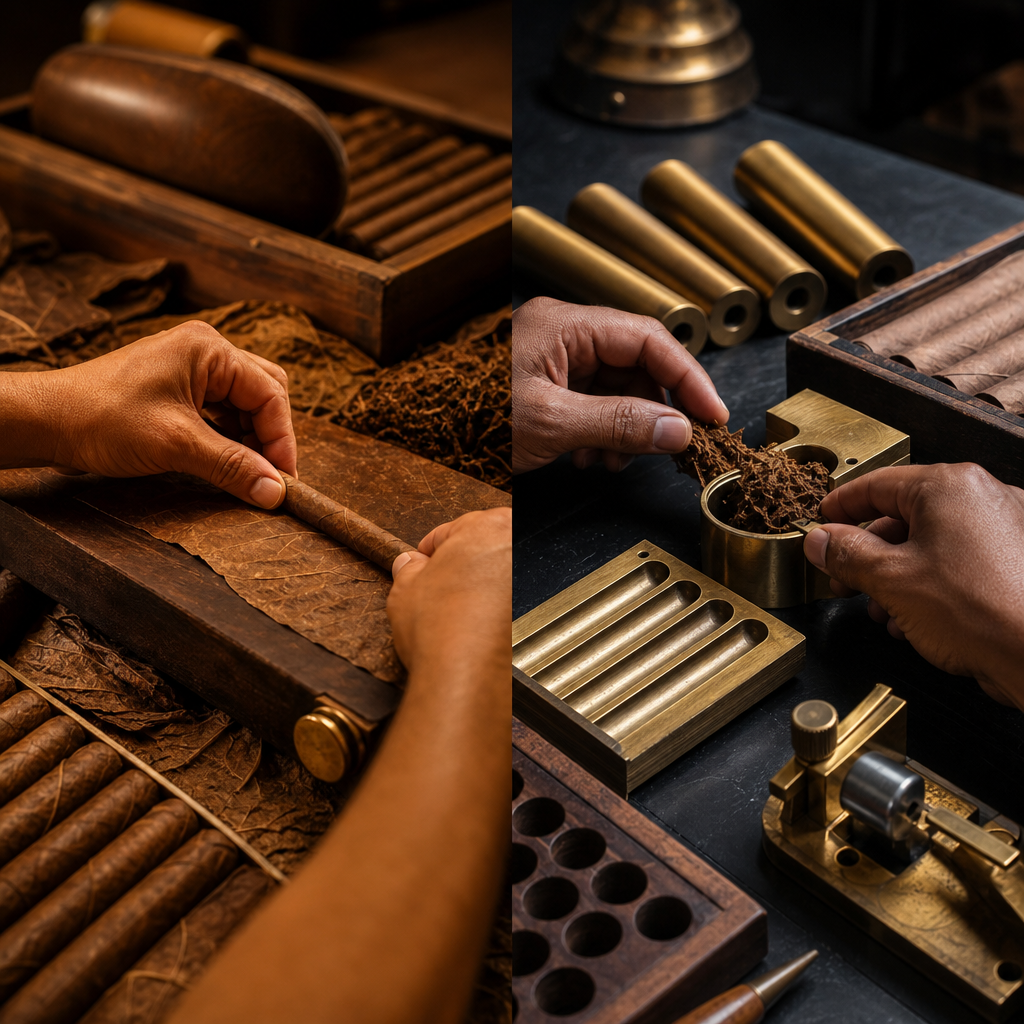
A handmade cigar typically consists of a wrapper, binder, and filler. The wrapper is responsible for visual appeal, texture, and some aroma; the binder provides structure; the filler determines burn, strength, and complexity. After harvesting, tobacco leaves undergo drying, fermentation, grading, and aging, which can take months to years. Improper control of temperature, humidity, and leaf pile height can affect ammonia taste, irritation, and burn stability.
Size is also a language left by history. Names like Corona, Robusto, Churchill, and Pirámide not only refer to length and thickness but also involve burn speed, airflow, and flavor concentration. The following table can serve as a comparison basis after entry:
| Common Sizes | Approximate Specifications | Historical or Style Impressions |
|---|---|---|
| Corona | 5.5 inches × 42 ring gauge | Traditional balance, suitable for observing transitions |
| Robusto | 5 inches × 50 ring gauge | Modern popularity, easier to manage time |
| Churchill | 7 inches × 47 ring gauge | Long rhythm, associated with Churchill's image |
| Pirámide | 6 inches × 52 ring gauge | Tapered head, noticeable airflow concentration |
The feel of the rolling master is something machines cannot fully replace. Too tight a fill will result in high draw resistance, while too loose will burn too quickly; if the wrapper is overstretched, it may crack after lighting. Cigars are considered crafts because they incorporate agriculture, microorganisms, handcraft techniques, and time management into a single piece.
Cultural Significance: Why Cigars Have Become a Symbol of Taste Today
Cigars have become a symbol of taste not merely because of price. The real key is that they require time, space, and self-restraint. You cannot treat a Churchill like a rushed schedule; nor can you judge the depth of a Robusto by appearance alone. From cutting, lighting, rotating, maintaining ash columns to temperature control after the midpoint, every step trains a person's patience and measure.
In the 20th century, cigars often appeared in diplomatic occasions, business meetings, movie roles, and private studies. Its image was once closely linked to power, but today's healthier understanding is to see it as a cultural etiquette among adults: respecting occasions, respecting others, respecting time. The aspect of collecting is also often discussed, such as limited editions, vintage editions, special wooden boxes, and preservation conditions affecting market attention, but collecting appreciation does not guarantee appreciation, still depending on source preservation and market.
For beginners, etiquette is more important than showing off:
- Do not light up in inappropriate indoor environments.
- Do not use cigars as a tool to display wealth.
- Confirm space regulations when seated with others.
- Preserve at about 65% to 70% relative humidity, 18°C to 21°C as common references.
- Cutting and lighting should be clean, stable, and avoid overheating.
A truly mature cigar taste is not about knowing how many expensive names, but being able to show restraint, knowledge, and respect in suitable occasions.
Frequently Asked Questions
Beginners learn history not to memorize years but to understand the cultural context behind each action. Here are some of the most frequently asked questions I receive, suitable for those who already understand the basics of puffing and want to take a step further.
Must cigars be understood starting from Cuba?
Not necessarily. Cuba has a deep history, but the Dominican Republic, Nicaragua, and Honduras each have their styles. It is recommended to build experience through three lines: origin, size, and strength.
Why do different sizes of the same brand taste different?
Different ring gauges, lengths, and filler ratios change burn speed and airflow. Even within the same brand, the layers of a Corona and a Robusto in the same series may differ.
Does longer aging always mean better?
Not necessarily. When preservation is stable, some cigars become smoother; but if humidity is unbalanced, the source is unclear, or the structure itself is lacking, time will not automatically bring better results.
What is the most easily overlooked aspect of cigar etiquette?
The most easily overlooked is the feelings of others and environmental regulations. Knowing when not to light up often shows more maturity than knowing how to light up.
What conditions should be considered for collecting cigars?
Consider source, preservation record, box condition, edition, year, and market demand. Collecting appreciation does not guarantee appreciation, still depending on source preservation and market.
Can historical knowledge improve actual experience?
Yes. When you know the context of brands, origins, and sizes, it's easier to discern how wood, spices, nuts, leather, or sweetness appear, rather than evaluating everything solely by strength.
As the editor of "Cigar Bible," I always believe that the most worthwhile aspect of cigars to learn is not the spectacle but the sense of time. It reminds adults to slow down and understand how land, craftsmen, history, and etiquette intersect at their fingertips. When you can respect occasions, preserve properly, and recognize styles, you truly enter cigar culture, rather than just picking up a cigar.
—Cigar Prince Wilson Tsai
Smoking is harmful to health. Under 20 years old is not allowed to smoke. Quitline: 0800-636363. This article is for reference by adults over 20 years old for cigar culture, preservation, and legal knowledge, not tobacco advertising, promotion, or purchase advice.