Montecristo 完整品牌深度:1935 Alonso Menéndez 創立、Alexandre Dumas 命名、與全球最暢銷古巴雪茄 90 年王朝
Montecristo Complete Brand In-Depth: Founded by Alonso Menéndez in 1935, Named After Alexandre Dumas, and the 90-Year Dynasty of the World's Best-Selling Cuban Cigar
In the world of Cuban cigars, if one asks which name is best known among gentlemen worldwide, the answer is almost beyond dispute: Montecristo. Born in 1935, the brand now accounts for about one quarter of Habanos S.A.'s global sales volume, while the No.4 is a legendary vitola with annual global production exceeding 20 million cigars. Behind this name lies a story more intricate and moving than many realize: a businessman, a French adventure novel, and a century-old factory rescued from decline. These three storylines converged in 1930s Havana, creating one of the greatest origin myths in cigar history.
I. 1935: That July at the Particulares Factory
Alonso Menéndez was a businessman of Sephardic Jewish descent. After immigrating to Cuba, he rose quickly in the tobacco industry with sharp commercial instinct. In July 1935, he acquired the Particulares factory in Havana and immediately created a new brand for the factory: Montecristo.
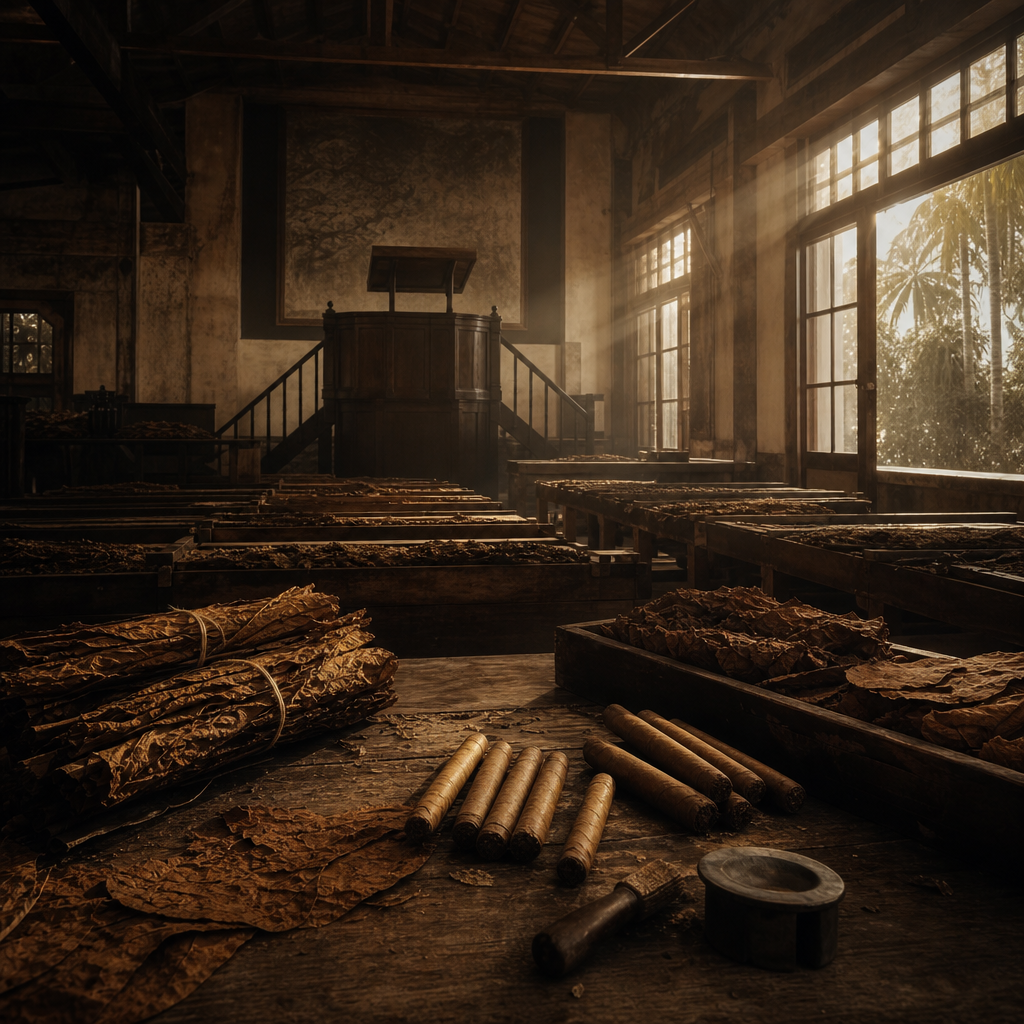
The name was inspired by French writer Alexandre Dumas père's 1844 adventure novel Le Comte de Monte-Cristo. In Cuban factories of the time, there was an old and distinctive tradition: the Lector sat on a raised platform and read newspapers and literary works aloud to the Torcedor, bringing a cultural atmosphere to highly repetitive handwork. Dumas's adventure novel was one of the most popular texts, and the workers were deeply moved by the unyielding spirit of the protagonist Edmond Dantès.
From the moment of its birth, the name Montecristo carried a literary aristocratic lineage.
II. 1937: Acquiring H. Upmann and Laying the Foundation of a Dynasty
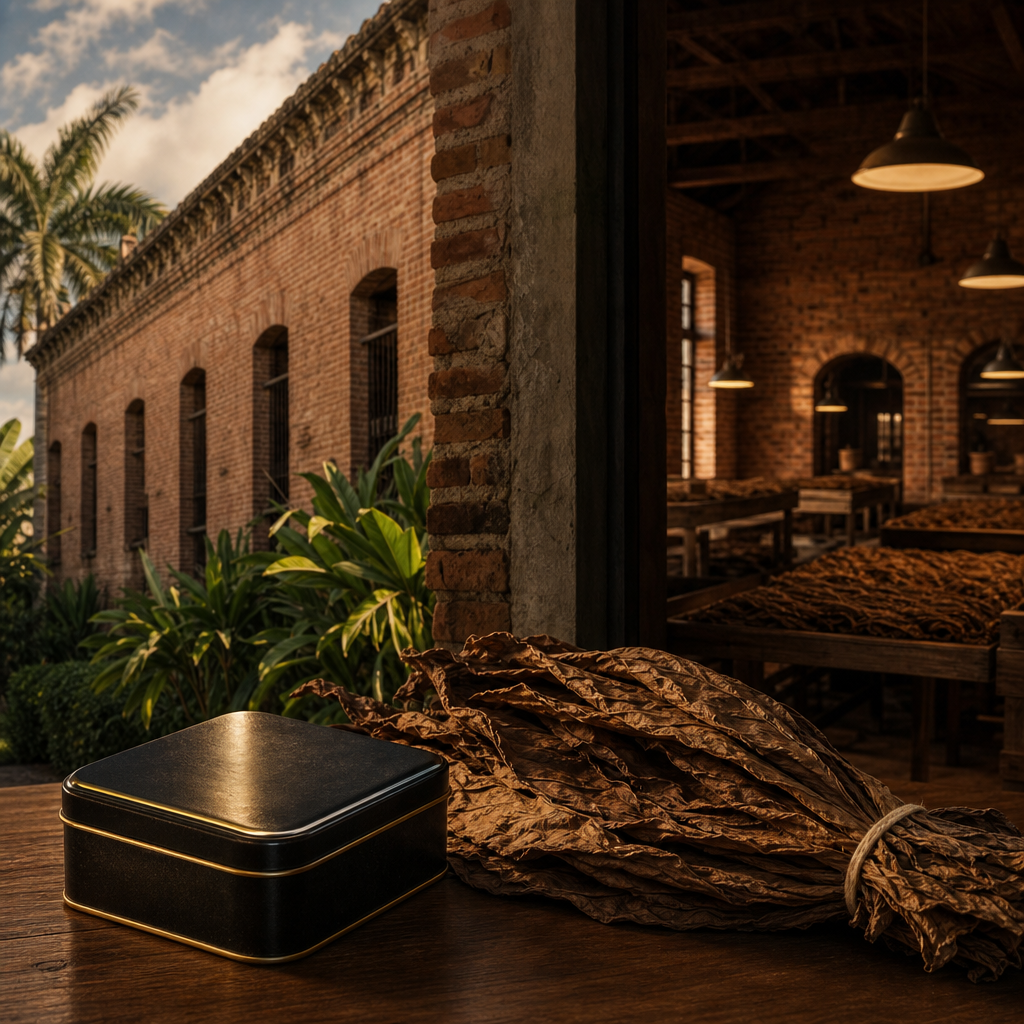
Two years later, Menéndez completed an even larger plan: together with his partner José Manuel García, he established "Menéndez, García y Cía." and acquired the struggling H. Upmann factory from the British-owned J. Frankau S.A. This century-old factory, founded in 1844 and named after the German banker Hermann Upmann, was revived through Menéndez's financial support.
Montecristo production was thereafter moved into the H. Upmann factory (now known as Briones Montoto, code BSM), causing this factory to carry the destinies of two legendary brands for the following decades.
The brand's emblem of six swords surrounding a fleur-de-lis was designed by John Hunter Morris & Elkan Co. Filled with the heraldic aesthetics of French nobility, it precisely echoed the naming imagery of the island of Monte-Cristo in the novel.
III. Alfred Dunhill and the Brand's Global Rise
If Menéndez was the builder of Montecristo, the Alfred Dunhill company was its global disseminator. Dunhill's London flagship actively promoted Montecristo in the mid-20th century, allowing it to rapidly establish prestige in British gentlemen's clubs, diplomatic circles, and the financial world.
The original five standard formats formed what remains one of the industry's most classic brand matrices:
| Vitola | Format | Characteristics |
|---|---|---|
| No.1 | Cervante, 6½" × 42 | Slender and elegant, best suited for longer appreciation |
| No.2 | Pirámide, 6⅛" × 52 | The brand's crown jewel, with an exceptionally high degree of tapered-head complexity |
| No.3 | Corona, 5⅝" × 42 | Balanced and moderate, the best introductory choice |
| No.4 | Petit Corona, 5" × 42 | The world's top seller, with annual production exceeding 20 million cigars |
| No.5 | Petit Corona, 4" × 40 | The shortest, a quick afternoon choice |
IV. After the 1959 Revolution: La Corona Factory and the New Order
After the Cuban Revolution in 1959, the Menéndez family gradually left Cuba, and the brand entered the state-owned system. Habanos S.A. allocated Montecristo's main production to the La Corona factory (code LCB), located at Avenida 20 de Mayo 520 in Havana. It is the largest cigar manufacturing base in Cuba and also produces brands such as Hoyo de Monterrey, Por Larrañaga, Cuaba, Diplomaticos, and San Cristóbal de la Habana.
Today, Montecristo production is not concentrated in a single factory. Taking the No.4 as an example, annual production of 20-25 million cigars is distributed across dozens of factories throughout the island, and quality consistency has long been a point of attention among experienced collectors. By comparison, the No.2 Pirámide format requires senior Torcedor to make it. With high technical demands and smaller quality fluctuations, it is the first choice more highly regarded by collectors.
V. Montecristo Today: One Quarter of Habanos S.A.'s Realm
No.2 (Pirámide) is recognized as the brand's crown jewel and was crowned Cigar Aficionado's best Cuban cigar of 2013. Its complex tapered-head design makes the three-stage flavor transformation especially evident, from grassy cream in the opening section to deep cocoa in the final section. It is one of the most dramatic appreciation journeys in the Habanos system.
No.4 (Petit Corona) is the world's best-selling Cuban cigar. From Parisian cafes to the hands of gentlemen in Taipei's Xinyi District, the universality of the No.4 has established Montecristo's foundation of globalization. Delivering a complete and clear Cuban mid-palate profile within 40-50 minutes, it is Montecristo's declaration of democracy.
The Edición Limitada series is released every few years, using specific aged tobacco leaves and paying tribute to the collector market. It is an important form through which Montecristo participates in the limited-year ecology of Habanos.
Montecristo currently accounts for about 25% of Habanos S.A.'s global sales volume, demonstrating the cultural dominance a single brand can achieve within one market system. Compared with the entire non-Cuban premium market combined, this figure is especially striking.
Conclusion: One Name, Undiminished for 90 Years
Montecristo's charm lies in its "universality": it is both the first stepping stone for beginners entering the world of Cuban cigars and the ultimate pursuit of experienced collectors aging a No.2 for 20 years. Born in an old Havana factory, named after a French adventure novel, and promoted through British gentlemen's circles, this brand has become the most recognizable cigar symbol in the world after 90 years.
At W Cigar Bar, Montecristo is an essential discussion topic in introductory appreciation courses, and it is also one of the most commonly seen collections on the bookshelf. It is not the rarest, yet it is often the one most worth revisiting again and again.
--
Sources of stock: Cuban cigars from four major official channels (PCC authorized dealers, official Cuban state-run stores, Swiss general distributor, Spanish general distributor).
LUBINSKI accessories official website: https://cigarclub.tw/
Book an appreciation: https://share.google/d9NIeFEetij9qWKj0
This site is for adults aged 20 and above only. Smoking is harmful to health. Smoking cessation hotline: 0800-636363.
W Cigar Bar Gentlemen's Cigar Lounge, written and planned by Cigar Prince Wilson Tsai.